
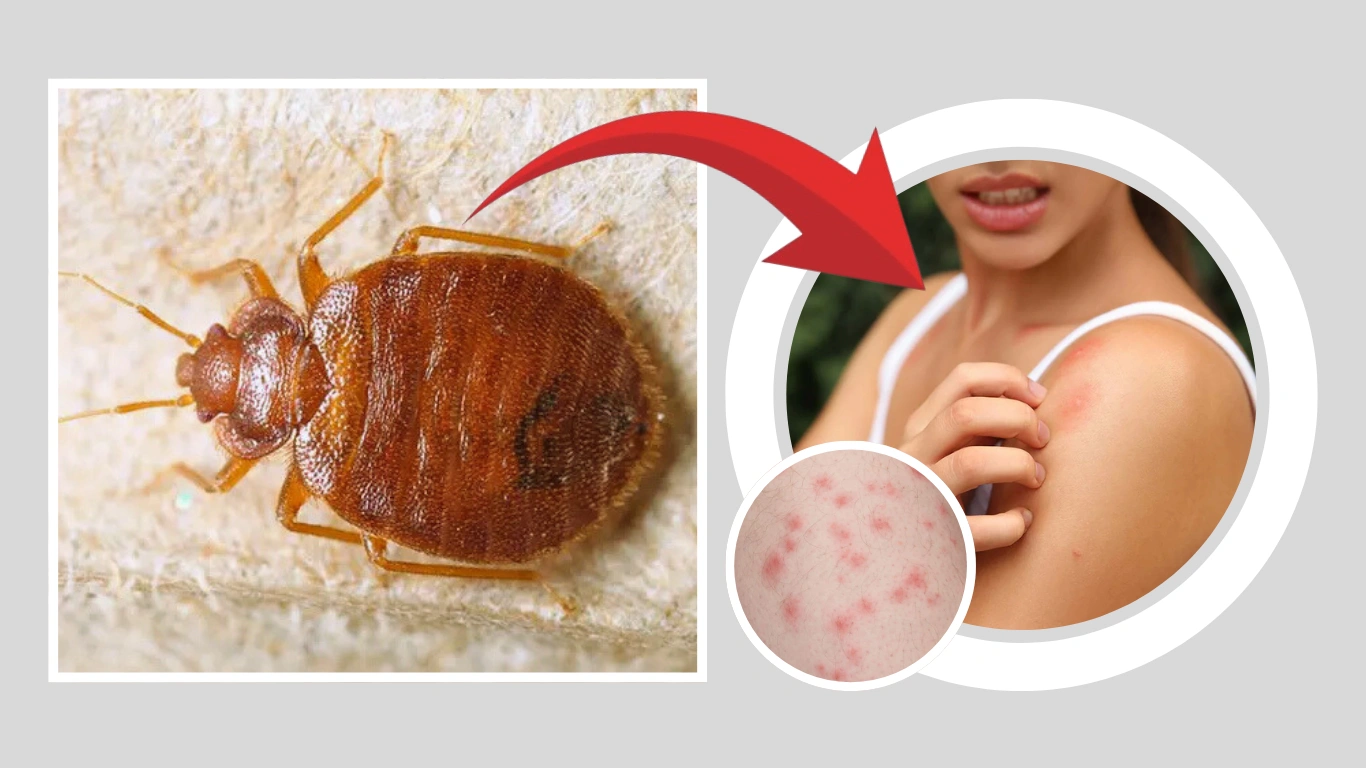
Bed bug bites can be a frustrating mystery—small, itchy marks that suddenly appear overnight, often grouped in unusual patterns. If you’ve ever woken up wondering what caused those red welts on your skin, you’re not alone. These tiny, elusive insects tend to bite while we sleep, leaving behind skin irritation that varies from person to person.
In this article, you’ll find clear descriptions and real-life image references to help you identify bed bug bites on humans. Whether you’re trying to confirm your own experience or helping someone else, this guide walks you through the symptoms, patterns, locations, and comparisons with other insect bites.
How to Identify Bed Bug Bites on Humans
Common Appearance
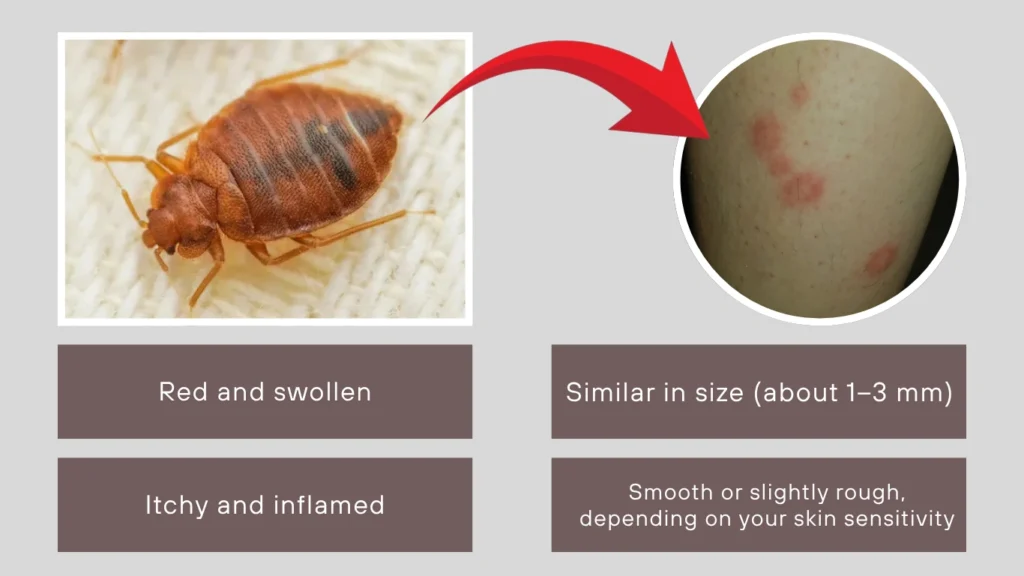
Bed bug bites typically appear as small, red, raised bumps on the skin. They may look like mosquito bites at first glance, but there are subtle clues that set them apart. Most bites are:
- Red and swollen
- Itchy and inflamed
- Similar in size (about 1–3 mm)
- Smooth or slightly rough, depending on your skin sensitivity
The most telling sign is the way the bites are grouped—unlike mosquito or flea bites, bed bugs tend to bite multiple times in a concentrated area.
Visual Description (Refer to Real Image)
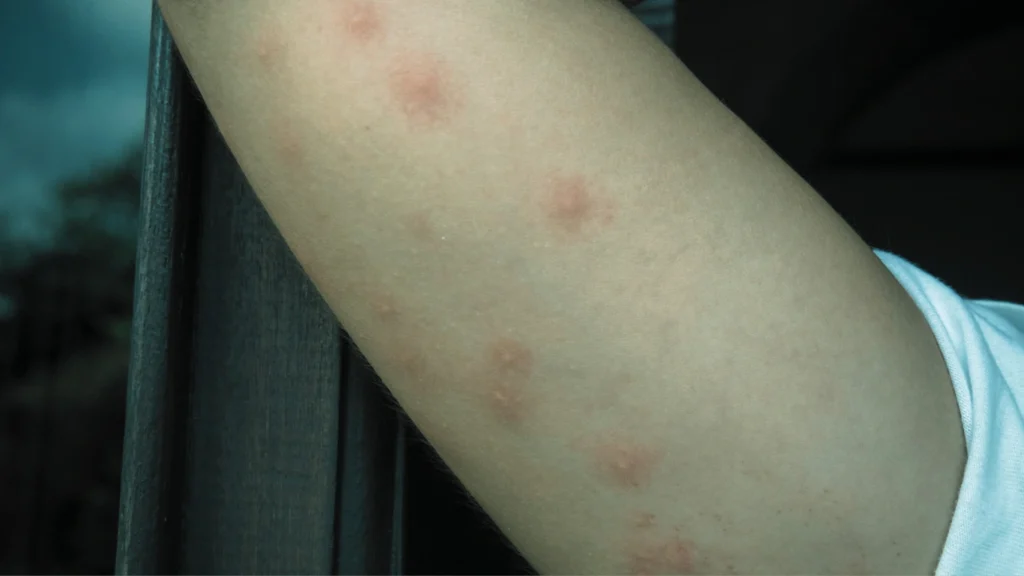
Insert bite image here with alt text: “Photo of real bed bug bites on arm”
In this image, you’ll see a line of red bumps on the forearm. The bites are relatively uniform in shape, appear slightly raised, and are surrounded by faint pink or red skin discoloration. Some bites look like small welts, while others are more flat and spread out. This variation is typical and depends on how the skin reacts to the saliva of the bed bug.
Where Bed Bug Bites Commonly Appear
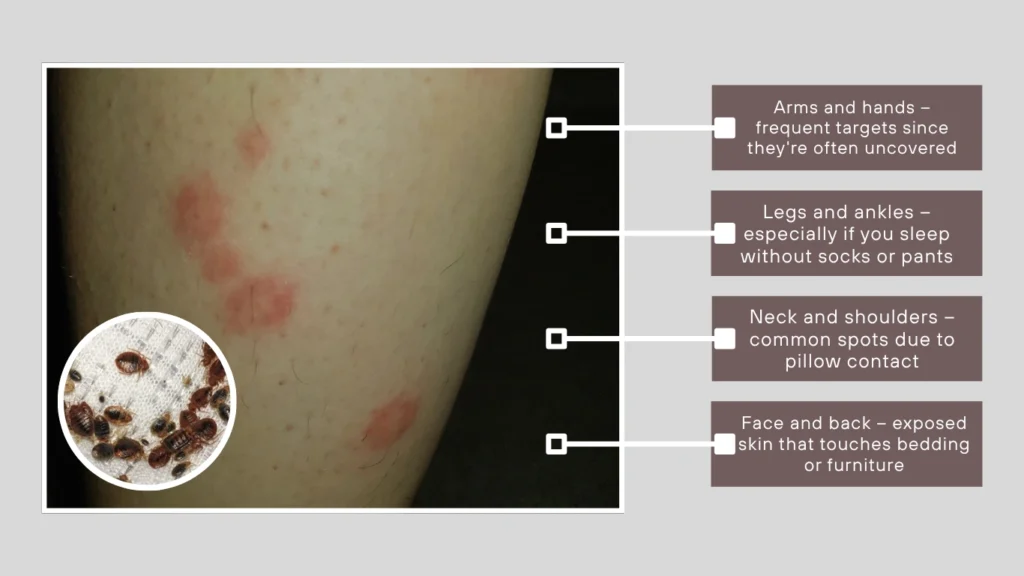
Bed bugs prefer to bite areas of the body that are exposed during sleep. Their flat bodies make it easy for them to crawl into small crevices in beds, furniture, and sheets—so wherever your skin touches the mattress, it’s vulnerable.
Most Affected Areas:
- Arms and hands – frequent targets since they’re often uncovered
- Legs and ankles – especially if you sleep without socks or pants
- Neck and shoulders – common spots due to pillow contact
- Face and back – exposed skin that touches bedding or furniture
You might notice bites in symmetrical areas, such as both arms or both legs, because bed bugs travel across the body while feeding.
Bed Bug Bite Patterns and Clues

Bites in a Line or Cluster
One of the most recognizable patterns is the “breakfast, lunch, and dinner” effect. This phrase describes how bed bugs often bite in a straight line or triangular group of three. It happens because a single bug may feed multiple times as it moves across the skin.
You may also find clusters of bites, especially if multiple bed bugs are feeding at the same time. These clusters are usually grouped closely together on the same body part.
Delayed Skin Reaction
Unlike mosquito bites that appear quickly, bed bug bites may take several hours or even days to show up. Some people don’t notice them until 24–48 hours later, which can make it harder to track the source.
In some cases, people don’t react to bed bug bites at all, especially with repeated exposure. Others may have more intense reactions that lead to blisters or secondary infections from scratching.
Bed Bug Bites vs Other Insect Bites
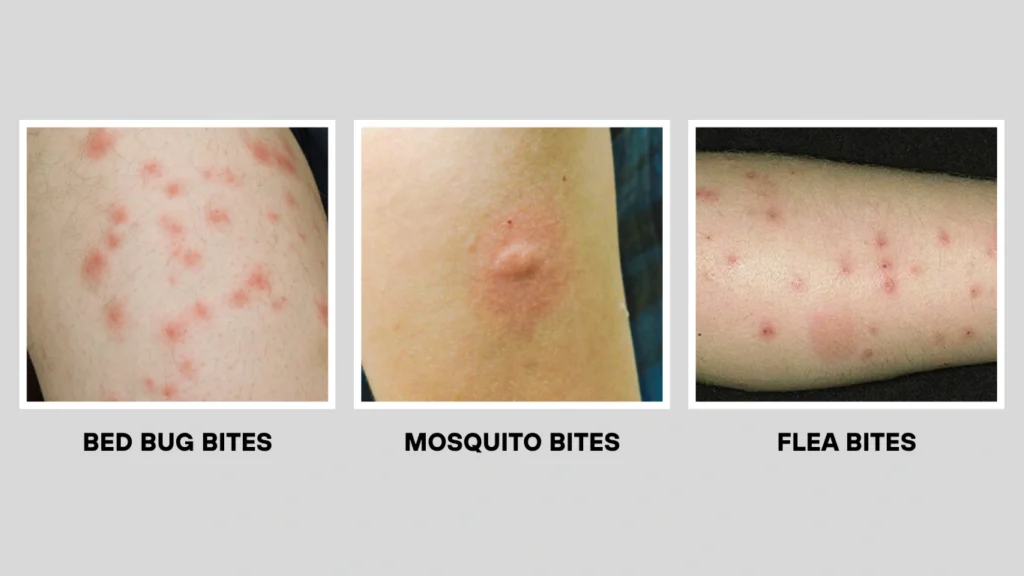
It’s easy to confuse bed bug bites with mosquito, flea, or even allergic rashes. But a side-by-side comparison helps clarify the differences.
Comparison Table
| Feature | Bed Bug Bites | Mosquito Bites | Flea Bites |
| Pattern | Clusters or straight lines | Random, spaced apart | Grouped around ankles |
| Time of Occurrence | Overnight, during sleep | Anytime, usually outdoors | Often from pets, anytime |
| Appearance | Small red bumps, itchy | Puffy, soft bumps | Small red dots, intense itch |
| Itch Level | Moderate to severe | Mild to moderate | High, with quick swelling |
| Duration | 1–2 weeks | Few days | 3–10 days |
Symptoms and Reactions to Expect
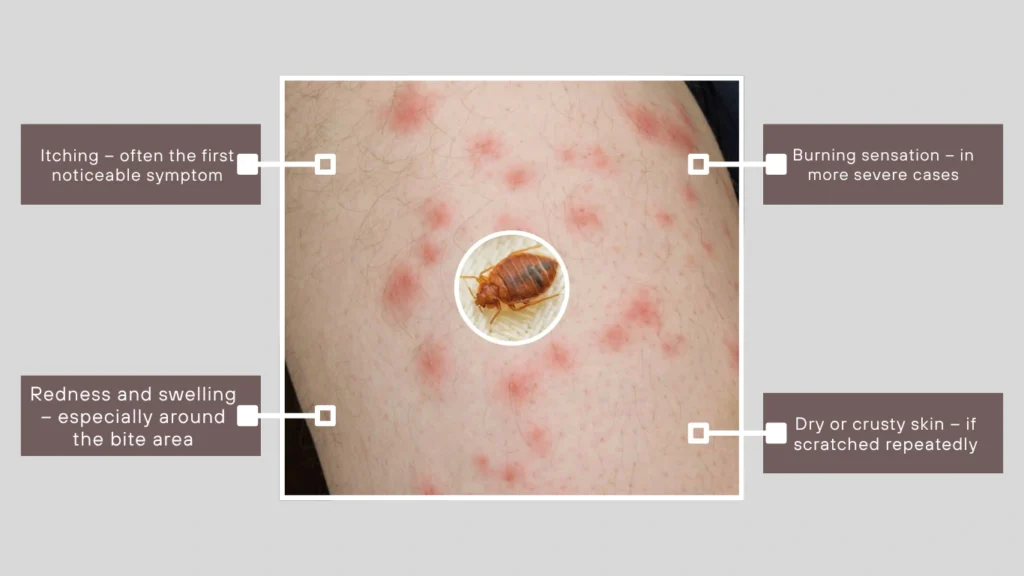
Typical Symptoms
For most people, bed bug bites are irritating but not dangerous. The skin’s reaction can vary depending on how sensitive you are to their saliva. Here’s what you might feel:
- Itching – often the first noticeable symptom
- Redness and swelling – especially around the bite area
- Burning sensation – in more severe cases
- Dry or crusty skin – if scratched repeatedly
Allergic Reactions (Less Common)
Though rare, some individuals may develop allergic responses such as:
- Hives or welts spreading beyond the bite area
- Intense swelling of the face or eyes
- Skin blistering or oozing
- General fatigue or dizziness
If any of these symptoms occur, it’s important to seek medical attention immediately.
When to See a Doctor
Most bed bug bites can be treated at home using over-the-counter anti-itch creams, cold compresses, or antihistamines. But you should see a doctor if:
- Bites become infected (look for pus, warmth, or pain)
- You experience swelling of the eyes, lips, or throat
- The rash spreads rapidly or doesn’t heal within two weeks
- You develop fever or flu-like symptoms
How to Confirm It’s Bed Bugs (Not Something Else)
Bites alone aren’t always enough to confirm a bed bug problem. Look for other physical signs in your home or bedroom:
Signs of Bed Bug Activity
- Blood spots on your sheets – from crushed bugs after feeding
- Black specks (fecal stains) around mattress seams or furniture
- Shed skins – bed bugs molt several times during growth
- Musty odor – a strong, sweet smell in infested areas
- Live bugs – flat, reddish-brown insects hiding in cracks or fabric folds
Use a flashlight or phone camera to inspect mattress seams, box springs, bed frames, and nearby furniture crevices.
Final Thoughts
Bed bug bites can be uncomfortable and distressing, but they’re often easy to identify with a careful look. By observing the shape, location, and pattern of the marks—especially with reference images—you can tell whether bed bugs are the likely culprit.
If you suspect an infestation, don’t delay: early action helps prevent the spread. Consider calling pest control, thoroughly cleaning your bedding, and sealing cracks where bugs might hide.
FAQs
1. How long do bed bug bites last?
Bed bug bites typically last anywhere from 7 to 14 days for most people. The redness and swelling usually subside within a few days, but the itching can linger longer, especially if the bites are scratched frequently. People with sensitive skin or allergic reactions may notice the bites taking 2 to 3 weeks to fully disappear. In some cases, dark spots or scars (called post-inflammatory hyperpigmentation) can remain for weeks or months after the skin heals, especially if the bites were irritated or became infected.
2. Do bed bug bites always itch?
No, not everyone experiences itching from bed bug bites. Reactions can vary depending on the person’s immune system and sensitivity to the bug’s saliva. While many people feel moderate to intense itching, some may have no visible symptoms at all—even if they were bitten multiple times. On the other hand, individuals with allergies may suffer from severe itching, inflammation, or even blistering. The itch usually begins a few hours after the bite and may intensify at night, especially in warm conditions.
3. Can bed bugs bite through clothes?
No, bed bugs cannot bite through clothing. Their mouths are designed to pierce bare skin, not fabric. However, they are skilled at crawling underneath loose garments like T-shirts, pajama pants, or underwear while a person is sleeping. If your clothing is tight-fitting, it’s less likely you’ll get bitten in that area. Still, areas where the skin is exposed—like the arms, neck, face, and feet—are the most common targets.
4. Are bed bug bites contagious?
No, bed bug bites are not contagious. You cannot catch bed bug bites from touching someone else’s skin or by sharing clothes, towels, or bedding (unless those items are infested with bed bugs). The bites themselves are simply a reaction to the bug’s saliva during feeding and are not caused by bacteria, viruses, or fungi. However, the infestation itself can spread if bed bugs are carried on personal belongings, which is why infestations often occur in shared spaces, such as hotels, dorms, or apartments.
5. Do bed bug bites spread like a rash?
Bed bug bites do not naturally spread across the skin like a rash or infection. Each bite occurs where a bug has fed directly. However, scratching the area repeatedly can cause the bites to look larger, redder, and more widespread. In some cases, secondary skin infections (like impetigo) can develop from open wounds due to scratching, which may cause rash-like symptoms or swelling. For this reason, it’s recommended to keep the area clean, apply anti-itch creams, and avoid scratching to prevent complications.
