
Bed bugs are small, blood-feeding insects that can cause major discomfort when they infest homes. While adult bed bugs are often noticed crawling on mattresses or furniture, their eggs are much harder to detect. Identifying bed bug eggs early is crucial for preventing a large infestation, since eggs hatch into new nymphs within days. In this article, we’ll break down exactly what bed bug eggs look like, where to find them, and the steps you can take to eliminate them.
Understanding Bed Bug Eggs

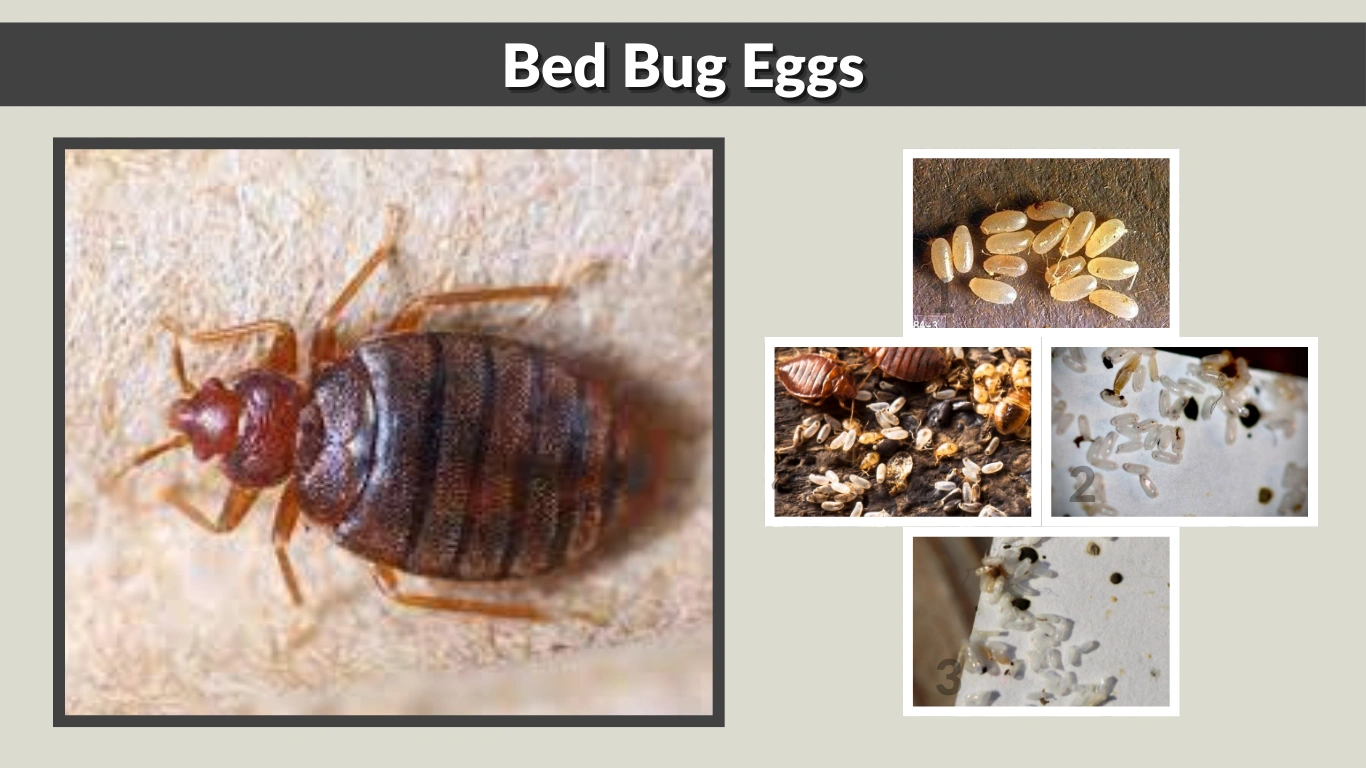
Identification: What Bed Bug Eggs Look Like
Bed bug eggs are tiny but visible to the naked eye if you look closely. Here are the main features:
- Color: Milky white to pearly translucent.
- Size: About 1 mm long, similar to a grain of rice or a pinhead.
- Shape: Oval and slightly elongated.
- Texture: They have a sticky outer layer that helps them cling to fabric, wood, or furniture crevices.
- Grouping: Usually laid in clusters of 10–50 eggs, though some may appear scattered.
- Surface Appearance: Smooth and shiny when freshly laid.
- Visibility: Easier to spot against dark surfaces than light ones, which makes them tricky to detect on sheets or clothing.
These characteristics make bed bug eggs distinct, but they can still be confused with lint, dandruff, or flea eggs if not carefully examined.
Life Cycle Connection

To understand bed bug eggs, it helps to see where they fit in the insect’s life cycle. A female bed bug can lay 200–250 eggs during her lifetime, usually depositing about 1–5 eggs per day. Under normal indoor temperatures, eggs hatch within 6 to 10 days, releasing nymphs (baby bed bugs) that immediately begin searching for blood meals.
Here’s how they differ from other stages:
- Eggs: White, oval, and immobile.
- Nymphs (larvae): Tiny, pale, and nearly translucent; they darken after feeding.
- Adults: Brownish-red, about the size of an apple seed.
Because eggs hatch so quickly, even a small cluster can result in dozens of new bed bugs within two weeks, emphasizing the need for early detection.
Where to Find Bed Bug Eggs
Common Hiding Places in the Home
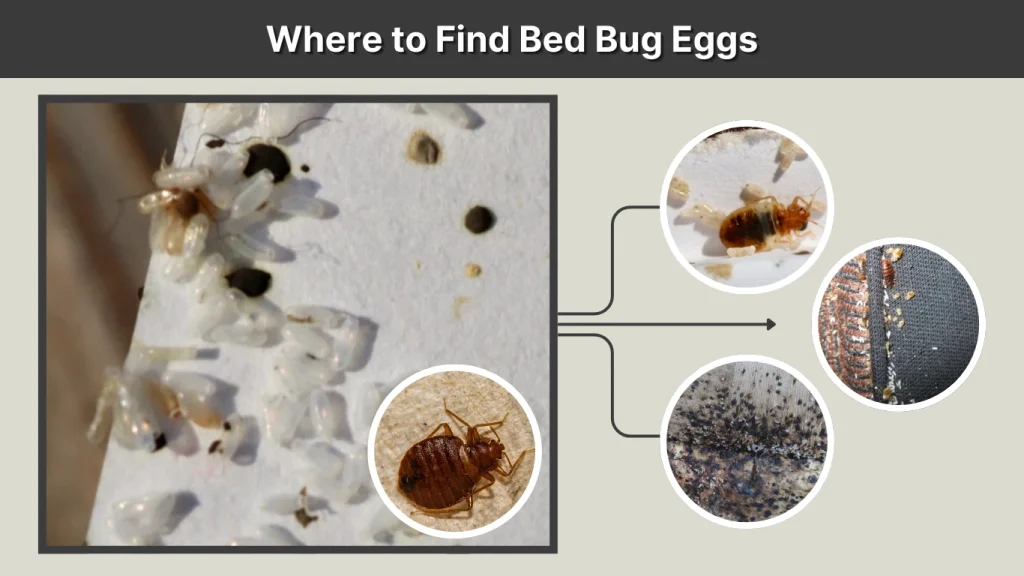
Female bed bugs carefully choose where to lay their eggs, preferring locations that are hidden, secure, and close to a food source. Below are the most frequent spots:
On Mattresses
- In seams, tufts, and folds.
- Around mattress edges or beneath piping.
- Near tags or fabric creases.
On Sheets and Blankets
- Less common but possible when infestations spread.
- Look near stitching and folds.
On Furniture
- Inside upholstered chairs and couches.
- In cracks of wooden furniture, especially bed frames and headboards.
- Along the underside of drawers or cushions.
On Wood Surfaces
- In crevices of bed frames, nightstands, or wooden floorboards.
- Eggs stick well to rough textures like unfinished wood.
On Clothes
- Usually on clothes stored near an infestation site.
- Eggs may cling to fabric folds or seams.
On Pets (Rare Cases)
- Bed bugs do not live on pets like fleas or lice, but eggs may cling temporarily to fur if a pet lies in an infested area.
Signs of Hatched vs. Unhatched Eggs
Knowing whether you’re seeing active eggs or remnants is important:
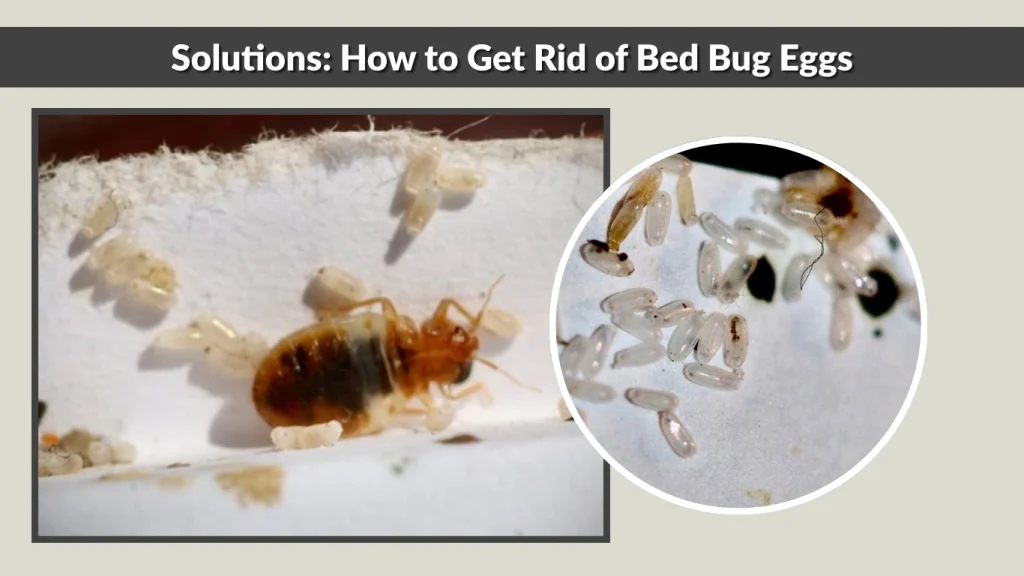
- Unhatched eggs: Plump, shiny, and white; may have a dark spot (the developing bug) inside.
- Hatched eggs: Look like flattened, transparent shells left behind.
- Dead eggs: Appear shriveled, discolored, or dry.
Spotting these signs can help gauge the severity of an infestation and determine whether professional treatment is necessary.
Identifying Bed Bug Eggs vs. Other Household Pests

Many household pests lay eggs that may look similar at first glance, which is why correct identification is crucial.
- Flea eggs: White and oval, but smaller and not sticky. They easily roll off fabrics and carpets.
- Lice eggs (nits): Attached to hair shafts, not fabrics. They’re slightly darker and teardrop-shaped.
- Dust or lint: Unlike eggs, dust doesn’t have a smooth surface or consistent shape.
If you’re unsure whether you’ve found bed bug eggs, using a magnifying glass and checking surrounding areas for live bed bugs or droppings can confirm the infestation.
Solutions: How to Get Rid of Bed Bug Eggs
Getting rid of bed bug eggs is challenging because they are resilient and often hidden in tight spaces. However, combining multiple strategies improves success.
DIY Methods
Heat Treatment
- Wash infested clothing, bedding, and linens in hot water (at least 60°C / 140°F).
- Dry on the highest heat setting for at least 30 minutes. Heat effectively kills both eggs and live bugs.
Vacuuming
- Use a vacuum with a HEPA filter to clean mattress seams, furniture cracks, and carpets.
- Immediately dispose of the vacuum bag in a sealed plastic bag outside the home.
Steam Cleaning
- A steamer can penetrate fabric and crevices, reaching eggs that vacuums may miss.
- Steam temperatures above 50°C (122°F) are lethal to bed bugs and their eggs.
Mattress and Pillow Encasements
- Use specially designed bed bug-proof covers to trap eggs and bugs inside.
- This prevents hatching nymphs from escaping and feeding.
Professional Treatments
For severe infestations, DIY methods may not be enough. Professional pest control offers more advanced solutions:
- Pesticide application: Licensed exterminators use targeted insecticides that kill both live bugs and eggs.
- Integrated Pest Management (IPM): Combines heat, chemicals, and monitoring for long-term results.
- Follow-up visits: Professionals inspect and treat repeatedly to ensure no eggs survive.
Prevention Tips
Once you’ve eliminated bed bug eggs, prevention is the next step.
- Inspect regularly: Check mattresses, furniture, and seams monthly.
- Reduce clutter: Fewer hiding places make eggs easier to spot.
- Seal cracks and crevices: Repair gaps in furniture, walls, and baseboards.
- Travel smart: Inspect hotel beds and keep luggage off the floor to avoid bringing home eggs.
- Wash bedding frequently: Regular laundering reduces the chance of unnoticed eggs surviving.
Conclusion
Bed bug eggs may be small, but they hold the key to an infestation’s survival. Recognizing their white, oval appearance and knowing where to find them—mattresses, furniture, clothing, and wood surfaces—can help you act quickly. While DIY heat, vacuuming, and steam treatments are effective for small infestations, professional help is often needed for severe cases. By combining early identification with consistent solutions and preventive measures, you can protect your home from these stubborn pests.
FAQs
How small are bed bug eggs?
Bed bug eggs are about 1 mm long, roughly the size of a pinhead. Despite their small size, they are visible to the naked eye.
What do hatched bed bug eggs look like?
Hatched eggs appear as flattened, transparent shells left behind after nymphs emerge. They may look like tiny flakes stuck to surfaces.
Can bed bug eggs be seen with the naked eye?
Yes, bed bug eggs can be seen without magnification, but they are often mistaken for dust or lint because of their tiny, white appearance.
Do bed bug eggs stick to clothes?
Yes, bed bug eggs have a sticky coating that allows them to cling to fabrics, though they are more commonly found on mattresses and furniture.
How long does it take for bed bug eggs to hatch?
Bed bug eggs typically hatch within 6 to 10 days under normal indoor conditions, quickly producing nymphs that begin feeding immediately.
