

Dung beetles are some of the most fascinating insects on Earth, best known for rolling balls of animal waste across the ground. While this behavior may look strange, it plays a powerful role in nature. People often search questions like “what do dung beetles eat,” “where do dung beetles live,” and “why do dung beetles roll dung.” Understanding these insects reveals how important they are for soil health, waste removal, and natural ecosystems around the world.
What Is a Dung Beetle?
A dung beetle is a type of scarab beetle that feeds partly or entirely on animal droppings. There are more than 6,000 known species worldwide, living on every continent except Antarctica. Unlike most beetles that eat plants or other insects, dung beetles specialize in using feces as food and as a place to raise their young.
Dung beetles are usually grouped into three main behavioral types. Rollers shape dung into balls and roll it away to bury later. Tunnelers dig directly under dung piles and pull pieces underground. Dwellers live inside the dung itself. Despite their differences, all dung beetles depend heavily on animal waste to survive and reproduce.
What Does a Dung Beetle Look Like?
Body Shape, Color, and Structure
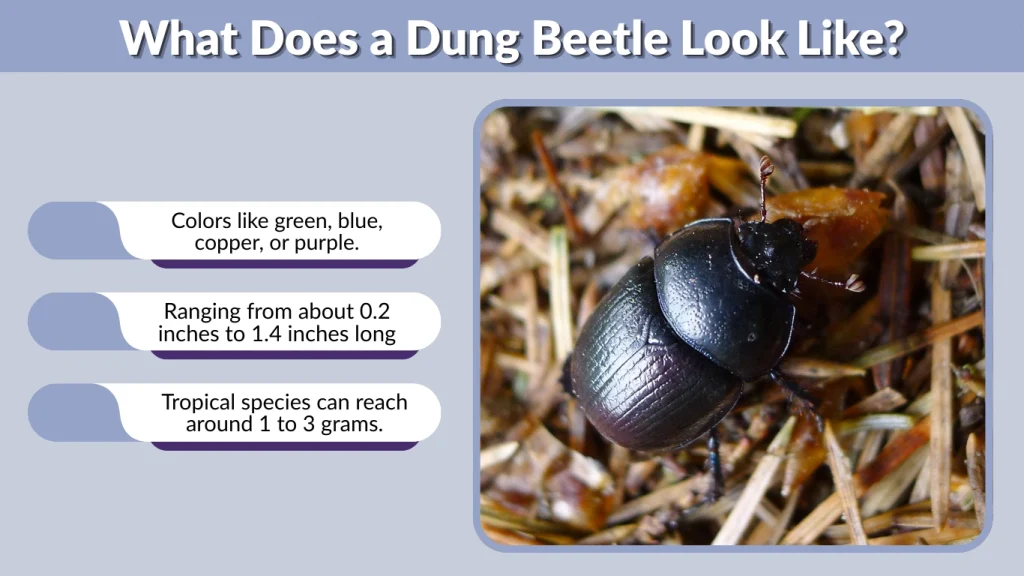
Dung beetles typically have oval, compact bodies with a hard outer shell. Their front legs are wide and strong, designed for digging and shaping dung. Many species are black or dark brown, but others display shiny metallic colors like green, blue, copper, or purple. Some male dung beetles also have horns on their heads, which they use to fight rivals or defend tunnels.
Size Range and Physical Strength
Most dung beetles are small, ranging from about 0.2 inches to 1.4 inches long, depending on the species. Even though they are tiny, dung beetles are famous for their strength. Some species can pull over 1,000 times their own body weight, making them among the strongest insects relative to size.
How Much Does a Dung Beetle Weigh?
A typical dung beetle weighs only a fraction of a gram. Smaller species may weigh just 0.01 grams, while larger tropical species can reach around 1 to 3 grams. Despite this light weight, their muscular build allows them to push, roll, and bury dung many times heavier than themselves.
What Do Dung Beetles Eat? (Diet Explained)

Dung beetles feed mainly on animal waste, but they are not simply “poop eaters” in the basic sense. They extract nutrients, liquids, and microorganisms found inside dung. Their diet supports both adult beetles and developing larvae.
- Animal dung from cows, horses, deer, elephants, and other mammals
- Undigested plant fibers found in herbivore droppings
- Bacteria and microorganisms living in manure
- Nutrient-rich liquids filtered from fresh dung
- In some species, rotting organic matter mixed into waste
So, do dung beetles eat poop? Yes, but more specifically, they feed on the nutrients within it. This is why fresh dung is extremely valuable to them and often triggers rapid swarming behavior.
Why Do Dung Beetles Roll Dung?
Food Storage and Survival
Dung beetles roll dung to secure a private food source. Fresh dung attracts many insects, creating intense competition. By shaping a ball and rolling it away, a beetle reduces the chance of losing its food to others. Once buried, the dung stays moist and usable for much longer.
Reproduction and Egg Laying
For many species, dung balls are not only food but also nurseries. After rolling and burying a ball, a female dung beetle lays eggs inside it. When the larvae hatch, they feed on the dung surrounding them. This protected environment gives the young beetles everything they need to grow.
What Do Dung Beetles Do With the Dung?
Dung beetles either eat it, bury it, or use it to raise offspring. By pulling dung underground, they improve soil structure, recycle nutrients, and help reduce surface waste that would otherwise attract pests and parasites.
Where Do Dung Beetles Live?
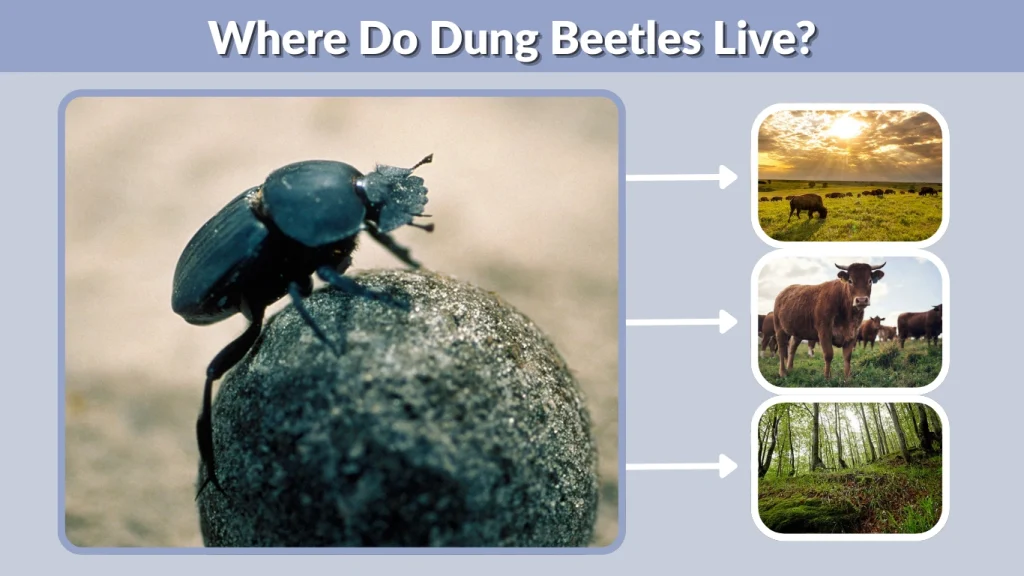
Dung beetles are found almost everywhere animals are present. They thrive in both wild ecosystems and human-managed environments.
- Grasslands and savannas with large grazing animals
- Farms, ranches, and cattle pastures
- Tropical forests and temperate woodlands
- Deserts and dry regions with wildlife or livestock
- Natural reserves, zoos, and even open countryside
Because they depend on animal droppings, dung beetles are especially common in areas where mammals live in large numbers. This wide distribution explains why people across the world encounter dung beetles in very different environments.
Can Dung Beetles Fly?
How Dung Beetles Use Flight
Yes, dung beetles can fly. Most species have well-developed wings hidden beneath their hard outer shells. Flying allows them to travel quickly from one area to another, which is essential because dung is a short-lived resource. Once waste dries out, it loses much of its nutritional value. Flight helps dung beetles reach fresh dung before competitors.
How They Locate Dung From the Air
Dung beetles have extremely sensitive antennae that can detect the smell of animal droppings from long distances. Many species take off almost immediately after an animal defecates. Some dung beetles are also skilled navigators, using the sun, moon, and even the Milky Way to move in straight lines while rolling their dung balls.
What Do Dung Beetles Do in the Ecosystem?

Are Dung Beetles Decomposers?
Dung beetles act as natural recyclers. While bacteria and fungi complete the final stages of decomposition, dung beetles are crucial early-stage decomposers. By breaking apart, burying, and consuming dung, they speed up the recycling of nutrients back into the soil, where plants can use them again.
Benefits to Soil, Animals, and Humans
Dung beetles improve soil fertility by pulling organic matter underground. Their tunnels aerate the soil, helping roots grow and improving water absorption. By removing surface dung, they also reduce breeding grounds for flies and parasites that affect livestock. Farmers often value dung beetles because healthier pastures lead to healthier animals.
What Eats Dung Beetles?
Dung beetles are an important food source for many animals. Despite their hard shells, they are regularly hunted.
- Birds such as crows, starlings, and chickens
- Reptiles and amphibians like lizards, frogs, and toads
- Small mammals including hedgehogs and rodents
- Spiders, ants, and predatory insects
- Other beetles and ground-dwelling predators
To survive, dung beetles rely on quick burrowing, tough exoskeletons, and rapid flight to escape danger.
Life Cycle and Daily Behavior
Dung Beetle Life Cycle Stages
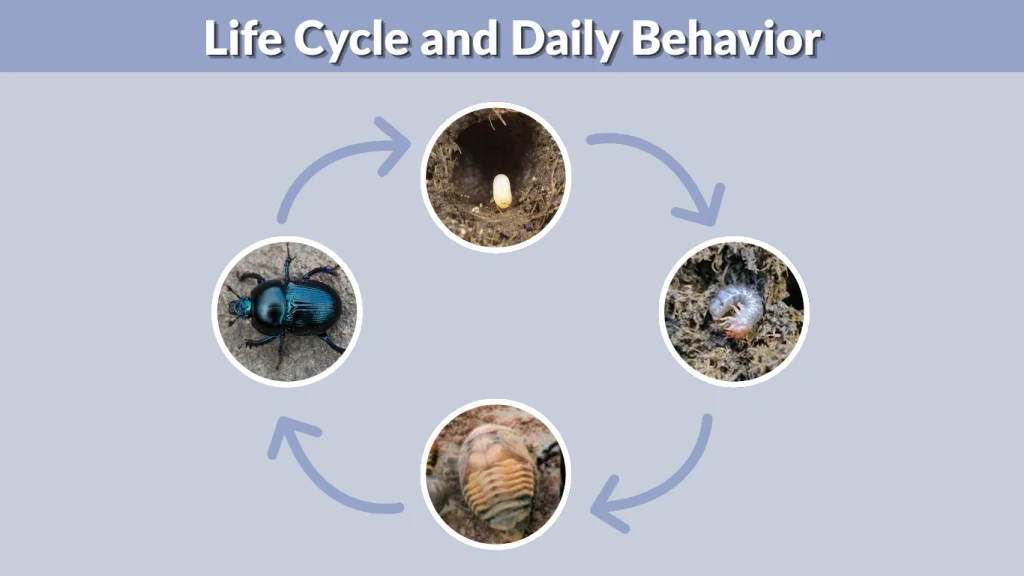
Dung beetles go through four life stages: egg, larva, pupa, and adult. Eggs are usually laid inside buried dung balls. The larvae feed on the dung, growing and molting several times before forming a pupa. After metamorphosis, adult beetles emerge and begin searching for dung to feed and reproduce.
What Do Dung Beetles Do All Day?
Most dung beetles spend their time flying in search of fresh dung, shaping or burying it, feeding, and mating. Some are active during the day, while others are nocturnal. Their daily routine revolves almost entirely around locating dung and competing with other insects for access to it.
Dung Beetles in ARK (Game-Related Searches)
How to Tame Dung Beetles in ARK
In ARK: Survival Evolved, dung beetles are passive creatures that can be tamed and used for farming fertilizer and oil. Players usually carry them, place them in enclosures, and feed them specific items to tame them. Once tamed, they convert dung into useful resources.
What Do Dung Beetles Eat in ARK?
In the game, dung beetles are commonly fed spoiled meat or feces to produce fertilizer and oil. Their in-game function is inspired by their real-world behavior of processing animal waste.
Interesting Facts About Dung Beetles
Some dung beetles are among the strongest animals on Earth in proportion to their size. Certain species navigate using polarized light and even the Milky Way. Ancient Egyptians considered the dung beetle sacred, symbolizing rebirth and the movement of the sun. Today, scientists continue studying dung beetles for their role in agriculture and environmental health.
FAQs
Do dung beetles really eat poop?
Yes, dung beetles feed on animal droppings, but they mainly consume the nutrients, bacteria, and liquids found within the waste. Dung from plant-eating animals is especially valuable because it contains undigested plant material that provides energy for both adult beetles and their developing larvae.
Why do dung beetles roll dung into balls?
Dung beetles roll dung to protect their food from competitors and to create safe underground chambers. These dung balls are often buried and used either as a personal food supply or as a nursery where eggs are laid and larvae develop in a nutrient-rich environment.
Where do dung beetles mostly live?
Dung beetles live on every continent except Antarctica. They are most common in grasslands, farms, forests, and savannas where large mammals are present. Anywhere animals regularly produce waste, dung beetles are likely to be found.
Can dung beetles fly long distances?
Yes, dung beetles can fly surprisingly long distances relative to their size. Their strong wings and sensitive sense of smell allow them to quickly locate fresh dung, sometimes traveling hundreds of meters or more in search of suitable feeding and breeding sites.
Are dung beetles harmful to humans?
Dung beetles are not harmful to humans. They do not bite or sting, and they rarely interact directly with people. In fact, they are beneficial insects that help clean the environment, improve soil quality, and reduce pests associated with animal waste.
