
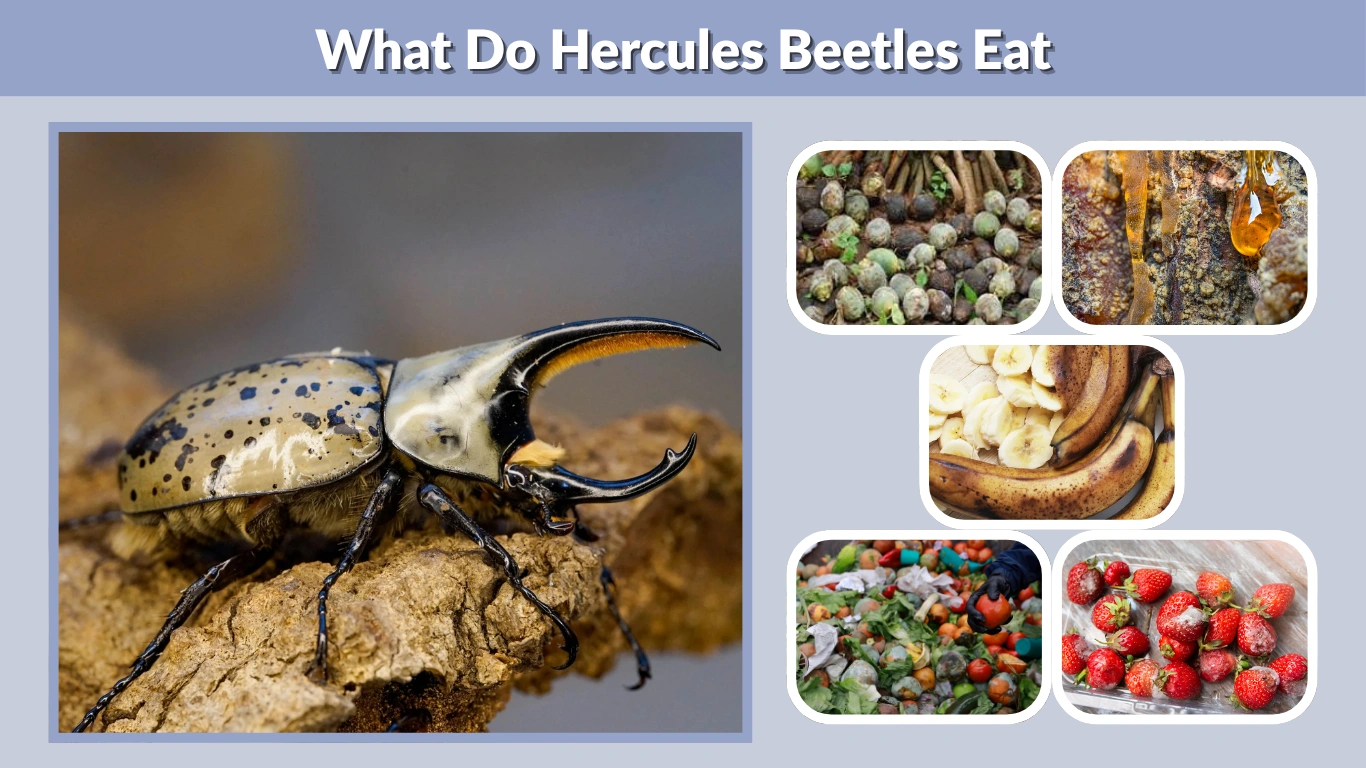
Hercules beetles are among the most fascinating insects on Earth, admired for their gigantic size and horned appearance. Found mainly in tropical rainforests, these beetles are powerful yet gentle plant eaters. Their diet changes dramatically as they grow, shifting from decaying wood in the larval stage to sweet fruits and sap as adults. Understanding what they eat reveals much about their strength, survival, and unique life cycle.
Life Stage and Diet Differences
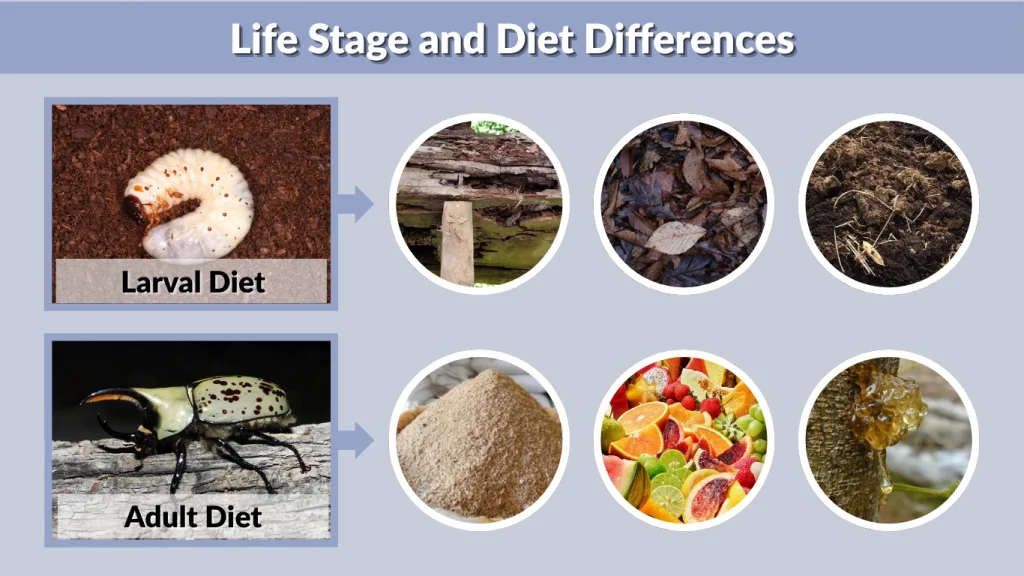
Larval Diet
The Hercules beetle’s life begins underground as a larva, where food is both abundant and hidden. These larvae feed on decaying hardwood, rotting leaves, and organic soil matter. This decomposing material is rich in nutrients like cellulose, which helps larvae grow for months or even years before transforming into pupae. The continuous intake of decayed wood gives them enough strength to later develop their signature horns.
A healthy larval diet is crucial — insufficient or poor-quality substrate can result in smaller adult beetles. In the wild, larvae are often found deep in forest floors, feeding quietly on fallen logs, which keeps the ecosystem clean by recycling dead plant matter.
Adult Diet
Once they emerge as adults, Hercules beetles completely change their diet. They leave behind the underground world and begin feeding on soft, sugary fruits and plant sap. Their mouthparts are designed to consume liquids, not to chew hard substances. Common foods include overripe bananas, mangos, peaches, and apples. These fruits provide the glucose needed for flight, mating, and daily activity.
Adult beetles can detect the scent of fermenting fruit from a long distance. They often gather around fallen fruit trees, especially during humid nights. The sugar from these fruits is their primary source of energy, making them essential for the beetle’s short but active adult life.
Natural Food Sources in the Wild
Forest Ecosystems
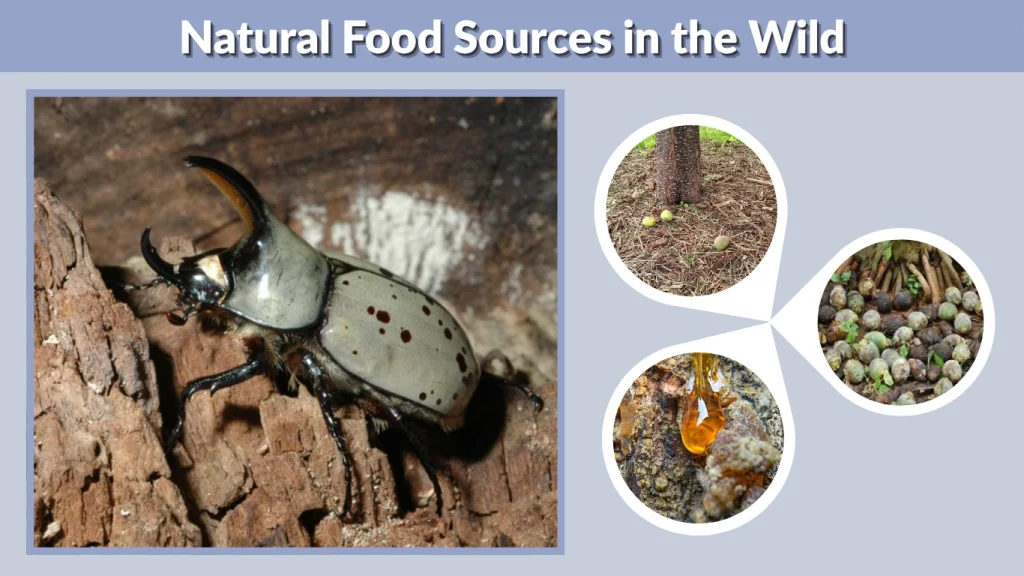
In their tropical habitats — particularly the rainforests of Central and South America — Hercules beetles rely on nature’s leftovers. When fruit drops and begins to decay, it releases a sweet, fermented aroma that draws these beetles in. They use their strong mandibles to pierce the soft fruit skin and suck out the juices.
These forests provide an ideal combination of moisture, warmth, and decay, creating a perfect buffet of natural foods. The diet is almost entirely vegetarian, with no evidence that Hercules beetles consume meat or other insects.
Tree Sap and Fermented Fruit
In addition to fruit, Hercules beetles are known to feed on tree sap, which seeps from bark wounds or damaged trunks. The sap contains sugars and amino acids that are easy to digest. At night, they may compete with other sap-feeding insects such as moths and beetles.
Fermented fruit, however, remains their favorite. It’s easier to digest, more fragrant, and rich in carbohydrates. In many rainforests, Hercules beetles can be seen clustering on overripe guavas or figs, feeding calmly through the night.
Preferred Foods in Captivity
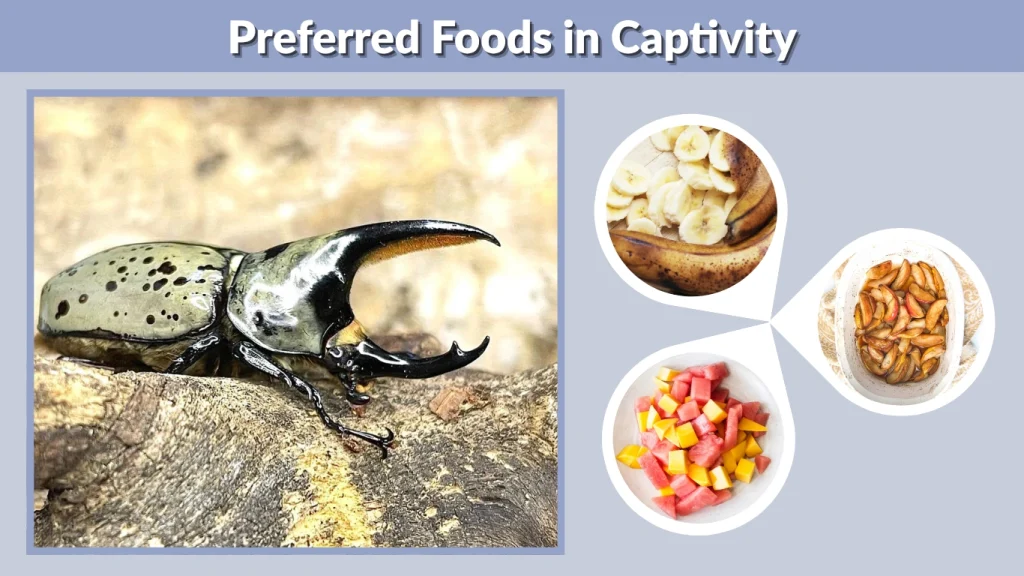
Hercules beetles can live successfully in captivity if their diet closely resembles what they eat in the wild. Breeders and hobbyists provide soft, juicy fruits and special beetle foods designed to replicate natural nutrition.
Recommended Foods
- Overripe bananas (a favorite due to their soft texture and high sugar content)
- Sliced apples, pears, or peaches
- Watermelon and mango chunks
- Commercial beetle jelly, a ready-made, nutrient-dense food used widely in Japan and other countries for rhinoceros beetles
Feeding Tips
Feeding Hercules beetles properly requires attention to freshness and cleanliness. Fruits should be slightly overripe but not moldy. Replace food every 24 hours to prevent bacterial growth and fruit flies. Place the food on flat bark or shallow dishes, making it easy for the beetle to reach.
Maintaining humidity between 70 and 80% is essential — moisture keeps fruits from drying and supports the beetle’s hydration. Avoid citrus fruits like oranges or lemons because their acidic content can irritate the beetle’s digestive system.
Nutritional Value and Feeding Behavior
Sugar and Energy Needs
Sugars from fruit are vital to adult Hercules beetles. They don’t require protein-rich diets because their adult stage focuses on energy rather than growth. Glucose fuels their powerful wing muscles, enabling them to fly and search for mates. Without sufficient sugar, adults quickly lose energy and become sluggish.
Moisture Importance
Because Hercules beetles live in humid environments, they rarely need to drink separately. Instead, they absorb water from fruit and the moist air around them. In captivity, misting the enclosure lightly every day keeps humidity stable and ensures proper hydration.
Feeding is mostly a nighttime activity. During the day, these beetles remain still or hidden under leaves, conserving energy until darkness falls. At night, they become active feeders, locating ripe fruit by scent and consuming it quietly for hours.
How Hercules Beetles Find Food
Sense of Smell
Hercules beetles rely heavily on their antennae, which act like sophisticated chemical sensors. They can detect the odor of fermenting fruit or leaking tree sap from surprisingly long distances. This sense is so refined that even faint scents guide them directly to food sources.
Feeding Timing
Their nocturnal nature gives them an advantage — fewer predators and cooler temperatures. Most feeding happens after dusk, and by dawn, they retreat to safety beneath logs or foliage. This nighttime schedule helps them avoid dehydration and maintain body energy efficiently.
Feeding Eastern Hercules Beetles
The Eastern Hercules beetle (Dynastes tityus), native to the southeastern United States, follows similar eating habits to its tropical relatives. Although the species differs in color and size, its dietary needs remain nearly identical.
Larval Diet
Eastern Hercules beetle larvae consume rotting oak, hickory, and other hardwoods. They live inside decomposing logs where moisture and nutrients are abundant. The slow digestion of cellulose allows steady growth, preparing them for metamorphosis into large, horned adults.
Adult Diet
Adult Eastern Hercules beetles feed on tree sap and overripe fruits such as figs, peaches, and grapes. They often visit sap flows on wounded trees during humid summer nights. These beetles depend on sugary fluids rather than solid foods, absorbing liquid nutrients through sponge-like mouthparts.
Differences Between Wild and Captive Diets
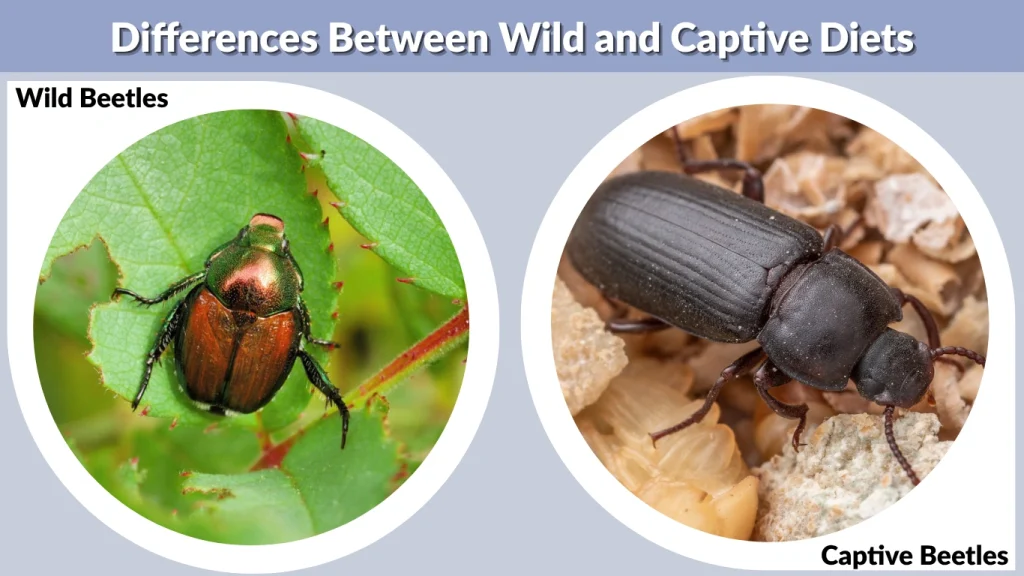
| Aspect | Wild Beetles | Captive Beetles |
| Food Source | Fallen fruit, decaying wood, tree sap | Fresh fruit, beetle jelly, supplements |
| Availability | Seasonal and dependent on habitat | Constantly available and controlled |
| Variety | Based on native vegetation | Chosen by the keeper for balance |
| Risks | Predators, parasites, food scarcity | Mold, bacteria, or humidity imbalance |
Wild Hercules beetles must adapt to seasonal food cycles — sometimes going days without fruit. In captivity, keepers can easily maintain a continuous supply of soft, nutrient-rich foods, helping them live longer and remain more active.
Common Feeding Mistakes to Avoid

Feeding Hercules beetles might seem simple, but certain errors can shorten their lifespan or cause stress.
- Offering unripe fruit: Hard fruit is difficult to pierce and provides little sugar.
- Leaving food too long: Spoiled fruit encourages mites and mold growth.
- Low humidity: Dry conditions lead to dehydration and inactivity.
- Citrus exposure: Acidic fruits irritate the digestive system.
- Overfeeding: Excess food attracts pests and wastes nutrients.
Keeping their environment clean, slightly damp, and well-ventilated prevents these problems and ensures a healthy beetle.
Breeding and Larval Nutrition
Healthy larvae are the foundation of successful breeding. Their food determines both size and horn length in adulthood.
Best Substrates
Breeders usually prepare a substrate mix of decomposed hardwood sawdust, leaf litter, and humus-rich soil. This material mimics natural forest floors and contains the microorganisms larvae depend on for digestion. The substrate should remain moist but not wet.
Protein Supplements
While Hercules beetle larvae mainly digest cellulose, adding small amounts of brewer’s yeast or soybean powder can enhance protein intake. This addition is optional but may produce larger, stronger beetles. However, excessive protein can lead to mold or attract mites, so moderation is key.
Regularly refreshing the substrate ensures the larvae always have access to fresh nutrients throughout their 12- to 18-month growth period.
Seasonal Feeding Patterns
In the wild, the Hercules beetle’s diet shifts with seasonal changes:
- Rainy Season: Fruits are plentiful. Beetles become highly active, often feeding and mating nightly.
- Dry Season: Food sources diminish. They rely mainly on tree sap and seek shade to preserve moisture.
Captive care should replicate these cycles. Slightly reducing feeding during drier months helps imitate natural rhythms and prevents obesity in adults.
Do Hercules Beetles Eat Each Other?
Despite their fearsome horns, Hercules beetles are herbivores, not predators. They never eat one another or other insects. Males may battle for territory or mates, but these fights rarely cause injury. Their horns are tools for flipping opponents, not weapons for feeding. Once the contest ends, both beetles return to their fruit meals peacefully.
Are Hercules Beetles Consumers?
Yes — Hercules beetles are primary consumers in the ecological food chain. By eating rotting plant material, fruits, and sap, they help break down organic matter and return nutrients to the soil. This process supports decomposition and forest regeneration, making them essential contributors to healthy ecosystems.
Their feeding behavior demonstrates how even a single beetle species plays a vital role in recycling nutrients and sustaining biodiversity in tropical and subtropical forests.
FAQs
What do Hercules beetle larvae eat?
Larvae feed on decaying hardwood, fallen leaves, and humus-rich soil. This fiber-packed diet fuels their long larval stage and ensures proper horn and body development before pupation.
Do adult Hercules beetles eat meat or insects?
No. Adults consume only fruit juices and tree sap. Their mouthparts are built for sipping, not biting. They have no interest in hunting or eating other animals.
Can Hercules beetles live without fruit for a few days?
Yes, adult beetles can survive for several days without food, especially if humidity is high. However, continuous access to soft fruits keeps them energetic and prolongs their lifespan.
What’s the best diet for pet Hercules beetles?
Offer overripe bananas, apples, mangoes, and beetle jelly. Replace food daily and maintain enclosure humidity around 70–80%. Avoid citrus or chemically treated fruits.
Do Hercules beetles need water?
They rarely drink separately. Instead, they absorb moisture directly from fruits and the humid air in their environment. Regular misting provides all the hydration they need.
