

Skipper butterflies, belonging to the Hesperiidae family, are well-known for their rapid, darting flight and compact body shape. With over 3,500 species worldwide, these butterflies thrive in grasslands, meadows, gardens, and open woodlands. While they may look similar to moths or small butterflies, skippers play an essential role in ecosystems, especially through pollination. To better understand them, it’s important to look closely at their diet—what adult skippers and their caterpillars eat, how it changes seasonally, and why it matters for their survival.
Understanding Skipper Butterflies’ Feeding Habits
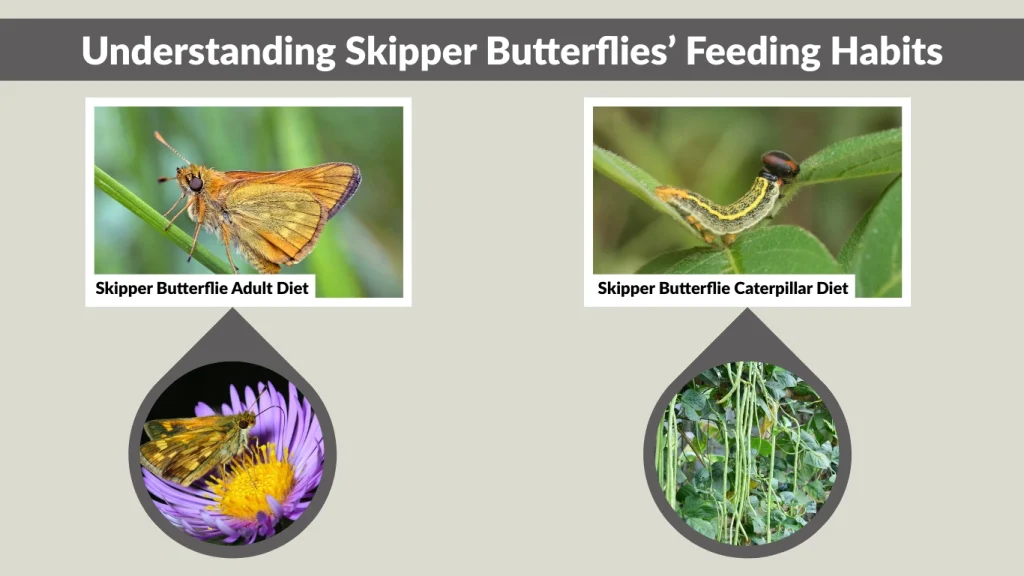
Adult vs. Caterpillar Diet
One fascinating thing about skipper butterflies is that adults and caterpillars eat very different foods. Adult skippers mainly feed on sugary liquids like nectar, tree sap, and rotting fruit, while caterpillars consume solid plant material, primarily grasses and legumes. This dietary division allows both life stages to thrive without competing for the same resources.
Role in Pollination
By feeding on nectar from flowers, skipper butterflies help transfer pollen from one bloom to another. While they are not as efficient as bees, their fast, frequent visits to flowers make them valuable contributors to pollination in grassland ecosystems. In fact, their feeding habits help maintain biodiversity by supporting wildflowers and crops alike.
What Adult Skipper Butterflies Eat
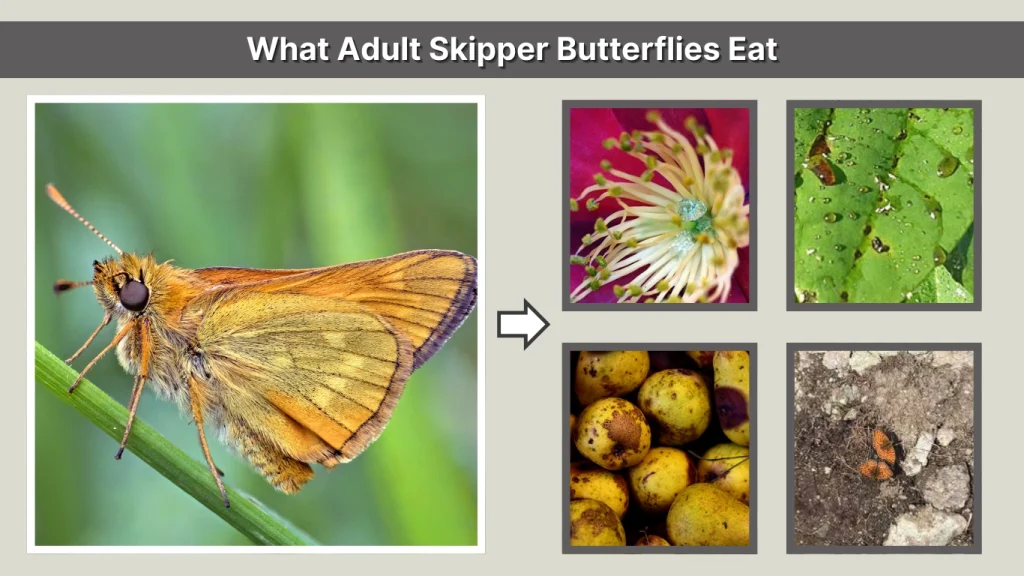
Adult skipper butterflies rely mostly on liquids that are rich in sugar and minerals. These foods provide quick energy, which they need for their constant fluttering flight.
Nectar from Wildflowers
Nectar is the primary food source for adult skipper butterflies. They prefer flowers with abundant nectar such as milkweed, clover, thistle, and aster. Skippers often visit small tubular flowers that match their short but strong proboscis, making them well-suited for feeding from plants that other butterflies might overlook. Nectar not only fuels their active lifestyle but also supports reproduction, as energy is essential for courtship and egg-laying.
Tree Sap and Honeydew
Beyond flowers, skippers sometimes drink tree sap that seeps from bark, especially in late summer and fall when nectar becomes less available. They also consume honeydew, a sugary liquid excreted by aphids and other insects. While less common than nectar feeding, these food sources provide vital sugar during times when flowers are scarce.
Rotting Fruit
Fermenting or rotting fruit, such as fallen apples, peaches, and berries, are also part of their diet. These fruits supply sugars and sometimes trace amounts of alcohol from fermentation, which give quick bursts of energy. Rotting fruit is especially important in autumn, as many flowers begin to die back and other food sources dwindle.
Moisture and Minerals (Mud-puddling)
Like many butterfly species, skipper butterflies engage in mud-puddling. This behavior involves sipping water from damp soil, puddles, animal droppings, or even human sweat. The liquid provides salts and minerals that nectar cannot supply. Males, in particular, rely on these nutrients to improve reproductive success, as minerals are transferred to females during mating.
What Skipper Caterpillars Eat
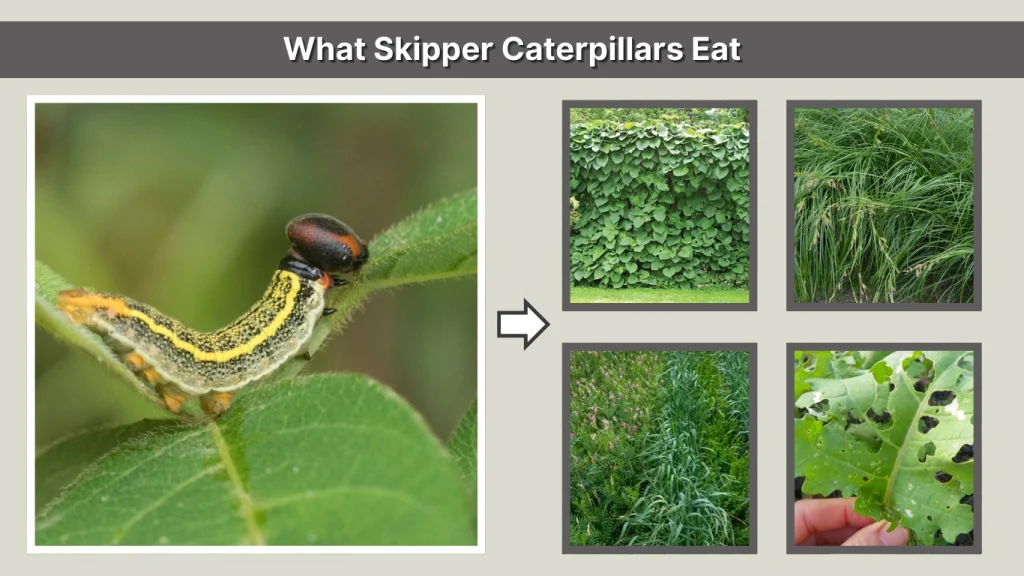
While adults sip liquids, skipper caterpillars (larvae) feed exclusively on plants. Their diet is more solid and protein-rich to support rapid growth during this stage of life.
Host Plants for Larvae
Each skipper species has specific host plants that the larvae depend on. These are typically grasses, sedges, or legumes. The female butterflies carefully lay their eggs on or near these host plants so that caterpillars have immediate access to food upon hatching.
Grasses and Sedges
Most skipper caterpillars feed on grasses, including species like Bermuda grass, bluestem, and switchgrass. Sedges are also common hosts. Since skippers thrive in grasslands and meadows, these plants are naturally abundant and provide continuous food throughout the growing season.
Legumes and Herbaceous Plants
While grasses are the primary food, some skipper caterpillars also feed on legumes such as clover, peas, and beans. These plants are nutrient-dense and supply essential proteins that help larvae grow quickly. In gardens and agricultural areas, skipper caterpillars may even be found on cultivated legumes, which sometimes makes them minor pests.
Leaf Shelter Feeding
Skipper caterpillars have a unique feeding behavior: they often build silk shelters by folding or tying leaves together. These shelters provide protection from predators and harsh weather while allowing the caterpillars to feed safely. Inside, they chew leaf tissue and rest between meals. This behavior is one of the features that sets skippers apart from other butterfly families.
Seasonal and Regional Feeding Variations
Summer Abundance
During the summer months, nectar-rich wildflowers bloom in abundance. Adults thrive on these resources, while caterpillars enjoy plentiful green leaves. This is the season of rapid growth and reproduction.
Autumn Adaptations
As autumn approaches and flowers fade, adult skipper butterflies turn to alternative food sources like tree sap, rotting fruit, and honeydew. Caterpillars, on the other hand, may prepare for overwintering by consuming larger amounts of host plant leaves before entering a dormant stage.
Habitat Influence
The diet of skipper butterflies also depends on their habitat. In grasslands, they feed heavily on grasses and clovers, while in woodlands they may rely more on tree sap and shaded plants. In agricultural areas, they sometimes benefit from access to crops like alfalfa and peas
How Diet Supports Their Life Cycle
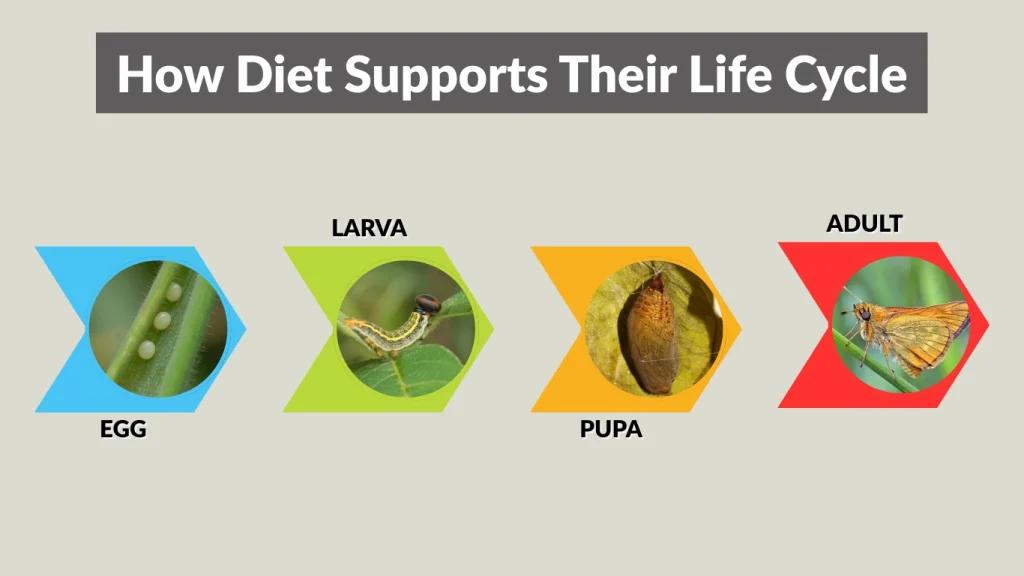
Energy for Flight
Adult skippers are constantly on the move, darting quickly from flower to flower. Nectar’s high sugar content provides the rapid energy needed for their unique flight style.
Nutrition for Reproduction
Mating and egg-laying are energy-intensive activities. The sugars, minerals, and amino acids from their diet directly support reproduction, ensuring strong offspring.
Growth of Caterpillars
For larvae, host plants are the foundation of survival. The proteins and nutrients in grasses and legumes fuel rapid growth and prepare them for metamorphosis into adult butterflies.
Ecological Role of Skipper Butterflies’ Diet
Pollinators in Grassland Ecosystems
By visiting a wide variety of wildflowers, skipper butterflies play a role in maintaining biodiversity. They pollinate native plants as well as crops, contributing to healthy ecosystems.
Food Source for Other Animals
Because of their plant-based diet, skippers themselves become important prey for birds, spiders, and small mammals. In this way, their feeding habits place them firmly within the food chain.
Human Influence on Their Diet
Impact of Agriculture
The widespread use of pesticides and herbicides can reduce the availability of both nectar plants and caterpillar host plants. In some cases, crop monocultures also limit the diversity of food sources for skippers.
Gardens and Conservation
Gardeners and conservationists can support skipper butterflies by planting native grasses, legumes, and nectar-rich wildflowers. Reducing pesticide use and maintaining natural meadows also ensures they have safe and plentiful food sources.
FAQs
Do skipper butterflies only eat nectar?
No, adult skipper butterflies do not rely only on nectar. While nectar is their main food source, they also consume tree sap, honeydew, rotting fruit, and even moisture with minerals from mud and puddles. These sources provide nutrients that nectar alone cannot offer.
What plants attract skipper butterflies?
Skipper butterflies are especially drawn to clover, milkweed, thistle, aster, and other wildflowers. These plants produce abundant nectar that matches the structure of the skippers’ proboscis. Planting these flowers in gardens is an effective way to attract them.
What do skipper caterpillars eat the most?
Skipper caterpillars mainly eat grasses and sedges, which make up the majority of their diet. Some species also consume legumes like clover and peas. These plants provide the protein and nutrients necessary for the caterpillars’ rapid growth.
Do skipper butterflies drink water?
Yes, skipper butterflies drink water, but they usually prefer “mud-puddling.” This involves sipping from moist soil, puddles, or even animal droppings to gain not only hydration but also essential minerals and salts.
