
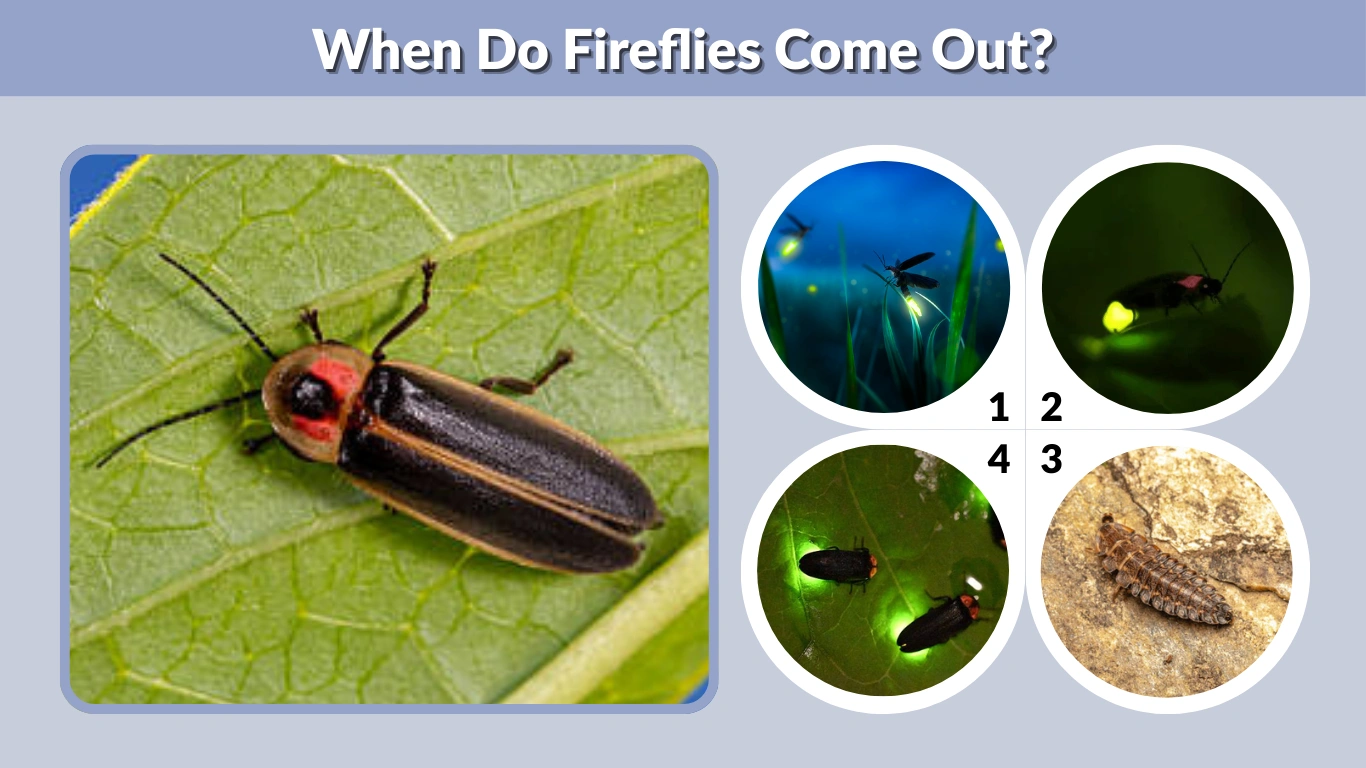
Fireflies, often called lightning bugs, are one of the most anticipated signs of warm weather. Each year, people start asking when fireflies come out and why they seem to appear almost overnight. Their timing depends on temperature, moisture, location, and even the time of sunset. In some states they arrive as early as May, while in others they don’t peak until midsummer. Understanding when fireflies come out—both seasonally and at night—helps explain why they’re common in some places and nearly absent in others.
When Do Fireflies Come Out Each Year
Fireflies typically begin appearing in late spring and remain active through mid to late summer. Most species spend the majority of their lives underground as larvae, emerging as adults only when conditions are right. Warm soil temperatures, consistent nighttime warmth, and adequate moisture are the key triggers.
In southern states, fireflies often start coming out as early as late April or May. In northern states and cooler climates, emergence is usually delayed until June or even early July. A cool or unusually dry spring can push the season back, while a warm, wet spring often leads to an earlier and stronger firefly season.
Fireflies do not truly hibernate, but they do overwinter in the soil as larvae. When temperatures rise consistently above about 50–55°F (10–13°C), development speeds up and adults begin to emerge. This is why firefly season varies from year to year, even within the same location.
When Do Fireflies Come Out at Night
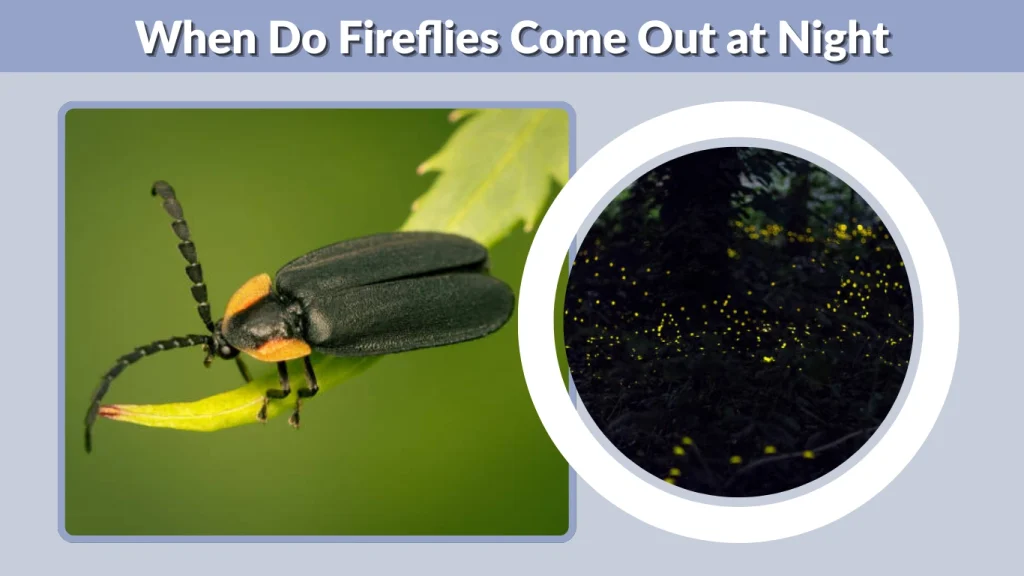
Fireflies are nocturnal insects, and their activity is closely tied to light levels. Most species begin flashing shortly after sunset, usually 20 to 30 minutes after dusk. This timing allows enough darkness for their light signals to be visible to potential mates.
Peak activity typically occurs during early evening, especially on warm, humid nights. As the night goes on and temperatures drop, flashing activity gradually slows. By late night, many species stop flashing altogether.
Artificial lighting can significantly affect when and where fireflies appear. Bright porch lights, streetlights, and illuminated lawns can reduce flashing or prevent fireflies from appearing at all. This is one reason fireflies are often more visible in rural areas, parks, and wooded edges than in brightly lit neighborhoods.
Firefly Season by Month
May: Early Firefly Season
May marks the beginning of firefly season in many southern and central regions of the United States. States like Texas, Georgia, Florida, Alabama, and parts of Tennessee often see the first flashes during this month. These are usually early-season species that emerge once nighttime temperatures stay consistently warm.
Sightings in May can be sporadic at first, especially if cool fronts move through. However, warm evenings following spring rain often produce noticeable increases in activity.
June: Peak Firefly Activity
June is the peak month for fireflies across much of the country. By this time, most regions have warm nights and sufficient humidity, creating ideal conditions. Firefly populations are usually at their highest, and flashing displays are more frequent and intense.
In the Midwest, Northeast, and Mid-Atlantic states, June is often the best month to see fireflies. This is also when many people notice them for the first time each year, leading to the common impression that fireflies “suddenly” appear.
July: Late and Northern Season
July marks peak firefly season in northern states such as Michigan, Wisconsin, Minnesota, Maine, and parts of Canada. While firefly activity may decline in the southern U.S. due to heat and dryness, northern regions are just reaching their prime.
Mountainous and forested areas often continue to see strong activity in July, as cooler temperatures and higher humidity extend the season.
August: End of Firefly Season
By August, firefly activity declines sharply in most regions. Adult fireflies have short lifespans, and mating season is largely over. Scattered sightings may still occur in cooler climates or shaded habitats, but large displays become rare.
When Do Fireflies Come Out by Region
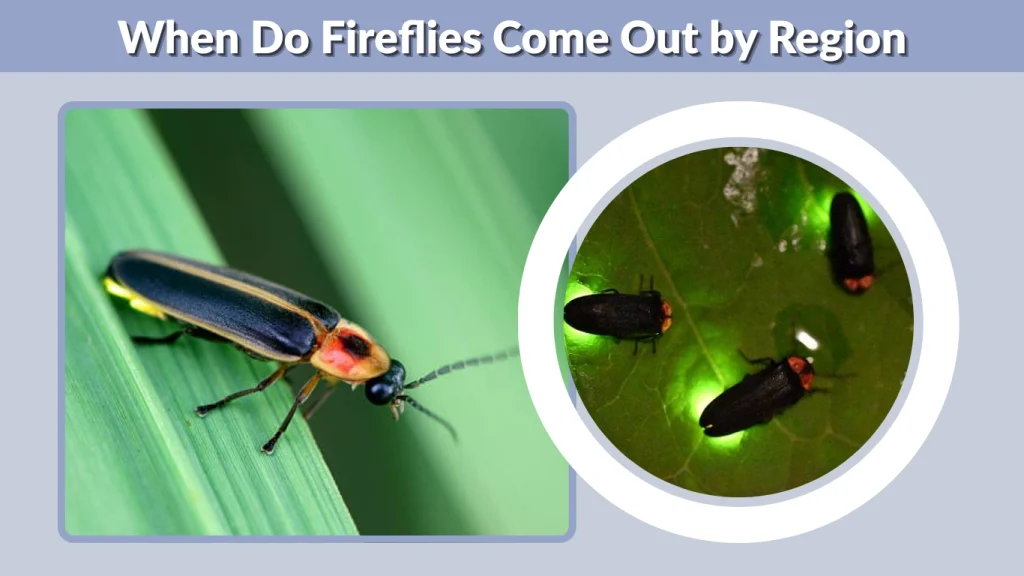
Southern States
In the southern United States, fireflies tend to emerge earlier and have a longer season. States like Texas, Florida, Georgia, Alabama, Louisiana, and the Carolinas often see fireflies from May through July. East Tennessee and the Smoky Mountains are especially well known for consistent firefly activity due to favorable habitat and moisture.
Midwest States
Fireflies are especially common throughout the Midwest, where warm summers and grassy landscapes provide ideal habitat. In states like Illinois, Indiana, Ohio, Michigan, Missouri, Wisconsin, Iowa, Kansas, and Minnesota, fireflies usually begin appearing in late May or early June.
Peak activity in the Midwest generally occurs in June and early July. Areas with less urban development—such as farmland edges, parks, and river corridors—tend to see larger and longer-lasting displays. Cities like Chicago, St. Louis, and Kansas City still have fireflies, but sightings are often reduced due to artificial lighting and habitat loss.
Northeast & Mid-Atlantic
In the Northeast and Mid-Atlantic, fireflies typically emerge later than in the South. States including Pennsylvania, New York, New Jersey, Maryland, Virginia, Connecticut, Massachusetts, Maine, New Hampshire, and Vermont usually see fireflies starting in June, with peak activity in late June and early July.
New England often has a shorter but intense firefly season. Cooler springs delay emergence, but once conditions are right, fireflies can be abundant in wooded areas, meadows, and suburban yards with minimal light pollution. Coastal regions may see fewer fireflies due to wind and cooler nighttime temperatures.
Canada & International
In southern Canada, particularly Ontario and Nova Scotia, fireflies usually appear from late June through July. Cooler climates mean a shorter season, but sightings can still be impressive in rural and forested areas.
In Australia, fireflies follow a different seasonal pattern due to the opposite climate cycle. They are typically seen during warmer, wetter months, often between October and March, depending on the region.
When Do Fireflies Come Out in Popular Locations
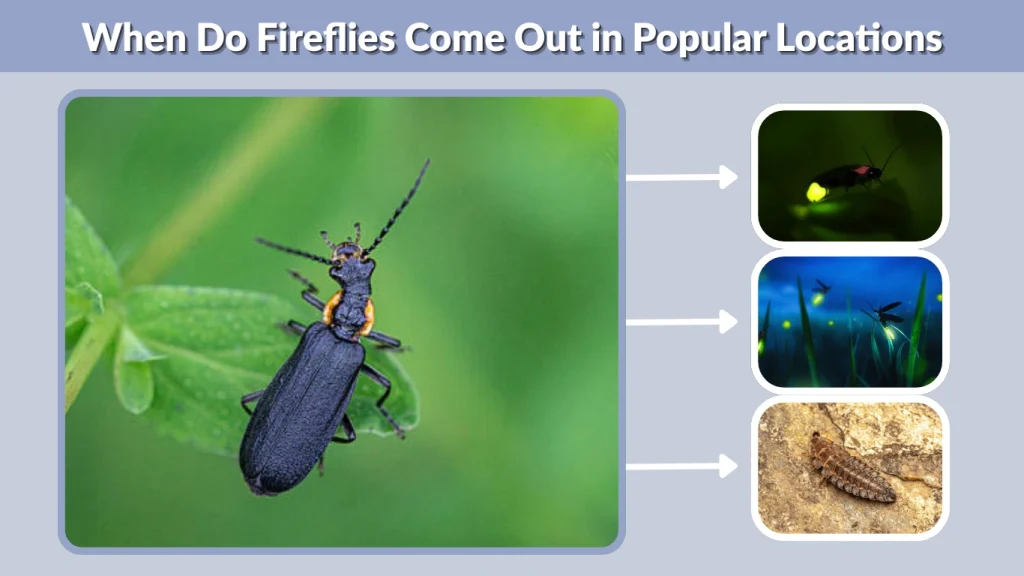
Urban vs Rural Areas
Fireflies are far more common in rural and semi-rural environments than in dense cities. Rural areas provide:
- Darker nighttime conditions
- Untreated lawns and soil
- Taller grasses and natural vegetation
Urban areas often experience reduced firefly populations due to light pollution, pesticide use, and habitat fragmentation. Even within cities, neighborhoods with fewer streetlights and more green space tend to see fireflies earlier and for longer periods.
Mountains and Forests
Mountainous and forested regions often have delayed but extended firefly seasons. Higher elevations stay cooler longer, which can push emergence into late June or July. The Great Smoky Mountains are one of the most famous firefly locations, with synchronized fireflies appearing for a short window each year, usually in early June.
Special Firefly Species Timing
When Do Blue Ghost Fireflies Come Out
Blue ghost fireflies typically appear from late May through early June. They are most commonly found in the Appalachian region, including parts of North Carolina, Tennessee, and South Carolina.
Unlike most fireflies, blue ghosts emit a steady blue-white glow rather than flashing. Their activity window is short, and they are usually visible only for a few weeks each year under very specific conditions.
When Do Sunset Fireflies Come Out
Sunset fireflies are active earlier in the evening than most species. They often begin glowing around dusk, before full darkness sets in. Their activity window is brief, which is why many people miss them entirely. These fireflies are most noticeable in open fields and forest edges during early summer.
Weather and Firefly Activity
Do Fireflies Come Out When It Rains?
Fireflies often come out after light rain, especially when it increases humidity. Damp soil benefits larvae and can trigger increased adult activity. However, heavy rain or storms usually suppress flashing until conditions improve.
Do Fireflies Come Out When It’s Cold?
Fireflies are sensitive to temperature. Cool evenings below about 50–55°F significantly reduce activity. Cold snaps in late spring can delay emergence altogether, while sudden summer cool fronts may temporarily reduce nighttime flashing.
Ideal Firefly Conditions
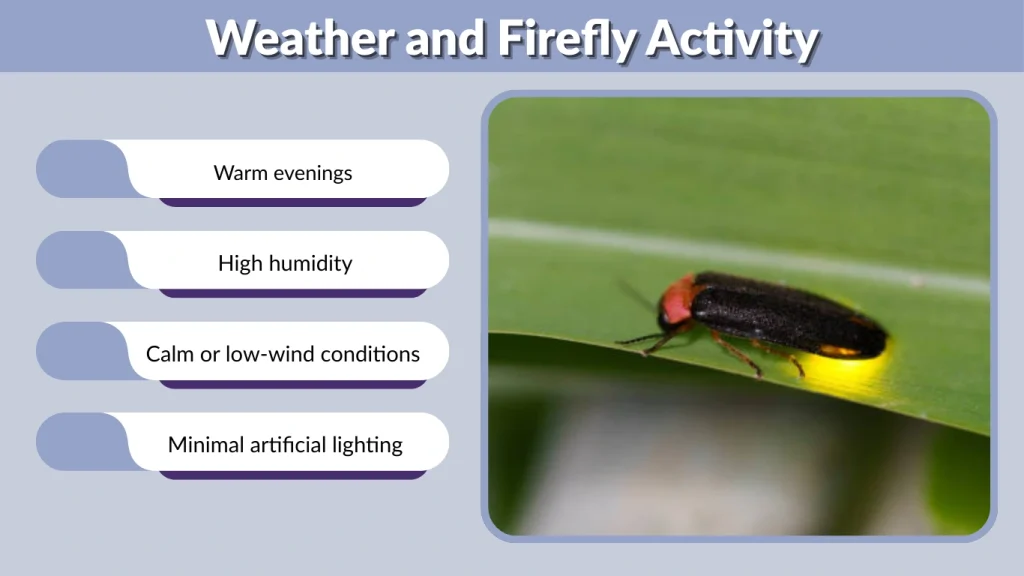
The best conditions for seeing fireflies include:
- Warm evenings
- High humidity
- Calm or low-wind conditions
- Minimal artificial lighting
Firefly Lifecycle and Behavior
Fireflies spend most of their lives as larvae underground, feeding on snails and other small invertebrates. The adult stage is short, often lasting only a few weeks. Flashing behavior is primarily used for mating, with each species having its own distinct pattern.
Fireflies do not emerge from hibernation in the traditional sense. Instead, larvae overwinter in soil or leaf litter and continue developing when temperatures rise in spring.
Why Fireflies Appear Earlier or Later Each Year
Year-to-year variation in firefly timing is normal. Warmer springs often lead to earlier emergence, while cooler or drier conditions delay activity. Urban heat islands can also cause cities to see fireflies earlier than nearby rural areas, even though overall populations may be lower.
FAQs
When do fireflies usually come out?
Fireflies usually come out in late spring and early summer, beginning as early as May in warm regions and peaking in June or July in cooler climates.
What time do fireflies come out at night?
Most fireflies begin appearing 20–30 minutes after sunset, with peak activity during early evening on warm, humid nights.
What is the best month to see fireflies?
June is the best month to see fireflies across most of the United States, though northern regions often peak in July.
Do fireflies come out after it rains?
Yes, fireflies often become more active after light rain due to increased humidity, but heavy storms can temporarily reduce activity.
Why don’t I see fireflies where I live?
Habitat loss, light pollution, pesticide use, and dry conditions can all reduce firefly populations, especially in urban and suburban areas.
