
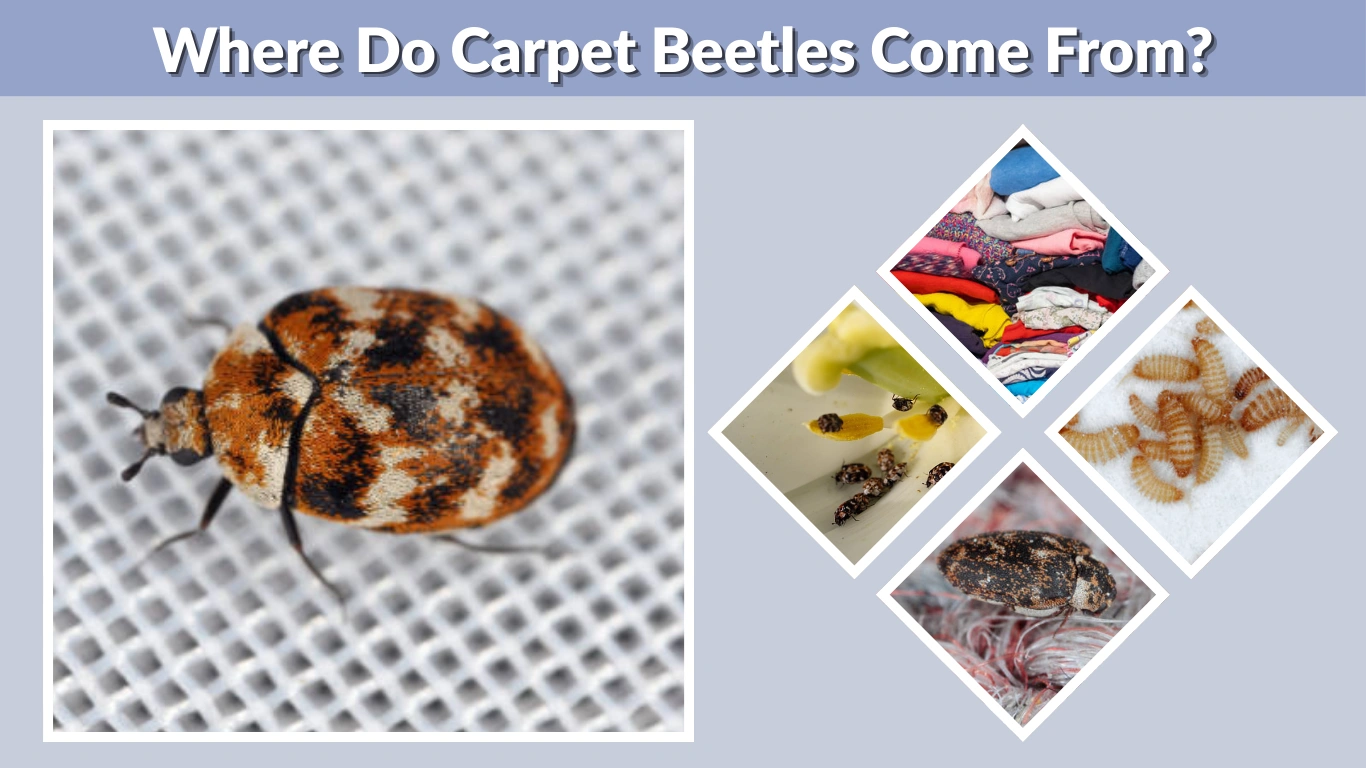
Carpet beetles are small insects, but they often create big confusion when they suddenly appear inside homes. Many people first notice tiny crawling larvae, damaged fabrics, or small beetles near windows and immediately ask, “Where do carpet beetles come from?” Understanding their true source is the key to stopping repeated infestations. Carpet beetles don’t randomly appear. They usually arrive from outdoor environments or hidden indoor breeding areas. Knowing where they originate helps you locate infestations faster and prevent long-term damage to carpets, clothes, and furniture.
What Are Carpet Beetles and Why They Invade Homes
Carpet beetles are small oval insects from the Dermestidae family. While adult beetles are mostly harmless and often feed on pollen outdoors, their larvae are destructive indoor pests. Carpet beetle larvae feed on natural fibers such as wool, silk, cotton, leather, fur, feathers, and even pet hair and dust.
Homes provide the perfect conditions for carpet beetles. They offer warmth, darkness, and an endless supply of hidden food sources. Closets, carpets, storage boxes, air vents, and upholstered furniture allow larvae to grow undisturbed. Because of this hidden lifestyle, infestations often go unnoticed for months. By the time people see larvae or adult beetles, a breeding population is usually already established somewhere inside the house.
Understanding the Carpet Beetle Life Cycle
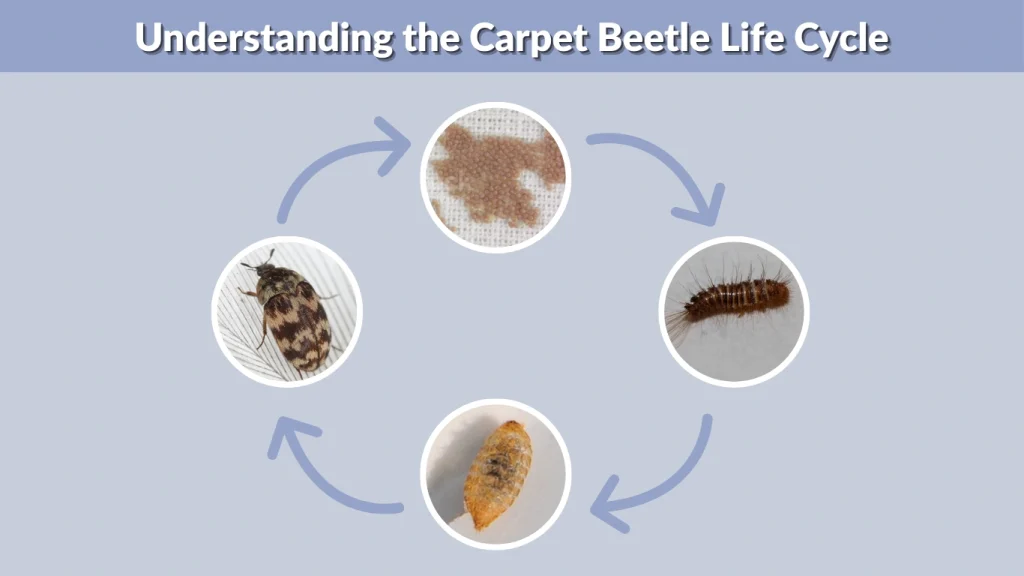
Carpet beetles pass through four main life stages: egg, larva, pupa, and adult. Each stage plays a role in explaining where they come from and why they are difficult to control.
Adult carpet beetles usually live outdoors, feeding on flower pollen and plant nectar. After entering a home, they lay tiny eggs in dark, protected areas near food sources. These eggs hatch into larvae, which cause nearly all household damage. Larvae feed for several months, shedding their skins as they grow. Once mature, they pupate and later emerge as adult beetles, restarting the cycle.
Because eggs and larvae remain hidden, people often believe carpet beetles “suddenly appear.” In reality, the infestation may have started long before visible signs appeared.
Adult vs Larva: Who Actually Comes Inside?
In most cases, adult carpet beetles are the ones that enter homes from outdoors. They are attracted to light, flowers, and warmth. After entering, they lay eggs indoors. The larvae hatch inside the house, which is why people usually notice larvae first rather than adult beetles.
Where Do Carpet Beetles Come From Naturally
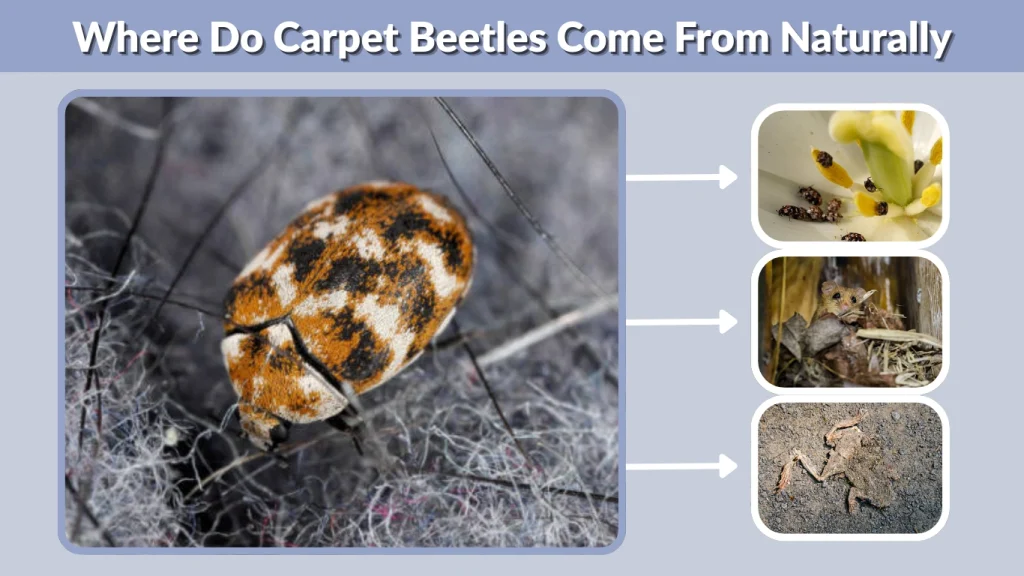
Carpet beetles are not originally indoor insects. They exist widely in outdoor environments and only move inside when conditions allow.
- Gardens, flowering plants, and tree blossoms
- Bird nests and rodent nests
- Dead insects and animal remains
- Stored natural materials outdoors
- Outdoor sheds, garages, and warehouses
Adult carpet beetles live naturally in places where pollen and organic debris are abundant. When windows or doors are open, they easily fly indoors. Once inside, they begin searching for dark, protected areas to lay eggs. This is often how a home infestation truly begins.
How Carpet Beetles Get Into Houses
Although carpet beetles exist outdoors, they rarely stay outside once easy entry points are available. Homes unknowingly provide many access routes.
- Open windows and doors
- Window screens with small gaps
- Cut flowers and decorative plants
- Second-hand furniture, rugs, and clothing
- Grocery packaging and pet food bags
- Storage boxes, suitcases, and moving items
- Cracks around doors, vents, and foundations
In many cases, carpet beetles are not noticed at the time of entry. A few adult beetles can enter, lay dozens of eggs, and disappear before homeowners ever realize they were present.
Where Do Carpet Beetles Come From in the House
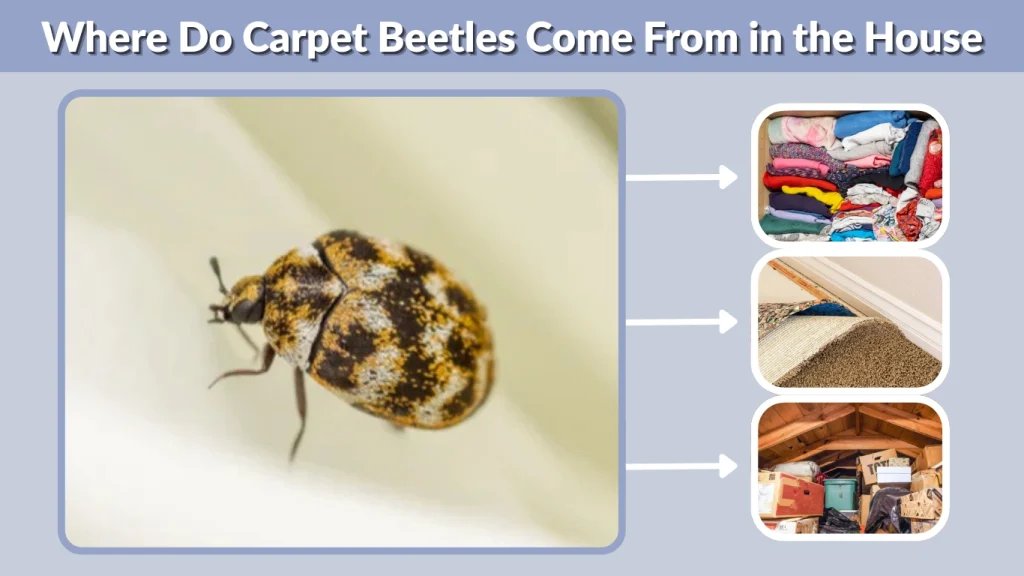
Once carpet beetles are indoors, infestations usually develop from a single hidden breeding location. This “source area” is where eggs were laid and larvae first began feeding. Over time, larvae spread outward in search of food.
Most Common Indoor Source Areas
- Closets and wardrobes with stored clothing
- Under carpets, rugs, and baseboards
- Inside air vents and wall voids
- Attics, basements, and storage rooms
- Upholstered furniture and mattresses
These areas are rarely disturbed, which allows larvae to grow without detection. The longer these spaces remain uncleaned, the stronger the infestation becomes.
Where Do Carpet Beetle Larvae Come From
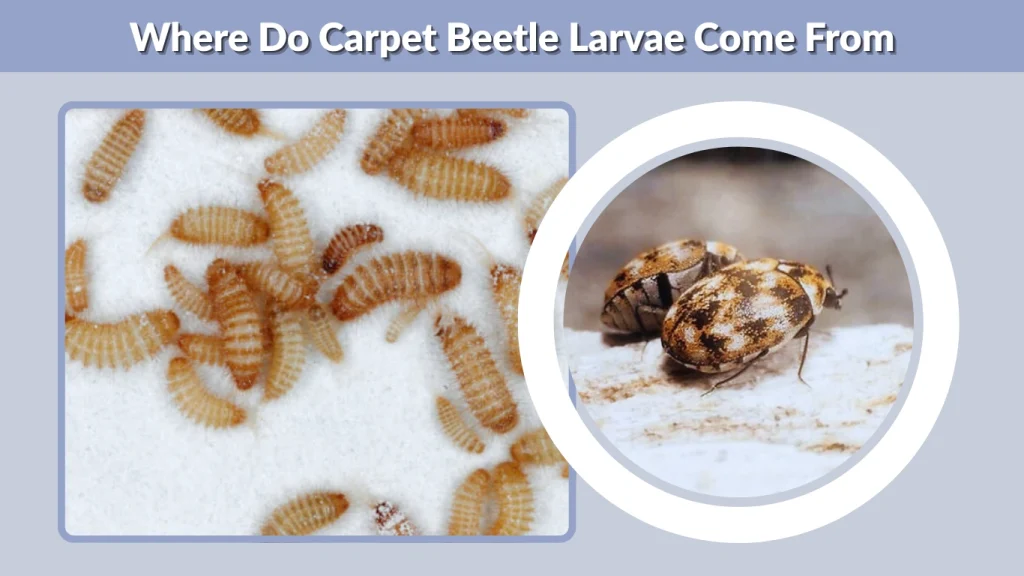
Carpet beetle larvae do not come from outside directly. They hatch from eggs laid by adult beetles inside the home.
- Eggs are laid in dark, hidden locations
- Larvae hatch near natural fiber food sources
- They feed on fabrics, lint, pet hair, and feathers
- Larvae slowly spread through nearby rooms
- Shed skins collect where larvae are active
Larvae are often discovered in closets, under beds, near vents, or along carpet edges. Seeing larvae usually means there is already a nearby breeding source that needs to be located.
Where Do Black Carpet Beetles Come From
Black carpet beetles are one of the most destructive species found in homes. They originally come from outdoor and commercial environments where animal-based materials are present. Warehouses, storage facilities, bird nests, and rodent nesting sites are common natural sources. Outdoors, they feed on dead insects, feathers, and animal remains.
Black carpet beetles often enter homes through infested items rather than direct flight. Old furniture, stored clothing, rugs, and even packaged food products can carry eggs or larvae inside. Once indoors, they settle into dark, undisturbed locations such as basements, closets, and wall voids. These hidden zones allow larvae to feed for months without being noticed, which is why black carpet beetle infestations are often advanced when finally discovered.
Why Black Carpet Beetles Thrive Indoors
Black carpet beetle larvae prefer darkness, warmth, and long-term access to natural fibers. They are strong crawlers and can travel through wall gaps, under flooring, and inside vents. Homes with extensive fabric storage, poor ventilation, and low cleaning frequency offer ideal conditions for this species to multiply rapidly.
Where Do Varied Carpet Beetles Come From

Varied carpet beetles are strongly connected to outdoor plant environments. Adults feed on pollen and nectar and are frequently found on flowers, bushes, and garden plants. Because they are attracted to light, they often enter homes through windows, doors, and balcony openings.
Once inside, varied carpet beetles usually move toward darker interior spaces to lay eggs. Closets, upholstered furniture, and stored fabrics are common egg-laying zones. The larvae then hatch indoors and begin feeding on natural fibers, pet hair, and lint. Many indoor infestations start after spring and summer months when adult varied carpet beetles are most active outdoors.
Why Homes Attract Carpet Beetles
Carpet beetles do not invade homes without reason. Modern houses unintentionally provide everything they need to survive and reproduce.
Natural fiber materials such as wool, silk, fur, feathers, cotton, and leather act as long-term food supplies. Pet hair, human skin flakes, and dust buildup further support larval feeding. Warm indoor temperatures allow carpet beetles to remain active throughout the year. Dark, undisturbed areas such as closets, storage bins, air ducts, and basements offer safe breeding spaces.
Long-term storage habits also increase risk. Clothing that remains unworn, stored blankets, old boxes, and rarely cleaned furniture create stable environments where carpet beetles can live undetected for months.
Signs That Reveal Where Carpet Beetles Are Coming From
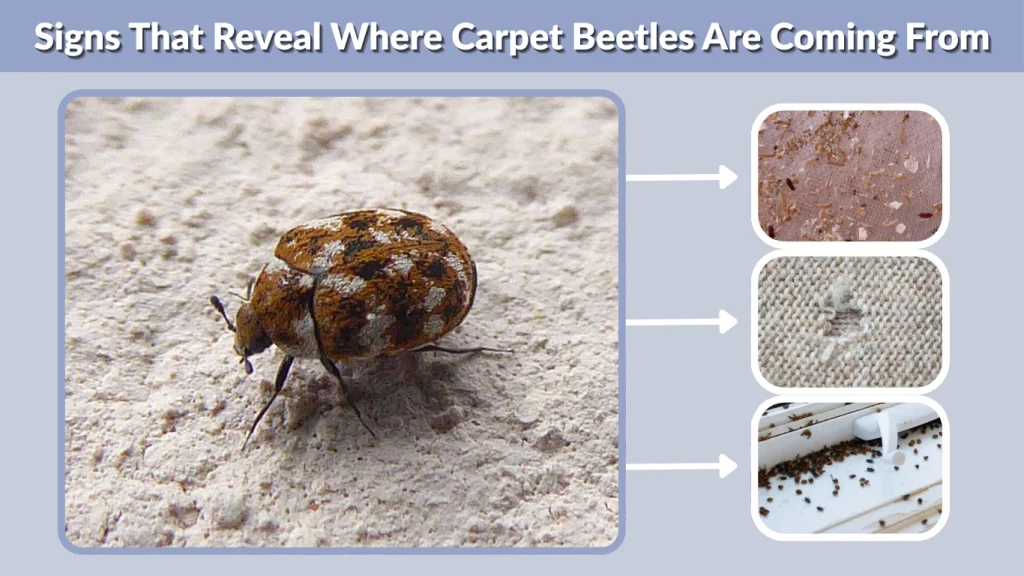
Finding the true source of an infestation requires recognizing certain clues. Carpet beetles usually leave behind visible evidence near their main feeding and breeding sites.
- Shed larval skins accumulating in corners
- Small holes in wool, carpets, and clothing
- Adult beetles appearing near windows
- Damage limited to specific rooms or closets
- Repeated larvae sightings in the same area
Areas with the heaviest shedding, damage, and repeated sightings usually indicate where the infestation began.
How to Find the Exact Source of an Infestation
Locating the source is the most important step in stopping carpet beetles permanently. Random spraying rarely works if the breeding site remains active.
Step-by-Step Source-Tracking Method
Begin by examining any damaged fabrics, rugs, or clothing. Follow nearby edges, seams, and folds. Next, inspect dark, hidden areas such as closet corners, under beds, inside drawers, behind furniture, and around baseboards. Remove vent covers and check for lint and shed skins. Finally, examine storage boxes, attic materials, and unused fabrics. The area with the highest concentration of larvae, skins, or damage is usually the original source.
How to Stop Carpet Beetles From Coming Back
Stopping future infestations requires removing both indoor breeding zones and outdoor entry routes.
Long-Term Prevention Measures
- Seal window gaps, door frames, and vents
- Vacuum carpets, furniture, and baseboards regularly
- Wash stored fabrics in hot water before storage
- Store clothes and blankets in airtight containers
- Remove bird and rodent nests near the house
- Reduce lint, pet hair, and dust buildup
- Inspect second-hand items before bringing them indoors
Consistent cleaning and sealed storage greatly reduce the chance of new infestations.
FAQs
Where do carpet beetles usually come from?
Carpet beetles usually come from outdoor environments such as gardens, flowers, bird nests, and stored organic materials. Adult beetles enter homes through open windows, doors, and small structural gaps. After entering, they lay eggs indoors, which later hatch into destructive larvae.
Where do carpet beetle larvae come from in the house?
Carpet beetle larvae come from eggs laid by adult beetles inside the home. Eggs are placed in dark, protected areas near natural fibers such as carpets, clothing, furniture, and pet hair. Once hatched, larvae remain hidden and feed for months before being noticed.
Where do black carpet beetles come from?
Black carpet beetles originate from environments containing animal-based materials, such as warehouses, storage areas, bird nests, and rodent habitats. They often enter homes through infested furniture, stored fabrics, food packaging, and structural openings, then establish hidden indoor breeding zones.
Where do varied carpet beetles come from?
Varied carpet beetles mainly come from outdoor flowering plants where adults feed on pollen. They commonly enter homes through windows and doors during warmer months. After entering, they lay eggs indoors, and the larvae hatch inside closets, furniture, and fabric storage areas.
Why do carpet beetles suddenly appear indoors?
Carpet beetles often seem to appear suddenly because larvae remain hidden for long periods. By the time they are visible, the infestation may already be well-established. Seasonal adult entry, long-term fabric storage, and undisturbed indoor spaces contribute to this sudden discovery.
