
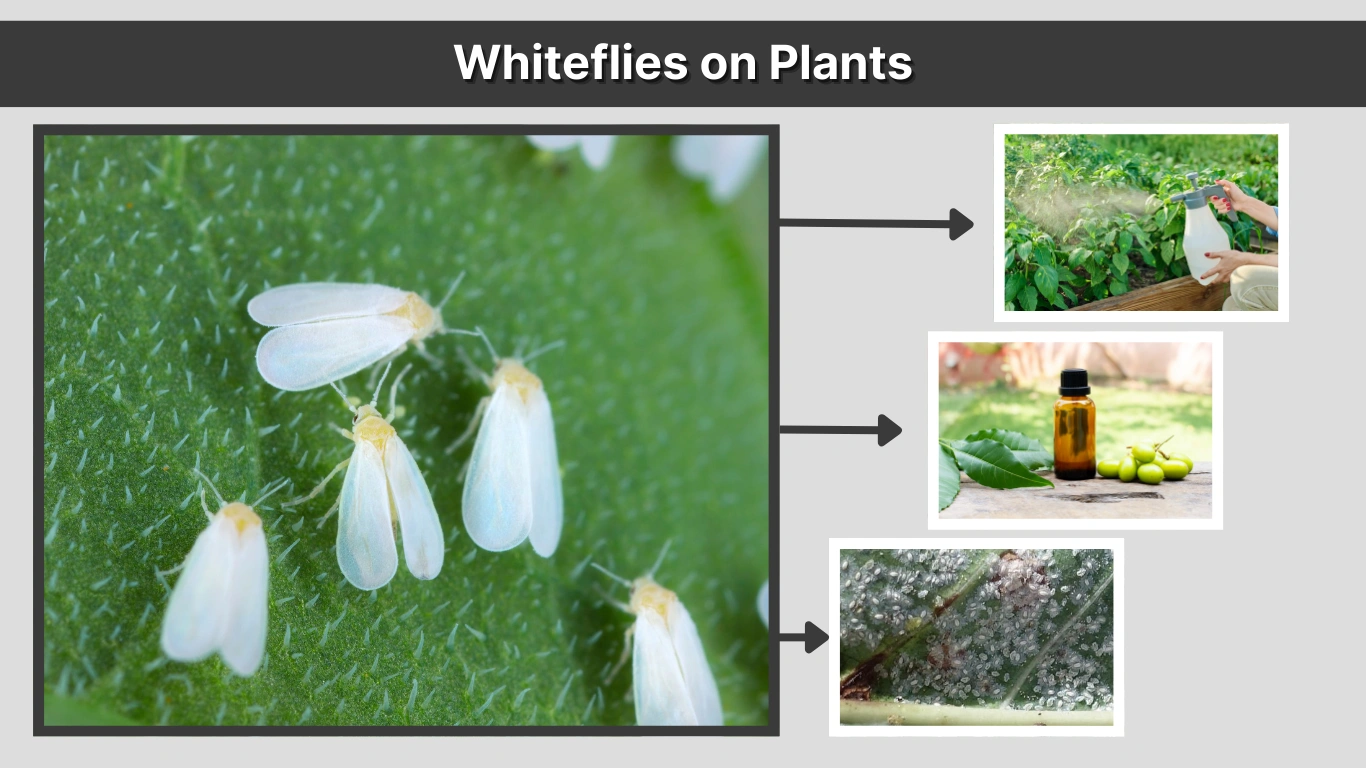
Whiteflies may look harmless because of their tiny size and delicate wings, but these pests can wreak havoc on plants if left unchecked. They gather in large numbers, sucking out plant sap, spreading diseases, and leaving behind sticky honeydew that attracts ants and mold. Whether on vegetables, ornamental flowers, or houseplants, whiteflies are a persistent problem that gardeners must address quickly.
Understanding Whiteflies on Plants
Whiteflies are small, moth-like insects often found on the undersides of leaves. They belong to the same family as aphids and mealybugs and are notorious for their rapid reproduction. A single female can lay hundreds of eggs, leading to overlapping generations that make infestations difficult to control.
They thrive in warm environments, which is why they are common in greenhouses, indoor houseplants, and outdoor gardens during hot seasons. Plants most often attacked include tomatoes, cucumbers, peppers, hibiscus, poinsettias, and fuchsia.
Signs of Whitefly Infestation
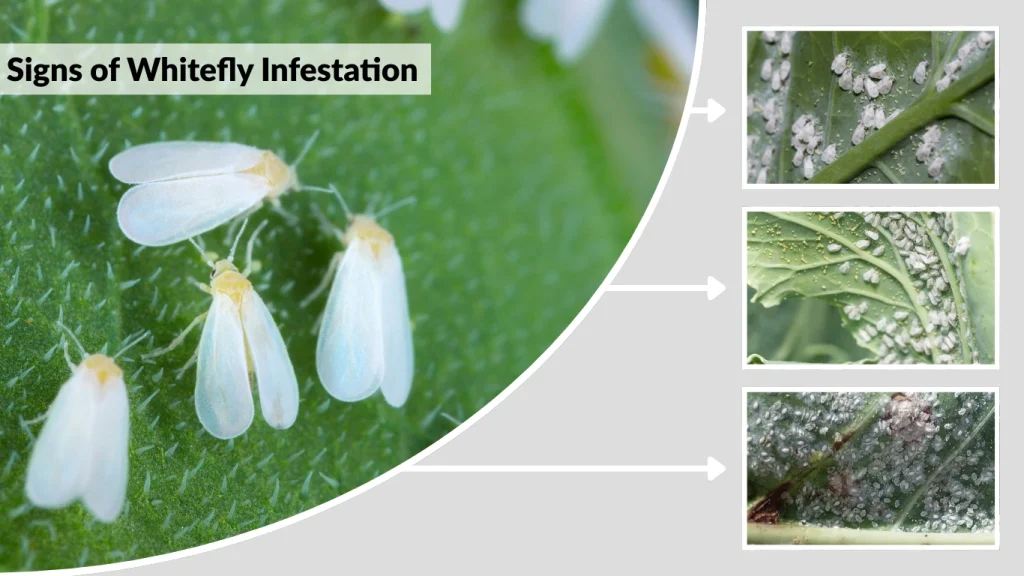
Visual Clues
One of the most obvious signs of a whitefly problem is when a cloud of tiny white insects flies up as you disturb a plant. Upon closer inspection, you’ll often see eggs, nymphs, and adults clustered on the undersides of leaves.
Plant Symptoms
Infested plants show yellowing, curling, or wilting leaves. Whiteflies extract essential sap, weakening the plant’s ability to produce energy. The sticky honeydew they leave behind encourages black sooty mold, making leaves appear dirty and reducing photosynthesis.
Secondary Issues
Whiteflies can also transmit plant viruses, causing more long-term damage. Their honeydew secretion attracts ants, which in turn protect whiteflies from predators, making infestations harder to manage.
Why Whiteflies Are Harmful to Plants
Whiteflies weaken plants in several ways:
- Sap Loss: Continuous feeding drains plant nutrients, stunting growth.
- Honeydew Production: Sticky residue encourages fungal growth like sooty mold.
- Reduced Yields: Fruits and flowers may drop prematurely or fail to develop.
- Plant Death: Severe infestations can kill seedlings and young plants outright.
Their combined impact makes whiteflies one of the most destructive pests in both home gardens and commercial agriculture.
How to Get Rid of Whiteflies: 9 Effective Methods
1. Manual Inspection and Leaf Cleaning

For early or light infestations, physically removing whiteflies works well. You can wipe the undersides of leaves with a damp cloth or spray plants with a strong jet of water to knock insects off. This method helps reduce populations quickly and prevents eggs from hatching into larger infestations.
2. Yellow Sticky Traps
Whiteflies are strongly attracted to the color yellow, mistaking it for new plant growth. Yellow sticky traps exploit this by luring adults and trapping them before they reproduce. Place these traps around infested plants, especially near the tops, to catch flying insects. While effective for reducing adult populations, they won’t eliminate eggs and nymphs, so traps should be paired with other treatments.
3. Insecticidal Soap Spray
Insecticidal soaps are safe and highly effective against soft-bodied pests like whiteflies. The soap penetrates their outer layer, causing dehydration and death. Spray directly onto affected leaves, focusing on the undersides. Repeat applications may be needed for larger infestations. Avoid spraying during hot sunny hours, as it can stress plants.
4. Neem Oil Treatment
Neem oil is an organic option that both repels and disrupts whitefly reproduction. It works by interfering with the insect’s feeding behavior and life cycle. To use, mix neem oil with water and a small amount of mild soap to help it stick to leaves. Spray thoroughly, especially on the undersides. Neem oil is safe for most plants and biodegradable, though it should be applied carefully to avoid harming beneficial insects.
5. Introduce Natural Predators
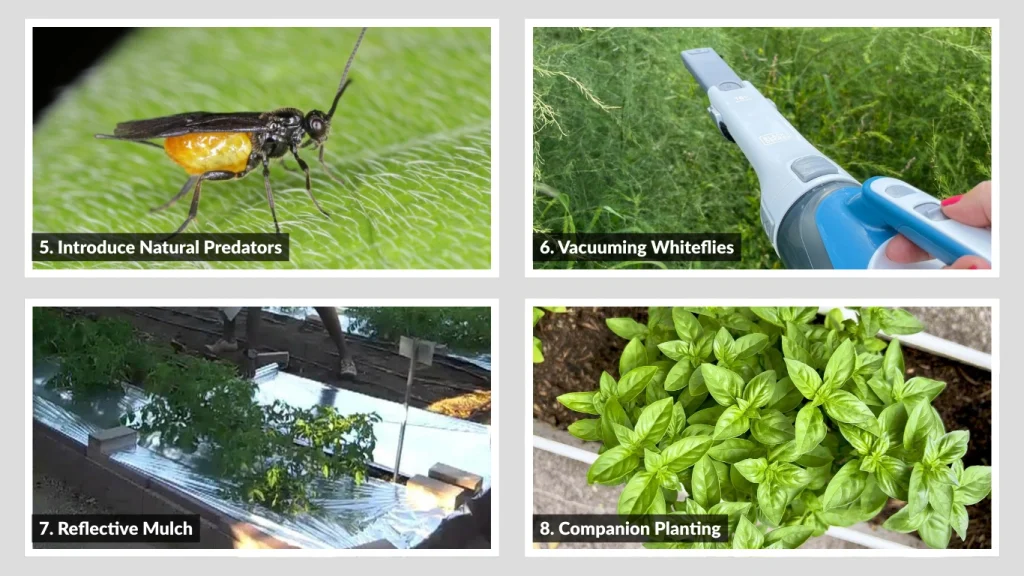
Beneficial insects are nature’s best defense against whiteflies. Ladybugs, lacewings, and predatory beetles feed on eggs and nymphs, while Encarsia formosa, a tiny parasitic wasp, specifically targets whiteflies by laying eggs inside them. These predators can be purchased from garden suppliers and released directly into affected areas. They provide long-term control without chemical risks.
6. Vacuuming Whiteflies
A simple handheld vacuum can physically remove adult whiteflies from plants. This method works best in the early morning when insects are sluggish. After vacuuming, seal the collected pests in a bag and dispose of them to prevent reinfestation. While effective for quick reduction, this method is labor-intensive and ideal for smaller gardens or indoor plants.
7. Reflective Mulch
Using silver or aluminum-colored reflective mulch around plants confuses whiteflies and prevents them from locating hosts. This method is particularly useful in vegetable gardens, especially for crops like tomatoes and cucumbers that whiteflies target heavily. Reflective mulch also deters other pests such as aphids and thrips, offering added protection.
8. Companion Planting
Strategic planting can help repel whiteflies naturally. Herbs such as basil and dill, along with flowers like marigolds and nasturtiums, act as deterrents. Companion planting also encourages biodiversity, attracting pollinators and predators that naturally balance pest populations. Planting these companions around susceptible crops can reduce infestations over time.
9. Chemical Solutions (Last Resort)
When natural and manual methods fail, chemical insecticides may be necessary. Options include systemic insecticides like imidacloprid or contact sprays such as pyrethroids. These should be used cautiously, as they can harm pollinators and beneficial insects. Always follow label instructions, apply sparingly, and rotate chemicals to avoid resistance. Chemicals should be considered the final step, not the first.
Preventing Whiteflies on Plants
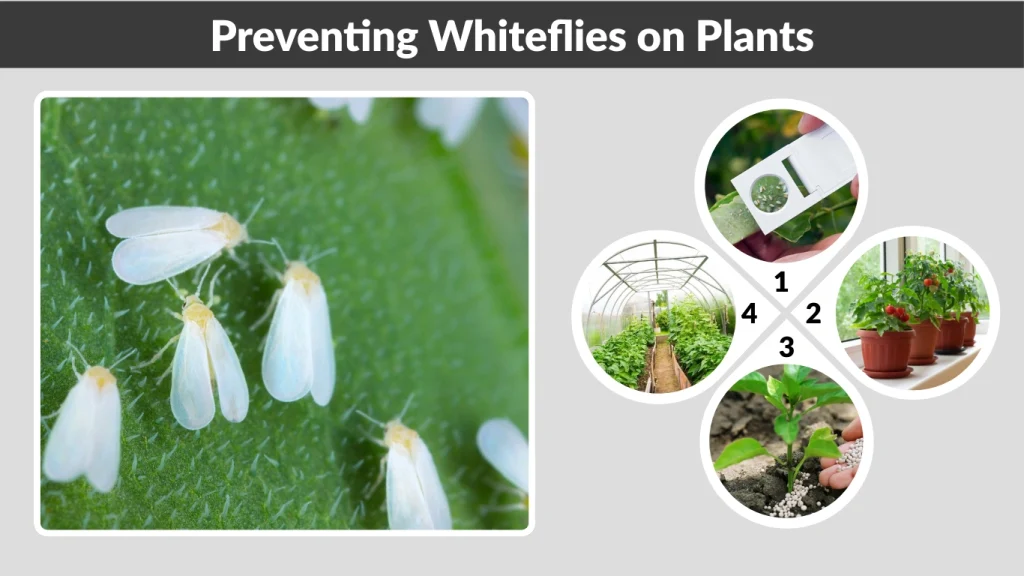
- Inspect regularly: Check the undersides of leaves weekly.
- Quarantine new plants: Isolate new arrivals before introducing them to your garden.
- Avoid over-fertilizing: Excess nitrogen encourages soft growth that attracts pests.
- Maintain airflow: Space plants properly to reduce humidity and discourage infestations.
- Keep the area clean: Remove weeds and debris that provide shelter for pests.
Prevention ensures that infestations don’t return once you’ve managed them.
Whiteflies on Indoor Plants vs. Outdoor Plants
Indoor Infestations
Houseplants in warm, humid rooms are vulnerable to whiteflies. Control them with sticky traps, neem oil sprays, or by wiping leaves regularly. Since indoor environments lack natural predators, infestations can persist longer if not treated early.
Outdoor Infestations
In gardens and farms, whiteflies are more challenging due to their mobility and access to multiple host plants. Outdoor control relies on a combination of reflective mulch, natural predators, and preventive measures. Chemicals are sometimes used in large-scale farming, but natural methods are better for home gardens.
FAQs
How do I permanently get rid of whiteflies?
Permanently eliminating whiteflies requires a combination of methods. Sticky traps reduce adults, while sprays like neem oil or insecticidal soap target nymphs. Adding natural predators ensures long-term control. Regular monitoring and prevention are essential to stop infestations from coming back.
Can whiteflies kill a plant completely?
Yes, severe infestations can kill young or weak plants by draining sap and spreading disease. Mature plants may survive but will be heavily weakened, producing fewer flowers and fruits. Quick action is necessary to prevent permanent damage, especially in seedlings and indoor plants.
Are whiteflies harmful to humans or pets?
No, whiteflies do not bite humans or pets and are not directly harmful. The real danger lies in their effect on plants. Their honeydew secretion can attract ants and promote mold, which may cause secondary household issues.
What plants repel whiteflies naturally?
Companion plants like basil, dill, marigolds, and nasturtiums are known to repel whiteflies. These plants either give off strong scents or attract beneficial insects that help control whitefly populations naturally. Planting them near vulnerable crops adds a protective barrier.
Do whiteflies come back after treatment?
Yes, whiteflies often return if only adults are treated. Since eggs and nymphs remain on leaves, multiple treatments are necessary. Preventive measures such as regular inspections, reflective mulch, and predator introduction help reduce the risk of recurring infestations.
Final Thoughts
Whiteflies are persistent and destructive plant pests, but they can be managed with consistent effort. Combining manual removal, organic sprays, beneficial insects, and preventive practices is the most effective way to protect your plants. By understanding their behavior and using multiple strategies, you can keep both indoor and outdoor plants healthy and thriving without relying heavily on chemicals.
