
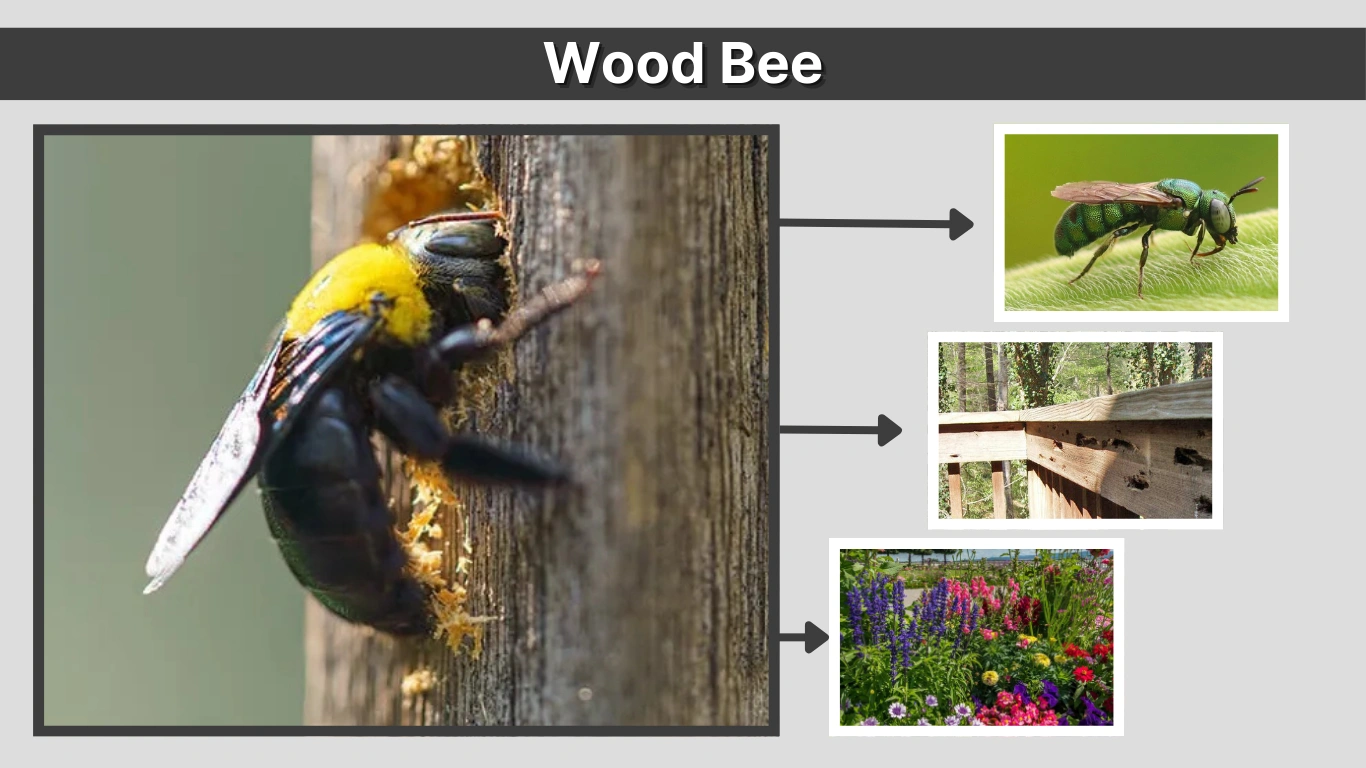
Wood bees, commonly known as carpenter bees, are fascinating pollinators found in many parts of the world. While they play a vital role in supporting ecosystems through pollination, they are also known for their unique nesting habit of boring into wood. This guide explores everything about wood bees—from their identification and different types to their behavior, benefits, and how to manage them around your home.
What is a Wood Bee?
Wood bees, more accurately called carpenter bees, are solitary bees belonging to the genera Xylocopa (large carpenter bees) and Ceratina (small carpenter bees). They get their common name from their habit of drilling into wood to create nesting tunnels. Unlike termites, they do not eat wood; instead, they excavate it to make shelter for their eggs and larvae.
These bees are often mistaken for bumblebees because of their size and buzzing flight, but a key difference is their shiny, hairless abdomen. Males are curious and may hover around people, while females focus on foraging and nest maintenance. Despite their sometimes intimidating appearance, they are important pollinators and generally non-aggressive unless provoked.
Physical Characteristics of Wood Bees

Identification Features
- Size Range: Varies from 0.25 inches in small carpenter bees to over 1 inch in large species.
- Body Shape: Robust and oval-shaped, resembling bumblebees but with a shiny, hairless abdomen.
- Color Variations: Can be black, metallic green, blue, or golden, depending on the species and sex.
- Wings: Transparent or dark-tinted, often with a purple or blue iridescence.
- Sexual Dimorphism: Males often have lighter facial markings, while females have solid-colored faces.
Types of Wood Bees
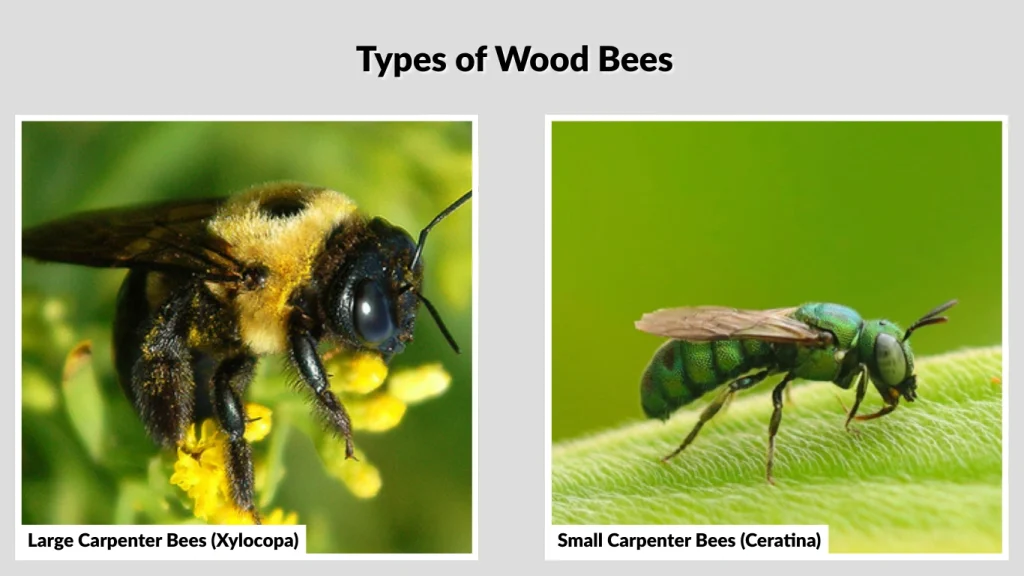
Large Carpenter Bees (Xylocopa)
These are the most recognized wood bees, often over 0.75 inches long, and known for boring into wooden structures like fences, decks, and eaves. Common examples include the Eastern Carpenter Bee and the Valley Carpenter Bee.
Small Carpenter Bees (Ceratina)
Much smaller, ranging from 0.25 to 0.4 inches, these bees nest in plant stems and soft pithy stalks rather than solid wood. They are usually metallic green or blue and are non-destructive to buildings.
Rare or Notable Species
Some species, like the Tropical Carpenter Bee (Xylocopa latipes), are notable for their large size and striking colors, often exceeding 1 inch and found in tropical climates.
Wood Bee Habitat and Nesting Behavior

Preferred Nesting Sites
Wood bees often select untreated, weathered, or softwood for nesting. Large carpenter bees bore into decks, fence posts, tree trunks, and roof eaves, while small carpenter bees choose hollow plant stems or dead twigs.
Nest Construction Process
Females chew perfectly round entry holes about 0.5 inches wide, leading into tunnels that run along the wood grain. Inside, they create multiple brood chambers, each sealed with pollen and nectar for the larvae. Some nests are reused and expanded year after year.
Diet and Pollination Role

What Wood Bees Eat
Wood bees feed primarily on nectar and pollen, visiting a wide range of flowering plants. They are generalist foragers, collecting from wildflowers, garden plants, and crops.
Importance as Pollinators
They are effective pollinators for many fruits, vegetables, and ornamental plants. In agriculture, they contribute to the pollination of crops such as blueberries, tomatoes, and eggplants, helping maintain biodiversity and food production.
Wood Bee Behavior

Social Structure
Wood bees are solitary insects, meaning each female builds and maintains her own nest. However, multiple females may nest in the same area, giving the appearance of a small colony.
Mating and Territorial Habits
Males often hover near nest entrances or flower patches to guard territory and seek mates. They may approach humans out of curiosity but cannot sting.
Seasonal Activity
Most wood bee species are active from spring through late summer. Nesting and foraging activity peak during warm months, with adults dying off in late summer after reproduction.
Life Cycle of Wood Bees
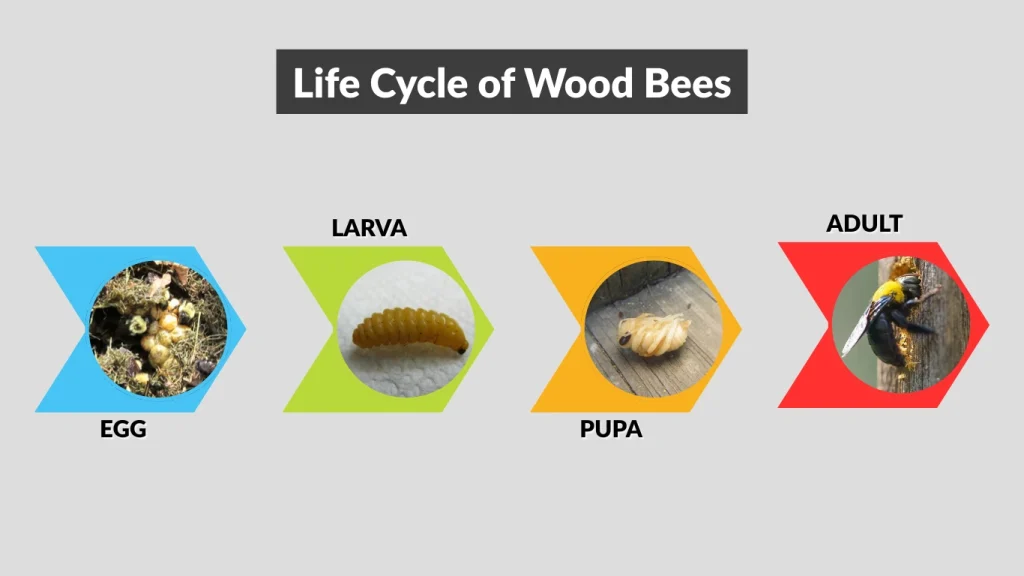
Egg to Adult Development
The female lays eggs in brood chambers within the nest. Each egg is placed on a pollen and nectar mass, which serves as food for the developing larva. The larvae pupate and emerge as adults within a few weeks to months, depending on the species and climate.
Lifespan
Most wood bees live about one year, with overwintering occurring in the adult stage inside old tunnels or sheltered areas.
Are Wood Bees Dangerous?
Stinging Behavior
Male wood bees cannot sting, and females only sting when provoked or handled roughly.
Aggressiveness Level
They are generally non-aggressive. Males may act defensive by hovering, but this is more of a bluff than a threat. Females are more concerned with nesting and feeding than attacking.
Damage Caused by Wood Bees

Structural Damage
Large carpenter bees can weaken wooden structures over time by boring entry holes and creating tunnels. While a single bee causes minimal harm, repeated nesting in the same spot for several years can lead to significant damage.
Signs of Infestation
Common signs include smooth, round entry holes in wood surfaces, small piles of sawdust beneath the holes, and the sound of buzzing or chewing inside the wood. You may also spot males hovering nearby and females entering and exiting the holes.
Benefits of Wood Bees
Ecological Impact
Wood bees are vital pollinators that help maintain healthy ecosystems. By visiting a wide variety of plants, they support biodiversity and contribute to the reproduction of native flora.
Balancing Benefits and Risks
While they can cause cosmetic or structural damage to wooden structures, their role in pollination outweighs the harm in most cases. Managing nesting sites responsibly allows humans to benefit from their pollination services while minimizing damage.
Interesting Facts About Wood Bees
Unique Adaptations
Wood bees have strong mandibles capable of drilling perfectly round holes into wood. Some species also exhibit “buzz pollination,” vibrating flowers to release pollen more efficiently.
Global Distribution Records
They are found on every continent except Antarctica, thriving in both temperate and tropical climates. Certain tropical species, like the Xylocopa latipes, rank among the largest bees in the world.
FAQs
What attracts wood bees to homes and yards?
Wood bees are drawn to untreated, weathered, or soft wood, plus areas rich in blooming plants. Exposed eaves, decks, rails, and fence posts are prime targets. Sunlit, dry wood is especially attractive. Nearby nectar sources—like wisteria, salvia, and fruit trees—keep them foraging close, increasing the chance they’ll explore structures for nesting.
Can wood bees reuse old nests?
Yes. Females frequently return to existing tunnels, cleaning and extending them to create new brood chambers. Reuse saves energy and can gradually enlarge galleries over several seasons. That’s why unsealed holes often worsen damage over time. Filling holes with wood dowels and sealant after bees vacate greatly reduces repeat nesting at the same site.
How can I tell a wood bee from a bumblebee?
Check the abdomen. Wood bees have a shiny, mostly hairless abdomen, while bumblebees are fuzzy overall. Wood bees also carve round holes in wood, unlike bumblebees, which nest in ground cavities or sheltered spaces. Males of wood bees may hover and “guard” areas but lack stingers; female wood bees sting only if provoked.
Are wood bees dangerous to people or pets?
Generally, no. Males cannot sting and only hover defensively. Females can sting but rarely do unless handled or their nest is disturbed. Most interactions are harmless. The greater concern is structural damage from repeated nesting. If someone is allergic to bee stings, take normal precautions and avoid handling or blocking active entrances.
What’s the best way to prevent wood bee damage?
Protect wood surfaces: paint or seal exposed lumber, use hardwood or pressure-treated wood where possible, and repair or replace decayed boards. In late summer or fall, plug empty tunnels with wooden dowels and exterior sealant. Reduce appeal by adding trim or metal flashing to edges. For active issues, consider professional, bee-safe relocation.
