
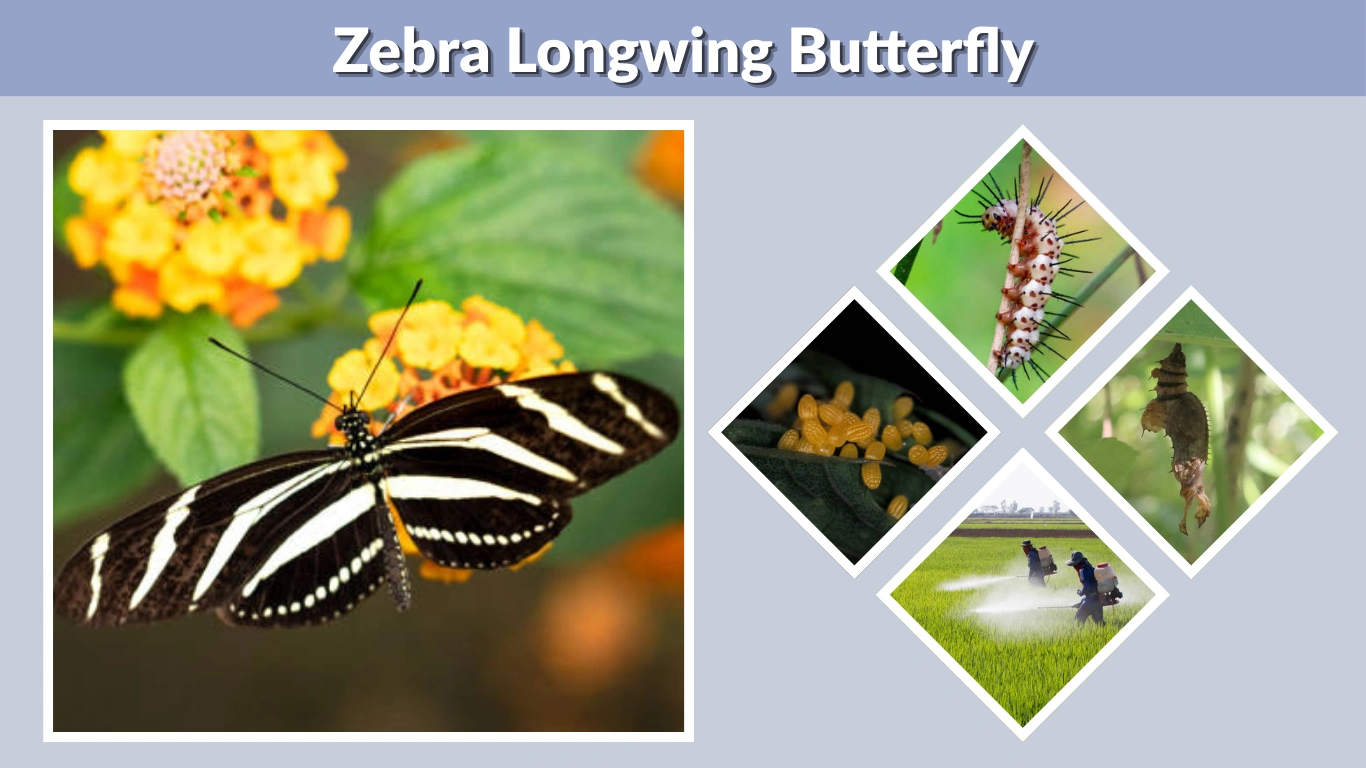
The zebra longwing butterfly is one of the most easily recognized butterflies in the Americas, famous for its long narrow wings and bold black-and-white striping. Unlike most butterflies, it flies slowly, roosts in groups, and can live for several months as an adult. These unusual traits make it a favorite among butterfly watchers and researchers alike. This guide explores how to identify the zebra longwing, where it lives, how it develops, and what makes it so different from other butterflies.
Zebra Longwing Butterfly Identification
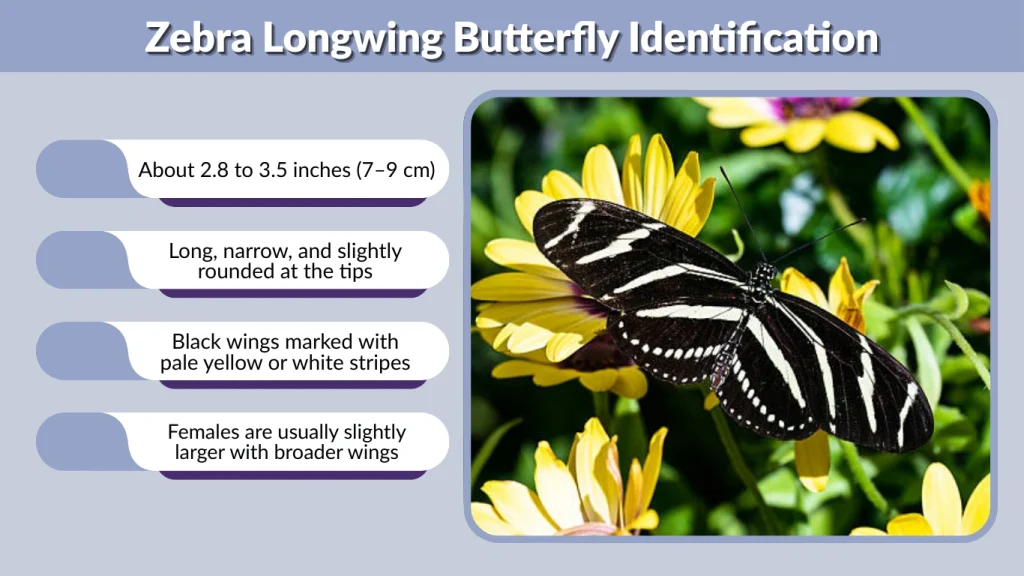
The zebra longwing butterfly (Heliconius charithonia) belongs to the longwing group of tropical butterflies, known for elongated wings and strong chemical defenses. Its dramatic color pattern and graceful flight make it easy to recognize in both wild habitats and butterfly gardens.
- Scientific name and family: Heliconius charithonia, family Nymphalidae
- Average wingspan and size: About 2.8 to 3.5 inches (7–9 cm)
- Wing shape: Long, narrow, and slightly rounded at the tips
- Wing coloration: Black wings marked with pale yellow or white stripes
- Male vs female differences: Females are usually slightly larger with broader wings
- Flight style: Slow, floating, and gliding, often close to vegetation
Physical Appearance and Wing Patterns
The zebra longwing’s wings are much longer and slimmer than those of most butterflies, giving it a delicate, ribbon-like silhouette in flight. The bold stripes stretch lengthwise across the wings, resembling a zebra’s pattern and making the butterfly highly visible against green foliage.
These contrasting black and light stripes serve as warning coloration. The species is chemically protected, and predators quickly learn to associate the pattern with an unpleasant taste. As a result, zebra longwings are rarely attacked by birds once the signal is recognized.
The body is slender and black, with pale spots along the thorax and head. Long antennae with small clubs at the tips help the butterfly sense flowers and navigate through forest edges and gardens. The legs are adapted for perching on thin vines and delicate blossoms.
Wing patterns remain fairly consistent across the species’ range, although butterflies from deeper tropical regions may appear slightly brighter. Over time, the wings may fade and fray, but the striped design usually remains distinct enough for easy identification.
Habitat and Geographic Range
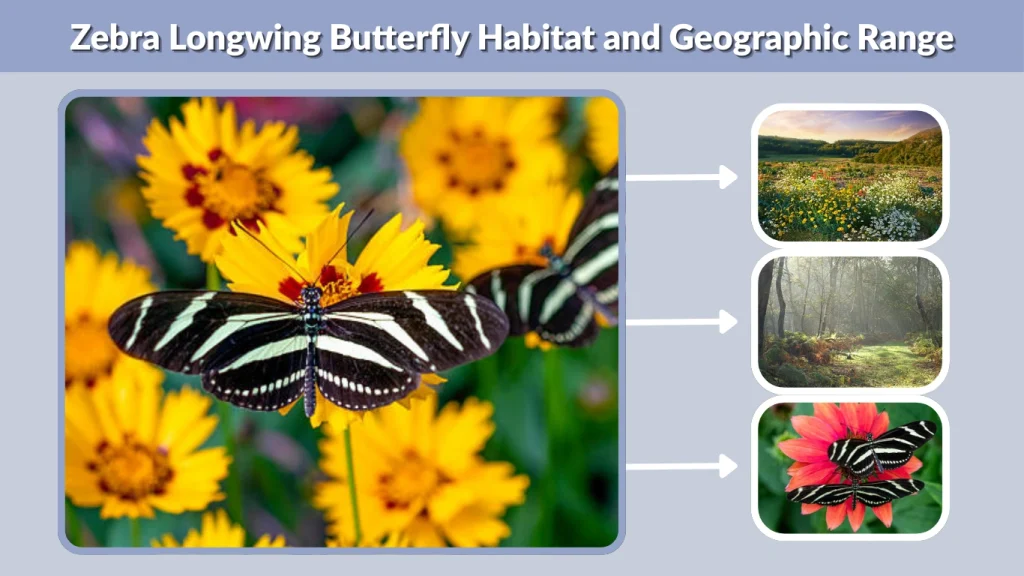
The zebra longwing butterfly is native to the southern United States, Central America, South America, and the Caribbean. In the U.S., it is most common in Florida and southern Texas, though individuals sometimes wander farther north during warm seasons.
This species thrives in tropical and subtropical environments, especially open woodlands, forest edges, hammocks, and overgrown fields. It is also a frequent visitor to gardens, parks, and butterfly conservatories where suitable host plants are present.
Zebra longwings prefer warm, humid climates where passionflower vines grow naturally. These habitats provide both food for caterpillars and nectar and pollen sources for adults. They are often seen fluttering along vine-covered fences, hedgerows, and woodland margins.
Unlike migratory butterflies, zebra longwings generally remain within the same region year-round, moving locally in search of flowers and fresh host plants. In cooler periods, they seek sheltered roosting spots to conserve energy.
Life Cycle of the Zebra Longwing Butterfly
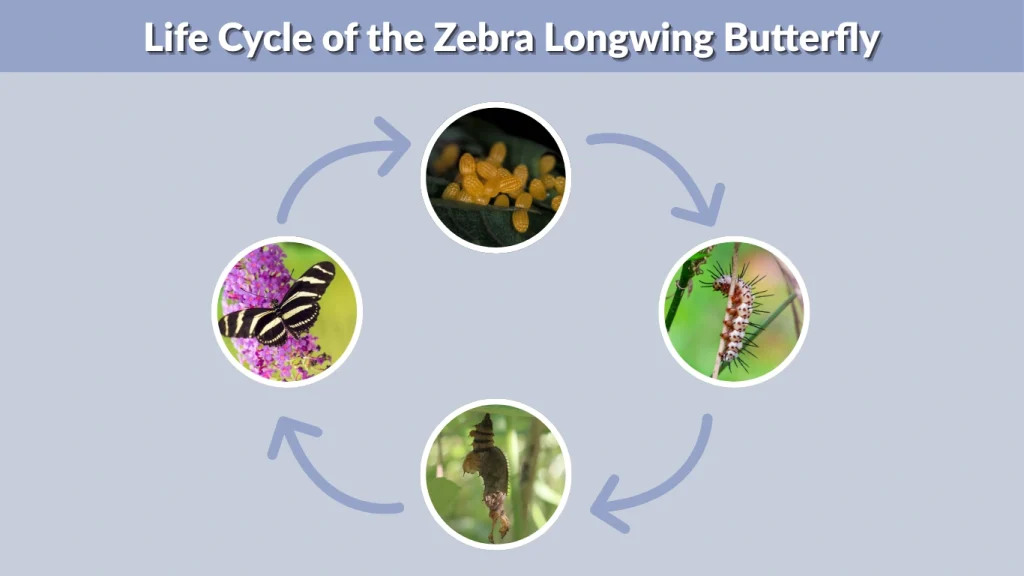
The zebra longwing undergoes complete metamorphosis, passing through four well-defined stages. Each stage plays a critical role in growth, survival, and reproduction.
- Egg stage: Small yellow eggs are laid singly or in clusters on passionflower leaves
- Caterpillar stage: Spiny larvae hatch and begin feeding on host plant foliage
- Chrysalis stage: The pupa hangs from stems, often resembling a curled leaf
- Adult stage: The butterfly emerges, expands its wings, and begins feeding and mating
- Generations per year: Multiple broods occur in warm climates
Caterpillar Appearance and Host Plants
What zebra longwing caterpillars look like
Zebra longwing caterpillars are striking in their own right. They are covered in soft, branching spines and display contrasting bands of white, black, and sometimes yellow. These bright colors act as a warning to predators, signaling that the caterpillars are not good to eat.
As they grow, the larvae pass through several molts, becoming longer and more vividly marked. They often rest openly on leaves, relying on their warning colors rather than hiding for protection.
Host plants and feeding behavior
Zebra longwing caterpillars feed almost exclusively on passionflower vines (Passiflora species). These plants contain toxic compounds that the caterpillars absorb into their bodies. The chemicals remain in the butterfly after metamorphosis, protecting adults from predators.
Females carefully select passionflower leaves when laying eggs. Without these vines, zebra longwings cannot complete their life cycle, making host plant availability a key factor in their distribution.
Behavior and Flight Characteristics
Zebra longwing butterflies are most active during warm, sunny hours, especially from late morning through mid-afternoon. They are easily recognized in motion because of their slow, floating flight, which resembles drifting rather than rapid flapping. This unhurried style makes them stand out among faster-moving butterflies.
One of their most unusual behaviors is social roosting. At night, zebra longwings often gather in small groups on branches or vine tangles, returning to the same resting spots repeatedly. Group roosting is believed to improve protection from predators and help conserve body heat.
Males sometimes defend small territories around nectar plants or host vines. Courtship involves slow aerial displays, followed by brief chases. During the day, adults alternate between feeding, basking in sunlight, and gliding through vegetation.
Diet and Feeding Habits
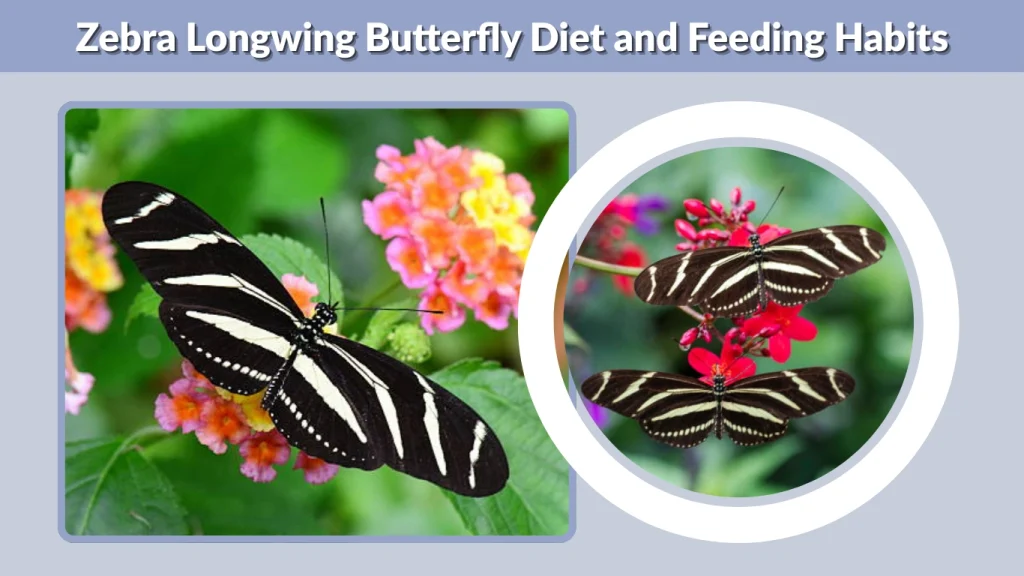
Zebra longwings feed on flower nectar like most butterflies, visiting blooms such as lantana, porterweed, verbena, shepherd’s needle, and passionflower. Nectar supplies the sugars needed for daily activity and reproduction.
What makes this species exceptional is its ability to feed on pollen. Zebra longwings actively collect pollen on their proboscis, digesting its proteins and amino acids. This nutrient-rich diet allows them to live much longer than most butterflies, often surviving several months as adults.
They also drink from tree sap, rotting fruit, and damp ground, obtaining minerals that support nervous system function and egg production. This diverse feeding strategy gives zebra longwings a nutritional advantage over many other species.
Unique Adaptations of the Zebra Longwing
The zebra longwing’s pollen-feeding habit is one of the most remarkable adaptations found in butterflies. While most species rely almost entirely on nectar, zebra longwings extract amino acids from pollen, fueling long life spans and repeated egg-laying cycles.
They are also known for advanced learning and memory abilities. Studies show zebra longwings can remember feeding locations for long periods, helping them return to reliable nectar and pollen sources.
Chemical defenses are another major adaptation. By storing toxins from passionflower plants, zebra longwings become unpalatable to predators. Their bold striping acts as a permanent warning signal, reducing the likelihood of attack.
Role in the Ecosystem
Zebra longwing butterflies play a meaningful role as pollinators. While feeding, they move pollen between flowers, aiding the reproduction of many tropical and subtropical plants.
Their caterpillars help regulate passionflower growth, preventing vines from becoming overly dominant. In this way, zebra longwings contribute to balanced plant communities.
They also serve as part of local food webs. Despite their chemical defenses, some predators and parasites are adapted to use them as a food source, integrating the species into broader ecological interactions.
Threats and Conservation Status
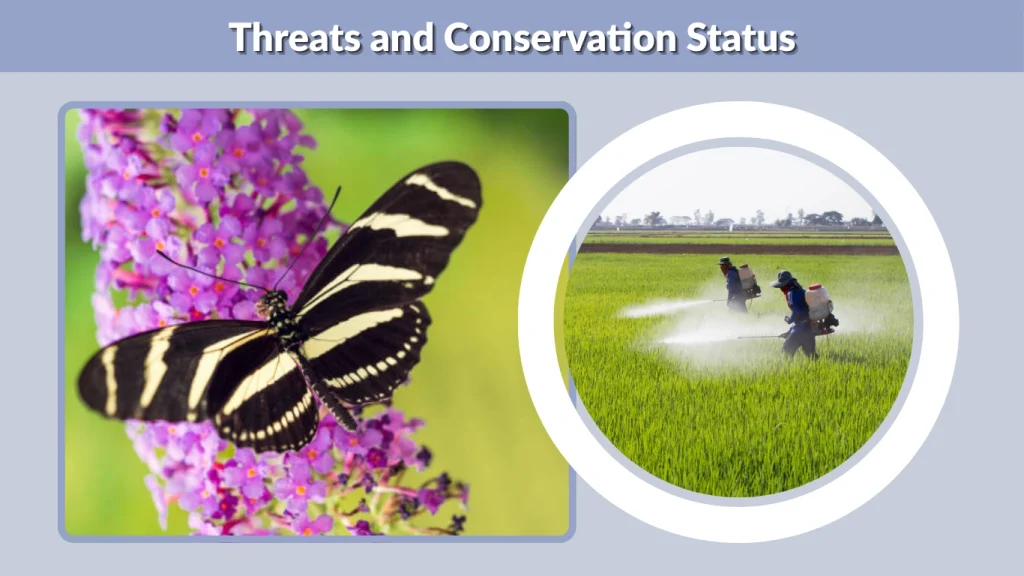
The zebra longwing butterfly is not currently endangered, but it faces increasing pressure from habitat loss, pesticide use, and climate change. Urban expansion removes native vines and flowering plants essential for survival.
Chemical pesticides can kill caterpillars directly or contaminate nectar sources. Climate shifts may alter the distribution of passionflower plants, forcing populations to move or decline.
Conservation focuses on habitat preservation, native planting, and public awareness. Butterfly gardens, protected forest edges, and reduced chemical use all help sustain healthy populations.
How to Attract Zebra Longwing Butterflies to Your Garden
Creating a zebra longwing-friendly garden involves providing both food and shelter.
- Plant passionflower vines to support caterpillars
- Grow nectar-rich flowers such as lantana, porterweed, and verbena
- Avoid pesticides and herbicides
- Provide dense shrubs or vines for group roosting
- Design sunny, wind-sheltered spaces for feeding and basking
Gardens that include climbing plants and continuous blooms are especially effective.
Interesting Facts About the Zebra Longwing
The zebra longwing is the official state butterfly of Florida, recognized for its beauty and ecological importance.
It can live three to six months as an adult, far longer than most butterflies, which often survive only a few weeks.
Zebra longwings regularly sleep together in the same spots, forming nighttime clusters that can persist for years.
Their slow flight and striking stripes make them a favorite subject for butterfly houses and nature education programs.
FAQs
Why is the zebra longwing butterfly called the longwing?
The zebra longwing is named for its unusually long, narrow wings. Compared to most butterflies, its wings are stretched and slender, giving it a graceful shape and slow, floating flight style that easily distinguishes it from round-winged species.
What do zebra longwing butterflies eat?
Zebra longwings feed on nectar, tree sap, and rotting fruit, but they are unique because they also eat pollen. Pollen provides proteins and amino acids that support their long lifespan and allow them to reproduce over extended periods.
Where do zebra longwing butterflies live?
They are found in the southern United States, Central America, South America, and the Caribbean. Zebra longwings prefer warm, humid habitats such as forest edges, tropical hammocks, overgrown fields, and gardens with passionflower vines.
How long does a zebra longwing butterfly live?
Unlike most butterflies that live only a few weeks, zebra longwings can survive three to six months as adults. Their pollen-based diet provides extra nutrients that support long life and continuous egg production.
How can you attract zebra longwings to your garden?
Plant passionflower vines for caterpillars and nectar-rich flowers for adults. Avoid pesticides, provide sunny sheltered areas, and allow some climbing plants or shrubs to remain for roosting and resting.
