
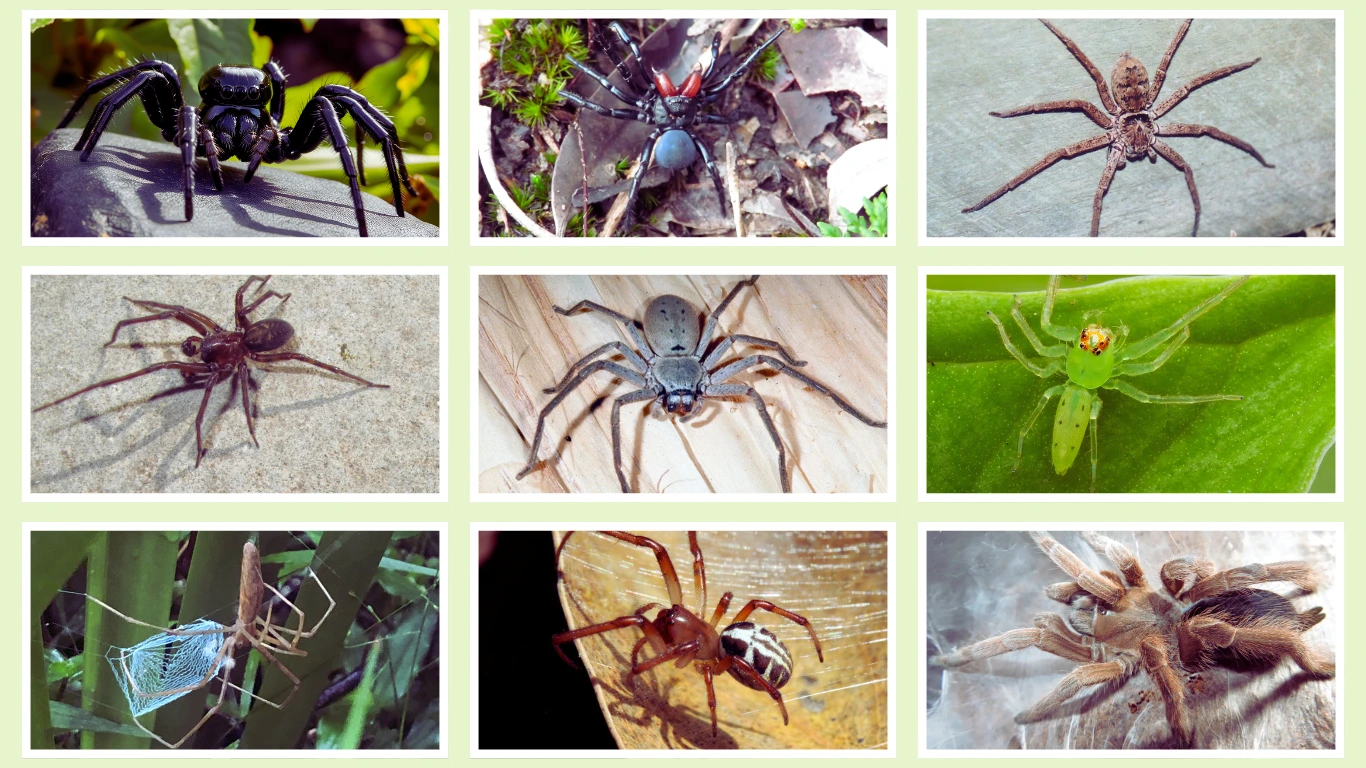
Australia is home to some of the world’s most unique and diverse spiders. From the deadly Sydney Funnel-Web to the dazzling Peacock Spider, each species has its own role in nature and fascinating traits.
In this guide, I’ll walk you through 30 of the most well-known Australian spiders, covering how to identify them, where they live, how they behave, their lifespan, and whether they’re dangerous.
Whether you’re a nature enthusiast, a curious gardener, or just trying to identify that eight-legged visitor in your home, this guide is designed with clear, easy-to-read sections and simple language to help you understand these incredible creatures better.
1. Sydney Funnel-Web Spider

The Sydney Funnel-Web Spider is one of the most famous spiders in Australia. Known for its shiny black body and powerful fangs, this spider is often feared—but it’s also an important part of the ecosystem. It lives mainly in the forests and gardens around Sydney and nearby regions.
Identification
- Color: Shiny black or dark brown
- Size: 1 to 5 cm in body length
- Body: Glossy, smooth carapace with a hairy abdomen
- Fangs: Strong and downward-pointing
- Legs: Long and strong, slightly hairy
- Eyes: Small, arranged in two rows
Habitat
Sydney Funnel-Web Spiders are mostly found in moist, cool environments. They live in burrows under logs, rocks, or deep leaf litter. Sometimes, they build funnel-shaped webs in cracks around gardens or bushland in the Sydney region.
Behavior
These spiders are mostly active at night. Males wander in search of females during the warmer months, especially after rain. They are known to be aggressive if threatened and will raise their front legs to show off their fangs.
Lifespan and Lifecycle
Females can live up to 10 years or more, while males usually live for only a few months after maturity. Mating occurs in summer, and females lay eggs in a silk sac, keeping it safe in their burrow.
Venom
Sydney Funnel-Web Spider venom is highly toxic to humans. It can cause serious illness and must be treated quickly. Luckily, anti-venom has been available since 1981, and no deaths have occurred since then. The venom is more dangerous from male spiders than females.
2. Redback Spider

The Redback Spider is one of Australia’s most recognized and feared spiders. It’s closely related to the Black Widow and is known for the red stripe on its back. These spiders are common in urban areas and can often be found in sheds, mailboxes, and under outdoor furniture.
Identification
- Color: Glossy black with a red or orange stripe on the back
- Size: Females up to 1 cm, males much smaller
- Shape: Round, bulbous abdomen
- Web: Messy, irregular web close to the ground
- Legs: Long, slender, and black
Habitat
Redbacks prefer warm, sheltered areas. You’ll often find them around human homes, especially in dry, undisturbed places like garages, garden sheds, and under outdoor items.
Behavior
They are not aggressive but will bite if disturbed. Females rarely move from their web, while males wander in search of mates. They are active mostly at night.
Lifespan and Lifecycle
Females can live 2–3 years, while males live only a few months. Females lay eggs in silk sacs and can produce hundreds of spiderlings. Babies often balloon on silk threads to new areas.
Venom
Redback venom is toxic and can cause serious pain, sweating, nausea, and muscle weakness. Antivenom is available, and fatalities are rare today thanks to medical treatment.
3. Huntsman Spider

The Huntsman Spider is large, fast, and often seen in Australian homes. Though they look scary, they are not dangerous to humans. They help control pests and are known for their crab-like walking style.
Identification
- Color: Brown, grey, or tan with darker markings
- Size: Leg span up to 15 cm
- Body: Flattened, wide body shape
- Legs: Long and crab-like, often spread out sideways
- Speed: Extremely fast movers
Habitat
Huntsman spiders live under bark, rocks, and loose tree bark in forests and woodlands. They often wander into houses, especially in summer.
Behavior
They do not build webs to catch prey. Instead, they hunt insects and other spiders. They are shy and prefer to escape rather than bite.
Lifespan and Lifecycle
Lifespan is about 2 years. Females lay eggs in a silk sac and guard them until they hatch. Young spiders go through several molts before becoming adults.
Venom
Huntsman venom is mild and not harmful to humans. A bite may cause slight pain, swelling, or redness, but it’s not serious.Huntsman Spider Bite
but bites are rare.
4. White-Tailed Spider

The White-Tailed Spider is often found inside homes, where it hunts other spiders. It has a sleek body and a distinctive white mark on the tip of its abdomen.
Identification
- Color: Dark grey or reddish with a white tip on the abdomen
- Size: 1–2 cm body length
- Shape: Slim and elongated body
- Legs: Long and slightly banded
- Markings: One or two white spots on the back
Habitat
They live under bark, in leaf litter, and often inside houses—in clothing, towels, and bedding. They like warm and dry environments.
Behavior
White-Tailed Spiders are night hunters and mainly eat other spiders, especially black house spiders. They wander indoors and are often blamed for unexplained bites.
Lifespan and Lifecycle
They live up to 2 years. Females lay eggs in silk sacs hidden in crevices. Young spiders hatch and start hunting small prey.
Venom
Their venom is not considered dangerous to humans. Some people may experience mild reactions like redness or swelling, but serious effects are rare.
5. Mouse Spider

The Mouse Spider looks similar to the Funnel-Web and is sometimes mistaken for it. They are ground-dwellers and known for their powerful jaws.
Identification
- Color: Glossy black or dark blue
- Size: Up to 3 cm
- Fangs: Large and strong
- Body: Bulky, with a short head and round abdomen
- Distinct: Some have a red patch on their head
Habitat
They live in burrows with trapdoors or silk-lined tunnels, mostly in open forests and grasslands. Burrows are often moist and deep.
Behavior
They are mostly inactive during the day and come out at night. Males wander during mating season. They are aggressive when disturbed but rarely bite.
Lifespan and Lifecycle
Females can live up to 10 years, while males live shorter lives. Eggs are laid in silk sacs inside burrows, guarded by the female.
Venom
Mouse Spider venom can be dangerous, similar to Funnel-Web venom. However, bites are rare, and antivenom is effective if needed.
6. Garden Orb-Weaver

Garden Orb-Weavers are harmless spiders that build large round webs in gardens and around homes. They are common and loved by gardeners for catching flying insects.
Identification
- Color: Brown, grey, or orange with patterned backs
- Size: 1.5–3 cm
- Body: Fat, rounded abdomen
- Web: Classic spiral shape in open spaces
- Legs: Hairy and strong for web-building
Habitat
They are commonly found in gardens, parks, forests, and around lights that attract insects. Webs are often seen between plants or fences.
Behavior
They are nocturnal and rebuild their webs every night. During the day, they hide in nearby leaves or corners. They are not aggressive and only bite if provoked.
Lifespan and Lifecycle
They live for about one year. Females lay eggs in silk sacs during autumn, and spiderlings hatch in spring.
Venom
Venom is not dangerous to humans. Bites may cause mild pain or itchiness but are not harmful.
7. Trapdoor Spider

Trapdoor Spiders are secretive ground-dwellers that build hidden burrows with silk “trapdoors.” They rarely leave their burrows and are fascinating ambush predators.
Identification
- Color: Dark brown to black
- Size: 1.5–3.5 cm
- Body: Stout and hairy
- Legs: Strong, built for digging
- Distinct: Burrow with a silk-hinged trapdoor
Habitat
They live underground in burrows, often in moist soil. Found in forests, gardens, and bushlands, their camouflaged trapdoor keeps them hidden from predators and prey.
Behavior
Trapdoor Spiders are ambush hunters. They wait just inside the trapdoor and grab passing insects. They are rarely seen unless uncovered.
Lifespan and Lifecycle
Females can live over 10 years, staying in the same burrow their whole life. Males leave their burrow to find mates and usually die shortly after mating.
Venom
Their venom is not dangerous to humans. Bites are rare and may cause mild local symptoms like swelling or redness.
8. Wolf Spider

Wolf Spiders are fast-moving hunters often found in gardens and open areas. They don’t use webs to catch prey—they chase it down.
Identification
- Color: Brown or grey with stripe or pattern
- Size: 1–3.5 cm
- Eyes: Large eyes arranged in three rows
- Legs: Long and powerful
- Distinct: Carries spiderlings on its back
Habitat
Wolf Spiders live in leaf litter, grass, and garden beds. Some dig burrows, while others roam freely. They are found in many parts of Australia.
Behavior
They are solitary hunters, active mostly at night. Females carry their egg sac and then the spiderlings on their back—a unique behavior.
Lifespan and Lifecycle
Wolf Spiders live 1–2 years. Eggs hatch in a silk sac, and spiderlings stay with the mother for a short time before dispersing.
Venom
Venom is not harmful to humans. Bites may cause mild irritation or swelling, but serious reactions are uncommon.
9. St Andrew’s Cross Spider

Known for the unique cross-shaped pattern in their webs, St Andrew’s Cross Spiders are easy to spot and are helpful in controlling garden pests.
Identification
- Color: Yellow, black, and white bands
- Size: 1–2 cm
- Abdomen: Brightly patterned and narrow
- Legs: Held in an X-shape while sitting in the web
- Web: Features a white zigzag cross
Habitat
They are found in gardens, grasslands, and bushy areas. Their webs are often built between shrubs or tall plants where flying insects are common.
Behavior
They stay still in the center of the web, legs in an X-formation. They vibrate the web when disturbed to confuse predators.
Lifespan and Lifecycle
They live around 12 months. Females lay eggs in sac-like silk pouches, usually attached to vegetation.
Venom
Venom is mild and not dangerous to humans. A bite may cause temporary discomfort, but these spiders rarely bite unless provoked.
10. Peacock Spider

Peacock Spiders are tiny, colorful jumping spiders known for their dazzling courtship dances. Males display bright colors and flap their flaps like a peacock to attract females.
Identification
- Color: Bright blue, red, orange, and black patterns (males)
- Size: 3–5 mm
- Eyes: Large front-facing eyes
- Legs: Short and thick
- Distinct: Fan-shaped flap on males used in mating dance
Habitat
Found in dry woodlands, coastal sand dunes, and leaf litter, mainly in southern and western Australia. They prefer sunny spots for dancing displays.
Behavior
Males perform elaborate dances to attract females. They are curious, active during the day, and hunt small insects by jumping.
Lifespan and Lifecycle
They live about 1 year. Mating happens in spring. Females lay eggs in silk nests, and spiderlings hatch after a few weeks.
Venom
Venom is not harmful to humans. Due to their small size, bites are extremely rare and medically insignificant.
11. Recluse Spider

The Recluse Spider is rarely seen and often misunderstood. Though not common in Australia, a few isolated populations exist, mainly introduced through imports.
Identification
- Color: Light to dark brown
- Size: Around 1 cm
- Markings: Violin-shaped mark on the back
- Eyes: Six eyes arranged in pairs
- Body: Slim with long legs
Habitat
They prefer dark, undisturbed indoor areas like basements, closets, and storage boxes. Outdoors, they live under rocks or logs.
Behavior
They are shy and avoid contact. Nocturnal by nature, they hunt small insects and hide during the day.
Lifespan and Lifecycle
Recluse Spiders can live 1–2 years. Females lay eggs in silk sacs and may produce several in their lifetime.
Venom
Bites can cause skin reactions, including ulcers in rare cases. However, serious medical issues are uncommon in Australia. Seek medical help if symptoms worsen.
12. Australian Tarantula
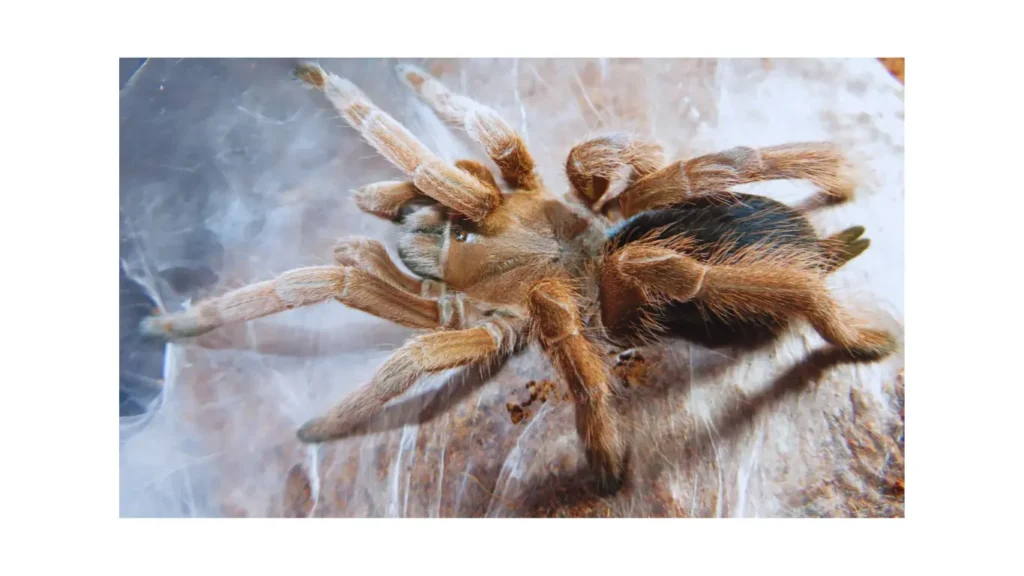
Australian Tarantulas, also called “Whistling Spiders,” are large, ground-dwelling spiders known for the hissing sound they make when threatened.
Identification
- Color: Brown to dark grey
- Size: Up to 6 cm body length, with 16 cm leg span
- Fangs: Large and powerful
- Hair: Covered in fine hairs
- Sound: Can produce a whistling noise by rubbing body parts
Habitat
They live in burrows in tropical and arid regions, especially in Queensland and Western Australia. Often found in open forests and grasslands.
Behavior
They are solitary and rarely leave their burrows unless hunting. When threatened, they rear up and may hiss to scare predators.
Lifespan and Lifecycle
Females can live over 10 years, while males live just a few years. Females guard their burrows and egg sacs fiercely.
Venom
Venom can cause nausea and vomiting in humans but is not usually life-threatening. Their large fangs can cause painful puncture wounds.
13. Daddy Long Legs

Also known as cellar spiders, Daddy Long Legs are common in homes across Australia. They are known for their extremely long legs and delicate webs.
Identification
- Color: Pale brown or grey
- Size: Small body, around 0.5–0.9 cm
- Legs: Very long and thin
- Body: Small, oval-shaped
- Web: Messy, irregular cobwebs in corners
Habitat
They are mostly found indoors—in ceilings, corners, basements, and sheds. Outdoors, they hide under rocks, logs, and loose bark.
Behavior
They are non-aggressive and often stay still in their webs. If disturbed, they vibrate their webs quickly to confuse predators.
Lifespan and Lifecycle
They live for about 1–2 years. Females lay small egg sacs, and spiderlings hatch and live near the mother for a short time.
Venom
Their venom is harmless to humans. Despite myths, they are not dangerous and rarely bite.
14. Badge Huntsman
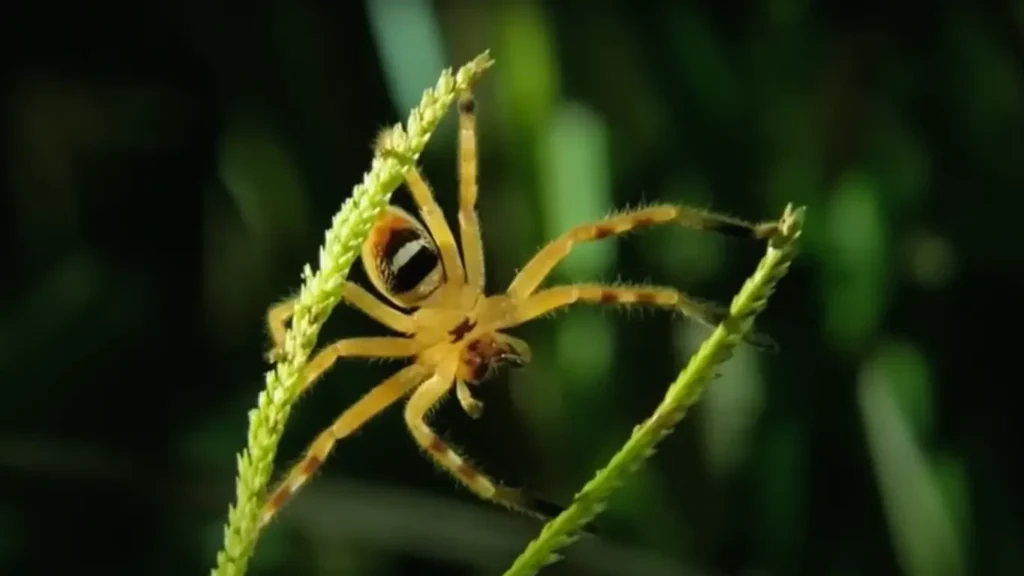
The Badge Huntsman is a large, fast-moving spider with a distinct black-and-white “badge” mark under its abdomen, often found in forests and homes.
Identification
- Color: Brown to grey with dark markings
- Size: Up to 4.5 cm body length
- Legs: Long and crab-like
- Body: Flattened shape
- Markings: Black and white pattern under the abdomen
Habitat
Common in woodlands, under bark, logs, and in homes. They prefer warm and dry environments and often hide in cracks or behind furniture.
Behavior
Active hunters, mostly at night. They don’t spin webs to catch prey but rely on speed and ambush. Generally shy and avoid humans.
Lifespan and Lifecycle
Badge Huntsman spiders live for 1–2 years. Females lay eggs in a silk sac and guard them until they hatch.
Venom
Their venom is not dangerous. Bites may cause mild pain or swelling but are not medically significant.
15. Leaf-Curling Spider
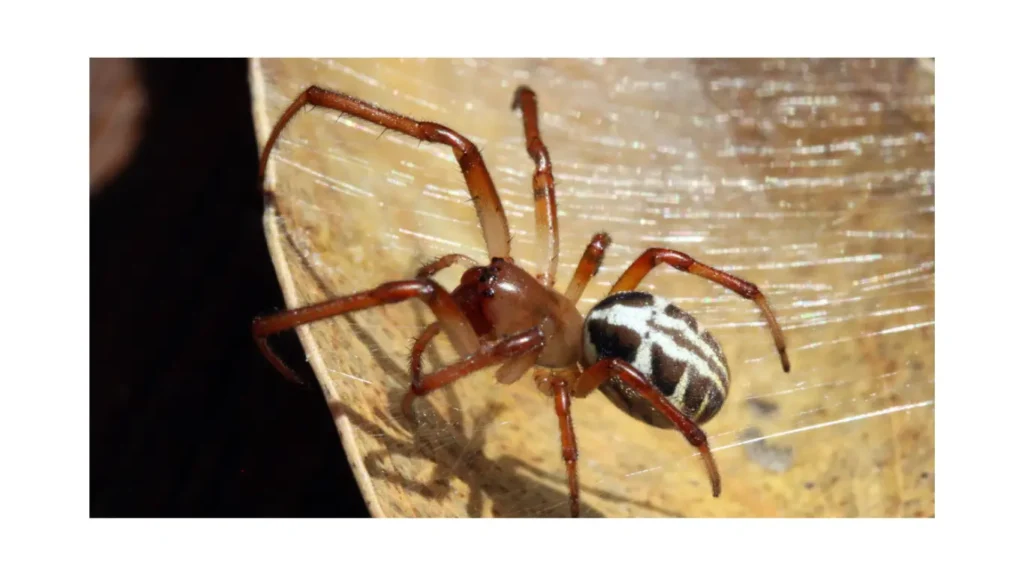
Leaf-Curling Spiders get their name from their unique web feature: a curled leaf in the center where they hide. They are clever and excellent at camouflage.
Identification
- Color: Brown, grey, or reddish
- Size: Around 1–2 cm
- Abdomen: Patterned and slightly spiny
- Web: Orb-shaped with a curled leaf in the center
- Legs: Band-patterned and thin
Habitat
Found in forests, gardens, and bushes. They prefer vegetation-rich areas where they can collect leaves for their webs.
Behavior
They hide in the curled leaf during the day and wait for prey at night. Not aggressive and rarely bite.
Lifespan and Lifecycle
They live up to 1 year. Females lay eggs inside the curled leaf and guard the web until the spiderlings hatch.
Venom
Venom is mild and not harmful to humans. Bites are very rare and may cause slight redness or itching.
16. Net-Casting Spider

The Net-Casting Spider is a unique Australian spider known for its special hunting technique—it throws a web net to catch prey. Also called the Ogre-Faced Spider due to its large eyes and long legs.
Identification
- Color: Brown or beige
- Size: 1.5–2.5 cm body length
- Eyes: Two large central eyes
- Legs: Long, spindly, and slightly bent
- Web: Small, stretchy net held between front legs
Habitat
This Australian spider is found in forests and woodlands, often hanging from branches or leaves. It prefers quiet, shaded areas with low light.
Behavior
It hangs upside down at night, holding its net. When an insect passes, it lunges forward to trap it in the net. They are solitary and stealthy.
Lifespan and Lifecycle
They live about 1–2 years. Females lay eggs in silk sacs hidden in leaves or bark. Spiderlings hatch and learn to hunt using the same net-throwing method.
Venom
Their venom is not harmful to humans. Bites are extremely rare, and reactions are usually mild if they occur.
17. Green Jumping Spider

The Green Jumping Spider is a colorful and energetic Australian spider that’s easy to spot in gardens. It’s admired for its metallic green body and excellent jumping skills.
Identification
- Color: Bright green with black or white markings
- Size: Around 1 cm
- Eyes: Large front-facing eyes
- Legs: Short and strong, adapted for jumping
- Body: Shiny and compact
Habitat
This Australian spider is often seen in gardens, shrubs, and trees. It enjoys sunny spots and is commonly found on leaves and flowers.
Behavior
They actively hunt during the day and don’t spin webs for catching prey. They rely on their sharp vision and quick jumps to ambush insects.
Lifespan and Lifecycle
Lifespan is about 1 year. Females lay eggs in silk retreats, and spiderlings hatch and begin hunting soon after.
Venom
Harmless to humans. If bitten, it may cause slight redness or itching, but it’s not considered dangerous.
18. Bronze Jumping Spider
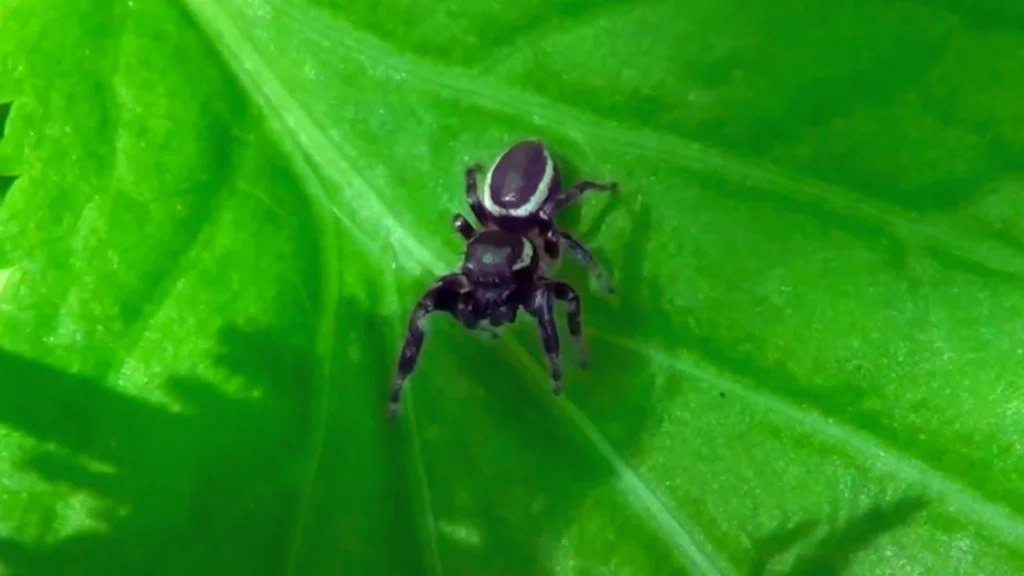
The Bronze Jumping Spider is another small Australian spider known for its shiny bronze body and fast, jerky movements. It’s a skilled daytime hunter.
Identification
- Color: Metallic bronze or copper
- Size: 0.8–1.2 cm
- Eyes: Forward-facing and large
- Legs: Compact and powerful for leaping
- Body: Smooth and rounded
Habitat
This Australian spider lives in leaf litter, tree bark, garden beds, and even on walls and fences. It enjoys warm, open spaces with plenty of insect activity.
Behavior
It hunts visually and jumps to catch prey. Curious and alert, it will often turn to look at humans. Active during the day.
Lifespan and Lifecycle
Lives up to 1 year. Females protect their eggs in silk nests. Spiderlings grow quickly and start hunting early in life.
Venom
Not harmful to people. Bites are rare and cause only minor irritation, if any.
19. Slater Spider

The Slater Spider is a fascinating Australian spider that mimics the appearance of a woodlouse (also known as a slater). Its flat, segmented body helps it blend into bark and leaf litter.
Identification
- Color: Brown or grey, with segmented markings
- Size: Around 1–1.5 cm
- Shape: Flattened body resembling a slater
- Legs: Short and wide-set
- Camouflage: Blends in with bark or soil
Habitat
This Australian spider is found under bark, in mulch, and within leaf litter across forests and gardens. It prefers moist, hidden areas.
Behavior
Slater Spiders are ambush hunters. They wait motionless for prey to come close. Their disguise keeps them safe from predators.
Lifespan and Lifecycle
They live for about 1–2 years. Females lay eggs in protected silk sacs hidden under bark or rocks.
Venom
Their venom is harmless to humans. Bites are extremely rare and not considered medically important.
20. Spiny Spider (Jewel Spider)

The Spiny Spider, also called the Jewel Spider, is a colorful and spiky-looking Australian spider often found in gardens. It’s known for its decorative body and symmetrical web.
Identification
- Color: White or yellow with black or red spines
- Size: Around 1–1.5 cm
- Abdomen: Wide and flat with six prominent spines
- Web: Neat orb-shaped web
- Legs: Short and stubby
Habitat
This Australian spider is common in gardens, woodlands, and bushland. It prefers open spaces between shrubs or trees where it can build its web.
Behavior
They sit in the center of their web during the day. Not aggressive and rarely move unless disturbed. Active in warmer months.
Lifespan and Lifecycle
Lifespan is up to 1 year. Females lay eggs in sacs attached to vegetation. Spiderlings hatch and disperse quickly.
Venom
Venom is not harmful to humans. Bites are rare and may cause minor irritation at most.
21. Long-Jawed Orb Weaver
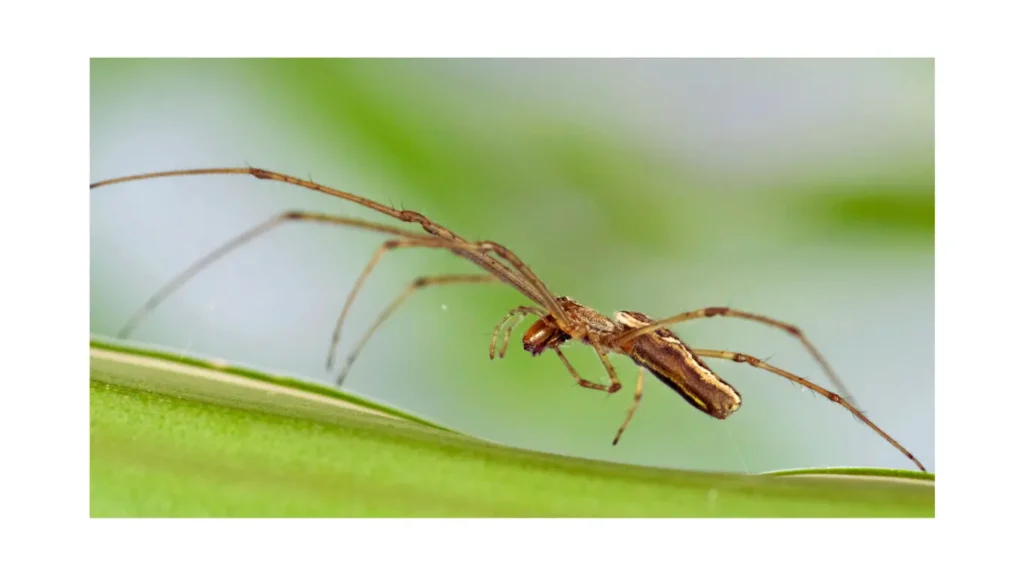
The Long-Jawed Orb Weaver is a slim-bodied Australian spider with very long legs and a small head. It spins delicate orb-shaped webs near water and vegetation.
Identification
- Color: Light brown, green, or yellow
- Size: Body up to 1.5 cm, legs much longer
- Legs: Extremely long and thin
- Body: Slender, cylindrical abdomen
- Web: Large and delicate
Habitat
This Australian spider is commonly found near creeks, wetlands, and gardens. It builds webs among reeds, bushes, and tall grass.
Behavior
They rest with legs outstretched in their web. They are not aggressive and quickly flee if disturbed. They rebuild webs daily.
Lifespan and Lifecycle
They live about 1 year. Females lay eggs in hanging sacs near the web. Spiderlings hatch and start spinning webs at a young age.
Venom
Venom is mild and not dangerous. Bites may cause slight discomfort but are not a medical concern.
22. Knob-Headed Spider

The Knob-Headed Spider is a lesser-known Australian spider with a strange, bumpy appearance. It’s a type of orb-weaving spider that builds small webs in foliage.
Identification
- Color: Brown or mottled grey
- Size: Around 1 cm
- Body: Bumpy or knobby projections on the head area
- Web: Small and round
- Legs: Short and strong
Habitat
This Australian spider lives in forests, gardens, and bushlands. It prefers low vegetation where it can build webs and stay hidden.
Behavior
It sits still in the center of its web or hides nearby during the day. It is shy and passive, only active when hunting small flying insects.
Lifespan and Lifecycle
Lifespan is around 1 year. Females produce silk egg sacs in hidden spots among leaves.
Venom
Not dangerous to humans. Bites are almost unheard of and cause no major symptoms.
23. Pillar Spider

The Pillar Spider is a unique Australian spider known for building tall, tower-like burrows with silk and soil at the entrance. These spiders are secretive and rarely seen.
Identification
- Color: Dark brown to black
- Size: Around 1.5–2 cm
- Body: Stocky and thick-legged
- Fangs: Large and downward-facing
- Distinct: Silk chimney or pillar at burrow entrance
Habitat
Found in forests and bushland across Australia. They dig vertical burrows in soft soil, topped with a silk-and-soil “pillar” for protection and camouflage.
Behavior
They stay deep in their burrows, waiting for vibrations at the entrance. Only emerge briefly at night to hunt or find mates.
Lifespan and Lifecycle
Can live for several years. Females remain in the same burrow their entire lives. Eggs are kept inside the burrow in silk sacs.
Venom
Venom is not considered dangerous. Bites are rare and may cause mild local symptoms if they happen.
24. Water Spider (Australian Fishing Spider)
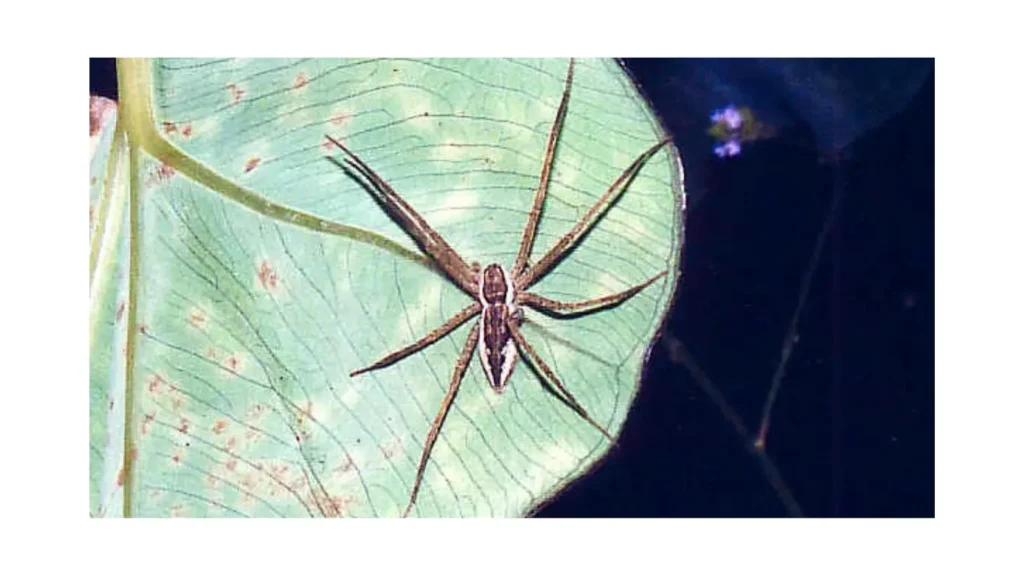
The Water Spider, also known as the Australian Fishing Spider, lives near streams and ponds. It can walk on water and even dive to catch prey.
Identification
- Color: Brown or grey with white stripes
- Size: 1.5–3 cm
- Legs: Long and spread out for walking on water
- Body: Streamlined and slightly flattened
- Distinct: Hairy legs that repel water
Habitat
This Australian spider lives near freshwater sources—creeks, ponds, and swamps. It hides among rocks or vegetation close to water.
Behavior
It hunts insects, tadpoles, and even small fish by detecting ripples. It can dive underwater using air trapped in its hairs.
Lifespan and Lifecycle
Lives up to 2 years. Females lay eggs in waterproof sacs near water, and spiderlings disperse into nearby vegetation.
Venom
Not harmful to humans. Bites are rare and may cause mild irritation if they occur.
25. Lace Web Spider

The Lace Web Spider is a small Australian spider known for its lace-like, tangled webs. It’s commonly found near homes and gardens.
Identification
- Color: Brown with pale markings
- Size: Around 1 cm
- Body: Long and slim with striped legs
- Web: Messy, lace-like structure with a retreat tube
- Legs: Thin and slightly spiny
Habitat
This Australian spider lives in crevices, under bark, fences, and garden walls. It prefers damp environments and is often found after rain.
Behavior
It hides in a silk retreat and waits for prey to enter its web. Fast-moving and shy, it rarely bites unless cornered.
Lifespan and Lifecycle
Lifespan is about 1–2 years. Females lay eggs in sacs hidden inside the web. Young spiders disperse by crawling or ballooning.
Venom
Their venom is not dangerous to humans. Some may experience slight pain or swelling if bitten, but it is not medically serious.
26. Six-Eyed Sand Spider

The Six-Eyed Sand Spider is a rare and reclusive Australian spider that hides under sand and debris in desert regions.
Identification
- Color: Sandy brown or grey
- Size: 1.5–2.5 cm body length
- Eyes: Six small eyes arranged in three pairs
- Body: Flat and wide, covered in fine hairs
- Camouflage: Blends into sand perfectly
Habitat
This Australian spider is found in arid inland areas, deserts, and sandy scrublands. It stays buried under sand to ambush prey.
Behavior
It’s extremely passive and avoids contact. It buries itself during the day and hunts insects by surprise at night.
Lifespan and Lifecycle
Lifespan is uncertain but believed to be several years. Egg sacs are buried in sand. Spiderlings hatch underground and are self-sufficient early on.
Venom
Though related to medically significant spiders, bites are almost unheard of in Australia. If bitten, seek medical advice, but confirmed harmful bites are extremely rare.
27. Harvestman Spider (Daddy Longlegs Spider)
Though often mistaken for spiders, Harvestmen (sometimes called Daddy Longlegs) are arachnids but not true spiders. They are harmless and common across Australia.
Identification
- Color: Brown, grey, or tan
- Size: Tiny body with very long legs
- Body: Single segment, unlike true spiders
- Eyes: Small, placed on a central knob
- Legs: Extremely thin and delicate
Habitat
Found in forests, gardens, under logs, and on walls. This Australian arachnid thrives in moist areas and hides during the day.
Behavior
They don’t spin webs or produce venom. They scavenge and feed on plant matter, fungi, and small insects.
Lifespan and Lifecycle
They live up to 1 year. Females lay eggs in soil or damp crevices. Offspring hatch as mini versions of adults.
Venom
Harvestmen do not have venom or fangs. They are completely harmless to humans.
28. Black House Spider

The Black House Spider is a common Australian spider often found in homes, sheds, and fences. It builds messy webs in corners and cracks.
Identification
- Color: Dark brown to black
- Size: 1–1.5 cm (body length)
- Body: Sturdy with a velvety texture
- Web: Untidy cobweb with a funnel-shaped retreat
- Legs: Short and strong
Habitat
This Australian spider lives in window frames, wall crevices, under eaves, and tree trunks. It prefers dry, sheltered environments and often builds in the same spot for years.
Behavior
It is reclusive and stays hidden in its web unless hunting or disturbed. When prey touches the web, the spider quickly rushes out to bite and pull it back in.
Lifespan and Lifecycle
Females live up to 2 years and rarely leave their webs. They lay eggs in white silk sacs within the web. Spiderlings hatch and spread slowly.
Venom
Venom is mildly toxic but not dangerous. Bites may cause local pain, swelling, and itching, but are not serious.
29. Flat Huntsman

The Flat Huntsman is a type of Huntsman Spider adapted for squeezing into tight spaces. It’s a widespread Australian spider and often surprises people indoors.
Identification
- Color: Light brown to grey
- Size: Up to 4.5 cm body length
- Body: Very flat and wide
- Legs: Long, spread out sideways
- Eyes: Clustered in two rows
Habitat
Found across Australia, especially in homes, sheds, bark, and tree trunks. Their flat body helps them hide under loose bark or inside cracks and furniture.
Behavior
Flat Huntsman Spiders are nocturnal hunters. They don’t build webs and rely on stealth and speed to catch insects. Often seen darting across walls.
Lifespan and Lifecycle
They can live for 2 years. Females lay eggs in flat silk sacs and may guard them until they hatch.
Venom
Not dangerous to humans. Bites are rare and usually cause mild symptoms like pain or swelling.
30. Golden Orb-Weaving Spider

This spider is known for spinning large golden-colored webs that can be seen in gardens and forests. They are gentle and rarely bite, making them one of Australia’s fascinating garden residents.
Identification
- Color: Yellow, black, and brown patterns
- Size: Females up to 4–5 cm, males are tiny
- Web: Large and golden-hued
- Shape: Long legs and slender body
- Silk: Strong and golden in sunlight
Habitat
Found in forests, gardens, and bushlands. They often build their webs between trees or tall plants to catch flying insects.
Behavior
They stay in the center of their web, waiting for prey. They are calm and non-aggressive. Males live near the female’s web and mate carefully to avoid being eaten.
Lifespan and Lifecycle
Lifespan is about 12 months. Females lay eggs in silk sacs attached to vegetation. Spiderlings hatch and disperse by air on silk threads.
Venom
Their venom is not harmful to humans. It may cause mild local pain or swelling if bitten,