





Bats are one of the most fascinating and diverse groups of mammals, with over 1,400 species found across the globe. From tiny insect-eaters to large fruit-loving flying foxes, bats come in many shapes, sizes, and behaviors. In this guide, we explore 25 unique types of bats, each with its own distinctive appearance, habitat, and feeding habits. Whether it’s the blood-sipping Vampire Bat or the world’s smallest mammal—the Bumblebee Bat—these flying mammals play essential roles in ecosystems as pollinators, seed dispersers, and natural pest controllers.
1. Little Brown Bat

The Little Brown Bat (Myotis lucifugus) is one of the most common bat species found in North America. Despite its small size, it is a highly effective insect predator and is often seen flying over lakes and ponds during warm evenings.
Identification
- Size: 3–4 inches in length
- Wingspan: Around 8–11 inches
- Color: Shiny brown fur with pale underparts
- Ears: Small, rounded
- Face: Dark muzzle and short snout
- Weight: 5–14 grams
Natural Habitat and Roosting
Little Brown Bats prefer moist environments near water, such as streams, lakes, and wetlands. They often roost in tree hollows, under bridges, or inside human-made structures like attics and barns. During winter, they hibernate in caves and mines where temperatures are stable.
Diet and Feeding Habits
Their diet consists entirely of insects, making them valuable pest controllers. They consume mosquitoes, moths, beetles, and other flying insects. A single bat can eat thousands of insects each night. They hunt using echolocation and are most active during the first few hours after sunset.
Behavior and Activity
These bats are nocturnal and highly agile in flight. They are social creatures, often roosting in colonies. During colder seasons, they enter hibernation and may go long periods without eating. In warmer months, they may occasionally enter torpor to conserve energy on cool nights.
2. Big Brown Bat
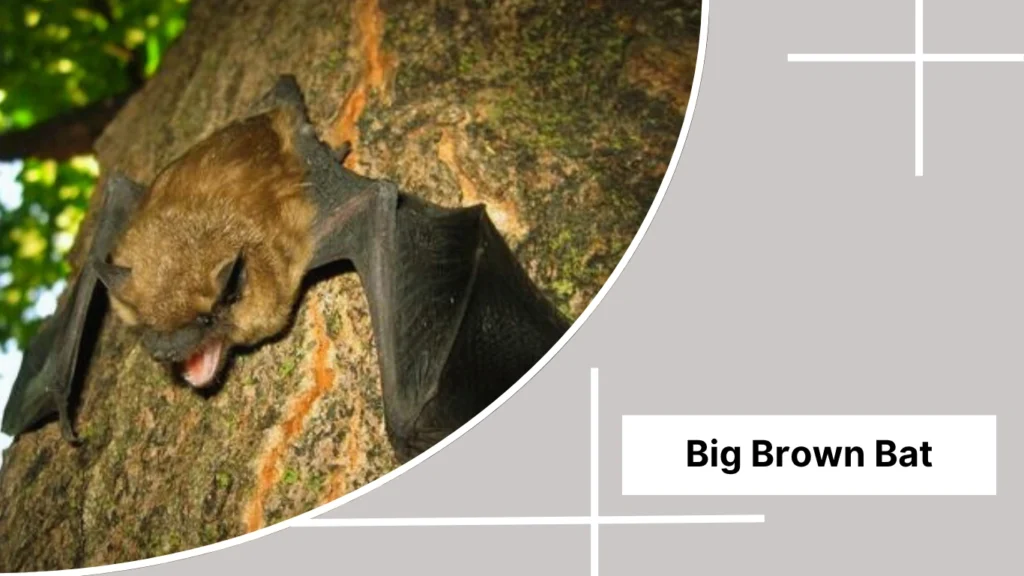
The Big Brown Bat (Eptesicus fuscus) is a robust and adaptable bat species found throughout much of North and Central America. Known for its strong flight and ability to thrive in urban and rural areas, it plays a crucial role in controlling agricultural pests.
Identification
- Size: 4–5 inches in length
- Wingspan: 12–13 inches
- Color: Glossy dark brown fur with black face and wings
- Ears: Medium-sized, rounded with a broad base
- Face: Broad snout and strong jaw
- Weight: 14–21 grams
Natural Habitat and Roosting
Big Brown Bats are versatile and found in a range of environments including forests, cities, and farmland. They commonly roost in attics, barns, hollow trees, and under loose bark. During winter, they hibernate in buildings, caves, or rock crevices where temperatures remain cool but not freezing.
Diet and Feeding Habits
These bats primarily feed on hard-bodied insects such as beetles, but they also eat moths, wasps, and flies. They use echolocation to detect prey and have powerful jaws that allow them to crunch tough exoskeletons. Feeding usually takes place shortly after sunset.
Behavior and Activity
Big Brown Bats are highly tolerant of cold weather and are among the last to enter hibernation. They are solitary or form small colonies and can travel several miles each night in search of food. Their strong flight and resistance to pesticides make them excellent natural pest controllers.
3. Vampire Bat
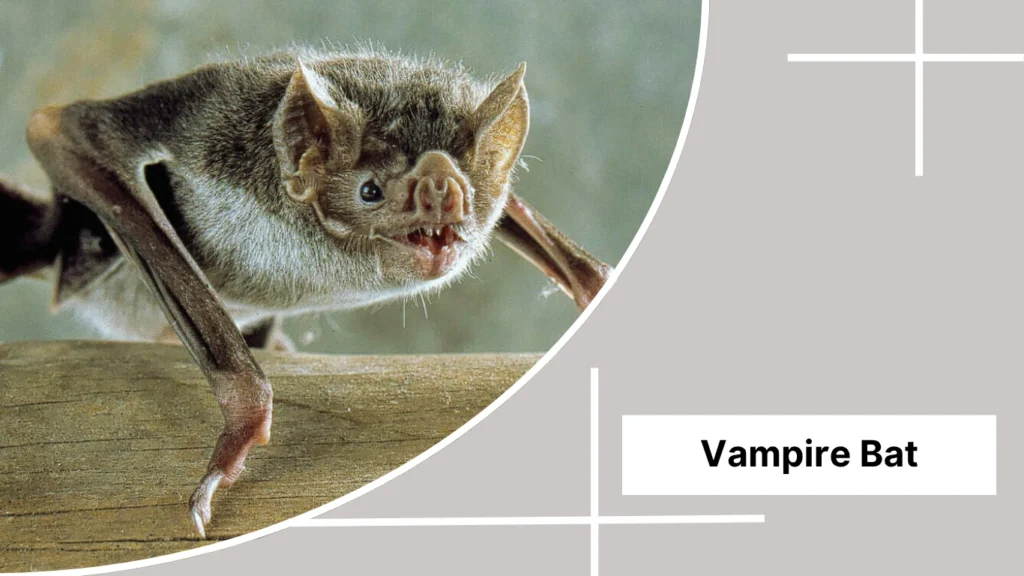
The Vampire Bat (Desmodus rotundus) is a small, nocturnal species native to Central and South America. It is best known for its unique feeding habit—consuming the blood of other animals, usually livestock.
Identification
- Size: 3–3.5 inches in length
- Wingspan: Around 7 inches
- Color: Gray-brown to reddish-brown fur
- Ears: Pointed and erect
- Face: Short nose with specialized heat sensors
- Weight: 15–50 grams
Natural Habitat and Roosting
Vampire Bats live in warm, humid environments such as forests, caves, and abandoned buildings. They often roost in large groups inside hollow trees, wells, and mine shafts. Their habitats are typically close to livestock or wildlife that can serve as hosts for feeding.
Diet and Feeding Habits
Unlike other bats, Vampire Bats feed exclusively on blood. They approach sleeping animals quietly, make a small incision with their sharp teeth, and lap up the blood with their tongues. Their saliva contains anticoagulants that prevent the wound from clotting while feeding.
Behavior and Activity
Vampire Bats are intelligent, social animals known for sharing food with roost mates that haven’t fed. They use infrared sensors to locate warm blood vessels on their host’s body. They are silent fliers and can walk and hop using their strong limbs when approaching prey on the ground.
4. Fruit Bat

Fruit Bats, also known as Flying Foxes, belong to the family Pteropodidae and are mainly found in tropical and subtropical regions. These large bats play a vital role in pollination and seed dispersal for many fruiting trees.
Identification
- Size: 6–16 inches in body length (varies by species)
- Wingspan: Up to 5.6 feet in larger species
- Color: Typically brown, black, or reddish with lighter underparts
- Ears: Large and pointed
- Face: Dog-like face with large eyes
- Weight: 300 grams to over 1 kilogram
Natural Habitat and Roosting
Fruit Bats inhabit rainforests, mangroves, and woodlands, especially where fruit-bearing trees are abundant. They roost in large colonies high in the trees, often returning to the same roosts daily. Some species are also known to roost in caves and urban parks.
Diet and Feeding Habits
Their diet consists mainly of fruits, nectar, and flowers. They feed by biting into fruit and extracting the juice, spitting out the fibrous parts. Favorite foods include bananas, mangoes, figs, and guavas. Some species are also important pollinators for trees like durian and baobab.
Behavior and Activity
Fruit Bats are nocturnal and travel long distances in search of food. They are highly social, forming noisy colonies with hundreds or even thousands of individuals. Unlike many bats, they rely on their keen sense of smell and vision rather than echolocation to locate food.
5. Egyptian Rousette
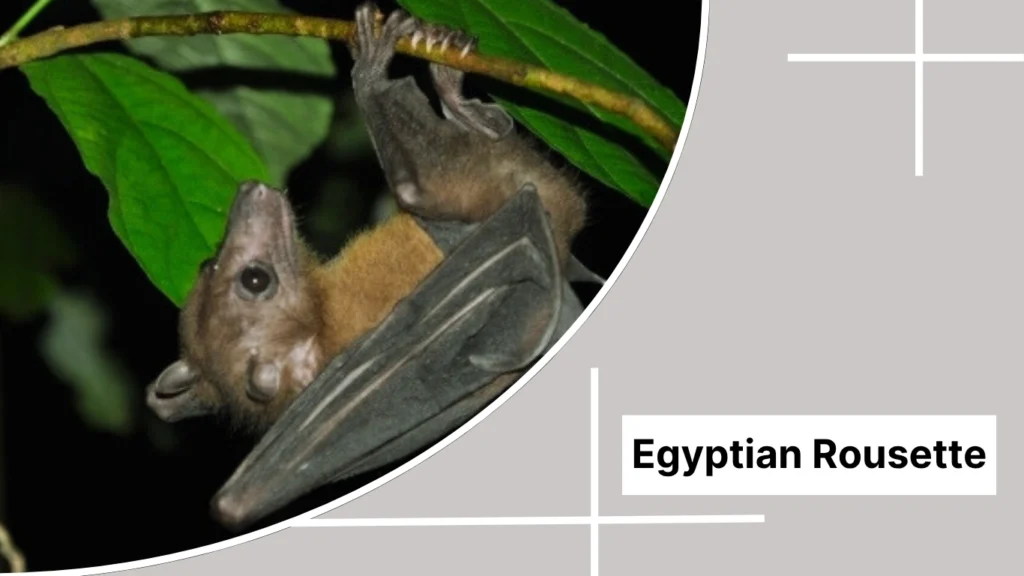
The Egyptian Rousette (Rousettus aegyptiacus) is a type of fruit bat native to parts of Africa and the Middle East. It is unique among fruit bats for its use of a primitive form of echolocation, allowing it to navigate in complete darkness.
Identification
- Size: 5–6 inches in body length
- Wingspan: Around 2 feet
- Color: Brownish-gray fur with paler underparts
- Ears: Short and rounded
- Face: Dog-like snout with large eyes
- Weight: 80–170 grams
Natural Habitat and Roosting
This bat is found in dry savannas, rocky cliffs, forests, and near human settlements. It roosts in dark caves, abandoned buildings, and crevices during the day, often in colonies of hundreds or more. These roosts are typically close to fruit sources.
Diet and Feeding Habits
Egyptian Rousettes consume soft fruits like dates, figs, and bananas. They chew the fruit to extract juices and pulp, then spit out the remaining fibers. They play a role in seed dispersal, especially for trees growing in rocky or dry environments.
Behavior and Activity
While they do use vision and smell like most fruit bats, Egyptian Rousettes also emit clicking sounds with their tongue to echolocate in total darkness. They are social and often seen grooming or communicating with each other within their colonies. Their flight is strong and steady, allowing them to travel considerable distances at night.
6. Indian Flying Fox
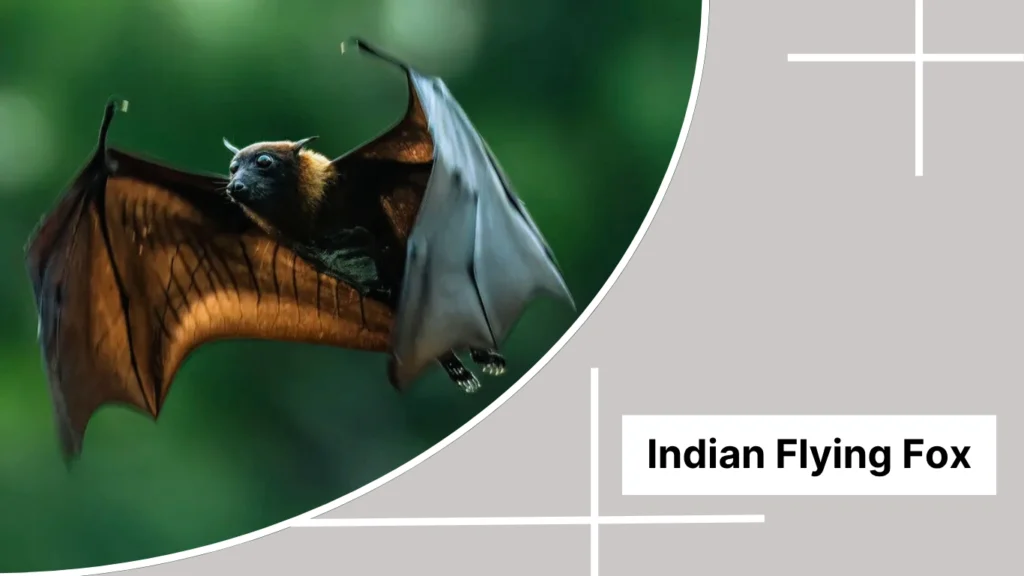
The Indian Flying Fox (Pteropus giganteus) is one of the largest bat species in the world, commonly found across the Indian subcontinent. With its massive wingspan and fruit-based diet, it plays a crucial ecological role in forest regeneration.
Identification
- Size: 6–9 inches in body length
- Wingspan: Up to 4.9 feet
- Color: Dark brown to black body with a rusty or golden-brown mantle
- Ears: Long and pointed
- Face: Fox-like with large eyes and a long snout
- Weight: 1.5–2.5 pounds
Natural Habitat and Roosting
Indian Flying Foxes inhabit forests, wetlands, urban parks, and agricultural areas. They roost in large numbers on tall trees near water sources. Colonies may contain hundreds or even thousands of bats, and they often return to the same roosts for generations.
Diet and Feeding Habits
Their diet is primarily composed of ripe and juicy fruits, including guavas, bananas, mangoes, and figs. They use their sharp teeth to pierce fruit and then suck out the juice. They also visit flowers for nectar, contributing to pollination.
Behavior and Activity
These bats are entirely nocturnal and travel long distances—sometimes over 50 kilometers—in a single night to forage. They are social animals, communicating through vocalizations and body language. Their strong, steady flight and large size make them highly visible at dusk and dawn.
7. Honduran White Bat

The Honduran White Bat (Ectophylla alba) is a small, rare species known for its snow-white fur and bright yellow nose and ears. Native to Central America, it is one of the few bats with entirely white fur, making it stand out among other species.
Identification
- Size: About 1.5 inches in length
- Wingspan: Approximately 4 inches
- Color: Pure white fur with yellow ears and nose
- Ears: Large and leaf-shaped
- Face: Short, with a rounded snout
- Weight: 5–6 grams
Natural Habitat and Roosting
This species lives in lowland rainforests of Honduras, Nicaragua, Costa Rica, and Panama. It roosts under large Heliconia leaves, which it cuts to form a tent-like shelter. These roosts provide camouflage and protection from rain and predators.
Diet and Feeding Habits
The Honduran White Bat feeds mostly on one type of fig, which provides all its nutritional needs. It prefers ripe, soft fruit and extracts the juice using its tiny teeth. The bat plays a role in seed dispersal within its limited range.
Behavior and Activity
It is a gentle and quiet species that roosts in small groups of 4 to 12 individuals. These bats are shy and avoid open spaces. They are active during the night and return to the same leaf roosts daily. Despite their small size, they are effective at navigating dense rainforest environments.
8. Greater Bulldog Bat
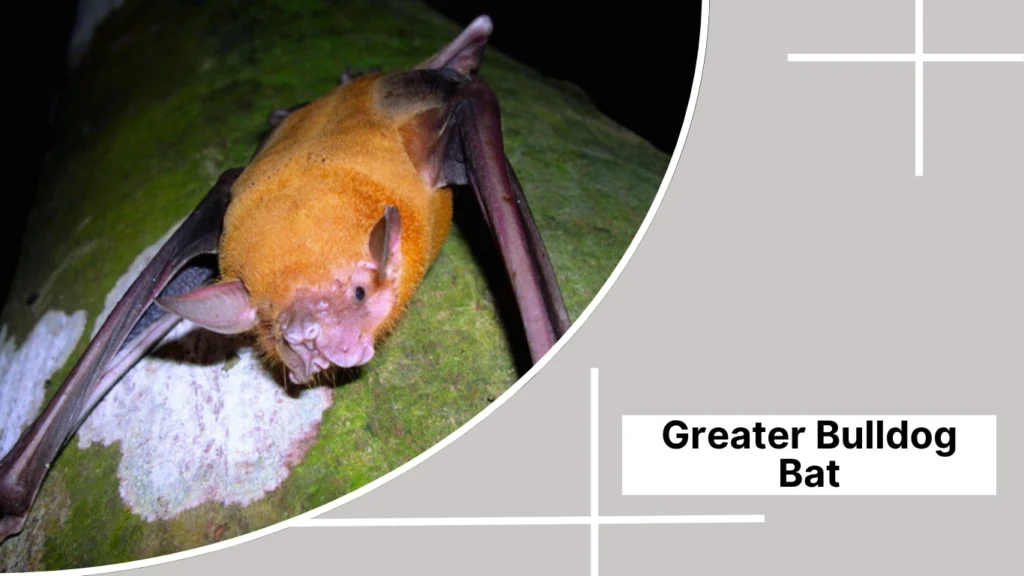
The Greater Bulldog Bat (Noctilio leporinus), also known as the Fishing Bat, is a large bat species renowned for its ability to catch fish using echolocation and specialized claws. It inhabits tropical regions of Central and South America.
Identification
- Size: 4.5–5.5 inches in body length
- Wingspan: Up to 3 feet
- Color: Reddish-brown to orange with a lighter underside
- Ears: Long and pointed
- Face: Broad with prominent lips and large noseleaf
- Weight: 50–90 grams
Natural Habitat and Roosting
This bat prefers habitats near large water bodies such as rivers, lakes, and coastal lagoons. It roosts in hollow trees, caves, and man-made structures like bridges. Roosts are usually close to feeding grounds, and the species forms small social groups.
Diet and Feeding Habits
The Greater Bulldog Bat feeds on fish, crustaceans, and aquatic insects. It uses echolocation to detect ripples made by swimming prey and then scoops them out of the water with its sharp claws. It may also consume frogs and water bugs.
Behavior and Activity
These bats are powerful fliers and skilled hunters. They patrol over water, skimming the surface with their feet to locate prey. They are most active just after sunset and before sunrise. Their behavior is highly specialized, and they often return to the same hunting areas night after night.
9. Lesser Horseshoe Bat

The Lesser Horseshoe Bat (Rhinolophus hipposideros) is a small, insect-eating bat found throughout parts of Europe, North Africa, and Asia. Named for the horseshoe-shaped fold of skin on its nose, this bat is known for its quiet, fluttering flight.
Identification
- Size: 1.6–1.8 inches in body length
- Wingspan: 7.5–9.5 inches
- Color: Gray-brown to reddish-brown back with pale underparts
- Ears: Short and pointed
- Face: Complex noseleaf shaped like a horseshoe
- Weight: 5–9 grams
Natural Habitat and Roosting
Lesser Horseshoe Bats favor wooded valleys, limestone caves, old buildings, and abandoned mines. They often roost in roofs and attics during summer and choose caves for hibernation in winter. Roost sites are typically in warm, sheltered locations.
Diet and Feeding Habits
This species feeds on small flying insects such as moths, flies, mosquitoes, and beetles. It catches prey in mid-air or gleans it from leaves and walls. It hunts in short bursts, using high-frequency echolocation calls to locate its prey.
Behavior and Activity
These bats are shy and elusive, flying low and slowly with a fluttery motion. They are solitary or form small groups. Roost switching is common, and individuals may use several different sites during the warmer months. They emerge shortly after dusk and avoid open spaces, preferring cluttered woodland and hedgerows.
10. Common Pipistrelle

The Common Pipistrelle (Pipistrellus pipistrellus) is one of the smallest and most widespread bat species in Europe. It’s frequently seen around gardens and streetlights, feeding on small flying insects during dusk and dawn.
Identification
- Size: 1.3–2 inches in body length
- Wingspan: 7–9 inches
- Color: Brown fur with a darker face and wings
- Ears: Short and rounded
- Face: Small with a blunt snout
- Weight: 3.5–8 grams
Natural Habitat and Roosting
Common Pipistrelles are highly adaptable and found in a range of habitats including woodlands, farmland, urban parks, and gardens. They roost in tree holes, bat boxes, buildings, and crevices in walls or roofs. They often change roost sites seasonally or even weekly.
Diet and Feeding Habits
Their diet mainly consists of small insects such as gnats, mosquitoes, and midges. They feed while flying, often close to vegetation or artificial lights where insects gather. Using high-frequency echolocation, they hunt with speed and precision.
Behavior and Activity
These bats are among the first to emerge in the evening. They are agile fliers, capable of quick turns and hovering. Common Pipistrelles are solitary or form small groups and are known for their high tolerance of human environments. They remain active until late in the night, especially in warmer months.
11. Mexican Free-tailed Bat

The Mexican Free-tailed Bat (Tadarida brasiliensis) is a medium-sized species known for forming some of the largest colonies of any mammal. It’s especially famous in the U.S. for its massive nightly emergence from caves like those in Texas.
Identification
- Size: 3.5–4 inches in body length
- Wingspan: 11–13 inches
- Color: Dark brown to grayish-brown fur
- Ears: Wide and slightly forward-tilting
- Face: Wrinkled with a broad snout
- Weight: 11–14 grams
Natural Habitat and Roosting
This species prefers warm climates and is often found in caves, tunnels, attics, and under bridges. They form dense colonies, sometimes in the millions, especially during the summer breeding season. Their roosts are typically dark and humid.
Diet and Feeding Habits
Mexican Free-tailed Bats are fast, high-flying insectivores that hunt moths, beetles, and flying ants. They can fly at altitudes of over 10,000 feet and reach speeds of 60 mph. Their ability to cover long distances makes them efficient foragers.
Behavior and Activity
Highly social and noisy, these bats engage in complex vocal communication within colonies. They are migratory, traveling from the U.S. to Mexico for winter. Their synchronized dusk emergence forms thick clouds of bats visible from miles away—a popular tourist spectacle in several regions.
12. Hoary Bat
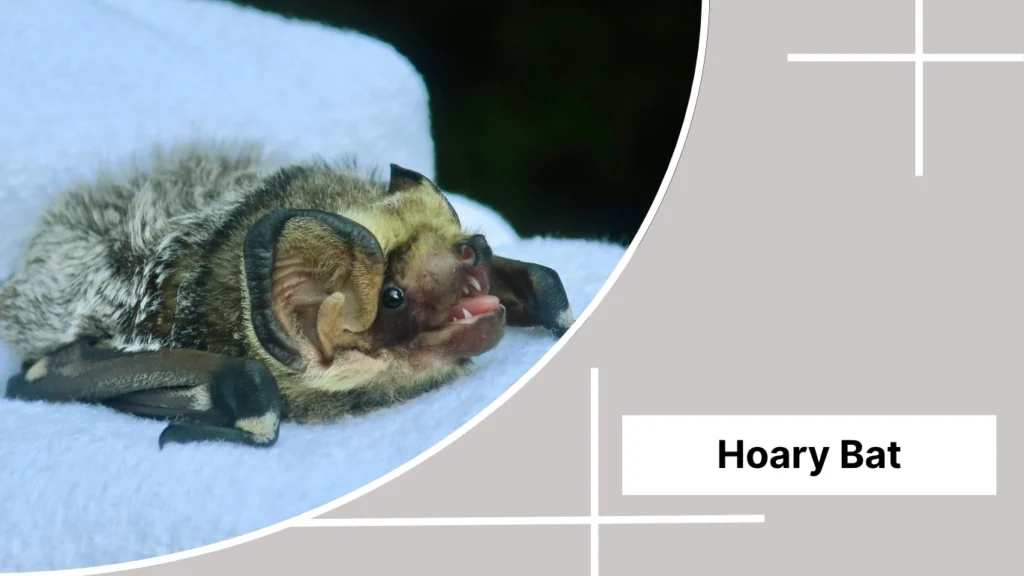
The Hoary Bat (Lasiurus cinereus) is a solitary, migratory bat known for its distinctive frosted fur. It is the most widespread bat species in the United States and can also be found in parts of Canada, Central America, and South America.
Identification
- Size: 5–6 inches in body length
- Wingspan: 15–16 inches
- Color: Dark brown fur with white-tipped hairs giving a frosted or “hoary” appearance
- Ears: Short and rounded
- Face: Blunt snout with small eyes
- Weight: 20–35 grams
Natural Habitat and Roosting
Hoary Bats prefer forested areas and are often found roosting high in trees among dense foliage. They are solitary and typically hang from branches hidden within leaves. During migration, they may roost in more exposed locations or even use human-made structures.
Diet and Feeding Habits
They feed primarily on moths but also consume beetles, wasps, dragonflies, and other flying insects. Their powerful flight allows them to cover vast distances during nightly foraging trips. They hunt in open areas like fields and above tree canopies.
Behavior and Activity
Hoary Bats are migratory, traveling long distances between summer and winter ranges. They are solitary and rarely seen in groups. Their flight is fast and direct, making them efficient aerial hunters. Males and females tend to inhabit different regions during certain times of the year.
13. Eastern Red Bat
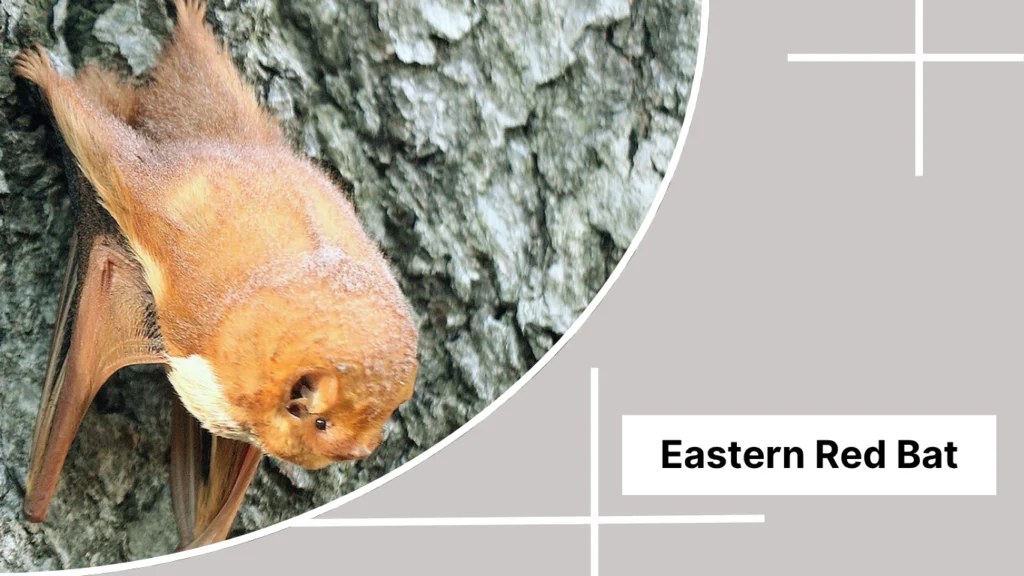
The Eastern Red Bat (Lasiurus borealis) is a colorful, tree-dwelling bat native to North America. Its reddish-orange fur helps it blend in with autumn leaves, providing excellent camouflage during roosting.
Identification
- Size: 3.5–5 inches in body length
- Wingspan: 11–13 inches
- Color: Brick-red to orange fur with white shoulder patches
- Ears: Short and rounded
- Face: Slightly pointed snout with dark facial features
- Weight: 10–15 grams
Natural Habitat and Roosting
Eastern Red Bats inhabit deciduous and mixed woodlands, especially near water sources. They roost alone in tree foliage, usually hanging from twigs or leaves. Their coloration helps them resemble dead leaves, protecting them from predators.
Diet and Feeding Habits
Their diet includes moths, flies, beetles, and other insects. They are especially fond of pest species and help control insect populations naturally. Eastern Red Bats hunt in forest clearings and over open water, using rapid and agile flight.
Behavior and Activity
These bats are solitary and active just after sunset. They migrate seasonally and are capable of long flights between breeding and wintering grounds. Their flight is swift and erratic, adapted to chasing down fast-moving insects. During cold spells, they may enter torpor while still clinging to leaves.
14. Gray Bat

The Gray Bat (Myotis grisescens) is a medium-sized, cave-dwelling bat endemic to the southeastern United States. It is a federally endangered species, primarily due to habitat loss and disturbance of roosting caves.
Identification
- Size: 3.5–4 inches in body length
- Wingspan: 11–12 inches
- Color: Uniformly gray fur that may appear brown when wet
- Ears: Long and narrow
- Face: Plain with a blunt snout and no noseleaf
- Weight: 7–16 grams
Natural Habitat and Roosting
Gray Bats are obligate cave dwellers, meaning they roost exclusively in caves year-round. They require caves with specific temperature and humidity conditions for hibernation and maternity colonies. These caves are typically located near water sources like rivers or reservoirs.
Diet and Feeding Habits
Their diet includes a variety of aquatic and terrestrial insects such as mayflies, caddisflies, moths, and beetles. They forage over streams, lakes, and forest edges, often traveling several miles from their roost to feed. Their feeding behavior supports healthy aquatic ecosystems.
Behavior and Activity
Gray Bats form large colonies, sometimes in the hundreds of thousands. They are highly sensitive to disturbance, especially during breeding and hibernation. They emerge just after sunset and often fly low over water surfaces while hunting. Their social behavior and dependence on specific caves make them vulnerable to human impact.
15. Indiana Bat
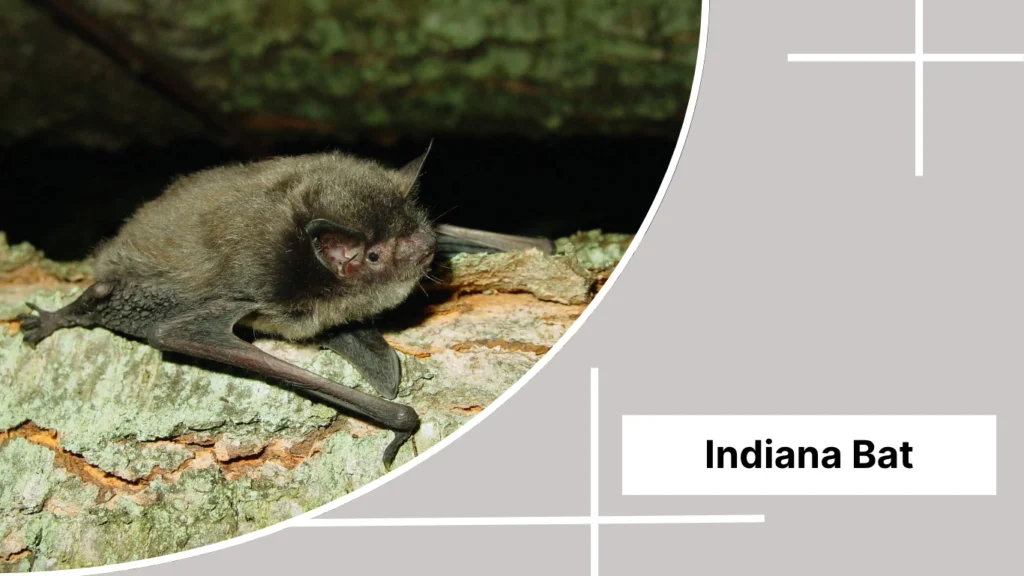
The Indiana Bat (Myotis sodalis) is a small, federally endangered bat species found in the eastern and midwestern United States. It closely resembles other Myotis species but is distinguishable by its slightly pinkish-brown fur and specialized hibernation habits.
Identification
- Size: 1.5–2 inches in body length
- Wingspan: 9–10 inches
- Color: Dull brown or grayish fur with a faint pinkish hue
- Ears: Small and pointed
- Face: Hairless muzzle with a slight V-shape between the eyes
- Weight: 5–8 grams
Natural Habitat and Roosting
Indiana Bats roost under loose tree bark during the summer and hibernate in large groups inside cold caves or abandoned mines during winter. Their summer roosts are often in floodplain forests or near streams, while winter hibernacula must maintain a stable temperature.
Diet and Feeding Habits
These bats feed on small, soft-bodied insects such as moths, beetles, and flies. They forage in forests, over streams, and along field edges. Like other Myotis bats, they use echolocation to navigate and catch prey in flight.
Behavior and Activity
Indiana Bats are social and form tight clusters when hibernating, sometimes with hundreds packed into a square foot. They emerge shortly after sunset and feed throughout the night. Their populations have declined due to habitat destruction, pesticide use, and the spread of white-nose syndrome.
16. Bechstein’s Bat

Bechstein’s Bat (Myotis bechsteinii) is a rare and elusive species found mainly in mature deciduous forests across parts of Europe. It is one of the most woodland-dependent bat species and is highly sensitive to habitat changes.
Identification
- Size: 1.7–2 inches in body length
- Wingspan: 9–11 inches
- Color: Reddish-brown back with pale grayish underparts
- Ears: Very long and broad, reaching beyond the snout
- Face: Pinkish skin with a pointed snout
- Weight: 7–12 grams
Natural Habitat and Roosting
This bat prefers ancient woodlands with a high density of hollow trees. Roosts are typically found in tree cavities, woodpecker holes, or bat boxes. They change roosts frequently and tend to stay close to the forest interior, avoiding open landscapes.
Diet and Feeding Habits
Bechstein’s Bats feed mainly on spiders, moths, and beetles, which they catch while flying slowly through the understory or by gleaning from foliage. Their large ears help them detect faint sounds made by insects on leaves or bark.
Behavior and Activity
They are strictly forest dwellers and very rarely venture into open spaces. Their flight is slow and maneuverable, adapted for navigating dense vegetation. These bats are typically solitary or live in small colonies. Due to their specialized habitat needs, they are considered a conservation priority in many regions.
17. Spectral Bat
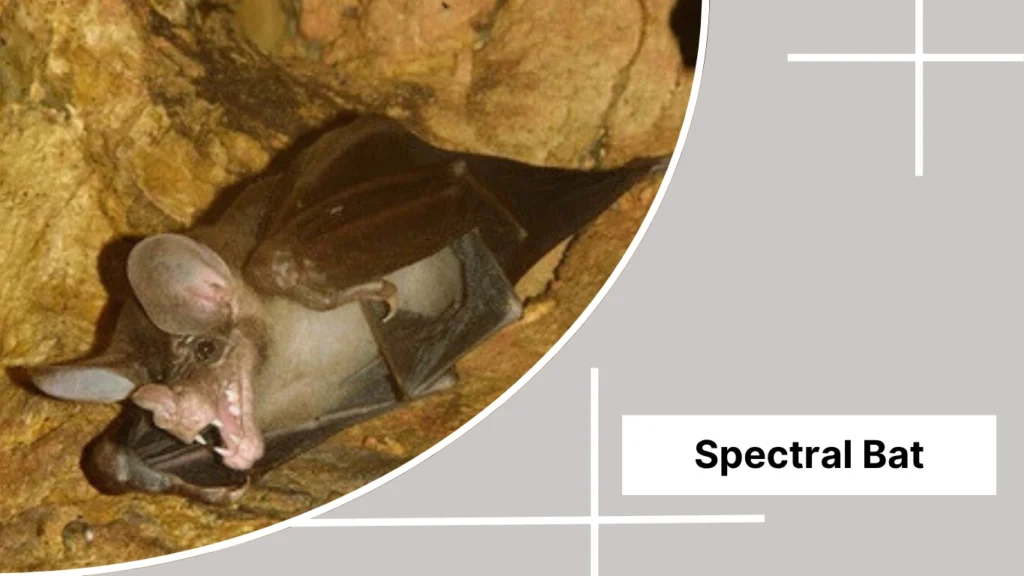
The Spectral Bat (Vampyrum spectrum), also known as the False Vampire Bat, is the largest carnivorous bat in the world. Native to Central and South America, it is a rare and powerful predator among bats.
Identification
- Size: 5.5–6 inches in body length
- Wingspan: Up to 3 feet
- Color: Dark brown to rust-colored fur with lighter underparts
- Ears: Large, pointed, and well-separated
- Face: Long snout with a strong jaw and prominent noseleaf
- Weight: 145–190 grams
Natural Habitat and Roosting
Spectral Bats are found in lowland tropical forests, often roosting in hollow trees or dense foliage. They are extremely secretive and rarely seen, making them one of the most poorly studied bat species. They typically roost alone or in small family groups.
Diet and Feeding Habits
Unlike fruit-eating bats, the Spectral Bat preys on small vertebrates including birds, rodents, lizards, and other bats. It hunts silently at night, using powerful jaws and sharp teeth to subdue its prey. It may also consume large insects when other prey is scarce.
Behavior and Activity
This bat is a solitary, nocturnal predator with a slow and deliberate flight. It often patrols the canopy and understory in search of prey. Its behavior is more owl-like than typical bat species, and it uses both echolocation and sharp vision to detect movement in the dark.
18. Townsend’s Big-eared Bat
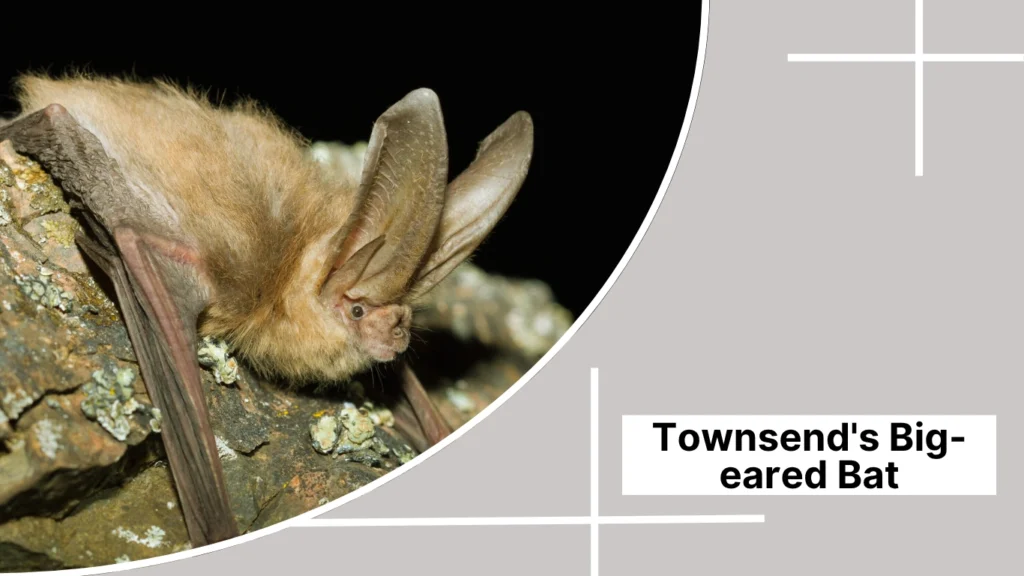
Townsend’s Big-eared Bat (Corynorhinus townsendii) is a medium-sized bat easily recognized by its enormous ears. Found in North America, especially the western United States, this bat is highly sensitive to human disturbance, especially in its roosting sites.
Identification
- Size: 3.5–4.5 inches in body length
- Wingspan: 12–13 inches
- Color: Grayish-brown to reddish-brown fur with paler underparts
- Ears: Extremely long, nearly as long as its body
- Face: Blunt with a pair of large glands between the eyes
- Weight: 7–12 grams
Natural Habitat and Roosting
Townsend’s Big-eared Bats roost in caves, abandoned buildings, and old mines. They prefer dry, undisturbed environments and are often found in arid and semi-arid habitats, woodlands, and mountainous regions. Maternity and hibernation roosts are especially sensitive to intrusion.
Diet and Feeding Habits
Their diet primarily consists of moths, which they often catch mid-flight or glean from surfaces. They fly slowly and silently, taking advantage of their highly sensitive hearing to locate prey. Unlike many bats, they often hover briefly to pick insects off leaves or walls.
Behavior and Activity
This bat is non-migratory and spends winter in hibernation. It is solitary or found in small colonies. When roosting, it often wraps its massive ears around its head. Its flight is quiet and fluttery, allowing it to navigate tight spaces and detect even faint sounds made by its prey.
19. Northern Long-eared Bat

The Northern Long-eared Bat (Myotis septentrionalis) is a small insectivorous bat found in the forests of eastern and central North America. It is known for its long ears and quiet flight, and has been severely affected by white-nose syndrome in recent years.
Identification
- Size: 3–3.7 inches in body length
- Wingspan: 9–10 inches
- Color: Light to dark brown fur with pale underparts
- Ears: Long and narrow, extending beyond the nose when laid forward
- Face: Slender with a slightly pointed snout
- Weight: 5–8 grams
Natural Habitat and Roosting
This species roosts in tree cavities, under bark, and occasionally in buildings. It favors mature, mixed hardwood forests near water. Roosting sites are often rotated and are selected based on temperature, cover, and humidity.
Diet and Feeding Habits
The Northern Long-eared Bat primarily feeds on moths, beetles, flies, and other soft-bodied insects. Unlike many other bats, it often uses a gleaning technique—plucking insects off leaves or bark rather than catching them mid-air.
Behavior and Activity
It is a quiet, maneuverable flier, adapted for foraging in cluttered forest interiors. This bat emerges shortly after dusk and hunts close to vegetation. It hibernates in caves and mines during winter and is solitary or found in small maternity groups during the warmer months.
20. Kitti’s Hog-nosed Bat
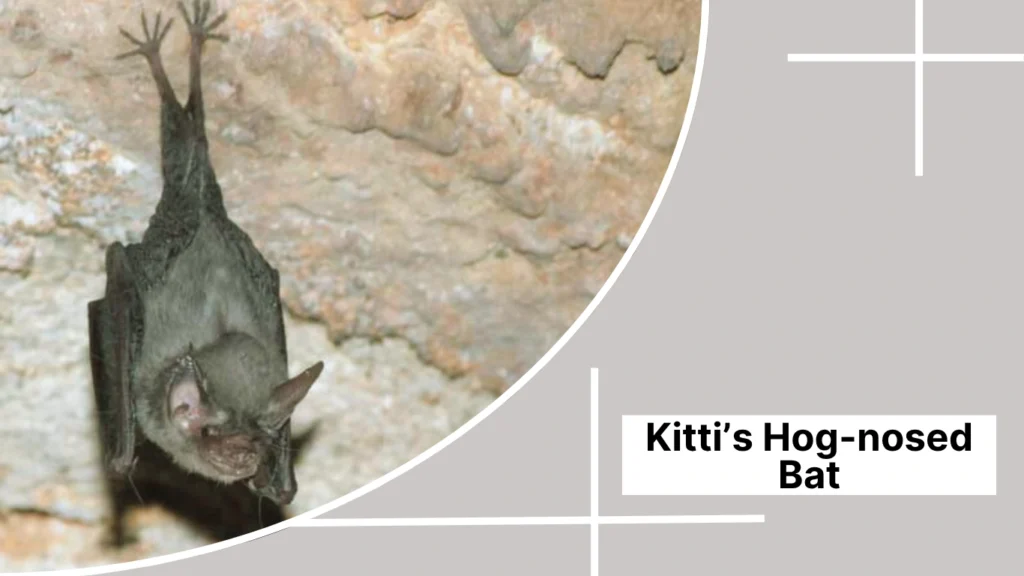
Kitti’s Hog-nosed Bat (Craseonycteris thonglongyai), also known as the Bumblebee Bat, is the smallest bat—and possibly the smallest mammal—in the world. It is native to parts of Thailand and Myanmar and is rarely observed in the wild.
Identification
- Size: 1.1–1.3 inches in body length
- Wingspan: Around 5.5–6.7 inches
- Color: Reddish-gray or light brown fur
- Ears: Relatively large and rounded
- Face: Pig-like snout with upward-facing nostrils
- Weight: 1.5–2 grams
Natural Habitat and Roosting
This species roosts in limestone caves, usually near rivers or within forested areas. Colonies are small, typically consisting of fewer than 100 individuals. Roosts are warm, humid, and undisturbed, often located in remote karst landscapes.
Diet and Feeding Habits
Kitti’s Hog-nosed Bat feeds on tiny insects such as gnats and flies. It hunts during short twilight periods—dawn and dusk—using echolocation. Its feeding activity is brief, lasting about 30 minutes per outing.
Behavior and Activity
These bats are delicate, fast flyers, using tight maneuvering to navigate cave entrances and dense vegetation. They are extremely sensitive to environmental changes and are currently classified as near-threatened due to their restricted range and vulnerability to disturbance.
21. Jamaican Fruit Bat
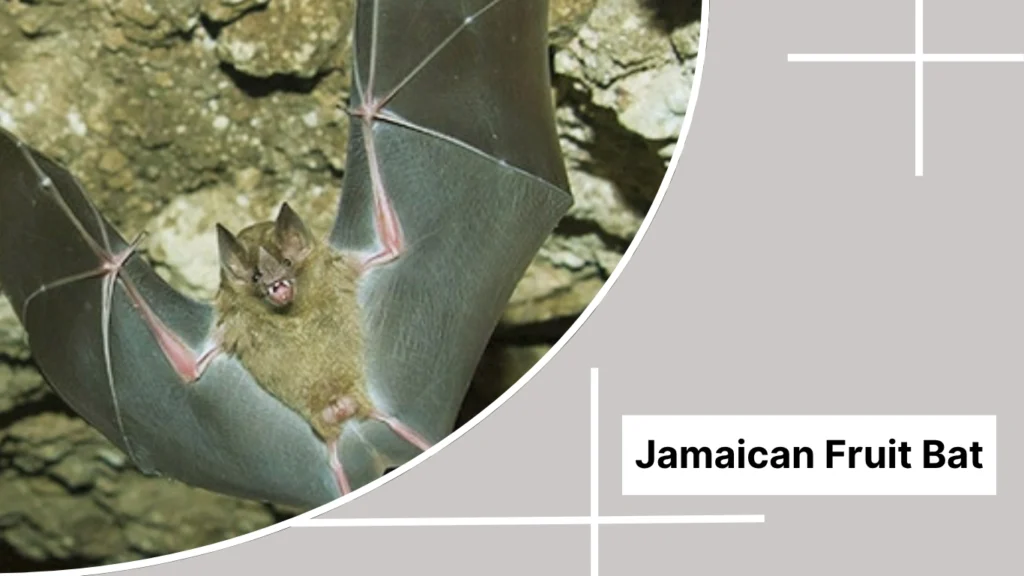
The Jamaican Fruit Bat (Artibeus jamaicensis) is a medium-sized tropical bat commonly found in Central and South America, as well as the Caribbean. It is an essential seed disperser in tropical ecosystems and thrives in both wild and disturbed habitats.
Identification
- Size: 3–4 inches in body length
- Wingspan: About 16 inches
- Color: Brown or grayish-brown fur with paler underparts
- Ears: Short and rounded
- Face: Broad snout with a prominent noseleaf
- Weight: 40–60 grams
Natural Habitat and Roosting
This species inhabits tropical forests, plantations, and urban gardens. It roosts in hollow trees, caves, and buildings, often in groups of several dozen individuals. Roosts are typically shaded and humid, providing shelter from predators and heat.
Diet and Feeding Habits
The Jamaican Fruit Bat feeds on figs, guavas, bananas, and other soft fruits. It crushes fruit with its strong jaws to extract the juice and pulp, then discards the rest. Its foraging activity helps disperse seeds and maintain forest regeneration.
Behavior and Activity
These bats are nocturnal and social, often vocalizing and grooming each other within roosts. They are agile flyers and can hover briefly while feeding. Their activity is strongly linked to fruit availability, and they may move roosts based on seasonal changes in food supply.
22. Peter’s Dwarf Epauletted Fruit Bat

Peter’s Dwarf Epauletted Fruit Bat (Micropteropus pusillus) is a small, fruit-eating bat found in parts of Central and West Africa. Males are known for their striking white shoulder tufts, which they use in visual mating displays.
Identification
- Size: 2.5–3.3 inches in body length
- Wingspan: Approximately 12 inches
- Color: Brownish-gray fur with paler underparts; males have white epaulettes
- Ears: Rounded and prominent
- Face: Fox-like with large eyes and a short snout
- Weight: 20–30 grams
Natural Habitat and Roosting
This bat inhabits tropical forests, savannas, and areas near rivers. It roosts in tree foliage, palm fronds, and sometimes inside buildings or huts. Roosting is usually solitary or in small groups, especially outside the breeding season.
Diet and Feeding Habits
Peter’s Dwarf Epauletted Fruit Bat primarily feeds on fruits such as mangoes, bananas, and figs. It chews the fruit to extract juice and pulp, playing a role in seed dispersal. It also consumes nectar and may assist in pollinating flowering plants.
Behavior and Activity
This species is mostly nocturnal and active shortly after sunset. Males may display their white shoulder tufts while calling to attract females. Its flight is quiet and agile, allowing it to maneuver through dense vegetation while foraging.
23. Yellow-winged Bat
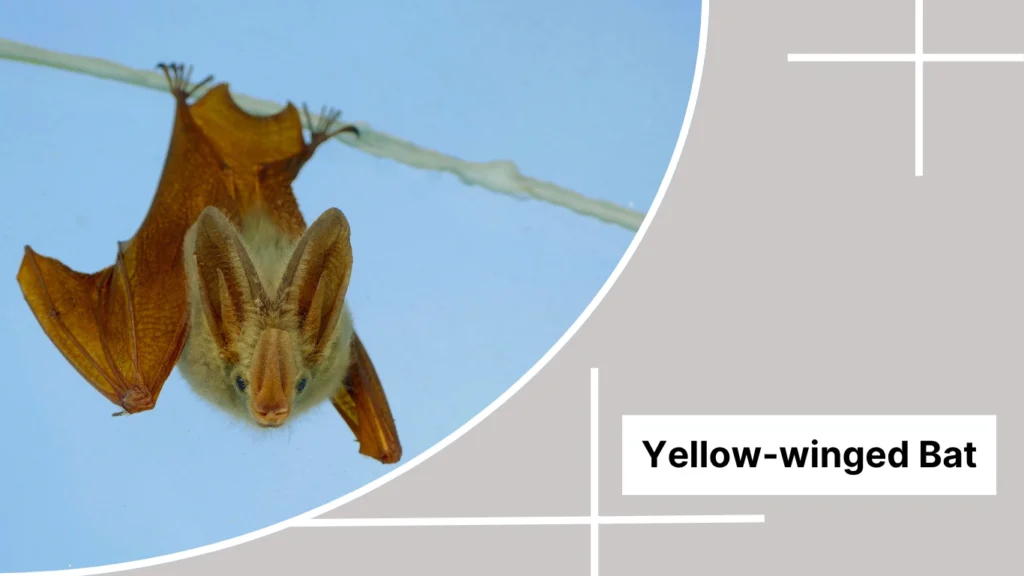
The Yellow-winged Bat (Lavia frons) is a visually striking species found in sub-Saharan Africa. Known for its bright yellow wing membranes and large eyes, it belongs to the false vampire bat family but feeds on insects, not blood.
Identification
- Size: 3.5–4.5 inches in body length
- Wingspan: About 14 inches
- Color: Grayish-blue or slate-gray body with vivid yellow or orange wings
- Ears: Long, narrow, and pointed
- Face: Wide face with large eyes and noseleaf
- Weight: 20–35 grams
Natural Habitat and Roosting
Yellow-winged Bats prefer savannas, dry woodlands, and riverine forests. They roost in trees, low shrubs, and occasionally caves or rock crevices. During the day, they are often seen hanging from exposed branches, relying on their coloration for camouflage.
Diet and Feeding Habits
They are insectivorous, feeding on moths, beetles, grasshoppers, and other night-flying insects. They often hunt from a perch, launching into short flights to snatch passing prey. Echolocation is used in combination with their excellent night vision.
Behavior and Activity
This bat is primarily solitary or lives in pairs. It is nocturnal and becomes active just after dark. Males are territorial and may defend small roosting areas. The Yellow-winged Bat has a slow, deliberate flight, making it effective at capturing insects in low-light environments.
24. Seychelles Sheath-tailed Bat

The Seychelles Sheath-tailed Bat (Coleura seychellensis) is a critically endangered species endemic to the Seychelles islands. It is named for the sheath-like structure around its tail and is one of the rarest bats in the world.
Identification
- Size: About 2 inches in body length
- Wingspan: Approximately 10 inches
- Color: Dark brown or black fur with lighter underparts
- Ears: Short and pointed
- Face: Broad nose with a flat muzzle
- Weight: 10–15 grams
Natural Habitat and Roosting
This bat inhabits lowland coastal forests and scrub habitats, typically near limestone outcrops. It roosts in rock crevices, caves, and abandoned buildings. Current populations are limited to just a few roosting sites on the islands of Silhouette and Mahe.
Diet and Feeding Habits
The Seychelles Sheath-tailed Bat is an aerial insectivore, feeding on small flying insects such as moths and beetles. It uses echolocation to detect prey while flying swiftly through vegetation or over open ground.
Behavior and Activity
This species is crepuscular and nocturnal, emerging at dusk to forage. It is extremely sensitive to habitat loss and disturbance. Colonies are small, and individuals are known to shift roosts frequently in response to environmental pressures.
25. Greater Noctule Bat

The Greater Noctule Bat (Nyctalus lasiopterus) is the largest bat species in Europe and one of the few known to prey on birds in flight. It is a rare and powerful aerial hunter with a wide but scattered distribution.
Identification
- Size: 4.5–5.7 inches in body length
- Wingspan: Up to 18 inches
- Color: Chestnut brown or reddish-brown fur
- Ears: Short, rounded, and widely spaced
- Face: Strong jaw and large muzzle
- Weight: 40–80 grams
Natural Habitat and Roosting
This bat prefers mature deciduous forests, particularly those with large, hollow trees for roosting. It also uses bat boxes and old woodpecker holes. It tends to avoid human structures and favors high roosting locations with good access to open skies.
Diet and Feeding Habits
Uniquely among bats, the Greater Noctule Bat feeds not only on large insects but also on migratory songbirds, which it catches in mid-air during nocturnal migration. It can detect and capture birds using a combination of echolocation and acute hearing.
Behavior and Activity
It is solitary or lives in small female groups during maternity season. These bats are active high above the canopy and have a fast, powerful flight. They are migratory and may travel long distances seasonally, adjusting their foraging behavior based on prey availability.