




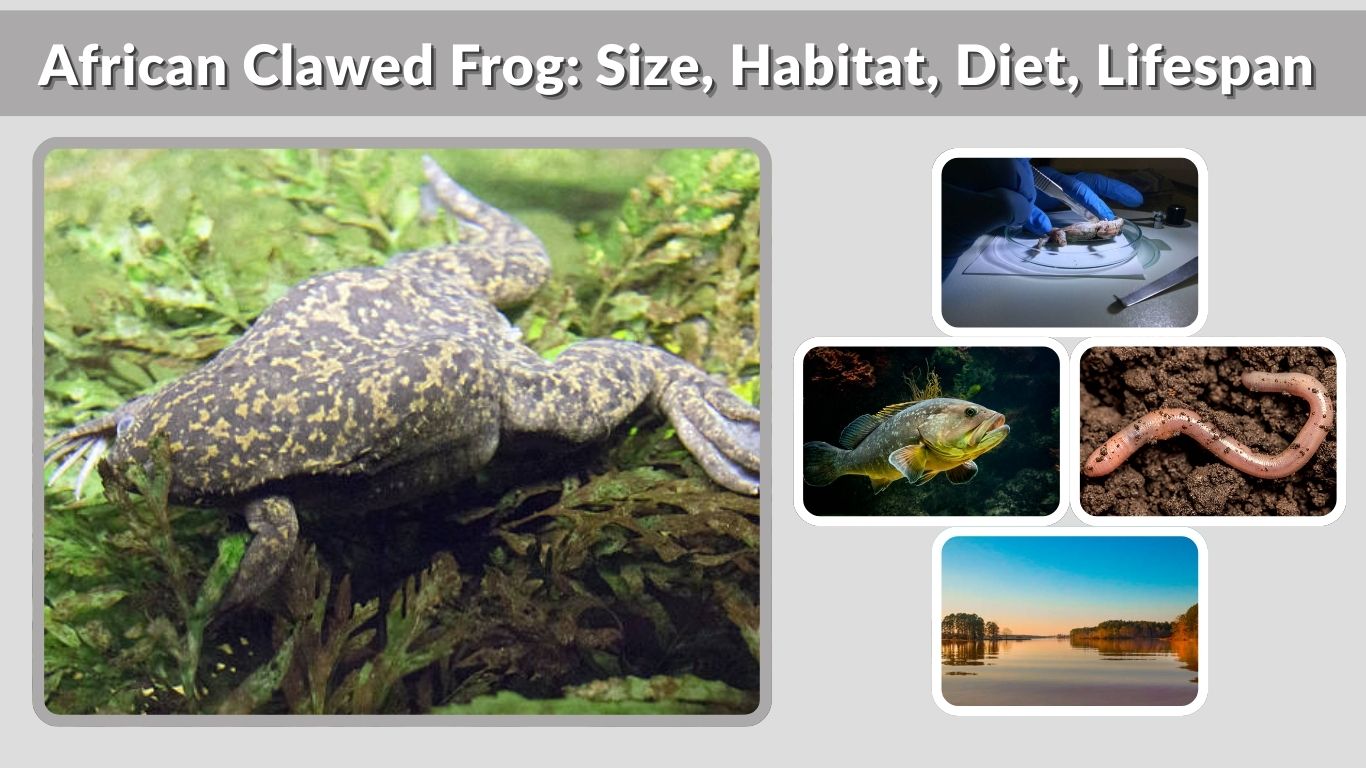
The African Clawed Frog (Xenopus laevis) is a unique, fully aquatic amphibian native to sub-Saharan Africa. Known for the sharp black claws on its hind feet and its importance in scientific research, this species has gained worldwide recognition. Unlike many frogs, it lacks a tongue and eyelids, relying instead on specialized adaptations for underwater survival. Today, the African Clawed Frog is found both in the wild and in laboratories and home aquariums. This article explores its size, habitat, diet, and early life stages in detail.
Overview of the African Clawed Frog
The African Clawed Frog belongs to the family Pipidae, a group of aquatic frogs that are highly adapted to life underwater. Its scientific name, Xenopus laevis, roughly translates to “strange foot,” a reference to its unusual clawed toes.
Native to southern and eastern Africa, this species thrives in warm freshwater environments. Due to its use in laboratory research and the pet trade, it has been introduced to various parts of North America, South America, Europe, and Asia. In some of these regions, wild populations have established themselves, and the frog is considered invasive because it competes with native amphibians and may spread disease.
The species is currently listed as Least Concern by conservation authorities due to its wide distribution and stable population in its native range.
Physical Characteristics
Size
The African Clawed Frog is medium-sized compared to many other frog species. Adult frogs typically grow between 4 and 5 inches (10 to 13 centimeters) in length. Females are generally larger and heavier than males, sometimes reaching slightly over 5 inches.
Their weight varies depending on diet and environment, but most adults weigh between 6 and 8 ounces (170 to 225 grams). In captivity, where food is readily available, individuals may grow larger than their wild counterparts.
Tadpoles develop relatively quickly compared to some other amphibians, transforming into juvenile frogs within a few months under ideal conditions.
Color
In the wild, African Clawed Frogs usually display olive-green, gray, or brown coloration with darker mottling across their bodies. Their underside is typically pale or cream-colored. This natural coloration helps them blend into muddy or plant-filled water.
Albino varieties are very common in laboratories and the pet trade. These frogs are pale pink or white with red eyes due to the lack of pigmentation. Although striking in appearance, albino frogs are rarely found in the wild because their coloration makes them more vulnerable to predators.
Distinctive Features
The African Clawed Frog has several unusual physical traits that distinguish it from other frogs:
- Fully webbed hind feet designed for strong swimming
- Sharp black claws on three toes of each hind foot
- Flattened body shape
- No tongue
- No movable eyelids
Instead of a tongue, the frog uses its front hands to help push food into its mouth. It also has a specialized lateral line system, similar to that of fish, which allows it to detect vibrations and movement in the water. This adaptation makes it highly effective at sensing prey even in murky conditions.
Natural Habitat and Distribution
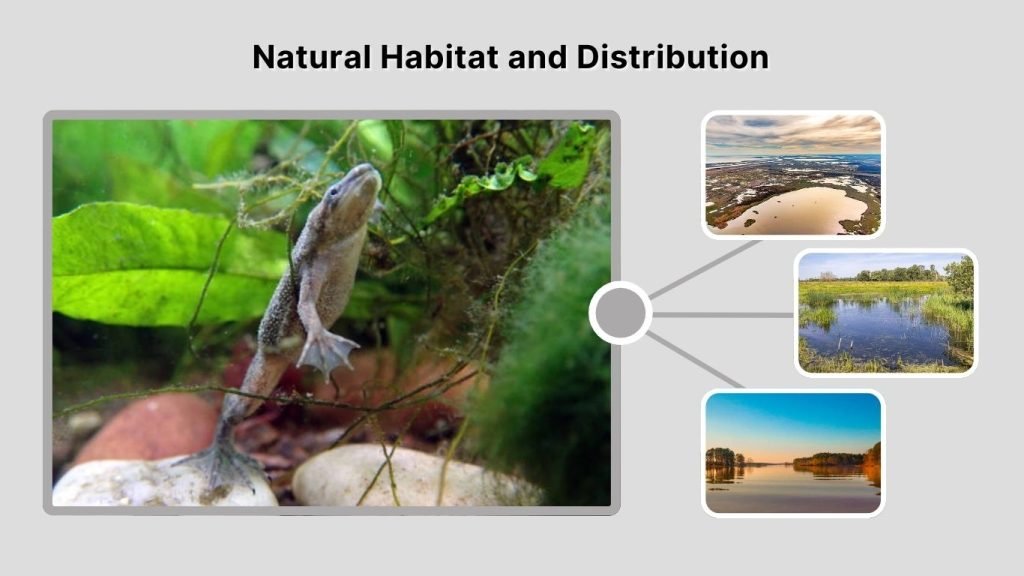
Native Habitat
African Clawed Frogs are native to sub-Saharan Africa, including countries such as South Africa, Namibia, Botswana, Zimbabwe, and parts of East Africa. They inhabit freshwater environments such as ponds, lakes, marshes, and slow-moving rivers.
Unlike many amphibians that require both land and water, this species is fully aquatic and rarely leaves the water except under extreme conditions.
Habitat Adaptations
One of the most remarkable traits of the African Clawed Frog is its adaptability. It can tolerate a wide range of water conditions, including stagnant or muddy water with low oxygen levels. When drought conditions occur, these frogs can burrow into mud and enter a dormant state until water returns.
They are strong swimmers and use powerful kicks from their webbed hind legs to move quickly. Their flattened bodies reduce water resistance, helping them glide smoothly through aquatic vegetation.
Diet and Feeding Behavior
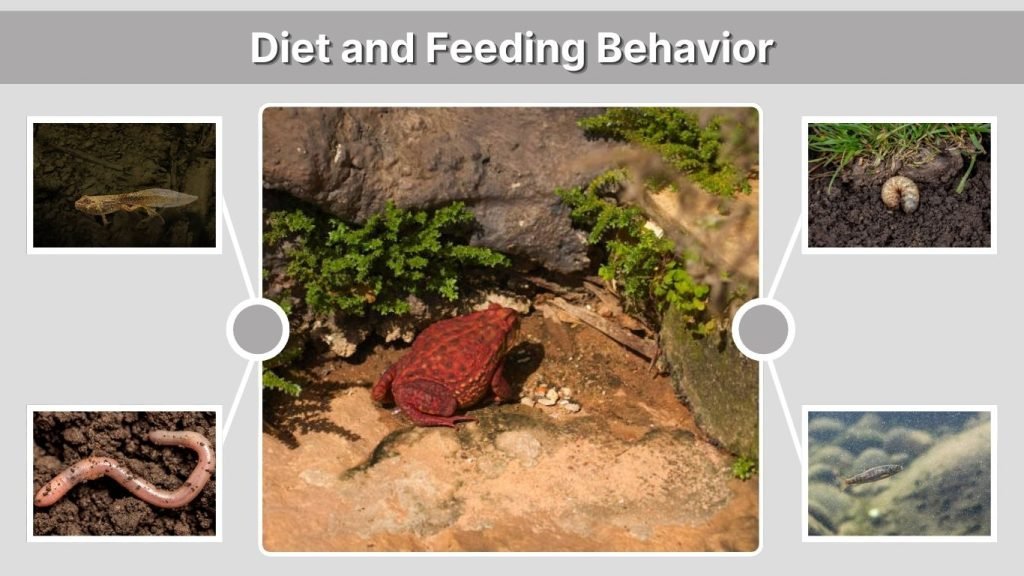
What Do African Clawed Frogs Eat?
African Clawed Frogs are carnivorous and opportunistic feeders. In the wild, their diet includes:
- Insect larvae
- Small fish
- Tadpoles
- Worms
- Crustaceans
- Snails
- Carrion
They are not picky eaters and will consume almost any animal matter they can swallow. This flexible diet contributes to their success in both native and introduced habitats.
Hunting Strategy
Unlike most frogs, African Clawed Frogs do not have tongues to capture prey. Instead, they rely on suction feeding and the use of their front limbs. When prey is detected, the frog lunges forward and quickly grabs or scoops the food into its mouth using its hands.
Their lateral line system plays a crucial role in hunting. By detecting vibrations in the water, they can locate prey even when visibility is poor. They are active both during the day and at night, although feeding often increases after dark.
Feeding in Captivity
In captivity, African Clawed Frogs require a balanced and carefully managed diet to stay healthy. High-quality commercial frog or aquatic amphibian pellets are commonly used as a staple food. These pellets are formulated to provide essential nutrients, including protein, vitamins, and minerals.
Owners often supplement pellets with frozen or live foods such as bloodworms, brine shrimp, earthworms, and small pieces of fish. Feeding typically occurs two to three times per week for adults, while juveniles may need more frequent meals to support growth.
Overfeeding is a common problem in captivity. Because these frogs will eat whenever food is available, excess feeding can lead to obesity and poor water quality. Maintaining clean, filtered water is crucial, as leftover food quickly decomposes and affects the frog’s health.
Lifecycle of the African Clawed Frog
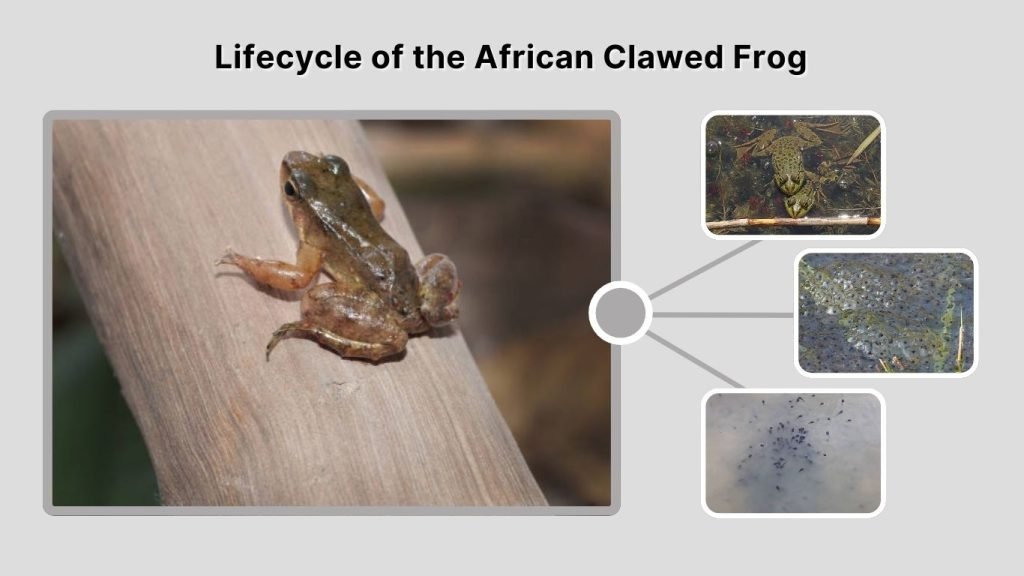
The lifecycle of the African Clawed Frog follows the typical amphibian pattern of egg, tadpole, and adult stages, but it occurs entirely in water.
Breeding Behavior
In the wild, breeding is often triggered by seasonal rains, which increase water levels and create favorable conditions for reproduction. In captivity, breeding may occur after changes in water temperature or water level that simulate rainfall.
During mating, the male grasps the female in a position known as amplexus. Unlike many frog species that call above water, African Clawed Frogs produce soft clicking or ticking sounds underwater to communicate.
Breeding activity can last several hours, during which the female releases eggs while the male fertilizes them externally.
Egg Stage
A female African Clawed Frog can lay hundreds to thousands of small eggs in a single breeding session. The eggs are usually attached individually to aquatic plants or other submerged surfaces rather than being laid in large floating clusters.
Hatching occurs quickly, typically within 2 to 4 days, depending on water temperature. Warmer water speeds up development, while cooler conditions slow it down.
Because the eggs are small and exposed, many fall victim to predators in the wild. Even adult frogs may consume eggs if given the opportunity.
Tadpole Stage
Newly hatched tadpoles look very different from adult frogs. They are slender and possess long tails for swimming. Unlike adult African Clawed Frogs, tadpoles initially feed by filter feeding. They consume microscopic organisms and organic particles suspended in the water.
As they grow, the tadpoles gradually develop hind legs, followed by front legs. Over several weeks, their bodies change shape, and their feeding behavior shifts toward a carnivorous diet.
Under favorable conditions, metamorphosis can occur within 6 to 8 weeks. However, environmental factors such as temperature and food availability may influence the speed of development.
Metamorphosis
Metamorphosis is the transformation from tadpole to juvenile frog. During this stage:
- Legs fully develop
- The tail gradually shrinks and is absorbed
- The digestive system changes to support a carnivorous diet
- Lungs become fully functional
Unlike many frog species that transition to land, African Clawed Frogs remain fully aquatic even after metamorphosis. Young frogs resemble miniature adults and continue growing over the next several months.
Lifespan
Lifespan in the Wild
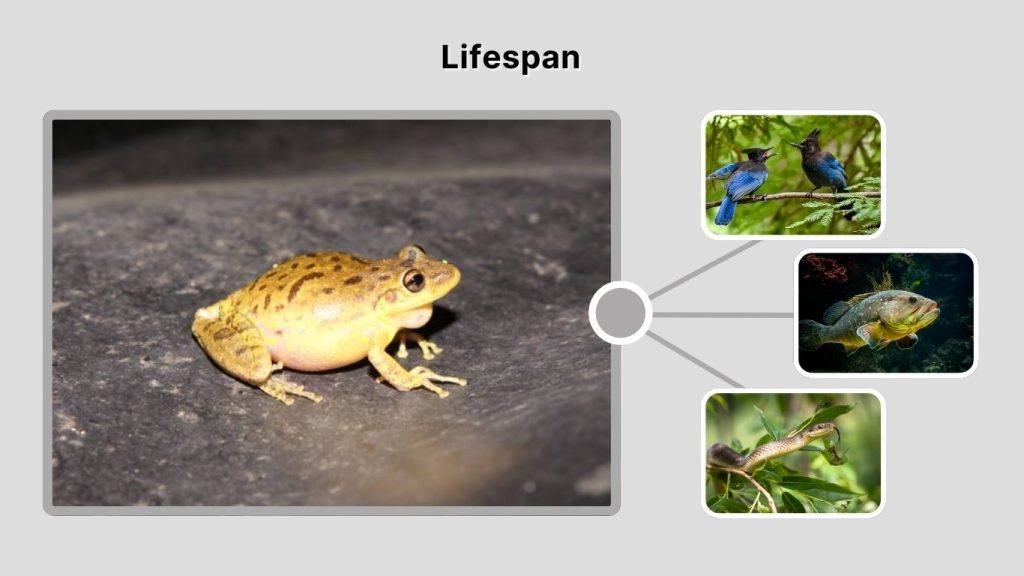
In natural environments, African Clawed Frogs typically live between 5 and 15 years. Survival depends on factors such as predation, water quality, food availability, and disease.
Natural predators may include birds, larger fish, snakes, and mammals. Tadpoles are particularly vulnerable and are often eaten before reaching adulthood.
Lifespan in Captivity
In captivity, these frogs can live significantly longer. With proper care, clean water, and a balanced diet, African Clawed Frogs may live 15 to 20 years or more. Some individuals in laboratory settings have reportedly exceeded two decades.
Their long lifespan makes them a serious, long-term commitment for pet owners.
Factors Affecting Longevity
Several factors influence the lifespan of African Clawed Frogs:
- Water quality and filtration
- Proper nutrition
- Tank size and space
- Stress levels
- Exposure to disease
Poor water conditions are one of the leading causes of health issues in captive frogs. Regular tank maintenance is essential to prevent bacterial and fungal infections.
Behavior and Adaptations
African Clawed Frogs are generally solitary and spend most of their time swimming or resting at the bottom of their habitat. They frequently rise to the surface to breathe air, as they possess lungs in addition to absorbing some oxygen through their skin.
They are strong swimmers, using powerful kicks of their webbed hind legs. Their claws help them tear apart larger pieces of food.
Another fascinating adaptation is their ability to produce underwater vocalizations. Males emit clicking sounds during breeding, while females may respond with different tones.
Their resilience and adaptability have helped them survive in diverse environments, but these same traits have contributed to their success as an invasive species in some parts of the world.
Role in Science and Research
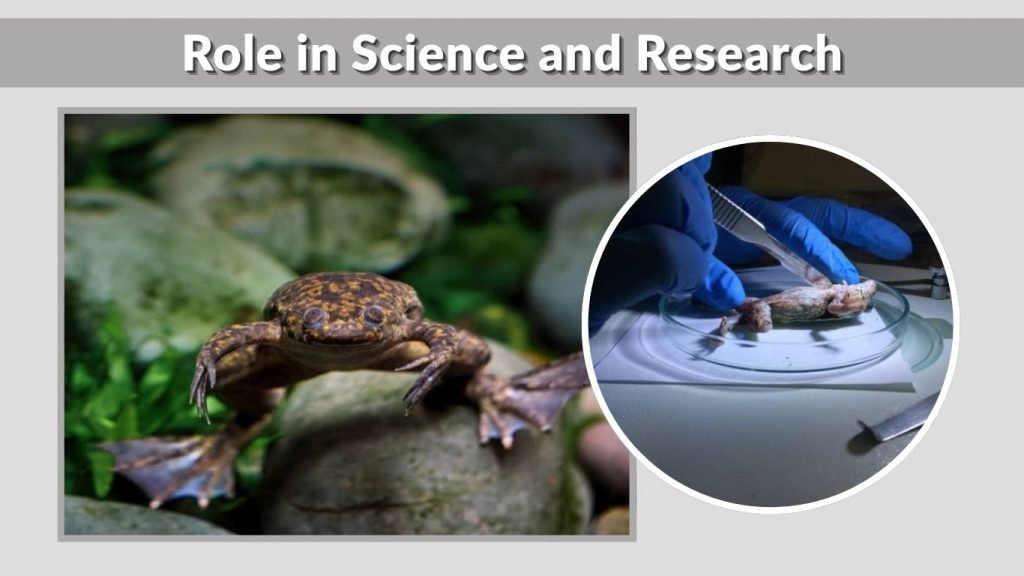
The African Clawed Frog has played a major role in scientific discovery. In the 20th century, it was widely used in early pregnancy tests. Scientists discovered that injecting a woman’s urine into a female frog would trigger egg-laying if the hormone hCG was present.
Today, Xenopus laevis remains an important model organism in developmental biology and genetics. Researchers study its embryos to better understand cell development, organ formation, and genetic processes.
Conclusion
The African Clawed Frog is a remarkable amphibian known for its fully aquatic lifestyle, clawed hind feet, and scientific importance. Growing up to 5 inches long, it thrives in warm freshwater habitats and feeds on a wide range of animal prey. Its lifecycle—from egg to filter-feeding tadpole to carnivorous adult—unfolds entirely underwater.
With a lifespan that can exceed 20 years in captivity, this species requires responsible care and management. Whether valued for research or kept as a pet, the African Clawed Frog remains one of the most fascinating amphibians in the world.