




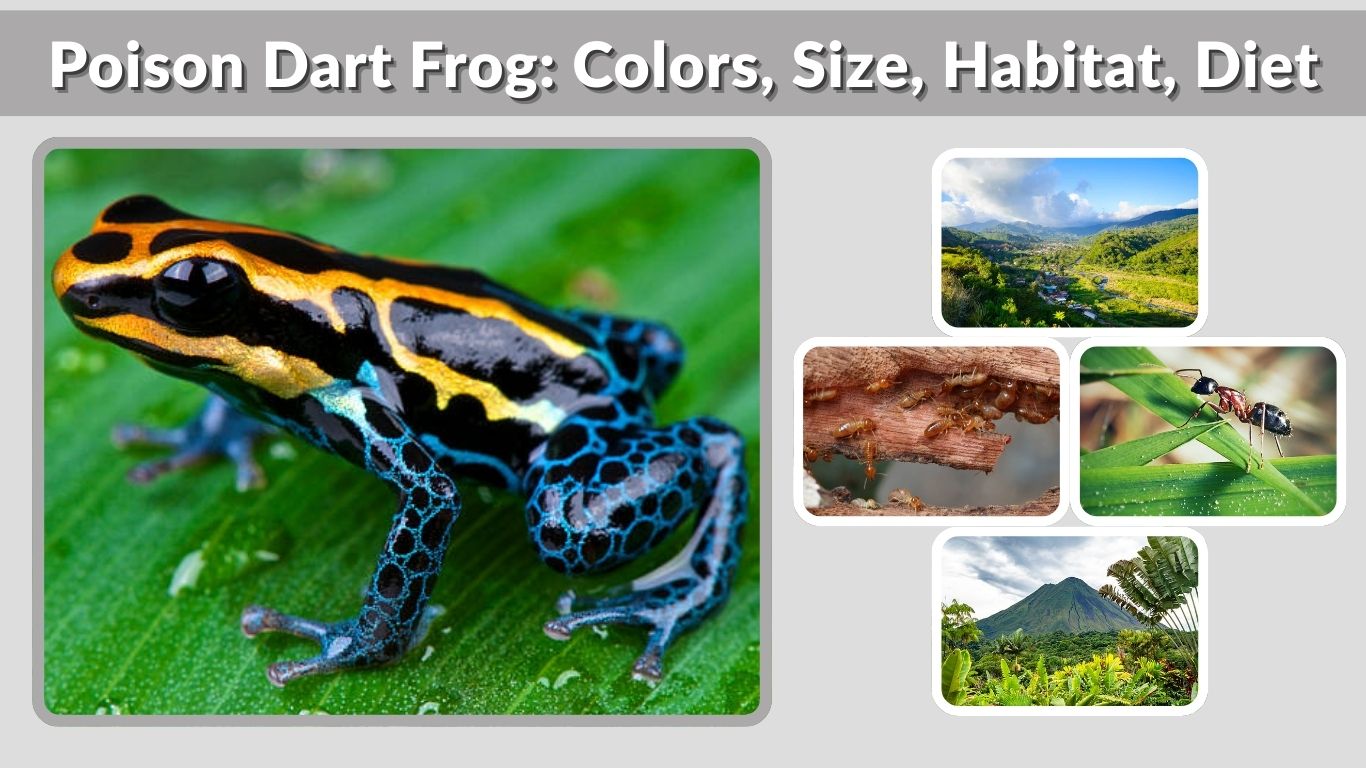
Poison dart frogs are among the most colorful and fascinating amphibians in the world. Belonging to the family Dendrobatidae, these small but striking frogs are famous for their vivid colors and toxic skin. Native to the tropical rainforests of Central and South America, they play an important role in their ecosystems and have captured global attention for both their beauty and their potent chemical defenses. In this article, we’ll explore their size, colors, habitat, toxicity, and feeding behavior in detail.
Overview of Poison Dart Frogs
Poison dart frogs belong to the family Dendrobatidae, which includes more than 200 species. They are commonly known as dart frogs or poison frogs. The name “poison dart frog” comes from indigenous tribes in Colombia who historically used the frogs’ toxic skin secretions to coat the tips of blow darts for hunting.
These frogs vary widely in toxicity. While some species are only mildly toxic, others—like the Golden Poison Frog (Phyllobates terribilis)—are considered among the most poisonous animals on Earth.
Poison dart frogs are primarily found in Central America and northern South America, especially in rainforest regions such as the Amazon Basin. Their conservation status varies by species. Some are relatively stable, while others face threats from habitat destruction, climate change, and illegal collection for the pet trade.
Physical Characteristics
Size
Poison dart frogs are generally small, making their bright colors even more striking. Most species measure between 0.5 and 2.5 inches (1.5 to 6 centimeters) in length. The smallest species are no bigger than a paperclip, while the largest may reach about the size of a golf ball.
Females are often slightly larger than males, although the difference is usually minimal. Despite their small size, these frogs are agile and active during the day.
Colors and Patterns
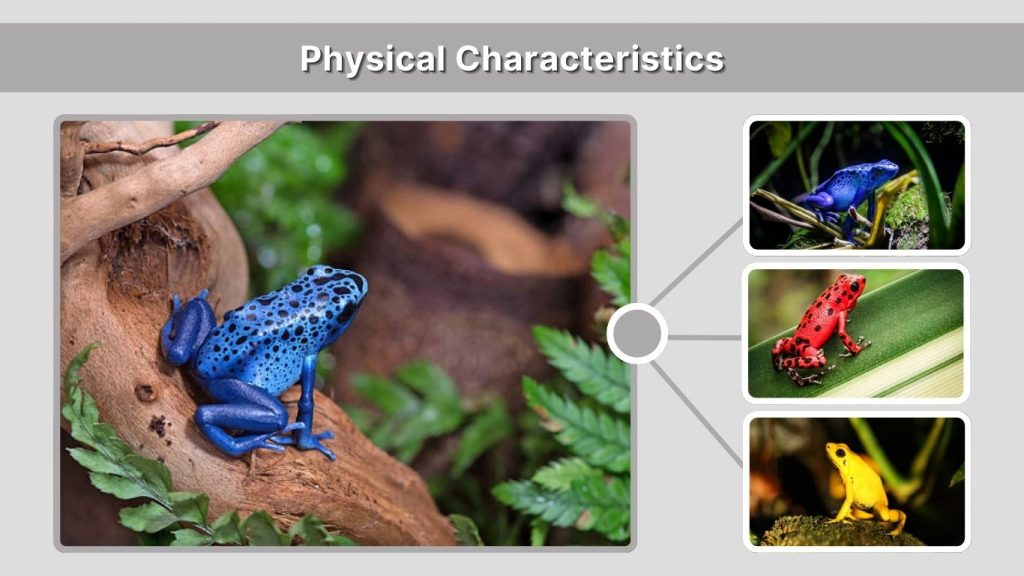
One of the most remarkable features of poison dart frogs is their brilliant coloration. Depending on the species, they may display vibrant shades of:
- Bright blue
- Red
- Yellow
- Orange
- Green
- Black
Many species also have bold patterns, such as spots, stripes, or mottled markings. These colors are not just for decoration—they serve as a warning to predators. This type of warning coloration is known as aposematism.
For example:
- The Blue Poison Dart Frog (Dendrobates tinctorius “azureus”) is bright blue with black spots.
- The Golden Poison Frog (Phyllobates terribilis) is a vivid yellow or orange.
- The Strawberry Poison Frog (Oophaga pumilio) can appear red, blue, green, or orange depending on the population.
Color variations can even occur within the same species, especially in different geographic regions.
Distinctive Features
Poison dart frogs have smooth, moist skin and slender bodies. Their skin contains specialized glands that produce toxic alkaloids. Unlike many frogs that are active at night, poison dart frogs are diurnal, meaning they are active during the day.
They also have small toe pads that help them grip surfaces, making them excellent climbers. Their strong vision allows them to spot tiny moving prey among leaf litter and vegetation.
Habitat and Distribution
Native Range
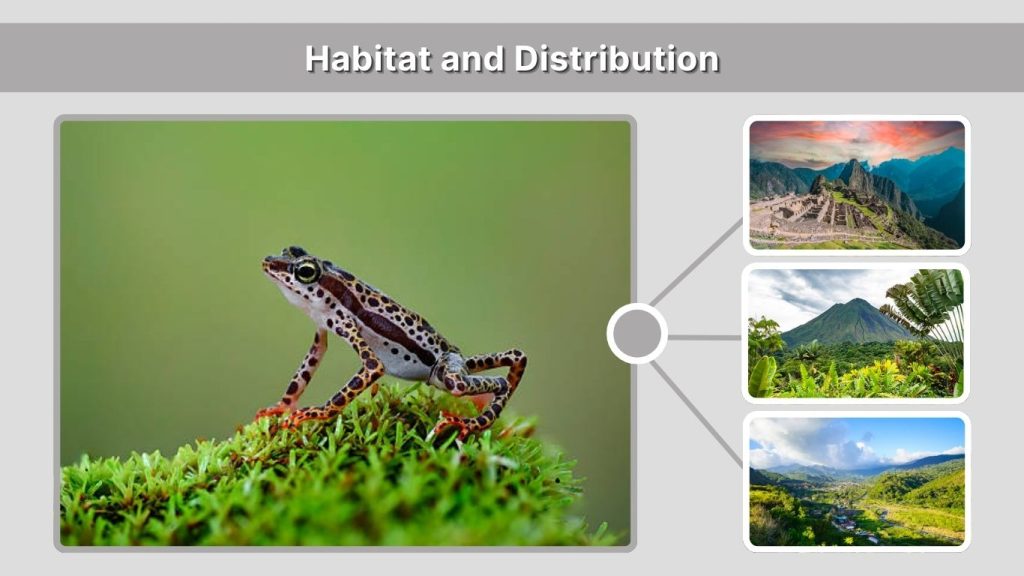
Poison dart frogs are native to Central America and the northern regions of South America, including countries such as Costa Rica, Panama, Colombia, Ecuador, Peru, Brazil, and Venezuela.
They are especially abundant in tropical rainforest ecosystems, where humidity and temperature remain relatively stable year-round.
Preferred Habitat
These frogs thrive in warm, humid environments. Tropical rainforests provide:
- Dense vegetation
- Abundant insect prey
- High humidity
- Shelter in leaf litter and plant growth
Most poison dart frogs live on the forest floor among fallen leaves and roots. Others climb low vegetation or trees.
Because they rely heavily on moisture, they are rarely found in dry or open habitats. Access to water is essential, especially for reproduction.
Microhabitats
Some species use specialized microhabitats for breeding. For example, certain poison dart frogs deposit their eggs on moist leaves. After hatching, parents may transport tadpoles on their backs to small pools of water collected in bromeliads (tropical plants that hold water between their leaves).
These tiny water pockets provide a safe nursery away from many predators found in larger bodies of water.
Toxicity and Defense Mechanisms
How Toxic Are They?
Poison dart frogs are famous for their toxicity, but not all species are equally dangerous. Their skin contains alkaloid toxins that can interfere with nerve and muscle function in predators.
The most toxic species, the Golden Poison Frog, produces a powerful toxin called batrachotoxin. In extreme cases, a single wild frog may carry enough toxin to kill multiple humans if handled improperly.
However, most poison dart frog species are far less toxic and pose little danger to humans unless ingested.
Source of Toxicity
Interestingly, poison dart frogs do not produce toxins entirely on their own. Instead, their toxicity comes from their diet. In the wild, they consume ants, mites, termites, and other small arthropods that contain alkaloid compounds. The frogs store and concentrate these chemicals in their skin glands.
In captivity, poison dart frogs are fed fruit flies and other non-toxic insects. As a result, captive-bred frogs typically lose their toxicity over time and are generally harmless.
Diet and Feeding Behavior
What Do Poison Dart Frogs Eat?
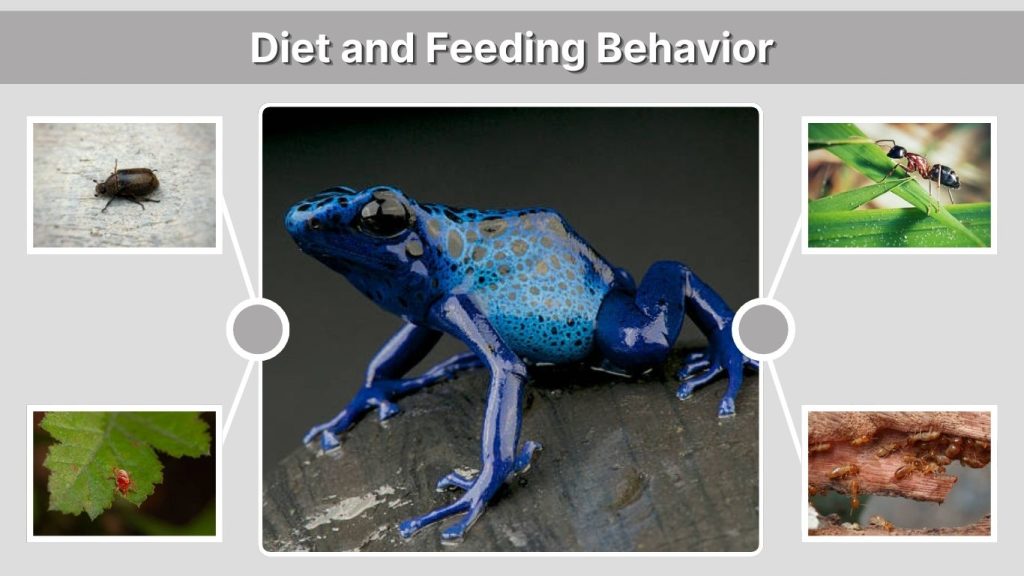
Poison dart frogs are carnivorous and feed primarily on small invertebrates. In the wild, their diet consists mainly of:
- Ants
- Termites
- Small beetles
- Mites
- Tiny spiders
- Fruit flies
Ants and mites are especially important because they contain the alkaloid compounds that make the frogs toxic. Different species may specialize in certain prey types depending on what is available in their habitat.
Despite their tiny size, poison dart frogs are active hunters and consume multiple small prey items throughout the day.
Hunting Strategy
Unlike many frogs that are nocturnal, poison dart frogs are diurnal, meaning they hunt during daylight hours. Their bright coloration signals that they do not rely on camouflage for protection. Instead, they confidently move across the forest floor searching for food.
They use their excellent eyesight to detect movement. Once prey is spotted, the frog quickly flicks out its sticky tongue to capture it. The entire process happens in a fraction of a second.
Because they feed on very small insects, poison dart frogs must hunt frequently to meet their energy needs.
Diet in Captivity
In captivity, poison dart frogs are typically fed flightless fruit flies, pinhead crickets, and other small cultured insects. Since these feeder insects do not contain the alkaloids found in wild prey, captive frogs are not toxic.
To ensure proper nutrition, keepers dust feeder insects with vitamin and mineral supplements, particularly calcium and vitamin D3. A consistent feeding schedule and proper supplementation are essential for long-term health.
Lifecycle and Reproduction
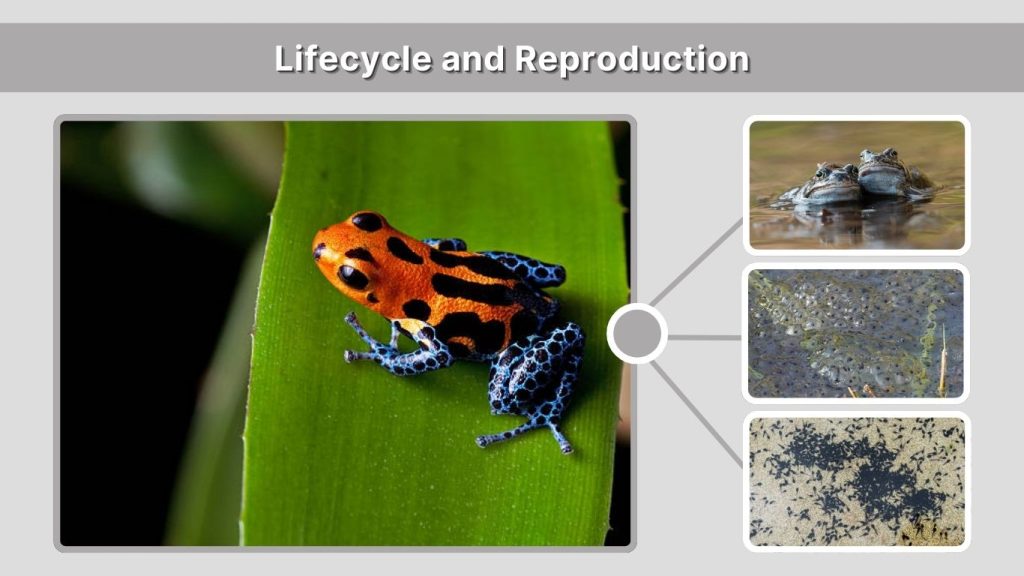
Poison dart frogs display one of the most advanced parental care systems among amphibians.
Courtship Behavior
During the breeding season, males establish territories and call to attract females. Their calls are soft buzzing or chirping sounds that vary by species.
If a female is interested, she approaches the male. Courtship may involve following, touching, or gentle nudging before mating occurs.
Egg Stage
After mating, the female lays a small clutch of eggs—often between 5 and 20—on moist leaves or other sheltered surfaces. Unlike many frogs that lay hundreds of eggs in water, poison dart frogs produce fewer eggs but invest more care in each one.
In many species, the male guards the eggs and keeps them moist by transporting water on his body. The eggs hatch within about 10 to 14 days.
Tadpole Care
Once the eggs hatch, one of the parents—often the male—carries the tadpoles on his back to a suitable water source. This is usually a small pool of water collected in a bromeliad plant or tree hole.
Some species exhibit even more remarkable care. For example, female Strawberry Poison Frogs feed their tadpoles with unfertilized eggs, providing a steady food supply in isolated water pools.
This level of parental involvement greatly increases the chances of survival compared to species that leave their eggs unattended.
Metamorphosis
Tadpoles develop over several weeks to a few months, depending on species and environmental conditions. During this time, they grow legs, absorb their tails, and gradually transform into miniature frogs.
Once metamorphosis is complete, the young frogs leave the water and begin life on land. They will continue growing and may reach maturity within several months to a year.
Lifespan
Lifespan in the Wild
In the wild, poison dart frogs typically live between 3 and 10 years, depending on the species and environmental conditions. Predation, habitat loss, and disease can shorten their lifespan.
Despite their toxicity, they are still vulnerable to certain predators that have developed resistance to their toxins.
Lifespan in Captivity
In captivity, poison dart frogs often live longer due to consistent food supply and protection from predators. With proper care, many species can live between 10 and 15 years.
Stable humidity, correct temperature, and a balanced diet are key factors in maintaining long-term health.
Factors Affecting Longevity
Several factors influence how long poison dart frogs live:
- Habitat quality
- Access to food
- Exposure to predators
- Disease, including chytrid fungus
- Environmental changes
Deforestation remains one of the biggest threats to wild populations, as rainforest destruction reduces suitable habitat.
Behavior and Social Structure
Poison dart frogs are active, alert, and highly territorial. Males often defend small territories from rivals using vocal calls and physical displays.
Unlike many amphibians, these frogs are primarily active during the day. Their bold coloration allows them to move openly without relying on camouflage.
Communication plays an important role in their behavior. Calls are used to attract mates and warn competitors. In addition, body posture and movement can signal aggression or submission.
One of the most fascinating aspects of poison dart frog behavior is their parental care. Few amphibians invest as much time and energy into protecting and raising their young.
Conservation Status and Threats
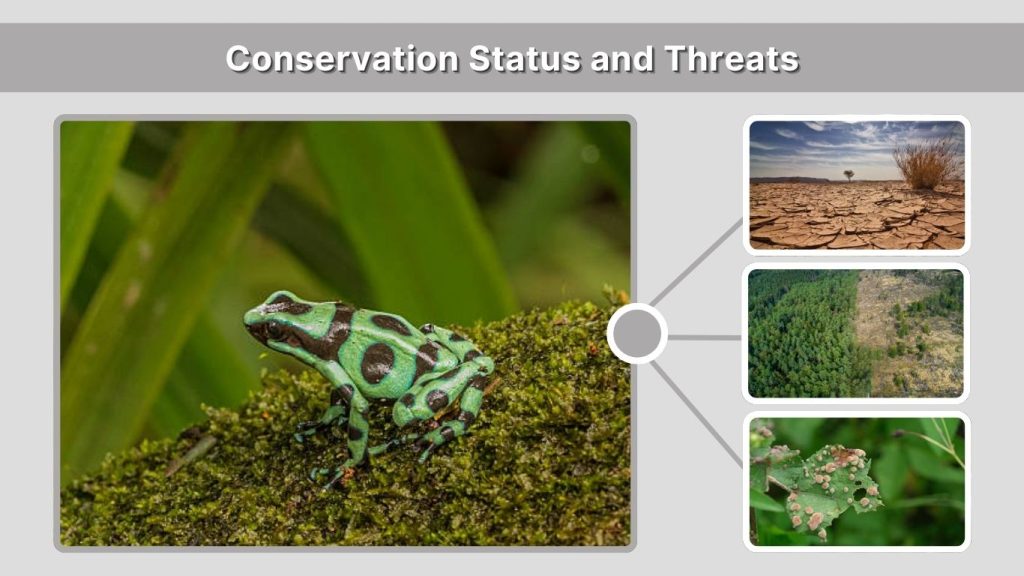
The conservation status of poison dart frogs varies widely among species. While some populations remain stable, others are threatened or endangered.
Major threats include:
- Deforestation and habitat destruction
- Illegal collection for the pet trade
- Climate change
- Infectious diseases such as chytrid fungus
Conservation efforts focus on habitat preservation, captive breeding programs, and regulating international trade.
Conclusion
Poison dart frogs are extraordinary amphibians known for their brilliant colors, small size, and powerful chemical defenses. Native to the rainforests of Central and South America, they rely on specialized diets to develop their toxicity and use bright coloration to warn predators.
From their active daytime hunting to their remarkable parental care, these frogs demonstrate unique adaptations that set them apart from most amphibians. Protecting their rainforest habitats is essential to ensuring that these vibrant and fascinating creatures continue to thrive in the wild.