




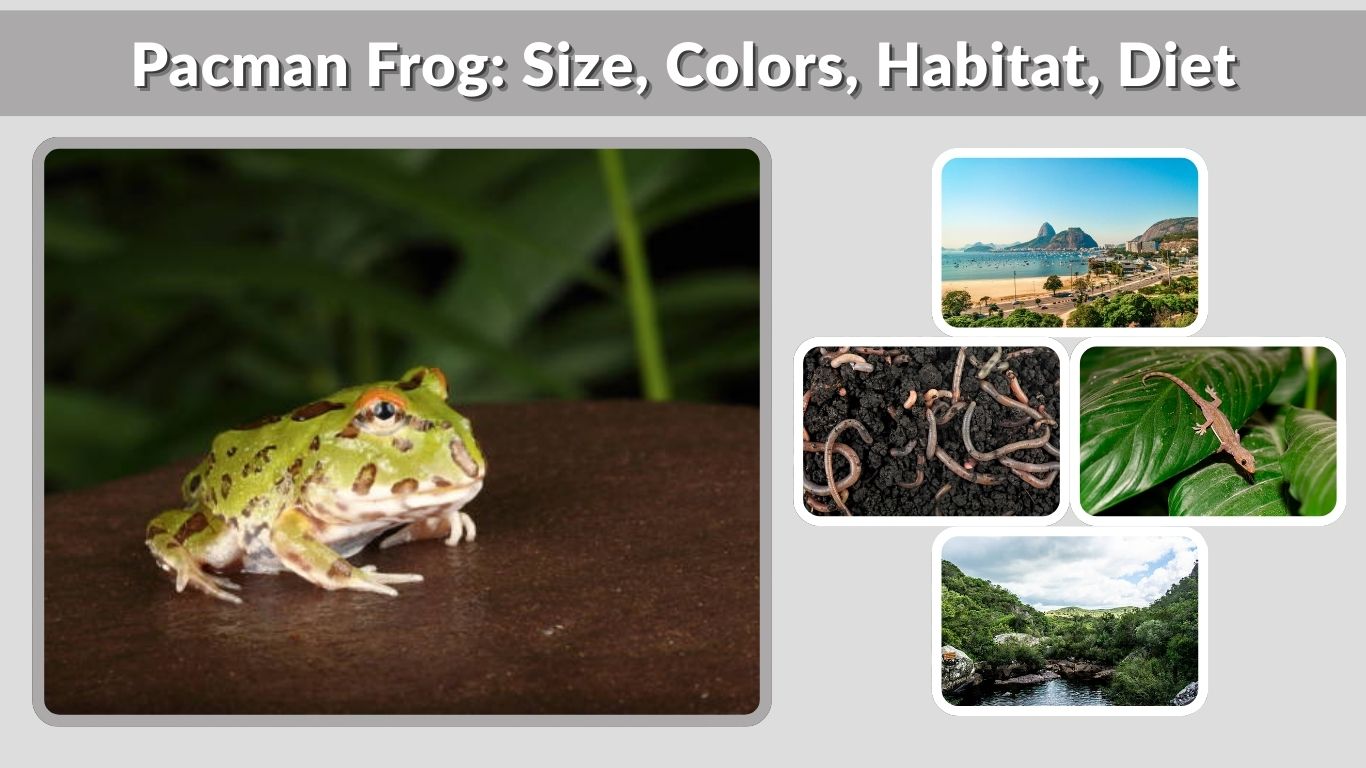
The Pacman Frog is a popular and fascinating amphibian known for its round body, enormous mouth, and bold personality. Native to South America, this frog gets its nickname from the classic Pac-Man video game character because of its wide, circular shape and voracious appetite. Scientifically classified under the genus Ceratophrys, the most common species in the pet trade is Ceratophrys ornata, also known as the Argentine horned frog. In this guide, we’ll explore the Pacman Frog’s size, colors, habitat, diet, and early life stages.
Overview of the Pacman Frog
Pacman frogs belong to the family Ceratophryidae, often referred to as horned frogs due to the small horn-like projections above their eyes in some species. These frogs are native to countries such as Argentina, Uruguay, Brazil, and Paraguay. They inhabit grasslands, forest edges, and tropical regions with high humidity.
There are several species within the Ceratophrys genus, but the Argentine horned frog (Ceratophrys ornata) and Cranwell’s horned frog (Ceratophrys cranwelli) are the most commonly kept as pets. “Fantasy” Pacman frogs are hybrid varieties bred in captivity.
Pacman frogs are known for their bold feeding response and relatively sedentary lifestyle. Unlike tree frogs or highly active amphibians, they spend much of their time partially buried in substrate, waiting for prey.
Physical Characteristics
Size
Pacman frogs are medium to large terrestrial frogs with noticeable size differences between males and females. Males typically grow to about 3 to 4 inches (7.5 to 10 cm) in length, while females are significantly larger, often reaching 4 to 7 inches (10 to 18 cm).
Because of their stocky build, they appear much larger than many other frogs of similar length. Adult females can weigh over 1 pound (450 grams) under proper feeding conditions. They grow rapidly during their first year, especially when provided with a steady food supply.
Colors and Morphs
In the wild, Pacman frogs are usually bright green with brown, black, or red markings that provide camouflage among leaves and forest floors. Their natural coloration helps them blend into grassy and muddy environments.
In captivity, selective breeding has produced a wide variety of color morphs, including:
- Albino (yellow and white with red eyes)
- Strawberry (pinkish-red tones)
- High red and high yellow morphs
- Patternless varieties
These vibrant morphs are especially popular among reptile and amphibian enthusiasts. However, in the wild, their coloration is more muted and functional for survival.
Distinctive Features
The Pacman Frog’s most striking feature is its enormous mouth, which can make up nearly half the width of its body. This adaptation allows it to consume prey nearly its own size.
Other distinctive features include:
- A round, almost circular body shape
- Short, strong legs
- Horn-like ridges above the eyes (more visible in some species)
- Powerful jaws and strong bite reflex
Despite their somewhat comical appearance, Pacman frogs are serious predators with impressive bite strength.
Natural Habitat and Distribution
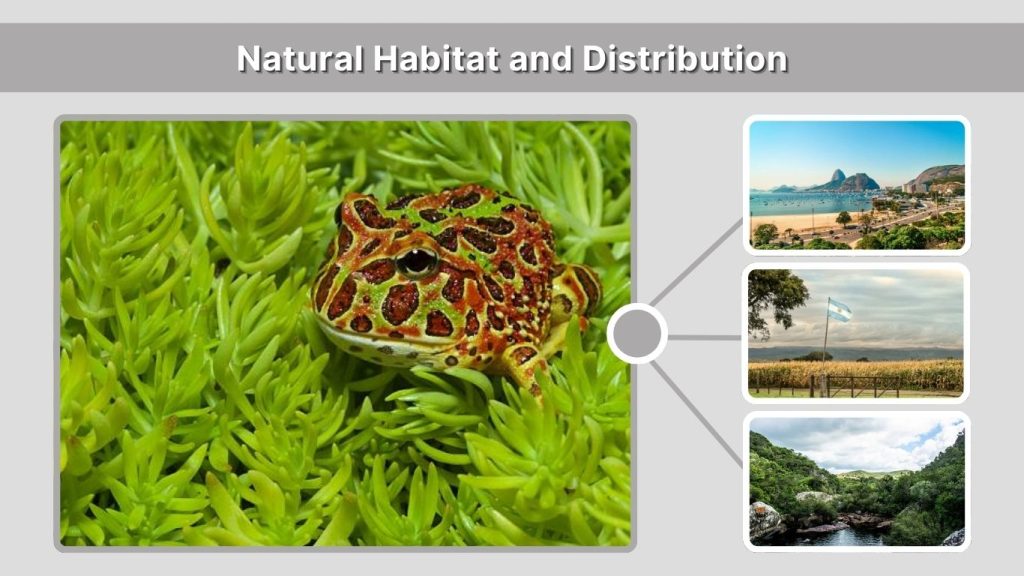
Native Habitat
Pacman frogs are native to South America, particularly Argentina, Uruguay, Brazil, and Paraguay. They inhabit tropical and subtropical regions, including grasslands, rainforests, and forest edges.
These environments typically experience seasonal rainfall patterns, which play an important role in breeding and overall activity levels.
Microhabitat Behavior
Unlike arboreal frogs that climb trees, Pacman frogs are terrestrial and spend most of their time on the ground. They are burrowers and often partially bury themselves in moist soil or leaf litter, leaving only their eyes and mouth exposed.
This behavior serves two main purposes:
- Camouflage from predators
- Ambush positioning for prey
They are primarily nocturnal, becoming more active at night when temperatures are cooler and humidity levels rise.
Environmental Adaptations
Pacman frogs are well adapted to survive in regions with seasonal dry periods. During drought conditions, they may enter a state known as estivation. In this state, the frog buries itself underground and forms a protective cocoon-like layer of shed skin to reduce moisture loss.
Once rainfall returns, they emerge and resume normal activity.
Their thick skin and stocky bodies help retain moisture, allowing them to survive in fluctuating environmental conditions.
Diet and Feeding Behavior
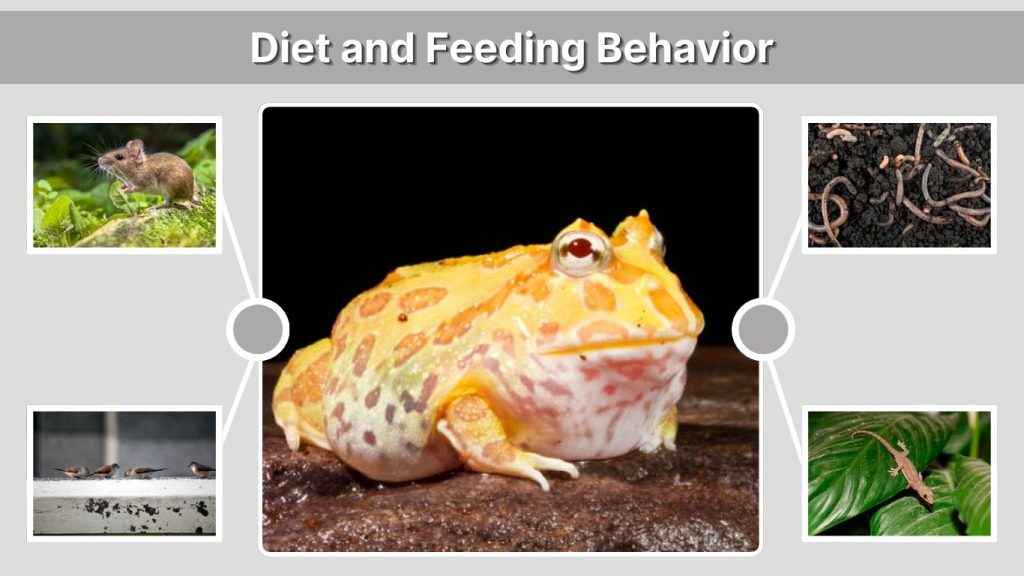
What Do Pacman Frogs Eat?
Pacman frogs are carnivorous and opportunistic predators. In the wild, their diet includes:
- Insects such as crickets, beetles, and grasshoppers
- Worms
- Small reptiles
- Other frogs
- Small rodents
- Occasionally small birds
They will attempt to eat almost anything that moves and fits into their mouth. Their aggressive feeding response is one of their most well-known traits.
Hunting Strategy
Pacman frogs are classic sit-and-wait predators. Rather than actively chasing prey, they remain still and rely on camouflage. When an unsuspecting animal approaches, the frog lunges forward with surprising speed.
Their powerful jaws clamp down quickly, and prey is swallowed whole. Because they lack long legs for extended pursuit, their hunting success depends on patience and precise timing.
Feeding in Captivity
In captivity, Pacman frogs require a varied and well-balanced diet to remain healthy. Juveniles should be fed every 1–2 days due to their rapid growth, while adults typically eat every 2–3 days depending on size and metabolism.
Common feeder options include:
- Crickets
- Dubia roaches
- Earthworms
- Mealworms (occasionally)
- Waxworms (as treats)
- Pinky mice (occasionally for large adults)
Prey size should never exceed the width of the frog’s mouth to prevent choking or impaction. Insects should be dusted with calcium and vitamin supplements several times per week, especially for growing frogs.
Overfeeding is a common issue. Because Pacman frogs are highly food-motivated, they can easily become obese. Obesity may lead to reduced lifespan and health problems, so portion control is important.
Lifecycle of the Pacman Frog

Pacman frogs follow a typical amphibian lifecycle consisting of egg, tadpole, and adult stages. However, their tadpoles are notably aggressive compared to many other frog species.
Breeding Behavior
In the wild, breeding is triggered by heavy seasonal rains. Increased moisture and temporary pools create ideal conditions for reproduction.
Males call to attract females with low, rumbling sounds. During mating, the male grasps the female in a behavior known as amplexus. Fertilization occurs externally as the female releases eggs into shallow water.
Breeding in captivity is possible but requires carefully controlled humidity, temperature, and simulated rainfall conditions.
Egg Stage
Female Pacman frogs lay hundreds to over a thousand eggs in shallow water. The eggs are usually attached to aquatic vegetation or float in clusters.
Hatching typically occurs within 2–4 days, depending on temperature. Warm conditions accelerate development, while cooler temperatures slow the process.
Like many amphibians, only a small percentage of eggs survive in the wild due to predation and environmental factors.
Tadpole Stage
Pacman frog tadpoles are carnivorous from an early age, which is unusual compared to many other frog species whose tadpoles are primarily herbivorous.
They feed on:
- Small aquatic organisms
- Insect larvae
- Other tadpoles (including their own species)
Cannibalism is common if food is scarce. Tadpoles grow rapidly and develop strong jaws even at this stage.
Over several weeks, hind legs begin to form, followed by front legs. As metamorphosis progresses, the tail shrinks and is gradually absorbed.
Metamorphosis
Metamorphosis typically occurs within 4–8 weeks under favorable conditions. During this transition:
- Legs fully develop
- The tail disappears
- Lungs mature for air breathing
- The digestive system adapts fully to a carnivorous diet
Once metamorphosis is complete, the young frog leaves the water and begins a terrestrial lifestyle. Juvenile Pacman frogs resemble miniature adults but are more brightly colored in some cases.
Lifespan
Lifespan in the Wild
In the wild, Pacman frogs typically live around 6 to 10 years. Survival depends on environmental stability, predation, and food availability.
Natural predators include birds, snakes, and larger mammals. Their camouflage and burrowing behavior help reduce predation risk.
Lifespan in Captivity
In captivity, Pacman frogs can live significantly longer. With proper care, they commonly reach 10 to 15 years, and some individuals may live even longer.
Factors that contribute to a longer lifespan include:
- Proper temperature and humidity
- Clean enclosure conditions
- Balanced diet
- Avoidance of overfeeding
- Minimal stress
Because of their potential longevity, owning a Pacman frog is a long-term commitment.
Pacman Frog as a Pet

Tank Setup
Pacman frogs do not require large enclosures due to their limited activity. A 10–20 gallon tank is usually sufficient for one adult frog.
Important enclosure requirements include:
- Moist, loose substrate such as coconut fiber
- Temperature between 75–85°F (24–29°C)
- Humidity levels of 60–80%
- A shallow water dish for soaking
- Hiding spots for security
The substrate should remain damp but not waterlogged. Proper humidity is essential to prevent dehydration and shedding problems.
Handling and Temperament
Pacman frogs are not ideal for frequent handling. They are generally solitary and can become stressed if handled too often. Additionally, they have a strong bite response and may mistake fingers for food.
Although not aggressive in the traditional sense, they are defensive and will lunge at perceived prey or threats. For this reason, they are better suited for observation rather than interaction.
Common Health Issues
Like many amphibians, Pacman frogs can experience health problems if care is improper. Common issues include:
- Obesity from overfeeding
- Impaction from ingesting unsuitable substrate
- Bacterial or fungal infections
- Shedding difficulties due to low humidity
Maintaining clean living conditions and proper environmental parameters significantly reduces these risks.
Conclusion
The Pacman Frog is a remarkable amphibian known for its round body, massive mouth, and powerful feeding response. Native to South America, it thrives in humid terrestrial environments and relies on camouflage and ambush tactics to capture prey. From carnivorous tadpoles to sedentary yet formidable adults, its lifecycle is both fascinating and unique.
With a lifespan of up to 15 years in captivity, the Pacman frog requires responsible, long-term care. Whether admired for its vibrant morphs or its bold personality, this species remains one of the most popular and intriguing frogs in the pet trade.