
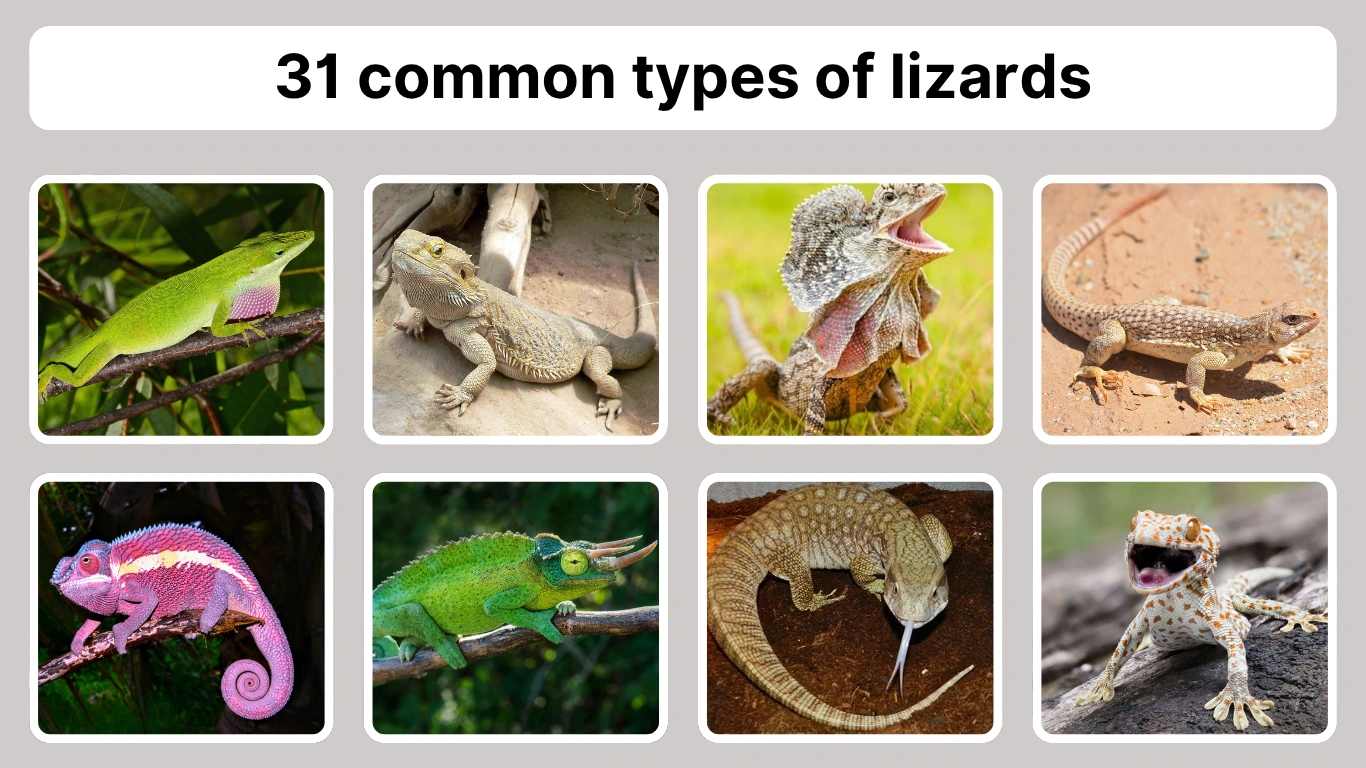
Lizards are one of the most diverse reptile groups on Earth, ranging from tiny geckos to massive monitor lizards. Found in deserts, forests, and even urban areas, each species has unique traits and behaviors. In this guide, we explore 31 common types of lizards with detailed identification and pictures, helping you recognize them by appearance, size, and habitat—perfect for reptile lovers, hobbyists, and nature explorers alike.
1. Green Anole
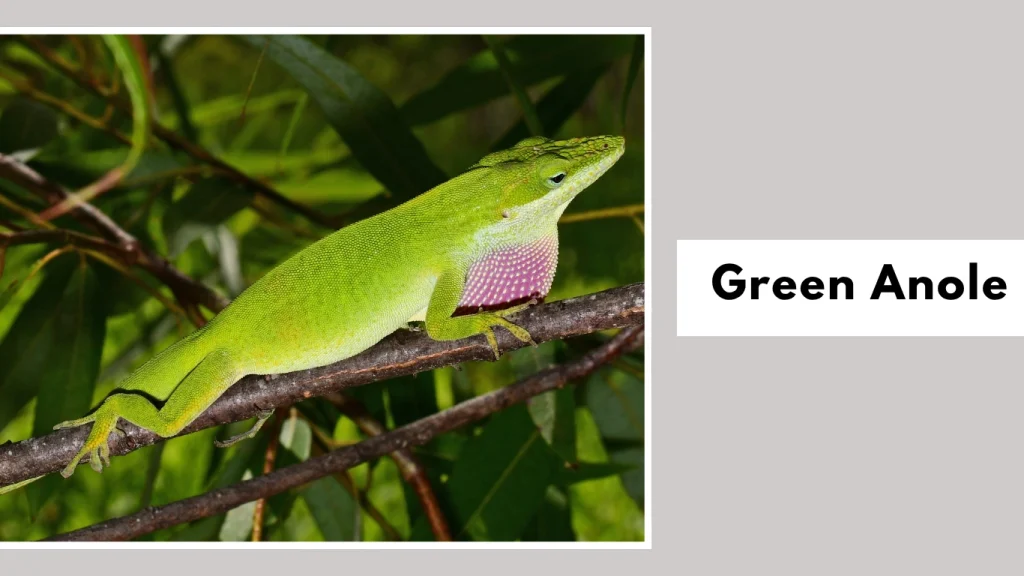
The Green Anole is a small, agile lizard native to the southeastern United States. Recognized for its vivid green color that can shift to brown, this lizard is commonly seen in gardens, forests, and on house walls. It plays a vital role in controlling insect populations and is a popular species in the pet trade due to its calm nature and ease of care.
Identification
- Color: Bright green (can change to brown depending on mood, temperature, or surroundings)
- Size: Typically 5 to 8 inches long
- Distinct feature: Males have a pink throat fan (dewlap)
- Tail: Long, slender, often accounting for half their body length
- Feet: Equipped with adhesive toe pads for climbing vertical surfaces
Behavior
Green Anoles are diurnal and highly territorial, especially the males. They display head-bobbing motions and extend their dewlaps to assert dominance or attract a mate. These lizards are excellent climbers and prefer elevated spots to rest or sunbathe.
Habitat
Green Anoles prefer warm, moist environments and are commonly found throughout the southeastern U.S., including Florida, Georgia, and South Carolina. They inhabit areas with dense vegetation, shrubs, vines, and trees, but are also seen in suburban gardens, wooden fences, brick walls, and porches. They rely on vertical structures and sunny spots for basking, and seek shelter in shady foliage when resting or avoiding predators.
Diet
Green Anoles are insectivorous and primarily feed on a variety of small insects and arthropods. Their diet includes flies, spiders, small beetles, and moths. They are active hunters that use sharp eyesight to detect movement and rely on their quick reflexes to capture prey. In captivity, they are typically fed small live insects such as crickets or mealworms, which should be dusted with calcium supplements to support bone health.
2. Bearded Dragon
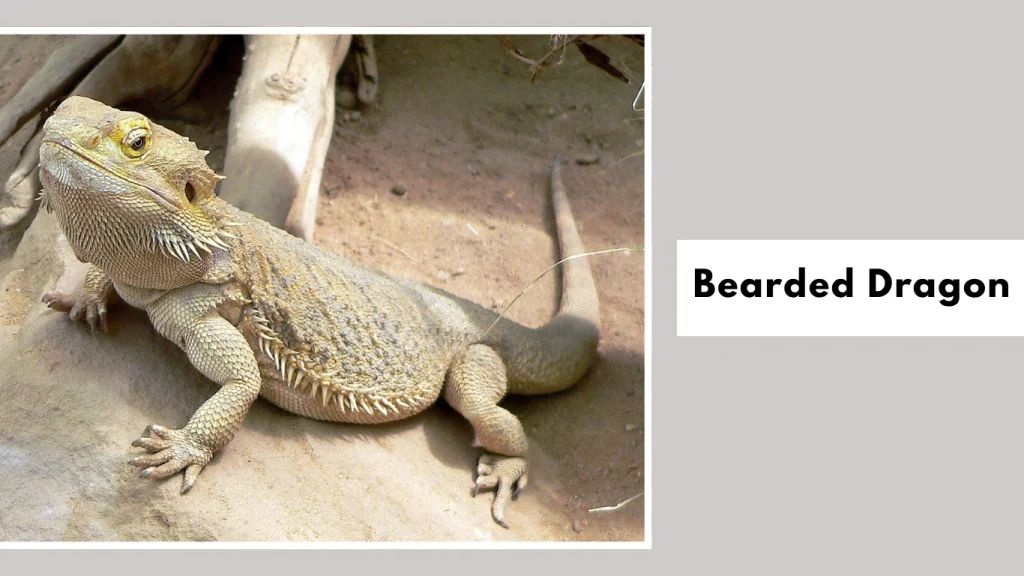
Bearded Dragons are one of the most popular pet lizards, native to Australia. They get their name from the spiky “beard” under their chin, which can puff out and darken when they feel threatened or during mating displays. These reptiles are known for their calm temperament and ease of handling.
Identification
- Color: Tan, brown, or yellowish with darker banding
- Size: 18 to 24 inches in length
- Distinct feature: Expandable spiny throat pouch (beard)
- Body: Broad, flattened with rows of spikes along sides
- Tail: Thick and muscular, about half the total length
Behavior
Bearded Dragons are diurnal and very sociable. They enjoy basking under heat lamps or in the sun and often wave one of their front legs as a submissive gesture.
Habitat
In the wild, Bearded Dragons inhabit deserts, scrublands, and dry forests of central and eastern Australia. They prefer open areas with plenty of sunlight and rocks or branches to climb. In captivity, they need a spacious, well-ventilated enclosure with basking spots, UVB lighting, and a warm environment to mimic their natural habitat.
Diet
Bearded Dragons are omnivorous. They eat a variety of insects such as crickets and roaches, as well as leafy greens, vegetables, and occasional fruits. Juveniles consume more protein, while adults require more plant-based foods. A balanced diet with calcium and vitamin supplements is essential to maintain their health in captivity.
3. Leopard Gecko
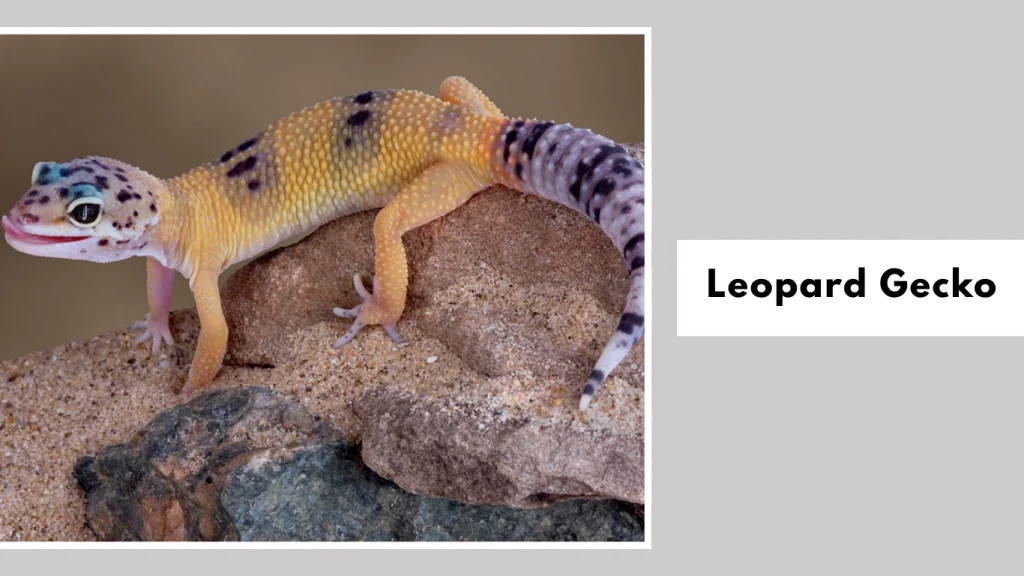
Leopard Geckos are ground-dwelling lizards native to arid regions of Afghanistan, Pakistan, and India. Their name comes from their distinctive spotted pattern, resembling a leopard. They are nocturnal, gentle, and easy to care for, making them ideal for beginner reptile keepers.
Identification
- Color: Yellow or white base with black or brown spots
- Size: 7 to 10 inches long
- Distinct feature: Fat tail used for fat storage
- Eyes: Large, with vertical pupils
- Skin: Bumpy texture, shed regularly
Behavior
Leopard Geckos are shy and quiet. They’re nocturnal hunters and spend the day hiding in burrows or shelters. Unlike most geckos, they do not have sticky toe pads and cannot climb smooth surfaces.
Habitat
In the wild, they inhabit dry deserts, grasslands, and rocky areas where they can hide under stones or in crevices to escape the heat. In captivity, they need a warm terrarium with hiding spots, a humid area for shedding, and a heat gradient for thermoregulation.
Diet
Leopard Geckos are strict insectivores. Their diet consists mainly of live insects such as crickets, mealworms, waxworms, and small roaches. They rely on movement to trigger feeding and must have their prey dusted with calcium and vitamins to prevent deficiencies. Regular feeding and clean water are essential for their well-being.
4. Tokay Gecko
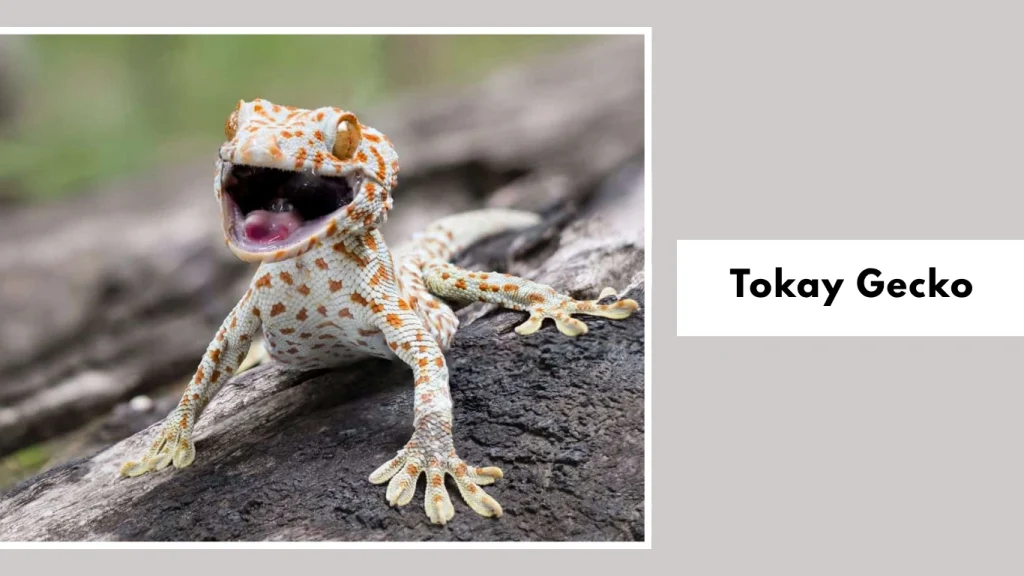
The Tokay Gecko is a strikingly colored and vocal species native to Southeast Asia. Known for its bold blue-gray skin covered in bright orange or red spots, it is one of the largest gecko species and has a powerful bite. Its loud call, which sounds like “to-kay,” is how it got its name.
Identification
- Color: Blue-gray with orange or red spots
- Size: 10 to 14 inches in length
- Distinct feature: Broad head with large eyes and vertical pupils
- Skin: Bumpy texture with loose folds
- Toes: Large, adhesive pads suited for vertical climbing
Behavior
Tokay Geckos are nocturnal and highly territorial. They are known for their aggression when threatened and are best observed rather than handled.
Habitat
In the wild, Tokay Geckos inhabit rainforests, rock crevices, and tree hollows, often near human dwellings where insects are plentiful. They prefer humid environments with vertical surfaces for climbing. In captivity, they require a tall enclosure with hiding spots, high humidity, and heat gradients to replicate their native tropical climate.
Diet
Tokay Geckos are carnivorous and feed on a wide variety of live prey. Their diet includes crickets, roaches, moths, and even small mice or lizards. They are ambush predators, waiting for prey to come close before striking with precision and force.
5. Crested Gecko

Crested Geckos, native to New Caledonia, are tree-dwelling lizards known for the fringed crest that runs from their eyes to the tail. Once thought to be extinct, they were rediscovered in the 1990s and quickly became a favorite in the pet trade due to their calm nature and easy care.
Identification
- Color: Varies widely—can be tan, orange, red, or gray
- Size: 8 to 10 inches long
- Distinct feature: Eyelash-like crests over the eyes
- Skin: Soft, velvety texture
- Tail: Prehensile but can be dropped and won’t regrow
Behavior
Crested Geckos are nocturnal and arboreal. They’re gentle and rarely bite, making them ideal for beginner reptile keepers. They use their tail and toe pads to climb branches and glass.
Habitat
They are native to the rainforests of New Caledonia and prefer warm, humid environments with lots of vertical climbing space. In captivity, they thrive in tall terrariums with plenty of branches, leaves, and cork bark. They don’t need intense heat but do require moderate humidity and UVB lighting for health.
Diet
Crested Geckos are omnivores and feed on both insects and fruit-based diets. In captivity, they often thrive on commercial gecko diet powders mixed with water, along with occasional feeder insects like crickets or small roaches. Their natural diet includes fruit, nectar, and small invertebrates.
6. Blue-Tongue Skink
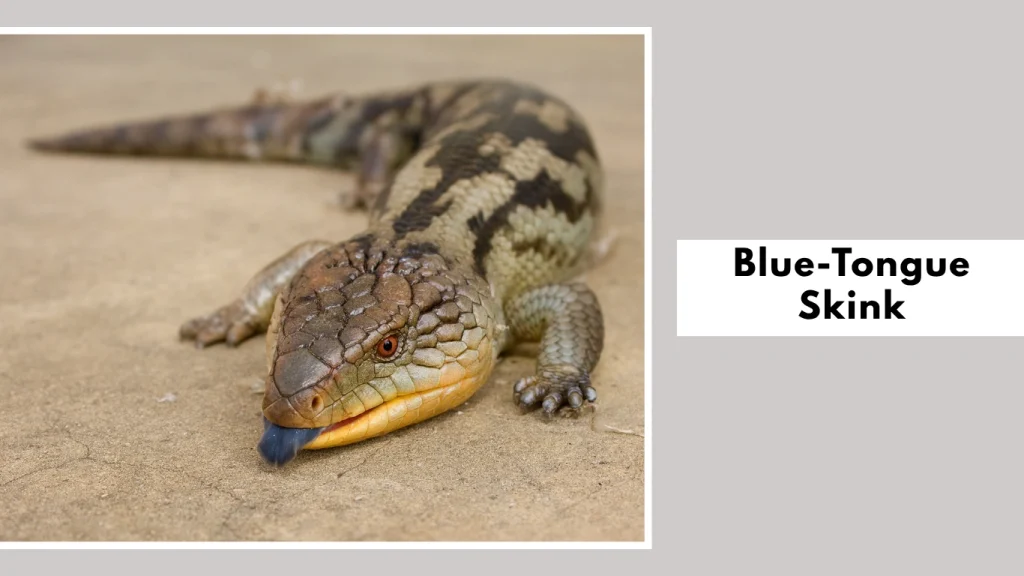
Blue-Tongue Skinks are robust, ground-dwelling lizards known for their wide bodies and signature blue tongues, which they flash as a defense mechanism. Native to Australia and parts of Indonesia, they are popular in the pet trade due to their docile temperament and ease of care.
Identification
- Color: Tan or gray base with dark brown bands
- Size: 18 to 24 inches in length
- Distinct feature: Wide, flat head and bright blue tongue
- Tail: Short and thick
- Legs: Short but sturdy, adapted for ground movement
Behavior
These skinks are diurnal and generally calm. When threatened, they puff up, hiss, and stick out their blue tongue to scare off predators. They are not fast runners but rely on intimidation and camouflage.
Habitat
In the wild, Blue-Tongue Skinks are found in arid woodlands, grasslands, and suburban backyards across Australia. They seek shelter under logs, leaf litter, or rocks. In captivity, they require a spacious enclosure with substrate for burrowing, hiding spots, and access to both basking and cooler zones. Proper UVB lighting and warmth are essential for their health.
Diet
They are omnivorous and enjoy a varied diet of plant and animal matter. In the wild, they eat insects, snails, slugs, berries, flowers, and fungi. In captivity, they thrive on a mix of vegetables, fruits, and protein sources such as cooked eggs, lean meats, and insects. Balanced nutrition is key to preventing health issues.
7. Argentine Black and White Tegu
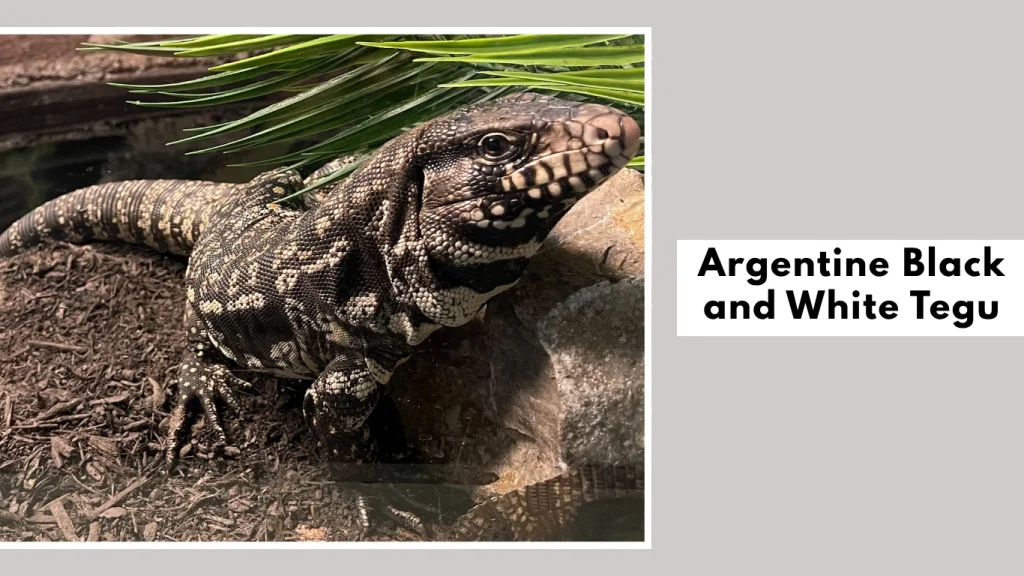
The Argentine Black and White Tegu is a large, intelligent lizard native to South America. It is known for its bold black and white banded pattern and dog-like behavior when socialized. These lizards can form bonds with their keepers and are often praised for their intelligence.
Identification
- Color: Black body with white banding or speckling
- Size: 3 to 4.5 feet in length
- Distinct feature: Powerful body with thick tail and jowls in mature males
- Limbs: Strong with sharp claws
- Tongue: Long and forked, used for scent detection
Behavior
Tegus are active during the day and have a seasonal brumation period in colder months. With proper handling, they become very tame and even affectionate. They are highly intelligent and can recognize their caretakers and follow routines.
Habitat
In their natural habitat, they live in forests, savannas, and swamps of Argentina, Brazil, and surrounding countries. They are terrestrial and enjoy digging burrows for shelter. In captivity, they require large enclosures with deep substrate for burrowing, high humidity, UVB lighting, and a hot basking area. Enrichment and space to roam are essential for their well-being.
Diet
Argentine Tegus are omnivorous with a strong appetite. Their diet includes fruits, vegetables, insects, small mammals, eggs, and carrion. In captivity, they thrive on a varied diet that includes lean meats, calcium-dusted insects, greens, and seasonal fruits. Their diet must be well-balanced to avoid obesity and metabolic issues.
8. Savannah Monitor
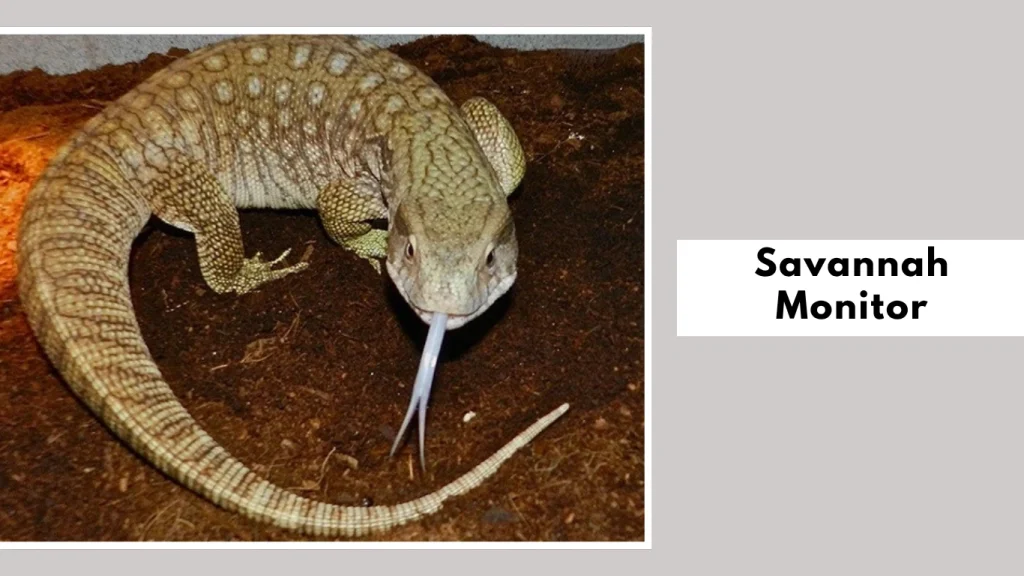
The Savannah Monitor is a stout-bodied, ground-dwelling lizard native to sub-Saharan Africa. Known for its strength and appetite, this species is often kept by experienced reptile keepers due to its size and specific care requirements.
Identification
- Color: Gray, brown, or tan with pale spots or bands
- Size: Typically 3 to 4 feet long
- Distinct feature: Thick neck, muscular limbs, and strong jaws
- Tail: Long, powerful, slightly flattened
- Tongue: Forked and pink or blue
Behavior
Savannah Monitors are generally solitary and spend most of their time basking or digging. Though they can be tamed with regular handling, they are powerful and may become aggressive if stressed or improperly cared for.
Habitat
In the wild, they inhabit savannas, scrublands, and grasslands. They live in burrows to regulate body temperature and escape predators. Captive Savannah Monitors require large enclosures with deep, diggable substrate, high basking temperatures, and low humidity. Hiding areas and UVB lighting are essential for their health and comfort.
Diet
They are carnivorous and feed primarily on invertebrates such as insects, snails, and crustaceans in the wild. In captivity, their diet includes crickets, roaches, earthworms, and occasional lean meat or eggs. A calcium-rich diet is crucial to prevent bone disorders.
9. Komodo Dragon
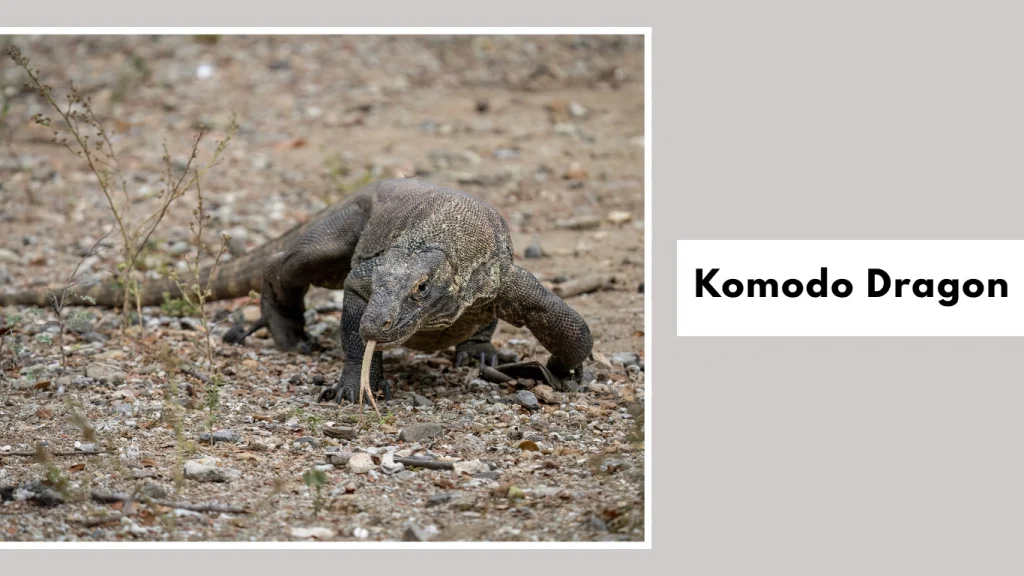
The Komodo Dragon is the largest living lizard on Earth, native to a few Indonesian islands. This apex predator is both powerful and stealthy, capable of taking down large prey with its sharp teeth, strong limbs, and mildly venomous bite.
Identification
- Color: Grayish-brown to black
- Size: Up to 10 feet long and 150–200 pounds
- Distinct feature: Thick, muscular body with long, clawed limbs
- Tail: Heavy and strong, used for balance and defense
- Tongue: Long, yellow, and forked
Behavior
Komodo Dragons are solitary hunters, active during the day. They use their excellent sense of smell to detect carrion from miles away. They are territorial and can become aggressive if threatened.
Habitat
Komodo Dragons are found on the Indonesian islands of Komodo, Rinca, Flores, and a few others. They live in dry, open grasslands, savannas, and forested areas. They dig burrows for shelter and prefer warm temperatures. In captivity, only specialized facilities like zoos or conservation parks can accommodate their size and needs.
Diet
They are carnivorous and feed on a wide range of animals, including deer, pigs, birds, and carrion. Juveniles eat insects and small lizards. Their bite delivers both physical damage and mild venom that prevents blood clotting, helping them subdue large prey. They are capable of eating up to 80% of their body weight in a single feeding.
10. Nile Monitor

The Nile Monitor is a large, semi-aquatic lizard native to sub-Saharan Africa. Known for its agility in both water and land, it’s a powerful predator with a muscular body, sharp claws, and strong jaws. Due to their size and temperament, they’re generally suited for experienced reptile keepers.
Identification
- Color: Dark brown or gray with yellowish spots and banding
- Size: 4.5 to 7 feet long
- Distinct feature: Strong limbs, sharp claws, and long, muscular tail
- Tongue: Forked and pink, similar to a snake’s
- Head: Narrow and pointed with large eyes
Behavior
Nile Monitors are highly active and territorial. They are strong swimmers, often diving to escape predators or search for food. In captivity, they are not easily tamed and may become defensive or aggressive if not handled properly.
Habitat
These monitors inhabit riverbanks, swamps, forests, and savannas. They often live near water sources such as lakes, rivers, and wetlands. In the wild, they dig burrows or shelter in hollow logs. In captivity, they require a large enclosure with access to both land and water areas, strong basking lights, and secure hiding places.
Diet
Nile Monitors are carnivorous and opportunistic feeders. They consume a wide variety of prey including fish, frogs, birds, rodents, insects, and eggs. In captivity, their diet may include feeder rodents, whole fish, snails, and insects. Their aggressive feeding behavior requires careful supervision during mealtime.
11. Gila Monster
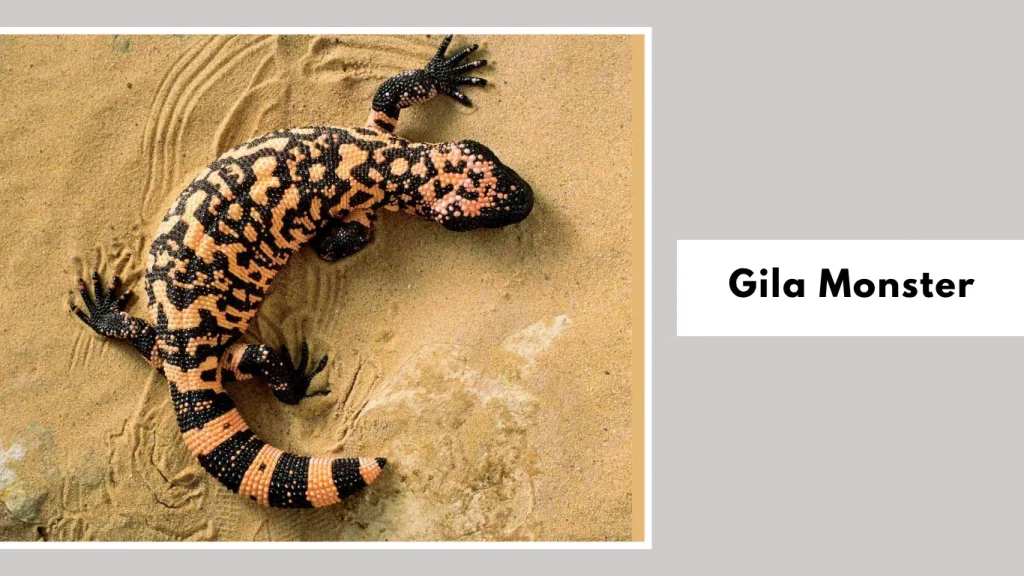
The Gila Monster is one of the few venomous lizards in the world, found in the deserts of the southwestern United States and northern Mexico. It is slow-moving and spends most of its life hidden underground, emerging mainly to feed or bask.
Identification
- Color: Black body with pink, orange, or yellow bands or blotches
- Size: 18 to 22 inches long
- Distinct feature: Thick body and tail with bead-like textured skin
- Tongue: Short and dark, used for taste and scent detection
- Limbs: Short and strong for digging
Behavior
Gila Monsters are solitary and primarily nocturnal or crepuscular. They are docile but will hiss, gape, and bite defensively if provoked. Their venom is delivered through grooved teeth, though bites to humans are rare and not fatal.
Habitat
They inhabit arid deserts, rocky hillsides, and scrublands. They spend up to 90% of their time in burrows or under rocks to escape extreme heat. In captivity, they require a secure, escape-proof enclosure with warm temperatures, hiding areas, and access to a shallow water dish.
Diet
Gila Monsters are carnivorous and have a slow metabolism. They feed on bird eggs, baby mammals, reptiles, and occasionally carrion. In captivity, they eat pre-killed mice, eggs, or specially prepared reptile diets. They can store fat in their tails, allowing them to go weeks or even months between meals.
12. Eastern Fence Lizard

The Eastern Fence Lizard is a small, spiny lizard native to the eastern and central United States. It’s commonly seen basking on logs, rocks, and fences, and is well adapted to forested and suburban areas.
Identification
- Color: Gray to brown with rough, keeled scales
- Size: 4 to 7.5 inches long
- Distinct feature: Males have bright blue patches on their bellies and throats
- Tail: Slim and proportionate to body length
- Body: Flattened appearance with ridged scales
Behavior
They are diurnal and quick to flee from predators. Males display push-ups and body bobbing to defend territory or attract mates. Though solitary, they often inhabit the same areas as other individuals with overlapping ranges.
Habitat
Eastern Fence Lizards inhabit woodlands, forest edges, and rocky outcrops. They are frequently found on tree trunks, fences, and sunny surfaces. They require dry, open areas with plenty of basking spots and hiding places such as bark or logs. These lizards hibernate during colder months in burrows or under debris.
Diet
Their diet consists mainly of insects and small arthropods. They actively hunt ants, beetles, spiders, and caterpillars. In captivity, they thrive on a varied diet of crickets, small roaches, and other soft-bodied insects. Proper supplementation with calcium and vitamins helps maintain their bone health.
13. Western Fence Lizard
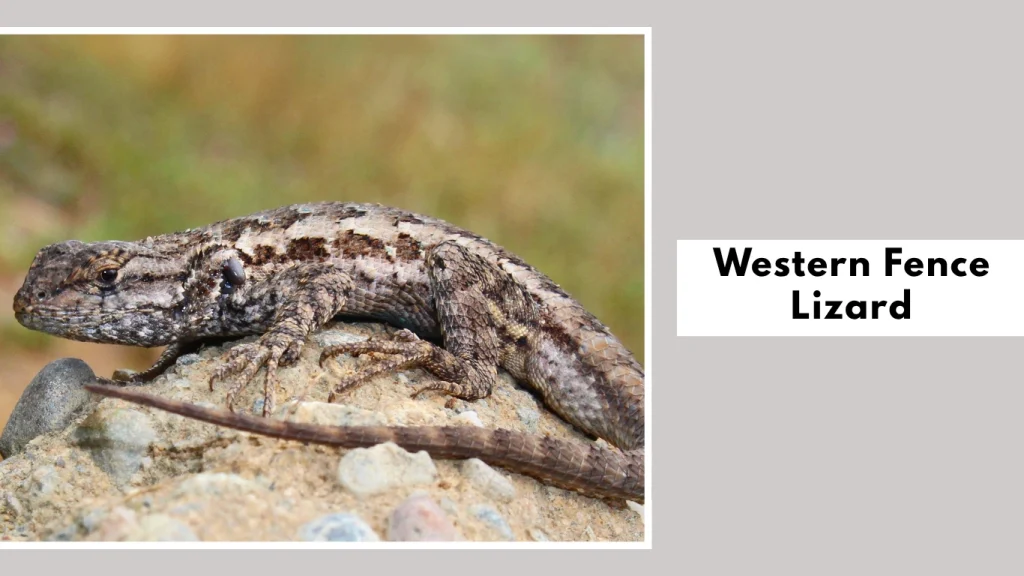
Also known as the “blue belly,” the Western Fence Lizard is native to the western United States. It’s a fast, agile species that thrives in dry, sunny environments and plays a key role in reducing Lyme disease risk by killing Lyme-carrying ticks during feeding.
Identification
- Color: Gray, brown, or black with blue patches on the belly and throat
- Size: 5 to 8.5 inches long
- Distinct feature: Rough, spiny scales and bright blue markings in males
- Body: Stout and muscular with long claws
- Tail: Long and tapering
Behavior
Western Fence Lizards are active during the day and quick to scurry away when approached. Males are territorial and often seen doing push-ups or head-bobbing displays. They are known to bask openly on rocks or fences.
Habitat
They prefer dry habitats such as grasslands, woodlands, chaparral, and suburban yards. They are commonly found sunning on fences, logs, and rocks. They hibernate during colder months and take refuge under bark, stones, or in burrows.
Diet
These lizards are insectivores and actively hunt small prey such as ants, beetles, flies, and spiders. Their feeding helps control local insect populations, and they are particularly beneficial in areas where ticks are prevalent. In captivity, they require a steady supply of live insects along with appropriate UVB lighting and supplements.
14. Five-Lined Skink
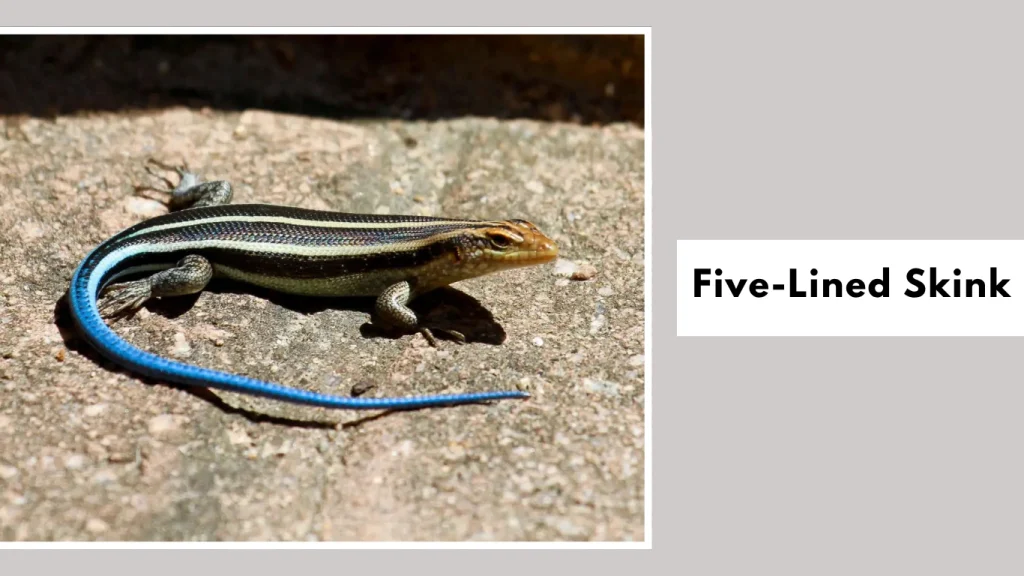
The Five-Lined Skink is a sleek, fast-moving lizard found throughout the eastern United States. It’s named for the five pale lines that run along its body, and juveniles are especially recognizable due to their bright blue tails.
Identification
- Color: Dark brown or black with five yellow to white lines
- Size: 5 to 8.5 inches long
- Distinct feature: Juveniles have a vibrant blue tail
- Body: Smooth, shiny scales
- Tail: Long and easily detached if grabbed
Behavior
Five-Lined Skinks are diurnal and quick to hide under logs, rocks, or leaf litter when disturbed. They are solitary and highly alert, often darting quickly from place to place in search of food or shelter.
Habitat
These skinks are commonly found in moist wooded areas, forest edges, and rotting logs. They prefer locations with good ground cover and sunlit basking spots. In human-inhabited areas, they are often seen around garden mulch, decks, or old woodpiles.
Diet
They are active insectivores, feeding on crickets, beetles, spiders, caterpillars, and other small invertebrates. Juveniles and adults both hunt by sight and use quick reflexes to catch their prey. A calcium-supplemented diet is necessary in captivity for proper bone development.
15. Italian Wall Lizard

The Italian Wall Lizard is a small, agile species native to southern Europe but introduced to parts of the U.S. It is often seen basking on rocks, concrete walls, and urban surfaces. Its adaptability has helped it thrive in both natural and human-made habitats.
Identification
- Color: Bright green to brown with dark mottling
- Size: 6 to 8 inches long
- Distinct feature: Long tail and slim body
- Body: Smooth scales with a slight metallic sheen
- Legs: Well-developed for climbing
Behavior
Italian Wall Lizards are active during the day and highly alert. They are fast runners and often flee into crevices when startled. Males may engage in territorial chases during the breeding season.
Habitat
They inhabit rocky outcrops, stone walls, ruins, and urban gardens. In both their native and introduced ranges, they prefer sunny areas with plenty of cracks, stones, or vegetation for hiding. Their ability to thrive in disturbed environments makes them successful colonizers.
Diet
These lizards feed mainly on insects and other small arthropods. Their diet includes flies, ants, moths, and beetles. In urban settings, they may also scavenge for crumbs or small food scraps. Regular access to live prey and natural sunlight is important for their health in captivity.
16. Brown Anole
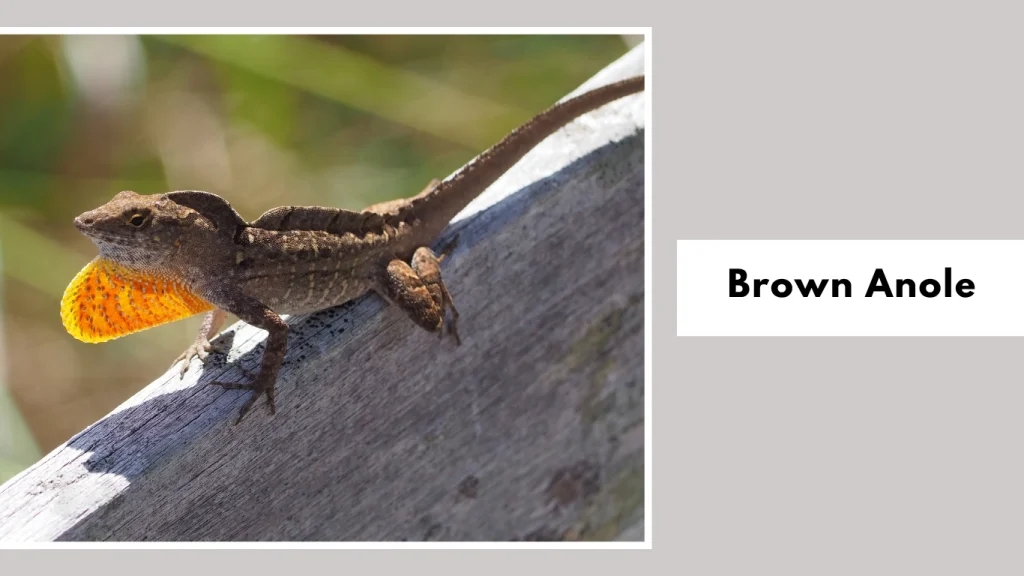
The Brown Anole is a highly adaptable lizard native to Cuba and the Bahamas but now widespread in the southeastern United States. It’s often seen darting across sidewalks, garden walls, and tree trunks, competing with native Green Anoles for territory.
Identification
- Color: Brown to grayish-brown with darker markings or diamond patterns
- Size: 5 to 8 inches long
- Distinct feature: Males have a reddish-orange dewlap
- Tail: Long and slender, often curled when climbing
- Body: Slim and agile with long limbs
Behavior
Brown Anoles are highly territorial and active during the day. Males often display head-bobs and extend their dewlap to assert dominance or attract females. They are quick runners and often jump between plants and walls.
Habitat
They thrive in urban and suburban environments, especially in gardens, shrubs, fences, and patios. They prefer dry, sunny spots with plenty of places to perch and hide. Unlike Green Anoles, Brown Anoles tend to stay closer to the ground and lower vegetation.
Diet
Brown Anoles feed on a variety of insects and arthropods. Their diet includes ants, spiders, small beetles, and flies. They are active hunters, relying on vision and speed. In captivity, they do well on small crickets and other soft-bodied insects, with calcium supplementation.
17. Green Iguana
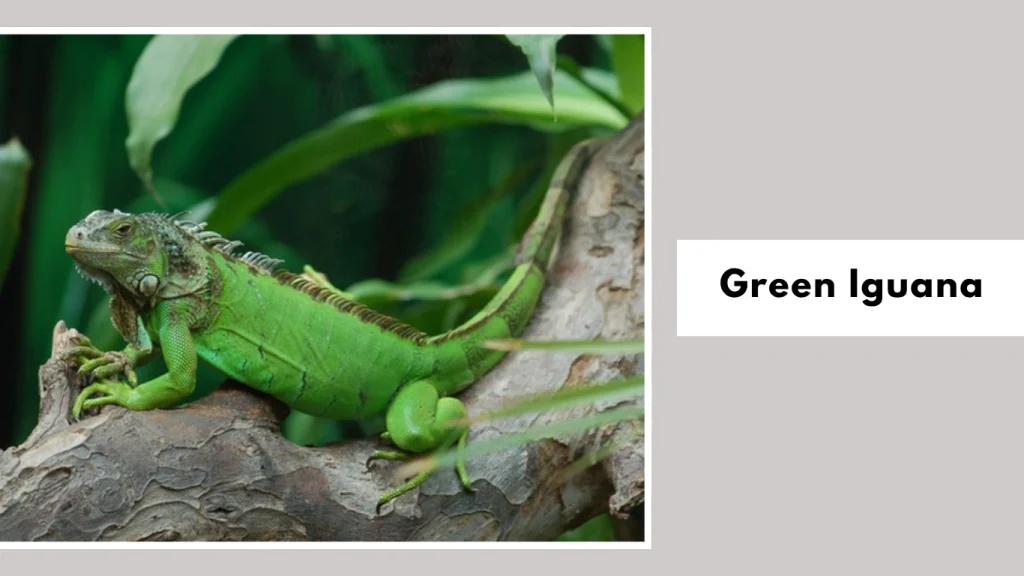
The Green Iguana is a large, tree-dwelling lizard native to Central and South America. Despite its name, it can vary in color from bright green to gray or even orange, especially during breeding season. It’s commonly kept as a pet, though it requires extensive care.
Identification
- Color: Usually green, but may be brown, orange, or gray
- Size: 4 to 6.5 feet including the tail
- Distinct feature: Large dewlap, row of spines along the back, long whip-like tail
- Head: Triangular with visible jowls in males
- Toes: Long with sharp claws for climbing
Behavior
Green Iguanas are mostly arboreal and active during the day. They are solitary and may become aggressive if provoked. When threatened, they can whip with their tail, bite, or jump from high branches into water to escape.
Habitat
In the wild, they live in tropical rainforests near rivers and streams. They spend most of their time in trees and bask in the sunlight for warmth. In captivity, they need a large, tall enclosure with strong UVB lighting, high humidity, and branches for climbing and basking.
Diet
They are strict herbivores and feed on a wide range of leafy greens, fruits, and flowers. Their wild diet includes young leaves, buds, and blossoms. In captivity, they must be fed a diet rich in calcium and fiber, consisting of dark leafy greens, squash, and limited fruits. Avoiding animal protein is crucial for their health.
18. Desert Iguana
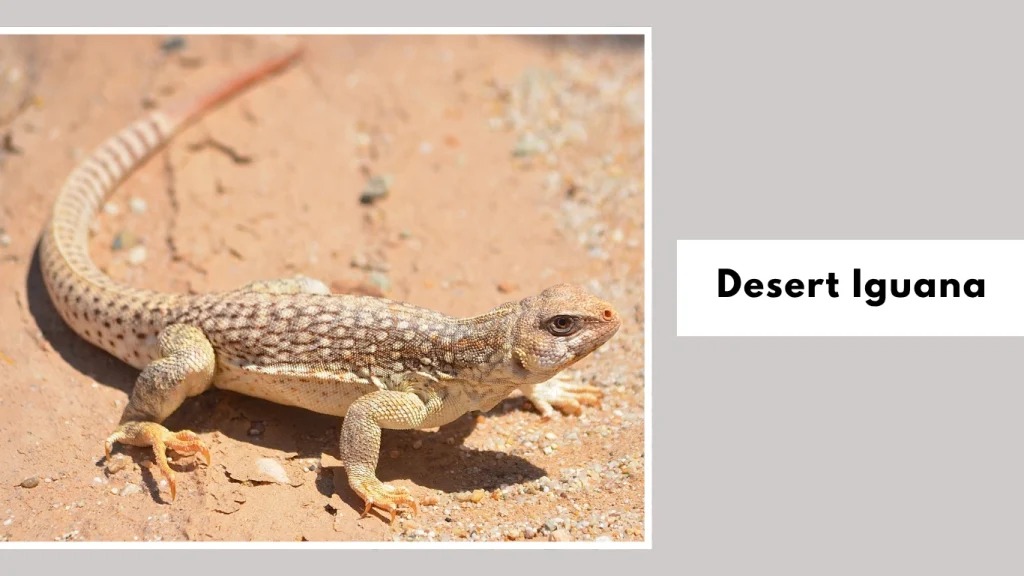
The Desert Iguana is a hardy, heat-tolerant lizard native to the arid regions of the southwestern United States and northwestern Mexico. It’s well adapted to extreme desert temperatures and is most active during the hottest part of the day.
Identification
- Color: Pale gray or tan with brownish spots and crossbands
- Size: 10 to 16 inches long
- Distinct feature: Blunt head, rounded body, and light-colored belly
- Tail: Long and banded, usually twice the length of the body
- Skin: Smooth with small, granular scales
Behavior
Desert Iguanas are diurnal and especially active during midday heat. They are shy but fast, often darting into burrows or under bushes when approached. They regulate their body temperature by basking on rocks and sand.
Habitat
They are found in deserts, particularly in areas with creosote bush, their preferred vegetation. They use rodent burrows or dig their own to escape predators and intense heat. Their habitat includes dry washes, rocky slopes, and sandy flats. They require a hot, dry environment with access to shelter.
Diet
Primarily herbivorous, Desert Iguanas feed on leaves, buds, flowers, and fruits, especially from the creosote bush. Occasionally, they may eat insects or small invertebrates, but plant matter makes up most of their diet. In captivity, they should be provided with a variety of greens, vegetables, and edible flowers like hibiscus.
19. Spiny-Tailed Iguana
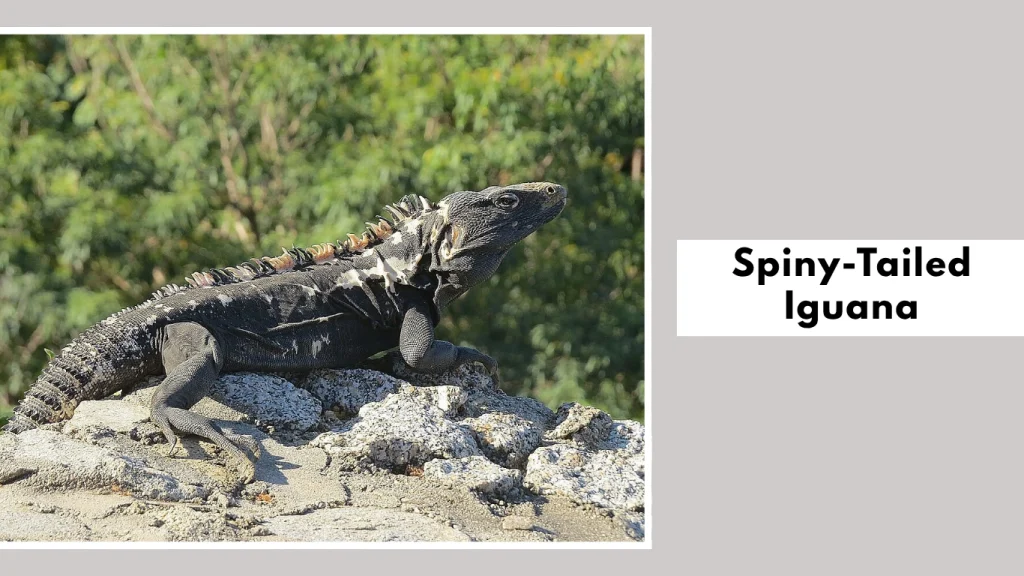
Spiny-Tailed Iguanas, also called Ctenosaurs, are fast, aggressive lizards native to Mexico and Central America. They’re recognized by the prominent spines running down their backs and tails and are known to be the fastest-running lizards in the world.
Identification
- Color: Varies from gray and tan to black with dark bands or blotches
- Size: 10 inches to over 4 feet, depending on species
- Distinct feature: Heavily spined tail used for defense
- Body: Lean and muscular with pronounced limbs
- Head: Angular with sharp, visible scales
Behavior
These lizards are diurnal and extremely wary of predators. When threatened, they use their tail to whip or flee at high speed. Males are territorial and often display head-bobbing and dewlap extension.
Habitat
Spiny-Tailed Iguanas inhabit dry forests, rocky hillsides, coastal cliffs, and ruins. They prefer sun-exposed surfaces for basking and shelter in rock crevices, tree trunks, or burrows. Some species have adapted to live in urban environments, especially in old buildings and walls.
Diet
Most species are omnivores. They eat leaves, flowers, fruits, and insects. Juveniles are more insectivorous, while adults shift toward a plant-based diet. In captivity, a mix of vegetables, leafy greens, fruits, and occasional insects supports their nutritional needs. High UVB exposure is essential for proper calcium absorption.
20. Frilled Lizard

The Frilled Lizard, famous for its dramatic neck frill, is native to northern Australia and southern New Guinea. It uses its large, colorful frill to scare off predators, creating a memorable and intimidating display.
Identification
- Color: Gray, brown, or reddish with subtle patterning
- Size: 2 to 3 feet long (half of that is tail)
- Distinct feature: Large frill around the neck that extends when threatened
- Limbs: Long with sharp claws for climbing
- Body: Slim and upright when running
Behavior
Frilled Lizards are mostly arboreal but come to the ground to hunt or bask. When threatened, they stand on their hind legs, extend their frill, and hiss. They are fast runners and can flee upright on two legs, a behavior that’s both defensive and fascinating to observe.
Habitat
They inhabit tropical and warm savannah woodlands, where trees and open ground are abundant. They prefer warm, humid environments with plenty of vertical space for climbing. During dry seasons, they become less active and hide in tree hollows or under debris.
Diet
Frilled Lizards are insectivorous. They feed on cicadas, ants, beetles, spiders, termites, and occasionally small vertebrates like other lizards. In captivity, they thrive on crickets, roaches, mealworms, and other live insects, which must be calcium supplemented to prevent metabolic bone disease.
21. Horned Lizard

Often called “horned toads” due to their squat, rounded bodies, Horned Lizards are native to North and Central America. These desert dwellers are famous for their spiny appearance and unusual defense tactic of squirting blood from their eyes to deter predators.
Identification
- Color: Tan to reddish-brown, matching local soil
- Size: 2.5 to 5 inches long
- Distinct feature: Rows of sharp horns on head and short, wide body
- Tail: Short and blunt
- Skin: Rough and bumpy for camouflage
Behavior
Horned Lizards are diurnal and mostly slow-moving. They rely on camouflage and stillness to avoid detection. When threatened, they puff up their bodies and may even squirt blood from their eyes as a last resort defense against predators.
Habitat
They are found in arid and semi-arid regions, including deserts, grasslands, and scrublands. They prefer sandy or loose soil areas where they can burrow easily. Their habitat often includes sparse vegetation and plenty of sun exposure.
Diet
Horned Lizards are highly specialized feeders, consuming mostly ants—particularly harvester ants. They may also eat beetles and other small insects, but ants make up the majority of their diet. This specialization makes them difficult to keep in captivity, as they require a steady supply of specific ant species.
22. Chameleon

Chameleons are highly specialized lizards known for their ability to change color, their independently moving eyes, and long projectile tongues. Native to Africa, Madagascar, and parts of Asia and Europe, they are popular in the exotic pet trade but require specific care.
Identification
- Color: Varies by species—green, brown, yellow, blue, or multicolored
- Size: 1 inch to over 2 feet depending on species
- Distinct feature: Independently rotating eyes and prehensile tail
- Feet: Zygodactyl (split toes for gripping branches)
- Tongue: Extremely long and sticky for catching prey
Behavior
Chameleons are slow-moving and solitary. They are arboreal and spend most of their time climbing through branches. Color changes reflect mood, temperature, and communication rather than just camouflage.
Habitat
They live in forests, woodlands, savannahs, and mountainous regions, depending on species. All require vertical space, vegetation, and controlled humidity. In captivity, they need a tall, ventilated enclosure with live plants, branches, UVB lighting, and precise temperature gradients.
Diet
Chameleons are insectivores. They eat live prey such as crickets, flies, moths, and small roaches. Some larger species may consume small birds or reptiles. A varied diet with calcium and vitamin supplementation is essential, as they are prone to nutritional deficiencies.
23. Jackson’s Chameleon
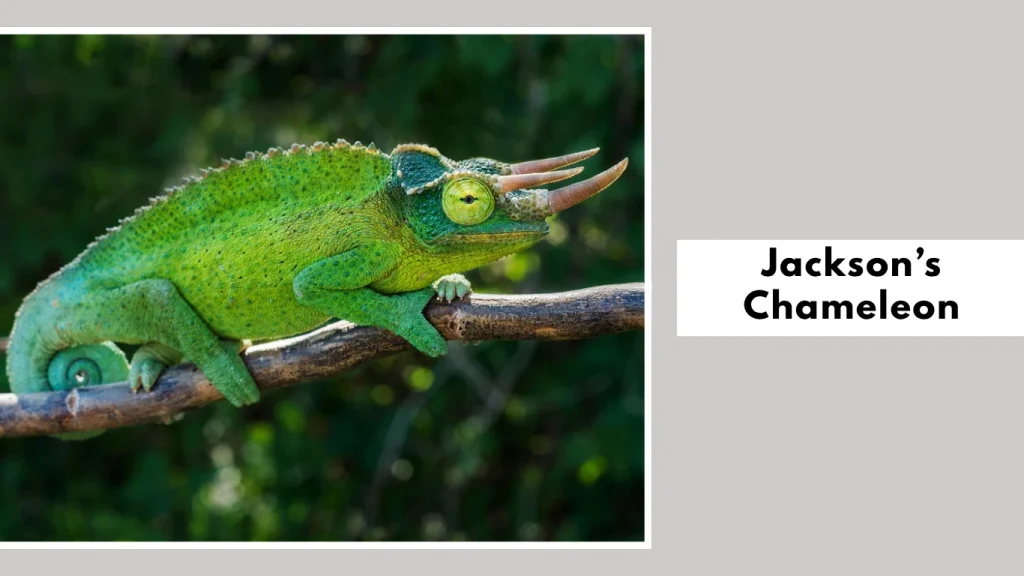
Jackson’s Chameleon is a species native to East Africa, particularly Kenya and Tanzania. It is one of the most recognized chameleons due to the three prominent horns on the males, resembling those of a miniature triceratops.
Identification
- Color: Usually green, with some yellow or blue tint
- Size: 9 to 13 inches long
- Distinct feature: Males have three horns—one on the nose and two above the eyes
- Eyes: Can rotate independently
- Tail: Prehensile and used for gripping branches
Behavior
Jackson’s Chameleons are shy and deliberate in movement. Males may use their horns to spar over territory or mates. They are sensitive to handling and do best with minimal disturbance.
Habitat
They live in montane forests and prefer cooler, moist climates compared to other chameleons. In captivity, they require a vertical enclosure with live plants, high humidity, cool ambient temperatures, and strong UVB lighting. Good airflow and hydration (via misting or drip systems) are vital.
Diet
Their diet consists of flying insects, crickets, worms, and small invertebrates. In captivity, they should be fed a mix of gut-loaded insects with proper calcium and vitamin supplementation to prevent metabolic disorders. Hydration is also critical, as they typically drink water droplets from leaves rather than from bowls.
24. Panther Chameleon
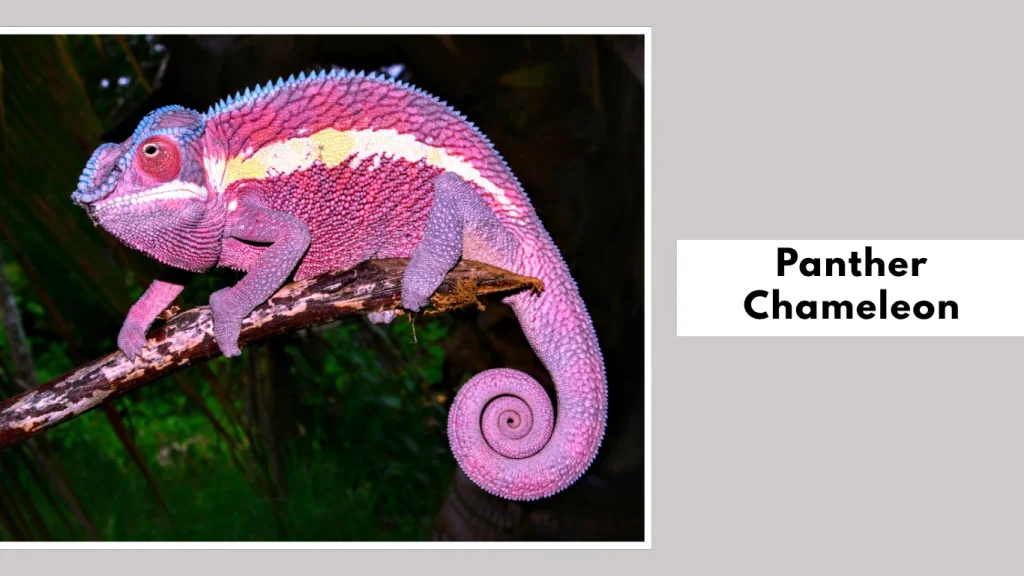
The Panther Chameleon is a vividly colored species native to Madagascar and widely admired for its brilliant display of hues, which vary depending on region, mood, and health. It’s one of the most popular pet chameleons due to its striking looks and relatively calm nature.
Identification
- Color: Red, green, blue, orange, yellow, or multi-colored (varies by locale)
- Size: 14 to 20 inches long
- Distinct feature: Bulging eyes, vibrant coloration, and prehensile tail
- Body: Laterally compressed with fine scales
- Tongue: Very long and sticky for catching insects
Behavior
Panther Chameleons are solitary and territorial. Males are more colorful and display brighter shades when courting or displaying dominance. They are calm if not overly handled and prefer observing from a secure, elevated perch.
Habitat
In the wild, they inhabit tropical forests along Madagascar’s coasts. They require warm, humid conditions with ample foliage and vertical climbing space. In captivity, they thrive in tall, screen enclosures with live plants, frequent misting, and full-spectrum UVB lighting to mimic their natural tropical environment.
Diet
They are insectivores and feed on a variety of live insects including crickets, flies, roaches, and silkworms. Larger individuals may occasionally consume small vertebrates. All feeder insects must be gut-loaded and dusted with calcium and vitamins to ensure proper health.
25. Common House Gecko
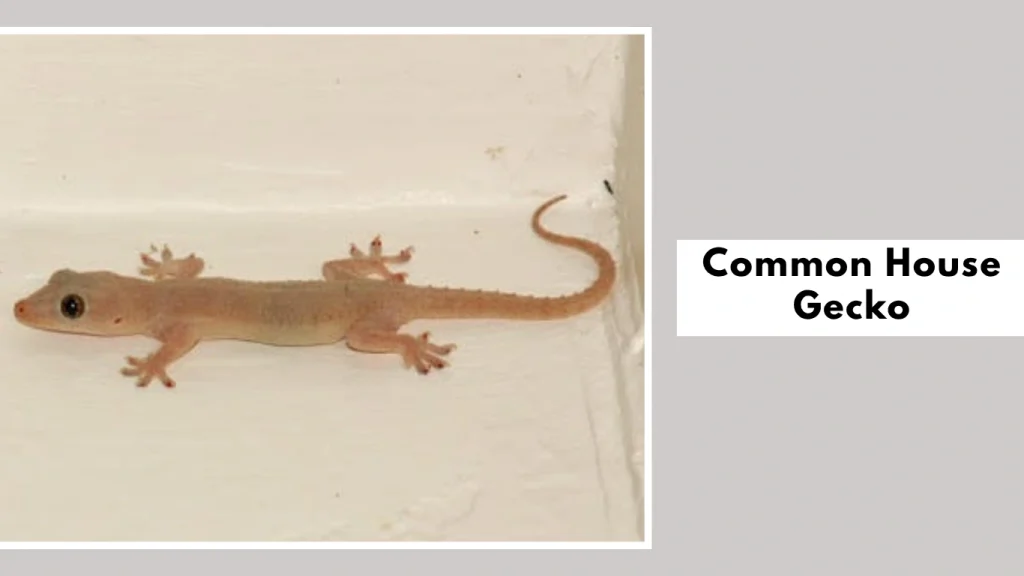
The Common House Gecko is a small, adaptable lizard found in tropical and subtropical regions worldwide. It’s frequently seen climbing walls and ceilings near lights at night, feeding on insects attracted to the glow.
Identification
- Color: Pale gray or light brown, often with darker spots
- Size: 3 to 6 inches long
- Distinct feature: Translucent skin and wide toe pads
- Tail: Can detach and regenerate
- Body: Slender with smooth scales
Behavior
These geckos are nocturnal and highly active at night. They use their adhesive toe pads to scale vertical surfaces, including glass and ceilings. They are commonly seen around human habitations and often emit a series of chirping sounds.
Habitat
They thrive in urban and rural settings—on walls, ceilings, tree trunks, and fences. They are highly adaptable and need little beyond warmth, humidity, and hiding spots. In captivity, they do well in small enclosures with vertical space, minimal lighting, and stable humidity levels.
Diet
Common House Geckos feed on mosquitoes, moths, ants, and small cockroaches. They are opportunistic insectivores that ambush or chase prey. In captivity, they thrive on small live insects such as crickets and fruit flies, supplemented with calcium powder to maintain bone health.
26. Mediterranean House Gecko
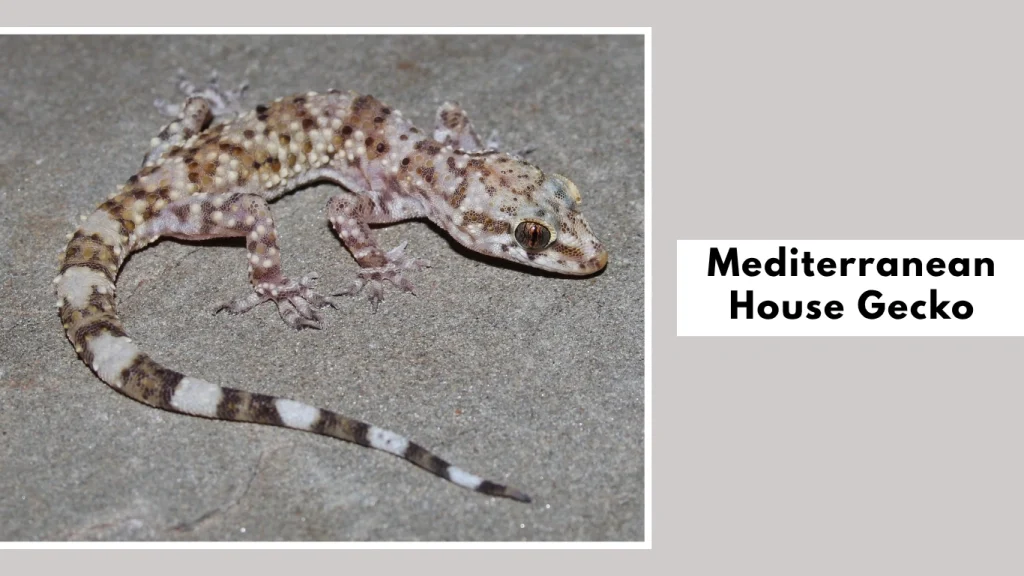
The Mediterranean House Gecko is a small, nocturnal lizard native to southern Europe but now widespread in warm regions worldwide. It’s commonly seen on building walls at night, hunting insects near lights.
Identification
- Color: Translucent pale pink, tan, or light gray with mottled patterns
- Size: 4 to 5 inches long
- Distinct feature: Bulging eyes without eyelids and bumpy skin texture
- Tail: Can detach when threatened and regrows over time
- Feet: Equipped with adhesive toe pads for climbing
Behavior
Mediterranean House Geckos are active at night and frequently vocalize with chirping or squeaking sounds. They are shy but fast and adept climbers. They spend daylight hours hiding behind shutters, under eaves, or inside cracks.
Habitat
They live in human dwellings, especially near lights that attract insects. Outdoors, they can be found on stone walls, buildings, and vegetation in warm climates. In captivity, they require a small enclosure with hiding spots, vertical climbing space, and warm, humid conditions.
Diet
They are insectivorous and feed on a variety of small insects including mosquitoes, moths, flies, and ants. In captivity, they do well on a diet of pinhead crickets, fruit flies, and small roaches dusted with calcium and multivitamins.
27. African Fat-Tailed Gecko

The African Fat-Tailed Gecko is a terrestrial species native to West Africa. Similar in appearance to the Leopard Gecko, it is known for its thick, fat-storing tail and calm demeanor, making it a popular pet.
Identification
- Color: Shades of brown with darker bands and sometimes white stripes
- Size: 7 to 9 inches long
- Distinct feature: Fat, rounded tail used for energy storage
- Skin: Smooth and soft to the touch
- Eyes: Vertical pupils with no eyelids
Behavior
These geckos are nocturnal, quiet, and gentle. They prefer low activity during the day and emerge at night to hunt. They rarely climb and enjoy hiding in tight, dark spaces. When threatened, they may drop their tail to distract predators.
Habitat
They inhabit humid savannahs and dry forests, often sheltering under rocks or in burrows. In captivity, they need a low enclosure with multiple hides, consistent humidity, a warm hide, and a cooler side for thermoregulation.
Diet
Their diet consists primarily of insects like crickets, mealworms, and waxworms. In captivity, feeding should be done with gut-loaded insects dusted with calcium and vitamin D3 supplements. Regular hydration is important, so a shallow water dish should always be available.
28. Asian Water Monitor
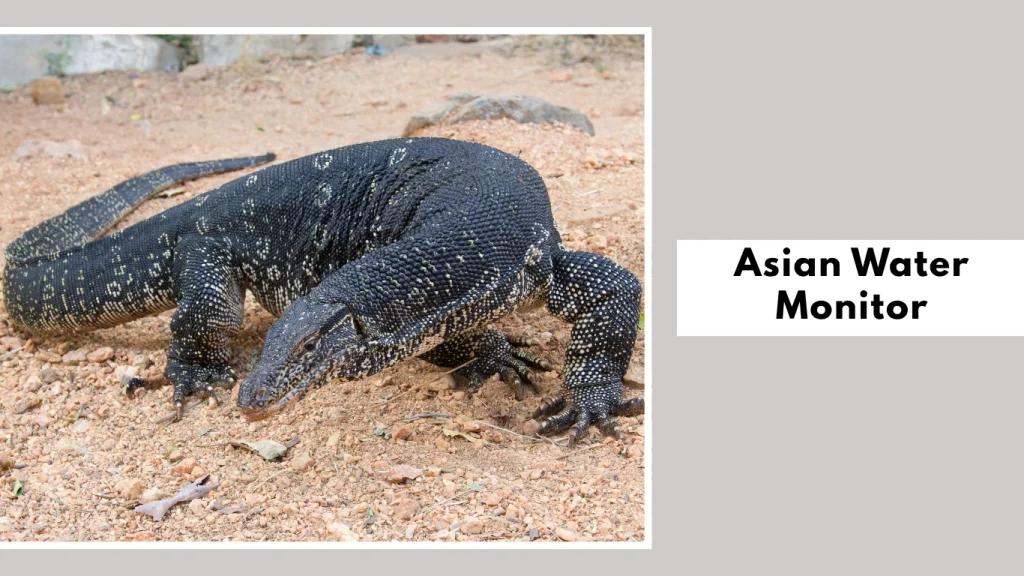
The Asian Water Monitor is one of the largest and most powerful lizards in the world, native to South and Southeast Asia. Highly intelligent and semi-aquatic, this species is known for its ability to adapt to a wide range of environments, from forests to cities.
Identification
- Color: Dark brown to black with yellow or cream bands and spots
- Size: 5 to 8 feet long, some over 9 feet
- Distinct feature: Long, muscular tail and forked tongue
- Limbs: Strong with sharp claws for climbing and digging
- Head: Elongated with powerful jaws and keen vision
Behavior
Asian Water Monitors are diurnal and solitary. They are excellent swimmers and can remain submerged for long periods. When threatened, they use their tail to whip or may bite. Despite their size, they are agile climbers and runners.
Habitat
They live in wetlands, mangroves, rainforests, rice paddies, canals, and even city drainage systems. They prefer areas near water bodies and often bask on riverbanks or branches. In captivity, they require massive enclosures with both land and water zones, basking areas, and high humidity.
Diet
These lizards are carnivorous and opportunistic. Their diet includes fish, frogs, birds, small mammals, eggs, and carrion. In captivity, they are fed rodents, fish, chicks, insects, and eggs. A varied, nutrient-rich diet is essential, along with calcium supplementation for young individuals.
29. Long-Tailed Lizard

The Long-Tailed Lizard, also called the Grass Lizard or Asian Grass Lizard, is a slim, active reptile native to Southeast Asia. Its most distinctive feature is its incredibly long tail, which can be 3–4 times the length of its body.
Identification
- Color: Light brown or olive with darker stripes along the body
- Size: 10 to 12 inches (tail makes up over 70%)
- Distinct feature: Extremely long, whip-like tail
- Body: Slender with smooth scales
- Legs: Long and thin, adapted for sprinting
Behavior
Long-Tailed Lizards are fast, alert, and prefer ground movement. They are diurnal and enjoy basking but retreat quickly when startled. They are social in groups but not overly territorial.
Habitat
They are commonly found in grasslands, forest edges, farmland, and near water. They prefer open, sunny areas with vegetation for cover. In captivity, they need horizontal space for running, moderate humidity, and branches or grasses for climbing and hiding.
Diet
They feed on small insects such as crickets, flies, and mealworms. They are visual hunters and prefer moving prey. In captivity, they should be given live insects and occasional calcium supplementation to maintain health. They drink from droplets or shallow water dishes.
30. Flying Dragon (Draco Lizard)
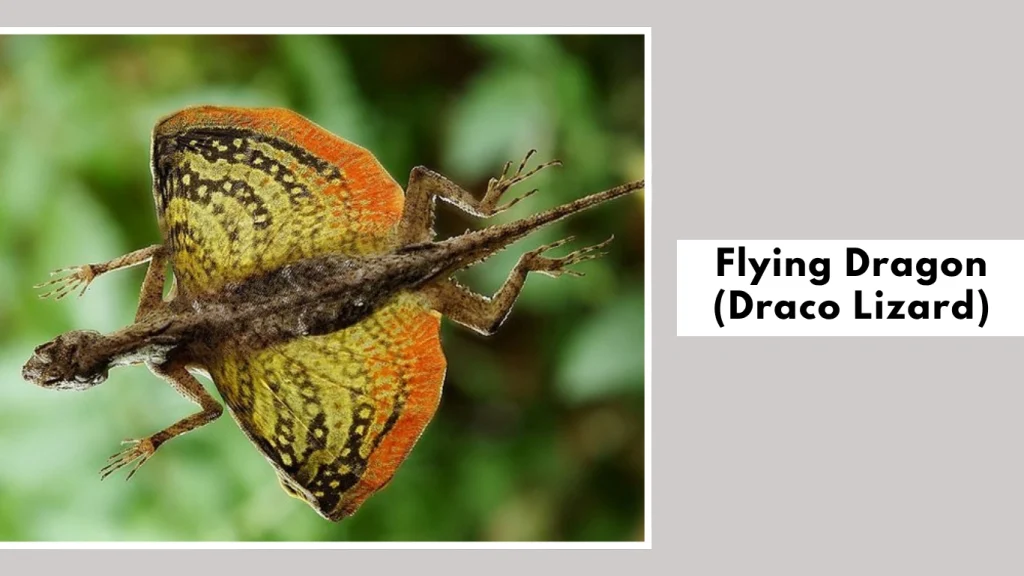
The Flying Dragon, or Draco Lizard, is a remarkable gliding reptile native to Southeast Asia. It uses wing-like flaps of skin supported by elongated ribs to glide from tree to tree in search of food or mates.
Identification
- Color: Typically brown or gray with subtle patterning; males have colorful dewlaps
- Size: 7 to 9 inches including tail
- Distinct feature: Gliding membrane (patagium) and long, thin tail
- Limbs: Slender with extended ribs for supporting “wings”
- Head: Pointed with a prominent dewlap in males
Behavior
Flying Dragons are arboreal and rarely come to the ground. They are territorial, with males defending vertical tree space. They use their dewlaps and gliding ability to communicate and escape danger. When gliding, they can cover distances of 20 to 30 feet or more.
Habitat
These lizards live in tropical forests and wooded lowlands. They are often found clinging vertically to tree trunks. In captivity (though rarely kept), they would require a tall enclosure with multiple tree-like structures, high humidity, and minimal handling.
Diet
Flying Dragons are insectivores. Their natural diet consists mostly of ants, termites, and small insects found on tree bark. In a captive environment, they require tiny live insects like pinhead crickets and fruit flies, with calcium supplements to support bone health.
31. Armadillo Girdled Lizard

The Armadillo Girdled Lizard is a small, spiny reptile native to the deserts of South Africa. Its most famous defense mechanism is curling into a ball and biting its tail—much like an armadillo—when threatened.
Identification
- Color: Yellowish-brown to dark brown with a rough, armored appearance
- Size: 3.5 to 4.5 inches long
- Distinct feature: Thick scales and spiny tail
- Body: Flattened with ringed, armored bands
- Limbs: Short and sturdy
Behavior
These lizards are social and often live in small colonies under rocks. When threatened, they curl into a defensive ball, protecting their soft underbelly. They are diurnal and spend much of the day basking on warm rocks.
Habitat
They inhabit arid, rocky deserts and semi-arid scrublands. They prefer cracks and crevices in rocks for shelter and temperature regulation. In captivity, they need a dry, warm enclosure with rocks to hide under and flat surfaces for basking.
Diet
Armadillo Girdled Lizards are primarily insectivores, feeding on termites, ants, and small beetles. In captivity, they thrive on small crickets, roaches, and mealworms dusted with calcium. Their slow metabolism allows them to eat relatively infrequently.