


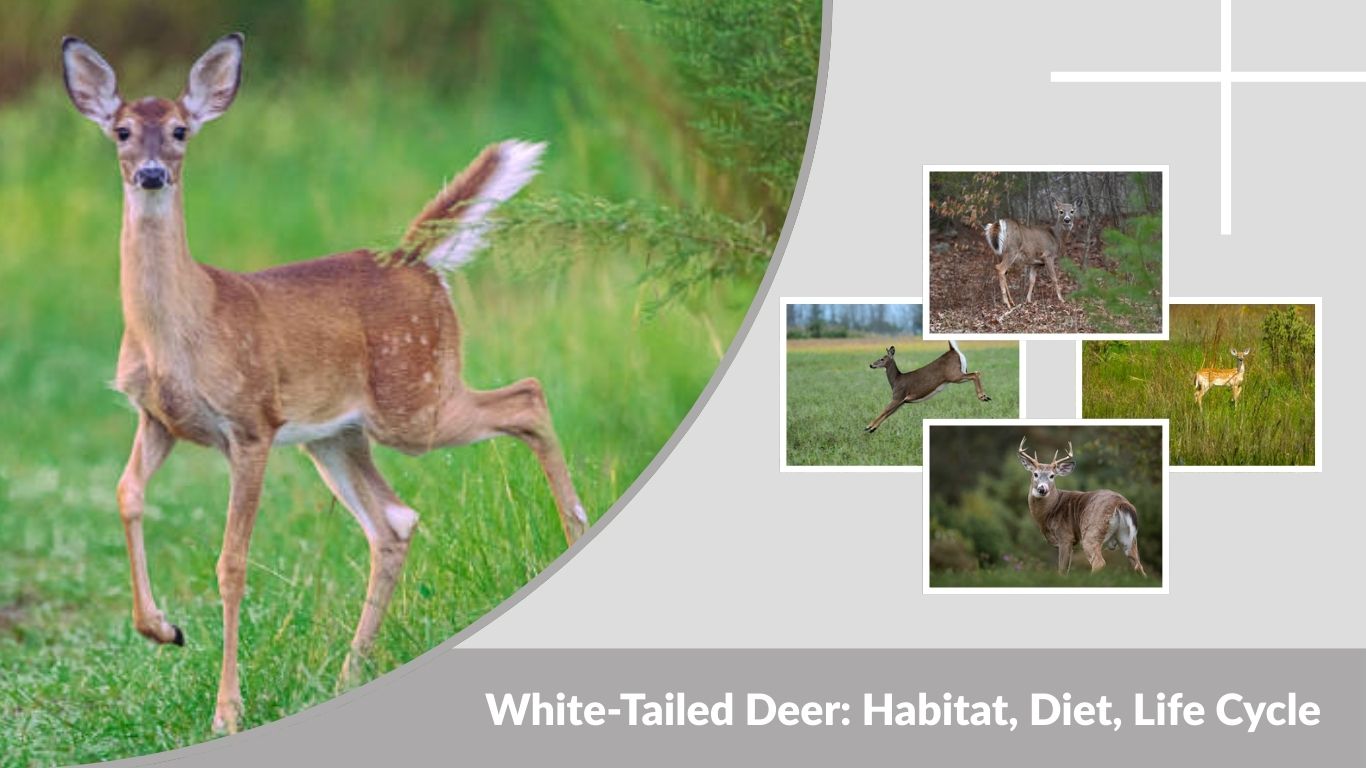
The white-tailed deer (Odocoileus virginianus), often called the whitetail deer, is one of the most recognizable and widespread mammals in North America. Known for the distinctive white underside of its tail, this species plays an important role in forest ecosystems and has adapted remarkably well to diverse environments. From dense woodlands to farmlands and suburban areas, white-tailed deer thrive across a wide range of habitats. Understanding their characteristics, size, habitat, and geographic range helps explain why they are so successful and familiar to people across the continent.
What Is a White-Tailed Deer?
The white-tailed deer is a medium-sized deer species belonging to the deer family Cervidae. It gets its name from the long tail that flashes bright white when the animal is alarmed, acting as a warning signal to other deer nearby. While “white-tailed deer” is the formal name, “whitetail deer” and “white tailed deer” are commonly used informal variations.
These deer are highly adaptable and intelligent animals. They are primarily crepuscular, meaning they are most active during early morning and late evening. Their cautious behavior, speed, and agility help them avoid predators and survive in both wild and human-altered landscapes.
White-Tailed Deer Scientific Name and Classification
The white-tailed deer scientific name is Odocoileus virginianus. It belongs to the genus Odocoileus, which also includes the mule deer. Within this species, there are several subspecies that vary slightly in size, coloration, and range.
Taxonomic classification:
- Kingdom: Animalia
- Phylum: Chordata
- Class: Mammalia
- Order: Artiodactyla
- Family: Cervidae
- Genus: Odocoileus
- Species: Odocoileus virginianus
This classification places the white-tailed deer among hoofed mammals that chew cud and rely on plant-based diets.
White-Tailed Deer Characteristics
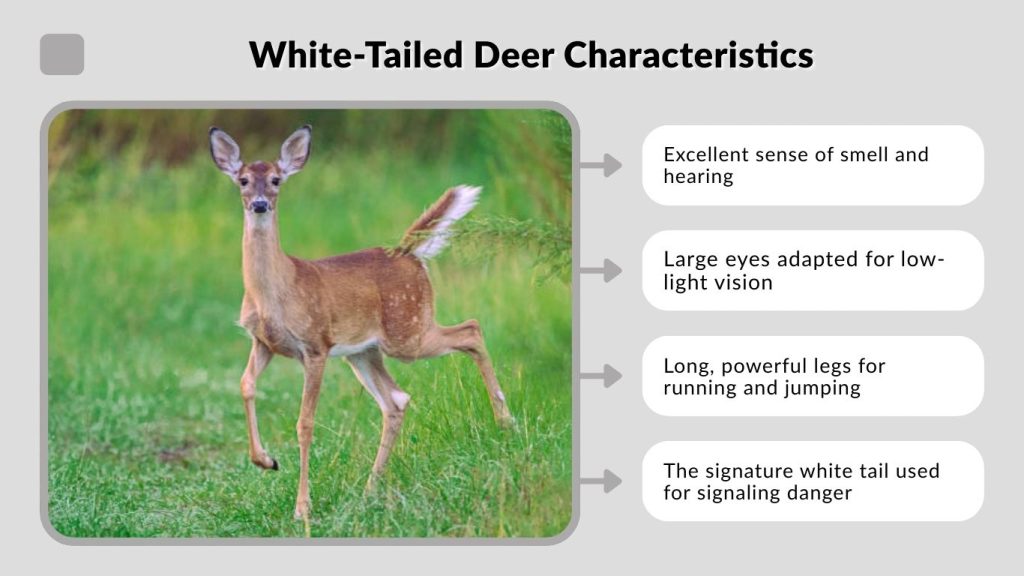
White-tailed deer have several distinctive physical and behavioral traits that make them easy to identify. Their coat color changes with the seasons, appearing reddish-brown in summer and grayish-brown in winter, which provides natural camouflage.
One of the most notable white-tailed deer characteristics is sexual dimorphism. Males, known as bucks, grow antlers each year, while females, called does, do not. Antlers are shed annually and regrown, with size often increasing as the buck ages.
Other key traits include:
- Excellent sense of smell and hearing
- Large eyes adapted for low-light vision
- Long, powerful legs for running and jumping
- The signature white tail used for signaling danger
These characteristics contribute to their ability to survive in a wide range of environments.
White-Tailed Deer Size and Weight
White-tailed deer size varies depending on age, sex, and geographic location. Deer living in northern regions tend to be larger than those in southern areas due to climate and food availability.
On average:
- Adult males stand about 3 to 3.5 feet at the shoulder
- Body length ranges from 4.5 to 6.5 feet
White-tailed deer weight also differs significantly:
- Adult females usually weigh between 90 and 200 pounds
- Adult males typically weigh 150 to 300 pounds, though some northern bucks can exceed this range
This variation in size allows white-tailed deer to adapt efficiently to local environmental conditions.
White-Tailed Deer Habitat
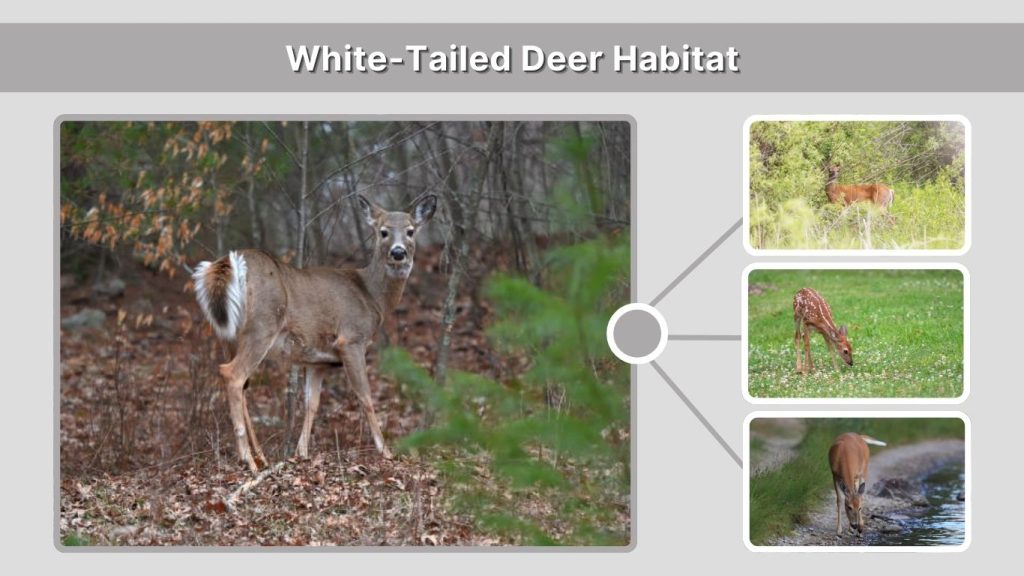
The white-tailed deer habitat is incredibly diverse. These animals are most commonly associated with forests and woodland edges, but they are equally comfortable in grasslands, wetlands, agricultural areas, and even suburban neighborhoods.
White-tailed deer prefer habitats that offer:
- Dense vegetation for cover
- Open areas for feeding
- Reliable water sources
Their ability to live near human settlements has contributed to their population growth in many regions. Seasonal changes also influence habitat use, with deer seeking thicker cover during winter months and more open feeding areas in warmer seasons.
White-Tailed Deer Range and Distribution
The white-tailed deer range spans most of North America. They are found throughout the United States, southern Canada, Mexico, Central America, and parts of South America. If you ask, where do white-tailed deer live, the answer includes nearly every type of landscape within this vast area.
In the United States, populations are especially dense in the eastern and central regions. White-tailed deer in Texas are particularly abundant, with the state supporting one of the largest populations due to its favorable climate and habitat diversity.
A notable subspecies is the Columbian white-tailed deer, which lives in limited areas of the Pacific Northwest. This subspecies is smaller and has faced conservation challenges due to habitat loss.
What Do White-Tailed Deer Eat?
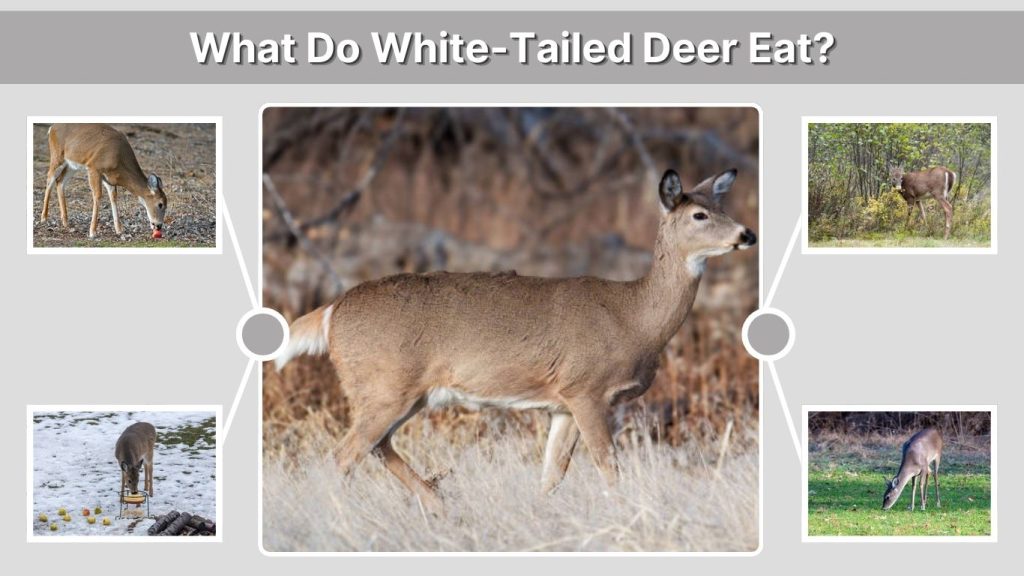
Understanding what do white-tailed deer eat is key to explaining their adaptability and wide distribution. White-tailed deer are herbivores, meaning their diet consists entirely of plant material. They are also selective feeders, choosing the most nutritious parts of plants rather than grazing randomly.
A typical white-tailed deer diet includes:
- Leaves, shoots, and twigs
- Grasses and forbs
- Acorns and other nuts
- Fruits and berries
- Agricultural crops such as corn and soybeans
Seasonal changes strongly influence the white tailed deer diet. In spring and summer, deer feed heavily on fresh green vegetation, which is high in protein and essential for growth. During fall, they rely more on nuts and fruits to build fat reserves. In winter, when food is scarce, they survive on woody plants, bark, and evergreen foliage.
White-Tailed Deer Life Cycle
The white-tailed deer life cycle follows a predictable pattern that aligns with seasonal changes. Most deer are born in late spring or early summer, when food is abundant and weather conditions are favorable.
The life cycle begins at birth and continues through several stages:
- Newborn (fawn) – Born after a gestation period of about 200 days
- Juvenile – Rapid growth during the first year
- Adult – Sexual maturity reached at about 1.5 years
- Senior – Physical decline in older age
In the wild, white-tailed deer typically live 4 to 6 years, although some individuals may reach 10 years or more under ideal conditions. Predation, disease, and human activity often limit their lifespan.
White-Tailed Deer Reproduction and Breeding
Reproduction in white-tailed deer is closely tied to seasonal cycles. The breeding season, known as the rut, usually occurs in the fall. During this time, males become more active and aggressive as they compete for mates.
The white-tailed deer female, called a doe, usually gives birth to one or two offspring after the gestation period. Younger females may have only one fawn, while healthy adults commonly produce twins.
Bucks use their antlers to spar with rivals and establish dominance. Once breeding is complete, males play no role in raising the young.
White-Tailed Deer Baby: The Fawn
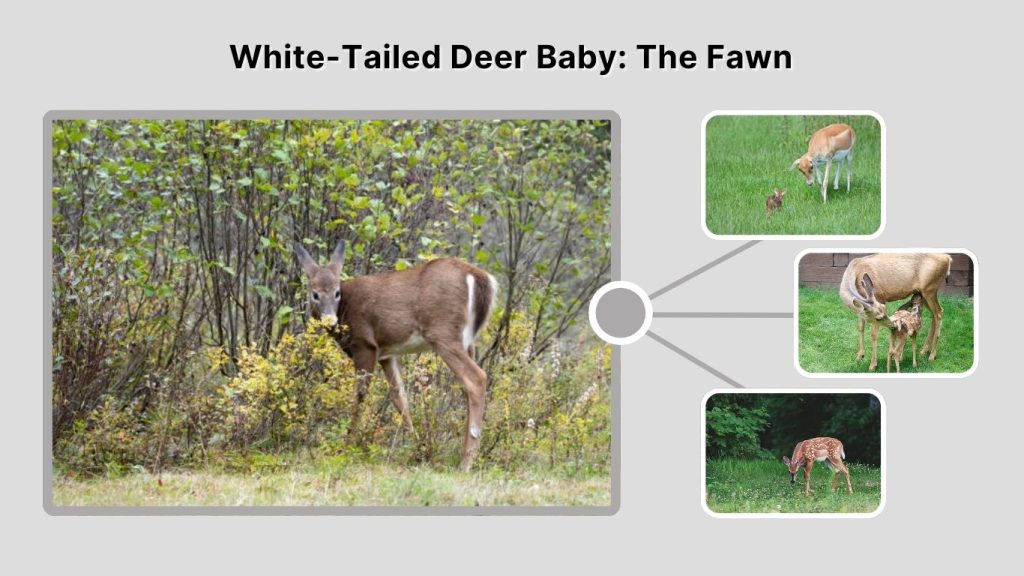
A white-tailed deer baby is known as a fawn. At birth, fawns weigh between 4 and 8 pounds and are easily recognized by their reddish-brown coat covered in white spots. These spots help camouflage them on the forest floor.
For the first few weeks of life:
- Fawns remain hidden while the mother feeds nearby
- They rely on milk for nutrition
- They have little scent, reducing detection by predators
As the fawn grows, it gradually transitions to solid food and begins following its mother. By fall, most baby white-tailed deer are strong enough to flee from danger and survive independently.
White-Tailed Deer and Humans
White-tailed deer have a complex relationship with humans. On one hand, they are valued for their ecological role and cultural importance. On the other hand, high population densities can lead to conflicts, including crop damage and vehicle collisions.
White-tailed deer hunting is one of the primary tools used to manage populations. Regulated hunting helps maintain healthy deer numbers and supports conservation efforts. In many regions, hunting seasons are carefully controlled to protect breeding cycles and ensure sustainability.
Beyond hunting, white-tailed deer are important seed dispersers and influence plant communities through their feeding habits. Their presence shapes forest structure and biodiversity.
Conservation and Population Management
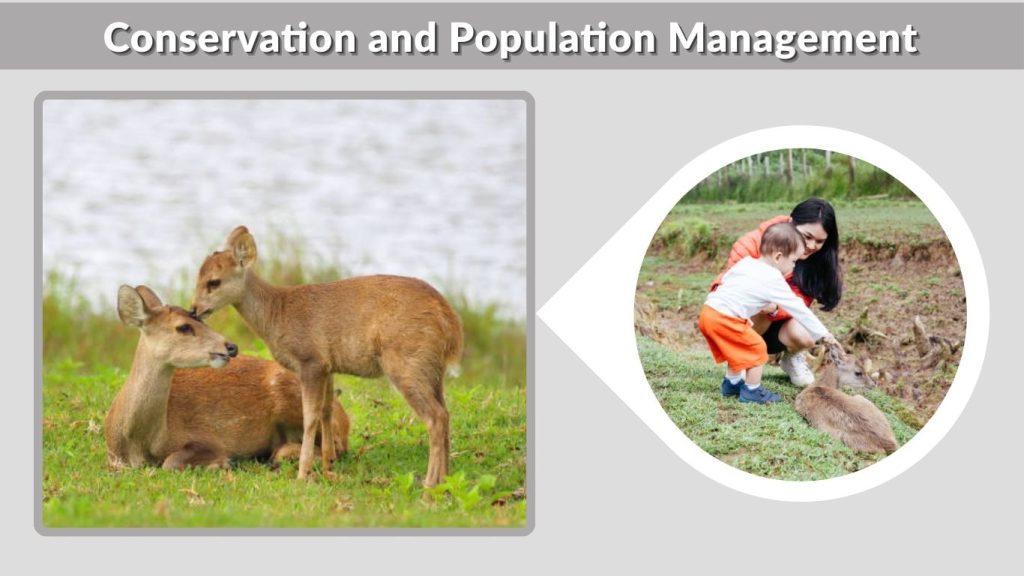
Overall, white-tailed deer populations are stable or increasing across much of their range. However, some subspecies, such as the Columbian white-tailed deer, require ongoing conservation efforts due to habitat loss and limited distribution.
Wildlife agencies focus on:
- Habitat protection
- Population monitoring
- Disease management
- Public education
These efforts aim to balance healthy deer populations with ecosystem stability and human needs.
FAQs
What is a white-tailed deer?
A white-tailed deer is a medium-sized hoofed mammal native to North and Central America. It is named for the white underside of its tail, which it raises as a warning signal when alarmed. The species is known for its adaptability and widespread distribution.
What is the scientific name of the white-tailed deer?
The scientific name of the white-tailed deer is Odocoileus virginianus. It belongs to the deer family Cervidae and is closely related to mule deer. Several subspecies exist, each adapted to specific regions and environmental conditions.
Where do white-tailed deer live?
White-tailed deer live across most of North America, including the United States, southern Canada, Mexico, and parts of Central America. They inhabit forests, grasslands, wetlands, farmland, and even suburban areas, showing remarkable adaptability to different environments.
What do white-tailed deer eat?
White-tailed deer are herbivores that feed on leaves, grasses, fruits, nuts, and woody plants. Their diet changes with the seasons, focusing on fresh vegetation in spring and summer and relying on nuts, twigs, and bark during fall and winter.
How big do white-tailed deer get?
White-tailed deer size varies by region and sex. Adult males typically weigh between 150 and 300 pounds, while females weigh 90 to 200 pounds. They usually stand about 3 to 3.5 feet tall at the shoulder and grow up to 6.5 feet long.