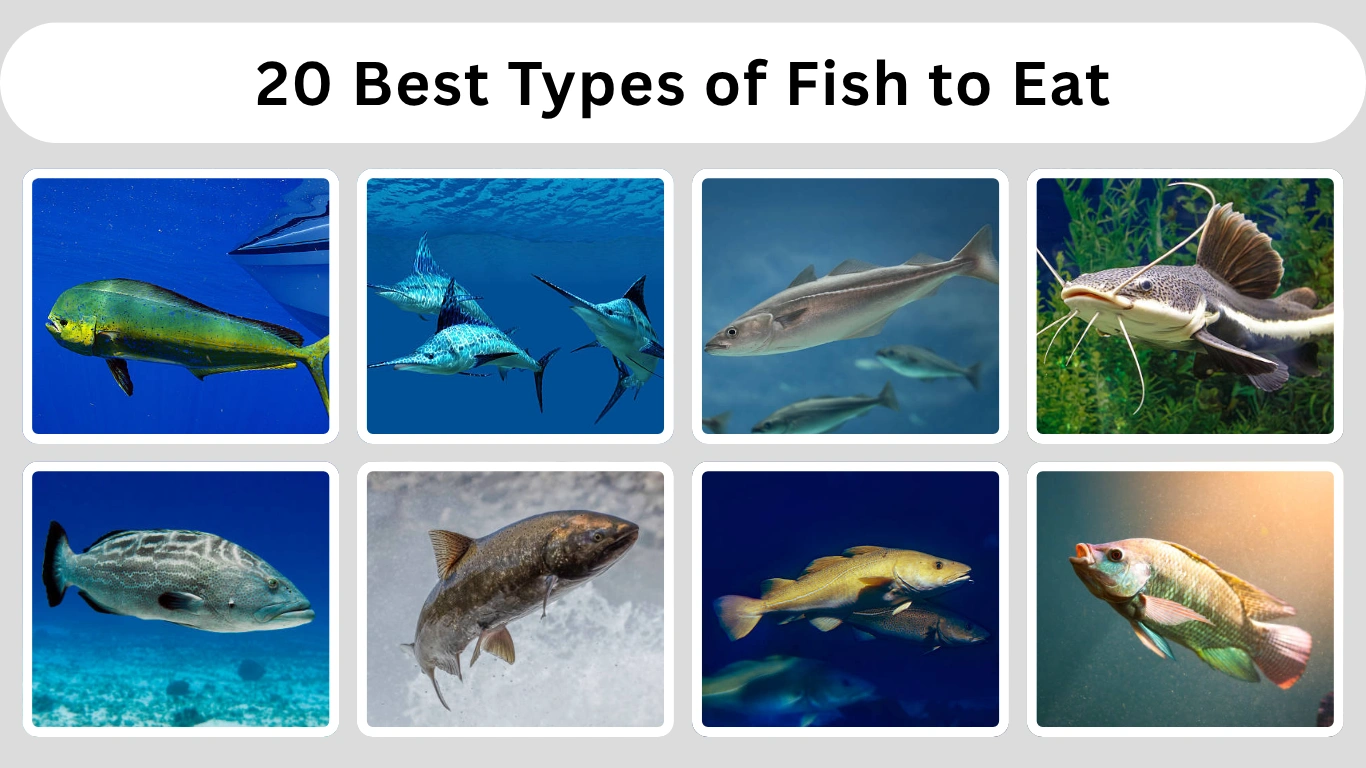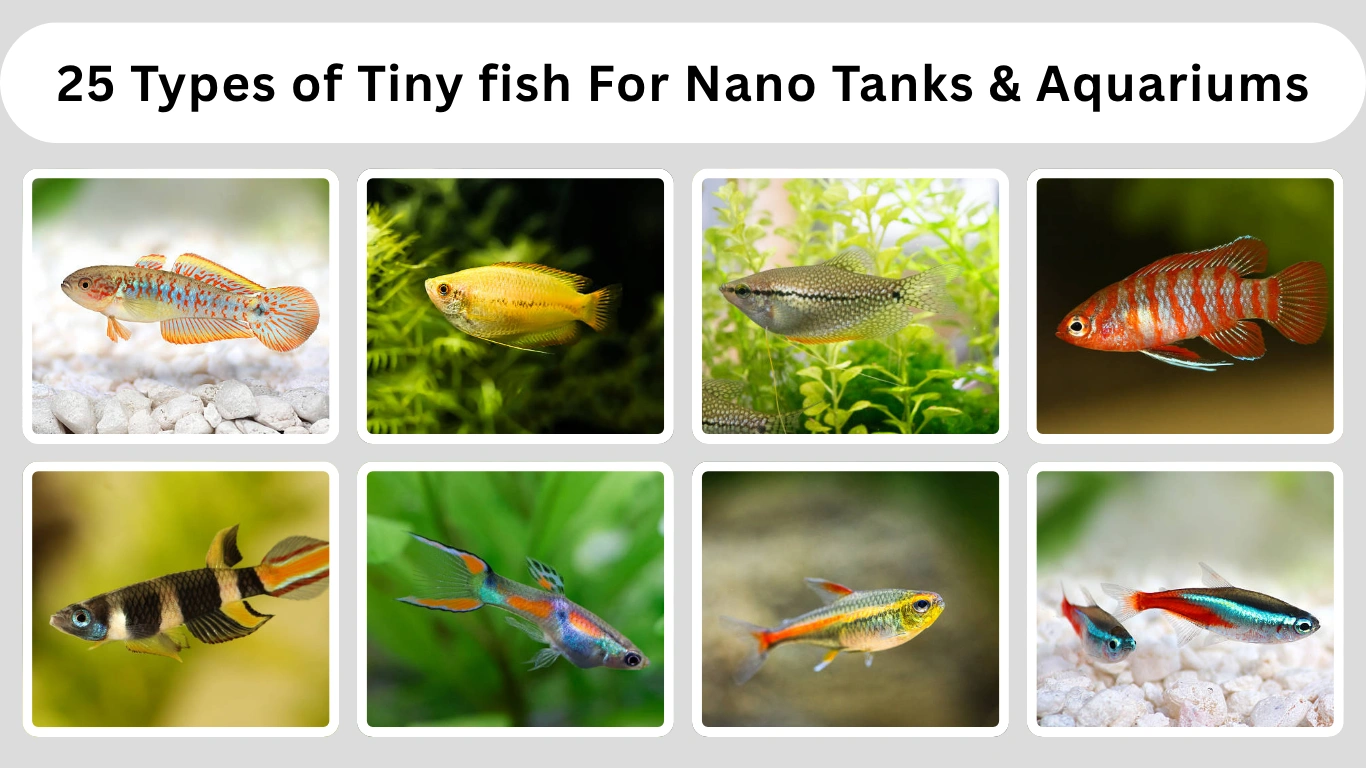





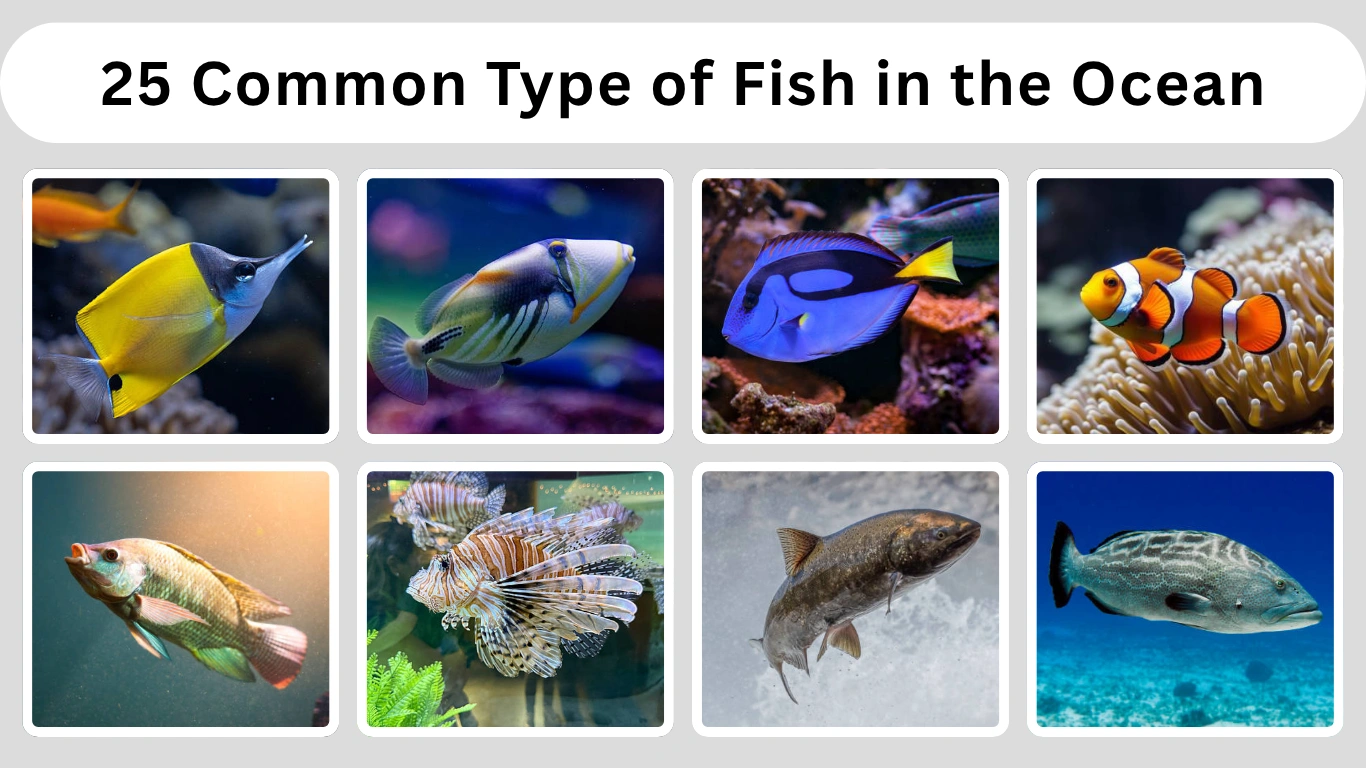
Ocean fish are incredibly diverse, ranging from small reef species to large open-water predators. They play a vital role in maintaining marine ecosystems and supporting global food supplies. Found in different habitats like coral reefs, deep seas, and coastal waters, each fish has unique characteristics and behaviors. This guide introduces 25 common types of ocean fish, helping you understand their features, habitats, and importance in the underwater world.
1. Tuna

Tuna is a large, fast-swimming ocean fish known for its strength, speed, and importance in both marine ecosystems and global fisheries. It is widely found in warm and temperate seas and is highly valued for its meat. Tuna are powerful predators and play a key role in maintaining the balance of ocean life.
Identification
- Streamlined, torpedo-shaped body built for speed
- Metallic blue or dark back with silvery sides
- Strong, crescent-shaped tail fin
- Small finlets behind dorsal and anal fins
- Can grow from 60 cm to over 2 meters depending on species
Habitat
Tuna are found in oceans worldwide, especially in tropical and subtropical waters. They prefer open ocean environments but may come closer to coastal areas in search of food. Tuna are highly migratory and travel long distances across oceans. They often stay in deeper waters during the day and move closer to the surface at night, depending on prey availability and temperature.
Behaviors
Tuna are known for their incredible speed and endurance, capable of swimming long distances without rest. They often travel in schools, especially when young, which helps with protection and hunting. Tuna are active predators and constantly on the move in search of food. Their ability to regulate body temperature allows them to survive in different water conditions.
Diet
Tuna are carnivorous and mainly feed on smaller fish, squid, and crustaceans. They are aggressive hunters and rely on speed to catch prey. Their diet varies depending on their size and location, but they generally consume high-protein food to support their active lifestyle.
2. Salmon

Salmon is a well-known fish that lives in both ocean and freshwater during different stages of its life. It is highly valued for its nutritional benefits and is famous for its long migration journey. Salmon play an important role in both marine and freshwater ecosystems, connecting different environments through their life cycle.
Identification
- Streamlined body with a slightly rounded shape
- Silvery color in the ocean, often turning reddish during spawning
- Small scales and smooth skin
- Forked tail fin for strong swimming
- Typically grows between 50–100 cm in length
Habitat
Salmon are found in the North Atlantic and Pacific Oceans, but they are unique because they migrate to freshwater rivers to spawn. They spend most of their adult life in the ocean, then travel upstream to the exact rivers where they were born. They prefer cold, clean waters and are commonly found in temperate regions. Their life cycle connects ocean and river ecosystems.
Behaviors
Salmon are famous for their migration behavior, traveling thousands of kilometers from the ocean to freshwater rivers. They are strong swimmers and can leap over obstacles like waterfalls during their journey. Salmon usually travel alone or in loose groups and rely on their sense of smell to find their birthplace. This journey is one of the most remarkable in the animal world.
Diet
Salmon mainly feed on smaller fish, crustaceans, and plankton while in the ocean. Young salmon in freshwater eat insects and larvae. Their diet changes as they grow, but they generally consume protein-rich food to support their long migrations and active lifestyle.
3. Cod

Cod is a widely known ocean fish valued for its mild taste and importance in global fisheries. It is commonly found in colder ocean waters and has been a major food source for humans for centuries. Cod are bottom-dwelling fish that play a key role in marine ecosystems by feeding on various smaller organisms.
Identification
- Elongated body with a slightly rounded shape
- Light brown, greenish, or gray color with spots
- Distinct barbel (whisker-like structure) on the chin
- Three dorsal fins and two anal fins
- Typically grows between 50–100 cm in length
Habitat
Cod are mainly found in cold and temperate ocean waters, especially in the North Atlantic. They prefer deeper coastal areas, continental shelves, and ocean floors. Cod usually stay close to the seabed, where they can easily find food. They may move to shallower waters during certain seasons, especially for spawning. Their habitat is often linked to rocky or sandy bottoms.
Behaviors
Cod are generally slow-moving fish that spend much of their time near the ocean floor. They can be solitary or found in small groups. During spawning season, they gather in larger numbers. Cod rely on their sense of smell and touch, especially using their chin barbel, to locate food in low-visibility conditions. They are not fast swimmers but are effective hunters.
Diet
Cod are carnivorous and feed on a variety of small marine animals. Their diet includes smaller fish, crustaceans, worms, and mollusks. They search for food along the seabed, using their barbel to detect prey. Their feeding habits help control populations of smaller marine species and maintain ecosystem balance.
4. Mackerel

Mackerel is a fast-swimming ocean fish known for its sleek body and striking striped patterns. It is commonly found in large schools and is highly valued both ecologically and commercially. Mackerel are active predators and play an important role in marine food chains, feeding on smaller organisms while serving as prey for larger fish and marine animals.
Identification
- Slender, streamlined body built for speed
- Blue-green back with dark wavy stripes
- Silvery underside
- Forked tail and small finlets behind fins
- Typically grows between 30–60 cm in length
Habitat
Mackerel are found in temperate and tropical ocean waters around the world. They prefer open seas but are often seen near coastal areas, especially where food is abundant. These fish usually stay in the upper layers of the ocean and are commonly associated with nutrient-rich waters. Seasonal migration is common, as mackerel follow changes in temperature and food availability.
Behaviors
Mackerel are highly active and social fish that form large schools. This behavior helps protect them from predators and improves feeding success. They are strong swimmers and can travel long distances. Mackerel are constantly on the move and often display synchronized swimming patterns. Their speed and agility make them effective hunters in open water.
Diet
Mackerel are carnivorous and mainly feed on small fish, plankton, and crustaceans. They hunt in groups, which increases their chances of catching prey. Their diet may vary depending on location and season, but they generally consume high-energy food to support their active lifestyle.
5. Sardine
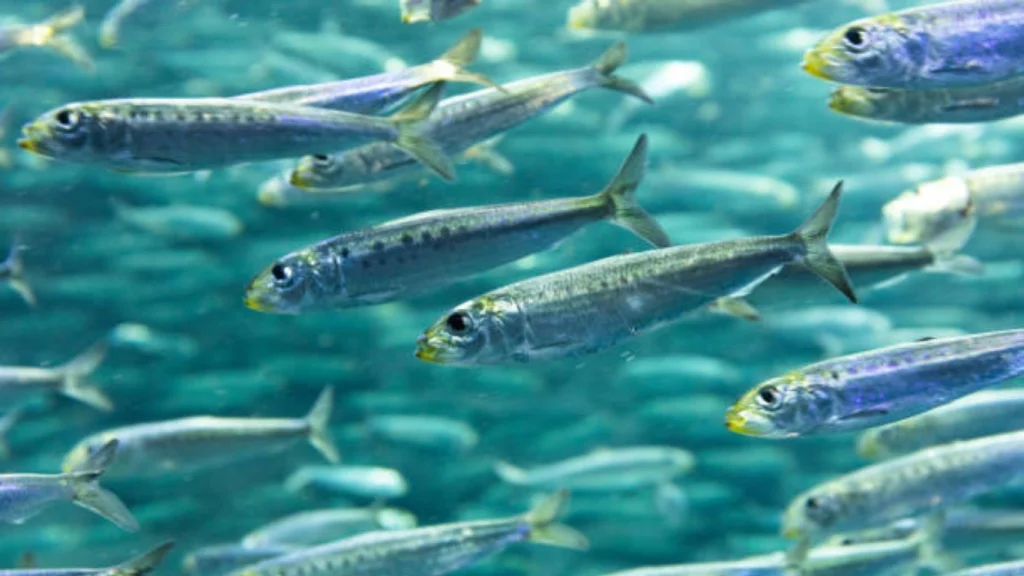
Sardine is a small, oily fish commonly found in large schools in ocean waters. It is an important species for both marine ecosystems and human consumption. Sardines are widely known for their abundance and are a key link in the ocean food chain, feeding on plankton and serving as prey for larger fish, birds, and marine mammals.
Identification
- Small, streamlined body with a slightly rounded shape
- Silvery scales that reflect light
- Single dorsal fin and forked tail
- Sometimes small dark spots along the sides
- Typically grows between 15–25 cm in length
Habitat
Sardines are mainly found in temperate and subtropical oceans, especially along coastlines. They prefer nutrient-rich waters where plankton is abundant, such as upwelling zones. These fish usually stay near the surface and are often seen in large groups. Sardines migrate seasonally, following water temperature changes and food availability across different regions.
Behaviors
Sardines are highly social and form massive schools that move in synchronized patterns. This schooling behavior helps them avoid predators and improves feeding efficiency. They are active swimmers and can quickly change direction when threatened. Their coordinated movements often create stunning visual patterns in the water.
Diet
Sardines mainly feed on plankton, including microscopic plants and small crustaceans. They are filter feeders, using their gill rakers to capture food from the water while swimming. Their diet makes them an essential part of the marine food web, connecting tiny organisms to larger predators.
6. Anchovy

Anchovy is a small, slender fish commonly found in ocean waters around the world. It is well known for forming large schools and playing a key role in marine ecosystems. Despite its small size, anchovy is an important food source for many larger fish, seabirds, and marine mammals. It is also widely used in human diets in various forms.
Identification
- Slender, elongated body
- Silvery sides with a bluish or greenish back
- Large mouth that extends beyond the eye
- Small, soft fins
- Typically grows between 10–20 cm in length
Habitat
Anchovies are found in temperate and subtropical coastal waters. They prefer shallow, nutrient-rich areas such as estuaries and continental shelves. These fish usually stay near the surface, especially in regions where plankton is abundant. Anchovies often migrate based on changes in temperature and food supply, making them common in dynamic marine environments.
Behaviors
Anchovies are highly social fish that form dense schools for protection against predators. They move in coordinated patterns, making it harder for predators to target individuals. Anchovies are active swimmers and may show daily movement patterns, staying deeper during the day and coming closer to the surface at night to feed.
Diet
Anchovies mainly feed on plankton, including tiny crustaceans and algae. They are filter feeders, using their gill rakers to trap food while swimming with their mouths open. Their simple diet supports their role as a key link in the ocean food chain.
7. Snapper

Snapper is a popular ocean fish known for its firm flesh and wide distribution in tropical and subtropical waters. It is commonly found near reefs and is an important species for both commercial and recreational fishing. Snappers are active predators and play a key role in maintaining the balance of reef ecosystems.
Identification
- Medium-sized, oval-shaped body
- Reddish, pink, or silver coloration depending on species
- Large mouth with sharp teeth
- Continuous dorsal fin
- Typically grows between 30–80 cm in length
Habitat
Snappers are mainly found in warm ocean waters, especially around coral reefs, rocky areas, and coastal regions. They prefer structured environments where they can find shelter and hunt for food. While many species stay close to reefs, some may move into deeper waters as they grow older. They are widely distributed in tropical and subtropical oceans.
Behaviors
Snappers are generally active and can be found alone or in small groups. Younger snappers often form schools, while adults tend to be more solitary. They are mostly active during the night or low-light conditions, when they hunt for prey. Snappers rely on quick bursts of speed to capture food and often hide during the day.
Diet
Snappers are carnivorous and feed on a variety of prey, including smaller fish, crustaceans, and mollusks. They hunt using their sharp teeth and strong jaws. Their diet may vary depending on their size and habitat, but they generally prefer protein-rich food sources found near reefs and the ocean floor.
8. Grouper

Grouper is a large, strong-bodied ocean fish commonly found in warm waters. It is well known for its big mouth and ability to ambush prey. Groupers are important predators in reef ecosystems and are also highly valued in commercial fishing. They often stay close to hiding spots, making them effective hunters.
Identification
- Thick, robust body
- Large mouth with a wide gape
- Mottled or spotted coloration for camouflage
- Rounded tail fin
- Typically grows between 40 cm to over 1 meter in length
Habitat
Groupers are mainly found in tropical and subtropical oceans, especially around coral reefs, rocky areas, and underwater structures. They prefer places with plenty of hiding spots such as caves and crevices. Most groupers stay close to the seabed and are commonly found in shallow to moderately deep waters.
Behaviors
Groupers are generally solitary and territorial fish. They rely on ambush tactics, staying still and quickly attacking passing prey. They are not long-distance swimmers and prefer to remain in a specific area. Some groupers can change sex during their lifetime, which is a unique biological trait among fish.
Diet
Groupers are carnivorous and feed on fish, crabs, and other marine animals. They use their large mouths to suck in prey quickly. Instead of chasing food, they rely on surprise attacks. Their diet helps control populations of smaller marine species in their habitat.
9. Halibut

Halibut is a large flatfish known for its unique body shape and life on the ocean floor. It is highly valued for its firm, white meat and is commonly found in cold ocean waters. Halibut are bottom-dwelling predators that play an important role in marine ecosystems by controlling populations of smaller fish and invertebrates.
Identification
- Flat, diamond-shaped body
- Both eyes located on one side of the head
- Upper side dark brown or gray, underside white
- Large mouth with sharp teeth
- Typically grows between 50 cm to over 2 meters in length
Habitat
Halibut are mainly found in cold and temperate ocean waters, especially in the North Pacific and North Atlantic. They prefer sandy or muddy seabeds where they can lie flat and blend into their surroundings. Halibut usually stay at depths ranging from shallow coastal areas to deep offshore waters, depending on age and season.
Behaviors
Halibut are mostly solitary and spend much of their time resting on the ocean floor. They use camouflage to hide from predators and to ambush prey. These fish are capable of sudden bursts of speed when hunting. As they grow, they move to deeper waters and become less active swimmers.
Diet
Halibut are carnivorous and feed on smaller fish, crustaceans, and other bottom-dwelling animals. They hunt by lying in wait and quickly striking passing prey. Their diet varies depending on their size, with larger halibut consuming bigger fish.
10. Flounder

Flounder is a flatfish known for its unique body structure and ability to blend into the ocean floor. It is commonly found in coastal waters and is well adapted to life on the seabed. Flounders are important both ecologically and commercially, as they help control populations of smaller marine organisms and are widely consumed as food.
Identification
- Flat, oval-shaped body
- Both eyes located on one side of the head
- Upper side brown, gray, or sandy colored for camouflage
- Smooth skin with small fins
- Typically grows between 30–60 cm in length
Habitat
Flounders are usually found in coastal ocean waters, especially over sandy or muddy bottoms. They prefer shallow areas such as bays, estuaries, and continental shelves. These environments allow them to bury themselves partially in the sand for protection. Flounders are widely distributed in temperate and tropical regions.
Behaviors
Flounders are bottom-dwelling fish that spend most of their time lying still on the seabed. They rely heavily on camouflage to avoid predators and to catch prey. Instead of actively swimming, they wait for food to come close and then strike quickly. Their movement is generally slow, but they can swim rapidly when needed.
Diet
Flounders are carnivorous and feed on small fish, crustaceans, and worms. They hunt by ambushing prey from the ocean floor. Their diet depends on what is available in their habitat, but they mainly consume bottom-dwelling organisms.
11. Sea Bass

Sea bass is a popular ocean fish known for its mild flavor and wide distribution in marine waters. It is commonly found in coastal regions and is important for both commercial and recreational fishing. Sea bass are adaptable predators that play a key role in maintaining the balance of marine ecosystems.
Identification
- Elongated, slightly compressed body
- Silver, gray, or dark-colored scales depending on species
- Large mouth with sharp teeth
- Spiny dorsal fin followed by a softer section
- Typically grows between 30–100 cm in length
Habitat
Sea bass are commonly found in coastal ocean waters, estuaries, and sometimes deeper offshore areas. They prefer environments with structure such as reefs, rocky bottoms, and seagrass beds. These areas provide shelter and feeding opportunities. Sea bass are widely distributed in temperate and tropical regions and can adapt to different water conditions.
Behaviors
Sea bass are generally active and can be found alone or in small groups. They are opportunistic hunters and often move between different areas in search of food. Some species migrate seasonally depending on temperature and breeding cycles. Sea bass rely on quick bursts of speed to catch prey and often stay close to cover.
Diet
Sea bass are carnivorous and feed on smaller fish, crustaceans, and mollusks. They hunt using a combination of stealth and quick attacks. Their diet varies depending on their size and habitat, but they generally prefer protein-rich prey found near the ocean floor or around structures.
12. Barracuda
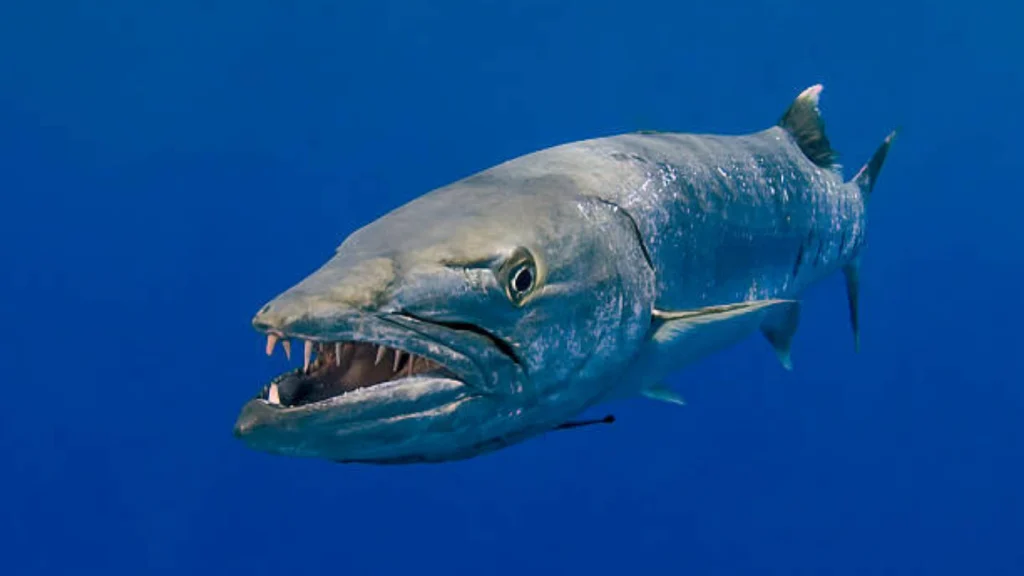
Barracuda is a fast and powerful ocean fish known for its long body and sharp teeth. It is a skilled predator often found in warm marine waters. Barracudas are famous for their speed and sudden attacks, making them one of the top hunters in their environment. They play an important role in controlling populations of smaller fish.
Identification
- Long, slender, torpedo-shaped body
- Silver coloration with a darker back
- Large mouth filled with sharp, fang-like teeth
- Pointed head and strong jaws
- Typically grows between 50 cm to over 1.5 meters in length
Habitat
Barracudas are commonly found in tropical and subtropical ocean waters. They prefer coastal areas, coral reefs, and open seas. Younger barracudas are often seen in shallow waters, while adults may move to deeper regions. They usually stay near the surface or mid-water, where prey is more abundant.
Behaviors
Barracudas are known for their aggressive hunting style and incredible speed. They often remain still and then launch sudden attacks on prey. Younger barracudas may form small groups, but adults are usually solitary. They rely on sharp eyesight to detect movement and are most active during daylight hours.
Diet
Barracudas are carnivorous and mainly feed on smaller fish such as sardines, anchovies, and mackerel. They use their speed and sharp teeth to catch and tear apart prey. Their diet supports their role as a top predator in the marine food chain.
13. Swordfish
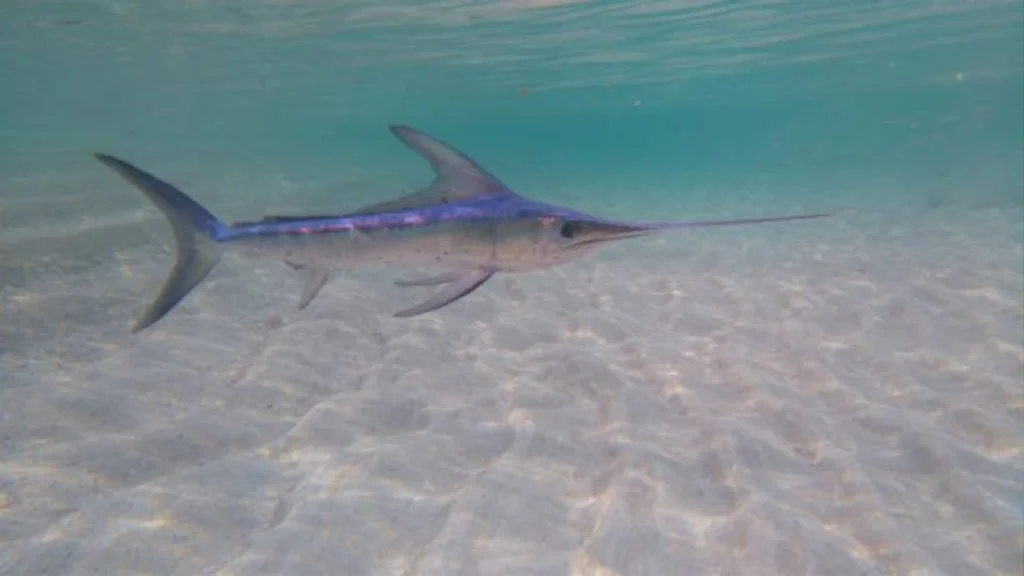
Swordfish is a large and powerful ocean fish known for its long, sword-like bill. It is one of the fastest swimmers in the ocean and is highly valued in commercial fishing. Swordfish are top predators and play an important role in maintaining the balance of marine ecosystems.
Identification
- Long, streamlined body
- Distinct flat, sword-like bill (extended upper jaw)
- Dark brown or bluish back with a lighter underside
- Tall dorsal fin and crescent-shaped tail
- Typically grows between 1–3 meters in length
Habitat
Swordfish are found in tropical, subtropical, and temperate oceans worldwide. They prefer open ocean environments and can live at various depths. During the day, they often stay in deeper, cooler waters, while at night they move closer to the surface to feed. They are highly migratory and travel long distances across oceans.
Behaviors
Swordfish are mostly solitary and are known for their strength and speed. They use their long bill to slash at prey, making it easier to catch. These fish are capable of deep dives and can tolerate a wide range of temperatures. They are active hunters and rely on both speed and precision.
Diet
Swordfish are carnivorous and feed on a variety of prey, including fish and squid. They hunt mainly at night when prey moves closer to the surface. Their sharp bill helps them injure or stun prey before eating it.
14. Marlin
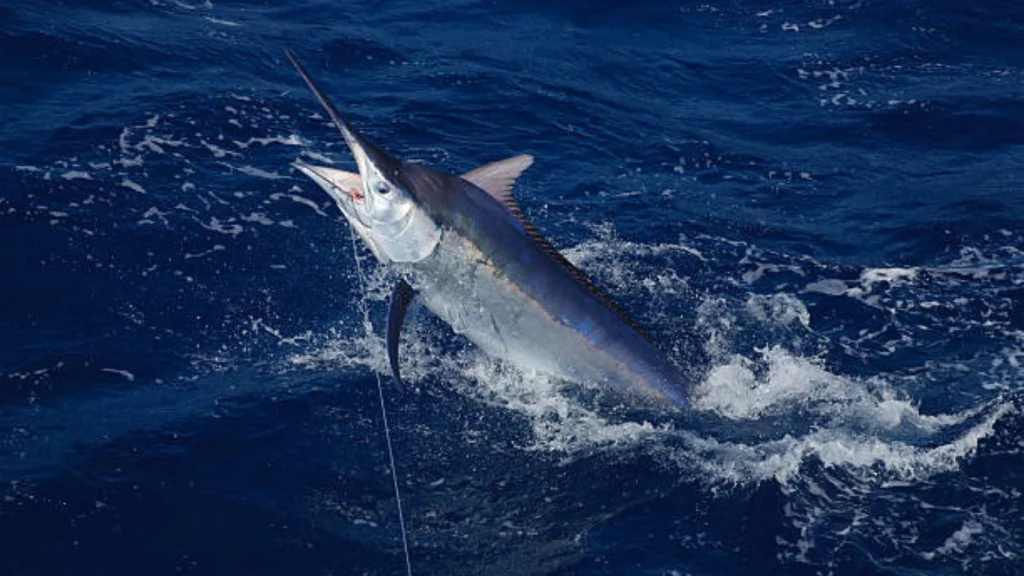
Marlin is a large, fast-swimming ocean fish known for its long bill and impressive speed. It is one of the most powerful predators in the ocean and is popular in sport fishing. Marlins are highly migratory and are admired for their strength and agility in open waters.
Identification
- Long, streamlined body built for speed
- Sharp, spear-like bill
- Blue or dark-colored back with a lighter underside
- Tall dorsal fin and crescent-shaped tail
- Typically grows between 1–4 meters in length
Habitat
Marlins are found in tropical and subtropical oceans around the world. They prefer open ocean environments rather than coastal areas. These fish are highly migratory and travel long distances in search of food and suitable water temperatures. They often stay near the surface but can dive deeper when needed.
Behaviors
Marlins are solitary and highly active predators. They are known for their speed and powerful swimming ability. Marlins often leap out of the water, especially when hooked or chasing prey. They rely on their bill to strike and injure prey, making it easier to catch. Their movements are fast and precise.
Diet
Marlins are carnivorous and mainly feed on smaller fish and squid. They use their speed and bill to hunt effectively in open water. Their diet supports their role as a top predator in the ocean ecosystem.
15. Herring

Herring is a small to medium-sized ocean fish known for its silvery body and schooling behavior. It is an important species in marine ecosystems and has been a major food source for humans for centuries. Herring are widely distributed and play a key role in connecting plankton to larger predators.
Identification
- Slender, laterally compressed body
- Bright silvery sides with a bluish or greenish back
- Single soft dorsal fin
- Forked tail for efficient swimming
- Typically grows between 20–30 cm in length
Habitat
Herring are commonly found in temperate and cold ocean waters, especially in the North Atlantic and North Pacific. They prefer coastal regions, continental shelves, and sometimes deeper offshore waters. Herring often migrate between feeding and spawning areas depending on the season and water conditions.
Behaviors
Herring are highly social and form massive schools that move in synchronized patterns. This behavior helps protect them from predators and improves feeding efficiency. They are active swimmers and can travel long distances during migration. Their coordinated movements create a shimmering effect in the water.
Diet
Herring mainly feed on plankton, including small crustaceans and microscopic organisms. They are filter feeders, using their gill rakers to capture food while swimming. Their diet makes them an essential link in the marine food chain.
16. Trout

Trout is a well-known fish that can live in both freshwater and ocean environments, depending on the species. Some types, like sea trout, spend part of their life in the ocean. Trout are valued for their taste and are important in both ecosystems and fishing industries.
Identification
- Streamlined body with a slightly rounded shape
- Color varies from silver to brown with spots
- Soft fins and forked tail
- Small scales and smooth skin
- Typically grows between 30–70 cm in length
Habitat
Trout are found in cold, clean waters, including rivers, lakes, and coastal ocean areas. Sea trout migrate between freshwater and saltwater, similar to salmon. In the ocean, they stay near coastal regions where food is abundant. They prefer cooler temperatures and well-oxygenated water.
Behaviors
Trout are active swimmers and can be found alone or in small groups. Sea trout migrate between freshwater and ocean environments, especially during breeding seasons. They are known for their strong swimming ability and can move against currents. Trout rely on keen senses to detect food and avoid predators.
Diet
Trout are carnivorous and feed on insects, small fish, and crustaceans. In ocean environments, they consume more fish and marine organisms. Their diet varies depending on their habitat and size, but they generally prefer protein-rich food sources.
17. Tilapia

Tilapia is a widely known fish that is mostly associated with freshwater but can also live in brackish and coastal marine environments. It is popular for its fast growth and importance in global aquaculture. Tilapia are adaptable fish that can survive in a variety of water conditions, making them one of the most farmed fish species in the world.
Identification
- Deep, laterally compressed body
- Silver or gray coloration, sometimes with faint stripes
- Long dorsal fin running along the back
- Small mouth and rounded tail
- Typically grows between 30–60 cm in length
Habitat
Tilapia are mainly found in warm freshwater environments but can also live in brackish and coastal ocean waters. They prefer shallow, calm waters such as lagoons, estuaries, and slow-moving rivers. Their adaptability allows them to survive in varying salinity levels and temperatures, especially in tropical and subtropical regions.
Behaviors
Tilapia are generally calm and social fish, often found in small groups. They are known for their ability to adapt quickly to environmental changes. Some species show parental care, with adults protecting their eggs and young. They are not aggressive swimmers and tend to stay in areas with stable conditions and available food.
Diet
Tilapia are mostly omnivorous and feed on algae, plankton, and small invertebrates. They often graze on plant material and organic matter in the water. Their flexible diet helps them survive in different environments and makes them efficient feeders in both natural and farmed conditions.
18. Catfish

Catfish is a diverse group of fish known for their whisker-like barbels that resemble a cat’s whiskers. While many species live in freshwater, some are found in coastal and marine environments. Catfish are important for ecosystems and are widely consumed around the world due to their availability and adaptability.
Identification
- Smooth, scaleless body
- Long barbels (whiskers) around the mouth
- Broad, flat head
- Rounded or slightly forked tail
- Typically grows between 20–100 cm in length depending on species
Habitat
Marine catfish are usually found in coastal ocean waters, estuaries, and brackish environments. They prefer muddy or sandy bottoms where they can easily find food. These fish are often seen in warm regions and tend to stay close to the seabed. Their ability to tolerate different salinity levels helps them survive in changing environments.
Behaviors
Catfish are generally bottom-dwelling and are more active during the night. They rely heavily on their barbels to sense food in dark or murky water. Some species are solitary, while others may form small groups. They move slowly but are effective at navigating their environment using touch and smell.
Diet
Catfish are omnivorous and feed on a wide variety of food, including small fish, insects, crustaceans, and organic matter. They often search for food along the ocean floor, using their barbels to detect prey. Their flexible diet allows them to thrive in different habitats.
19. Eel
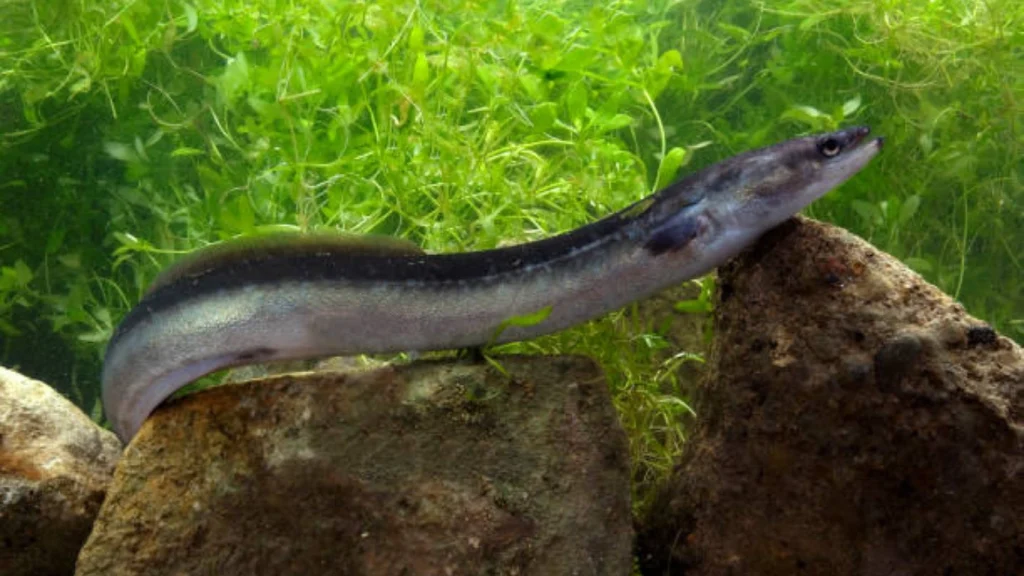
Eel is a long, snake-like fish known for its smooth body and unique movement. It is found in both freshwater and ocean environments, depending on the species. Eels are important predators in marine ecosystems and are known for their mysterious life cycles, often involving long migrations between ocean and freshwater habitats.
Identification
- Long, slender, snake-like body
- Smooth, scaleless or very small-scaled skin
- Continuous dorsal, anal, and tail fins
- Small head with sharp teeth
- Typically grows between 40 cm to over 1 meter in length
Habitat
Eels are found in oceans worldwide, especially in coastal areas, reefs, and deep-sea environments. Many species live in crevices, burrows, or rocky areas where they can hide. Some eels migrate between freshwater and the ocean during their life cycle. They prefer environments with plenty of hiding places and are often found near the seabed.
Behaviors
Eels are mostly solitary and spend much of their time hidden in rocks or sand. They are more active at night when they come out to hunt. Eels move in a snake-like motion, allowing them to navigate tight spaces. Some species are known for long-distance migration, especially for breeding purposes.
Diet
Eels are carnivorous and feed on fish, crustaceans, and small marine animals. They hunt by ambushing prey from hiding spots. Their sharp teeth help them पकड़ and consume slippery prey.
20. Lionfish
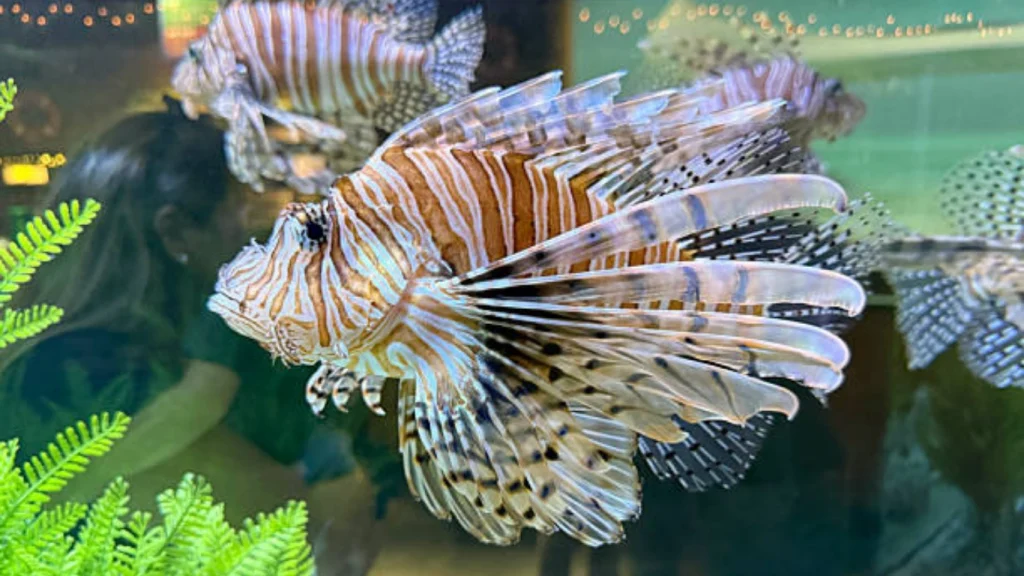
Lionfish is a striking ocean fish known for its bold stripes and long, venomous spines. It is commonly found in warm marine waters and is easily recognized by its dramatic appearance. Lionfish are both admired for their beauty and known for their impact on ecosystems, especially in areas where they are considered invasive.
Identification
- Distinct red, white, or brown vertical stripes
- Long, fan-like fins with venomous spines
- Slender body with a wide, flowing appearance
- Small head with protruding mouth
- Typically grows between 20–40 cm in length
Habitat
Lionfish are mainly found in tropical and subtropical ocean waters, especially around coral reefs, rocky areas, and lagoons. They prefer environments with plenty of hiding spots such as crevices and caves. Originally native to the Indo-Pacific, they are now also found in the Atlantic, where they have spread widely.
Behaviors
Lionfish are mostly solitary and are slow, graceful swimmers. They rely on stealth and patience when hunting, often cornering their prey using their wide fins. They are more active during low-light conditions such as dawn and dusk. Their venomous spines provide strong protection from predators.
Diet
Lionfish are carnivorous and feed on small fish and crustaceans. They use a suction method to quickly capture prey. Their appetite and efficient hunting make them powerful predators, especially in areas where they have few natural enemies.
21. Clownfish
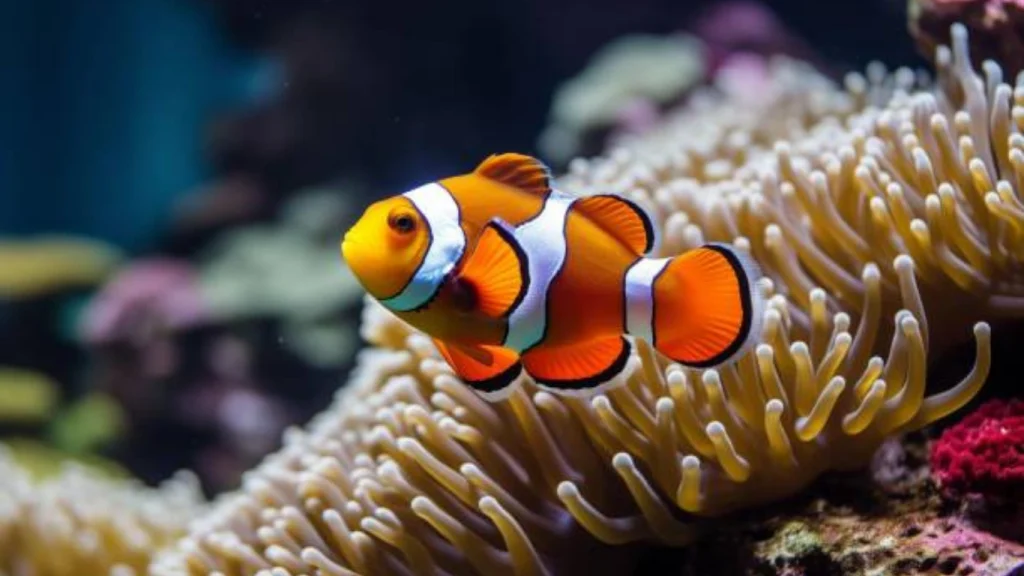
Clownfish is a small, brightly colored fish best known for its relationship with sea anemones. It is commonly found in warm ocean waters and is popular due to its striking orange color and white bands. Clownfish play an important role in reef ecosystems and are widely recognized around the world.
Identification
- Small, oval-shaped body
- Bright orange color with white bands outlined in black
- Rounded fins and tail
- Small mouth and large eyes
- Typically grows between 7–15 cm in length
Habitat
Clownfish are mainly found in tropical ocean waters, especially in coral reefs of the Indo-Pacific region. They live closely with sea anemones, which provide protection from predators. These fish rarely leave their host anemone and depend on it for shelter and safety. Their habitat is usually shallow and warm.
Behaviors
Clownfish are known for their unique symbiotic relationship with sea anemones. They are immune to the anemone’s stinging tentacles and use them as protection. Clownfish live in small groups with a strict social hierarchy. They are active during the day and tend to stay within a limited area around their host.
Diet
Clownfish are omnivorous and feed on small plankton, algae, and leftover food from their host anemone. They often pick food from the surrounding water or nearby surfaces. Their diet is simple but supports their active lifestyle within reef environments.
22. Parrotfish
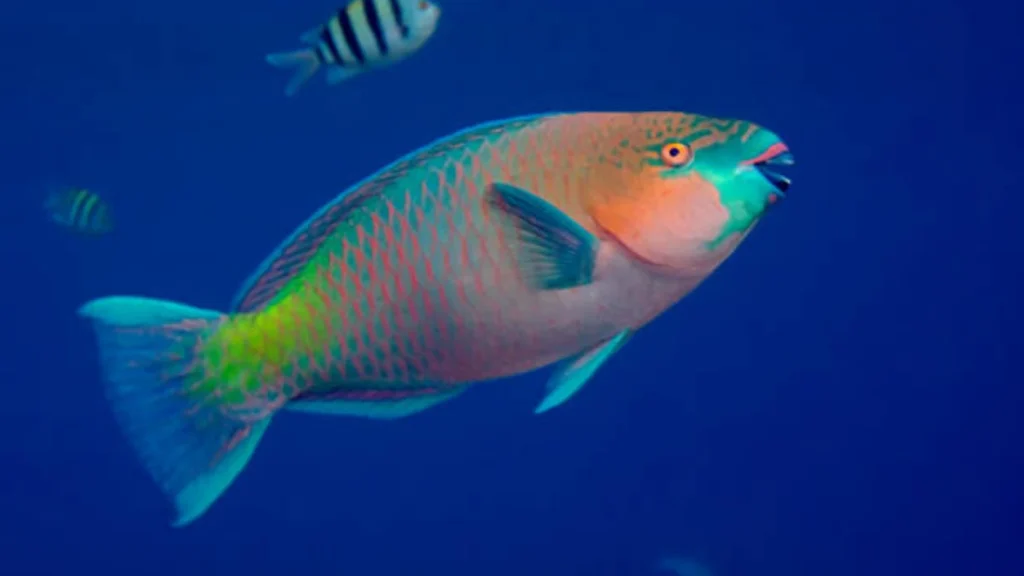
Parrotfish is a colorful ocean fish known for its beak-like teeth and ability to scrape algae from coral surfaces. It plays a vital role in maintaining healthy coral reefs. These fish are commonly seen in tropical waters and are easily recognized by their bright colors and unique feeding behavior.
Identification
- Brightly colored body, often blue, green, or pink
- Beak-like fused teeth resembling a parrot’s beak
- Thick, elongated body
- Large scales and strong jaws
- Typically grows between 30–120 cm in length
Habitat
Parrotfish are mainly found in tropical ocean waters, especially around coral reefs. They prefer shallow, warm environments where algae is abundant. These fish spend most of their time near reefs, where they find both food and shelter. They are widely distributed in Indo-Pacific and Caribbean regions.
Behaviors
Parrotfish are active during the day and spend much of their time grazing on coral and rocks. They are generally found in small groups and are not highly aggressive. Some species produce a mucus cocoon at night to protect themselves from predators. Their constant feeding helps maintain reef health.
Diet
Parrotfish mainly feed on algae growing on coral and rocks. While feeding, they often scrape off small pieces of coral, which they later excrete as sand. This process contributes to the formation of sandy beaches.
23. Surgeonfish
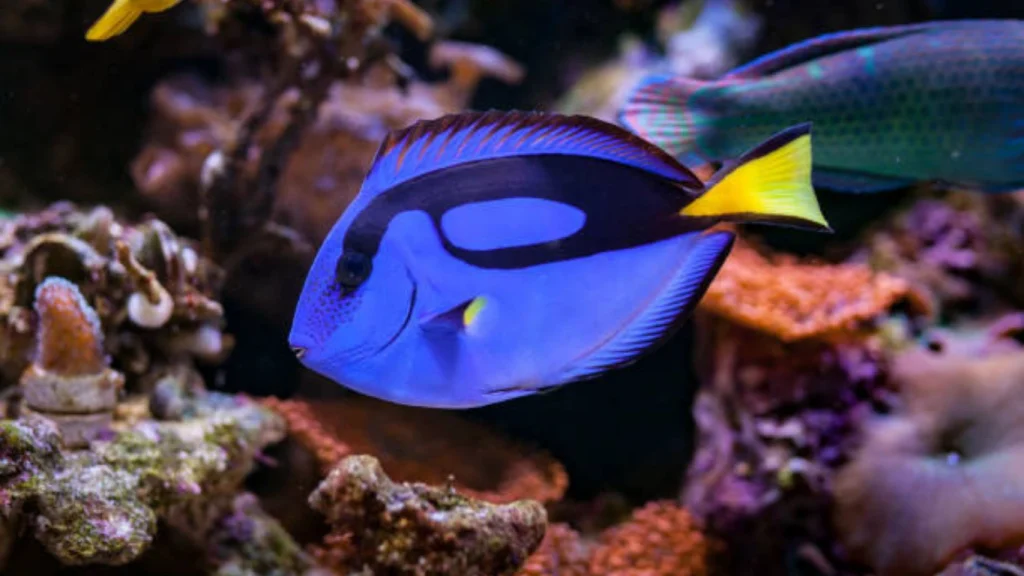
Surgeonfish is a brightly colored ocean fish known for the sharp, blade-like spines near its tail. It is commonly found in coral reef environments and plays an important role in maintaining reef health by feeding on algae. These fish are active swimmers and are popular among divers due to their vivid appearance.
Identification
- Oval-shaped, laterally compressed body
- Bright colors such as blue, yellow, or purple
- Sharp, scalpel-like spine near the tail
- Small mouth and pointed snout
- Typically grows between 15–40 cm in length
Habitat
Surgeonfish are mainly found in tropical ocean waters, especially around coral reefs. They prefer shallow, warm environments where algae is abundant. These fish are often seen swimming near reef surfaces and rocky areas. They are widely distributed in Indo-Pacific regions and are closely associated with reef ecosystems.
Behaviors
Surgeonfish are active during the day and are often seen swimming in small groups or schools. They can be territorial, especially when defending feeding areas. Their sharp tail spines are used for protection against predators and rivals. They are constantly on the move, grazing on algae across reef surfaces.
Diet
Surgeonfish are mostly herbivorous and feed mainly on algae. They graze continuously on rocks and coral surfaces, helping to prevent algae overgrowth. Some species may also consume small plankton. Their feeding habits are essential for keeping coral reefs clean and healthy.
24. Triggerfish
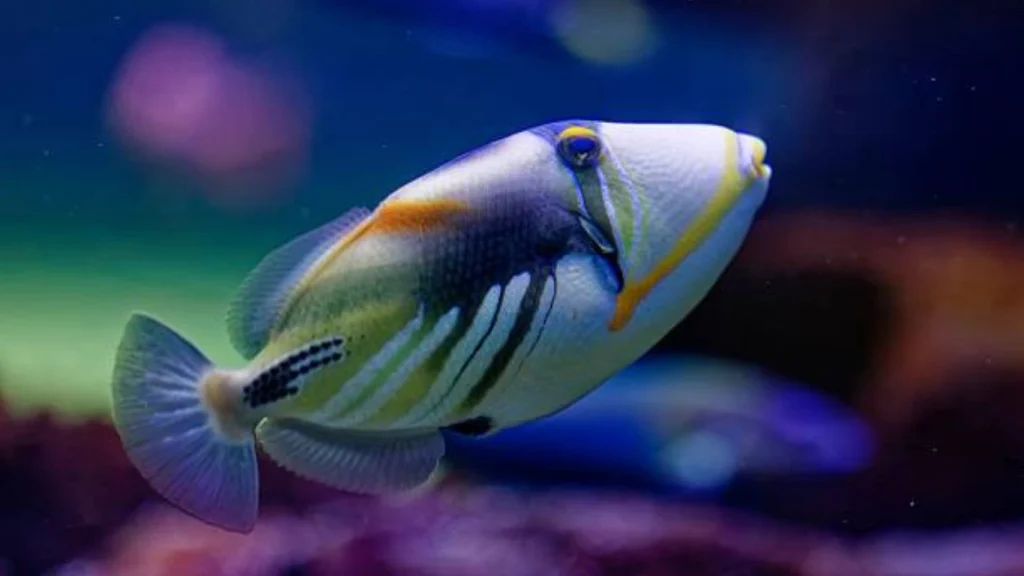
Triggerfish is a unique ocean fish known for its strong jaws and distinctive dorsal spine mechanism. It is commonly found in warm marine waters and is recognized for its bold patterns and behavior. Triggerfish play an important role in reef ecosystems and are known for their intelligence and territorial nature.
Identification
- Oval, laterally compressed body
- Bright colors and bold patterns depending on species
- Strong jaws with sharp teeth
- First dorsal spine can be locked in place (trigger mechanism)
- Typically grows between 20–60 cm in length
Habitat
Triggerfish are mainly found in tropical and subtropical ocean waters, especially around coral reefs, lagoons, and sandy bottoms. They prefer areas with structures where they can hide or build nests. These fish are usually seen in shallow waters but can also inhabit deeper reef zones.
Behaviors
Triggerfish are known for their territorial and sometimes aggressive behavior, especially during breeding seasons. They can defend their nests fiercely against intruders. These fish are intelligent and often interact with their surroundings in complex ways. They swim using a unique fin movement that allows precise control.
Diet
Triggerfish are carnivorous and feed on hard-shelled prey such as sea urchins, crustaceans, and mollusks. Their strong jaws and teeth allow them to crush shells easily. They may also eat small fish and other marine organisms depending on availability.
25. Butterflyfish
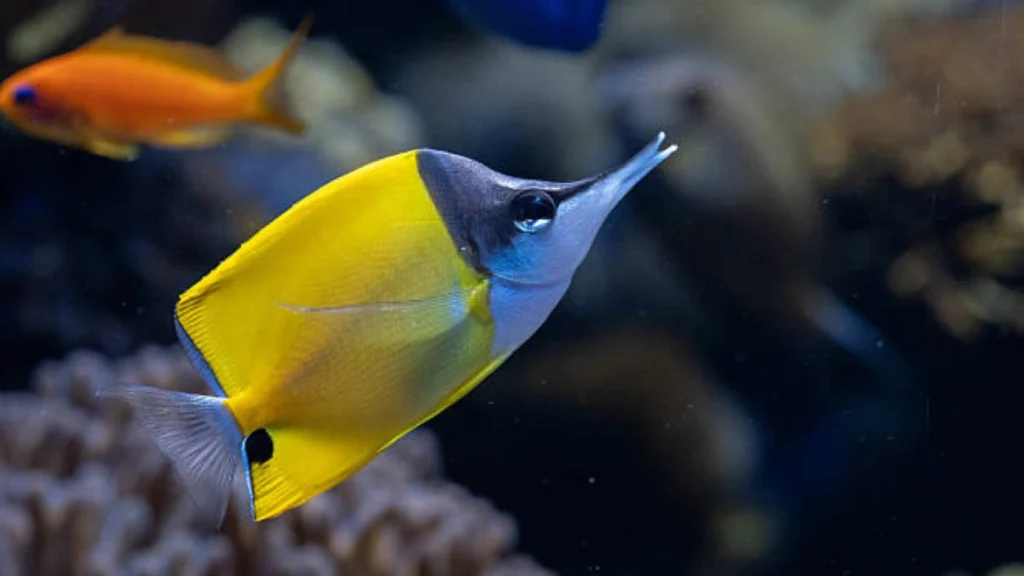
Butterflyfish is a small, colorful ocean fish known for its delicate appearance and striking patterns. It is commonly found in coral reef environments and is admired for its beauty. Butterflyfish play an important role in reef ecosystems and are often seen swimming gracefully among corals.
Identification
- Thin, laterally compressed body
- Bright colors with bold patterns, often yellow, white, or black
- Small mouth with a pointed snout
- Continuous dorsal fin
- Typically grows between 12–22 cm in length
Habitat
Butterflyfish are mainly found in tropical ocean waters, especially around coral reefs. They prefer shallow, warm environments where coral growth is abundant. These fish usually stay close to reefs, relying on them for food and protection. They are widely distributed in Indo-Pacific and Atlantic reef systems.
Behaviors
Butterflyfish are often seen in pairs or small groups and are generally active during the day. Many species form long-term pairs and defend small territories. They are graceful swimmers and spend much of their time moving through coral structures. Their behavior is closely tied to reef health and structure.
Diet
Butterflyfish mainly feed on coral polyps, small invertebrates, and algae. Some species have specialized diets that depend heavily on coral. They use their small mouths to pick food from coral surfaces.
FAQs
What are the most common ocean fish?
Common ocean fish include tuna, salmon, cod, mackerel, and sardine. These species are widely found across different oceans and are important for both ecosystems and human consumption. They are known for their abundance, adaptability, and role in the marine food chain.
Where do most ocean fish live?
Most ocean fish live in a variety of habitats, including coral reefs, coastal waters, open oceans, and deep-sea environments. Their location depends on the species, with some preferring warm shallow waters and others living in colder or deeper regions.
What do ocean fish usually eat?
Ocean fish have different diets depending on their type. Some are carnivorous and eat smaller fish and crustaceans, while others are herbivorous and feed on algae. Many fish are omnivores and consume a mix of plant and animal matter.
Why are ocean fish important?
Ocean fish are essential for maintaining marine ecosystem balance. They help control populations of smaller organisms and serve as food for larger predators. They are also a major source of protein for humans and support global fishing industries.
Do ocean fish migrate?
Yes, many ocean fish migrate over long distances. Migration is often related to feeding, breeding, or changes in water temperature. Fish like tuna and salmon are well known for their long and complex migration patterns.