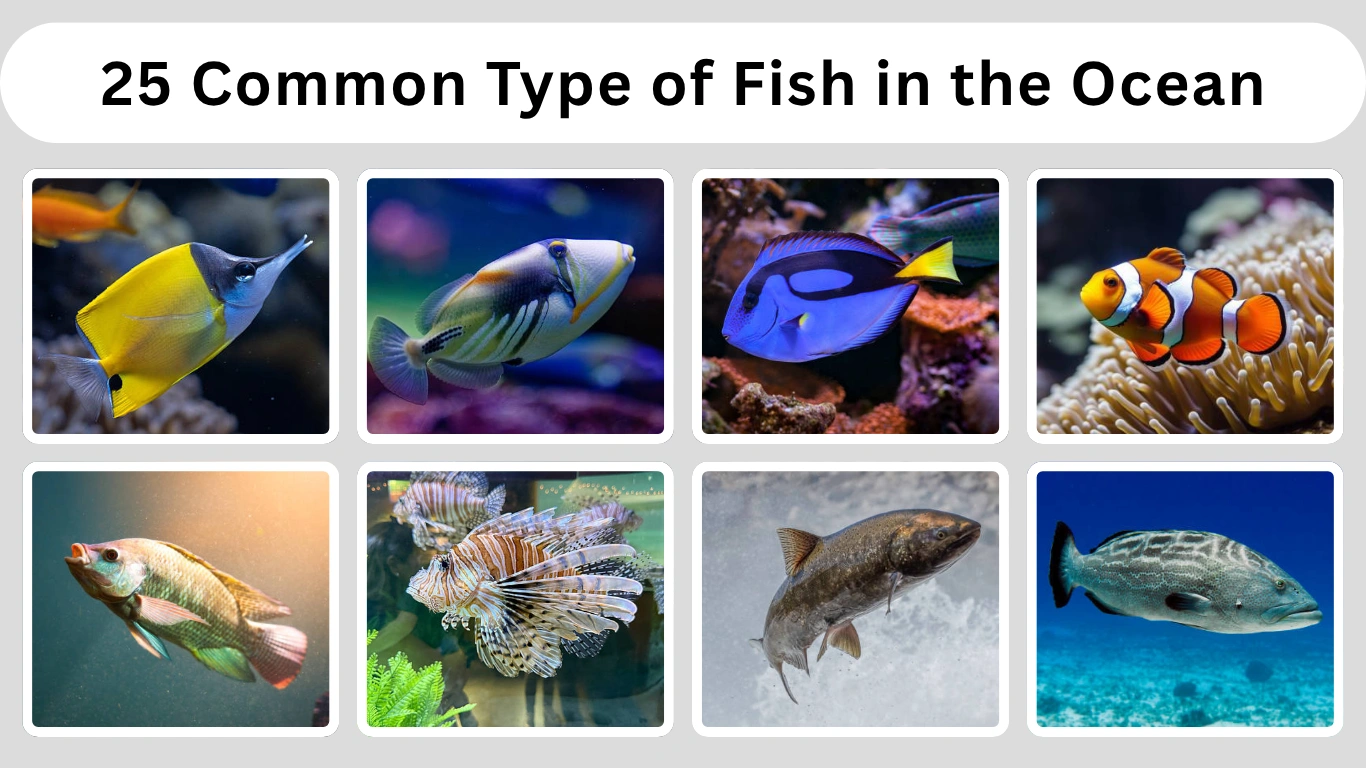




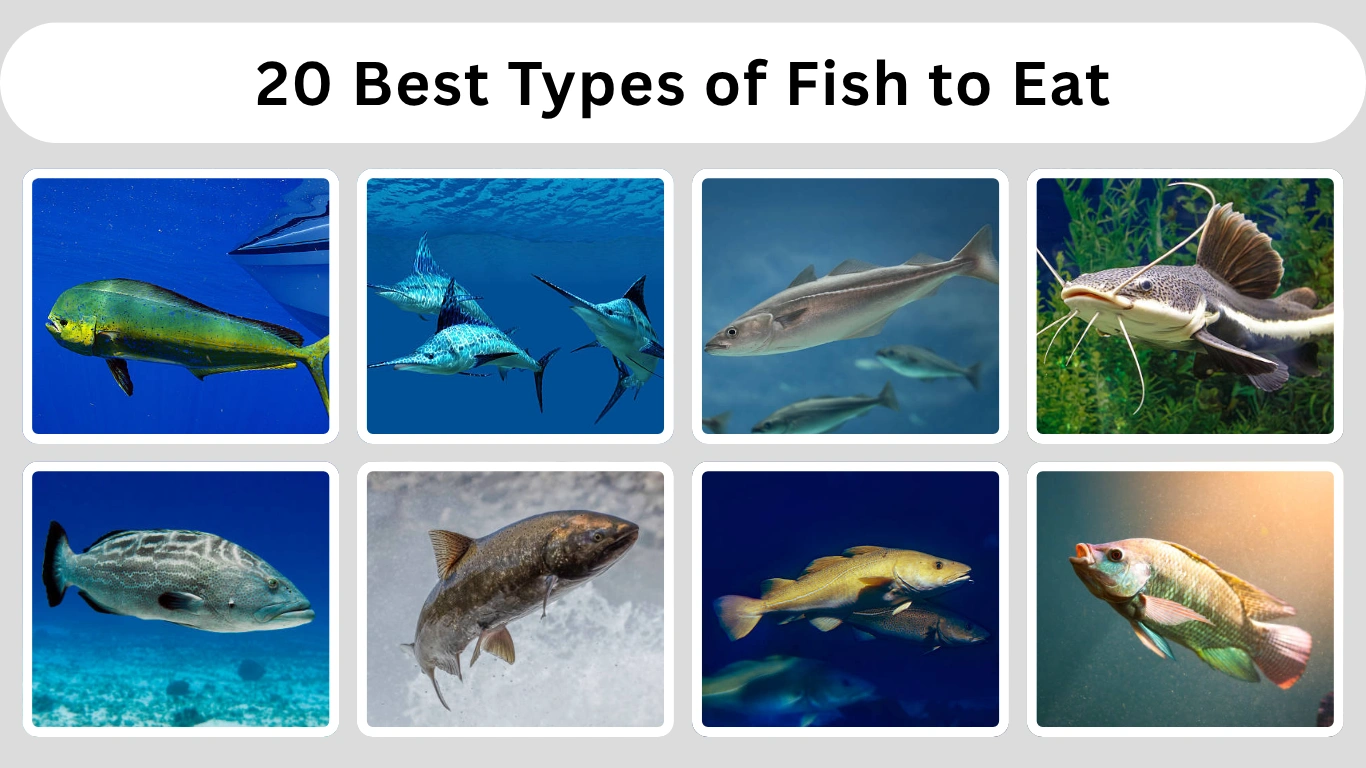
Fish is one of the healthiest foods you can include in your diet, offering high-quality protein and essential nutrients. From oily fish rich in omega-3 to lean white fish, each type provides unique benefits. They are found in oceans, rivers, and farms, making them widely available worldwide. This guide explores 20 of the best fish to eat, highlighting their size, habitat, benefits, and identification to help you choose the right option for your meals.
1. Salmon

Salmon is one of the most popular and nutritious fish to eat, known for its rich flavor and high omega-3 fatty acid content. It is widely consumed around the world and is valued for its health benefits. Salmon can live in both freshwater and ocean environments, making it unique among fish. It is commonly grilled, baked, or smoked and is a favorite in many cuisines.
Identification
- Streamlined body with a slightly rounded shape
- Silvery color in the ocean, often turning pink or reddish
- Small scales and smooth skin
- Forked tail fin for strong swimming
- Typically grows between 50–100 cm in length
Habitat
Salmon are found in the North Atlantic and Pacific Oceans, but they are also known for migrating into freshwater rivers to spawn. They prefer cold, clean waters and are commonly seen in temperate regions. Their life cycle includes both ocean and river environments, making them highly adaptable and widely distributed.
Benefits
Salmon is highly nutritious and rich in omega-3 fatty acids, which support heart and brain health. It is also an excellent source of high-quality protein, vitamins like B12 and D, and essential minerals. Regular consumption of salmon can help reduce inflammation, improve cardiovascular health, and support overall well-being.
Size
Salmon typically range from medium to large in size, depending on the species. Most commonly eaten salmon weigh between 2 to 8 kg and measure around 50–100 cm in length. Larger species, such as Chinook salmon, can grow even bigger, making them one of the larger edible fish options.
Diet
Salmon feed on smaller fish, crustaceans, and plankton while in the ocean. Their diet contributes to their rich nutritional profile, especially their high omega-3 content. Young salmon in freshwater consume insects and larvae before moving to the ocean.
2. Tuna

Tuna is a widely consumed fish known for its firm texture, rich taste, and high protein content. It is commonly used in dishes like sushi, steaks, and canned products. Tuna is a fast-swimming fish found in oceans worldwide and is valued for both its flavor and nutritional benefits. It is an excellent choice for people looking for lean, healthy seafood.
Identification
- Streamlined, torpedo-shaped body
- Dark blue or metallic back with silvery sides
- Strong, crescent-shaped tail fin
- Small finlets behind dorsal and anal fins
- Can grow from 60 cm to over 2 meters depending on species
Habitat
Tuna are found in tropical, subtropical, and temperate oceans across the world. They prefer open ocean environments but often move closer to coastal areas in search of food. Tuna are highly migratory and travel long distances, adapting to different water temperatures and depths.
Benefits
Tuna is rich in high-quality protein and low in fat, making it ideal for a healthy diet. It contains omega-3 fatty acids that support heart health and brain function. Tuna is also a good source of vitamins like B12 and minerals such as selenium, which help boost immunity and overall health.
Size
Tuna vary greatly in size depending on the species. Smaller tuna may weigh a few kilograms, while larger species like bluefin tuna can exceed 600 kg and grow over 2 meters long. Most commonly consumed tuna fall within a medium size range.
Diet
Tuna are carnivorous and feed on smaller fish, squid, and crustaceans. Their high-protein diet contributes to their firm flesh and nutritional value, making them a popular choice for consumption.
3. Cod

Cod is a popular white fish known for its mild flavor and flaky texture, making it a favorite in many dishes around the world. It is commonly used in fried, baked, and grilled recipes. Cod is not only but also nutritious, offering a good balance of protein and essential nutrients. It is widely available and suitable for various cooking styles.
Identification
- Elongated body with a slightly rounded shape
- Light brown, greenish, or gray color with spots
- Distinct barbel (whisker-like structure) on the chin
- Three dorsal fins and two anal fins
- Typically grows between 50–100 cm in length
Habitat
Cod are mainly found in cold and temperate ocean waters, especially in the North Atlantic. They prefer deeper coastal areas and ocean floors, often staying near the seabed. Cod are commonly associated with rocky or sandy bottoms and may move to shallower waters during spawning seasons.
Benefits
Cod is a lean source of high-quality protein and is low in fat, making it ideal for a healthy diet. It is rich in vitamins like B12 and minerals such as iodine and selenium, which support metabolism and immune function. Cod is also easy to digest and suitable for many diets.
Size
Cod are medium to large fish, typically ranging from 50–100 cm in length and weighing between 2–10 kg. Some larger individuals can grow even bigger, especially in colder waters where they have more time to develop.
Diet
Cod are carnivorous and feed on smaller fish, crustaceans, worms, and mollusks. They search for food along the seabed using their chin barbel, which helps them detect prey in low-visibility conditions.
4. Mackerel

Mackerel is a flavorful and oily fish known for its rich taste and high nutritional value. It is commonly eaten grilled, smoked, or canned and is popular in many cuisines. Mackerel is especially valued for its high omega-3 fatty acid content, making it a healthy choice for regular consumption.
Identification
- Slender, streamlined body
- Blue-green back with dark wavy stripes
- Silvery underside
- Forked tail and small finlets
- Typically grows between 30–60 cm in length
Habitat
Mackerel are found in temperate and tropical ocean waters around the world. They prefer open seas but are often seen near coastal regions, especially in areas rich in plankton. These fish usually swim in the upper layers of the ocean and migrate seasonally in search of food and suitable temperatures.
Benefits
Mackerel is rich in omega-3 fatty acids, which support heart and brain health. It is also a great source of protein, vitamin D, and vitamin B12. Regular consumption can help reduce inflammation, improve cardiovascular health, and support overall well-being.
Size
Mackerel are medium-sized fish, typically ranging from 30–60 cm in length and weighing around 1–3 kg. Some species may grow slightly larger depending on their environment and food availability.
Diet
Mackerel are carnivorous and feed on small fish, plankton, and crustaceans. Their nutrient-rich diet contributes to their high oil content, which makes them both flavorful and beneficial for human health.
5. Sardine

Sardine is a small, oily fish that is widely consumed due to its rich flavor and excellent nutritional value. It is commonly eaten fresh, canned, or smoked and is popular in many diets around the world. Sardines are especially valued for being affordable, sustainable, and packed with essential nutrients.
Identification
- Small, streamlined body with a slightly rounded shape
- Silvery scales that reflect light
- Single dorsal fin and forked tail
- Sometimes small dark spots along the sides
- Typically grows between 15–25 cm in length
Habitat
Sardines are mainly found in temperate and subtropical ocean waters, especially along coastlines. They prefer nutrient-rich areas where plankton is abundant, such as upwelling zones. These fish usually stay near the surface and are often seen in large schools moving together.
Benefits
Sardines are rich in omega-3 fatty acids, calcium, and vitamin D, making them excellent for bone and heart health. They are also a great source of protein and essential minerals. Because they are eaten whole, they provide additional nutrients like phosphorus and healthy fats.
Size
Sardines are small fish, typically ranging from 15–25 cm in length and weighing less than 1 kg. Their small size makes them easy to cook and consume whole in many dishes.
Diet
Sardines feed mainly on plankton, including microscopic plants and small crustaceans. Their simple diet contributes to their high nutritional value and makes them an important part of the marine food chain.
6. Trout

Trout is a nutritious and flavorful fish that is widely enjoyed around the world. While many species live in freshwater, some, like sea trout, spend time in the ocean. Trout is known for its tender meat and is often grilled, baked, or pan-fried. It is a healthy option for those looking for a balanced diet.
Identification
- Streamlined body with a slightly rounded shape
- Color ranges from silver to brown with dark spots
- Soft fins and forked tail
- Smooth skin with small scales
- Typically grows between 30–70 cm in length
Habitat
Trout are commonly found in cold, clean waters, including rivers, lakes, and coastal ocean areas. Sea trout migrate between freshwater and saltwater environments. In the ocean, they usually stay near coastal regions where food is available. They prefer well-oxygenated water and moderate temperatures.
Benefits
Trout is rich in omega-3 fatty acids, high-quality protein, and essential vitamins such as B12 and D. It supports heart health, brain function, and muscle development. Trout is also relatively low in calories, making it a great option for a healthy diet.
Size
Trout are medium-sized fish, typically growing between 30–70 cm in length and weighing around 1–5 kg. Some species can grow larger depending on their environment and food supply.
Diet
Trout are carnivorous and feed on insects, small fish, and crustaceans. In ocean environments, they consume more marine organisms, which contributes to their nutritional richness and flavor.
7. Halibut

Halibut is a large flatfish known for its firm, white meat and mild flavor, making it a popular choice for healthy meals. It is commonly grilled, baked, or pan-seared. Halibut is valued for its lean protein content and versatility in cooking, making it suitable for a variety of dishes.
Identification
- Flat, diamond-shaped body
- Both eyes located on one side of the head
- Dark upper side and white underside
- Large mouth with sharp teeth
- Typically grows between 50 cm to over 2 meters in length
Habitat
Halibut are mainly found in cold and temperate ocean waters, especially in the North Pacific and North Atlantic. They prefer sandy or muddy seabeds where they can lie flat and blend into their surroundings. Halibut are found at various depths, from shallow coastal waters to deep offshore areas.
Benefits
Halibut is a lean source of high-quality protein and is low in fat. It contains important nutrients such as omega-3 fatty acids, vitamin D, and selenium. Regular consumption can support heart health, improve metabolism, and strengthen the immune system.
Size
Halibut are among the largest edible fish. They can range from medium to very large, typically measuring 50 cm to over 2 meters and weighing between 3–200 kg depending on the species and age.
Diet
Halibut are carnivorous and feed on smaller fish, crustaceans, and other bottom-dwelling animals. Their diet contributes to their firm texture and nutritional value, making them a desirable fish for consumption.
8. Tilapia

Tilapia is a widely consumed fish known for its mild taste and affordability. It is popular in many cuisines due to its versatility and ease of cooking. Although commonly farmed in freshwater, tilapia can also live in brackish and coastal environments. It is a great choice for those looking for a lean and accessible protein source.
Identification
- Deep, laterally compressed body
- Silver or gray coloration, sometimes with faint stripes
- Long dorsal fin running along the back
- Small mouth and rounded tail
- Typically grows between 30–60 cm in length
Habitat
Tilapia are mainly found in warm freshwater environments but can also live in brackish and coastal waters. They prefer shallow, calm areas such as lagoons, ponds, and estuaries. Their adaptability allows them to survive in different water conditions, especially in tropical and subtropical regions.
Benefits
Tilapia is a good source of lean protein and contains essential nutrients like vitamin B12, phosphorus, and selenium. It is low in fat and calories, making it suitable for a healthy diet. Tilapia is also widely available and affordable, making it accessible to many people.
Size
Tilapia are medium-sized fish, typically ranging from 30–60 cm in length and weighing around 1–3 kg. Some larger individuals may grow bigger depending on farming conditions and natural environments.
Diet
Tilapia are mostly omnivorous and feed on algae, plankton, and small invertebrates. Their plant-based diet contributes to their mild flavor and makes them efficient to farm and widely available.
9. Catfish

Catfish is a popular and affordable fish known for its mild flavor and soft texture. It is widely consumed in many parts of the world and is especially common in fried and grilled dishes. While many catfish live in freshwater, some species are found in coastal and marine environments. It is valued for its versatility and nutritional benefits.
Identification
- Smooth, scaleless body
- Long barbels (whisker-like structures) around the mouth
- Broad, flat head
- Rounded or slightly forked tail
- Typically grows between 20–100 cm in length
Habitat
Catfish are commonly found in freshwater, but some species live in brackish and coastal ocean waters. They prefer muddy or sandy bottoms where they can easily find food. Marine catfish are usually seen in warm coastal regions and estuaries, staying close to the seabed.
Benefits
Catfish is a good source of protein and contains essential nutrients like vitamin B12, omega-3 fatty acids, and selenium. It supports muscle growth, heart health, and overall body function. It is also relatively low in calories, making it suitable for a balanced diet.
Size
Catfish vary widely in size depending on the species. Most commonly eaten catfish range from 20–100 cm in length and weigh between 1–10 kg. Some species can grow much larger in natural environments.
Diet
Catfish are omnivorous and feed on a wide range of food, including small fish, insects, crustaceans, and organic matter. They use their barbels to detect food, especially in murky waters where visibility is low.
10. Snapper

Snapper is a highly valued fish known for its firm texture and slightly sweet flavor. It is widely used in various cuisines and is commonly grilled, baked, or fried. Snapper is not only delicious but also nutritious, making it a popular choice for healthy seafood meals.
Identification
- Medium-sized, oval-shaped body
- Reddish, pink, or silver coloration
- Large mouth with sharp teeth
- Continuous dorsal fin
- Typically grows between 30–80 cm in length
Habitat
Snappers are mainly found in warm ocean waters, especially around coral reefs, rocky areas, and coastal regions. They prefer environments with plenty of shelter and food sources. While younger snappers may form groups in shallow waters, adults often move to deeper reef areas.
Benefits
Snapper is rich in high-quality protein and contains essential nutrients like omega-3 fatty acids, vitamin B12, and selenium. It supports heart health, brain function, and muscle development. Its low fat content makes it a healthy option for regular consumption.
Size
Snapper are medium-sized fish, typically ranging from 30–80 cm in length and weighing between 2–10 kg. Some larger species can grow bigger depending on their environment and age.
Diet
Snapper are carnivorous and feed on smaller fish, crustaceans, and mollusks. They hunt using quick bursts of speed and strong jaws, making them effective predators in reef environments.
11. Grouper

Grouper is a popular fish known for its firm texture and rich, mild flavor. It is widely used in seafood dishes and is especially valued in coastal cuisines. Grouper is a large, slow-moving fish that is often caught fresh and prepared grilled, baked, or fried. It is both delicious and nutritious.
Identification
- Thick, robust body
- Large mouth with a wide gape
- Mottled or spotted coloration for camouflage
- Rounded tail fin
- Typically grows between 40 cm to over 1 meter in length
Habitat
Groupers are mainly found in tropical and subtropical ocean waters, especially around coral reefs, rocky areas, and underwater structures. They prefer environments with plenty of hiding spots such as caves and crevices. Most groupers stay close to the seabed and are commonly found in shallow to moderately deep waters.
Benefits
Grouper is a great source of lean protein and contains essential nutrients like vitamin B12, selenium, and omega-3 fatty acids. It supports muscle growth, heart health, and overall body function. Its low fat content makes it a healthy choice for many diets.
Size
Grouper are medium to large fish, typically ranging from 40 cm to over 1 meter in length and weighing between 5–50 kg. Larger species can grow significantly bigger in natural environments.
Diet
Grouper are carnivorous and feed on fish, crabs, and other marine animals. They use their large mouths to swallow prey quickly, often relying on ambush tactics rather than chasing food.
12. Sea Bass

Sea bass is a popular fish known for its mild flavor and tender texture, making it a favorite in many cuisines. It is widely available and can be prepared in various ways, including grilling, baking, and steaming. Sea bass is not only delicious but also offers excellent nutritional value.
Identification
- Elongated, slightly compressed body
- Silver, gray, or dark-colored scales
- Large mouth with sharp teeth
- Spiny dorsal fin followed by a softer section
- Typically grows between 30–100 cm in length
Habitat
Sea bass are commonly found in coastal ocean waters, estuaries, and sometimes deeper offshore regions. They prefer areas with structures such as reefs, rocky bottoms, and seagrass beds, which provide shelter and feeding opportunities. They are widely distributed in temperate and tropical waters.
Benefits
Sea bass is rich in high-quality protein and contains omega-3 fatty acids that support heart health. It also provides important nutrients like vitamin B12, phosphorus, and selenium. Regular consumption can help improve brain function, support muscle health, and boost immunity.
Size
Sea bass are medium to large fish, typically ranging from 30–100 cm in length and weighing between 2–15 kg. Some species can grow even larger depending on their habitat and age.
Diet
Sea bass are carnivorous and feed on smaller fish, crustaceans, and mollusks. They hunt using quick bursts of speed and often stay close to structures where prey is abundant.
13. Flounder

Flounder is a flatfish known for its delicate, mild flavor and soft texture, making it a popular choice for light and healthy meals. It is commonly baked, fried, or steamed and is widely enjoyed in many cuisines. Flounder is easy to cook and is suitable for a variety of dishes.
Identification
- Flat, oval-shaped body
- Both eyes located on one side of the head
- Upper side brown, gray, or sandy colored for camouflage
- Smooth skin with small fins
- Typically grows between 30–60 cm in length
Habitat
Flounders are usually found in coastal ocean waters, especially over sandy or muddy bottoms. They prefer shallow areas such as bays, estuaries, and continental shelves. These environments allow them to bury themselves partially in the sand for protection and hunting.
Benefits
Flounder is a lean source of protein and is low in fat, making it ideal for a healthy diet. It contains important nutrients such as vitamin B12, phosphorus, and selenium. It supports heart health, muscle growth, and overall body function.
Size
Flounder are medium-sized fish, typically ranging from 30–60 cm in length and weighing around 1–4 kg. Their manageable size makes them easy to cook and serve in various recipes.
Diet
Flounder are carnivorous and feed on small fish, crustaceans, and worms. They hunt by lying still on the seabed and ambushing prey that comes close.
14. Haddock

Haddock is a popular white fish known for its mild flavor and tender, flaky texture. It is commonly used in dishes like fish and chips and is widely consumed in many parts of the world. Haddock is a healthy seafood option and is easy to cook using various methods such as frying, baking, or grilling.
Identification
- Elongated body with a slightly compressed shape
- Dark gray or blackish back with silvery sides
- Distinct black lateral line and dark spot near the pectoral fin
- Three dorsal fins and two anal fins
- Typically grows between 40–80 cm in length
Habitat
Haddock are mainly found in cold and temperate waters of the North Atlantic Ocean. They prefer deeper coastal areas and continental shelves, usually staying close to the seabed. These fish are commonly associated with sandy or rocky bottoms and are often found in cooler environments.
Benefits
Haddock is a lean source of protein and is low in fat, making it ideal for a healthy diet. It contains essential nutrients such as vitamin B12, selenium, and iodine, which support metabolism and overall health. It is also easy to digest and suitable for many dietary needs.
Size
Haddock are medium-sized fish, typically ranging from 40–80 cm in length and weighing between 1–5 kg. Some individuals may grow larger depending on their habitat and age.
Diet
Haddock are carnivorous and feed on small fish, crustaceans, and worms. They search for food along the ocean floor, using their senses to locate prey in low-visibility conditions.
15. Pollock

Pollock is a widely consumed fish known for its mild flavor and soft, flaky texture. It is commonly used in processed seafood products like fish fillets, fish sticks, and imitation crab. Pollock is affordable, nutritious, and easy to cook, making it a popular choice for everyday meals.
Identification
- Slender, elongated body
- Greenish or brownish back with silvery sides
- Small chin barbel (less noticeable than cod)
- Three dorsal fins and two anal fins
- Typically grows between 30–90 cm in length
Habitat
Pollock are mainly found in cold ocean waters, especially in the North Pacific and North Atlantic. They prefer open seas and coastal regions, often staying in mid-water or near the ocean floor. Pollock are commonly found in large schools and are widely distributed in cooler environments.
Benefits
Pollock is a lean source of protein and is low in fat, making it a healthy option. It contains essential nutrients like vitamin B12, selenium, and omega-3 fatty acids. It supports heart health, muscle growth, and overall body function while being budget-friendly.
Size
Pollock are medium-sized fish, typically ranging from 30–90 cm in length and weighing between 1–4 kg. Their manageable size makes them suitable for both commercial processing and home cooking.
Diet
Pollock are carnivorous and feed on small fish, plankton, and crustaceans. They often hunt in groups, which helps them catch prey more efficiently in open water environments.
16. Anchovy

Anchovy is a small, oily fish known for its strong flavor and high nutritional value. It is commonly eaten fresh, dried, or preserved, especially in sauces and dishes. Despite its small size, anchovy is packed with nutrients and is an important part of many traditional diets around the world.
Identification
- Small, slender, elongated body
- Silvery sides with a bluish or greenish back
- Large mouth compared to body size
- Soft fins and delicate scales
- Typically grows between 10–20 cm in length
Habitat
Anchovies are found in temperate and subtropical ocean waters, especially near coastlines. They prefer shallow, nutrient-rich environments such as estuaries and continental shelves. These fish are usually seen near the surface in large schools, particularly in areas where plankton is abundant.
Benefits
Anchovies are rich in omega-3 fatty acids, calcium, and protein. They support heart health, strengthen bones, and improve brain function. Since they are often eaten whole, they provide additional nutrients like phosphorus and essential minerals, making them highly nutritious.
Size
Anchovies are small fish, typically ranging from 10–20 cm in length and weighing only a few grams. Their small size makes them easy to process and consume in various forms.
Diet
Anchovies feed mainly on plankton, including tiny crustaceans and algae. They are filter feeders, using their gill rakers to trap food while swimming, which supports their role in the marine food chain.
17. Herring

Herring is a small, oily fish known for its rich flavor and high nutritional value. It is widely consumed in many parts of the world, often smoked, pickled, or canned. Herring plays an important role in marine ecosystems and is also a healthy choice for human diets due to its beneficial nutrients.
Identification
- Slender, laterally compressed body
- Bright silvery sides with a bluish or greenish back
- Single soft dorsal fin
- Forked tail for efficient swimming
- Typically grows between 20–30 cm in length
Habitat
Herring are commonly found in temperate and cold ocean waters, especially in the North Atlantic and North Pacific. They prefer coastal regions and continental shelves where food is abundant. These fish often form large schools near the surface but may move deeper depending on light and temperature conditions.
Benefits
Herring is rich in omega-3 fatty acids, which support heart and brain health. It also provides high-quality protein, vitamin D, and vitamin B12. Regular consumption can help reduce inflammation, improve cardiovascular health, and support overall well-being.
Size
Herring are small to medium-sized fish, typically ranging from 20–30 cm in length and weighing less than 1 kg. Their manageable size makes them easy to prepare and consume in various dishes.
Diet
Herring mainly feed on plankton, including small crustaceans and microscopic organisms. They are filter feeders, using their gill rakers to capture food while swimming, which contributes to their high nutritional value.
18. Barramundi

Barramundi is a popular fish known for its mild, buttery flavor and tender texture. It is widely consumed in many cuisines and is considered a healthy seafood option. Barramundi is also valued for its sustainability and ability to thrive in both freshwater and saltwater environments.
Identification
- Elongated, slightly compressed body
- Silver coloration with large scales
- Large mouth with a slightly upturned jaw
- Rounded tail fin
- Typically grows between 60–120 cm in length
Habitat
Barramundi are commonly found in coastal waters, estuaries, and rivers in tropical regions. They can live in both freshwater and saltwater, often moving between the two during their life cycle. They prefer warm environments and are widely distributed in areas like Southeast Asia and Australia.
Benefits
Barramundi is rich in omega-3 fatty acids, high-quality protein, and essential nutrients like vitamin D and selenium. It supports heart health, brain function, and overall wellness. It is also relatively low in fat compared to some other fish, making it a healthy dietary choice.
Size
Barramundi are medium to large fish, typically ranging from 60–120 cm in length and weighing between 3–15 kg. Some individuals can grow even larger in natural environments.
Diet
Barramundi are carnivorous and feed on smaller fish, crustaceans, and insects. They are active hunters and use their strong jaws to capture prey efficiently.
19. Swordfish
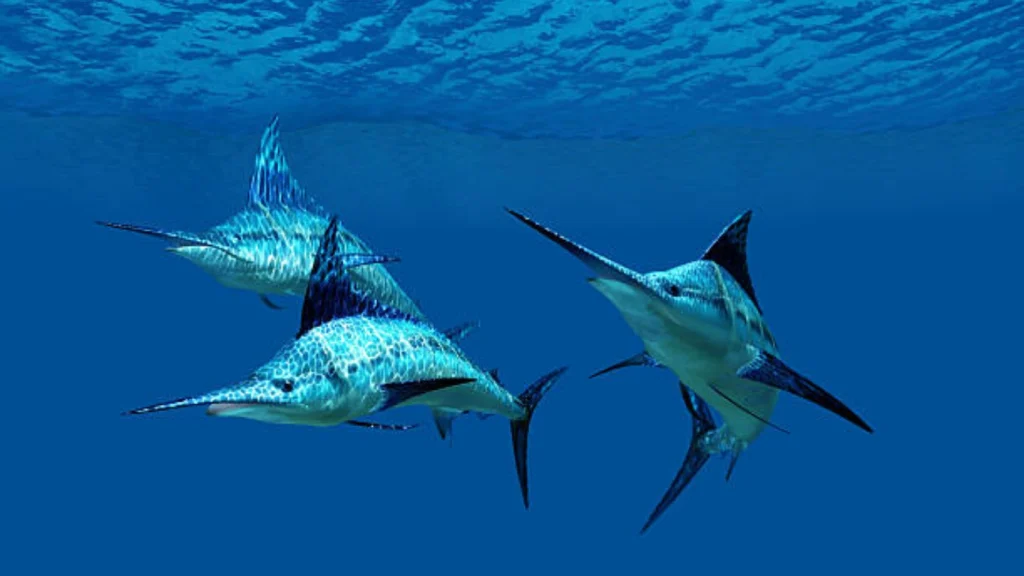
Swordfish is a large, meaty fish known for its firm texture and rich flavor. It is commonly grilled or seared and is popular in many cuisines. Swordfish is a strong, fast-swimming predator and is valued for its high protein content and satisfying taste.
Identification
- Long, streamlined body
- Distinct sword-like bill (extended upper jaw)
- Dark brown or bluish back with lighter underside
- Tall dorsal fin and crescent-shaped tail
- Typically grows between 1–3 meters in length
Habitat
Swordfish are found in tropical, subtropical, and temperate oceans worldwide. They prefer open ocean environments and can live at various depths. During the day, they stay in deeper waters and move closer to the surface at night to feed.
Benefits
Swordfish is a great source of high-quality protein and contains important nutrients like vitamin D, selenium, and omega-3 fatty acids. It supports muscle growth, bone health, and overall body function. However, it is often recommended to consume it in moderation due to mercury levels.
Size
Swordfish are large fish, typically ranging from 1–3 meters in length and weighing between 50–500 kg. Their large size makes them suitable for steak-style cuts commonly used in cooking.
Diet
Swordfish are carnivorous and feed on fish and squid. They use their long bill to slash and stun prey before eating, making them efficient hunters in open ocean environments.
20. Mahimahi

Mahimahi, also known as dolphinfish, is a popular ocean fish valued for its mild, slightly sweet flavor and firm texture. It is commonly grilled, baked, or pan-seared and is widely used in many cuisines. Mahimahi is also known for its fast growth and vibrant appearance, making it both a culinary and ecological favorite.
Identification
- Bright blue, green, and yellow coloration
- Slender body with a blunt head
- Long dorsal fin running along the back
- Forked tail for fast swimming
- Typically grows between 50–100 cm in length
Habitat
Mahimahi are found in tropical and subtropical ocean waters around the world. They prefer warm, open seas and are often seen near floating objects or seaweed where food is abundant. These fish are highly migratory and move frequently in search of food and suitable water conditions.
Benefits
Mahimahi is a lean source of protein and contains essential nutrients like vitamin B12, selenium, and omega-3 fatty acids. It supports heart health, muscle development, and overall well-being. Its low fat content makes it a healthy choice for many diets.
Size
Mahimahi are medium to large fish, typically ranging from 50–100 cm in length and weighing between 5–15 kg. Some individuals can grow larger depending on their environment and age.
Diet
Mahimahi are carnivorous and feed on smaller fish, squid, and crustaceans. They are fast and active hunters, using speed to catch prey in open water.
FAQs
Which fish is the healthiest to eat?
Salmon is often considered one of the healthiest fish due to its high omega-3 fatty acids, protein, and essential vitamins. Other healthy options include mackerel, sardines, and trout, which also provide heart-healthy nutrients and support overall well-being.
What is the best fish for beginners to cook?
Tilapia, cod, and flounder are great choices for beginners because they have a mild flavor and are easy to cook. These fish are versatile and work well with simple recipes like baking, frying, or grilling without requiring complex techniques.
How often should you eat fish?
It is generally recommended to eat fish at least 2 times per week. This helps provide essential nutrients like omega-3 fatty acids, which support heart and brain health. Choosing a variety of fish can also help balance nutrition and reduce exposure to contaminants.
Which fish should be eaten in moderation?
Fish like swordfish, tuna (especially large species), and some types of mackerel should be eaten in moderation due to higher mercury levels. It is important to balance consumption and choose low-mercury options for regular meals.
What are the benefits of eating fish regularly?
Eating fish regularly supports heart health, improves brain function, and provides high-quality protein. It also supplies essential nutrients like vitamin D, B vitamins, and omega-3 fatty acids, which help reduce inflammation and promote overall health.