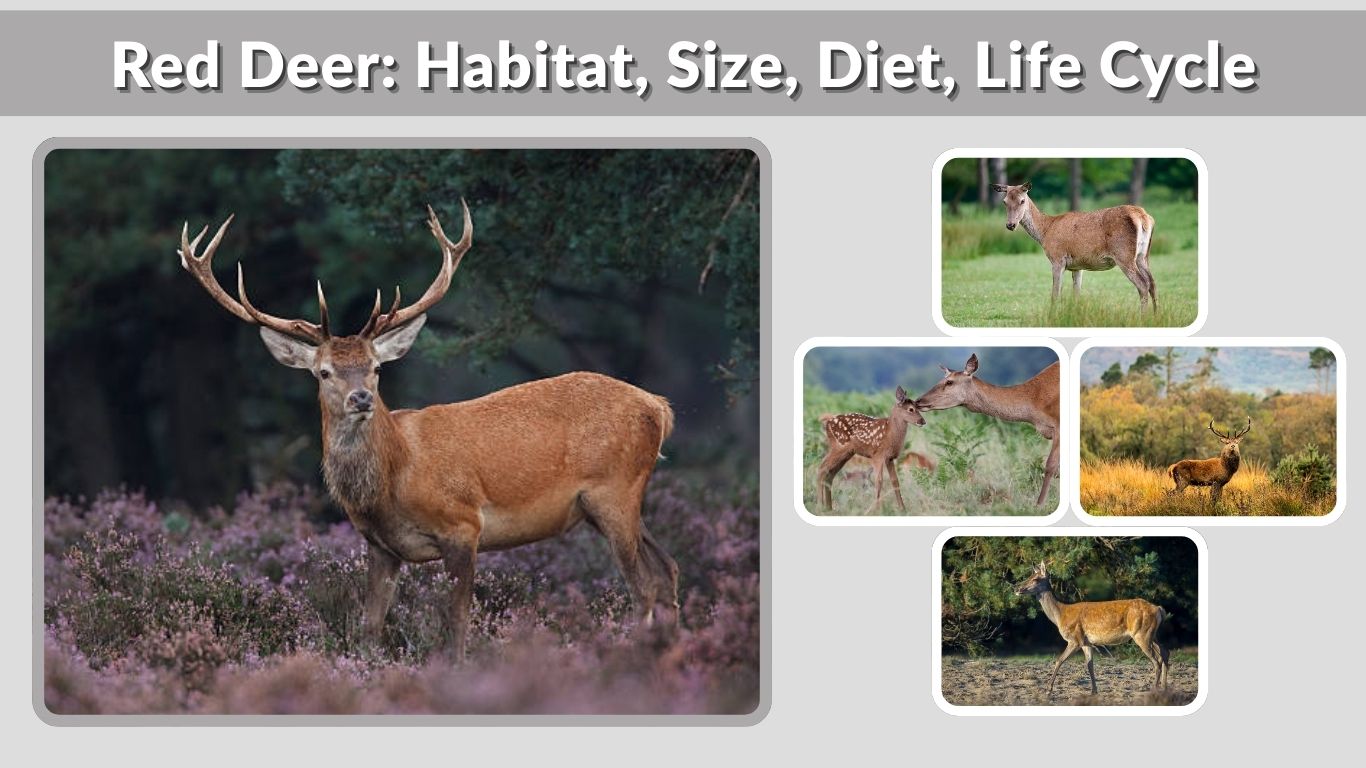
The red deer (Cervus elaphus) is one of the largest and most widely distributed deer species in the world. Known for its impressive antlers, powerful build, and seasonal coat changes, the red deer has played an important role in ecosystems, history, and human culture for thousands of years. Native to Europe, Asia, and parts of North Africa, and introduced to several other regions, red deer thrive in a wide range of environments. Understanding what red deer are, along with their physical traits, size, habitat, and geographic range, provides valuable insight into this iconic species.
What Is a Red Deer?
A red deer is a large species of deer recognized for its reddish-brown coat during warmer months and its strong social behavior. It is one of the best-known members of the deer family and is often associated with forests, open woodlands, and mountainous regions. Red deer are highly adaptable animals that can live in both dense vegetation and open landscapes.
These deer are social for much of the year, forming herds that are typically separated by sex outside the breeding season. Their alert nature, strong senses, and ability to travel long distances make them well suited to a variety of environments.
Red Deer Scientific Name and Classification
The red deer scientific name is Cervus elaphus. This species belongs to the family Cervidae and is part of a group that includes several closely related deer species. In some regions, red deer are closely related to or even classified alongside elk, which has led to taxonomic confusion.
Taxonomic classification:
- Kingdom: Animalia
- Phylum: Chordata
- Class: Mammalia
- Order: Artiodactyla
- Family: Cervidae
- Genus: Cervus
- Species: Cervus elaphus
Within this species, there are multiple subspecies that vary in size, antler shape, and coloration depending on their geographic location.
Red Deer Physical Characteristics
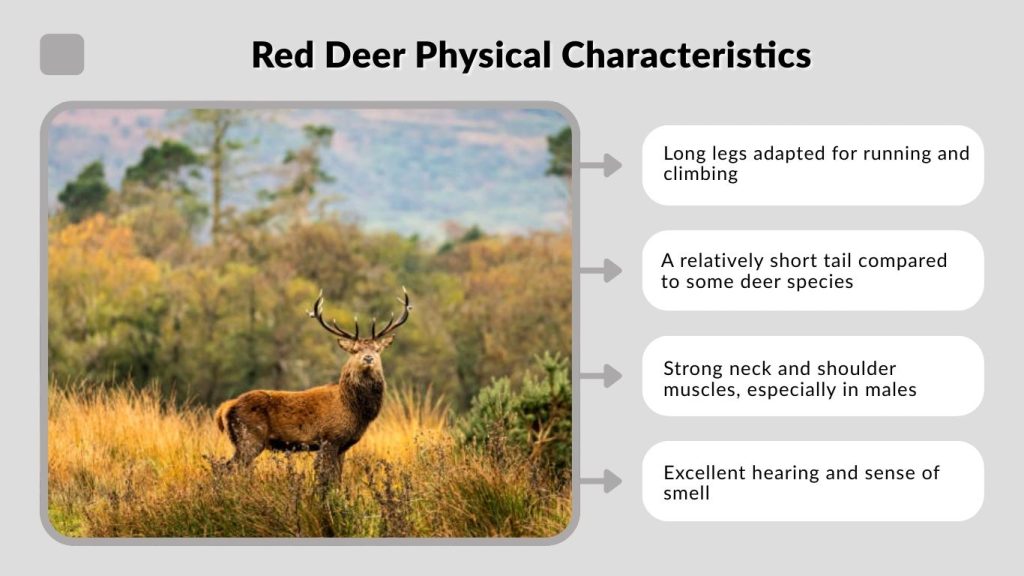
Red deer are known for their powerful build and striking appearance. One of the most noticeable red deer characteristics is their seasonal coat. During summer, their fur appears reddish or chestnut brown, while in winter it becomes thicker and more grayish-brown for insulation.
Males, known as stags, grow large, branching antlers that are shed and regrown each year. Females, called hinds, do not grow antlers. Antler size often reflects age, health, and nutrition.
Other notable physical traits include:
- Long legs adapted for running and climbing
- A relatively short tail compared to some deer species
- Strong neck and shoulder muscles, especially in males
- Excellent hearing and sense of smell
These features help red deer detect predators and navigate varied terrain.
Red Deer Size and Weight
Red deer size varies by region, with individuals in colder climates generally growing larger than those in warmer areas. They are among the largest deer species, surpassed only by moose and elk.
On average:
- Adult red deer stand 3.5 to 4.5 feet tall at the shoulder
- Body length ranges from 6 to 7.5 feet
In terms of weight:
- Females typically weigh between 260 and 400 pounds
- Males often weigh 350 to 530 pounds, with some exceeding this range
This large body size allows red deer to retain heat efficiently and compete successfully for mates during the breeding season.
Red Deer Habitat
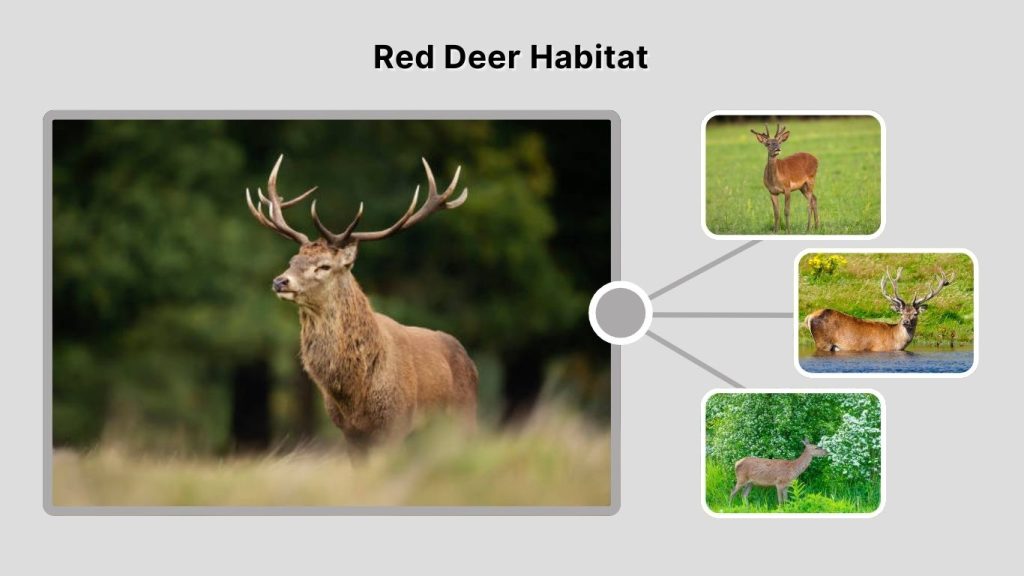
The red deer habitat includes a broad range of environments. Traditionally, red deer are associated with forests and woodland edges, but they are equally comfortable in open grasslands, hills, and mountainous regions.
Preferred habitat features include:
- Access to both cover and open grazing areas
- Reliable water sources
- Seasonal vegetation availability
Red deer often adjust their habitat use throughout the year. In summer, they may move to higher elevations or open areas with abundant food. In winter, they seek sheltered locations that provide protection from harsh weather.
Red Deer Range and Distribution
The red deer range is extensive. Native populations are found across much of Europe, parts of Asia, and North Africa. Over time, red deer have also been introduced to regions such as New Zealand, Australia, South America, and parts of North America, where they have established stable populations.
In their native range, red deer are most common in:
- Western and Central Europe
- The British Isles
- Central Asia
Introduced populations have adapted well to new environments, sometimes requiring active management to balance ecosystems and agricultural interests.
Red Deer Diet and Feeding Behavior
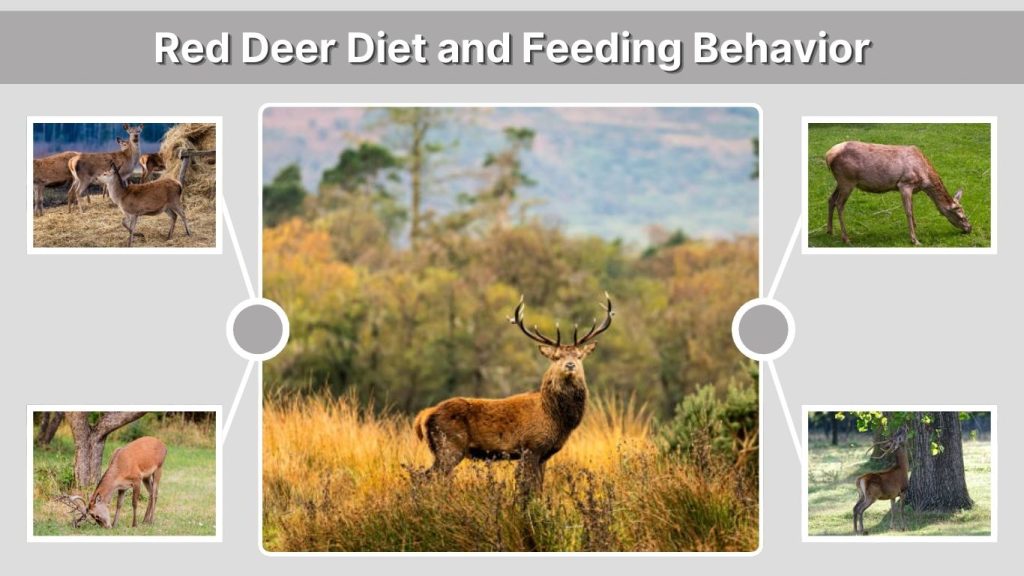
The red deer is a herbivore with a flexible feeding strategy that allows it to survive in many different environments. Its diet consists mainly of plant material, and red deer are considered mixed feeders because they both graze and browse depending on food availability.
Common components of the red deer diet include:
- Grasses and herbs
- Leaves and shoots from shrubs and trees
- Agricultural crops such as cereals
- Bark and twigs during winter months
Seasonal changes strongly influence feeding behavior. In spring and summer, red deer focus on fresh, nutrient-rich vegetation to support growth and antler development. During autumn, they consume higher-energy foods to build fat reserves. In winter, when food is limited, they rely on woody plants and lower-quality forage.
Red Deer Life Cycle
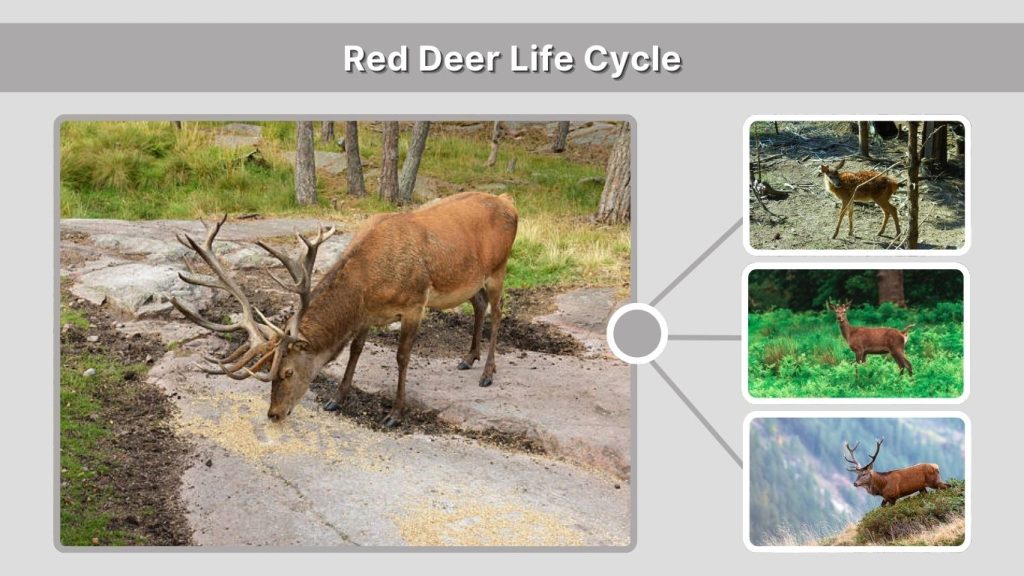
The red deer life cycle follows a predictable pattern shaped by seasonal conditions. Calves are typically born in late spring or early summer, when temperatures are mild and food resources are abundant.
The main stages of the life cycle include:
- Calf – Born after a gestation period of about 230 days
- Juvenile – Rapid growth during the first year
- Adult – Sexual maturity reached at 1.5 to 2 years
- Older adult – Gradual physical decline
In the wild, red deer commonly live between 10 and 15 years, though some individuals may survive longer in protected environments. Mortality is influenced by predation, disease, climate, and human activity.
Red Deer Reproduction and the Rut
Reproduction in red deer is centered around the rut, the breeding season that usually occurs in early autumn. During this period, males compete intensely for access to females. Stags use vocalizations, displays, and physical confrontations to establish dominance.
One of the most distinctive behaviors during the rut is the stag’s loud roaring call, which serves to intimidate rivals and attract females. Dominant males form harems of hinds and defend them from competing stags.
After mating, females carry their calves through winter and give birth the following spring. Mothers provide extensive care, protecting and nursing calves during their early development.
Red Deer vs Elk
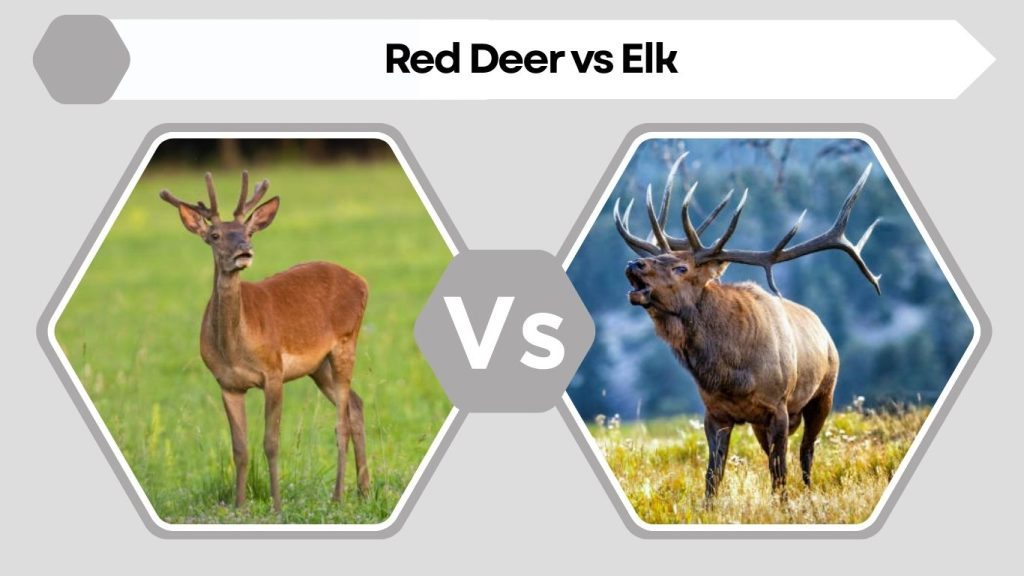
The comparison of red deer vs elk often causes confusion, particularly between European and North American terminology. In Europe, the term “elk” refers to what North Americans call a moose. However, in North America, “elk” usually refers to the wapiti, which is closely related to red deer.
Key differences include:
- Elk are generally larger than red deer
- Elk antlers are longer and less branched
- Red deer have shorter bodies and more compact antlers
Despite these differences, red deer and elk share a close evolutionary relationship and similar behaviors.
Red Deer and Humans
Red deer have played an important role in human history for thousands of years. They have been featured in mythology, art, and traditional hunting practices across Europe and Asia. Today, red deer are valued for wildlife tourism, regulated hunting, and ecological importance.
In some regions, red deer populations must be actively managed to prevent overgrazing and habitat degradation. Controlled hunting is often used as a conservation tool to maintain balanced ecosystems.
Conservation and Population Management
Overall, red deer populations are stable or increasing in many parts of their range. However, challenges such as habitat fragmentation, climate change, and human-wildlife conflict continue to affect some populations.
Conservation strategies focus on:
- Habitat preservation and restoration
- Population monitoring
- Regulated hunting programs
- Reducing conflicts with agriculture
These measures help ensure long-term sustainability for red deer and the ecosystems they inhabit.
FAQs
What is a red deer?
A red deer is a large deer species native to Europe, Asia, and parts of North Africa. It is known for its reddish-brown summer coat, impressive antlers on males, and strong social behavior. Red deer are among the largest deer species in the world.
What is the scientific name of the red deer?
The scientific name of the red deer is Cervus elaphus. It belongs to the deer family Cervidae and includes several subspecies that vary in size, antler shape, and geographic distribution across Europe, Asia, and introduced regions.
Where do red deer live?
Red deer live in forests, grasslands, hills, and mountainous regions. Their native range includes Europe, parts of Asia, and North Africa. They have also been introduced to countries such as New Zealand, Australia, and parts of South America.
What do red deer eat?
Red deer are herbivores that feed on grasses, herbs, leaves, shoots, and agricultural crops. Their diet changes seasonally, focusing on fresh vegetation in spring and summer and switching to bark, twigs, and woody plants during winter months.
What is the difference between red deer and elk?
The main difference between red deer and elk is size and regional classification. Elk are generally larger with longer antlers, while red deer are smaller and more compact. In Europe, the term “elk” refers to moose, which adds to the confusion.