


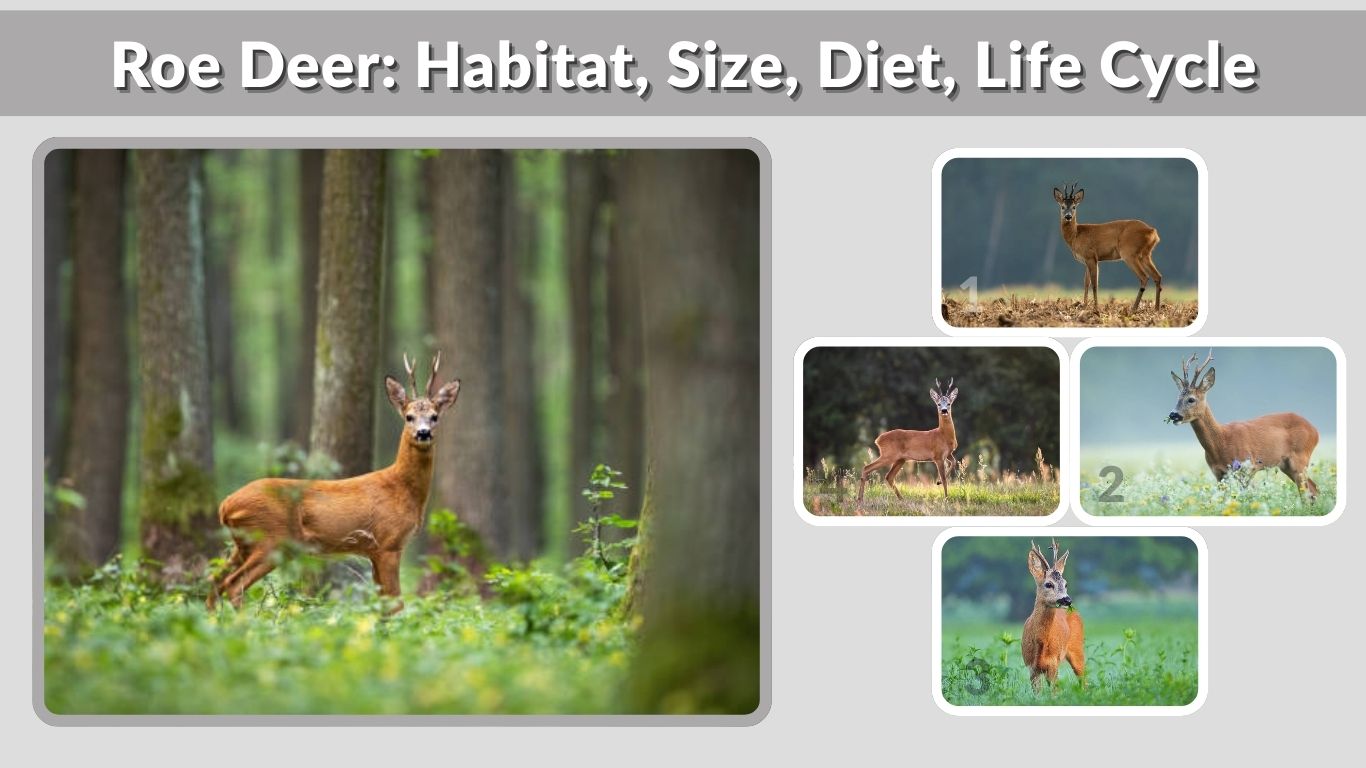
The roe deer (Capreolus capreolus) is one of the smallest and most widespread deer species in Europe. Known for its graceful appearance, short antlers, and remarkable adaptability, the roe deer thrives in a wide range of habitats, including forests, farmland edges, and even areas close to human settlements. Despite its small size, this species plays a significant role in shaping vegetation and maintaining ecological balance. Understanding roe deer characteristics, habitat, size, and distribution provides valuable insight into this unique member of the deer family.
What Is a Roe Deer?
A roe deer is a small, lightly built deer species distinguished by its slender body, short tail, and alert behavior. Unlike larger deer, roe deer are typically solitary or live in small family groups rather than large herds. They are highly territorial, especially during the breeding season.
Roe deer are crepuscular animals, meaning they are most active at dawn and dusk. Their cautious nature, quick movements, and excellent senses help them avoid predators and adapt to changing environments.
Roe Deer Scientific Name and Classification
The roe deer scientific name is Capreolus capreolus. This species belongs to the deer family Cervidae and is native to much of Europe and western Asia. A closely related species, the Siberian roe deer (Capreolus pygargus), occupies parts of eastern Europe and Asia and is generally larger in size.
Taxonomic classification:
- Kingdom: Animalia
- Phylum: Chordata
- Class: Mammalia
- Order: Artiodactyla
- Family: Cervidae
- Genus: Capreolus
- Species: Capreolus capreolus
Although similar in appearance, European and Siberian roe deer differ slightly in body size, coat color, and range.
Roe Deer Physical Characteristics
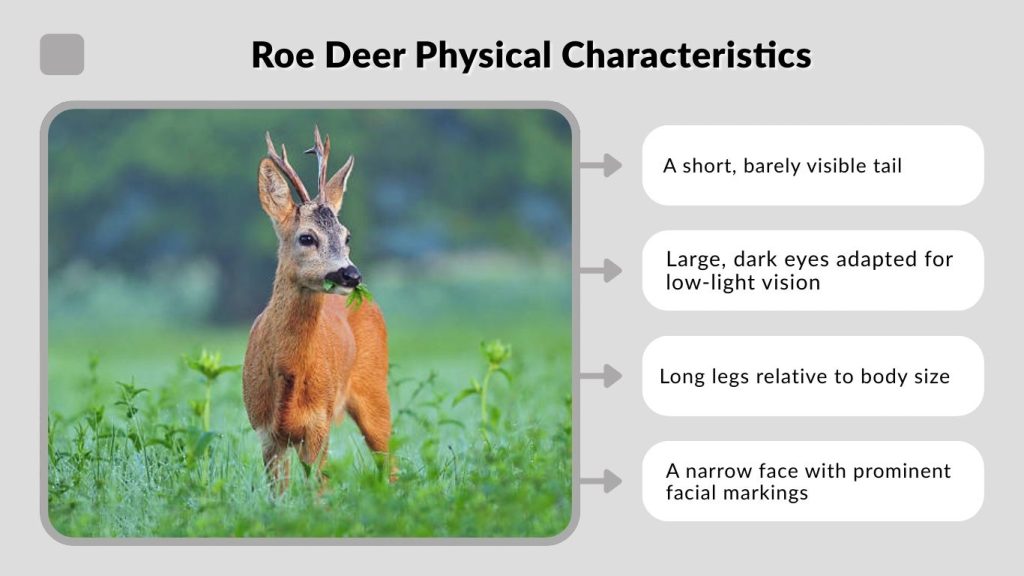
Roe deer have a delicate but athletic build that allows them to move quickly through dense vegetation. One of the most recognizable roe deer characteristics is the white rump patch, which becomes more visible when the deer is alarmed.
Their coat changes with the seasons. In summer, roe deer have a reddish-brown coat, while in winter, it turns grayish or brownish for better insulation. Males, known as bucks, grow short antlers with usually two or three points on each side. These antlers are shed annually and regrown in preparation for the breeding season.
Other key physical features include:
- A short, barely visible tail
- Large, dark eyes adapted for low-light vision
- Long legs relative to body size
- A narrow face with prominent facial markings
Roe Deer Size and Weight
Roe deer size is noticeably smaller compared to other deer species such as red deer. Their compact size allows them to move easily through thick undergrowth and woodland edges.
On average:
- Roe deer stand about 2 to 2.5 feet tall at the shoulder
- Body length ranges from 3.5 to 4.5 feet
In terms of weight:
- Adult females typically weigh between 33 and 77 pounds
- Adult males usually weigh 44 to 77 pounds
This small size contributes to their agility and ability to exploit a wide variety of habitats.
Roe Deer Habitat
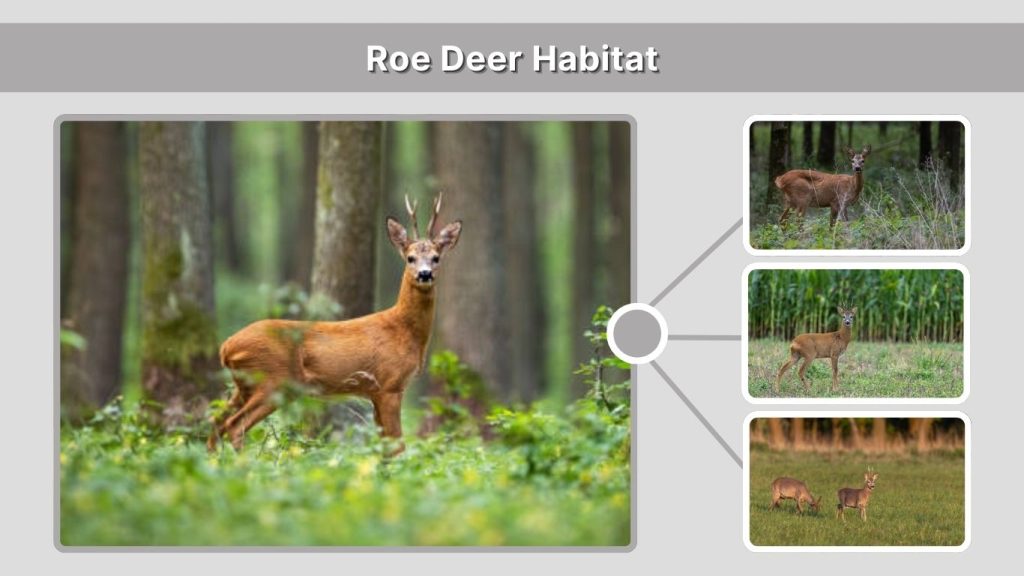
The roe deer habitat is diverse, reflecting the species’ adaptability. Roe deer prefer areas that provide a mix of cover and open feeding grounds, making woodland edges and agricultural landscapes ideal.
Common habitats include:
- Deciduous and mixed forests
- Farmland edges and hedgerows
- Shrublands and grasslands
- Suburban and semi-rural areas
Roe deer adjust their habitat use seasonally, seeking dense cover during winter and more open feeding areas during warmer months.
Roe Deer Range and Distribution
The roe deer range extends across most of Europe and into western Asia. They are absent from some Mediterranean islands but are otherwise widely distributed. Introduced populations also exist in parts of the United Kingdom and other regions where suitable habitat is available.
European roe deer are especially common in:
- Central and Western Europe
- Scandinavia
- The British Isles
Siberian roe deer occupy eastern Europe, Siberia, and parts of northern Asia, where they have adapted to colder climates and larger territories.
Roe Deer Diet and Feeding Behavior
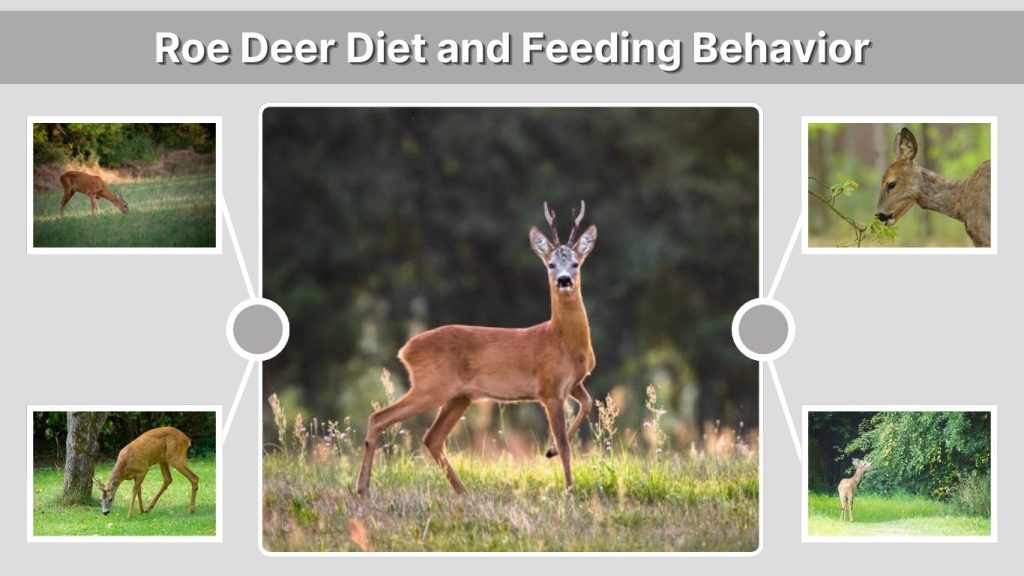
Roe deer are herbivores with highly selective feeding habits. Unlike larger deer that graze extensively, roe deer are primarily browsers, choosing nutrient-rich plant parts to meet their high metabolic needs.
The typical roe deer diet includes:
- Leaves and buds from shrubs and trees
- Herbs and forbs
- Young shoots and grasses
- Agricultural crops such as cereals and vegetables
Seasonal availability strongly affects feeding behavior. In spring and summer, roe deer rely on fresh vegetation that supports growth and reproduction. During autumn, they consume energy-rich foods to build fat reserves. In winter, when resources are scarce, they feed on woody plants, bark, and evergreen foliage.
Roe Deer Life Cycle
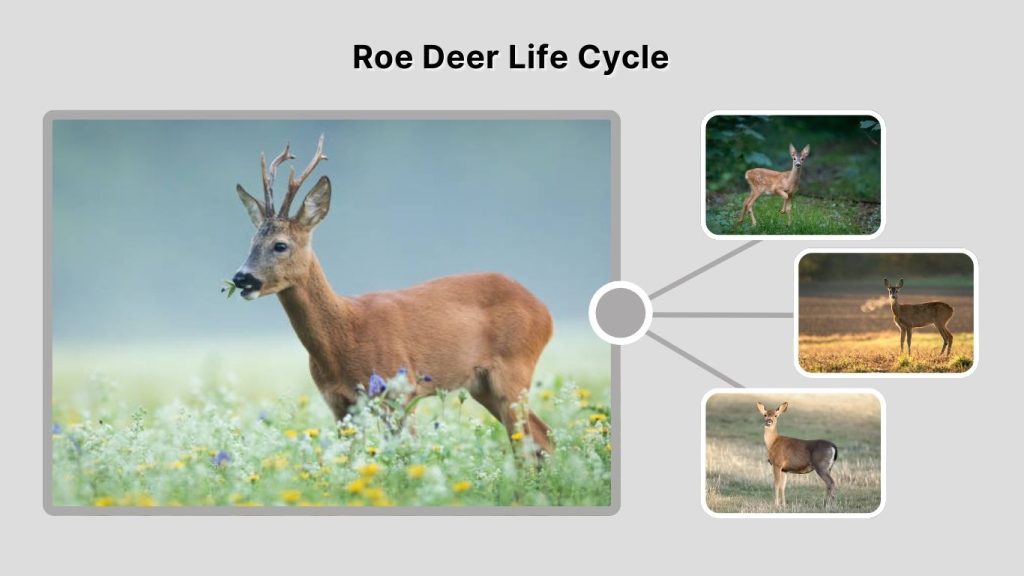
The roe deer life cycle is unique among deer species due to a reproductive adaptation known as delayed implantation. This allows mating to occur in summer while birth is timed for favorable spring conditions.
The main life stages include:
- Fawn – Born in late spring after delayed development
- Juvenile – Rapid growth during the first year
- Adult – Sexual maturity reached at about one year
- Older adult – Gradual decline with age
In the wild, roe deer typically live between 10 and 12 years, though many do not reach this age due to predation, disease, and human activity.
Roe Deer Reproduction and Rutting Season
Roe deer breeding behavior is closely linked to their unique reproductive strategy. The rut occurs in mid to late summer, earlier than in most other deer species. During this time, bucks become highly territorial and may chase does in circular patterns known as “roe rings.”
After mating, the fertilized egg remains dormant for several months before implanting in the uterus. This delayed implantation ensures that fawns are born in late spring, when food is abundant.
Females usually give birth to one or two fawns and provide intensive maternal care during the early weeks of life.
Roe Deer vs Red Deer
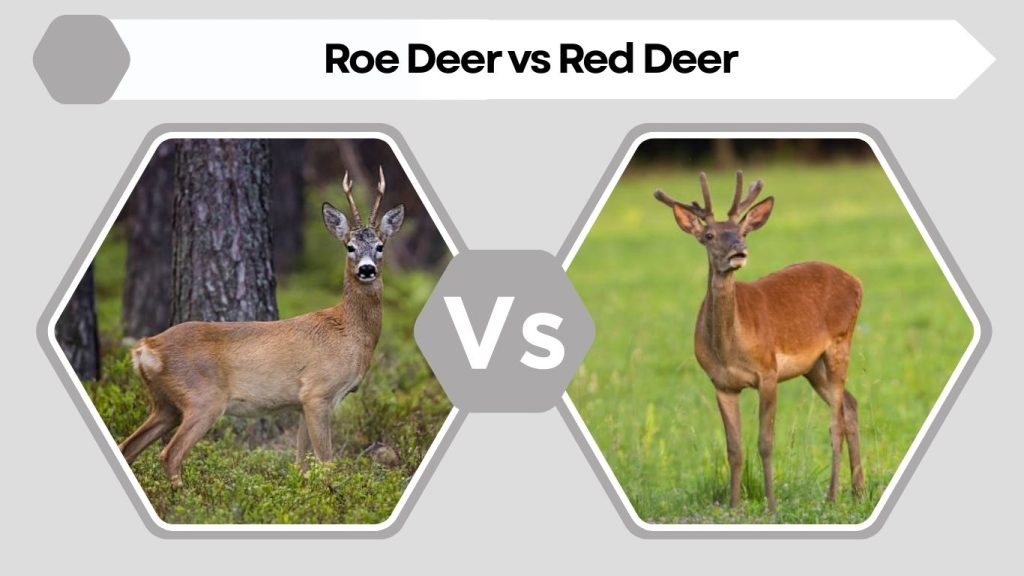
The comparison of roe deer vs red deer highlights clear differences in size, behavior, and ecology. Roe deer are significantly smaller and more solitary than red deer, which form large herds and dominate open landscapes.
Key differences include:
- Roe deer are smaller and lighter
- Red deer have much larger antlers
- Roe deer are territorial year-round
- Red deer are more social and migratory
These differences allow both species to coexist in overlapping regions without direct competition.
Roe Deer and Humans
Roe deer have a long history of interaction with humans, particularly in Europe. They are often seen near farmland and suburban areas, where food availability is high. While they are admired for their appearance, roe deer can also cause crop damage when populations grow too large.
In many countries, regulated hunting is used as a management tool to control numbers and maintain healthy ecosystems. Conservation efforts focus on balancing roe deer populations with habitat preservation and agricultural needs.
Conservation and Population Management
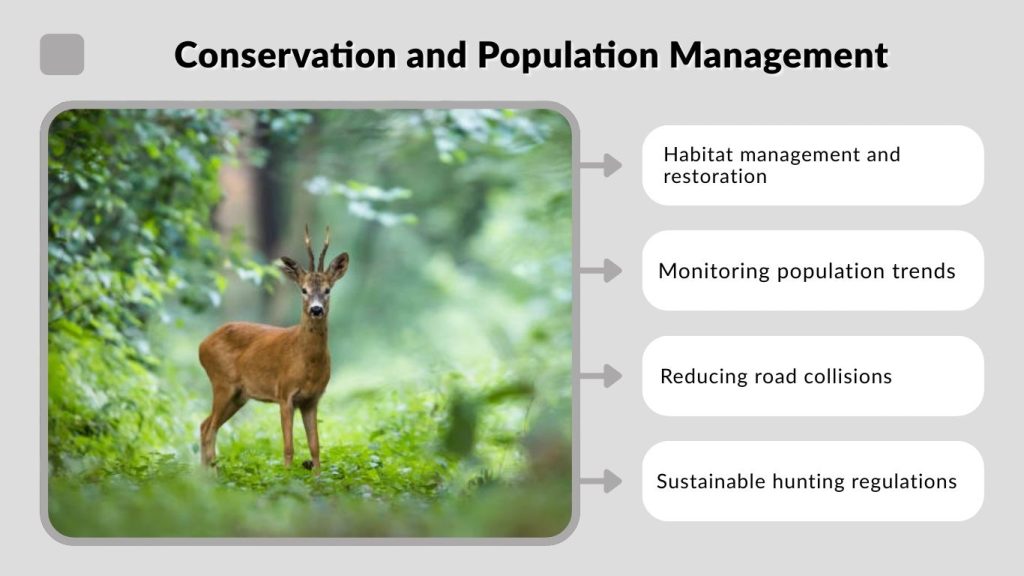
Overall, roe deer populations are stable or increasing in much of their range. Their adaptability to fragmented landscapes has allowed them to thrive even as forests have been altered by human development.
Key conservation strategies include:
- Habitat management and restoration
- Monitoring population trends
- Reducing road collisions
- Sustainable hunting regulations
These measures help ensure the long-term survival of roe deer and the ecosystems they inhabit.
Conclusion
The roe deer is a small but highly successful deer species, known for its adaptability, unique reproductive strategy, and ecological importance. From forests and farmland edges to suburban landscapes, roe deer continue to thrive across Europe and Asia. Understanding their behavior, life cycle, and conservation needs highlights why this species remains an important part of many ecosystems.