


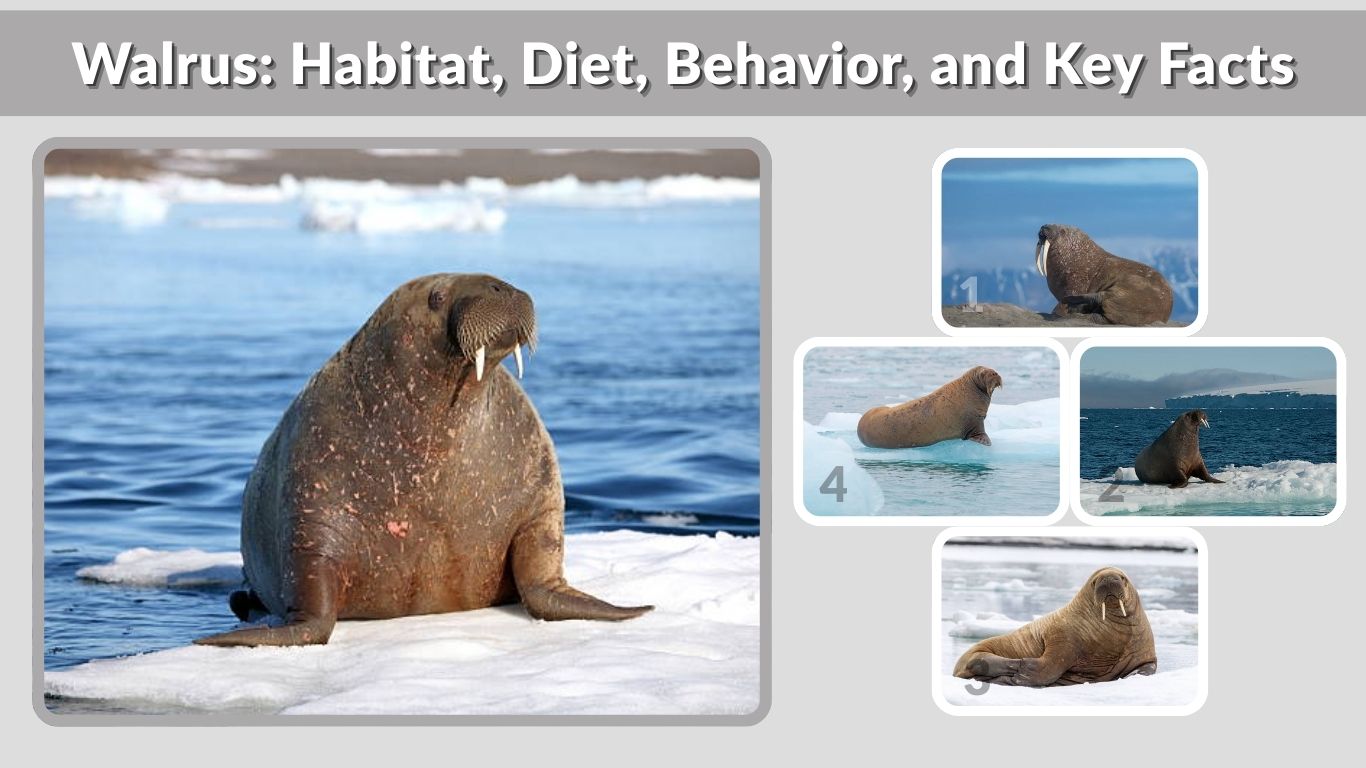
The walrus is one of the most recognizable animals of the Arctic, known for its massive body, long tusks, and distinctive whiskered face. As a marine mammal adapted to some of the coldest environments on Earth, the walrus plays an important role in Arctic ecosystems. These animals have lived in polar regions for thousands of years, relying heavily on sea ice and shallow coastal waters for survival. This article explores what a walrus is, where it lives, how it is physically adapted to the cold, and what it eats in its harsh natural environment.
What Is a Walrus?
A walrus is a large marine mammal belonging to the pinniped group, which also includes seals and sea lions. Its scientific name is Odobenus rosmarus, meaning “tooth-walking sea horse,” a reference to its tusks and movement on ice. There are two main subspecies: the Atlantic walrus and the Pacific walrus. Both share similar characteristics but live in different regions of the Arctic.
Unlike seals, walruses are easily identified by their long tusks, thick skin, and stiff whiskers called vibrissae. They spend much of their time in cold ocean waters but regularly haul out onto ice or land to rest. Walruses are well adapted to both aquatic and icy environments, making them one of the most iconic animals of the polar world.
Walrus Habitat and Range
Where Do Walruses Live?
Walruses are found in Arctic and subarctic regions of the Northern Hemisphere. They inhabit coastal waters along the Arctic Ocean, including areas near Alaska, Canada, Greenland, and parts of Russia. These regions provide shallow seas where walruses can easily access food on the ocean floor.
Walruses prefer continental shelf areas because the water is not too deep, allowing them to dive down and feed efficiently. They often migrate seasonally, following changes in ice coverage and food availability.
Importance of Sea Ice
Sea ice is essential to walrus survival. Walruses use floating ice as a platform for resting between feeding dives, giving birth, and nursing their calves. Ice also offers protection from predators and reduces the distance they need to swim.
As sea ice shifts with the seasons, walruses move with it. During warmer months, they may travel farther north, while in colder months they remain closer to stable ice. The availability of sea ice directly influences their behavior, movement, and overall health.
Physical Characteristics of a Walrus
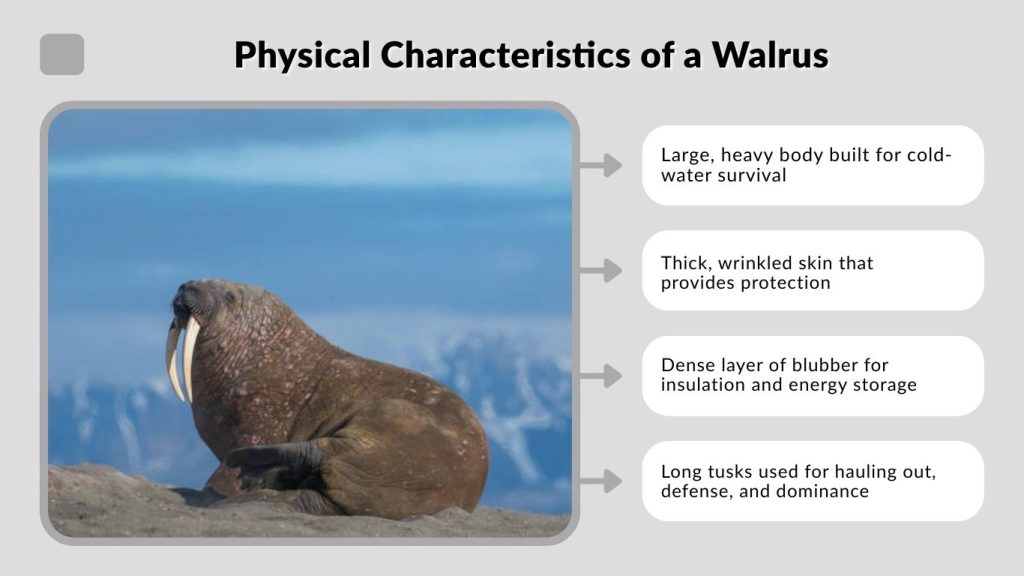
Walruses have a powerful and distinctive appearance shaped by life in the harsh Arctic environment. Their large bodies, thick skin, and unique features help them survive freezing temperatures, long swims, and deep dives. Each physical trait plays an important role in feeding, protection, and movement on ice and in water.
Key Physical Characteristics of a Walrus:
- Large, heavy body built for cold-water survival
- Thick, wrinkled skin that provides protection
- Dense layer of blubber for insulation and energy storage
- Long tusks used for hauling out, defense, and dominance
- Stiff, highly sensitive whiskers for locating food
- Broad flippers adapted for swimming and ice movement
- Small eyes and ears that reduce heat loss
What Do Walruses Eat?
Primary Diet
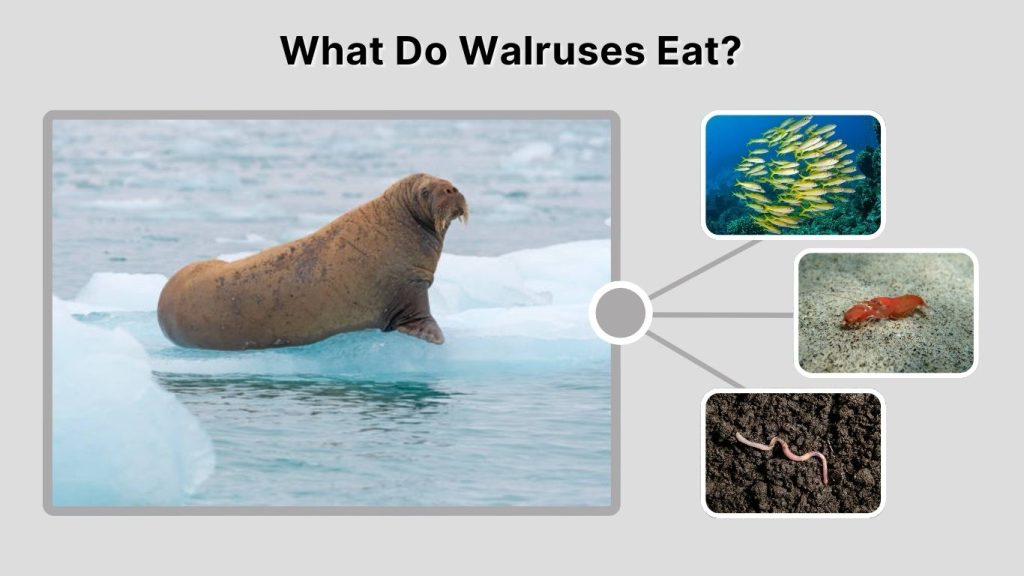
Walruses are bottom feeders, meaning they search for food along the seafloor. Their diet mainly consists of clams, mussels, snails, and other soft-bodied organisms. A single walrus can consume thousands of clams in one feeding session.
Although clams are their preferred food, walruses may occasionally eat worms, shrimp, or small fish if necessary.
How Walruses Find and Eat Food
Walruses use their sensitive whiskers to locate prey buried in the sediment. Once they find a clam, they use a powerful suction technique to remove the meat from the shell. This method allows them to feed efficiently without breaking the shells.
Walrus Behavior and Social Structure
Group Living and Social Bonds
Walruses are highly social animals and are rarely seen alone. They often gather in large groups, known as herds, on sea ice or coastal land. These groups can range from a few individuals to several thousand walruses resting closely together. Living in groups provides safety from predators and helps conserve body heat in cold environments.
Social structure among walruses is influenced by age and sex. Adult males often compete for dominance during the breeding season, while females and calves usually form separate groups. Despite their massive size, walruses are generally calm animals, though crowding can sometimes lead to aggressive behavior.
Communication and Sounds
Walruses communicate using a wide range of sounds, both above and below water. These include grunts, clicks, whistles, and bell-like tones. Underwater vocalizations are especially important during the breeding season, when males produce complex sounds to attract females.
Physical gestures also play a role in communication. Body posture, tusk displays, and movement patterns help walruses express dominance or submission within a group.
Walrus Reproduction and Lifespan
Mating and Breeding
Walrus breeding typically occurs during late winter and early spring. Males compete for access to females through vocal displays and physical presence rather than violent fighting. After mating, females experience delayed implantation, meaning the fertilized egg does not immediately develop.
This adaptation allows the calf to be born at a time when environmental conditions are more favorable. Actual pregnancy lasts about 15 months, including the delay.
Calves and Parental Care
Walrus calves are usually born on sea ice and weigh around 60 kilograms (130 pounds) at birth. They are able to swim shortly after birth and rely heavily on their mothers for warmth, protection, and nourishment.
Mothers nurse their calves with rich, high-fat milk, helping them build a thick blubber layer quickly. The bond between mother and calf is strong, and calves may stay with their mothers for several years while learning essential survival skills.
Average Lifespan
In the wild, walruses can live between 30 and 40 years. Lifespan depends on factors such as food availability, environmental conditions, and human impact. Older walruses often show worn tusks and scars, signs of a long life in a challenging habitat.
Walrus vs Seal: What’s the Difference?
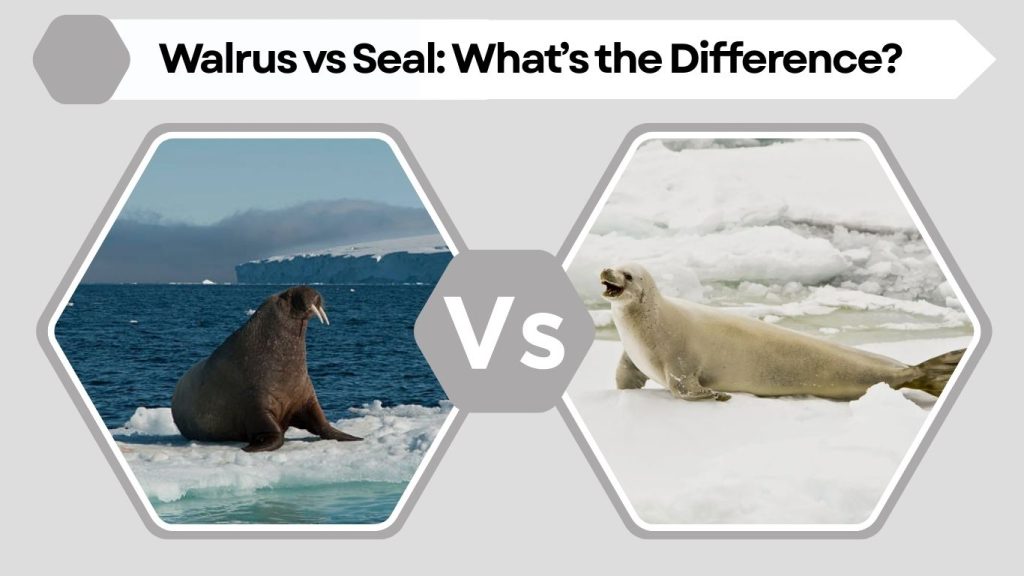
Walruses and seals both belong to the pinniped family and share similar marine lifestyles, but they differ greatly in size, appearance, behavior, and diet. Walruses are much larger and are easily recognized by their long tusks and thick whiskers, while seals are generally smaller, more streamlined, and lack tusks. These differences reflect how each animal has adapted to its specific role in marine ecosystems.
Walrus vs Seal Comparison Table
| Feature | Walrus | Seal |
| Average Size | Very large; up to 3.5 m long | Smaller; varies by species |
| Weight | Up to 1,500 kg (3,300 lbs) | Usually under 400 kg |
| Tusks | Long, visible tusks | No tusks |
| Whiskers | Thick and highly sensitive | Shorter and less stiff |
| Skin and Blubber | Extremely thick skin and blubber | Thinner skin and blubber |
| Primary Diet | Clams, mollusks, bottom-dwelling prey | Fish, squid, crustaceans |
| Feeding Method | Suction feeding on seafloor | Active hunting and chasing |
| Habitat | Arctic and subarctic regions | Polar, temperate, and coastal waters |
| Social Behavior | Highly social; large herds | Often solitary or small groups |
| Movement on Land | Slow and heavy | More agile and flexible |
| Lifespan | 30–40 years | 20–30 years (varies by species) |
Threats Facing Walruses Today
Climate Change and Ice Loss
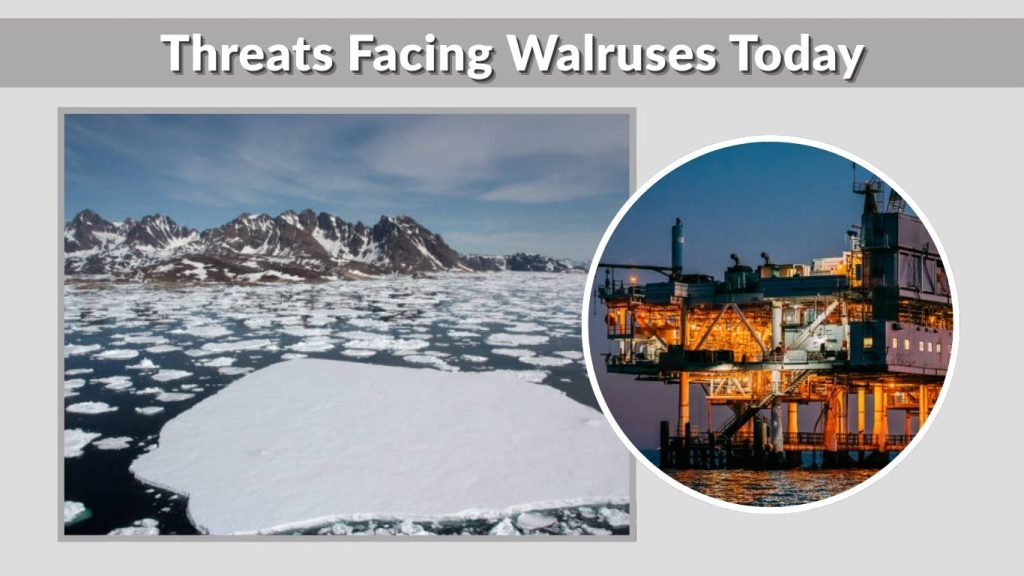
One of the greatest threats to walruses is climate change. Rising global temperatures are causing Arctic sea ice to melt at an alarming rate. With less ice available, walruses are forced to travel longer distances to find resting areas and food.
Large groups hauling out on land due to ice loss can lead to overcrowding and stampedes, particularly endangering young calves. These changes place significant stress on walrus populations.
Human Activity
Human activities such as increased shipping, oil exploration, and industrial noise also affect walruses. Disturbances can disrupt feeding and resting behavior. In the past, walruses were heavily hunted for their tusks, meat, and blubber, leading to population declines.
Although hunting is now regulated, human presence in the Arctic continues to pose challenges.
Conservation Status and Protection Efforts
Walruses are currently protected under various international and national conservation laws. Many Arctic nations have implemented regulations to limit hunting and protect key habitats. Indigenous communities are often involved in sustainable management practices that balance cultural traditions with conservation.
Protecting sea ice habitats and reducing environmental damage are essential for the long-term survival of walruses.
Conclusion
The walrus is a remarkable marine mammal uniquely adapted to life in the Arctic. From its massive size and powerful tusks to its social behavior and specialized feeding techniques, the walrus plays a vital role in polar ecosystems. However, climate change and human activities continue to threaten its survival. Understanding and protecting this iconic species is crucial to preserving the fragile Arctic environment for future generations.
FAQs
Why do walruses have tusks?
Walruses use their tusks for several important purposes. Tusks help them pull their heavy bodies onto sea ice, establish dominance during social interactions, and defend themselves from predators. Tusks may also be used to stir the seafloor while searching for food.
How big can a walrus get?
An adult walrus can grow up to 3.5 meters (11 feet) long and weigh more than 1,500 kilograms (3,300 pounds). Males are generally larger than females. Their massive size helps them stay warm in cold Arctic waters and provides protection from natural predators.
What do walruses eat the most?
Walruses primarily feed on clams and other bottom-dwelling mollusks. Using their sensitive whiskers, they locate prey buried in the sediment and extract the soft meat using a powerful suction technique. A single walrus can eat thousands of clams in one day.
Are walruses dangerous to humans?
Walruses are usually calm and non-aggressive animals, but they can become dangerous if threatened or startled. Their size, strength, and long tusks make them capable of causing serious injury. Most incidents occur when humans get too close or disturb resting walruses.