




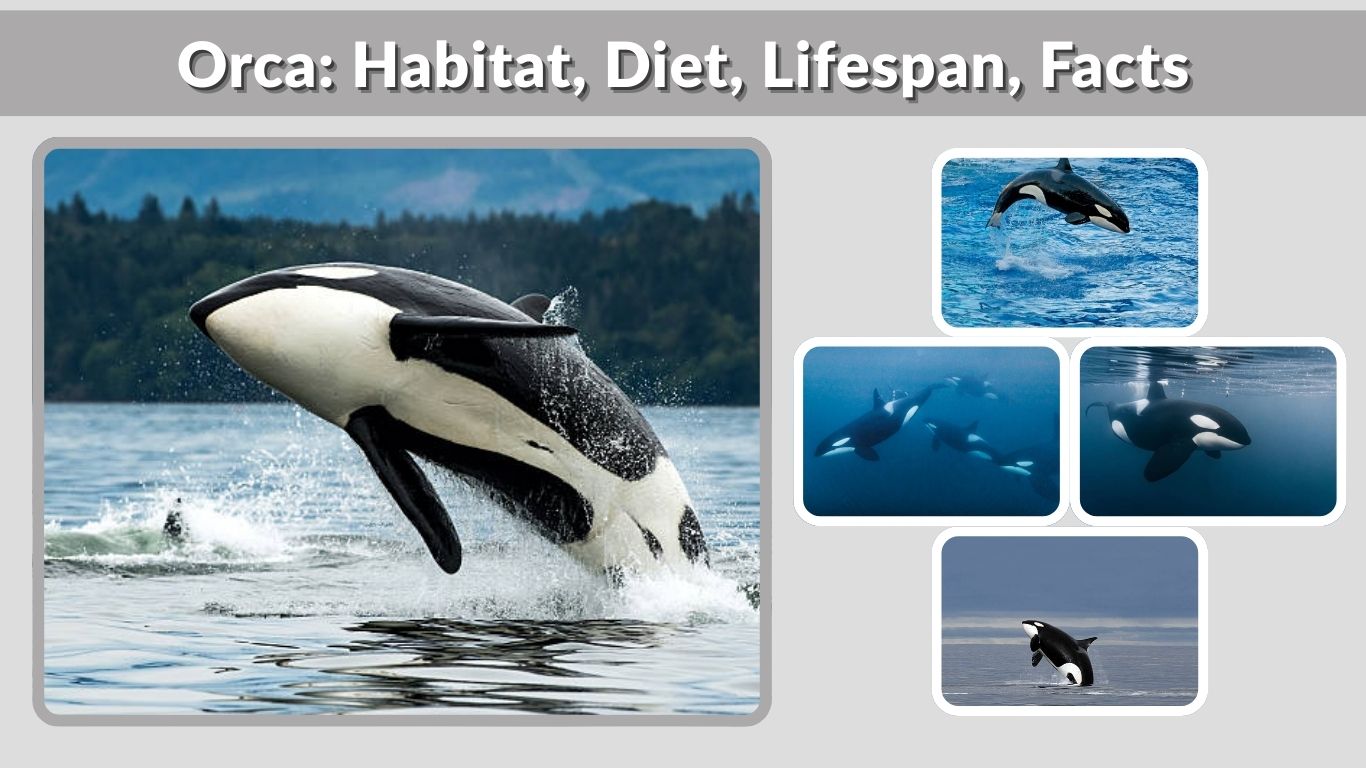
Orcas, also known as killer whales, are among the most powerful and intelligent marine predators on Earth. Recognizable by their striking black-and-white coloration and tall dorsal fins, these ocean mammals are found in every major ocean. Despite their name, orcas are actually the largest members of the dolphin family. From their complex social structure to their advanced hunting techniques, orcas are fascinating animals. In this guide, you’ll learn about orca habitat, diet, lifespan, and key facts.
What Is an Orca?
The orca (Orcinus orca) is a marine mammal that belongs to the dolphin family, Delphinidae. Although commonly called “killer whales,” they are technically dolphins. The name “killer whale” likely originated from the term “whale killer,” given by sailors who observed orcas hunting large whales.
Orcas are apex predators, meaning they sit at the very top of the marine food chain. They have no natural predators and are known for their intelligence, cooperation, and adaptability. Their ability to hunt in coordinated groups and target a wide range of prey makes them one of the most successful predators in the ocean.
Orca Identification Guide
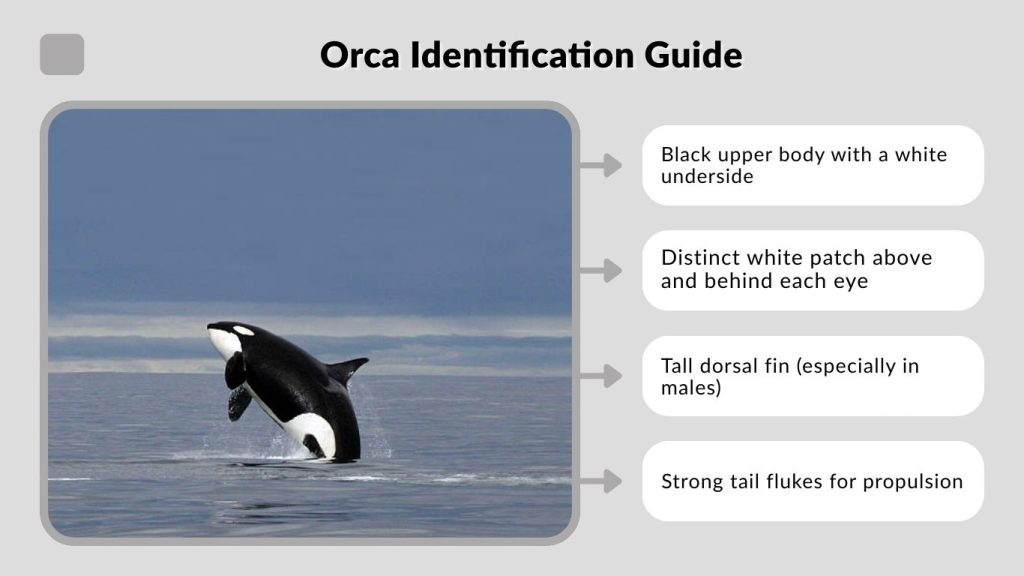
Orcas are easy to recognize thanks to their bold coloration and large size.
Physical Characteristics
Orcas have a sleek, streamlined body built for speed and power. Their most recognizable features include:
- Black upper body with a white underside
- Distinct white patch above and behind each eye
- Tall dorsal fin (especially in males)
- Strong tail flukes for propulsion
Male orcas can have dorsal fins reaching up to 6 feet tall, while females have shorter, curved fins. Their powerful bodies allow them to swim at speeds of up to 30 miles per hour in short bursts.
Size and Weight
Orcas are among the largest marine mammals after the great whales. Adults typically measure between 20 and 32 feet long.
Weight varies by sex:
- Males: 8,000 to 12,000 pounds
- Females: 6,000 to 8,000 pounds
Males are generally larger and heavier than females, with broader dorsal fins and more robust builds.
Types of Orcas (Ecotypes)
Not all orcas are the same. Scientists recognize different ecotypes based on diet, behavior, and habitat.
- Resident orcas primarily eat fish, especially salmon.
- Transient (Bigg’s) orcas hunt marine mammals like seals and sea lions.
- Offshore orcas are less understood but are believed to eat fish and sharks.
Each ecotype has distinct hunting strategies and social behaviors, showing how adaptable these animals are across different environments.
Where Do Orcas Live?
Orcas are one of the most widely distributed marine mammals on Earth.
Global Distribution
Orcas can be found in:
- The Arctic Ocean
- The Antarctic Ocean
- The Pacific Ocean
- The Atlantic Ocean
- The Indian Ocean
They inhabit both polar and tropical waters, though they are most commonly seen in cooler coastal regions where prey is abundant.
Orca Habitat Preferences
Orca habitat varies depending on the ecotype. Some prefer coastal waters near shorelines, while others live in deep offshore ocean environments.
Coastal populations often stay near areas with large fish runs or seal colonies. Offshore populations may travel farther from land in open ocean waters.
Migration and Movement
Some orca populations are migratory, following seasonal prey movements. Others remain resident in a specific region year-round.
For example, resident orcas in the Pacific Northwest tend to stay within a defined territory, while transient orcas roam widely in search of marine mammals.
Their movement patterns are strongly tied to food availability and environmental conditions.
Orca Diet Explained
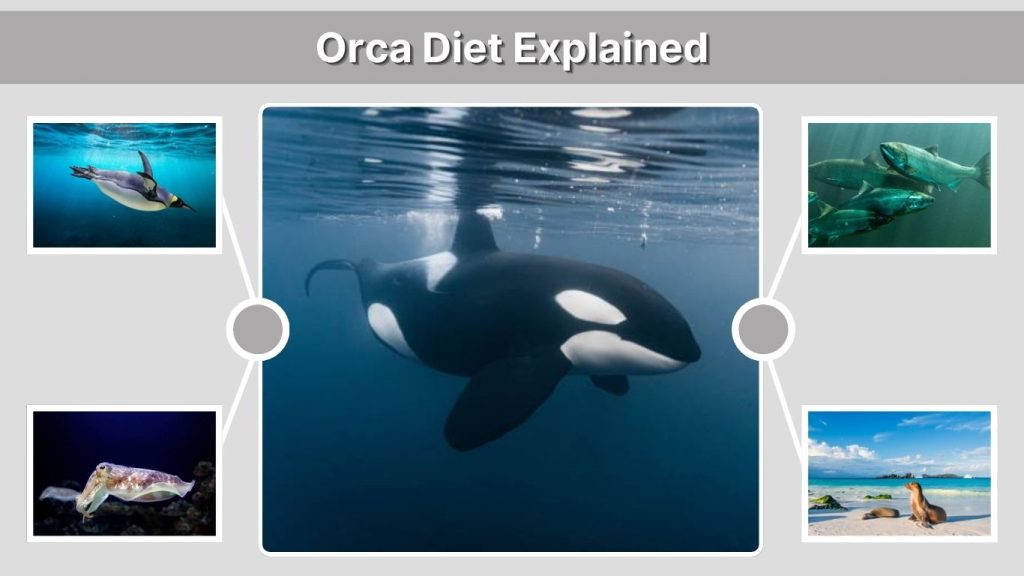
Orcas have one of the most diverse diets of any marine predator.
What Do Orcas Eat?
The orca diet depends largely on the ecotype, but it can include:
- Fish (salmon, herring, tuna)
- Seals and sea lions
- Penguins
- Squid
- Sharks
- Even large whales
Transient orcas have been documented hunting great white sharks and even young whales. Their diet flexibility allows them to thrive in many different marine ecosystems.
Hunting Techniques
Orcas are known for their highly intelligent and cooperative hunting strategies. They often work together in pods to capture prey.
Some remarkable techniques include:
- Creating waves to knock seals off ice floes
- Tail-slapping fish to stun them
- Surrounding schools of fish to trap them
- Flipping sharks upside down to induce temporary paralysis
These advanced methods demonstrate their problem-solving abilities and teamwork.
Apex Predator Status
As apex predators, orcas have no natural enemies. Their dominance influences marine ecosystems by regulating prey populations.
Because they sit at the top of the food chain, changes in prey availability or environmental conditions can directly affect their survival.
Orca Lifespan and Reproduction
Orcas are long-lived marine mammals with complex family structures and slow reproduction rates. Their lifespan varies significantly between males and females.
Orca Lifespan
Female orcas typically live much longer than males. On average:
- Females live between 50 and 90 years.
- Males usually live between 30 and 50 years.
One remarkable trait of female orcas is their long post-reproductive lifespan. After menopause, older females often take on leadership roles within the pod, guiding younger members and helping locate food.
Scientists estimate age by examining teeth growth layers, similar to counting rings in a tree.
Reproduction and Calves
Orcas have a gestation period of about 15 to 18 months, one of the longest among marine mammals. Females usually give birth to a single calf every 3 to 10 years.
Newborn calves are about 7 to 8 feet long and weigh roughly 300 to 400 pounds. They nurse for up to two years and remain closely bonded with their mothers for life.
Social Structure
Orcas live in tight-knit family groups called pods. These pods are often led by an older female, known as the matriarch. Family bonds are extremely strong, and individuals typically remain with their mothers throughout their lives.
Each pod has its own vocal dialect and hunting traditions, which are passed down through generations. This cultural behavior is rare in the animal kingdom and highlights their high intelligence.
Orca vs Shark: Who Would Win?
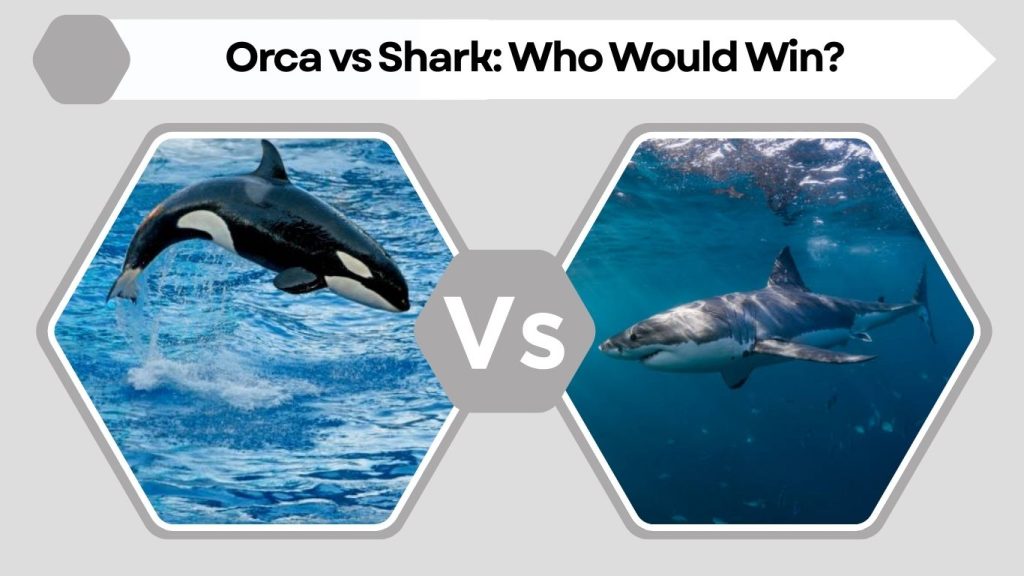
The question of orca vs shark often sparks debate, especially when comparing orcas to great white sharks.
Size and Strength Comparison
A large male orca can reach up to 32 feet long and weigh over 10,000 pounds. In comparison, a great white shark typically measures around 15 to 20 feet and weighs up to 5,000 pounds.
Orcas generally have a clear size and strength advantage.
Intelligence and Strategy
While sharks rely heavily on instinct and powerful bite force, orcas combine strength with teamwork and advanced hunting strategies. Orcas often hunt in coordinated groups, increasing their success rate.
Real-World Encounters
There have been documented cases of orcas hunting and killing great white sharks. In some instances, orcas have flipped sharks upside down, inducing a state called tonic immobility that temporarily paralyzes the shark.
These real-world observations suggest that in most encounters, the orca would likely dominate.
Fascinating Orca Facts
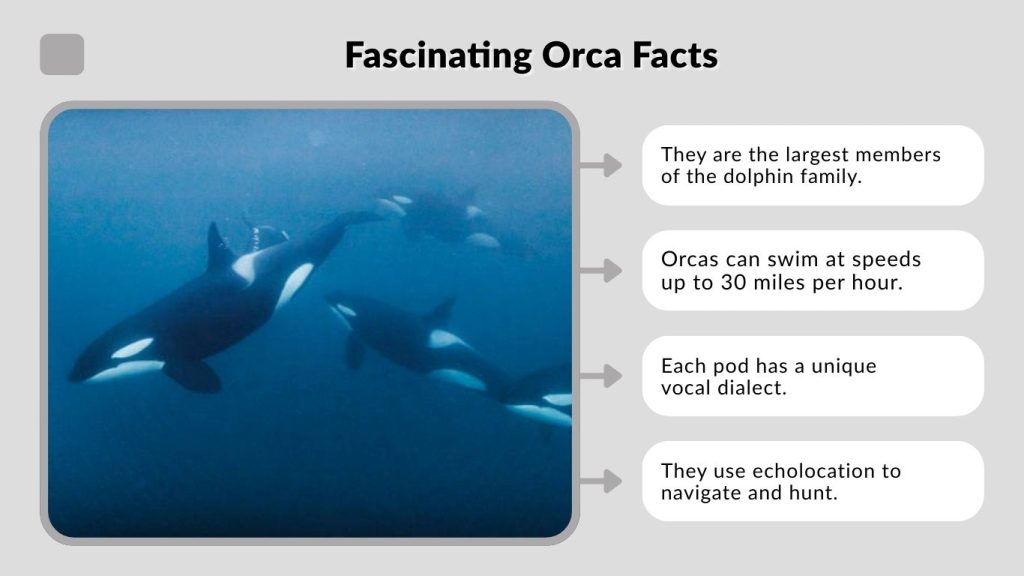
Orcas are among the most studied marine mammals due to their intelligence and behavior.
- They are the largest members of the dolphin family.
- Orcas can swim at speeds up to 30 miles per hour.
- Each pod has a unique vocal dialect.
- They use echolocation to navigate and hunt.
- Orcas are found in every ocean on Earth.
Their ability to adapt to different environments and prey types makes them one of the most versatile predators in the sea.
Are Orcas Dangerous to Humans?
In the wild, there are no confirmed fatal attacks on humans by orcas. They generally show curiosity rather than aggression toward people.
However, there have been incidents involving captive orcas in marine parks. These situations are believed to result from stress and unnatural living conditions rather than typical wild behavior.
Overall, wild orcas are not considered a threat to humans.
Conservation and Threats
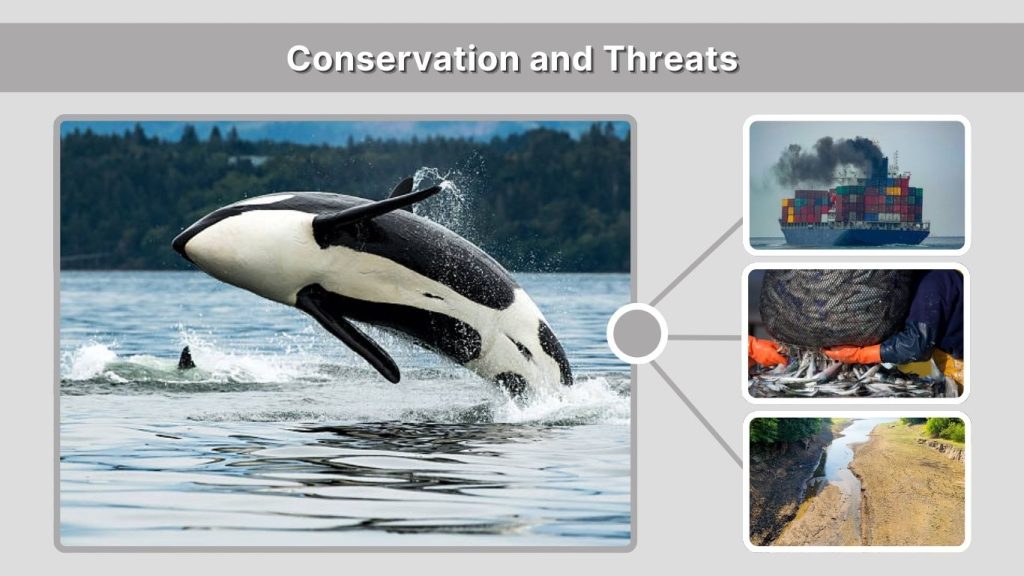
Although orcas are powerful predators, they still face environmental threats.
Major challenges include:
- Pollution – Toxins accumulate in their blubber through bioaccumulation.
- Declining prey populations – Overfishing reduces food sources.
- Noise pollution – Ship traffic interferes with echolocation and communication.
- Climate change – Alters prey distribution and habitat conditions.
Some populations, such as certain resident orcas in the Pacific Northwest, are considered endangered. Conservation efforts focus on habitat protection, reducing pollution, and restoring prey species.
FAQs
What do orcas eat?
Orcas eat a wide range of prey, including fish, seals, sea lions, penguins, squid, sharks, and even other whales. Their diet depends on their ecotype and geographic location.
Where do orcas live?
Orcas live in every ocean worldwide, from polar regions to tropical waters. They are commonly found in coastal areas with abundant prey but also inhabit deep offshore waters.
How long do orcas live?
Female orcas typically live between 50 and 90 years, while males usually live between 30 and 50 years. Females often live decades beyond their reproductive years.
Are orcas whales or dolphins?
Orcas are dolphins. They are the largest members of the dolphin family, Delphinidae, even though they are commonly called killer whales.
Who would win in an orca vs shark fight?
In most documented encounters, orcas have dominated sharks due to their larger size, intelligence, and cooperative hunting strategies.