



The macaroni penguin is one of the most striking and colorful penguin species in the Southern Ocean. Instantly recognizable by its bright yellow-orange crest feathers, this energetic seabird stands out among its black-and-white relatives. As the largest of the crested penguins, the macaroni penguin thrives on remote subantarctic islands where massive colonies gather each breeding season. In this guide, we’ll explore macaroni penguin facts, habitat, behavior, diet, and early life stages.
What Is a Macaroni Penguin?
The macaroni penguin (Eudyptes chrysolophus) belongs to the crested penguin family. It is the largest species within this group and one of the most numerous penguins in the world.
The unusual name “macaroni” dates back to the 18th century. At the time, “macaroni” referred to fashionable men in Britain who wore extravagant clothing. Early explorers thought the penguin’s bold yellow crest resembled these flashy styles, and the name stuck.
Distinct Physical Features
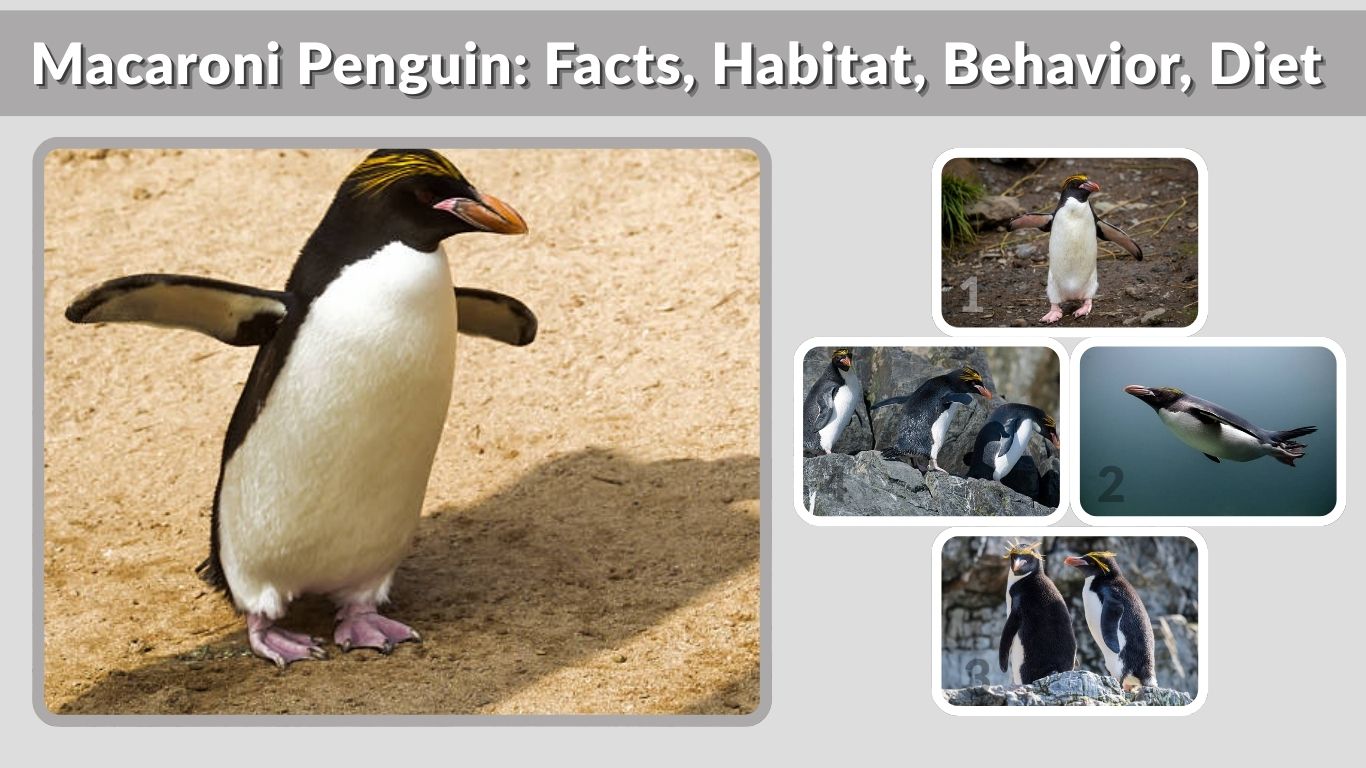
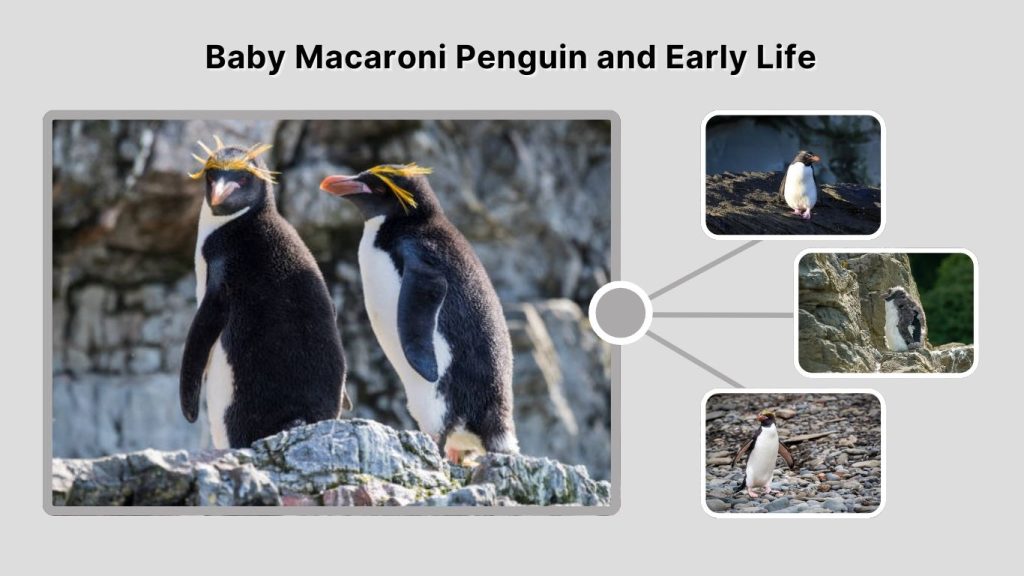
Macaroni penguins are easy to identify thanks to their dramatic appearance:
- Long, bright yellow-orange crest feathers that sweep backward from the forehead
- Red eyes
- Strong orange-brown beak
- Black head and back with a white belly
Their bodies are compact and streamlined, built for efficient swimming and diving. While they may appear awkward on land, they are powerful and agile underwater.
Size and Weight
Macaroni penguins typically stand about 28 inches (70 cm) tall. Adults generally weigh between 10 and 14 pounds (4.5–6.5 kg), although weight can vary depending on the season.
During breeding and molting periods, adults may lose weight because they spend extended time on land without feeding. Despite not being the tallest penguin species, macaroni penguins are sturdy and well-adapted to harsh coastal conditions.
Where Do Macaroni Penguins Live?
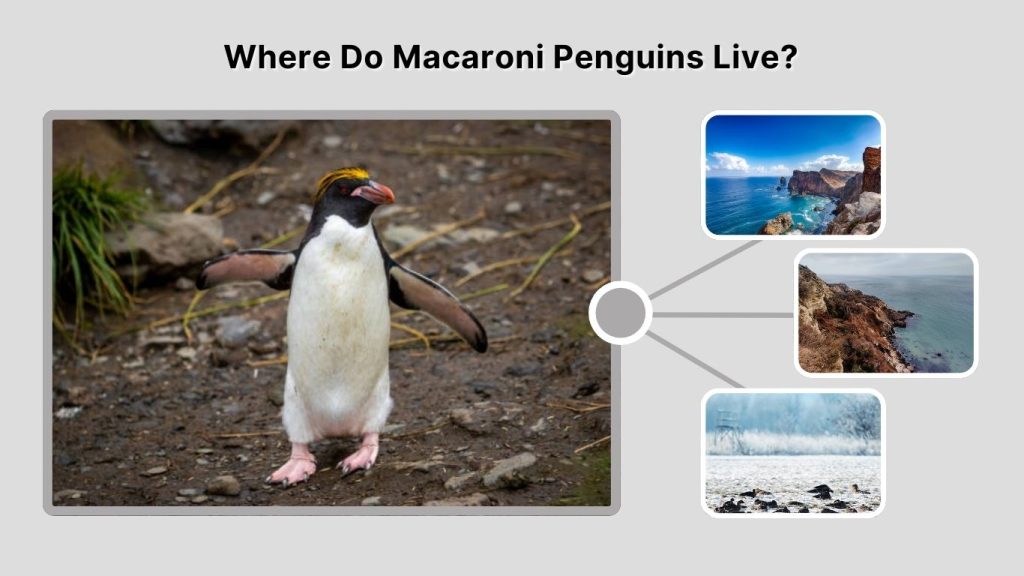
Macaroni penguins live in the Southern Ocean, primarily on subantarctic islands. They rarely inhabit the Antarctic mainland itself.
Macaroni Penguin Habitat
Their preferred habitat includes:
- Rocky coastal cliffs
- Steep slopes near the sea
- Ice-free breeding grounds
They nest in densely packed colonies on rugged terrain, often far from human disturbance. Access to open ocean waters is essential because they rely entirely on marine food sources.
Geographic Range
Major breeding populations are found on:
- South Georgia
- Falkland Islands
- Crozet Islands
- Kerguelen Islands
- South Sandwich Islands
These islands provide suitable nesting terrain and proximity to krill-rich waters.
Seasonal Movement
Macaroni penguins follow a seasonal pattern. During the breeding season (typically October to March), they gather in large colonies on land.
After breeding and molting, they spend the winter months at sea. During this time, they travel and forage across wide areas of the Southern Ocean until it is time to return to their nesting grounds.
Fascinating Macaroni Penguin Facts
Macaroni penguins are believed to number in the millions, making them one of the most abundant penguin species globally.
They are extremely social and live in some of the densest penguin colonies in the world. These colonies can be loud, crowded, and full of constant movement.
Despite their relatively small size compared to emperor penguins, macaroni penguins are capable divers. They can dive to considerable depths in search of prey, often staying underwater for several minutes at a time.
Their bright crest feathers play a role in courtship displays and species recognition. During breeding season, males perform head-swinging displays while vocalizing loudly to attract mates and strengthen pair bonds.
Macaroni Penguin Behavior
Macaroni penguins are highly social birds, but they can also be territorial, especially during nesting season.
Courtship Displays
Courtship involves dramatic visual and vocal performances. Males throw their heads back, wave their crests, and produce loud braying calls. These displays help attract females and reinforce pair bonds.
Once paired, many macaroni penguins reunite with the same mate each breeding season.
Territorial Interactions
Because colonies are so crowded, disputes over nesting space are common. Penguins may peck, flap their flippers, or vocalize aggressively to defend their territory.
Competition for nesting spots and small stones can lead to frequent confrontations, but these conflicts are usually brief.
Molting Behavior
Like all penguins, macaroni penguins undergo an annual molt. During this period, they shed old feathers and grow new waterproof ones.
Molting requires significant energy, so penguins must remain on land and fast for several weeks. They cannot enter the water until their new feathers are fully developed.
Macaroni Penguin Diet and Feeding Habits
Macaroni penguins are carnivorous seabirds that rely entirely on marine prey.
What Do Macaroni Penguins Eat?
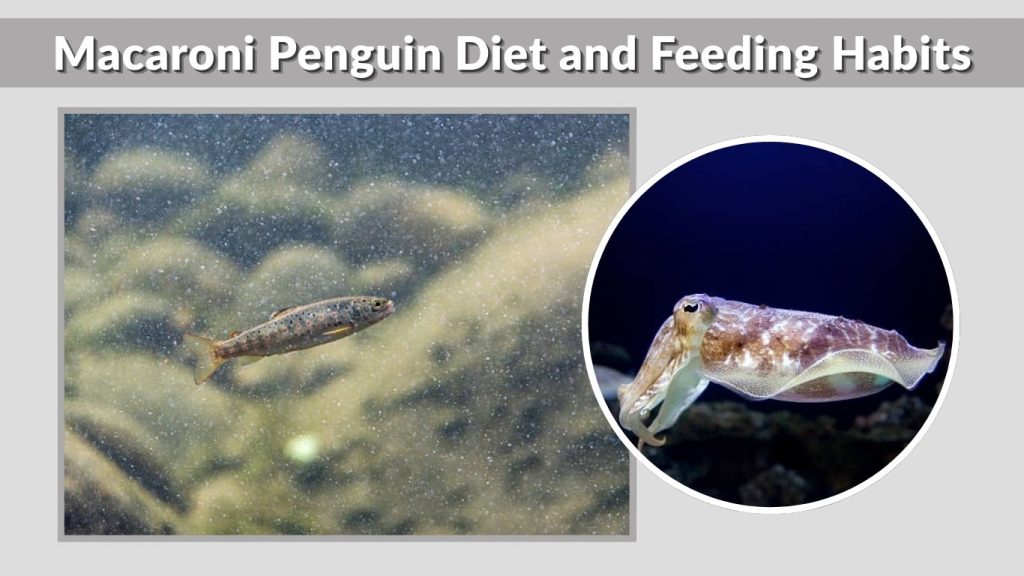
Their primary food source is Antarctic krill, which makes up the majority of their diet.
They also consume:
- Small fish
- Squid
Krill is especially important because it is abundant and energy-rich, supporting large populations of macaroni penguins.
Hunting Techniques
Macaroni penguins are strong swimmers and capable divers. They propel themselves underwater using powerful flippers, steering with precision as they chase prey.
They may forage alone or in groups, diving repeatedly during feeding trips. During breeding season, adults make frequent trips to sea to gather food for their chicks.
Macaroni Penguin Eggs and Reproduction
Macaroni penguins breed during the Southern Hemisphere spring and summer, usually between October and March. When breeding season begins, adults return to the same colonies year after year, often reuniting with previous mates.
Nest Building
Unlike some penguin species that carefully build raised pebble nests, macaroni penguins create relatively simple nests. These are usually shallow scrapes in the ground lined with small stones, mud, or bits of vegetation.
Because colonies are crowded, space is limited. Penguins often defend their nesting spots aggressively to prevent neighbors from encroaching.
Macaroni Penguin Eggs
A female macaroni penguin typically lays two eggs, but they are noticeably different in size. The first egg is much smaller and rarely survives. The second, larger egg is the one that is most likely to hatch successfully.
Incubation lasts about 33 to 37 days. Both parents share incubation duties, taking turns keeping the egg warm while the other forages at sea.
This unequal egg size is unusual among birds and is one of the most interesting reproductive traits of macaroni penguins.
Parental Roles
Once the chick hatches, the male usually guards it while the female makes extended feeding trips. Later, both parents share feeding responsibilities.
Adults feed their chicks by regurgitating partially digested krill, fish, or squid. Frequent feeding is essential during the early weeks of rapid growth.
Baby Macaroni Penguin and Early Life
Chick Appearance
A baby macaroni penguin is covered in thick gray-brown down feathers. Unlike adults, chicks do not yet have the bright yellow crest.
These fluffy feathers provide insulation but are not waterproof, so chicks must remain on land until they develop juvenile plumage.
Growth and Crèche Stage
In the first few weeks, chicks depend entirely on parental warmth and protection. Soon after, they begin forming groups known as crèches.
Crèches offer safety in numbers. While chicks cluster together for warmth and protection from predators like skuas, both parents can forage at sea.
During this period, chicks grow rapidly and build fat reserves needed for survival at sea.
Fledging and First Ocean Journey
After several weeks, chicks molt their down feathers and develop waterproof juvenile plumage. This transformation allows them to enter the ocean for the first time.
Once fledged, young macaroni penguins leave the colony and begin life at sea, where they will spend most of the year.
Macaroni Penguin Life Cycle
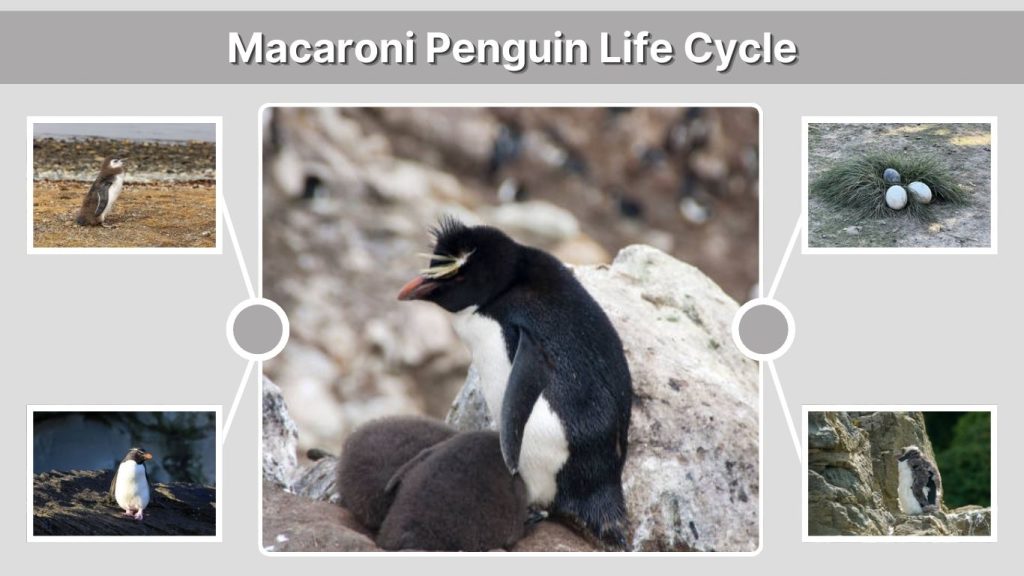
The life cycle of a macaroni penguin includes several distinct stages shaped by the Southern Ocean environment.
Egg Stage
The cycle begins with egg laying and incubation. As mentioned, usually only one chick is successfully raised due to the size difference between eggs.
Chick Stage
Chicks remain dependent on their parents for food and protection during the early weeks. Rapid growth prepares them for independence.
Juvenile Stage
After fledging, juveniles head to sea and spend several years maturing. They learn to hunt effectively and avoid predators.
Adult Stage
Macaroni penguins typically reach breeding maturity at around 5 years of age. Adults return to land each breeding season, often nesting in the same area as previous years.
This cycle repeats annually, with adults balancing time between breeding on land and feeding at sea.
Macaroni Penguin Lifespan and Survival
Macaroni penguins generally live 15 to 20 years in the wild, though some individuals may survive longer under favorable conditions.
Natural Predators
Like other penguin species, macaroni penguins face predators both in the water and on land:
- Leopard seals
- Orcas (killer whales)
- Skuas that prey on eggs and chicks
Living in large colonies provides some protection, but young chicks remain vulnerable.
Environmental Threats
One of the greatest threats to macaroni penguins is climate change. Because they rely heavily on Antarctic krill, any decline in krill populations can significantly affect breeding success and survival.
Changes in ocean temperatures and commercial krill fishing may reduce food availability. Pollution and habitat disturbance also pose additional risks.
For these reasons, macaroni penguins are closely monitored by scientists as indicators of ecosystem health in the Southern Ocean.
Conclusion
The macaroni penguin is a vibrant and resilient seabird known for its bright crest, energetic behavior, and massive breeding colonies. Living on remote subantarctic islands, these penguins depend on krill-rich waters and stable marine ecosystems for survival.
From their unusual egg-laying pattern to their dramatic courtship displays, macaroni penguins display fascinating adaptations to life in harsh coastal environments. Understanding their habitat, diet, life cycle, and lifespan helps highlight the importance of protecting the fragile Southern Ocean ecosystems they call home.