
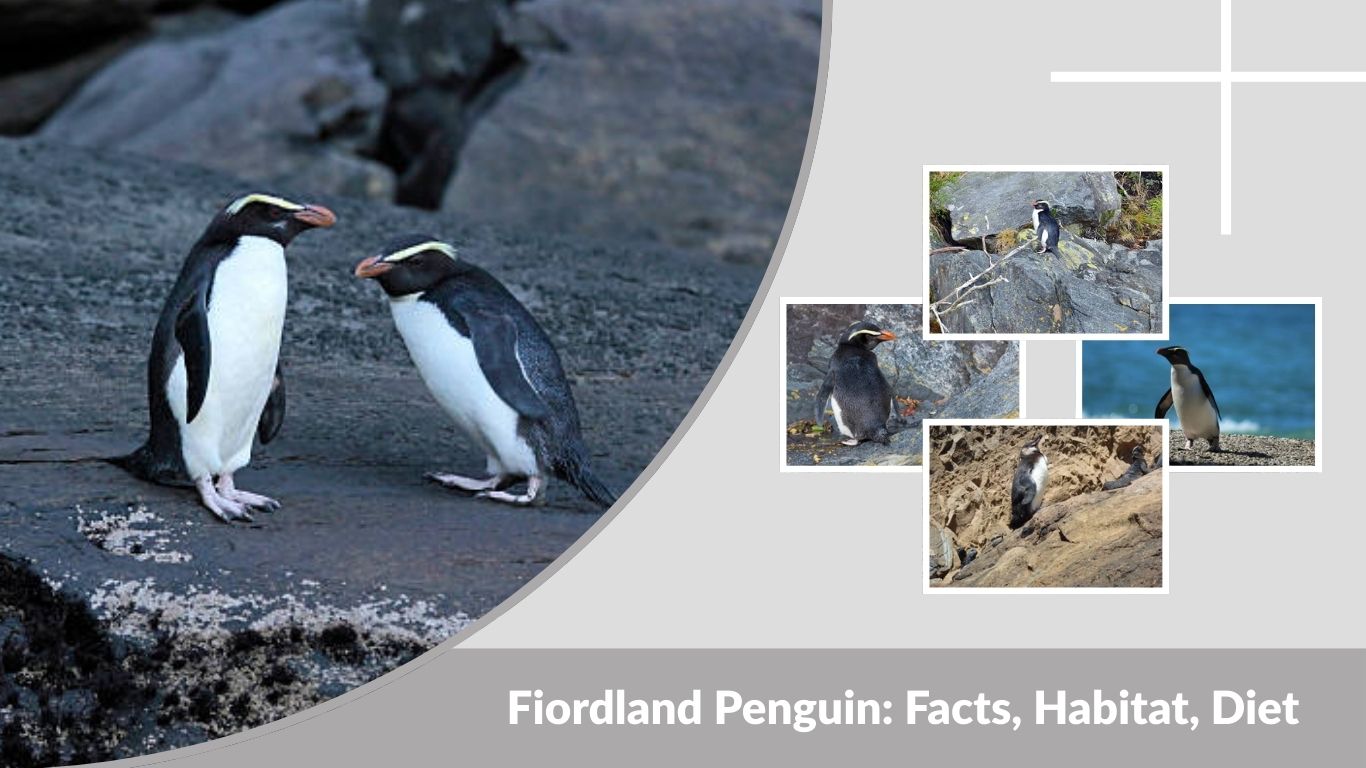
The Fiordland penguin (Eudyptes pachyrhynchus), also known as the Fiordland crested penguin, is one of the rarest and most secretive penguin species in the world. Native to New Zealand, this striking bird is recognized for its bold yellow crest and thick orange bill. Unlike many penguins that nest on open beaches, Fiordland penguins prefer dense coastal forests and remote rocky shores. From their unique habitat to their specialized diet, these penguins are truly fascinating.
What Is a Fiordland Penguin?
The Fiordland penguin is a medium-sized crested penguin species belonging to the family Spheniscidae. Its scientific name, Eudyptes pachyrhynchus, reflects its strong, thick bill—one of its defining features. It is closely related to other crested penguins, such as the Snares and royal penguins, but has several unique traits that set it apart.
This species typically stands about 55 to 60 centimeters tall and weighs between 2.5 and 4 kilograms, depending on the season and food availability. Like other penguins, it has a streamlined body designed for swimming rather than flying. Its dark blue-black upperparts contrast sharply with its white underbelly, creating the classic penguin appearance.
Fiordland penguins are known for being shy and difficult to spot. They tend to avoid human activity and often return to land under the cover of darkness. This secretive behavior has helped them survive in remote coastal regions but also makes them less studied compared to other penguin species.
Fiordland Penguin Facts
Physical Characteristics
One of the most recognizable Fiordland penguin facts is its bright yellow crest. Thick yellow eyebrow-like stripes begin at the base of the bill and extend backward past the eyes. These crests give the species its “crested penguin” name.
Their strong orange bill is broader and heavier than that of many other penguin species. This thick bill helps them catch slippery prey in the ocean. Their eyes are reddish-brown, adding to their striking appearance.
Like all penguins, Fiordland penguins have powerful flippers that allow them to “fly” underwater. Their bodies are covered in dense, waterproof feathers that keep them warm in cold waters. Beneath these feathers lies a layer of fat that provides insulation against chilly ocean temperatures.
Behavior and Social Traits
Fiordland penguins are more reserved than many other penguin species. Instead of forming massive open colonies, they nest in smaller, scattered groups hidden within forested areas or rocky coastlines. This behavior reduces visibility to predators and limits disturbance.
They are strong swimmers and spend much of their lives at sea. During the day, they forage for food in offshore waters, often traveling several kilometers from the coast. At night, they return quietly to their nests.
Pairs form strong bonds during breeding season. Like many penguins, they recognize their mates and chicks through unique vocal calls. Despite their shy nature, their colonies can still be noisy when adults and chicks communicate.
Breeding and Reproduction
The breeding season for Fiordland penguins generally begins in July and can extend into November. Adults return to their nesting sites, often using the same location year after year. This behavior, known as site fidelity, is common among penguins.
They typically lay two eggs, but the first egg is usually smaller and less likely to survive. The second egg has a much higher chance of hatching successfully. Both parents take turns incubating the egg while the other forages at sea.
Once the chick hatches, it relies entirely on its parents for warmth and food. After several weeks, chicks begin to develop waterproof feathers, preparing them for life in the ocean. Parental care is critical during this early stage, as chicks are vulnerable to cold weather and predators.
Where Do Fiordland Crested Penguins Live?
Main Breeding Locations
When asking, “Where do Fiordland crested penguins live?” The answer is primarily along the southwestern coast of New Zealand’s South Island. The species is especially associated with Fiordland National Park, a rugged and remote region known for its dramatic cliffs, rainforests, and fjords.
They also breed on Stewart Island and the Solander Islands. These isolated areas provide protection from large-scale human disturbance. Because their breeding range is limited to New Zealand, the species is considered endemic to the country.
Marine Range Outside Breeding Season
Outside of breeding season, Fiordland penguins spend most of their time at sea. They disperse into the Tasman Sea and surrounding southern waters in search of food. During this time, they are rarely seen on land.
Their marine movements are not fully understood, but it is believed they travel significant distances offshore during winter months. The health of these ocean waters is essential for their survival, as it directly influences food availability.
Fiordland Penguin Habitat
Coastal Rainforest Environment
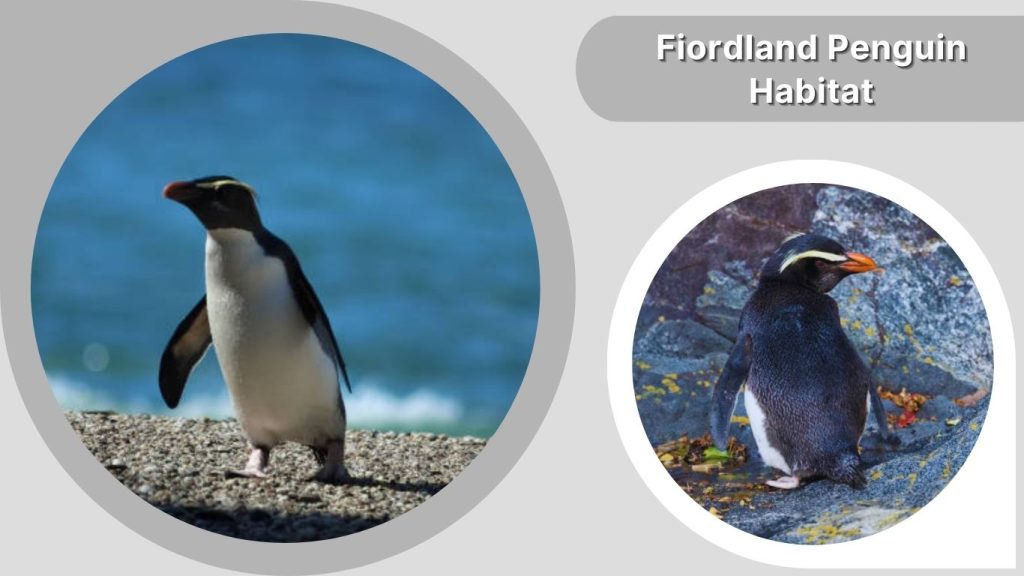
The Fiordland penguin habitat is very different from that of many other penguin species. Instead of nesting on open beaches or rocky cliffs, these penguins prefer dense temperate rainforests along New Zealand’s southwestern coastline. Thick vegetation provides natural cover and protection from predators and harsh weather.
Fiordland’s climate is cool, wet, and often windy. Heavy rainfall and misty conditions create a lush forest environment where penguins can hide beneath tree roots, fallen logs, and large rocks. This hidden nesting style helps reduce exposure to aerial predators and human disturbance.
The combination of forest shelter and nearby ocean access makes this habitat ideal for breeding and raising chicks.
Nesting Preferences
Fiordland penguins choose secluded nesting spots that are difficult to access. They often build nests in natural crevices, shallow burrows, or under dense vegetation. These nests are usually close to the shoreline so adults can travel efficiently between the ocean and their chicks.
Unlike species that gather in enormous open colonies, Fiordland penguins nest in smaller, scattered groups. This reduces competition for space and helps them remain less visible to predators such as dogs or stoats, which were introduced to New Zealand.
Their strong attachment to specific nesting sites means they often return to the same location year after year.
Environmental Conditions
The surrounding ocean is just as important as the land habitat. Nutrient-rich waters around New Zealand support diverse marine life, which forms the basis of the Fiordland penguin diet. Ocean currents influence prey availability and feeding success.
However, environmental changes such as warming sea temperatures or shifts in fish populations can directly affect breeding outcomes. Because their habitat is so specific and limited, Fiordland penguins are particularly sensitive to ecological changes.
What Do Fiordland Penguins Eat?
Primary Food Sources
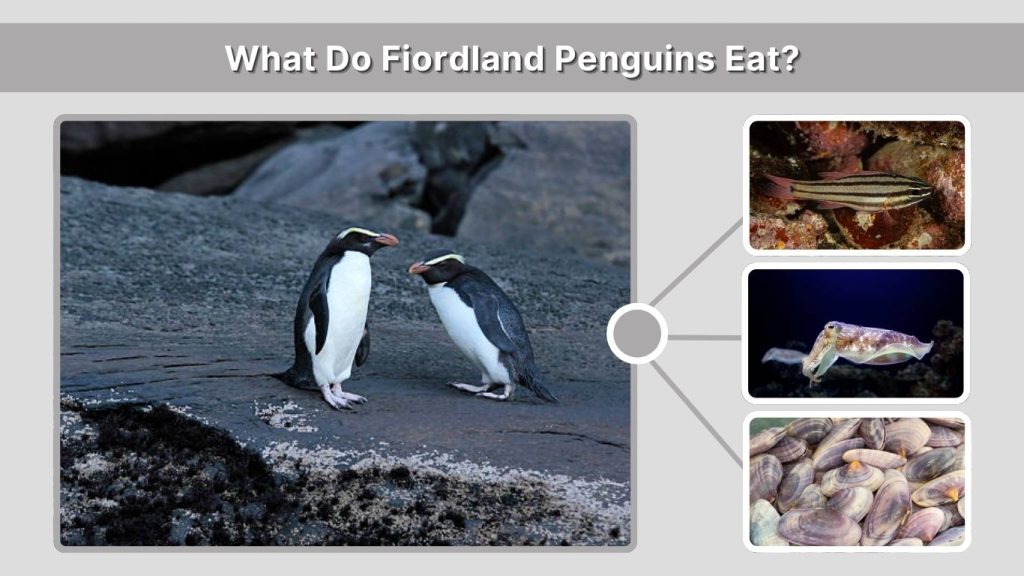
If you’re wondering, “What do Fiordland penguins eat?” Their diet mainly consists of small fish, squid, and crustaceans. Fish species such as anchovies and pilchards are common prey, along with arrow squid and krill-like organisms.
These foods provide the protein and energy needed to survive in cold ocean waters. During the breeding season, adults must gather enough food not only for themselves but also for their growing chicks.
The exact composition of their diet can vary depending on season and local ocean conditions.
Hunting and Diving Behavior
Fiordland penguins are agile underwater hunters. They use their strong flippers to propel themselves through the water and can dive to moderate depths in search of prey. Most dives are relatively short but repeated frequently throughout feeding trips.
They may forage alone or in small groups. While hunting, they rely on sharp eyesight to spot moving prey beneath the surface. Their thick, sturdy bill helps them grip slippery fish and squid.
During chick-rearing season, feeding trips become more frequent. Parents must balance time at sea with time guarding and feeding their young on land.
Seasonal Diet Changes
Outside the breeding season, Fiordland penguins spend extended periods offshore. During winter, they may travel farther from land, following prey movements in the Tasman Sea.
Seasonal shifts in ocean productivity influence what they eat and how far they must travel. In years when food is scarce, breeding success may decline because adults struggle to provide enough nourishment for their chicks.
Fiordland Penguin vs Other Crested Penguins
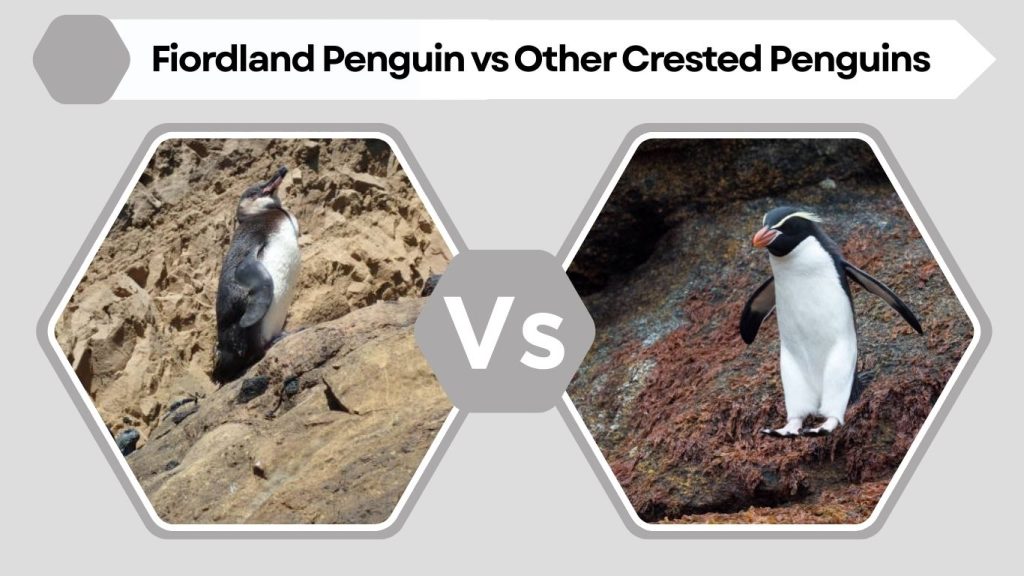
Fiordland penguins are often compared with other crested penguin species, such as the Snares penguin or royal penguin. While all share yellow crest feathers and similar body shapes, important differences exist.
The Fiordland penguin is smaller and more secretive than many of its relatives. It also nests in forested environments, unlike species that prefer open coastal colonies. Additionally, its population is smaller and more geographically restricted, making it more vulnerable to threats.
These distinctions highlight how unique the Fiordland penguin is among crested penguins.
Conservation Status of the Fiordland Penguin
The Fiordland penguin is currently classified as Vulnerable due to its relatively small and declining population. Estimates suggest that only a few thousand breeding pairs remain in the wild.
One of the greatest threats comes from introduced predators, including stoats, dogs, and cats, which prey on eggs and chicks. Habitat disturbance and human activity near nesting sites can also disrupt breeding.
Climate change presents a long-term risk by altering ocean temperatures and prey availability. Fisheries interactions may reduce food supply or accidentally capture penguins in nets.
Conservation efforts in New Zealand include predator control programs, habitat protection, and public awareness campaigns. Because the species breeds in protected national parks and remote areas, there is hope for stabilization with continued management.
Interesting Fiordland Penguin Facts
- Fiordland penguins are one of the rarest penguin species in the world.
- They often come ashore at night to avoid predators.
- They prefer nesting in dense forests rather than open beaches.
- Each breeding pair typically returns to the same nesting site every year.
- They are endemic to New Zealand, meaning they are found nowhere else on Earth.
Why Fiordland Penguins Matter to New Zealand’s Ecosystem
Fiordland penguins play an important role in both marine and coastal ecosystems. As predators of fish and squid, they help maintain balance in ocean food webs. Their presence also indicates the health of surrounding marine environments.
On land, nutrients from penguin colonies enrich the soil and contribute to forest ecosystems. Additionally, they are a significant part of New Zealand’s natural heritage and eco-tourism appeal.
Protecting Fiordland penguins not only preserves a unique species but also supports the broader environmental health of the region.
FAQs
Where do Fiordland crested penguins live?
Fiordland crested penguins live primarily along the southwestern coast of New Zealand’s South Island, especially in Fiordland National Park. They also breed on Stewart Island and the Solander Islands, spending much of the year at sea in surrounding southern waters.
What do Fiordland penguins eat?
Fiordland penguins eat mainly small fish, squid, and crustaceans. Their diet varies depending on seasonal availability and ocean conditions, but fish and squid form the core of their nutrition.
Are Fiordland penguins endangered?
Fiordland penguins are classified as Vulnerable, meaning they face a high risk of population decline. Habitat threats, introduced predators, and climate change are major concerns for their long-term survival.
How many Fiordland penguins are left?
Current estimates suggest only a few thousand breeding pairs remain. Exact numbers are difficult to determine because of their remote and secretive nesting behavior.
Why are Fiordland penguins rare?
They are rare due to their limited breeding range in New Zealand, small population size, and sensitivity to predators and environmental changes. Their specialized habitat also restricts expansion to new areas.