




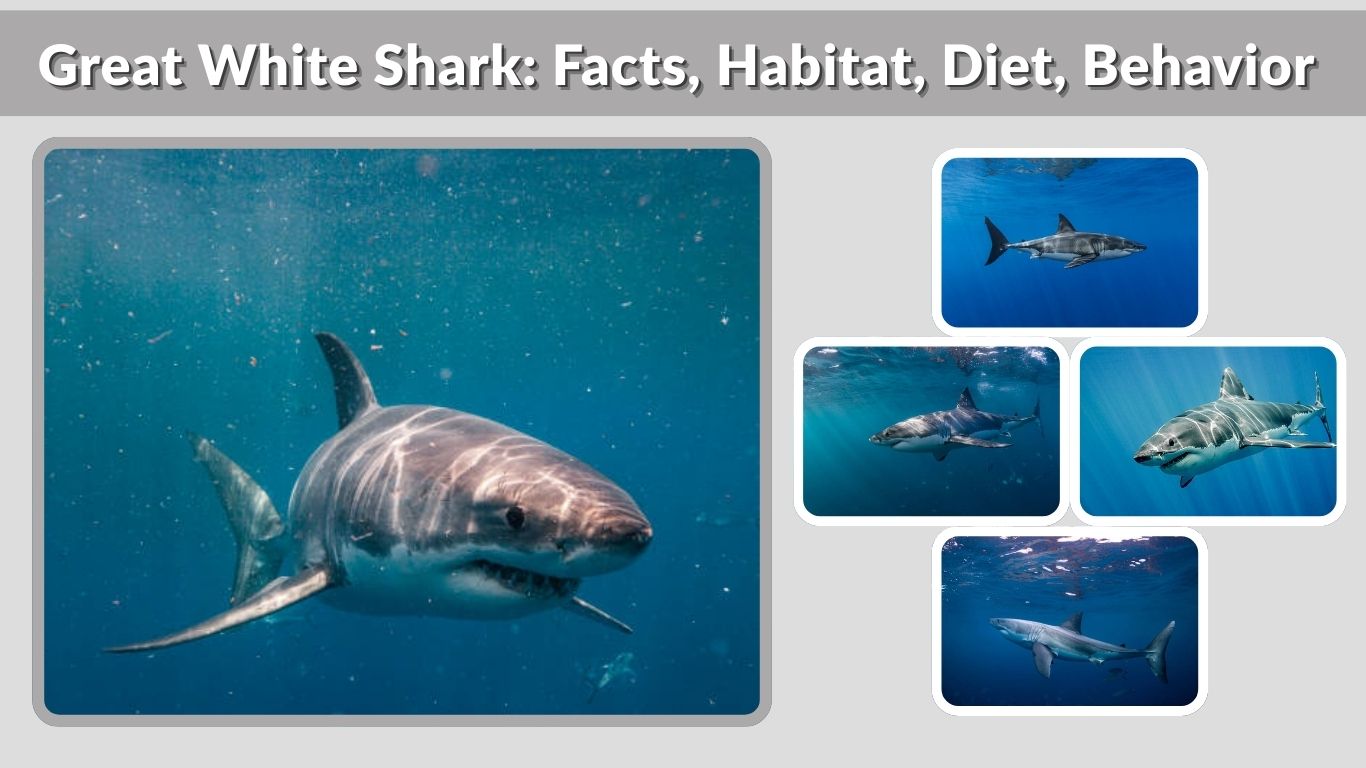
The great white shark (Carcharodon carcharias) is one of the most powerful and fascinating predators in the ocean. Known for its massive size, sharp teeth, and dramatic breaching attacks, this species has captured global attention through documentaries and movies. However, beyond its fearsome reputation lies a highly evolved marine hunter that plays a vital role in maintaining ocean ecosystems. In this guide, we’ll explore essential great white shark facts, their habitat, diet, hunting style, and key behaviors that make them one of the ocean’s true apex predators.
Great White Shark Facts
Great white sharks belong to the mackerel shark family, Lamnidae. They are among the largest predatory fish in the world and sit at the top of the marine food chain.
Some key facts about great white sharks include:
- Scientific name: Carcharodon carcharias
- Average length: 11–16 feet (3.4–4.9 meters)
- Weight: 1,500–2,400 pounds (680–1,100 kg)
- Top speed: Up to 25 mph (40 km/h) in short bursts
- Teeth: Up to 300 serrated teeth arranged in rows
- Conservation status: Vulnerable
Unlike most fish, great white sharks are partially warm-blooded. This adaptation allows them to maintain a body temperature higher than the surrounding water, giving them better muscle control and speed when hunting.
How Big Is a Great White Shark?
Female great white sharks are generally larger than males. While males average around 11–13 feet, females can grow up to 16 feet or more. Some unverified reports suggest individuals exceeding 20 feet, though most confirmed specimens are slightly smaller.
Their size gives them a significant advantage as apex predators. A large body mass allows them to target bigger prey like seals and sea lions while also deterring most other marine predators.
How Fast Can a Great White Shark Swim?
Great white sharks can reach speeds of approximately 25 miles per hour during short bursts. This speed is especially useful during ambush attacks. They often strike from below with powerful upward force, sometimes launching themselves completely out of the water in a behavior known as breaching.
This combination of speed and power makes them one of the ocean’s most efficient hunters.
Great White Shark Habitat

Great white sharks are found in coastal and offshore waters across the globe. They prefer temperate regions but can also travel through colder seas due to their partial warm-blooded ability.
They are commonly found in:
- The coasts of South Africa
- Southern Australia
- California (USA)
- Parts of the Mediterranean Sea
- Chile and Argentina
These areas are often rich in marine mammals, which form a major part of the adult shark’s diet.
Where Do Great White Sharks Live?
Great white sharks typically inhabit coastal waters near continental shelves. They are frequently seen near seal colonies, rocky shorelines, and islands where prey is abundant.
However, they are not limited to shallow waters. Satellite tracking has shown that they travel vast distances across open oceans. Some populations migrate thousands of miles between feeding and breeding grounds.
For example, sharks tagged off California have traveled to a region in the Pacific sometimes called the “White Shark Café,” a remote offshore area believed to be linked to breeding or feeding behavior.
Why Do They Migrate?
Migration in great white sharks is primarily driven by three factors:
- Food availability – They follow seal populations and other prey sources.
- Water temperature – They prefer water temperatures between 54°F and 75°F (12°C–24°C).
- Reproduction – Some migrations are believed to be related to mating.
Seasonal movement ensures access to optimal hunting grounds while maintaining suitable environmental conditions.
What Do Great White Sharks Eat?
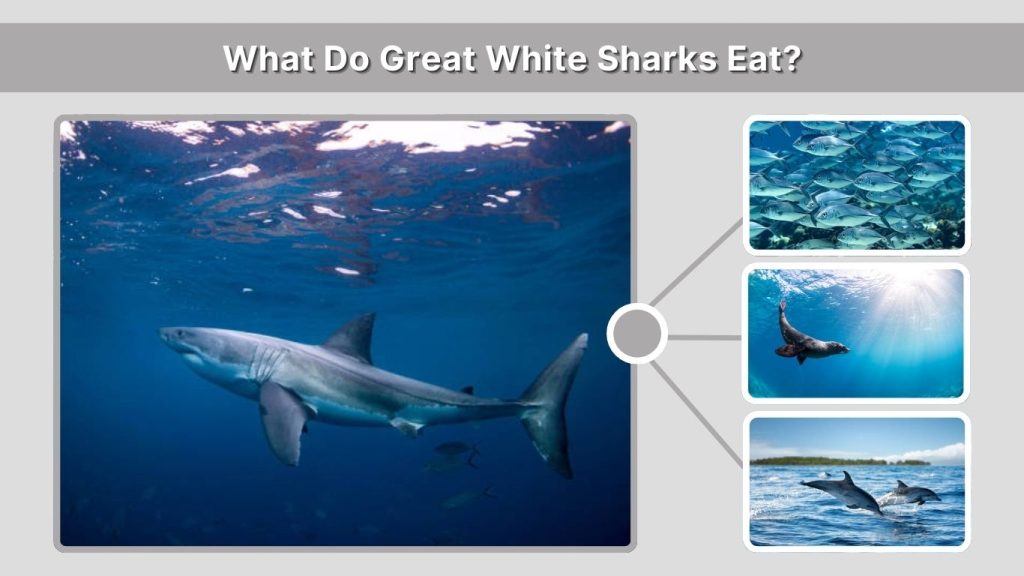
Great white sharks are apex predators, meaning they sit at the very top of the marine food chain. Their diet changes as they grow, reflecting both size and hunting ability.
Young sharks tend to eat smaller prey, while adults focus on energy-rich marine mammals.
Great White Shark Diet (Juveniles vs Adults)
Juvenile Diet:
- Fish
- Rays
- Smaller sharks
Young great whites rely heavily on fish-based diets until they grow large enough to tackle bigger prey.
Adult Diet:
- Seals
- Sea lions
- Dolphins
- Occasionally whale carcasses (scavenging)
Marine mammals are high in fat, providing the calories needed to support the shark’s large body and active hunting style.
How Do Great White Sharks Hunt?
Great white sharks are ambush predators. One of their most famous hunting techniques involves approaching prey from below at high speed. Because seals often swim near the surface, sharks use the darker depths to remain hidden before launching a surprise attack.
Their success is enhanced by specialized sensory systems:
- Ampullae of Lorenzini: Detect electrical signals produced by other animals.
- Acute sense of smell: Can detect blood from great distances.
- Excellent vision: Adapted for low-light conditions.
Rather than continuously biting, great whites often deliver a powerful initial bite and then wait for the prey to weaken before feeding. This reduces the risk of injury from struggling animals.
Great White Shark Behavior
Great white sharks are often misunderstood due to their portrayal in movies and media. While they are powerful predators, their behavior is more complex than simple aggression. In reality, they are intelligent, highly adapted hunters that usually travel alone.
Most of the time, great white sharks are solitary animals. However, they may gather in areas where food is abundant, such as near seal colonies. Even in these situations, they tend to maintain a loose social structure rather than forming coordinated groups.
Research suggests that great whites display dominance hierarchies. Larger individuals typically have priority access to food, while smaller sharks wait their turn. This reduces unnecessary conflict and conserves energy.
Are Great White Sharks Aggressive?
Great white sharks are not naturally aggressive toward humans. Most shark attacks are believed to be cases of mistaken identity, particularly in areas where surfers resemble seals from below.
In many recorded incidents, a shark bites once and then retreats. Unlike their behavior with prey, they rarely continue attacking humans. Statistically, shark attacks remain extremely rare compared to other everyday risks.
Despite their fearsome reputation, great white sharks do not view humans as a primary food source.
How Intelligent Are Great White Sharks?
Great white sharks demonstrate signs of advanced sensory processing and learning behavior. Studies show that they can adapt hunting strategies based on prey behavior and environmental conditions.
Their large brain-to-body ratio (compared to many other fish species) supports:
- Problem-solving abilities
- Social recognition
- Strategic hunting
They also display curiosity, often investigating unfamiliar objects such as boats or diving cages. This exploratory behavior is sometimes mistaken for aggression but is more likely a form of environmental assessment.
Great White Shark Lifespan and Reproduction
Great white sharks are long-lived animals. Scientists estimate their lifespan ranges between 30 and 70 years, though ongoing research suggests some individuals may live even longer.
They grow slowly and reach sexual maturity relatively late compared to many other fish species. Males typically mature around 9–10 years old, while females may not mature until 14–16 years.
How Do Great White Sharks Reproduce?
Great white sharks are ovoviviparous, meaning their eggs hatch inside the mother’s body. The pups are born live and fully developed.
Before birth, embryos feed on unfertilized eggs inside the womb — a process called oophagy. When born, pups are about 4–5 feet long and must immediately survive on their own.
There is no parental care after birth, which makes early survival challenging.
Why Is Their Population Vulnerable?
Despite being apex predators, great white sharks face several threats:
- Accidental capture in fishing nets (bycatch)
- Illegal hunting for fins and teeth
- Habitat degradation
- Slow reproduction rates
Because females produce relatively few pups and mature late, population recovery is slow. For this reason, great white sharks are classified as Vulnerable in many regions.
Conservation efforts now focus on marine protected areas, fishing regulations, and satellite tracking research to better understand their migration patterns.
Great White Shark vs Orca
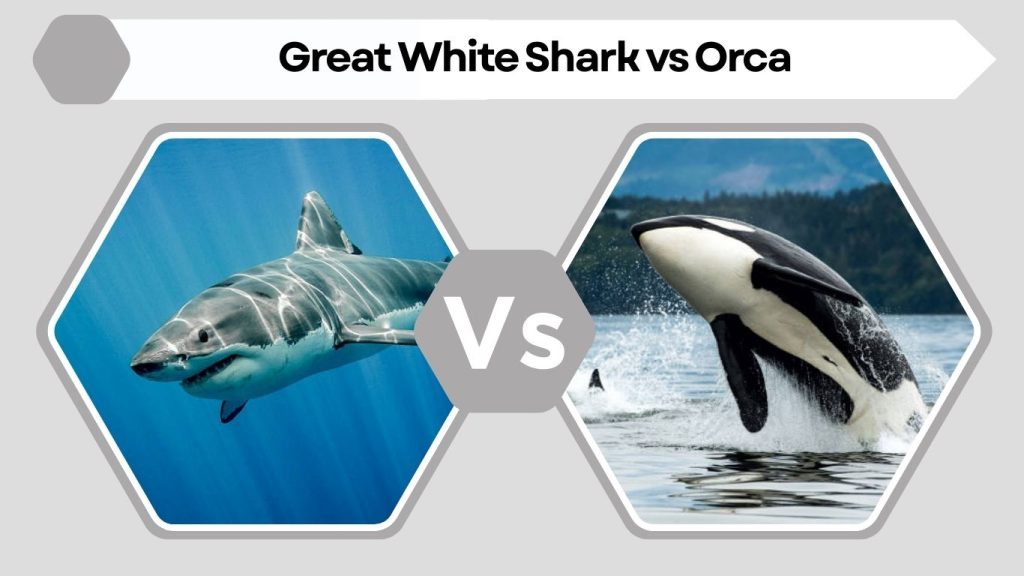
One of the most fascinating ocean rivalries involves the great white shark and the orca (killer whale). While great whites are apex predators, orcas are considered super-predators — meaning they have no natural predators and sometimes hunt other top predators.
Size and Strength Comparison
- Great white shark: Up to 16 feet long, over 2,000 pounds
- Orca: Up to 26–32 feet long, over 6 tons
Orcas are significantly larger and heavier. Their intelligence and group hunting strategies also give them a major advantage.
Intelligence and Hunting Strategy
Great white sharks rely on stealth and ambush tactics. Orcas, on the other hand, hunt in coordinated pods using complex communication and teamwork.
In documented encounters, orcas have been observed flipping great white sharks upside down, inducing a temporary state called tonic immobility. This allows them to target the shark’s nutrient-rich liver.
Who Would Win?
In a one-on-one scenario, size and intelligence favor the orca. In fact, studies have shown that when orcas enter an area, great white sharks often leave and avoid returning for extended periods.
While the great white remains a dominant predator in most marine environments, it appears to yield territory when orcas are present.
How to Draw a Great White Shark (Simple Guide)
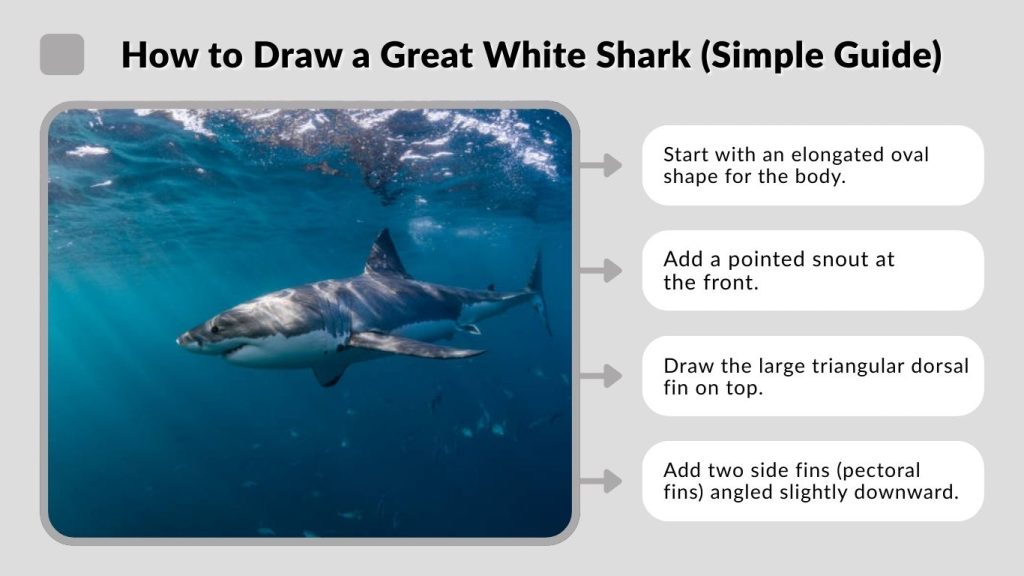
Drawing a great white shark can be simple if broken into basic steps.
- Start with an elongated oval shape for the body.
- Add a pointed snout at the front.
- Draw the large triangular dorsal fin on top.
- Add two side fins (pectoral fins) angled slightly downward.
- Sketch the crescent-shaped tail.
- Draw a curved mouth line and small triangular teeth.
- Add gill slits behind the head.
- Shade the top darker and leave the belly lighter to show countershading.
For a more realistic look, focus on smooth lines and a streamlined body shape.
FAQs
How long do great white sharks live?
Great white sharks typically live between 30 and 70 years. Some studies suggest they may live even longer, but slow growth and late maturity make them vulnerable to population decline.
What do great white sharks eat the most?
Adult great white sharks primarily eat marine mammals such as seals and sea lions. Juveniles mainly consume fish and rays until they grow large enough to hunt bigger prey.
Where do great white sharks live?
They live in temperate coastal waters worldwide, especially near seal colonies in places like South Africa, Australia, and California.
Are great white sharks endangered?
Great white sharks are classified as Vulnerable due to slow reproduction, fishing threats, and habitat pressures.
Who would win: great white shark or orca?
In documented encounters, orcas have the advantage due to their larger size, intelligence, and cooperative hunting strategies.
Conclusion
The great white shark is far more than a fearsome predator — it is a highly adapted, intelligent species that plays a crucial role in maintaining marine balance. From its powerful hunting strategies and global migration patterns to its complex behavior and long lifespan, this remarkable shark continues to fascinate scientists and ocean lovers alike. Protecting great white sharks ensures healthier oceans and preserves one of nature’s most iconic marine animals for future generations.