




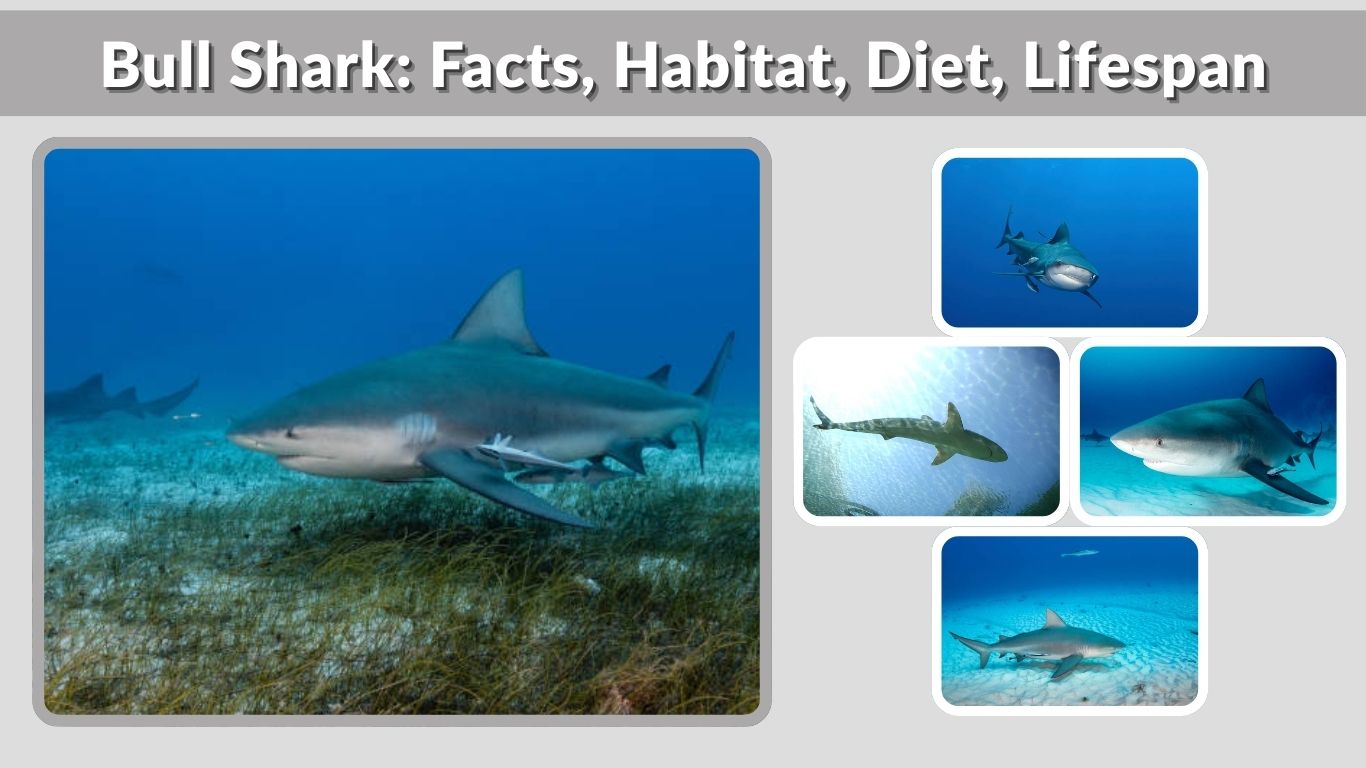
The bull shark is one of the most powerful and fascinating predators in the ocean. Known for its stocky body and aggressive reputation, this species stands out because it can survive in both saltwater and freshwater. Unlike most sharks, the bull shark is often found in rivers and estuaries, sometimes traveling hundreds of miles inland. In this guide, you’ll discover essential bull shark facts, explore its habitat, understand its diet, learn about its life span, and see how it compares to the great white shark.
What Is a Bull Shark?
The bull shark (Carcharhinus leucas) is a large predatory shark belonging to the family Carcharhinidae, also known as requiem sharks. It is sometimes called the Zambezi shark in Africa or the Nicaragua shark in Central America due to its presence in rivers and lakes in those regions.
Bull sharks are widely distributed in warm coastal waters around the world. They are especially common in shallow areas where humans often swim, which contributes to their reputation as one of the more dangerous shark species.
Physical Characteristics
Bull sharks have a heavy, stocky build and a blunt, rounded snout. This shape gives them a powerful appearance and contributes to their name. Adult bull sharks typically grow between 7 and 11 feet long, with females generally larger than males. They can weigh between 200 and 500 pounds, though some individuals exceed that range.
Their coloring helps them blend into their environment. The upper body is gray, while the underside is white—a type of camouflage known as countershading. This makes them harder to spot from both above and below in the water.
One of the bull shark’s most impressive features is its bite force. Pound for pound, it is considered one of the strongest-biting sharks in the world. Combined with its muscular body and aggressive tendencies, this makes it a highly effective predator.
Bull Shark Habitat

The bull shark habitat is one of the broadest of any shark species. Their range spans tropical and subtropical regions across the globe.
Ocean Habitat
In the ocean, bull sharks prefer warm, shallow coastal waters. They are commonly found in the Atlantic, Pacific, and Indian Oceans. Coastal shelves, bays, and harbors provide ideal hunting grounds due to abundant prey.
Unlike great white sharks, which often patrol deeper offshore waters, bull sharks tend to stay closer to shore. This proximity increases the likelihood of human encounters.
Freshwater and River Habitat
What truly sets the bull shark apart is its presence in freshwater systems. Bull sharks have been documented in major rivers such as the Mississippi River in the United States, the Amazon River in South America, and the Zambezi River in Africa.
They have even been found in Lake Nicaragua, a large freshwater lake connected to the Caribbean Sea by the San Juan River. In some cases, bull sharks have traveled hundreds of miles inland.
Rivers and estuaries often serve as nursery areas for young bull sharks. The murky water provides protection from larger predators while offering plenty of food. This strategy increases the survival rate of juveniles.
Bull Shark in River: How Common Is It?
The idea of a bull shark in a river may sound surprising, but it is more common than many people think. These sharks frequently enter river systems, especially in tropical and subtropical regions.
Young bull sharks are more likely to remain in freshwater for extended periods. Adults may move between saltwater and freshwater depending on breeding cycles and food availability.
Bull sharks can travel significant distances inland. For example, individuals have been recorded more than 1,000 miles up the Mississippi River. Their ability to tolerate low-salinity environments makes such journeys possible.
However, river environments can increase the risk of accidental encounters with humans. Murky water reduces visibility, making it harder for both sharks and swimmers to detect one another. Even so, attacks in rivers remain rare compared to coastal ocean incidents.
Bull Shark Diet
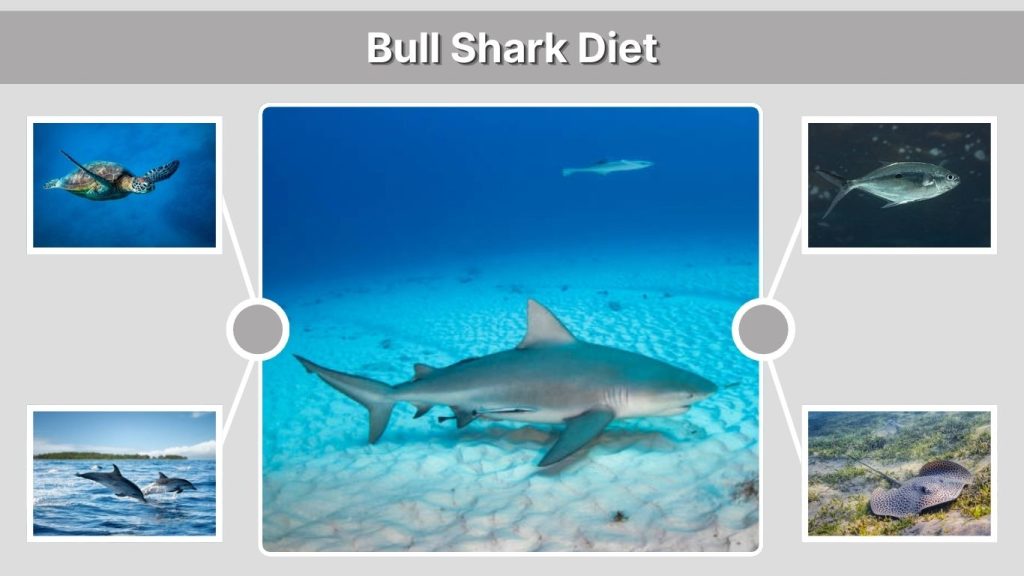
Bull sharks are opportunistic carnivores, meaning they will eat a wide variety of prey depending on what is available in their environment. Their powerful bodies and strong bite force make them highly effective hunters in both ocean and river systems.
What Do Bull Sharks Eat?
The bull shark diet mainly consists of:
- Bony fish
- Stingrays
- Smaller sharks
- Sea turtles
- Dolphins
- Crustaceans
In river systems, they may also feed on freshwater fish species. Their willingness to eat almost anything they can overpower makes them apex predators in many habitats.
Juvenile bull sharks typically feed on smaller fish and invertebrates. As they grow larger, their prey size increases. Adults are capable of taking down large marine animals, including other sharks.
Hunting Style
Bull sharks are ambush predators. They often rely on stealth and sudden bursts of speed to capture prey. Their gray coloring allows them to blend into murky water, especially in rivers and estuaries.
Like other sharks, bull sharks use electroreceptors to detect the electrical signals produced by living organisms. This ability is particularly useful in low-visibility environments.
Rather than carefully selecting prey, bull sharks often bite first and determine edibility afterward. This opportunistic feeding behavior is one reason they are sometimes involved in accidental attacks on humans.
Bull Shark Life Span and Reproduction
Understanding the bull shark life span helps explain how this species maintains its population in diverse environments.
Average Life Span
The average bull shark life span ranges from 16 to 30 years in the wild. Environmental factors, food availability, and human activity can influence longevity.
Sharks face threats from fishing, habitat destruction, and pollution, all of which may shorten their natural life expectancy.
Growth and Maturity
Bull sharks grow relatively quickly compared to some larger shark species. Males typically reach sexual maturity at around 14 to 15 years of age, while females mature slightly later.
At birth, pups measure about 2 to 3 feet long. They grow steadily during their early years, especially in protected nursery areas like estuaries and rivers.
Reproduction and Nursery Areas
Bull sharks are viviparous, meaning they give birth to live young rather than laying eggs. After a gestation period of about 10 to 11 months, females give birth to litters that usually contain between 1 and 13 pups.
Shallow coastal waters and river mouths serve as nursery habitats. These areas offer protection from larger predators and provide abundant food sources. Young bull sharks may remain in freshwater for several years before moving into the open ocean.
Bull Shark vs Great White Shark
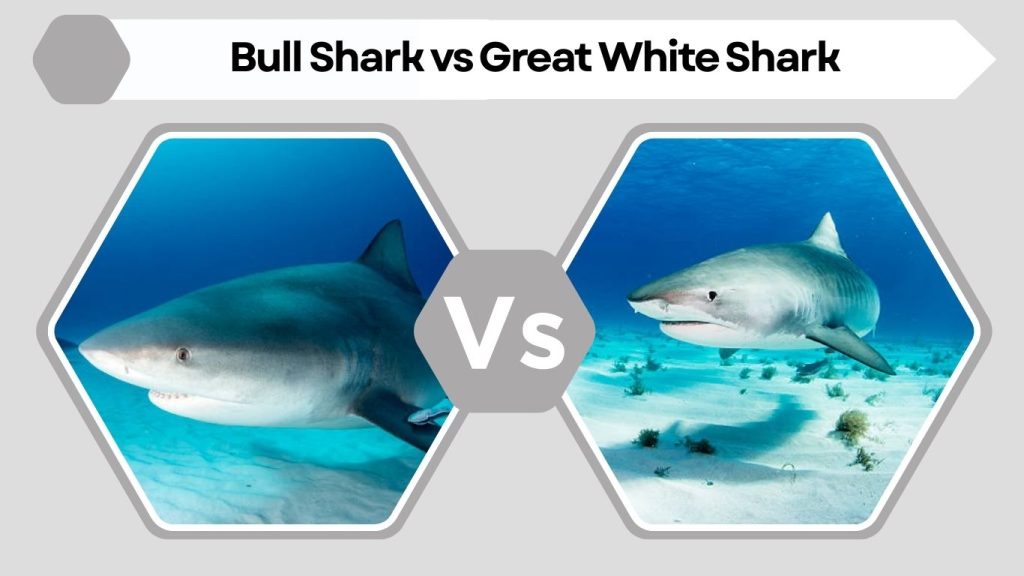
The comparison between the bull shark vs great white shark is common, especially when discussing danger and strength.
Size and Strength Comparison
The great white shark is generally larger. Adults can grow up to 20 feet long and weigh over 4,000 pounds. In contrast, bull sharks usually reach a maximum length of about 11 feet.
However, when comparing bite force relative to body size, the bull shark ranks extremely high. Pound for pound, it may generate more bite pressure than the great white.
Habitat Differences
One of the biggest differences lies in habitat. Great white sharks primarily inhabit open ocean and coastal marine environments. They do not enter freshwater systems.
Bull sharks, on the other hand, can thrive in both saltwater and freshwater. Their presence in rivers and shallow coastal areas increases the likelihood of human encounters.
Aggression and Attack Records
Both species are involved in shark attacks on humans. Great whites are responsible for the highest number of recorded attacks worldwide. However, bull sharks are often considered more unpredictable because they frequent shallow, murky waters.
In reality, neither species hunts humans as a primary food source. Most incidents are believed to be exploratory bites or cases of mistaken identity.
Which Shark Is More Dangerous?
Determining which shark is more dangerous depends on context. The great white is larger and more powerful overall. The bull shark, however, is more adaptable and more likely to be found in areas where people swim.
Because bull sharks live in rivers and near shorelines, they may pose a greater risk in certain environments.
Bull Shark Facts
Bull sharks are often misunderstood. While they have a reputation for aggression, they are also biologically unique and highly adaptable.
Unique Freshwater Ability
One of the most remarkable bull shark facts is its ability to live in freshwater. Most sharks cannot survive outside of saltwater because their bodies are designed to maintain a specific salt balance. Bull sharks, however, have a specialized system that allows them to regulate the amount of salt in their bodies.
Through a process called osmoregulation, bull sharks adjust how much salt and water they retain. Their kidneys and special glands work together to maintain internal balance whether they are in the ocean or in a river. This adaptation allows them to travel far inland, making them one of the few shark species capable of long-term freshwater survival.
Aggression and Behavior
Bull sharks are often listed among the top three shark species involved in unprovoked attacks on humans, alongside the great white shark and the tiger shark. However, their aggressive reputation may be partly due to their habitat preferences.
They commonly swim in shallow coastal waters, estuaries, and river mouths—areas where people frequently swim, surf, and fish. Their territorial nature also plays a role. Bull sharks are known to defend their space aggressively if they feel threatened.
Despite this, they do not actively hunt humans. Most shark attacks are believed to be cases of mistaken identity or defensive reactions.
Strength and Adaptability
Bull sharks are strong swimmers with highly developed senses. Like other sharks, they can detect tiny electrical signals emitted by prey. They also have an excellent sense of smell, allowing them to locate food even in murky water.
Their adaptability is one of their greatest strengths. Whether in salty ocean water or muddy rivers, bull sharks can adjust to changing conditions. This flexibility helps them survive in environments where other shark species could not.
Conservation Status and Threats
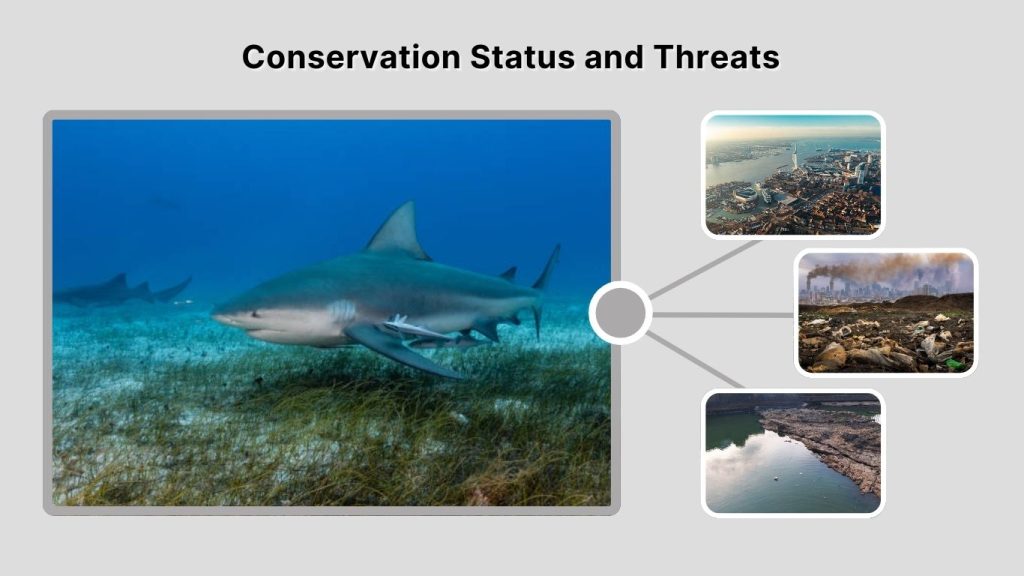
Although bull sharks are not currently classified as critically endangered, they face growing threats.
Overfishing is one of the biggest dangers. Bull sharks are sometimes caught intentionally for their fins, meat, and skin. They are also victims of bycatch in commercial fishing operations.
Habitat destruction presents another challenge. Coastal development, pollution, and river modification reduce suitable nursery habitats for young sharks.
As apex predators, bull sharks play a crucial role in maintaining balanced ecosystems. Protecting their habitats and regulating fishing practices are essential for ensuring their long-term survival.
FAQs
Can bull sharks live permanently in freshwater?
Yes, bull sharks can survive in freshwater for extended periods. Thanks to their advanced osmoregulation system, they can adjust salt levels in their bodies. Some individuals spend years in rivers or lakes, though they often return to the ocean for breeding.
How big does a bull shark get?
Adult bull sharks typically grow between 7 and 11 feet long and can weigh up to 500 pounds. Females are usually larger than males. Their stocky build and muscular bodies make them appear even more powerful.
What is the average bull shark life span?
The average bull shark life span ranges from 16 to 30 years in the wild. Factors such as fishing pressure, habitat quality, and food availability can influence how long they live.
Are bull sharks more aggressive than great whites?
Bull sharks are often considered more aggressive due to their territorial behavior and preference for shallow water. However, great white sharks are responsible for more recorded attacks globally. Both species are powerful predators but do not actively hunt humans.
Why are bull sharks found in rivers?
Bull sharks are found in rivers because they can regulate the salt concentration in their bodies. This unique adaptation allows them to survive in freshwater, where young sharks often benefit from safer nursery environments.