




The shortfin mako shark (Isurus oxyrinchus) is one of the most powerful and fascinating predators in the ocean. Known as the fastest shark species in the world, this sleek and athletic hunter can reach incredible speeds while chasing prey. Found in temperate and tropical waters across the globe, the shortfin mako is admired for its strength, agility, and striking appearance. In this article, we’ll explore the mako shark’s speed, habitat, diet, size, and key biological traits.
What Is a Shortfin Mako Shark?
The shortfin mako shark belongs to the mackerel shark family, Lamnidae, which also includes the great white shark and porbeagle shark. These sharks are known for their speed, intelligence, and strong swimming ability.
Scientific Classification
- Kingdom: Animalia
- Phylum: Chordata
- Class: Chondrichthyes
- Order: Lamniformes
- Family: Lamnidae
- Species: Isurus oxyrinchus
As a cartilaginous fish, the shortfin mako has a skeleton made of cartilage rather than bone. This lighter structure helps improve flexibility and speed in the water.
Physical Characteristics
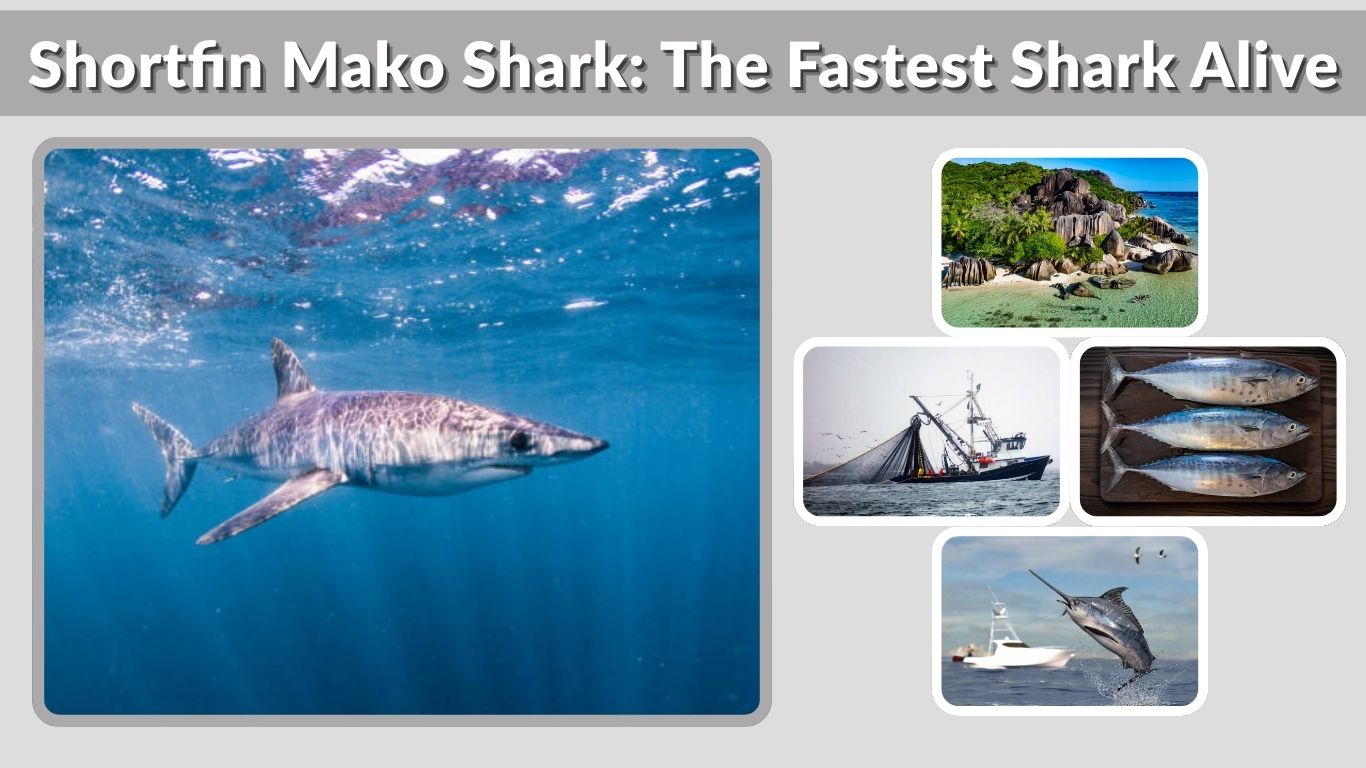
The shortfin mako shark has a streamlined, torpedo-shaped body built for speed. Its metallic blue upper body fades into a bright white underside, providing camouflage in the open ocean. This coloration makes it difficult for prey to see it from above or below.
Key physical features include:
- A long, pointed snout
- Large black eyes
- A crescent-shaped tail (caudal fin)
- Long, narrow pectoral fins
- Sharp, needle-like teeth that remain visible even when the mouth is closed
Adult shortfin makos typically grow between 10 and 12 feet in length, although larger individuals have been recorded. Their muscular build and powerful tail allow them to accelerate rapidly while hunting.
Mako Shark Speed
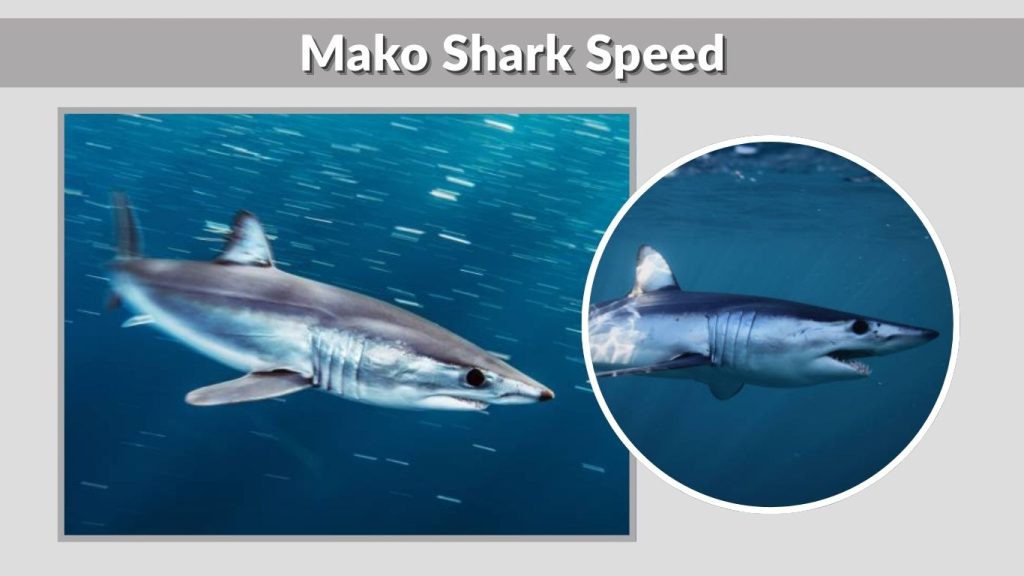
The shortfin mako shark is widely recognized as the fastest shark species in the world. Its speed and agility make it one of the ocean’s most efficient predators.
How Fast Can a Mako Shark Swim?
Shortfin makos can reach speeds of up to 45 miles per hour (72 kilometers per hour) in short bursts. This remarkable speed allows them to chase down fast-moving prey such as tuna and swordfish.
In addition to high cruising speeds, mako sharks are capable of sudden acceleration. They can rapidly change direction and lunge upward when attacking prey.
Why Makos Are So Fast
Several biological adaptations contribute to the mako shark’s impressive speed:
- Streamlined Body Shape – The torpedo-like form reduces drag in the water.
- Powerful Tail Fin – The crescent-shaped tail generates strong thrust.
- Warm-Blooded Adaptation – Unlike most sharks, shortfin makos are regionally endothermic, meaning they can regulate body temperature above the surrounding water.
This partial warm-blooded system allows their muscles to function more efficiently, improving strength and reaction time. As a result, makos can maintain higher speeds than many other shark species.
Because of their speed, mako sharks are also known for spectacular leaps. When hooked by fishermen, they have been observed jumping up to 20 feet out of the water.
Mako Shark Habitat
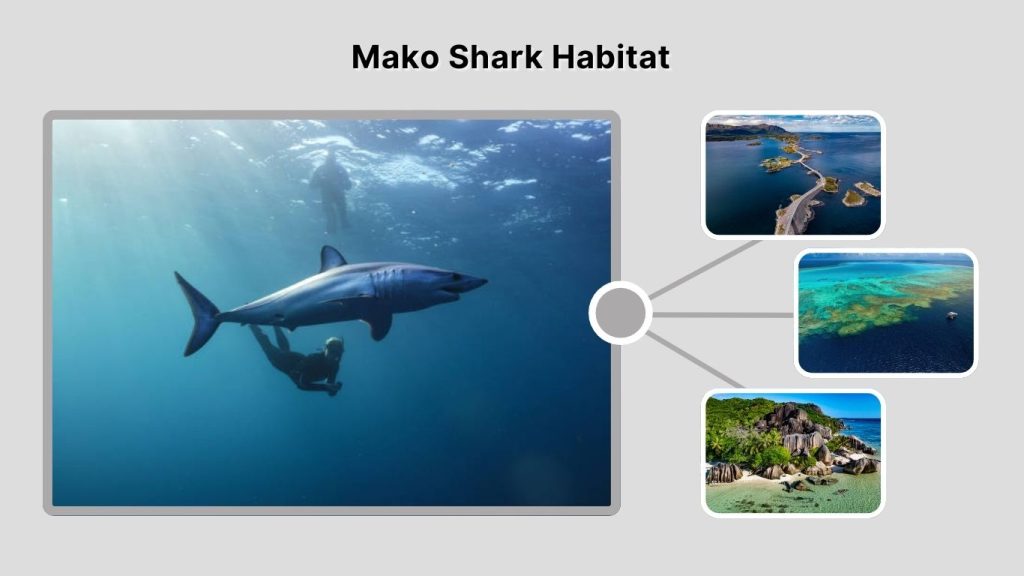
The shortfin mako shark is a pelagic species, meaning it lives primarily in the open ocean rather than near the coast.
Global Distribution
Shortfin makos are found in:
- The Atlantic Ocean
- The Pacific Ocean
- The Indian Ocean
They prefer temperate and tropical waters but can also tolerate slightly cooler regions. Their wide distribution makes them one of the most globally spread shark species.
Migration and Depth Range
Mako sharks are highly migratory and can travel thousands of miles across oceans. They often follow warm water currents and areas rich in prey.
Although they are commonly seen near the surface, shortfin makos can dive to depths of over 500 meters (1,640 feet). These deep dives may be related to hunting behavior or temperature regulation.
Satellite tracking studies have revealed that mako sharks regularly cross international waters, which makes conservation efforts more complex.
Mako Shark Diet
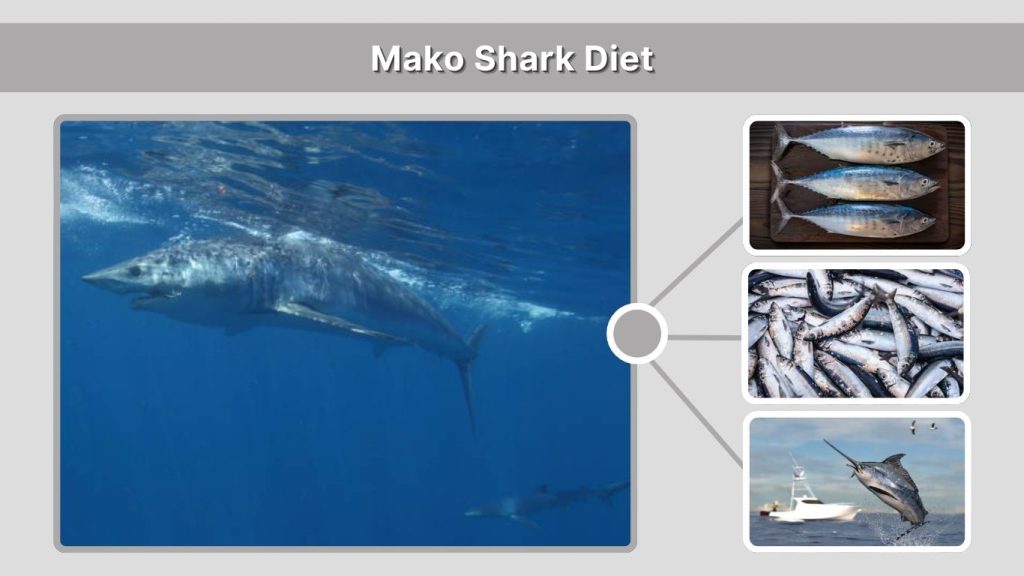
The shortfin mako shark is an apex predator that feeds primarily on fast-swimming fish and squid.
What Do Shortfin Makos Eat?
Their diet commonly includes:
- Tuna
- Mackerel
- Bonito
- Swordfish
- Squid
Because they are fast swimmers, mako sharks often target prey that other sharks may struggle to catch. Their sharp, narrow teeth are designed to grip slippery fish effectively.
Hunting Style
Unlike ambush predators, shortfin makos are active hunters. They rely on speed and endurance to chase down prey in open water. Their hunting strategy often involves:
- High-speed pursuit
- Sudden directional changes
- Upward lunging attacks
Their intelligence and strong vision further enhance their hunting efficiency.
Mako Shark Size and Lifespan
The shortfin mako shark is not only fast but also impressively built. Its muscular body and streamlined shape support both speed and power, making it one of the ocean’s top predators.
Average Size and Weight
Adult shortfin mako sharks typically measure between 10 and 12 feet (3–3.7 meters) in length. Females are usually larger than males, a common trait among many shark species. Large females can exceed 13 feet and weigh more than 1,200 pounds (540 kilograms).
Their bodies are dense and muscular, designed for rapid acceleration. Unlike bulkier shark species, makos have a lean profile that reduces drag and improves hydrodynamic performance.
Growth and Reproduction
Shortfin makos are ovoviviparous, meaning eggs develop and hatch inside the mother’s body. The pups are born live and fully developed. During development, embryos may practice a behavior known as oophagy, where they consume unfertilized eggs for nourishment.
The gestation period is estimated to last 15 to 18 months, and females give birth to a small number of pups compared to many fish species. Because they produce relatively few offspring and mature slowly, mako populations can be vulnerable to overfishing.
Lifespan
The shortfin mako shark lifespan is estimated at 25 to 30 years, though some research suggests females may live even longer. Males typically reach maturity earlier than females, but both require several years before they can reproduce.
Is the Mako Shark Dangerous?
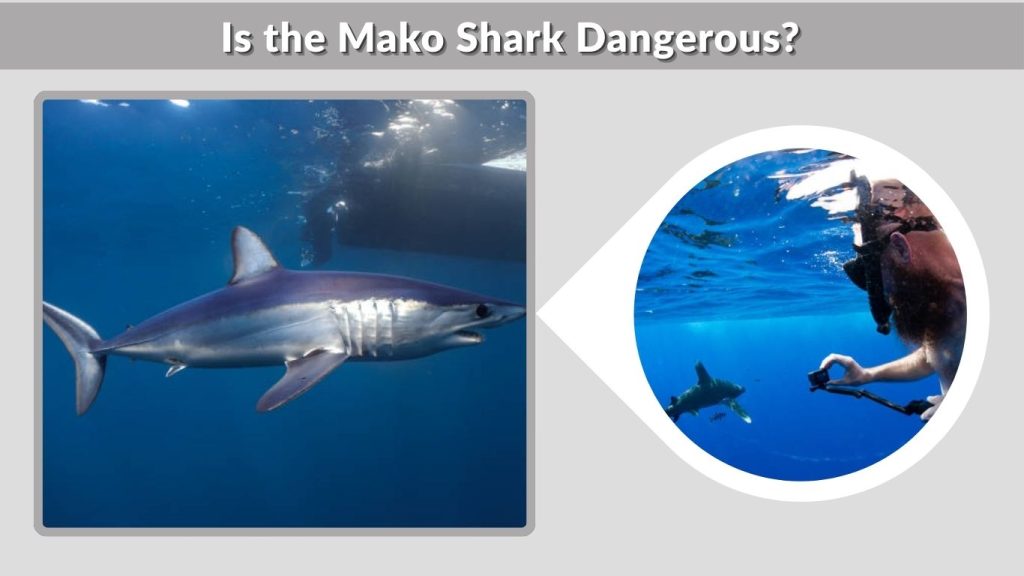
Because of their speed and sharp teeth, many people wonder whether the mako shark is dangerous. While shortfin makos are powerful predators, attacks on humans are rare.
Most recorded incidents involve fishermen rather than swimmers. When hooked, mako sharks can become extremely active and may leap or thrash violently. This behavior can make them dangerous during capture.
In open water, makos are generally not considered a major threat to humans. They are highly focused on their natural prey and rarely interact with divers. However, like any wild predator, they should be treated with caution and respect.
Their high energy and quick reactions sometimes give them a reputation for aggression, but this behavior is primarily linked to hunting and survival instincts.
Conservation Status
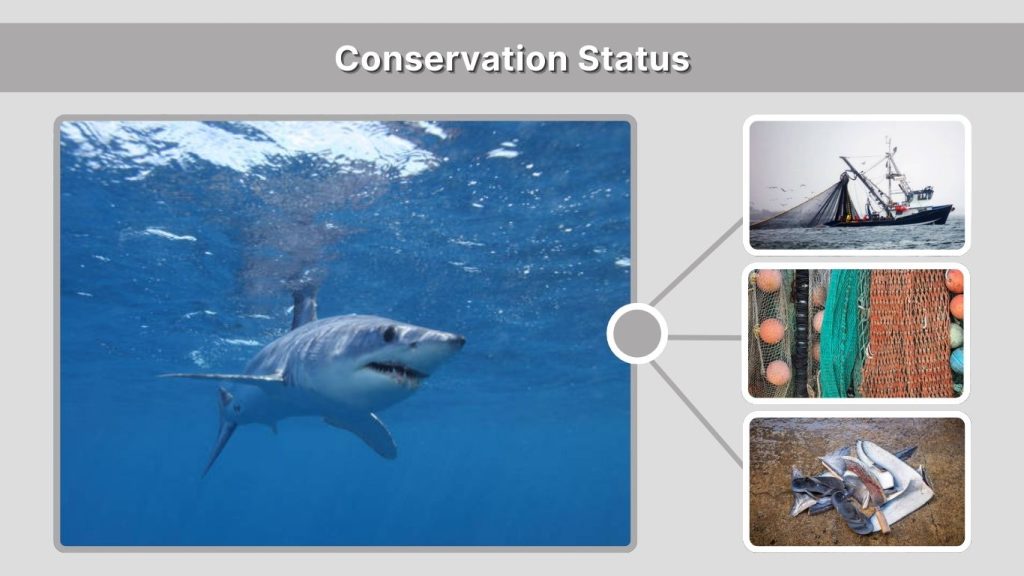
The shortfin mako shark is currently listed as Endangered on the IUCN Red List. Overfishing has significantly reduced populations in many regions.
Major Threats
- Targeted commercial fishing
- Bycatch in longline and gillnet fisheries
- Shark fin trade
- International fishing pressure in open waters
Because makos are highly migratory and cross international boundaries, protecting them requires global cooperation.
Conservation Efforts
Some regions have introduced catch limits or fishing bans to help stabilize populations. International agreements aim to regulate trade and reduce overfishing.
Ongoing research, satellite tracking, and improved fisheries management are essential to ensuring the survival of this remarkable shark species.
FAQs
How fast is a mako shark?
The shortfin mako shark can reach speeds of up to 45 miles per hour (72 km/h), making it the fastest shark species in the world. Its streamlined body and powerful tail allow it to accelerate quickly while chasing prey.
How big does a shortfin mako get?
Most adult shortfin makos grow between 10 and 12 feet long. Large females can exceed 13 feet and weigh over 1,200 pounds. Females are typically larger than males.
Where do mako sharks live?
Shortfin mako sharks live in temperate and tropical oceans worldwide, including the Atlantic, Pacific, and Indian Oceans. They prefer open ocean environments but can also be found near coastal waters.
Are mako sharks aggressive toward humans?
Mako sharks are powerful predators but rarely attack humans. Most incidents occur during fishing activities when the shark is hooked. In natural settings, they generally avoid human interaction.
Conclusion
The shortfin mako shark is an extraordinary marine predator known for its unmatched speed, sleek design, and powerful hunting ability. From its open-ocean habitat to its high-energy pursuit of prey, every feature of this shark is built for performance. However, its slow reproduction and heavy fishing pressure have placed it at risk. Protecting the mako shark ensures that one of the ocean’s fastest and most impressive predators continues to thrive for generations to come.