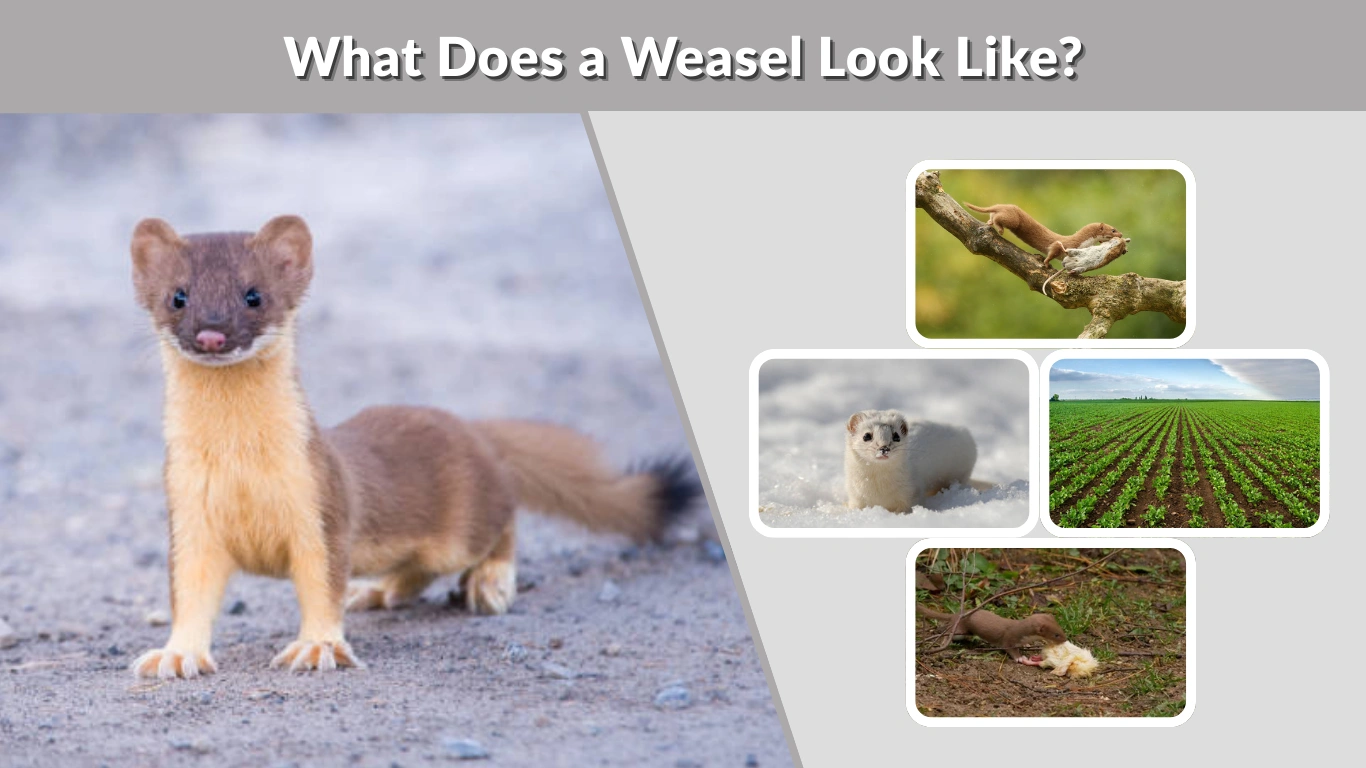





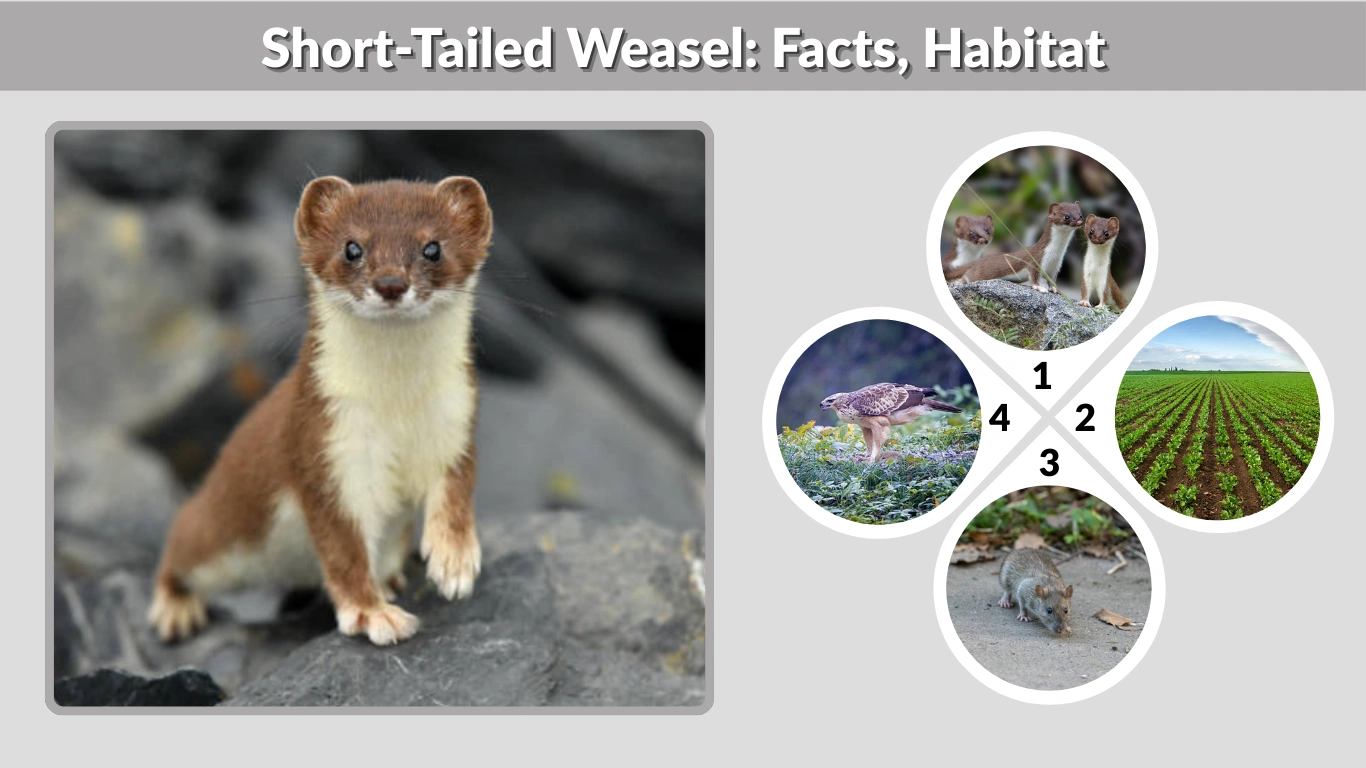
The short-tailed weasel (Mustela erminea), also known as the stoat or ermine, is a small but fierce predator found across North America, Europe, and parts of Asia. Despite its slender body and lightweight build, this agile carnivore plays a major role in controlling rodent populations. One of its most fascinating features is its seasonal coat change—turning brown in summer and white in winter. This remarkable adaptation helps it survive in snowy environments and makes it one of the most recognizable small mammals in colder regions.
What Is a Short-Tailed Weasel?
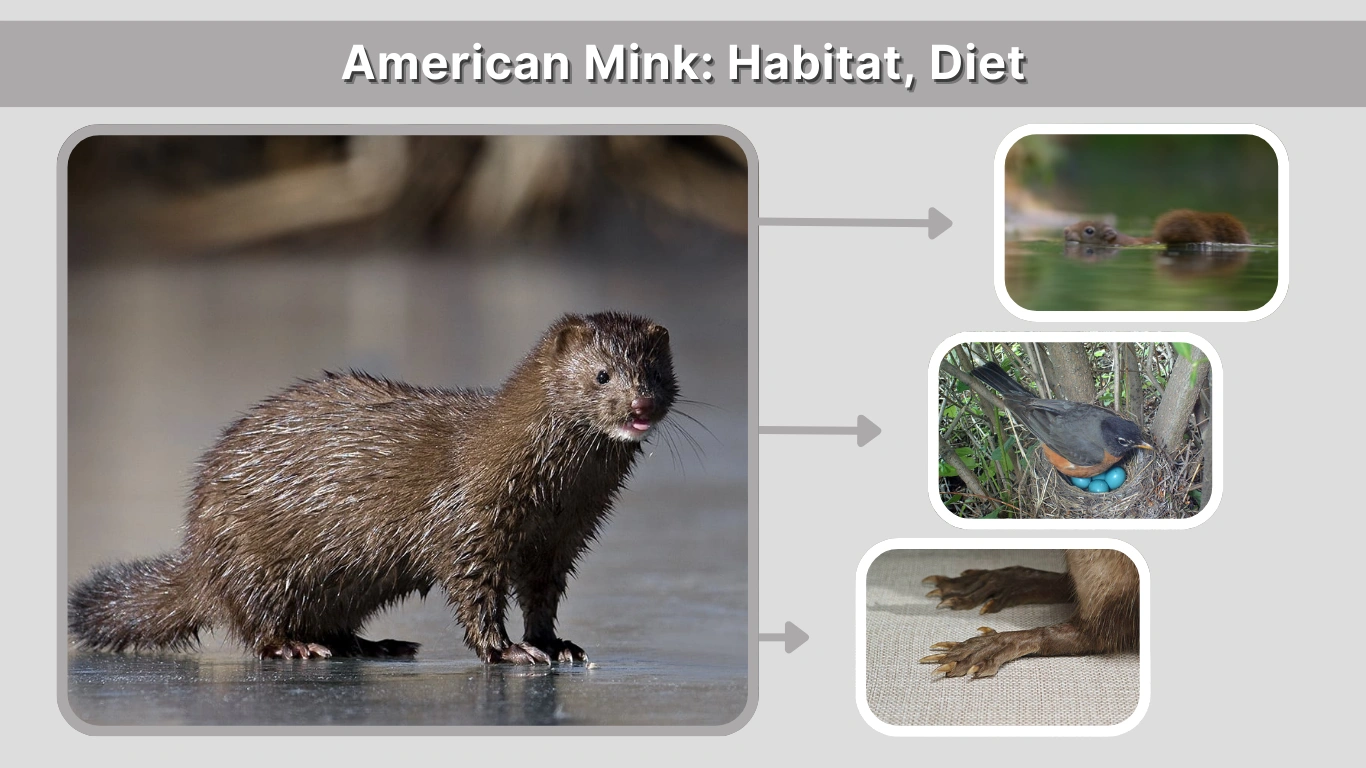
The short-tailed weasel belongs to the Mustelidae family, which includes mink, ferrets, otters, and badgers. Its scientific name, Mustela erminea, reflects its historical association with ermine fur, once prized in royal garments.
This species is widely distributed throughout the Northern Hemisphere. It thrives in temperate, subarctic, and even Arctic climates. As a carnivorous mammal, it sits in the middle of the food chain—hunting small animals while also serving as prey for larger predators.
Though small in size, the short-tailed weasel is known for its bold and energetic personality. It is highly active, curious, and relentless when pursuing prey.
Physical Characteristics and Identification
Size and Body Structure
The short-tailed weasel has a long, slender body designed for slipping into narrow burrows. Adults typically measure:
- Body length: 7 to 13 inches (18–33 cm)
- Tail length: 3 to 5 inches (7–12 cm)
- Weight: 2 to 12 ounces (60–340 grams)
Males are noticeably larger than females, sometimes weighing nearly twice as much. This size difference is common among weasel species.
Its elongated body, short legs, and flexible spine allow it to twist and turn quickly while chasing prey underground.
Coat Color and Seasonal Change
One of the most distinctive features of the short-tailed weasel is its coat.
- Summer coat: Brown back with a pale or white underside
- Winter coat: Entirely white in snowy regions
- Tail tip: Always black, regardless of season
The white winter phase is called the “ermine” stage. This color change provides camouflage against snow, helping the weasel avoid predators and sneak up on prey. In regions with milder winters and little snowfall, some individuals may remain brown year-round.
The molting process is triggered by changes in daylight rather than temperature, ensuring the coat change happens at the right time of year.
How to Identify a Short-Tailed Weasel in the Wild
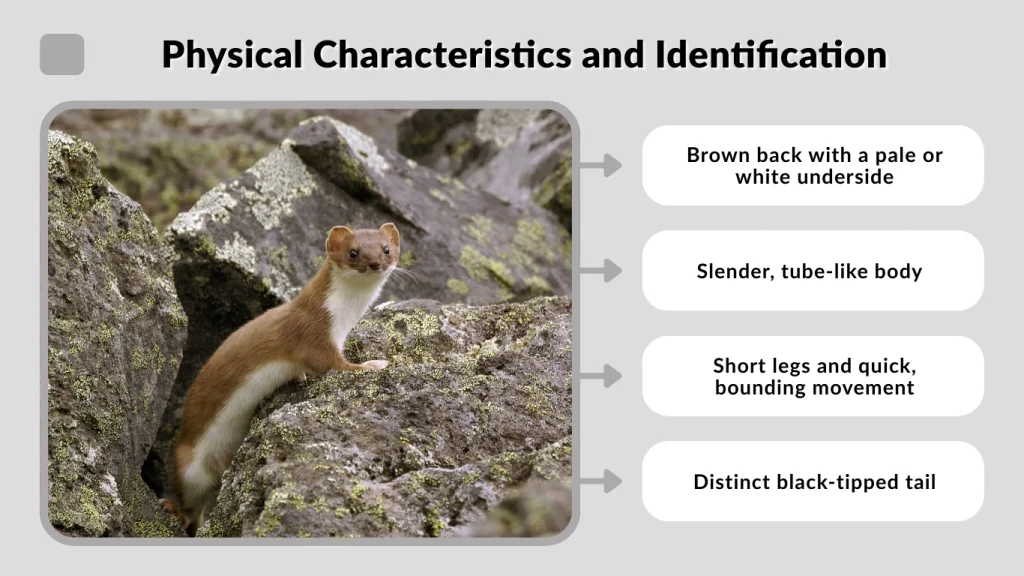
Identifying a short-tailed weasel can be challenging because of its speed and small size. However, a few key traits make it recognizable:
- Slender, tube-like body
- Short legs and quick, bounding movement
- Distinct black-tipped tail
- Seasonal color change
Its movement is often described as energetic and bouncy. When alarmed or excited, it may stand upright briefly to scan its surroundings.
Tracks are small and paired, often found near rodent burrows, logs, or brush piles.
Short-Tailed Weasel Habitat
Where Do Short-Tailed Weasels Live?
The short-tailed weasel has one of the widest ranges of any small carnivore. It is found in:
- Most of Canada and Alaska
- Northern and central United States
- Europe
- Northern Asia
It prefers cooler climates but adapts well to different environments within its range.
Preferred Environments
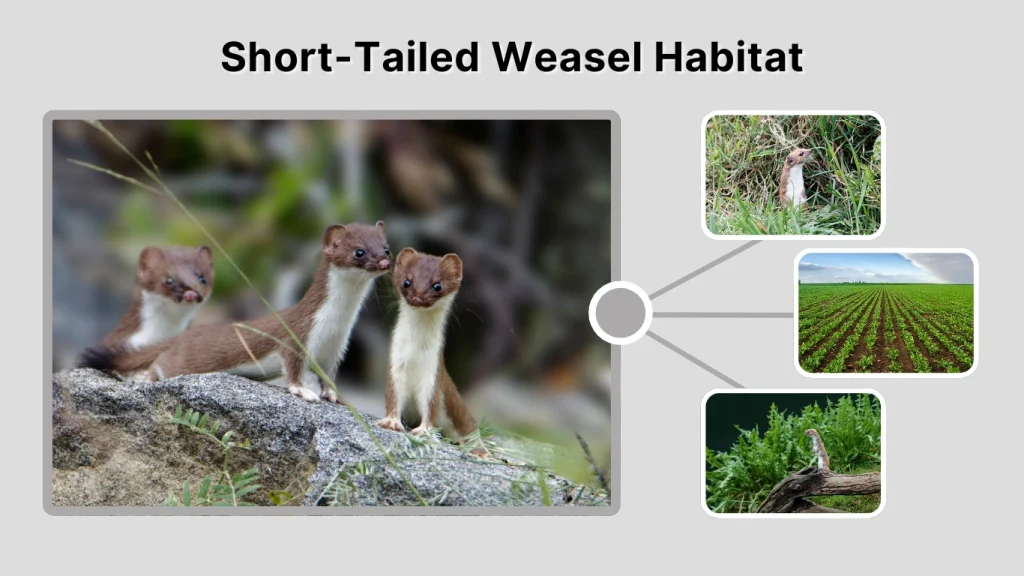
Short-tailed weasels are highly adaptable and live in a variety of habitats, including:
- Forest edges
- Grasslands and meadows
- Farmland
- Marshes and wetlands
- Tundra regions
They often choose areas with abundant small mammals, especially rodents, which form the bulk of their diet.
Rather than digging their own burrows, they typically occupy abandoned tunnels made by mice, voles, or other small animals.
Denning and Shelter Habits
Short-tailed weasels use dens for resting, hiding, and raising their young. These dens are usually located:
- Under tree roots
- In rock piles
- Inside hollow logs
- Within rodent burrows
They line their nests with fur, feathers, or dry vegetation for insulation. During winter, the thick white coat combined with a well-insulated den helps them survive freezing temperatures.
Diet and Hunting Behavior
What Do Short-Tailed Weasels Eat?
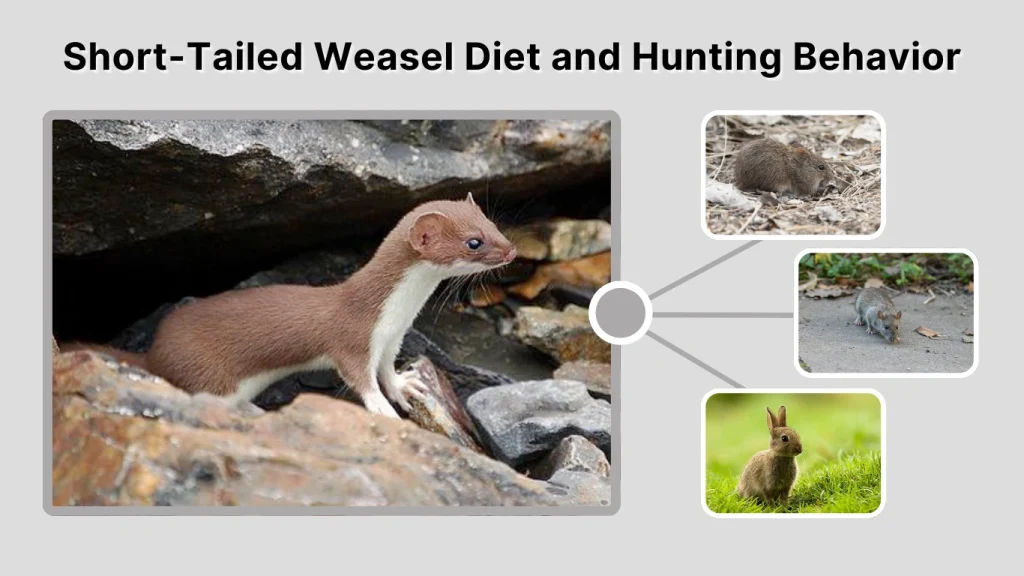
The short-tailed weasel is a strict carnivore. Its primary food source consists of small mammals such as:
- Mice
- Voles
- Shrews
- Young rabbits
It may also eat birds, eggs, insects, and occasionally amphibians. In winter, when food becomes scarce, it relies heavily on rodents living beneath the snow.
Because of its fast metabolism, the weasel must eat frequently. It may consume a large portion of its body weight in prey each day.
Hunting Strategy
Short-tailed weasels are fearless hunters. Their narrow bodies allow them to chase prey directly into underground tunnels. Once inside, the prey has little chance of escape.
They typically kill with a precise bite to the back of the neck, targeting the spinal cord. This quick method ensures the prey is immobilized immediately.
Weasels are also known to store extra food, especially during times of abundance. This behavior helps them survive periods when prey is harder to find.
Behavior and Lifestyle
Activity Patterns
Short-tailed weasels are active year-round and do not hibernate. They are primarily nocturnal and crepuscular, meaning they are most active at night and during dawn and dusk. However, in remote or undisturbed areas, they may also be seen during the day.
Because of their high metabolism, they spend much of their time hunting. Short bursts of activity are followed by periods of rest in sheltered dens. Even in winter, they remain energetic, traveling beneath the snow in search of rodents.
Territorial Behavior
Short-tailed weasels are solitary animals. Each individual maintains its own territory, which it marks with scent glands located near the base of the tail.
- Males typically control larger territories than females.
- A male’s range may overlap with several females.
- Same-sex individuals usually avoid one another.
If another weasel enters its territory, aggressive encounters may occur. These animals are bold and will fiercely defend their hunting grounds.
Communication
Although mostly silent, short-tailed weasels use several forms of communication:
- Scent marking to define territory
- High-pitched squeaks or chirps during conflict
- Body postures to signal threat or excitement
When highly excited or hunting, they may perform a twisting, bouncing movement often called the “weasel war dance.” This energetic display can confuse prey or signal heightened alertness.
Short-Tailed Weasel vs Long-Tailed Weasel
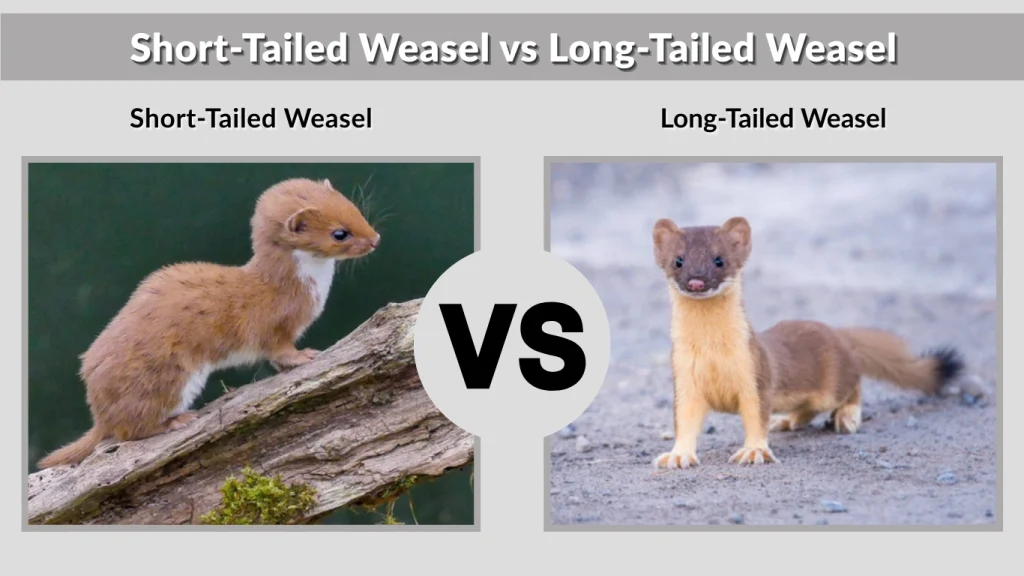
Because the two species look similar, they are often confused. However, there are clear differences.
Key Physical Differences
- Tail length: The short-tailed weasel has a noticeably shorter tail with a black tip. Long-tailed weasels have longer tails relative to body size.
- Body size: Long-tailed weasels are generally larger overall.
- Proportions: The short-tailed weasel appears slightly more compact.
The black-tipped tail is present in both species, but tail length remains the most reliable identification clue.
Geographic and Habitat Differences
Short-tailed weasels prefer cooler northern climates, including subarctic and tundra regions. Long-tailed weasels are more common in southern areas and warmer habitats.
In regions where their ranges overlap, habitat preference and size differences help reduce competition.
Reproduction and Life Cycle
Short-tailed weasels have a fascinating reproductive strategy known as delayed implantation.
- Breeding season: Typically occurs in summer.
- Delayed development: After mating, the fertilized egg does not immediately implant in the uterus.
- Active gestation: Once implantation occurs months later, development lasts about 3–4 weeks.
This adaptation ensures that young are born in spring when food is plentiful.
Females give birth to litters of 4 to 12 kits in a well-hidden nest. The newborns are blind and helpless but grow rapidly. By late summer, young weasels are capable hunters and begin establishing their own territories.
In the wild, short-tailed weasels usually live 1 to 3 years, though many fall prey to larger predators before reaching old age.
Predators and Natural Threats
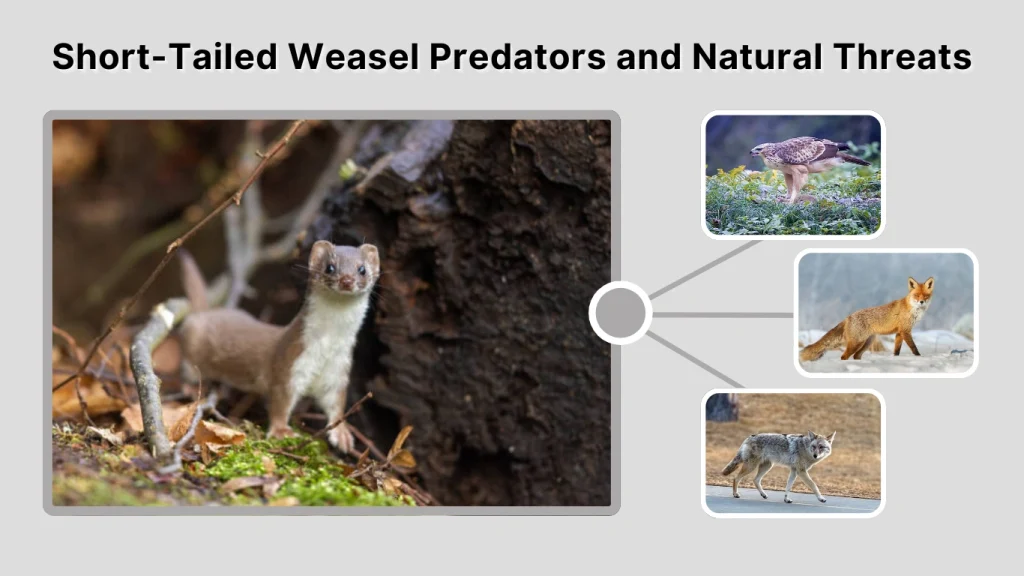
Despite being skilled hunters, short-tailed weasels are prey for several larger animals, including:
- Hawks and owls
- Foxes
- Coyotes
- Larger carnivorous mammals
Their small size makes them vulnerable, especially in open areas. The white winter coat helps reduce visibility in snowy landscapes, but climate change poses a growing threat. In regions with shorter snow seasons, white-coated weasels may stand out against snowless ground, increasing predation risk.
Habitat loss due to agriculture and development can also reduce available shelter and prey.
Conservation Status
The short-tailed weasel is currently considered a species of least concern in most parts of its range. It has a broad distribution and stable overall population.
However, local populations may fluctuate depending on rodent numbers, habitat changes, and climate conditions. Historically, the ermine fur was highly valued in the fur trade, particularly in Europe, where it symbolized royalty and status.
Today, while trapping still occurs in some areas, it is regulated in many regions to maintain sustainable populations.
Interesting Facts About the Short-Tailed Weasel
- The term “ermine” refers to the weasel’s white winter coat.
- Ermine fur was traditionally used to trim royal robes in Europe.
- A short-tailed weasel can take down prey larger than itself.
- It has an extremely fast metabolism and must eat frequently.
- Its slender body allows it to access prey in underground tunnels that other predators cannot reach.
FAQs
Is a short-tailed weasel the same as a stoat?
Yes, the short-tailed weasel and the stoat are the same species. “Ermine” is another name used specifically when the animal is in its white winter coat phase.
Why does the short-tailed weasel turn white in winter?
The seasonal color change provides camouflage in snowy environments. The shift is triggered by changes in daylight length rather than temperature, helping the animal adapt before heavy snowfall arrives.
How big does a short-tailed weasel get?
Adults typically measure 7 to 13 inches in body length, with an additional 3 to 5 inches of tail. Males are significantly larger than females.
Are short-tailed weasels dangerous to humans or pets?
Short-tailed weasels are not dangerous to humans. They are shy and avoid contact. However, they may prey on small poultry or rodents if given the opportunity.