



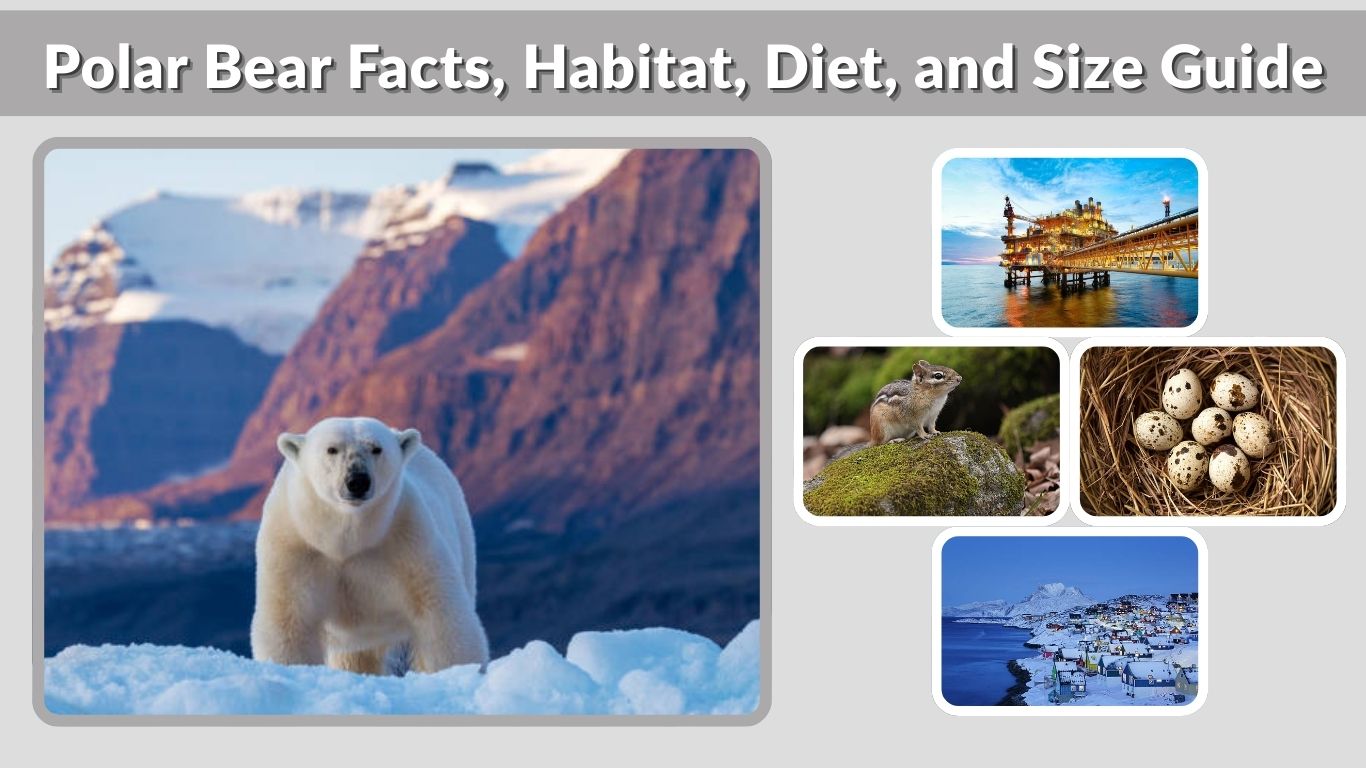
Polar bears are powerful Arctic predators known for their massive size, thick white fur, and remarkable ability to survive in freezing temperatures. Scientifically called Ursus maritimus, these marine mammals depend heavily on sea ice for hunting and survival. From their unique black skin to their seal-based diet, polar bears are perfectly adapted to life in the Arctic. In this guide, you’ll discover essential polar bear facts, habitat details, size information, and fascinating insights into their life cycle.
What Is a Polar Bear?
The polar bear (Ursus maritimus) is the largest land carnivore in the world. Unlike other bears, it is classified as a marine mammal because it spends most of its life on Arctic sea ice and relies on the ocean for food.
Polar bears evolved from brown bears thousands of years ago, adapting to extreme cold conditions. Their scientific name means “maritime bear,” highlighting their close relationship with the sea. Among the most interesting polar bear facts is that they are excellent swimmers and can travel long distances between ice floes in search of food.
Polar Bear Habitat and Location
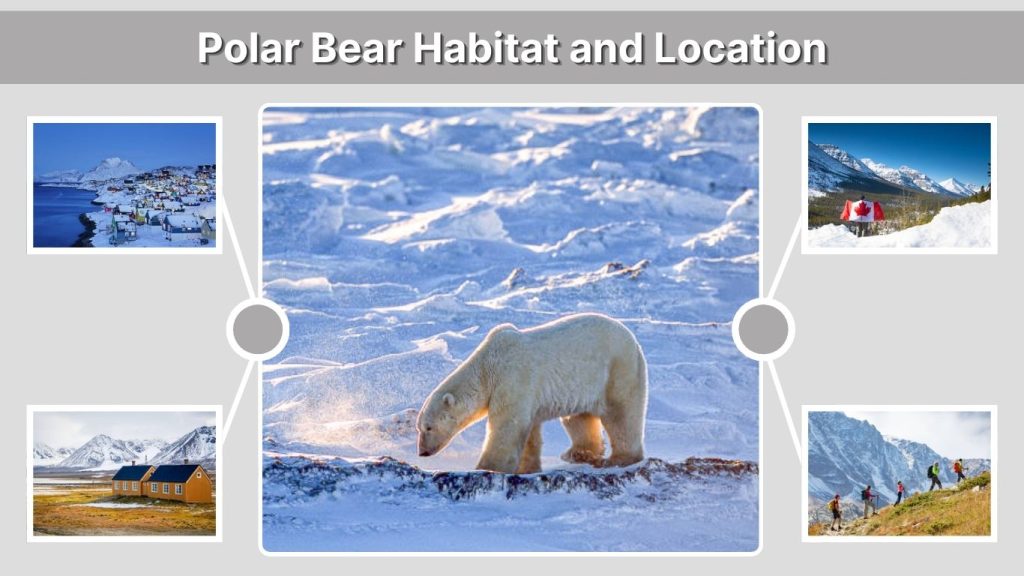
Where Do Polar Bears Live?
Polar bear habitat is limited to the Arctic Circle. Their location includes five main regions:
- Canada
- Russia
- Greenland
- Norway (Svalbard)
- United States (Alaska)
Canada has the largest polar bear population in the world. These bears are rarely found far from sea ice because it is essential for hunting seals.
The polar bear location is determined by ice availability rather than land boundaries. As sea ice shifts seasonally, polar bears migrate accordingly.
Polar Bear Habitat Characteristics
The ideal polar bear habitat includes:
- Sea ice platforms
- Coastal Arctic regions
- Ice floes over continental shelves
- Areas rich in seal populations
Sea ice acts as a hunting ground. Polar bears use it to catch seals at breathing holes or along ice edges. During summer months, when ice melts, some bears move to shore and rely on stored body fat until hunting conditions improve.
Polar Bear Range
The polar bear range spans across the circumpolar Arctic. Scientists divide populations into 19 subpopulations based on geographic regions.
However, this range is shrinking due to climate change. Rising temperatures reduce sea ice coverage, limiting hunting areas. Since polar bears depend on ice for survival, changes in their range directly impact their population health.
Polar Bear Size and Physical Characteristics
How Big Is a Polar Bear?
Polar bear size is one of their most impressive traits. Adult males (boars) typically measure:
- Length: 7 to 10 feet
- Weight: 900 to 1,600 pounds
Females (sows) are smaller:
- Length: 6 to 8 feet
- Weight: 330 to 650 pounds
When standing on their hind legs, a large male can reach over 10 feet tall. Their massive size helps them dominate as apex predators in the Arctic ecosystem.
Unique Body Adaptations
Polar bears have evolved several adaptations to survive extreme cold:
- Thick fur for insulation
- A blubber layer up to 4.5 inches thick
- Small ears and tail to reduce heat loss
- Large, wide paws for walking on ice and swimming
Their paws can measure up to 12 inches across, acting like natural snowshoes. These paws also help them swim efficiently, as polar bears are powerful and graceful in the water.
Polar Bear Skin and Fur
One of the most surprising polar bear facts is that their fur is not actually white. The hairs are transparent and hollow, reflecting light to appear white. This camouflage helps them blend into snowy environments.
Even more fascinating is polar bear skin, which is black. The dark skin absorbs sunlight and helps retain heat in freezing Arctic temperatures. Beneath the skin lies a thick layer of fat that provides insulation and energy storage during periods when food is scarce.
Polar Bear Diet and Hunting Behavior
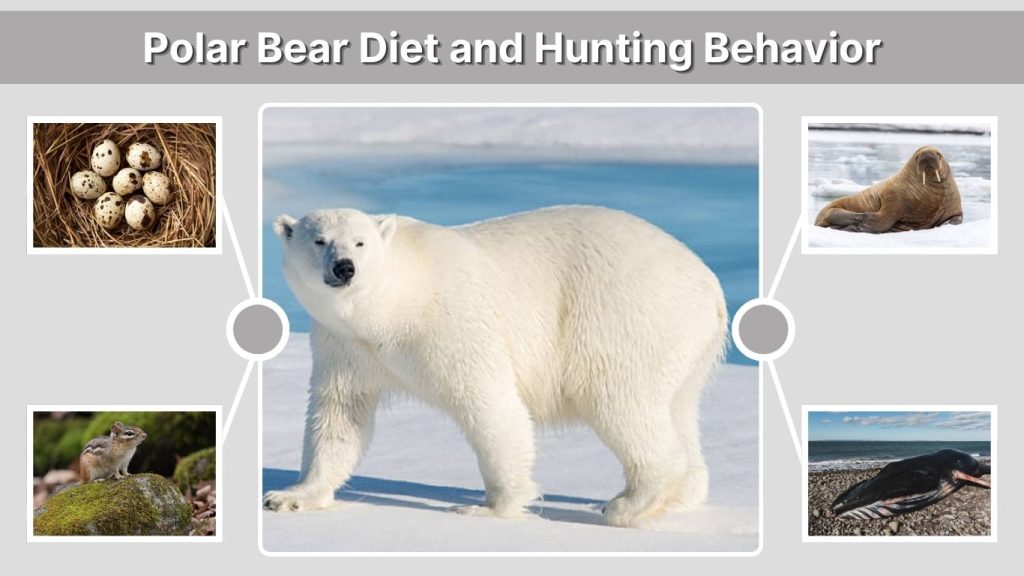
What Do Polar Bears Eat?
The polar bear diet mainly consists of seals, especially:
- Ringed seals
- Bearded seals
Seals provide the high-fat nutrition polar bears need to survive. A single seal can supply several days’ worth of energy.
Although they are specialized hunters, polar bears are opportunistic feeders. They may eat:
- Walrus
- Whale carcasses
- Bird eggs
- Small mammals
- Occasionally vegetation
However, their survival largely depends on access to seal populations.
Hunting Techniques
Polar bears are patient and strategic hunters. One common method is “still-hunting,” where the bear waits silently near a seal’s breathing hole in the ice. When the seal surfaces for air, the bear strikes with incredible speed.
They also hunt along ice edges, where seals frequently surface. Polar bears can swim for dozens of miles and use their strong sense of smell to detect prey nearly 20 miles away.
Polar Bear Life Cycle and Reproduction
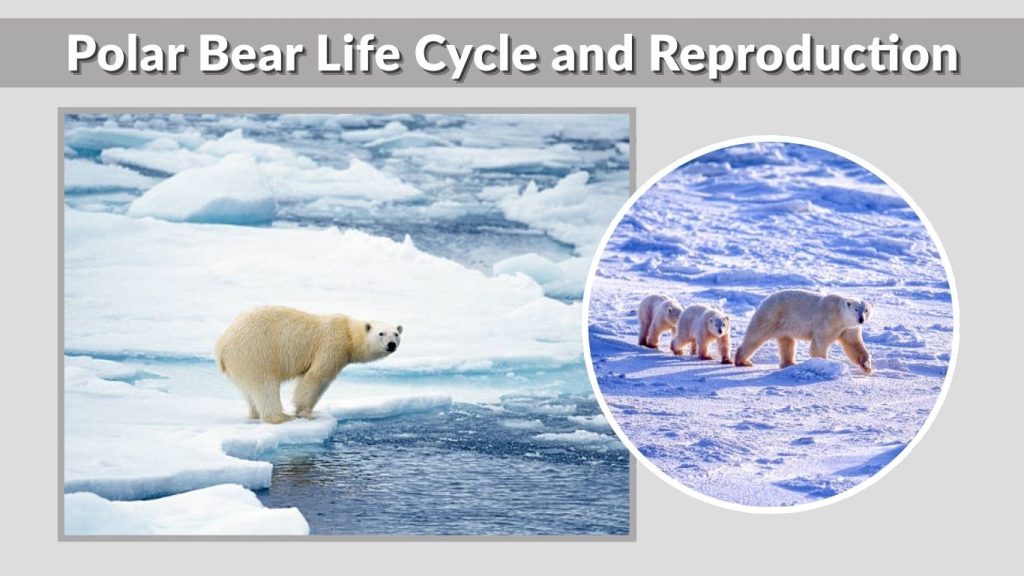
Mating Season
The polar bear life cycle begins with mating season, which typically occurs between April and May. During this time, males may travel long distances to find receptive females. Competition can be intense, with males sometimes fighting for mating rights.
After mating, a fascinating biological process called delayed implantation occurs. Although fertilization happens in spring, the embryo does not immediately attach to the uterus. Implantation takes place in the fall, ensuring cubs are born during winter when the mother is safely inside a den.
Birth and Cubs
Pregnant females dig snow dens in coastal areas during late autumn. Inside these dens, they give birth between November and January. Cubs are born tiny—usually weighing about one pound—and are blind and helpless at birth.
Most litters consist of two cubs. The mother nurses them with fat-rich milk while remaining inside the den for several months. During this time, she does not eat and relies entirely on stored body fat.
In early spring, the mother and cubs emerge from the den. Cubs stay with their mother for two to three years, learning essential survival skills such as hunting and navigating sea ice.
Growth and Lifespan
Young polar bears grow rapidly due to their nutrient-rich diet. By the time they leave their mother, they are capable hunters.
Polar bears typically reach sexual maturity at:
- Females: 4–5 years
- Males: 6 years
In the wild, the average lifespan is 20 to 25 years, although some individuals may live longer under favorable conditions.
Fascinating Polar Bear Facts
Here are some surprising polar bear facts that highlight their incredible abilities:
- Polar bears are the largest land carnivores on Earth.
- They can swim continuously for over 60 miles without rest.
- Their sense of smell can detect seals nearly 20 miles away.
- A polar bear can run up to 25 miles per hour in short bursts.
- They are considered marine mammals due to their dependence on the ocean.
- Despite their size, they move quietly and stealthily when hunting.
These adaptations make them perfectly suited to the harsh Arctic environment.
Threats and Conservation Status
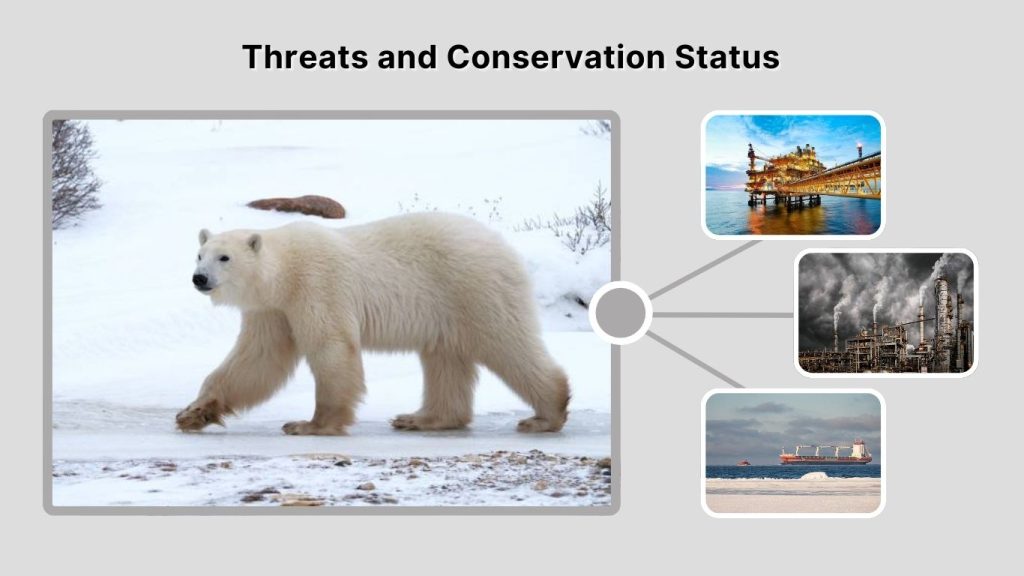
Polar bears are currently classified as Vulnerable by the International Union for Conservation of Nature (IUCN). The greatest threat to their survival is climate change.
As global temperatures rise, Arctic sea ice melts earlier in spring and forms later in autumn. Since polar bears rely on sea ice for hunting, reduced ice coverage directly impacts their ability to find food.
Other threats include:
- Oil and gas exploration
- Pollution and contaminants
- Increased human-bear conflicts
- Shipping activity in Arctic waters
Conservation efforts focus on reducing greenhouse gas emissions, protecting critical habitat, and monitoring polar bear populations. International cooperation is essential because the polar bear range spans multiple countries.
Polar Bears in Popular Culture
Polar Bear Teddy
The polar bear teddy has become a beloved symbol of Arctic wildlife. Inspired by real bears, plush polar bear toys are especially popular among children. Their soft white fur and gentle appearance make them appealing, even though real polar bears are powerful predators.
Teddy bears in general originated in the early 20th century, and polar bear versions remain common in toy collections, holiday gifts, and conservation fundraising campaigns.
Polar Bear Clip Art and Educational Use
Polar bear clip art is widely used in educational materials, classroom decorations, wildlife presentations, and children’s books. Because polar bears are iconic Arctic animals, they are often featured in winter-themed designs and environmental awareness campaigns.
Teachers frequently use polar bear clip art to introduce lessons about Arctic ecosystems, climate change, and animal adaptations. When using digital images, it is important to respect copyright and licensing guidelines.
Why Polar Bears Matter to the Arctic Ecosystem
Polar bears play a crucial role as apex predators. By hunting seals, they help regulate prey populations and maintain balance within the Arctic marine ecosystem.
They are also considered an indicator species. Changes in polar bear health and population trends often reflect broader environmental shifts in the Arctic. Protecting polar bears ultimately supports the stability of the entire ecosystem.
FAQs
How big is a polar bear?
Polar bear size varies by sex. Adult males typically weigh between 900 and 1,600 pounds and measure 7 to 10 feet long. Females are smaller, weighing 330 to 650 pounds. When standing upright, a large male can exceed 10 feet in height.
Where do polar bears live?
Polar bears live in the Arctic Circle, including Canada, Russia, Greenland, Norway (Svalbard), and Alaska in the United States. Their location depends on sea ice availability because they rely on ice platforms to hunt seals.
What do polar bears eat?
The polar bear diet mainly consists of seals, especially ringed and bearded seals. They may also consume walrus, whale carcasses, bird eggs, and small mammals. High-fat prey is essential for maintaining their energy and insulation.
What color is a polar bear’s skin?
Polar bear skin is black. While their fur appears white, it is actually transparent and hollow. The black skin absorbs heat from sunlight, helping the bear stay warm in freezing Arctic conditions.
Are polar bears endangered?
Polar bears are classified as Vulnerable, meaning they face a high risk of population decline. Climate change and shrinking sea ice are the biggest threats to their survival. Conservation efforts aim to protect their habitat and reduce global warming impacts.