



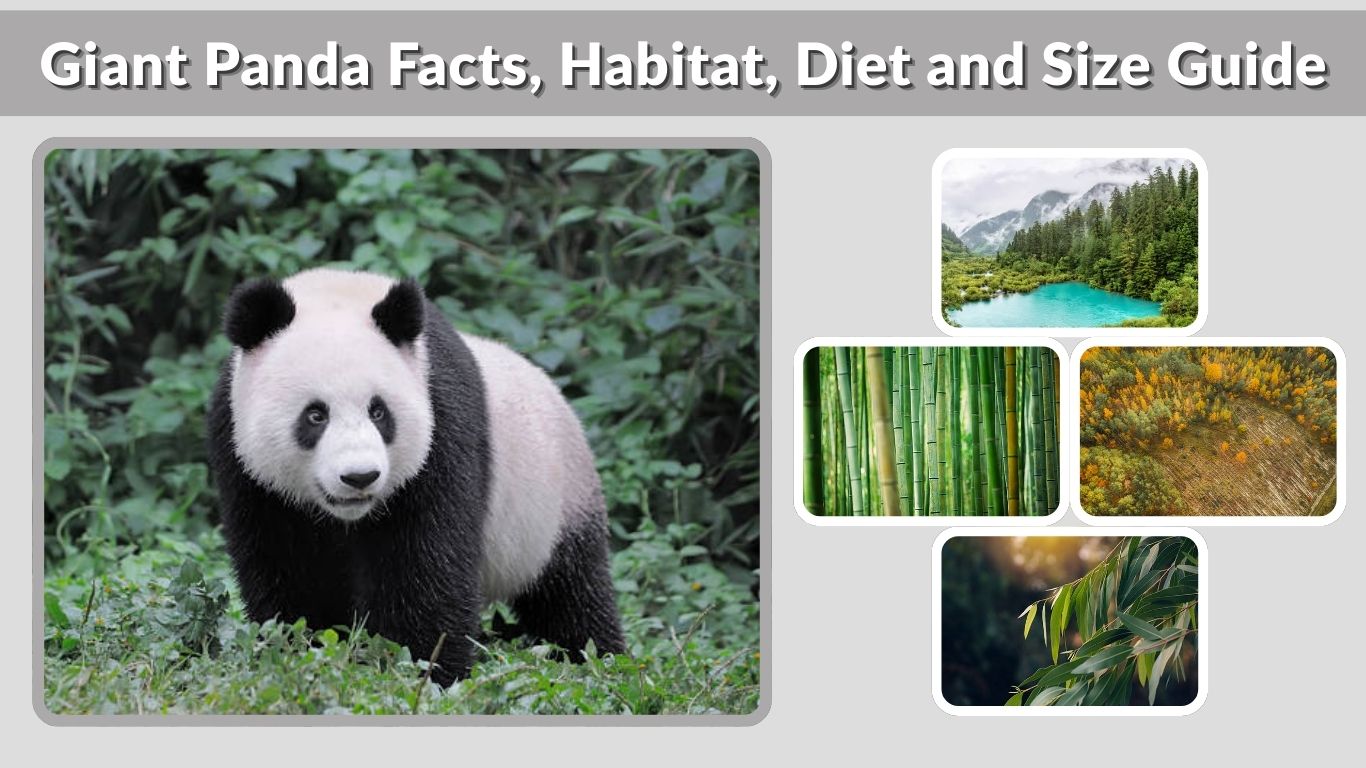
The giant panda is one of the world’s most recognizable animals, famous for its black-and-white fur and love of bamboo. Native to China, this gentle bear has become a global symbol of wildlife conservation. Although it belongs to the bear family, the giant panda has several unique traits that set it apart from other species. From its specialized diet to its mountain habitat, this guide explores essential giant panda facts, habitat details, size information, and fascinating adaptations.
What Is a Giant Panda?
The giant panda (Ailuropoda melanoleuca) is a member of the bear family, Ursidae. Unlike most bears, which are omnivores with varied diets, the giant panda primarily eats bamboo. Its scientific name means “black-and-white cat-foot,” describing its distinctive coloring.
One of the most interesting giant panda facts is that although they share ancestry with other bears, they evolved to thrive in cool mountain forests. Their bold black eye patches, ears, and limbs contrast sharply with their white body fur, making them instantly recognizable worldwide.
Despite their cuddly appearance, giant pandas are strong animals with powerful jaws and teeth designed to crush tough bamboo stalks.
Giant Panda Habitat and Location
Where Do Giant Pandas Live?
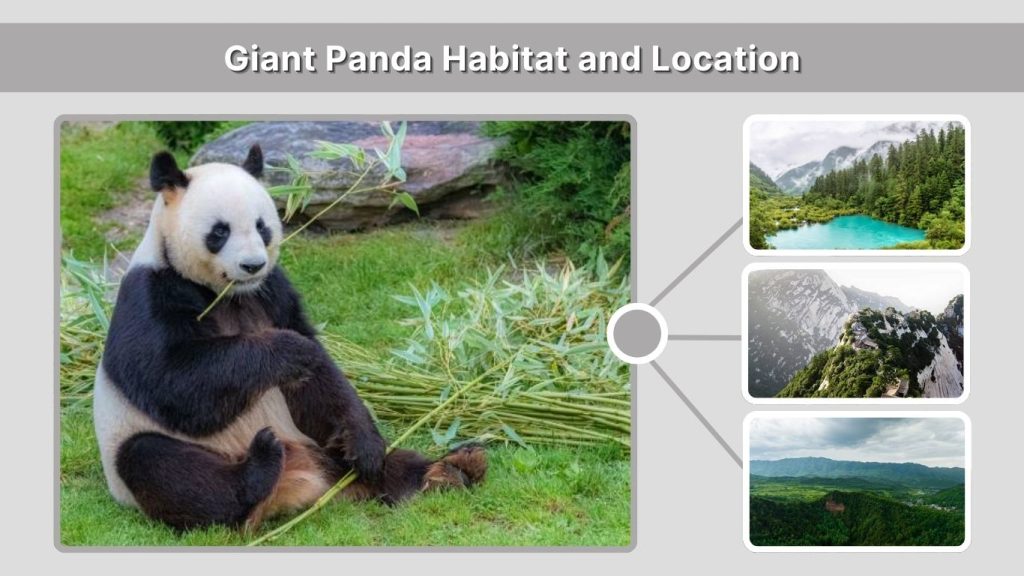
The giant panda location is limited to central China. They inhabit mountain ranges in:
- Sichuan Province
- Shaanxi Province
- Gansu Province
These regions contain dense bamboo forests that provide both food and shelter. Unlike polar bears that roam icy landscapes, giant pandas prefer temperate mountain ecosystems with cool, moist climates.
Today, most wild pandas live within protected reserves established by the Chinese government to preserve their habitat.
Giant Panda Habitat Characteristics
The ideal giant panda habitat consists of:
- Thick bamboo forests
- Steep mountain slopes
- Elevations between 5,000 and 10,000 feet
- Cool, misty weather conditions
Bamboo is the foundation of their habitat. Since bamboo grows at different elevations and seasons, pandas sometimes move within their range to follow fresh growth.
Because bamboo forests are fragile ecosystems, habitat destruction has historically been one of the biggest threats to panda survival. Protecting these forests is essential for maintaining stable panda populations.
Giant Panda Size and Physical Characteristics
How Big Is a Giant Panda?
Giant panda size varies between males and females. Adult males typically weigh between 190 and 275 pounds, while females usually weigh 150 to 220 pounds.
In terms of length, giant pandas measure about 4 to 6 feet from head to body, with an additional short tail of about 4 to 6 inches. Their shoulder height averages around 2 to 3 feet.
While they are not as large as some bear species, their sturdy build and muscular frame give them significant strength.
Distinctive Black-and-White Fur
The giant panda’s black-and-white fur pattern serves important purposes. Scientists believe the white fur helps them blend into snowy mountain landscapes, while the black patches provide camouflage in shaded forest areas.
Their thick coat also protects them from cold mountain temperatures. Even though they do not hibernate like some other bears, their dense fur keeps them warm throughout the year.
Unique Adaptations
Giant panda adaptations allow them to survive on a bamboo-heavy diet despite belonging to the carnivore order.
One of the most remarkable adaptations is their “pseudo-thumb.” This is an enlarged wrist bone that functions like an extra thumb, helping pandas grasp and hold bamboo stalks with precision.
Other adaptations include:
- Extremely strong jaw muscles
- Broad, flat molars for grinding bamboo
- A slow metabolism to conserve energy
Although bamboo is low in nutrients, these physical adaptations allow pandas to efficiently process large quantities of it.
Giant Panda Diet and Feeding Behavior
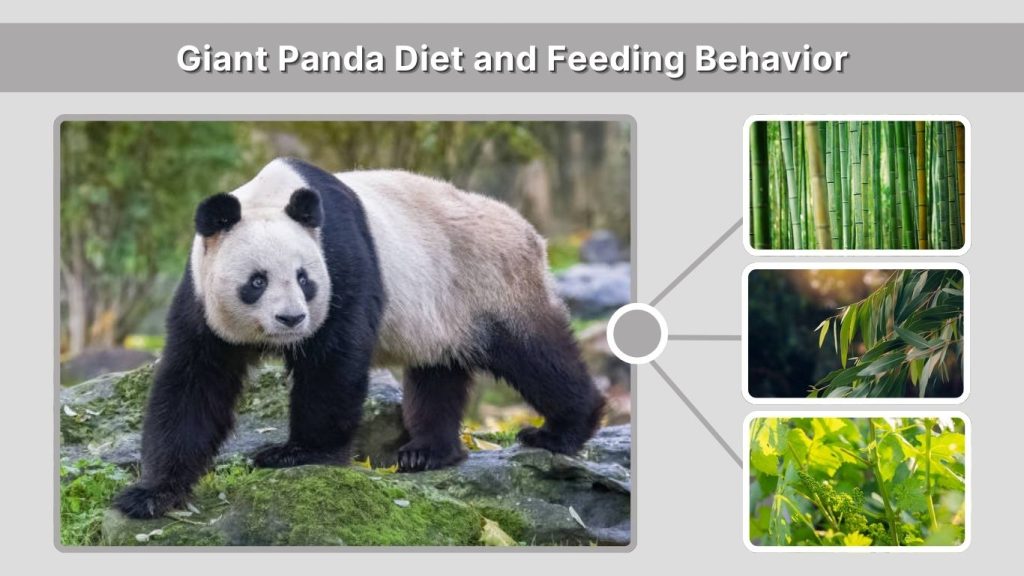
What Do Giant Pandas Eat?
The giant panda diet consists of about 99% bamboo. They eat different parts of the plant, including:
- Bamboo shoots
- Leaves
- Stems
Occasionally, they may consume small animals or carrion, but this is rare. Despite being classified as carnivores biologically, their feeding habits are mostly herbivorous.
Because bamboo contains limited nutrients, pandas must eat large amounts daily to meet their energy needs.
How Much Do They Eat?
A giant panda may eat between 26 and 84 pounds of bamboo every day. They spend approximately 10 to 16 hours daily feeding.
Their digestive system is similar to that of other bears and is not fully adapted to digest plant material efficiently. As a result, pandas must consume significant quantities of bamboo to absorb enough nutrients.
This constant feeding routine shapes much of their daily behavior, making them relatively slow-moving and solitary animals.
Giant Panda Life Cycle and Reproduction
Mating Season
The giant panda life cycle includes a short and highly specific breeding period. Mating season typically occurs in spring, between March and May. Female pandas are fertile for only a few days each year, which makes reproduction challenging in the wild.
Males compete for access to females, often communicating through vocalizations and scent marking. After successful mating, the gestation period lasts about 95 to 160 days.
Birth and Cubs
Female pandas usually give birth to one cub, although twins can occur. However, in the wild, the mother typically raises only one cub because caring for two requires too much energy.
Newborn cubs are extremely small compared to their mothers. At birth, they weigh only 3 to 5 ounces and are pink, hairless, and blind. This makes them one of the smallest newborn mammals relative to the size of the mother.
The cub begins developing its black-and-white markings within a few weeks. During the first few months, it depends entirely on its mother for warmth, protection, and milk.
Growth and Lifespan
Giant panda cubs start crawling at around three months and begin eating bamboo at about six months old, although they continue nursing for over a year.
Cubs usually stay with their mother for 18 to 24 months, learning survival skills such as climbing and foraging. After separation, young pandas establish their own territories.
In the wild, giant pandas typically live around 20 years. In captivity, with medical care and consistent food supply, they can live 30 years or more.
Giant Panda Population and Conservation
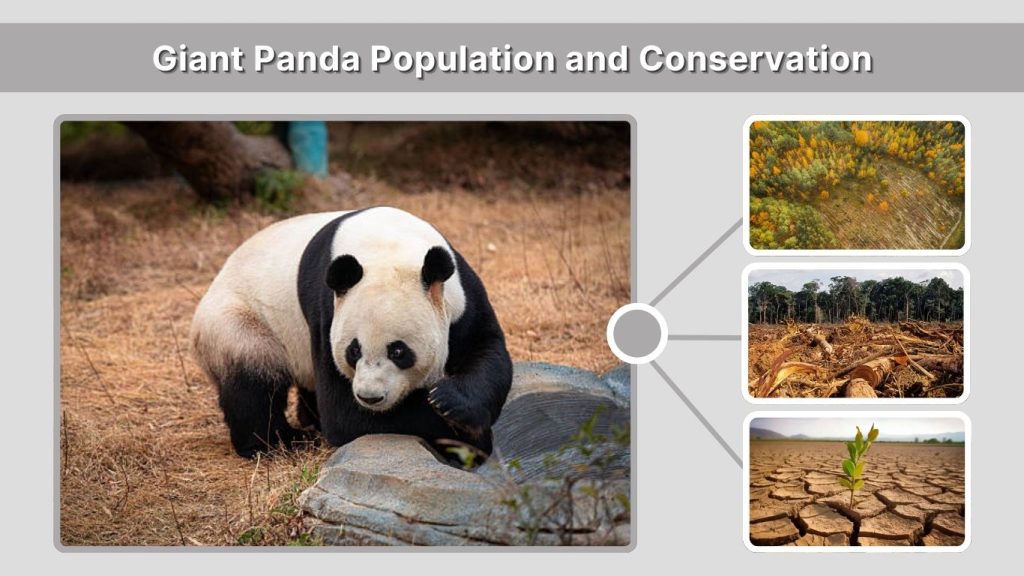
Current Population Status
The giant panda population has improved in recent decades due to strong conservation efforts. Today, there are approximately 1,800 giant pandas living in the wild.
Thanks to habitat protection and breeding programs, the species is currently classified as Vulnerable rather than Endangered. This change reflects a significant conservation success story.
Major Threats
Despite improvements, giant pandas still face several threats:
- Habitat fragmentation
- Deforestation
- Infrastructure development
- Climate change affecting bamboo growth
Since pandas rely heavily on bamboo forests, any environmental disruption can directly impact their survival.
Conservation Success Story
Giant panda conservation is considered one of the world’s most successful wildlife recovery efforts. The Chinese government has established more than 60 panda reserves, protecting large areas of bamboo forest.
Breeding programs in China and international zoos have also helped increase panda numbers. Additionally, the giant panda serves as the symbol of the World Wide Fund for Nature (WWF), highlighting its global conservation importance.
Continuous monitoring, habitat restoration, and research remain essential for maintaining stable panda populations.
Fascinating Giant Panda Facts
Here are some interesting giant panda facts that make this species unique:
- Giant pandas have a special wrist bone that acts like a thumb.
- They are excellent climbers and can climb trees to escape danger.
- Pandas are mostly solitary animals, except during mating season.
- They communicate using scent markings and vocal sounds.
- Baby pandas are born pink and develop their black-and-white fur later.
- Despite their size, they can swim when necessary.
These characteristics help pandas survive in their mountainous forest environments.
Giant Panda vs Red Panda
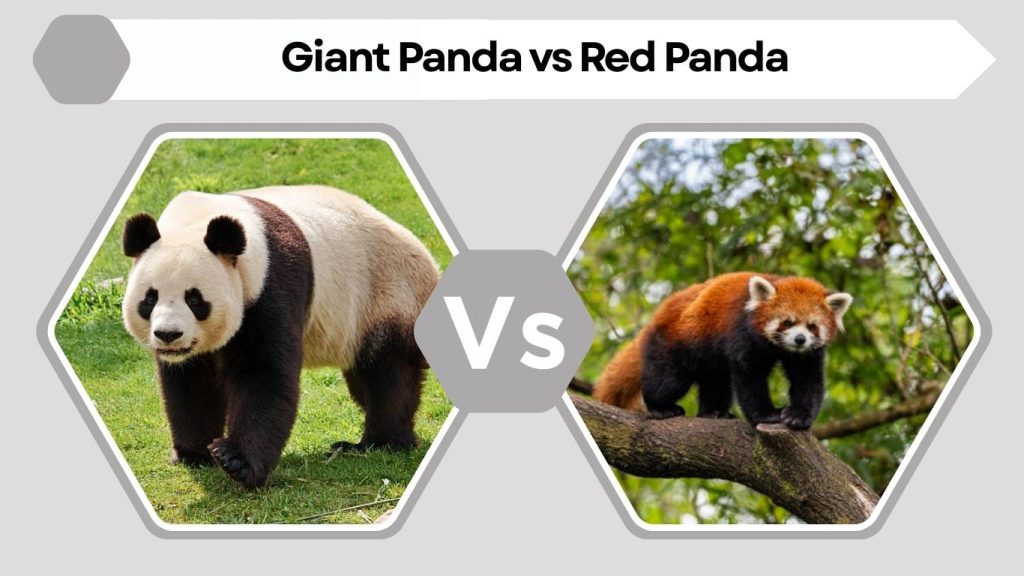
Although they share a similar name, giant pandas and red pandas are not closely related.
Key differences include:
- Giant pandas are true bears, while red pandas belong to a separate family.
- Giant pandas are much larger and heavier.
- Both species eat bamboo, but red pandas also consume fruits and insects.
- Giant pandas live mainly in central China, while red pandas have a broader range across the Himalayas and parts of Asia.
Understanding these differences helps clarify common confusion between the two species.
Why Giant Pandas Matter to Ecosystems
Giant pandas play an important role as an umbrella species. By protecting panda habitats, conservation programs also safeguard many other plants and animals that share the same environment.
Healthy bamboo forests support diverse wildlife, including birds, small mammals, and insects. Therefore, protecting giant pandas contributes to broader biodiversity conservation in China’s mountain ecosystems.
FAQs
Where do giant pandas live?
Giant pandas live in central China, primarily in Sichuan, Shaanxi, and Gansu provinces. They inhabit cool, mountainous regions with dense bamboo forests at elevations between 5,000 and 10,000 feet. Most wild pandas now live in protected reserves designed to preserve their natural habitat.
What do giant pandas eat?
The giant panda diet consists mainly of bamboo, including shoots, leaves, and stems. Bamboo makes up about 99% of their diet. Although they belong to the carnivore family, pandas rarely eat meat and must consume large amounts of bamboo daily to meet their nutritional needs.
How big is a giant panda?
Giant panda size ranges from 4 to 6 feet in length, with males weighing 190 to 275 pounds and females weighing 150 to 220 pounds. They have a sturdy build and strong jaws that allow them to crush bamboo efficiently.
Are giant pandas endangered?
Giant pandas are currently classified as Vulnerable. Their population has increased due to conservation efforts, but habitat loss and climate change remain ongoing threats. Continued protection of bamboo forests is essential for their long-term survival.
How many giant pandas are left?
There are approximately 1,800 giant pandas living in the wild. Additional individuals live in conservation centers and zoos worldwide as part of breeding and research programs that support giant panda conservation efforts.