





High in the windswept mountains of the Tibetan Plateau lives one of the world’s least understood bears—the Tibetan blue bear. Known scientifically as Ursus arctos pruinosus, this elusive animal is a rare subspecies of the brown bear. Its unusual name comes from the bluish or slate-gray sheen of its thick fur, which can appear almost silver under harsh mountain light. Because it inhabits remote, high-altitude regions, sightings are uncommon, adding to its mystery and even linking it to Himalayan legends.
What Is the Tibetan Blue Bear?
The Tibetan blue bear is a subspecies of the brown bear found primarily on the Tibetan Plateau. Despite its dramatic name, it is not a separate species. Instead, it belongs to the wider brown bear family, which includes several subspecies spread across North America, Europe, and Asia.
The term “blue” does not mean the bear is bright blue. Rather, its fur often has a frosted or slate-colored appearance. In certain lighting conditions—especially against snow or rocky terrain—it can appear bluish. This distinct coloration, combined with its remote habitat, has made it one of the least studied bears in the world.
Because it is rarely seen and poorly documented compared to other brown bears, many people are unsure whether it truly exists. However, zoologists recognize it as a legitimate subspecies with unique regional adaptations.
Scientific Classification and Origins
Taxonomy Breakdown
The Tibetan blue bear’s classification places it within the broader brown bear species:
- Kingdom: Animalia
- Class: Mammalia
- Order: Carnivora
- Family: Ursidae
- Genus: Ursus
- Species: Ursus arctos
- Subspecies: Ursus arctos pruinosus
Brown bears are among the most widely distributed bear species in the world. Over thousands of years, isolated populations adapted to different climates and terrains, leading to the development of distinct subspecies—including the Tibetan blue bear.
Evolution and Adaptation
The Tibetan Plateau is one of the harshest inhabited regions on Earth. With elevations often exceeding 4,000 meters (13,000 feet), oxygen levels are low, temperatures are extreme, and vegetation is sparse.
Over time, the Tibetan blue bear adapted to these challenging conditions. Its thick, dense fur provides insulation against freezing winds. Its powerful build allows it to travel long distances across rugged, rocky landscapes. Geographic isolation also played a key role in shaping its distinct characteristics, separating it from other brown bear populations.
Physical Characteristics
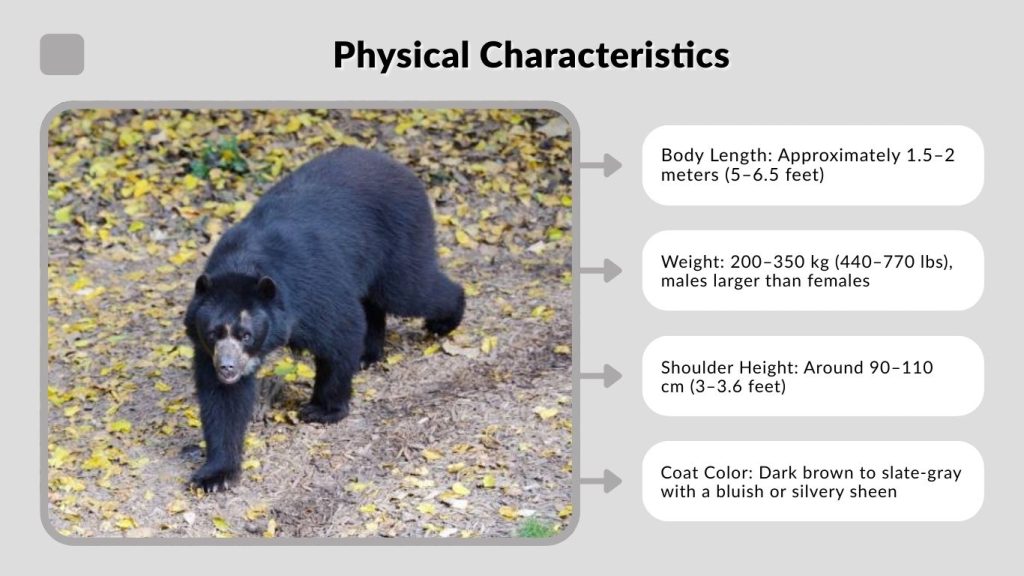
The Tibetan blue bear is a powerful, high-altitude subspecies of the brown bear, built for survival in one of the harshest environments on Earth. Its body is muscular and compact, helping it conserve heat in freezing temperatures. Thick fur, strong limbs, and heavy bone structure allow it to navigate rocky mountain slopes with ease. While it shares many traits with other brown bears, its unique coat coloration and adaptations to extreme elevation set it apart.
Key Physical Traits
- Body Length: Approximately 1.5–2 meters (5–6.5 feet)
- Weight: 200–350 kg (440–770 lbs), males larger than females
- Shoulder Height: Around 90–110 cm (3–3.6 feet)
- Coat Color: Dark brown to slate-gray with a bluish or silvery sheen
- Fur Type: Thick, dense, and insulating for extreme cold
- Shoulder Hump: Prominent muscle mass for digging strength
- Paws: Large with long, curved claws for digging and gripping rocky terrain
- Head Shape: Broad skull with strong jaws
These physical characteristics allow the Tibetan blue bear to survive in high-altitude alpine ecosystems where few large mammals can thrive.
Habitat and Geographic Range
The Tibetan blue bear primarily inhabits the Tibetan Plateau, one of the highest and most expansive plateaus in the world. This region is characterized by:
- Cold alpine climates
- Sparse vegetation
- Rocky mountains and open grasslands
Unlike forest-dwelling bears, the Tibetan blue bear survives in relatively treeless environments. Alpine meadows and steppe-like landscapes provide seasonal food sources.
Elevation Range
This bear is typically found at elevations above 4,000 meters (13,000 feet). Living at such heights requires special adaptations. Lower oxygen levels and extreme weather conditions make survival difficult for many species, but the Tibetan blue bear has evolved to thrive in this demanding ecosystem.
Countries Where It Is Found
The subspecies is primarily found in:
- China, particularly within the Tibet Autonomous Region
There have been occasional reports suggesting it may roam near parts of the Himalayan border regions, but its core population remains within the Tibetan Plateau.
Because these regions are remote and sparsely populated, scientific research on the bear remains limited. Much of what is known comes from scattered field studies and indirect evidence.
Diet and Feeding Behavior

Like all brown bears, the Tibetan blue bear is omnivorous. This flexible diet is crucial in an environment where food availability changes with the seasons.
Plant-Based Foods
During warmer months, the bear feeds on:
- Grasses
- Roots and tubers
- Berries when available
Digging is a common behavior, as underground plants can provide reliable nutrition even when surface vegetation is scarce.
Animal-Based Foods
The Tibetan blue bear also consumes:
- Small mammals such as pikas and rodents
- Insects
- Carrion
In rare cases, it may prey on livestock, which can lead to conflicts with local herders. However, such incidents are generally opportunistic rather than habitual hunting behavior.
Its varied diet helps it build fat reserves before winter, when food becomes extremely limited.
Behavior and Lifestyle
The Tibetan blue bear is largely solitary, except during mating season or when a mother is raising cubs. Like other brown bears, it maintains a large home range, which can span dozens of square kilometers depending on food availability.
Because the Tibetan Plateau is sparsely populated by humans, encounters are rare. This isolation has helped the bear maintain its elusive reputation. Most activity is believed to occur during daylight hours, although bears may adjust their patterns to avoid human presence in areas where herding takes place.
Hibernation Patterns
Harsh winters at high altitudes make survival challenging. As temperatures drop and food sources disappear, the Tibetan blue bear enters a period of hibernation.
Before winter, it consumes large amounts of food to build up fat reserves. It then retreats to a den—often dug into a hillside or sheltered among rocks—where it remains for several months. During hibernation, its heart rate and metabolism slow significantly, allowing it to conserve energy until spring.
Female bears typically give birth during this period. Cubs are born blind and helpless, relying entirely on their mother’s milk and warmth until they are strong enough to leave the den.
Interaction with Humans
Due to its remote habitat, the Tibetan blue bear has limited interaction with humans. However, occasional livestock predation can lead to conflict with local pastoral communities.
In such cases, herders may view the bear as a threat. Conservation efforts aim to reduce these conflicts through better livestock management practices and increased awareness about the bear’s ecological importance.
Overall, compared to other bear populations worldwide, the Tibetan blue bear remains relatively insulated from large-scale human disturbance.
Conservation Status and Threats
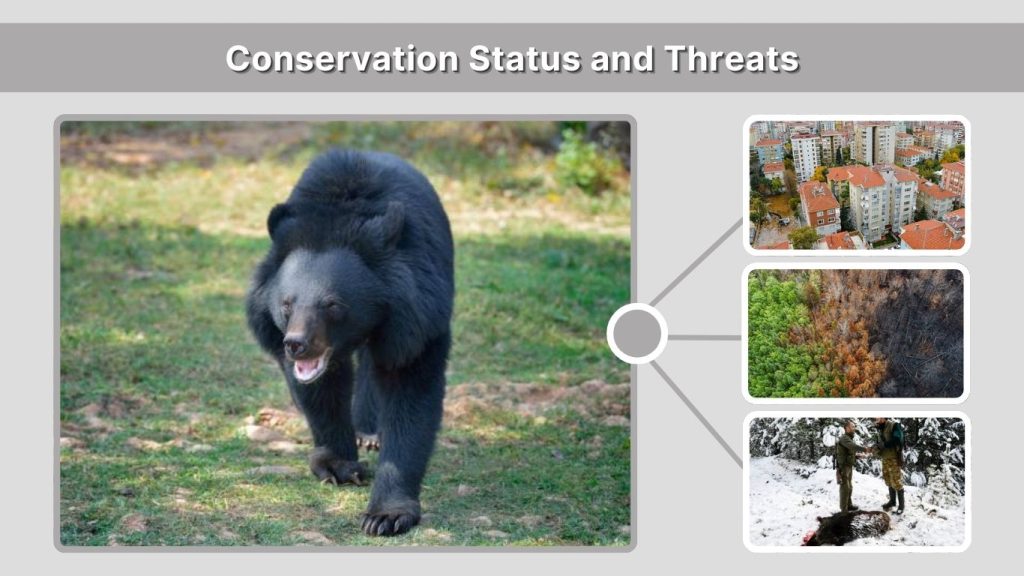
Accurate population estimates for the Tibetan blue bear are difficult to obtain. Its habitat is vast, rugged, and often inaccessible to researchers. As a result, the subspecies is considered rare, but precise numbers remain uncertain.
Although it is not always listed separately from other brown bear subspecies in global conservation assessments, its limited distribution makes it vulnerable.
Major Threats
Despite its isolation, the Tibetan blue bear faces several potential threats:
- Habitat degradation: Expansion of grazing areas and infrastructure can disrupt natural habitats.
- Climate change: Rising temperatures may alter alpine ecosystems and reduce food availability.
- Human-wildlife conflict: Retaliatory killings can occur when livestock losses happen.
Because the bear exists in a fragile high-altitude ecosystem, environmental changes can have amplified effects.
Conservation Efforts
In China, brown bears are protected under national wildlife protection laws. Portions of the Tibetan Plateau are designated as nature reserves, which offer some level of habitat protection.
Additionally, the remoteness of the region acts as a natural safeguard. Limited industrial development and low population density reduce large-scale habitat destruction.
However, increased research and monitoring are essential for better understanding the subspecies’ long-term survival prospects.
Tibetan Blue Bear and the Yeti Legend
One of the most fascinating aspects of the Tibetan blue bear is its possible connection to the Yeti legend—the so-called “Abominable Snowman” of the Himalayas.
For centuries, local folklore has described large, mysterious creatures roaming snowy mountain regions. Some researchers believe that unusual bear sightings, particularly of the Tibetan blue bear, may have contributed to these stories.
From a distance, a large bear walking upright briefly or leaving unusual tracks in snow could easily be misidentified. The bear’s frosted fur and remote habitat further enhance its mysterious image.
While there is no scientific evidence linking the Tibetan blue bear directly to mythical creatures, it remains one of the most plausible real-world animals behind some Yeti sightings.
Tibetan Blue Bear vs Himalayan Brown Bear
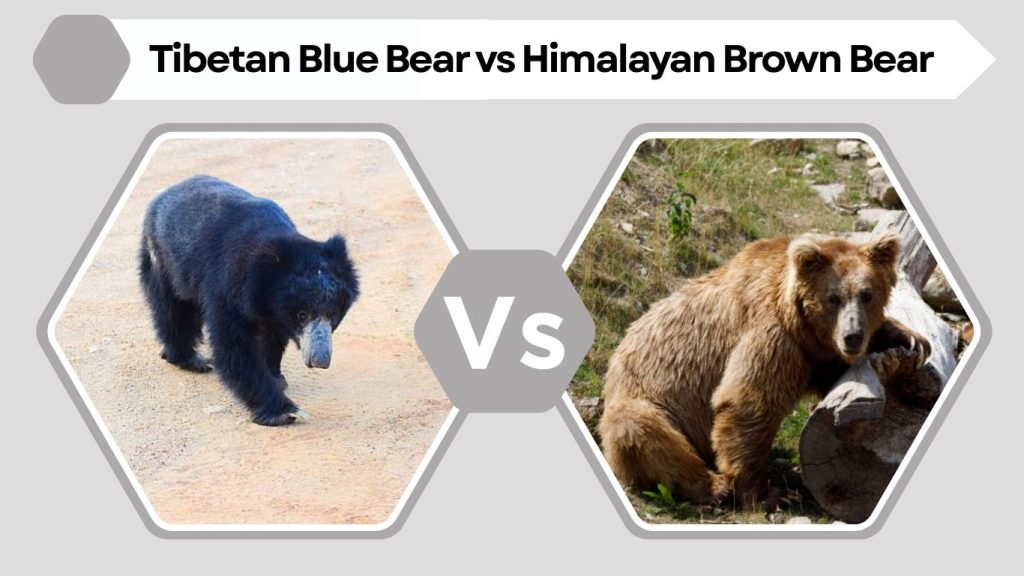
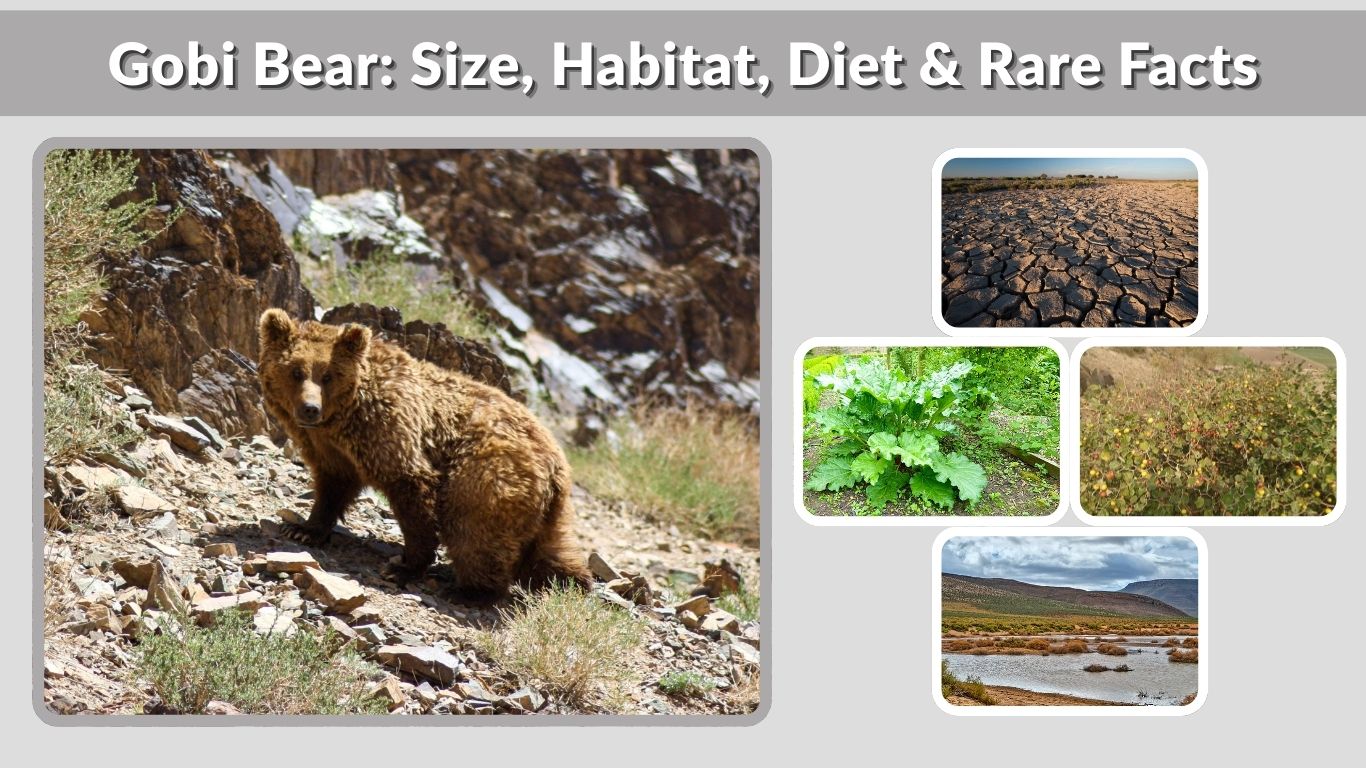
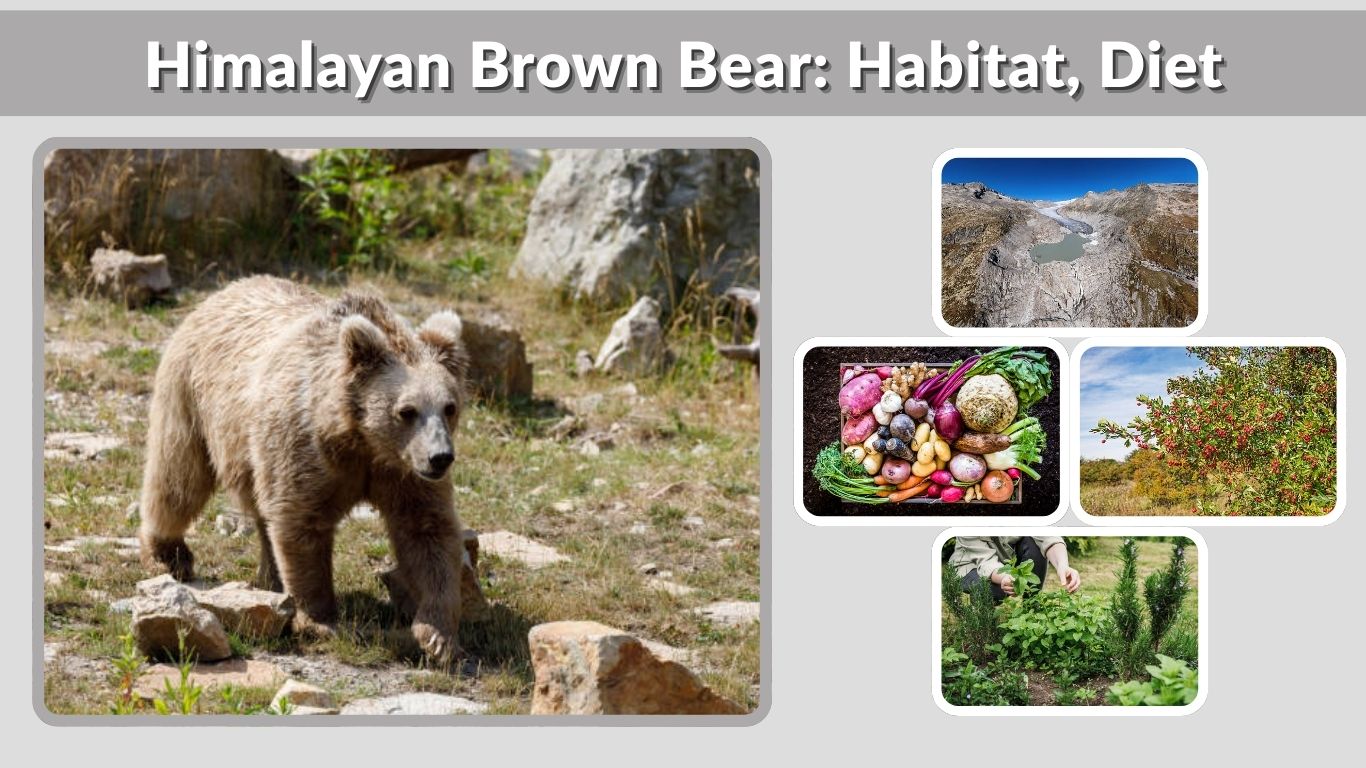
The Tibetan blue bear is often confused with the Himalayan brown bear, another brown bear subspecies found in parts of the Himalayas.
Similarities
- Both belong to Ursus arctos
- Similar body size and weight
- Omnivorous diet
- Adapted to mountainous environments
Differences
- Coat Color: The Tibetan blue bear typically has a darker, slate-gray or bluish sheen, while the Himalayan brown bear often appears lighter brown or reddish.
- Geographic Range: The Tibetan blue bear is mainly associated with the Tibetan Plateau, whereas the Himalayan brown bear inhabits parts of India, Pakistan, and Nepal.
- Population Status: The Himalayan brown bear is generally considered more critically endangered in certain regions.
Because their ranges may overlap near border regions, distinguishing them in the wild can be difficult without detailed observation.
Why Is the Tibetan Blue Bear So Rarely Seen?
Several factors contribute to the bear’s rarity in scientific records and public awareness:
- Remote Habitat: The Tibetan Plateau is one of the least accessible regions on Earth.
- Low Population Density: The harsh environment naturally supports fewer large mammals.
- Limited Research: Few long-term field studies focus specifically on this subspecies.
- Camouflage: Its coat blends well with rocky and snowy terrain.
Together, these factors create the impression of a “ghost” species—present, but seldom observed.
FAQs
Is the Tibetan blue bear real?
Yes, the Tibetan blue bear is a recognized subspecies of the brown bear, scientifically named Ursus arctos pruinosus. Although rarely seen, it is acknowledged by zoologists and inhabits the Tibetan Plateau.
Why is it called the blue bear?
The name comes from the bluish or slate-gray sheen of its fur. Under certain lighting conditions, especially against snow or rock, its coat can appear silvery-blue.
Where does the Tibetan blue bear live?
It primarily lives on the Tibetan Plateau in China, typically at elevations above 4,000 meters in alpine and mountainous environments.
Is the Tibetan blue bear endangered?
Precise population numbers are unclear, but it is considered rare. Habitat changes, climate impacts, and human conflict pose potential risks to its survival.
How big is the Tibetan blue bear?
Adult individuals can reach 1.5 to 2 meters in length and weigh between 200 and 350 kilograms, with males generally larger than females.
Conclusion
The Tibetan blue bear remains one of the most mysterious members of the brown bear family. Living high on the Tibetan Plateau, it has adapted to extreme cold, thin air, and sparse resources. Its bluish-tinted fur and remote habitat have fueled legends and limited scientific understanding. While recognized as a real subspecies, much about its population and behavior remains unknown. Protecting its fragile alpine environment is essential to ensuring that this rare “ghost of the Himalayas” continues to roam the mountains for generations to come.