
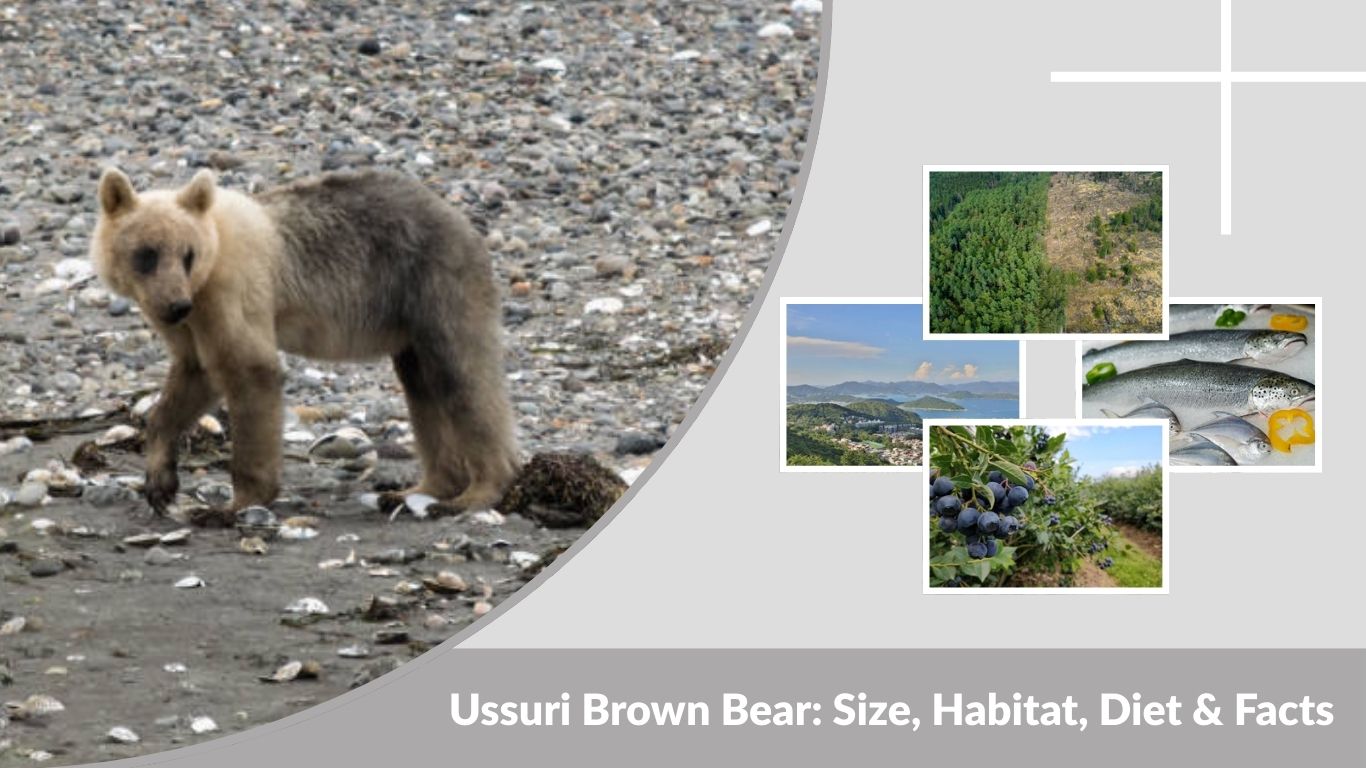
The Ussuri brown bear (Ursus arctos lasiotus) is one of the largest and most powerful brown bear subspecies in the world. Native to the Russian Far East, northeastern China, the Korean Peninsula, and parts of Japan, this massive predator thrives in cold forests and mountainous regions. Often compared to the grizzly bear, the Ussuri brown bear stands out for its impressive size, thick fur, and ability to survive harsh climates. Beyond its strength, it plays a crucial ecological role in maintaining balance within its ecosystem.
What Is the Ussuri Brown Bear?
The Ussuri brown bear is a subspecies of the brown bear species (Ursus arctos). It belongs to a group of bears that are widely distributed across North America, Europe, and Asia. Among Asian brown bears, the Ussuri population is considered one of the largest and most formidable.
Scientific Classification
- Kingdom: Animalia
- Phylum: Chordata
- Class: Mammalia
- Order: Carnivora
- Family: Ursidae
- Genus: Ursus
- Species: Ursus arctos
- Subspecies: Ursus arctos lasiotus
This classification places the Ussuri brown bear alongside other well-known subspecies such as the grizzly bear and the Kodiak bear.
Other Names and Regional Variants
The Ussuri brown bear is also known as the Amur brown bear or Manchurian brown bear, referencing the Amur River region and historical Manchuria. In Japan, a closely related population is called the Hokkaido brown bear. Although slight physical and genetic differences exist, these populations share many characteristics.
How It Differs From Other Brown Bears
Compared to other brown bear subspecies, the Ussuri brown bear is recognized for its large skull, powerful jaw structure, and thick, dense coat. It is generally larger than many mainland brown bears and rivals some North American populations in size. Geographic isolation in East Asia has influenced its physical development and adaptations.
Ussuri Brown Bear Size and Physical Characteristics
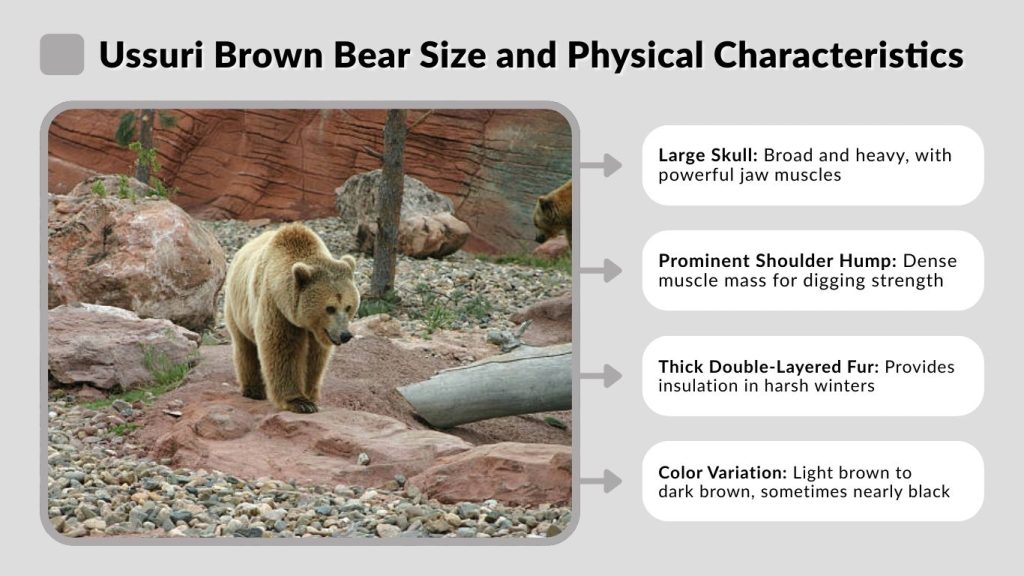
The Ussuri brown bear is one of the largest brown bear subspecies in mainland Asia. Built for strength and survival, it has a heavy muscular frame, thick fur for insulation, and powerful limbs designed for digging and hunting. Males are significantly larger than females, and overall size can vary depending on habitat and food availability. Below is a quick overview of its key physical features.
Overview of Size
- Adult Male Weight: 400–600 kg (880–1,320 lbs)
- Adult Female Weight: 200–350 kg (440–770 lbs)
- Shoulder Height: 1.2–1.5 meters (4–5 feet)
- Standing Height (upright): Up to 3 meters (8–10 feet)
- Body Length: 1.8–2.5 meters (6–8 feet)
Key Physical Characteristics
- Large Skull: Broad and heavy, with powerful jaw muscles
- Prominent Shoulder Hump: Dense muscle mass for digging strength
- Thick Double-Layered Fur: Provides insulation in harsh winters
- Color Variation: Light brown to dark brown, sometimes nearly black
- Massive Paws: Equipped with long, curved claws for digging and defense
- Strong Sense of Smell: Highly developed for locating food over long distances
- Stocky, Muscular Build: Adapted for cold climates and rugged terrain
These features make the Ussuri brown bear a dominant and highly adaptable predator within its ecosystem.
Habitat and Geographic Range
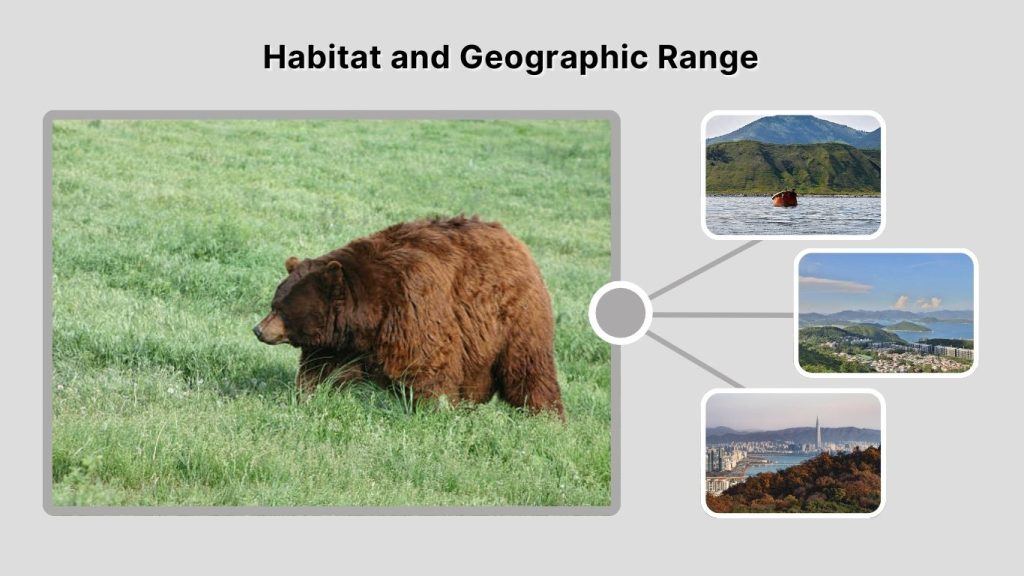
The Ussuri brown bear inhabits some of the coldest and most rugged landscapes in East Asia. Its range spans multiple countries and diverse environments.
Native Range
This subspecies is primarily found in:
- The Russian Far East, especially the Primorsky and Khabarovsk regions
- Northeastern China
- Parts of the Korean Peninsula
- The island of Hokkaido in Japan
These areas are characterized by vast forests, mountain ranges, and river systems that provide both shelter and food.
Preferred Habitat Types
Ussuri brown bears prefer dense forests with abundant vegetation and access to freshwater. They are commonly found in:
- Mixed coniferous and deciduous forests
- Mountain slopes
- River valleys rich in salmon
- Coastal regions with seasonal food sources
The presence of rivers is especially important, as fish become a key part of their diet during spawning seasons.
Climate Adaptations
Living in regions with long, harsh winters requires significant adaptation. The Ussuri brown bear accumulates large fat reserves during autumn to survive months of limited food availability.
Like other brown bears, it enters a state of hibernation during winter. While not a true deep hibernation like smaller mammals, the bear’s metabolism slows considerably. It remains in a den—often dug into hillsides or sheltered under tree roots—until spring arrives.
Diet and Feeding Behavior
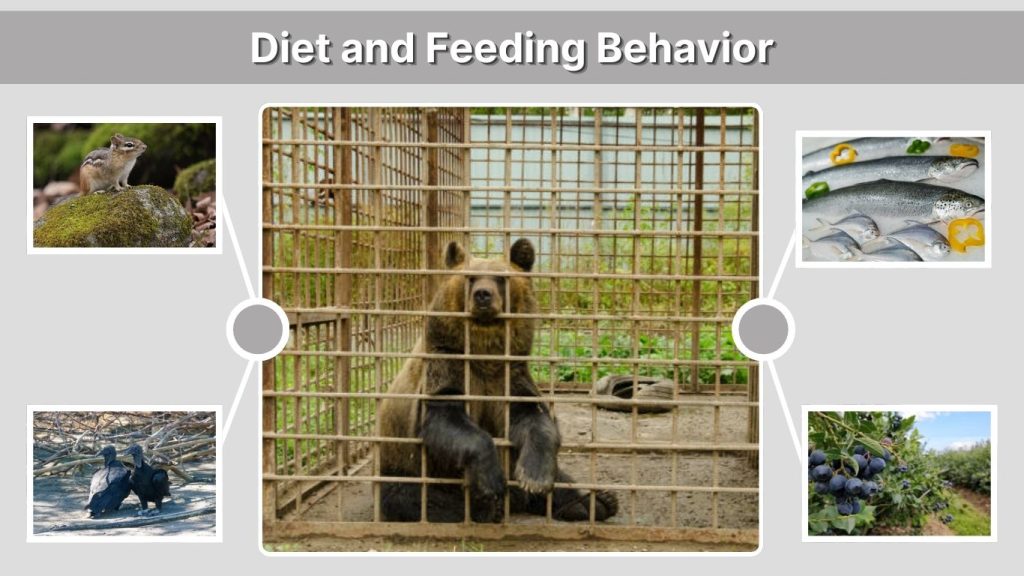
The Ussuri brown bear is an omnivore, meaning it consumes both plant and animal matter. Its flexible diet helps it survive in varied environments.
Omnivorous Diet
Its diet includes:
- Fish, particularly salmon during spawning seasons
- Berries, nuts, roots, and grasses
- Small mammals such as rodents
- Larger prey, occasionally including deer
- Carrion, when available
Seasonal changes heavily influence food choices. In summer and early autumn, high-calorie foods like fish and nuts are critical for building fat reserves before winter.
Hunting and Foraging Skills
Ussuri brown bears are skilled foragers. They use their acute sense of smell to locate food from great distances. Along rivers, they demonstrate impressive fishing techniques, catching salmon with swift paw movements or powerful bites.
Though not specialized predators like big cats, they are opportunistic hunters and will take advantage of vulnerable prey. Their strength allows them to dominate feeding sites when necessary.
Behavior and Social Structure
Despite their massive size, Ussuri brown bears are generally solitary animals. They spend most of their lives alone, coming together only during mating season or when a mother is raising her cubs.
Solitary Lifestyle
Each bear maintains a home range that can span dozens or even hundreds of square kilometers, depending on food availability. Males typically occupy larger territories than females, and their ranges may overlap with several females.
Although usually solitary, Ussuri brown bears may tolerate each other temporarily in areas where food is abundant, such as salmon-rich rivers. However, they can become aggressive if resources are limited.
Reproduction and Cubs
The mating season usually occurs between late spring and early summer. Like other brown bears, the Ussuri brown bear experiences delayed implantation, meaning the fertilized egg does not immediately attach to the uterus. This adaptation ensures cubs are born during winter hibernation when the mother is safely in her den.
Females typically give birth to one to three cubs. At birth, cubs are tiny, blind, and completely dependent on their mother. They remain with her for up to two or three years, learning essential survival skills such as foraging, hunting, and avoiding danger.
Hibernation Cycle
As winter approaches, the Ussuri brown bear enters a den to conserve energy during periods of food scarcity. Dens are often dug into hillsides or created under fallen trees and dense vegetation.
During hibernation, the bear’s heart rate and metabolism slow significantly. It survives entirely on stored body fat. By spring, it emerges thinner but ready to feed and rebuild strength for the coming seasons.
Ussuri Brown Bear vs Grizzly Bear
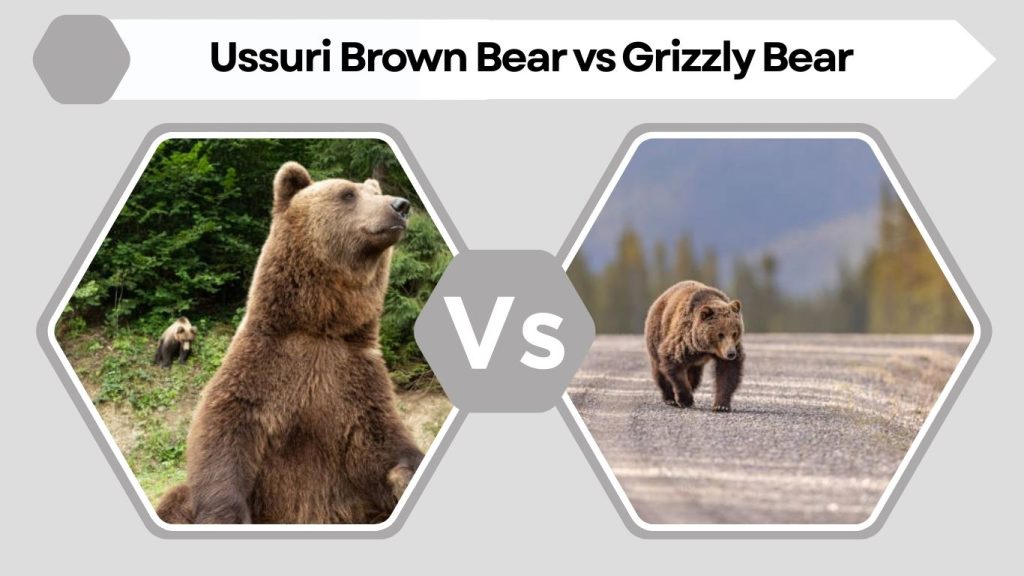
The Ussuri brown bear is often compared to the North American grizzly bear, as both belong to the same species (Ursus arctos). However, there are some notable differences.
Size Comparison
While both subspecies are large and powerful, the Ussuri brown bear is considered one of the largest mainland brown bears in Asia. In some cases, large male Ussuri bears rival or exceed the size of inland grizzlies. However, coastal grizzlies with abundant food supplies may grow equally large or larger.
Habitat Differences
Grizzly bears primarily inhabit North America, including Alaska, western Canada, and parts of the northwestern United States. In contrast, the Ussuri brown bear lives in East Asia’s forests and mountainous regions.
Environmental conditions differ significantly. Ussuri bears often endure colder winters and dense forest ecosystems, while many grizzlies occupy open tundra, meadows, and coastal habitats.
Behavioral Differences
Both subspecies display similar behaviors, including omnivorous diets and hibernation patterns. However, levels of human interaction may vary depending on regional population density and land use.
In remote parts of the Russian Far East, Ussuri brown bears may encounter humans less frequently than grizzlies in developed areas of North America.
Population and Conservation Status
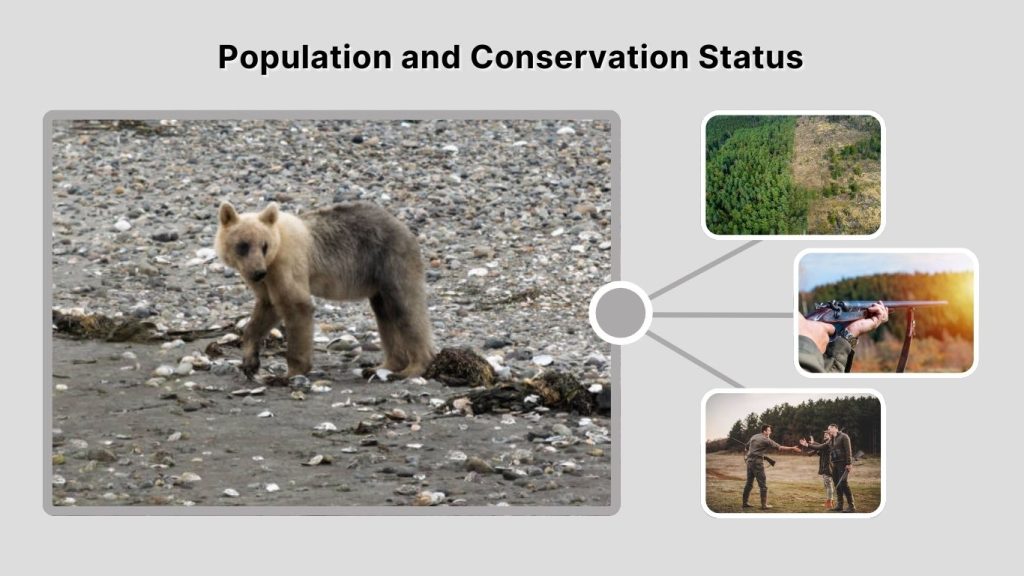
The population of Ussuri brown bears varies by region, with the largest numbers found in Russia. Smaller populations exist in China and Japan.
Estimated Population Numbers
Russia supports the majority of the population, particularly in protected areas of the Far East. Hokkaido, Japan, also maintains a stable but closely monitored bear population.
Exact numbers fluctuate due to environmental factors and monitoring challenges, but conservation authorities continue to assess trends through wildlife surveys.
Major Threats
Despite their strength and adaptability, Ussuri brown bears face several threats:
- Habitat loss from logging and infrastructure development
- Poaching, sometimes for body parts used in illegal trade
- Human-wildlife conflict, especially in areas where bears approach settlements in search of food
Climate change may also affect food availability and denning patterns in the future.
Conservation Efforts
Governments and conservation organizations have established protected reserves and national parks within the bear’s range. Anti-poaching regulations, habitat management programs, and public awareness campaigns help reduce conflict and promote coexistence.
In Japan and Russia, wildlife management strategies aim to balance human safety with the long-term survival of bear populations.
Interesting Facts About the Ussuri Brown Bear
- It is one of the largest brown bear subspecies in mainland Asia.
- Some individuals can stand nearly 10 feet tall on their hind legs.
- It has an exceptionally strong sense of smell, allowing it to detect food from miles away.
- Ussuri brown bears may occasionally compete with Siberian tigers in overlapping territories.
- They play a vital ecological role by dispersing seeds and regulating prey populations.
FAQs
How big can a Ussuri brown bear get?
Adult males can weigh between 400 and 600 kilograms, with some exceptional individuals exceeding this range. When standing upright, they may reach heights of up to 3 meters (about 10 feet), making them one of the largest brown bear subspecies in Asia.
Is the Ussuri brown bear bigger than a grizzly?
The Ussuri brown bear can rival inland grizzlies in size and may even exceed some populations. However, large coastal grizzlies with rich food supplies can grow just as large or larger. Size often depends on habitat and diet.
Where does the Ussuri brown bear live?
This subspecies lives in the Russian Far East, northeastern China, parts of the Korean Peninsula, and Hokkaido, Japan. It prefers forested and mountainous regions with access to rivers and abundant natural food sources.
What does the Ussuri brown bear eat?
The Ussuri brown bear is omnivorous. Its diet includes fish such as salmon, berries, nuts, roots, small mammals, and occasionally larger prey. Seasonal food availability strongly influences its feeding behavior.
Is the Ussuri brown bear endangered?
The Ussuri brown bear is not globally classified as endangered, but certain regional populations face threats from habitat loss, poaching, and human conflict. Conservation programs aim to maintain stable populations across its range.
Conclusion
The Ussuri brown bear is a powerful and adaptable predator that thrives in the forests and mountains of East Asia. With its massive size, thick coat, and impressive survival skills, it stands among the most formidable brown bear subspecies. Beyond its physical strength, this bear plays an essential ecological role in maintaining healthy forest ecosystems. Continued conservation efforts are crucial to ensuring that future generations can witness the presence of this remarkable wildlife species in its natural habitat.