




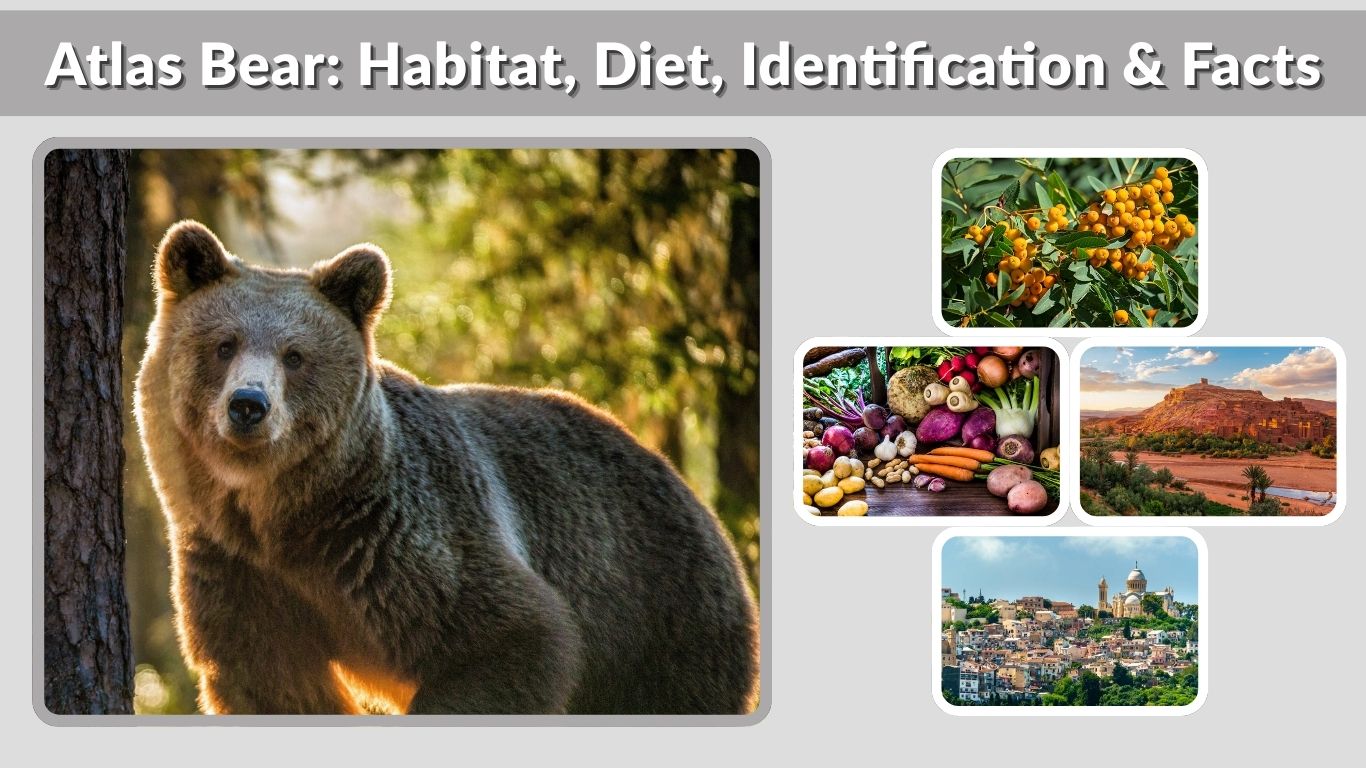
The Atlas bear was the only bear species native to Africa and one of the most fascinating extinct animals of North Africa. Scientifically known as Ursus arctos crowtheri, it was a subspecies of the brown bear that once roamed the forests and mountains of Morocco, Algeria, and Tunisia. Unlike other African predators, the Atlas bear belonged to a lineage commonly associated with Europe and Asia. Its extinction in the 19th century marked the disappearance of Africa’s only indigenous bear. Understanding the Atlas bear habitat, diet, and historical role provides insight into both its unique legacy and the consequences of human expansion.
What Was the Atlas Bear?
The Atlas bear was a North African subspecies of the brown bear (Ursus arctos). It inhabited the Atlas Mountains, a vast mountain range stretching across Morocco, northern Algeria, and Tunisia. Though closely related to Eurasian brown bears, it adapted to the Mediterranean climate and mountainous landscapes of North Africa.
Scientific Classification
The scientific name of the Atlas bear is Ursus arctos crowtheri. It is generally classified as a subspecies of the brown bear, although some researchers debate whether it was distinct enough to be considered a separate population closely related to Middle Eastern brown bears.
Genetic evidence is limited because the species became extinct before modern DNA analysis could be widely applied. However, fossil remains and historical descriptions strongly suggest it belonged to the broader brown bear family that once ranged across Europe, Asia, and parts of North Africa.
Its presence in Africa likely dates back thousands of years, when land connections and climate conditions allowed brown bears to expand their range southward into the Atlas region.
Historical Background
The Atlas bear was known to ancient civilizations, particularly the Romans. Historical records indicate that bears from North Africa were captured and transported to Rome for use in gladiatorial games and public spectacles. These animals were prized for their strength and ferocity.
As Roman influence expanded across North Africa, hunting pressure increased significantly. Later, during colonial periods, European hunters further reduced the population.
By the late 1800s, sightings became extremely rare. The last confirmed reports of the Atlas bear date to the late 19th century, after which it was declared extinct. Its disappearance marked the loss of Africa’s only native bear population.
Atlas Bear Identification
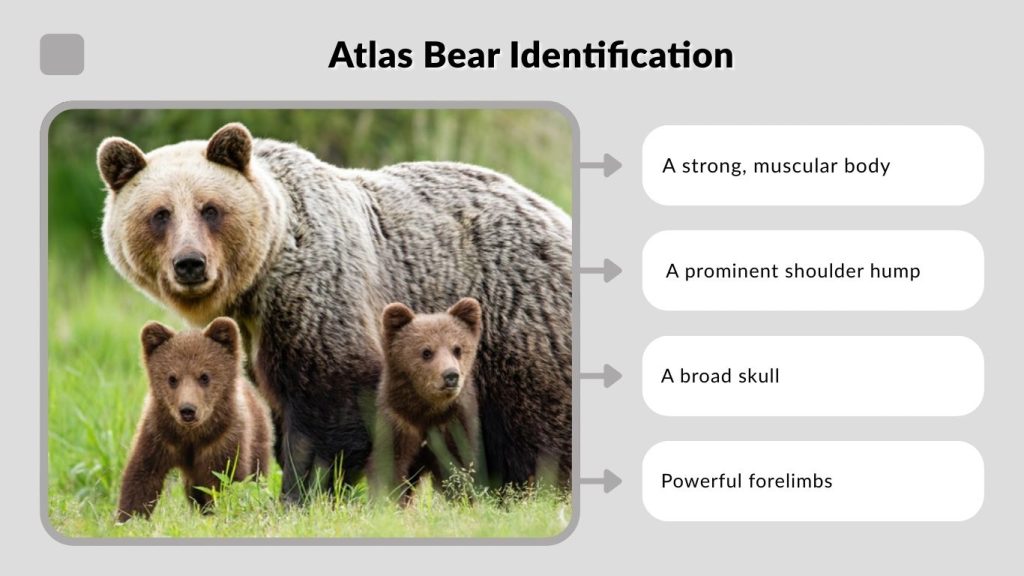
Since the Atlas bear is extinct, identification relies on fossil remains, skeletal evidence, and written historical accounts. Despite limited physical specimens, researchers have pieced together a general understanding of its appearance.
Physical Characteristics
The Atlas bear likely had dark brown to almost black fur, distinguishing it slightly from some lighter-colored Eurasian brown bears. Some historical descriptions suggest its fur may have appeared thicker and darker, possibly as an adaptation to mountain climates.
Like other brown bears, it probably had:
- A strong, muscular body
- A prominent shoulder hump
- A broad skull
- Powerful forelimbs
Its claws would have been long and curved, useful for digging and foraging. Although exact measurements vary, fossil evidence suggests it was not as massive as some northern brown bear subspecies.
Size and Appearance
The Atlas bear was likely medium-sized compared to other brown bears. Estimates suggest adult males may have weighed between 400 and 600 pounds (180–270 kg), though exact figures remain uncertain.
When standing upright, it may have reached heights of around 6 to 8 feet (1.8–2.4 meters). Its build was probably stockier than desert-adapted predators but smaller than large European brown bears.
Adaptations to mountainous terrain may have given it strong legs suited for climbing rocky slopes and navigating forested hills.
Evidence From Fossils and Records
Most knowledge about the Atlas bear comes from:
- Fossilized bones discovered in North Africa
- Roman historical texts
- 18th and 19th-century hunting accounts
Unfortunately, no complete preserved specimen exists today. This limits scientific certainty about its exact size, coloration, and behavior. However, enough skeletal evidence confirms its classification within the brown bear lineage.
Atlas Bear Habitat
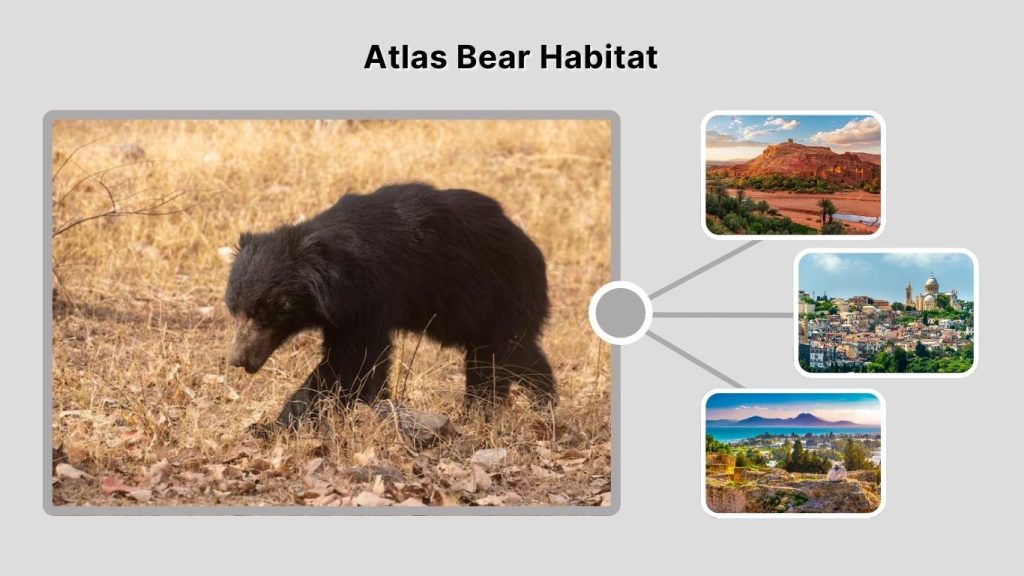
The Atlas bear habitat consisted primarily of mountainous and forested regions within North Africa. Unlike the dry Sahara Desert to the south, the Atlas Mountains provided cooler temperatures, rainfall, and dense vegetation suitable for large mammals.
Geographic Range
The Atlas bear lived in the Atlas Mountain range, which stretches across:
- Morocco
- Northern Algeria
- Parts of Tunisia
These mountains created isolated forest ecosystems separated from European bear populations by the Mediterranean Sea.
The region’s elevation and climate likely played a major role in sustaining the species for centuries despite increasing human settlement.
Preferred Environment
The Atlas bear thrived in forested and mountainous terrain rather than desert environments. The Atlas Mountains provided a mix of cedar forests, oak woodlands, rocky slopes, and river valleys. These areas offered food sources, water, and shelter.
Cedar and oak forests were especially important, as they produced nuts, fruits, and vegetation that likely formed a major part of the Atlas bear diet. River valleys supported additional plant growth and attracted smaller animals, creating a balanced ecosystem.
The mountainous landscape also provided natural dens in caves and rock formations. These sheltered areas would have been ideal for resting and possibly hibernation during colder months.
Climate and Adaptation
The Atlas Mountains experience a Mediterranean climate, characterized by mild, wet winters and hot, dry summers. This climate is very different from the cold northern habitats of many other brown bears.
To survive these conditions, the Atlas bear likely adapted to:
- Seasonal rainfall patterns
- Limited summer water availability
- Variable plant growth
Unlike Arctic or northern brown bear subspecies, the Atlas bear may not have required long periods of hibernation due to milder winters. However, it likely reduced activity during extreme seasonal conditions.
Its darker fur may have helped it retain warmth during cooler mountain nights while also offering camouflage in shaded forests.
Atlas Bear Diet
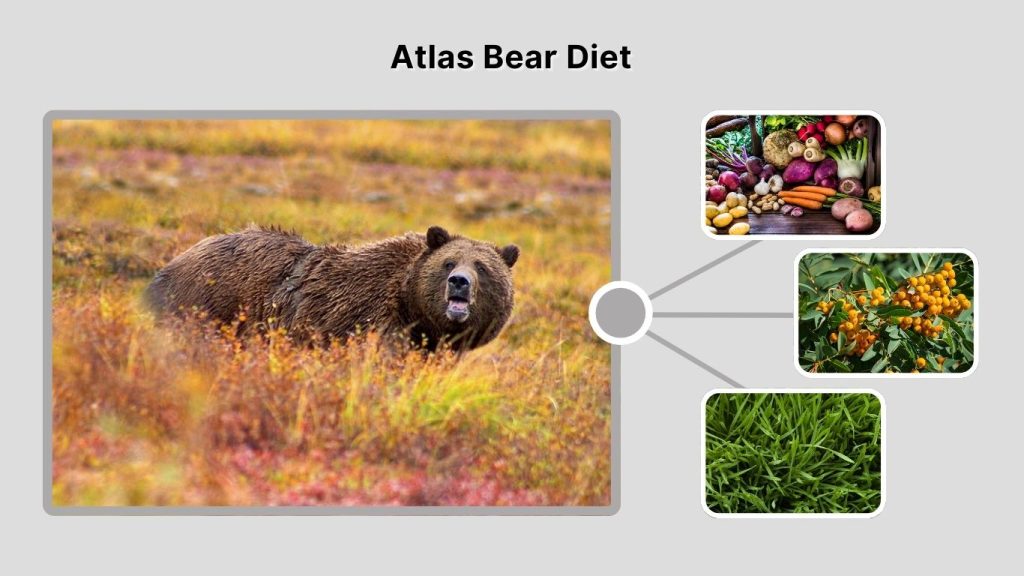
The Atlas bear diet was omnivorous, similar to other brown bear subspecies. Its feeding habits were likely shaped by the Mediterranean environment and available seasonal foods.
Omnivorous Feeding Behavior
As an omnivore, the Atlas bear likely consumed a wide range of plant and animal matter. Plant-based foods probably formed the majority of its diet.
Likely food sources included:
- Roots and tubers
- Berries and wild fruits
- Acorns and nuts from oak forests
- Grasses and herbs
In addition to vegetation, the Atlas bear would have eaten insects, larvae, and small mammals when available. Its strong claws were well suited for digging up roots and overturning rocks in search of insects.
Seasonal Diet Changes
Seasonal availability of food strongly influenced the Atlas bear’s feeding patterns.
- Spring: Fresh vegetation and emerging plant growth
- Summer: Fruits, nuts, and insects
- Autumn: Increased feeding to store fat before colder months
In times of scarcity, it may have scavenged carcasses or preyed on small livestock, which could have contributed to human-bear conflict.
Role in the Ecosystem
As a large omnivore, the Atlas bear likely played an important ecological role.
It may have contributed to:
- Seed dispersal through fruit consumption
- Population control of smaller animals
- Natural scavenging and nutrient recycling
Its presence would have helped maintain balance within the Atlas Mountain ecosystem. Its extinction likely altered local ecological dynamics, even if those changes were gradual and undocumented.
Atlas Bear Facts
The Atlas bear holds a unique place in wildlife history as Africa’s only native bear species.
The Only Bear Native to Africa
Unlike other bear populations found in Europe, Asia, and North America, the Atlas bear was the only bear known to live naturally in Africa during historical times. This makes it an important species in understanding prehistoric animal migration and climate shifts.
Use in Roman Gladiator Arenas
One of the most well-documented facts about the Atlas bear is its use in Roman arenas. Roman authorities captured bears from North Africa and transported them across the Mediterranean.
These bears were used in:
- Gladiatorial combat
- Public executions
- Animal exhibitions
This large-scale capture significantly reduced wild populations over time.
Extinction Timeline
The decline of the Atlas bear likely began during Roman times and continued for centuries. Habitat destruction, expanding agriculture, and continued hunting accelerated the population decrease.
By the late 19th century, the species was believed to be extinct. The last confirmed reports date to the 1870s, though exact documentation is limited.
Cultural and Scientific Legacy
Today, the Atlas bear remains a subject of scientific interest. Researchers study fossil evidence to better understand its genetic relationship to other brown bear subspecies.
Its extinction also serves as a powerful conservation lesson, highlighting how hunting pressure and habitat loss can eliminate even large, powerful predators.
Why Did the Atlas Bear Go Extinct?
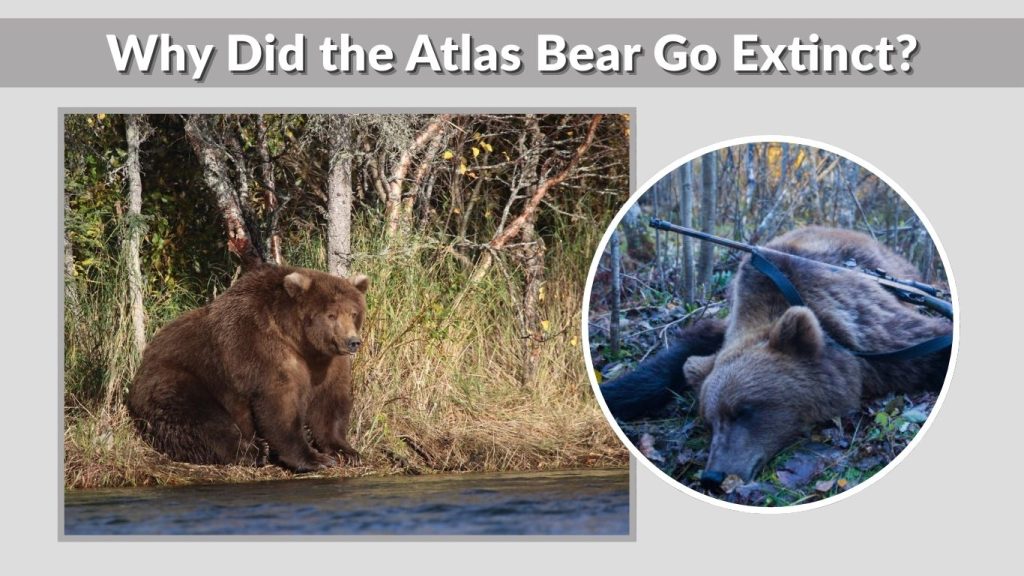
The extinction of the Atlas bear was likely caused by a combination of human-related factors rather than natural causes.
Overhunting
From Roman times onward, heavy hunting drastically reduced numbers. Bears were captured for entertainment and killed for sport or safety.
Habitat Destruction
Deforestation for agriculture and settlement gradually reduced suitable habitat in the Atlas Mountains. As forests declined, food sources became limited.
Lack of Conservation Measures
During the time of its decline, wildlife protection laws did not exist. Small, isolated populations could not recover from sustained hunting pressure.
FAQs
Was the Atlas bear the only bear in Africa?
Yes, the Atlas bear was the only known native bear species in Africa during historical times. No other bear populations naturally inhabited the continent.
What did the Atlas bear eat?
The Atlas bear had an omnivorous diet that likely included roots, berries, nuts, insects, and small mammals. It may have occasionally scavenged or preyed on livestock.
Where did the Atlas bear live?
It lived in the Atlas Mountains of Morocco, Algeria, and Tunisia, primarily in forested and mountainous environments.
When did the Atlas bear go extinct?
The Atlas bear is believed to have gone extinct in the late 19th century, with the last confirmed sightings reported in the 1870s.
Conclusion
The Atlas bear was a remarkable and historically significant animal — the only bear ever native to Africa. From its mountainous habitat in North Africa to its role in Roman history, it occupied a unique ecological and cultural position. However, overhunting and habitat destruction ultimately led to its extinction. The story of the Atlas bear serves as a reminder of the importance of wildlife conservation and the fragile balance between human expansion and natural ecosystems.