




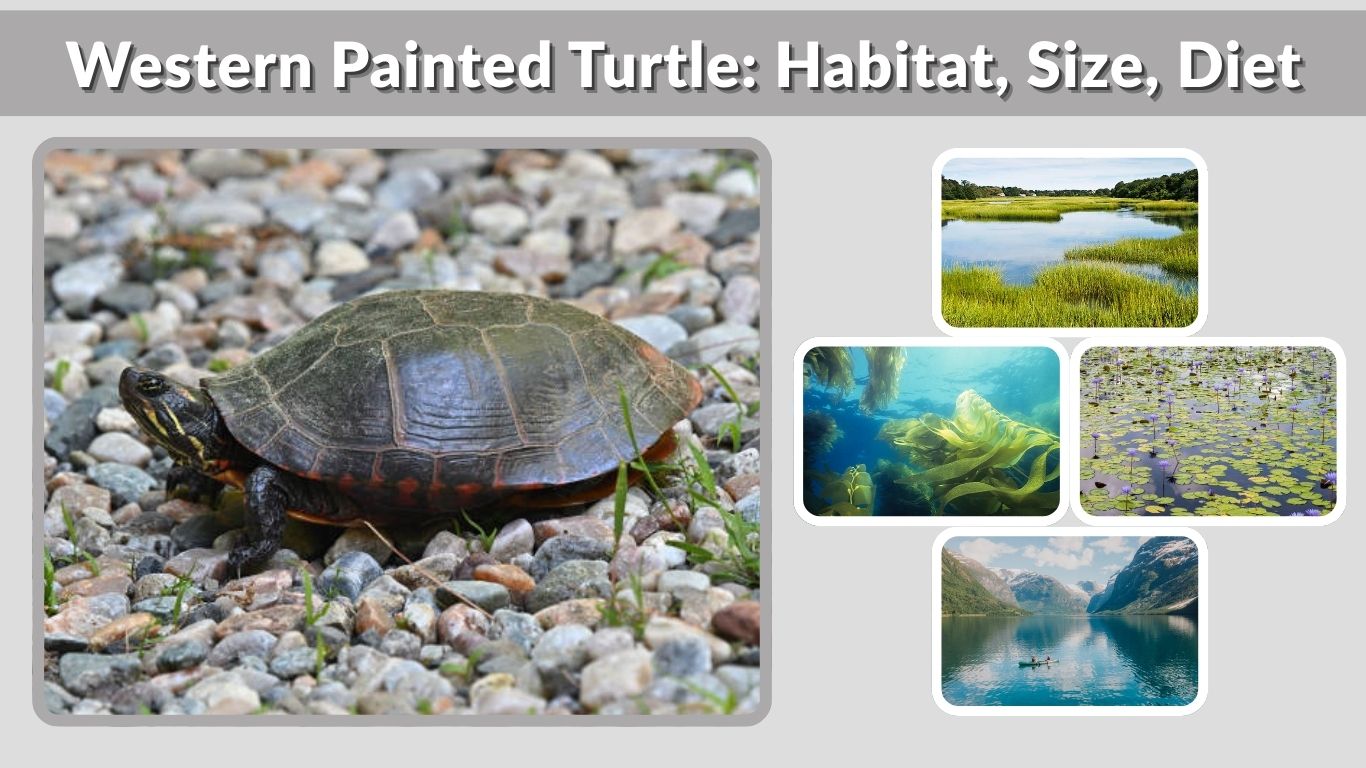
The western painted turtle (Chrysemys picta bellii) is the largest and most colorful subspecies of painted turtle in North America. Known for its striking red and yellow markings and bright red underside, this freshwater turtle thrives in ponds, lakes, and slow-moving rivers across the western United States and parts of Canada. Whether you’re researching the western painted turtle habitat, size, diet, or lifespan, understanding this adaptable species provides insight into one of the continent’s most resilient reptiles.
What Is a Western Painted Turtle?
The western painted turtle is one of four subspecies of the painted turtle species (Chrysemys picta). It stands out because of its larger size and vivid coloration, especially on its plastron (the underside of the shell), which often displays a bright red pattern with dark symmetrical markings.
Like other painted turtles, it is semi-aquatic, spending most of its life in water but regularly basking in the sun. Basking helps regulate body temperature and supports shell health.
Western Painted Turtle Identification
Identifying a western painted turtle is relatively straightforward due to several key features:
- A smooth, dark olive to black carapace (top shell)
- Red and yellow markings along the shell edges
- A bright red plastron with bold dark patterns
- Yellow stripes on the head and legs
Compared to other painted turtle subspecies, the western painted turtle is generally larger and more intensely colored.
Western Painted Turtle Habitat
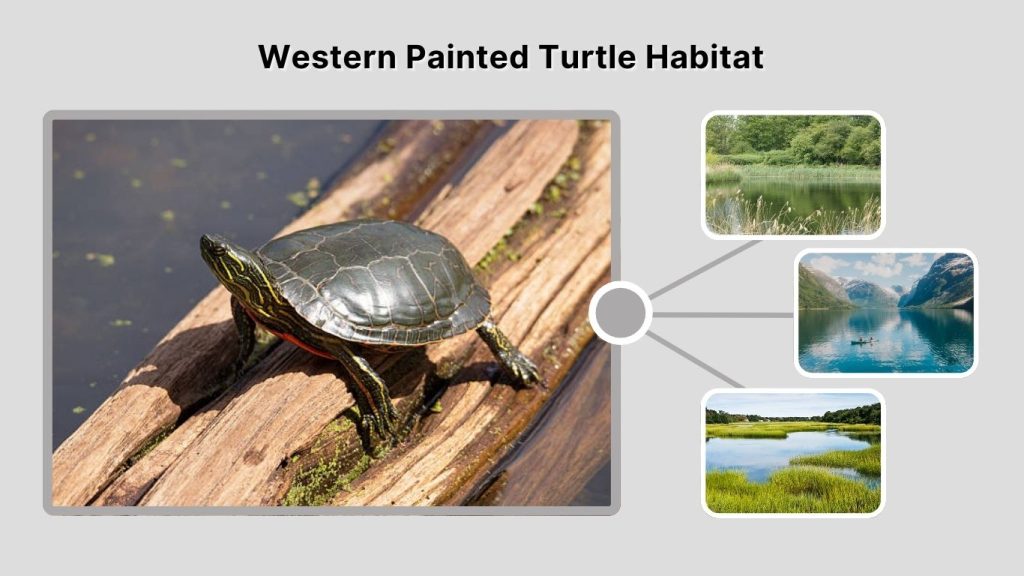
The western painted turtle habitat spans a wide geographic range, including much of the western and central United States and southern Canada. Its adaptability allows it to survive in various freshwater environments.
Natural Habitat in the Wild
In the wild, western painted turtles prefer calm, freshwater ecosystems such as:
- Ponds
- Lakes
- Marshes
- Slow-moving rivers
- Wetlands
They favor shallow waters with soft, muddy bottoms and plenty of aquatic vegetation. These environments provide both food and protection from predators.
Basking sites are equally important. Western painted turtles often climb onto logs, rocks, or floating debris to absorb sunlight. Regular basking is essential for maintaining healthy shells and supporting immune function.
Clean water and abundant plant life are key components of a suitable habitat. Areas with stable water levels and limited disturbance tend to support larger populations.
Seasonal Behavior and Winter Survival
Western painted turtles are most active during warm months, especially spring and summer. During this time, they swim, forage, bask, and reproduce.
In colder climates, they enter a state known as brumation, similar to hibernation. They settle into the muddy bottoms of ponds or lakes and drastically slow their metabolism.
One remarkable adaptation of the western painted turtle is its ability to survive long periods in cold, oxygen-poor water. During winter, it can absorb small amounts of oxygen through specialized tissues near its tail and skin. This cold tolerance makes it one of the most resilient freshwater turtles in North America.
Western Painted Turtle Size and Growth
The western painted turtle is the largest painted turtle subspecies, making size one of its defining characteristics.
How Big Do Western Painted Turtles Get?
Adult western painted turtles typically measure between 7 and 10 inches in shell length. Some large females may exceed this range slightly.
Females are generally larger than males, a common trait among many turtle species. Males, however, usually have longer front claws and slightly longer tails.
Hatchlings are small, usually about 1 inch long at birth. During the first few years of life, growth is relatively rapid, especially when food is abundant.
Growth Rate and Maturity
Western painted turtles grow quickly during their juvenile years. Growth gradually slows as they approach adulthood.
Sexual maturity usually occurs between 4 and 8 years of age, depending on environmental conditions such as temperature and food availability. Warmer climates and abundant resources can accelerate development.
Environmental factors that influence growth include:
- Water temperature
- Food supply
- Population density
- Overall habitat quality
Proper nutrition and a stable habitat are essential for reaching full adult size.
Western Painted Turtle Diet
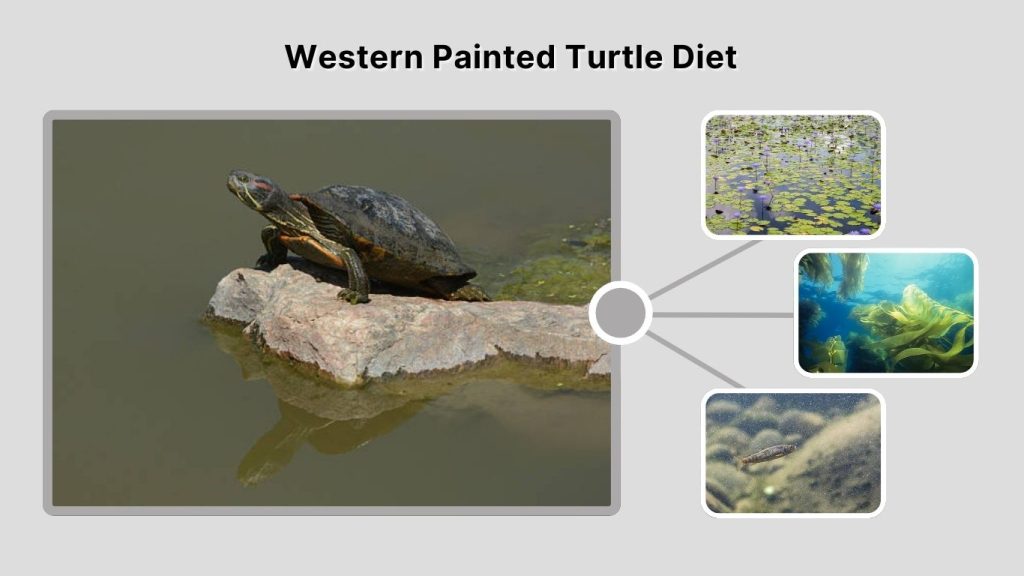
The western painted turtle diet is omnivorous, meaning it includes both plant and animal matter. Their feeding habits change as they age, with younger turtles consuming more protein and adults incorporating more plant material.
What Do Western Painted Turtles Eat in the Wild?
In their natural habitat, western painted turtles feed on a wide variety of foods, including:
- Aquatic plants
- Algae
- Insects and larvae
- Small fish
- Tadpoles
- Snails and crustaceans
Juveniles tend to be more carnivorous because protein supports rapid growth. As they mature, they gradually shift toward a more balanced diet that includes significant plant material.
Western painted turtles are opportunistic feeders, meaning they eat what is readily available in their environment. This flexibility helps them survive in diverse freshwater ecosystems.
Western Painted Turtle Diet in Captivity
When kept as pets, western painted turtles require a balanced and carefully managed diet. A high-quality commercial turtle pellet should form the foundation of their meals, as it provides essential vitamins and minerals.
In addition, owners should offer:
- Leafy greens such as romaine lettuce, dandelion greens, and collard greens
- Aquatic plants
- Occasional protein sources like mealworms or small feeder fish
Hatchlings should be fed daily because they need more protein for growth. Adult western painted turtles can be fed every other day. Overfeeding should be avoided, as it can lead to obesity and poor water quality.
Access to UVB lighting and proper calcium intake is also critical. Without adequate UVB exposure, turtles cannot properly metabolize calcium, which may lead to shell deformities and metabolic bone disease.
How Long Do Western Painted Turtles Live?
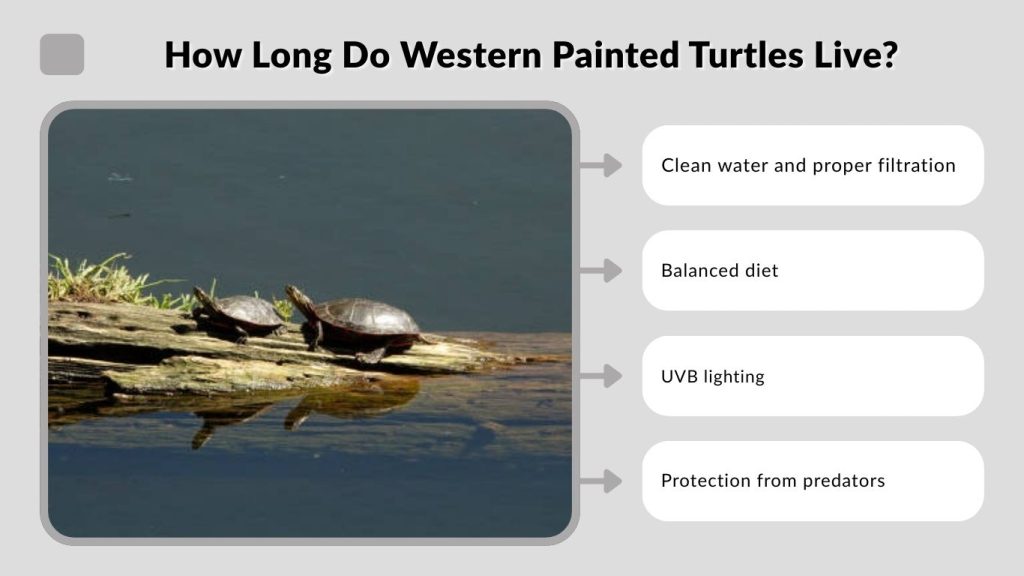
A common question is: How long do western painted turtles live?
In the wild, they typically live 20 to 30 years. However, many do not reach their full lifespan due to predation, habitat loss, and environmental challenges.
In captivity, with proper care, western painted turtles can live 30 to 40 years or more. Some individuals have been known to approach or exceed four decades under ideal conditions.
Several factors influence lifespan:
- Clean water and proper filtration
- Balanced diet
- UVB lighting
- Protection from predators
- Regular health monitoring
Because of their long lifespan, western painted turtles are a serious long-term commitment for pet owners.
Western Painted Turtle Nesting and Reproduction
Western painted turtles reproduce seasonally, with mating typically occurring in spring. After mating, females leave the water to search for suitable nesting areas.
Nesting Behavior
Nesting usually takes place from late spring to early summer. Females look for sunny, well-drained soil such as sandy banks or loose ground near water.
Using their hind legs, they dig a flask-shaped nest about 4 to 7 inches deep. A single clutch may contain 5 to 20 eggs, depending on the size and age of the female.
After laying the eggs, the female carefully covers the nest and returns to the water. There is no parental care after this point.
Incubation and Hatchlings
Eggs incubate for approximately 70 to 90 days, depending on temperature.
Like other painted turtles, the western painted turtle exhibits temperature-dependent sex determination. Warmer nest temperatures typically produce females, while cooler temperatures produce males.
In some northern regions, hatchlings may remain in the nest over winter and emerge the following spring. Baby turtles face many predators, including raccoons, birds, and fish. Only a small percentage survive to adulthood.
Western Painted Turtle vs Other Painted Turtles
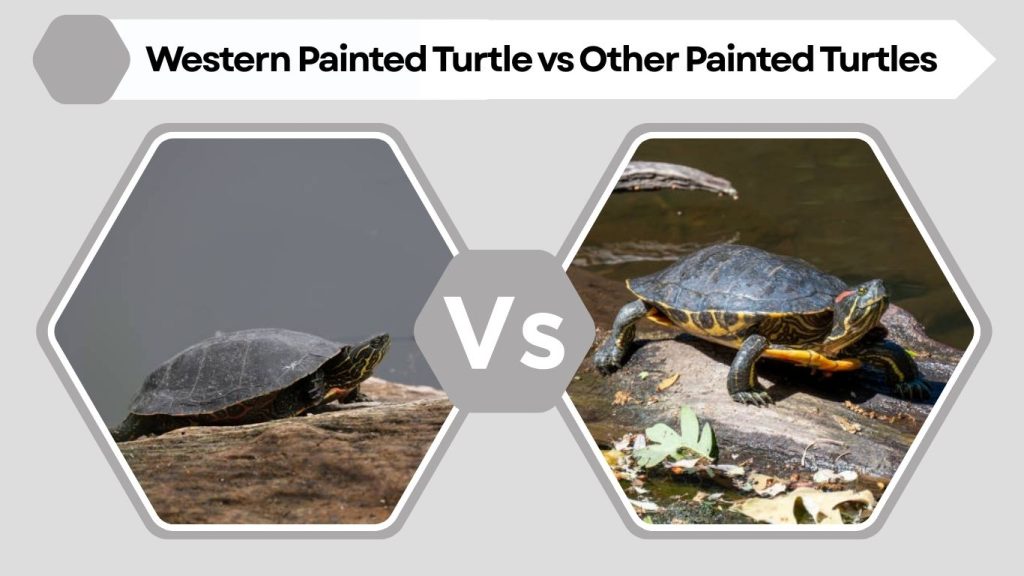
The western painted turtle differs from other painted turtle subspecies in several noticeable ways.
Size:
It is the largest of the four subspecies.
Coloration:
Its bright red plastron with bold dark markings is more vivid than that of eastern or midland painted turtles.
Range:
It occupies western and central North America, while other subspecies are found in eastern or southern regions.
Despite these differences, all painted turtle subspecies share similar diets, habitats, and behaviors.
Are Western Painted Turtles Good Pets?

Western painted turtles can make rewarding pets for dedicated owners. However, they are not low-maintenance animals.
They require:
- A large tank (at least 40 gallons for adults)
- Strong filtration systems
- A basking platform
- UVB lighting
- Consistent cleaning and monitoring
They are best suited for owners prepared for a long-term commitment. Because they may live for decades, adopting one should be a carefully considered decision.
In some regions, collecting wild turtles is illegal. Always check local regulations before acquiring a western painted turtle.
Interesting Western Painted Turtle Facts
- It is the largest painted turtle subspecies.
- It can survive freezing winters underwater by slowing its metabolism.
- Its bright red underside makes it one of the most colorful freshwater turtles in North America.
- It is an excellent swimmer and quick to dive when threatened.
- It plays an important ecological role by controlling insect and aquatic invertebrate populations.
FAQs
How big does a western painted turtle get?
Western painted turtles typically grow between 7 and 10 inches long. Females are usually larger than males. Growth depends on habitat quality, diet, and environmental conditions.
Where do western painted turtles live?
They live in freshwater habitats across the western and central United States and southern Canada. They prefer ponds, lakes, marshes, and slow-moving rivers with plenty of vegetation and basking spots.
What do western painted turtles eat?
They eat aquatic plants, algae, insects, larvae, small fish, tadpoles, and crustaceans. Juveniles consume more protein, while adults include more plant matter in their diet.
How long do western painted turtles live?
In the wild, they live about 20 to 30 years. In captivity, with proper care, they can live 30 to 40 years or longer.
Do western painted turtles hibernate?
Yes. In colder climates, they enter a brumation state during winter, resting underwater in muddy bottoms while slowing their metabolism to conserve energy.
Conclusion
The western painted turtle is a striking and resilient freshwater species known for its vibrant markings and impressive adaptability. From its diverse habitat range and omnivorous diet to its long lifespan and remarkable winter survival abilities, this turtle is both fascinating and ecologically important. Whether observed in the wild or cared for responsibly in captivity, the western painted turtle remains one of North America’s most recognizable and admired reptiles.