



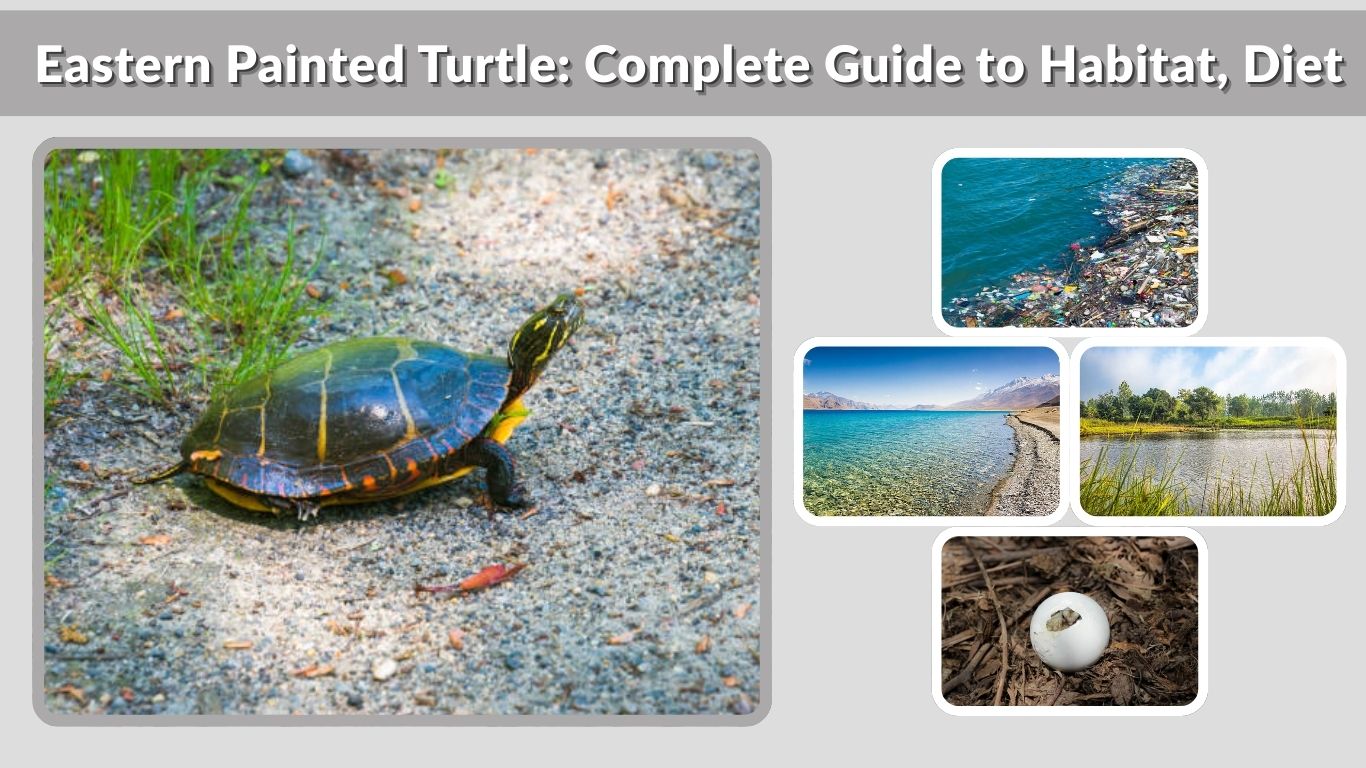
The eastern painted turtle (Chrysemys picta picta) is one of the most widespread and recognizable freshwater turtles in North America. Known for its smooth dark shell trimmed with bright red and yellow markings, this species thrives in calm ponds, marshes, and slow-moving streams. Its adaptability, striking appearance, and hardy nature make it a favorite among wildlife observers and reptile enthusiasts. In this guide, you’ll learn how to identify the eastern painted turtle, understand its natural habitat, and explore its diet and behavior.
Overview of the Eastern Painted Turtle
Scientific Classification
The eastern painted turtle belongs to the species Chrysemys picta, which includes four recognized subspecies: eastern, midland, western, and southern painted turtles. The eastern painted turtle (Chrysemys picta picta) is the nominate subspecies and was the first described scientifically. It is part of the family Emydidae, which includes many common pond and marsh turtles throughout North America.
Among the subspecies, the eastern painted turtle is often distinguished by its relatively plain yellow plastron (bottom shell) and vibrant red markings along the edges of its carapace.
Geographic Range
The eastern painted turtle is found primarily in the eastern United States. Its range extends from southeastern Canada down through New England and along the East Coast, reaching as far south as Georgia. It thrives in temperate climates where freshwater habitats remain available year-round.
This subspecies prefers calm, shallow bodies of water with soft bottoms and abundant aquatic vegetation. Because of its adaptability, it can also survive in man-made ponds and suburban wetlands.
Conservation Status
Currently, the eastern painted turtle is considered stable across most of its range. It is not listed as endangered or threatened at the federal level. However, local populations can face pressures from habitat destruction, pollution, and road mortality. Wetland drainage and urban expansion remain ongoing concerns for long-term sustainability.
Physical Characteristics and Identification
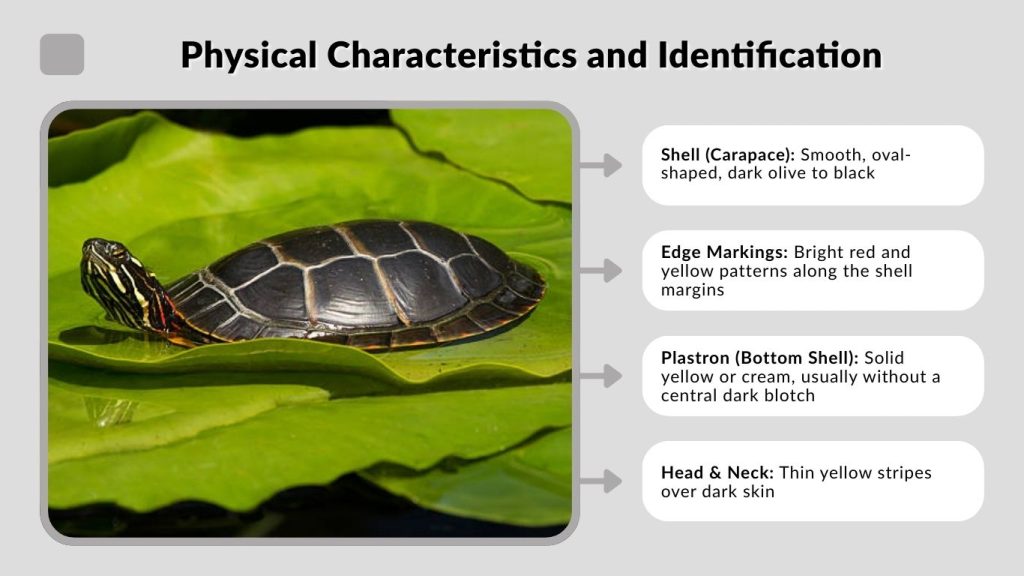
The eastern painted turtle is a small to medium-sized freshwater turtle known for its smooth shell and bright, decorative markings. Its coloration helps with camouflage in dark, muddy waters while the red and yellow patterns along the edges make it easy to recognize. Compared to other painted turtle subspecies, the eastern painted turtle has a simpler plastron pattern and slightly more defined marginal markings. Below are the key identification features:
Key Identification Features
- Shell (Carapace): Smooth, oval-shaped, dark olive to black
- Edge Markings: Bright red and yellow patterns along the shell margins
- Plastron (Bottom Shell): Solid yellow or cream, usually without a central dark blotch
- Head & Neck: Thin yellow stripes over dark skin
- Legs: Striped with yellow lines; occasional red markings
- Adult Size: Typically 4–7 inches in shell length
- Gender Differences: Females larger; males have longer tails and front claws
- Hatchlings: About 1 inch long with brighter, more vivid coloration
These features make the eastern painted turtle one of the easiest freshwater turtles to identify in its natural range.
Eastern Painted Turtle Habitat
Preferred Water Sources
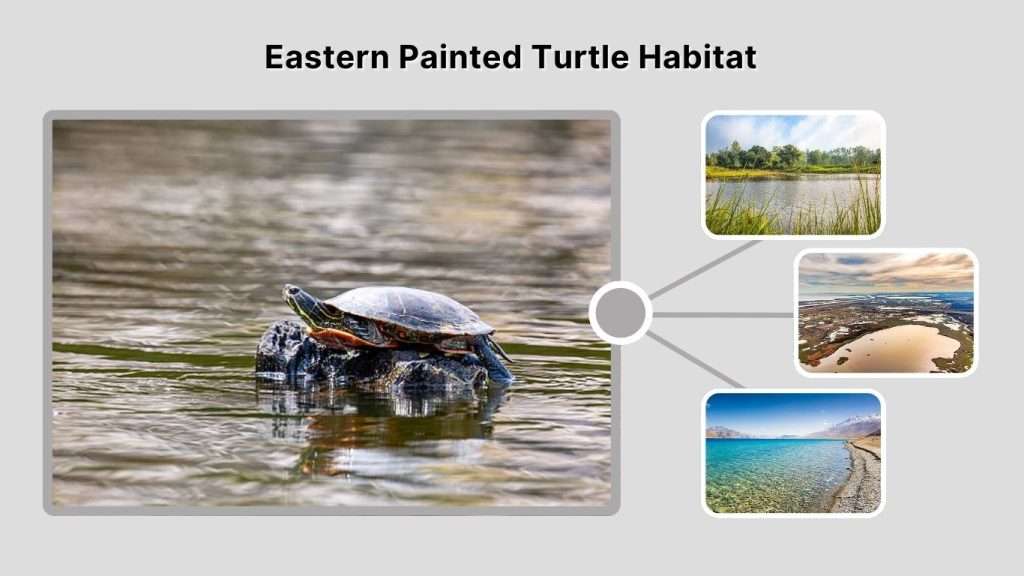
The eastern painted turtle favors slow-moving or still freshwater environments. Ideal habitats include ponds, marshes, shallow lakes, and gentle streams. These turtles prefer water bodies with soft, muddy bottoms where they can forage for food and bury themselves when needed.
Aquatic vegetation plays an important role in their habitat. Plants provide both food and cover from predators. Fallen logs, branches, and partially submerged rocks are also essential features, as they serve as basking sites.
Basking and Sunlight Needs
Like all reptiles, eastern painted turtles are ectothermic, meaning they rely on external heat sources to regulate their body temperature. Basking is a crucial daily activity. Turtles climb onto logs or rocks to absorb sunlight, which helps warm their bodies, improve digestion, and support immune function.
Basking groups are common, especially in areas with limited space. If startled, these turtles quickly slide back into the water for safety.
Behavior and Temperament
Eastern painted turtles are diurnal, meaning they are most active during the day. Much of their time is spent swimming, foraging, and basking. Basking is especially important because it helps regulate body temperature and supports healthy shell development. You’ll often see several turtles lined up together on a log, soaking in the sun. While they may appear social, they are not truly social animals—they simply tolerate each other when resources are plentiful.
Defense Mechanisms
When threatened, eastern painted turtles quickly slide off their basking spot into the water. In the water, they are agile swimmers and can hide in muddy bottoms or dense vegetation. On land, they rely on retracting their head and limbs into their shell for protection. Their dark shell coloration also helps them blend into murky environments, offering additional camouflage from predators.
Interaction with Other Wildlife
Eastern painted turtles share habitats with fish, frogs, waterfowl, and other turtle species. Natural predators include raccoons, foxes, skunks, large fish, and birds of prey. Eggs and hatchlings are particularly vulnerable. Despite these threats, their adaptability has helped maintain stable populations in many areas.
Eastern Painted Turtle Lifespan and Reproduction
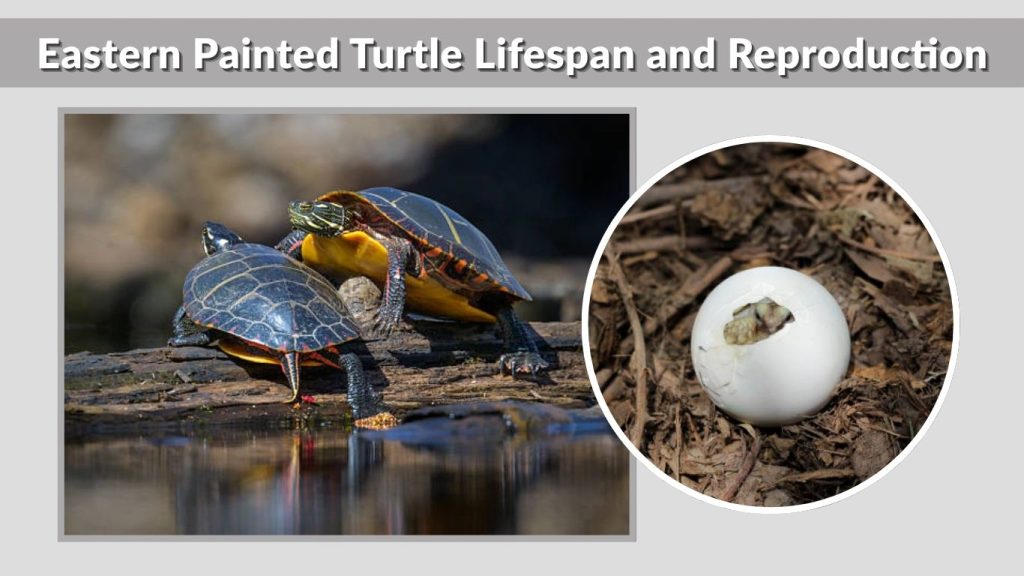
Eastern painted turtles are relatively long-lived reptiles. In the wild, they commonly live between 20 and 30 years, though some individuals may survive longer under favorable conditions. In captivity, with proper care, diet, and veterinary support, they can exceed 30 years. Their long lifespan makes them a serious long-term commitment for pet owners.
Mating and Nesting
Breeding typically occurs in spring and early summer. After mating in the water, females leave their aquatic habitat to find suitable nesting sites on land. They prefer sandy or loose soil areas exposed to sunlight. Using their hind legs, females dig a small flask-shaped nest where they lay a clutch of eggs, usually ranging from 3 to 12 eggs.
Egg Incubation and Hatchlings
Eggs incubate for approximately 70 to 80 days, depending on temperature. Like many reptiles, the temperature of the nest can influence the sex of the hatchlings. Baby eastern painted turtles emerge small, brightly marked, and highly vulnerable to predators. Some hatchlings remain in the nest over winter and emerge the following spring.
Eastern Painted Turtle Care (Pet Guide Section)

Keeping an eastern painted turtle as a pet requires preparation, space, and a long-term commitment. Before acquiring one, it is essential to check local wildlife regulations, as collecting wild turtles may be restricted or illegal in some regions.
Tank Setup Requirements
Eastern painted turtles need a large aquatic enclosure. A minimum 40-gallon tank is recommended for a single adult, though larger is better. The tank should include:
- Clean, filtered water deep enough for swimming
- A sturdy basking platform completely out of the water
- A heat lamp to maintain a basking temperature around 85–90°F
- UVB lighting to support calcium absorption and prevent shell deformities
Water quality is critical. A strong filtration system helps prevent bacterial growth and shell infections.
Proper Diet in Captivity
A balanced diet in captivity should include high-quality commercial turtle pellets as the main staple. Supplement this with leafy greens such as romaine lettuce, dandelion greens, and aquatic plants. Protein sources like insects or small feeder fish can be offered occasionally, especially for younger turtles. Overfeeding protein in adults can lead to health issues.
Common Health Concerns
Common health problems include shell rot, respiratory infections, and vitamin A deficiency. Many of these conditions result from poor water quality, lack of UVB lighting, or improper diet. Regular tank cleaning, proper lighting, and a balanced diet significantly reduce health risks.
Threats and Conservation
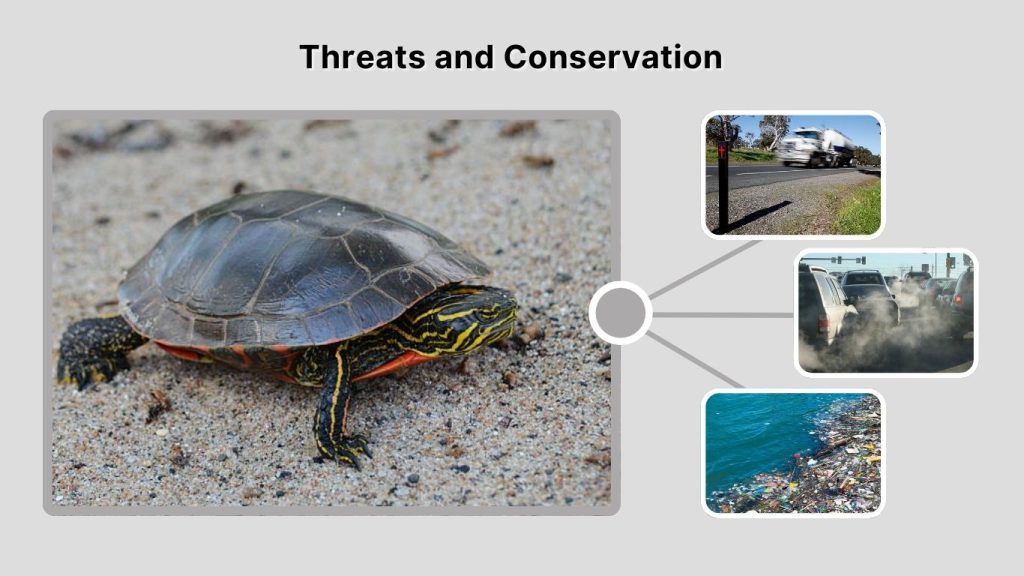
Although eastern painted turtles are not currently considered endangered, they face several environmental threats. Wetland destruction is one of the most significant challenges, as it reduces available habitat. Road mortality is also common when females cross roads to lay eggs. Pollution, including plastic waste and chemical runoff, further impacts freshwater ecosystems.
Protecting wetlands, reducing pollution, and respecting wildlife laws are essential steps in ensuring healthy populations. Responsible pet ownership also plays a role—never release captive turtles into the wild.
Conclusion
The eastern painted turtle (Chrysemys picta picta) is a resilient and visually striking freshwater species found throughout eastern North America. With its colorful markings, adaptable habitat preferences, and long lifespan, it continues to capture the interest of wildlife enthusiasts and reptile keepers alike. Understanding its habitat, diet, behavior, and care needs is essential for both conservation and responsible ownership. By protecting wetlands and promoting proper turtle care, we can help ensure that this vibrant species thrives for generations to come.