



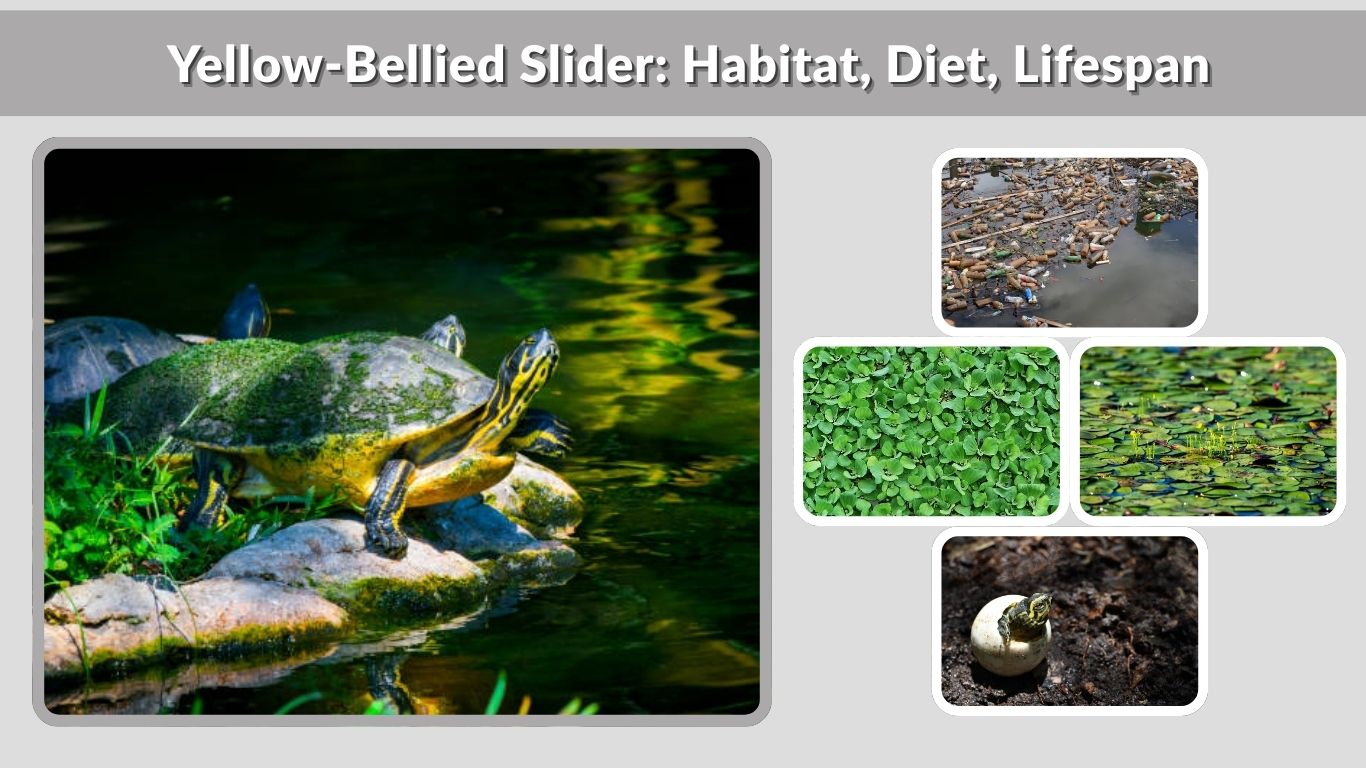
The yellow-bellied slider (Trachemys scripta scripta) is a large and highly recognizable freshwater turtle native to the southeastern United States. Named for its bright yellow plastron (bottom shell), this semi-aquatic species is often seen basking on logs in ponds, lakes, and slow-moving rivers. It is closely related to the red-eared slider and is sometimes confused with it. In this guide, we’ll explore the yellow-bellied slider’s identification, habitat, and diet to better understand this adaptable reptile.
Overview of the Yellow-Bellied Slider
Scientific Classification
The yellow-bellied slider belongs to the family Emydidae, which includes many pond and marsh turtles. Its scientific name, Trachemys scripta scripta, identifies it as one of three main subspecies of the pond slider (Trachemys scripta). The other well-known subspecies include the red-eared slider (Trachemys scripta elegans) and the Cumberland slider (Trachemys scripta troostii).
As a subspecies of the pond slider, the yellow-bellied slider shares many traits with its relatives, including strong swimming ability, frequent basking behavior, and omnivorous feeding habits.
Native and Introduced Range
The yellow-bellied slider is native to the southeastern United States. Its natural range includes states such as Florida, Georgia, Alabama, the Carolinas, and parts of Virginia. Within this range, it thrives in warm, temperate climates with abundant freshwater habitats.
Due to the pet trade and accidental releases, yellow-bellied sliders have also been introduced outside their native range. In some areas, they compete with native turtle species for basking spots and food resources.
Ecological Role
In the wild, yellow-bellied sliders serve as both predators and scavengers. As juveniles, they help control insect and small aquatic animal populations. As adults, they consume aquatic plants and algae, contributing to ecosystem balance.
Their eggs and hatchlings also provide food for predators such as raccoons, birds, and fish, making them an important part of the food web.
Physical Characteristics and Identification
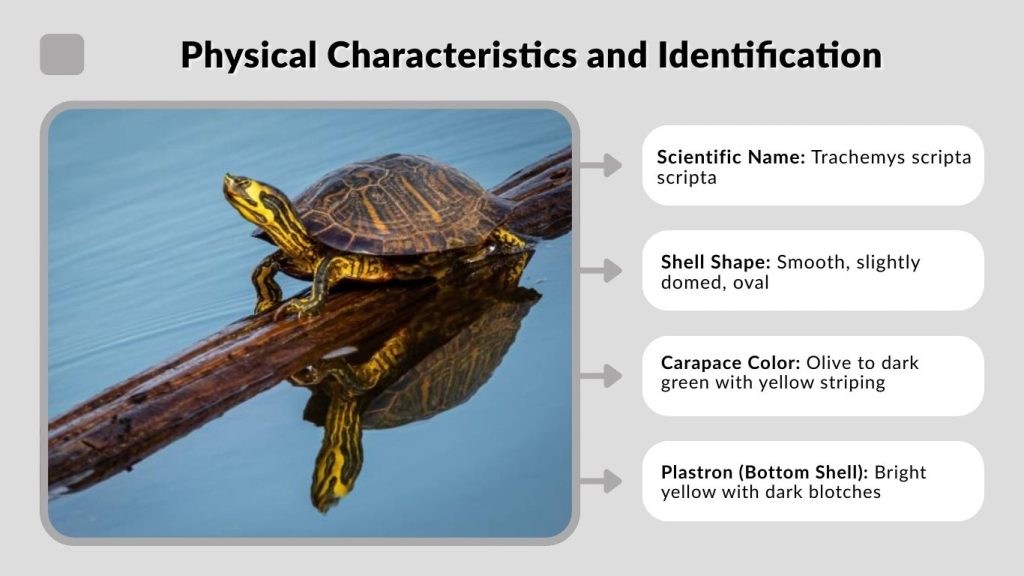
The yellow-bellied slider is a medium to large freshwater turtle known for its bold yellow markings and smooth, olive-colored shell. It closely resembles other pond sliders but can be identified by its bright yellow plastron and the distinctive yellow stripe behind each eye. Its streamlined body makes it an excellent swimmer, while its strong limbs and claws support climbing and basking behavior.
Key Identification Features
- Scientific Name: Trachemys scripta scripta
- Adult Size:
- Males: 5–8 inches
- Females: 8–13 inches
- Males: 5–8 inches
- Shell Shape: Smooth, slightly domed, oval
- Carapace Color: Olive to dark green with yellow striping
- Plastron (Bottom Shell): Bright yellow with dark blotches
- Head Markings: Large vertical yellow stripe behind each eye
- Skin: Dark green with bold yellow lines
- Male Traits: Longer front claws, thicker and longer tail
- Female Traits: Larger body size, shorter claws
These features help distinguish the yellow-bellied slider from similar species, especially the red-eared slider.
Yellow-Bellied Slider Habitat
Preferred Water Bodies
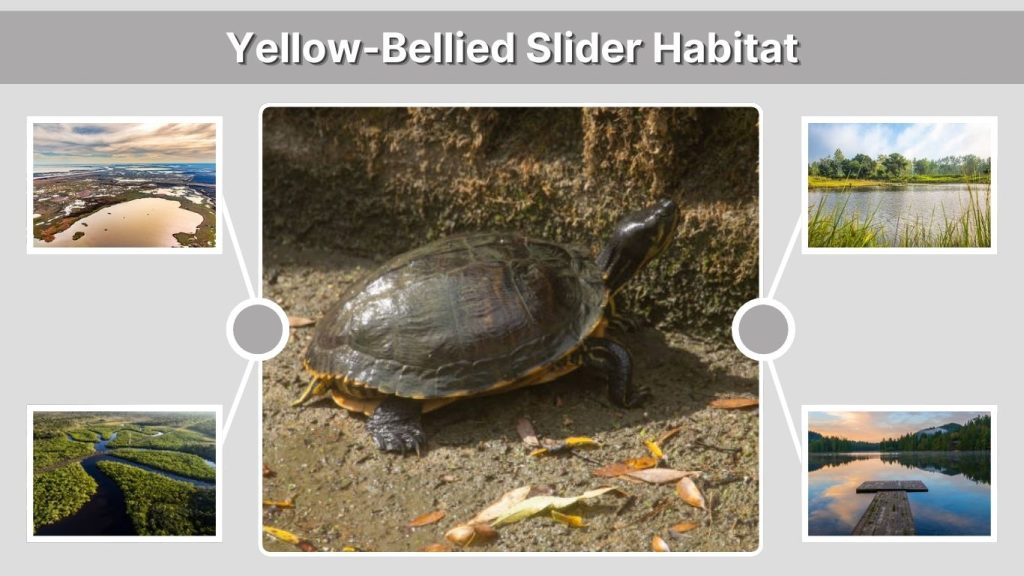
The yellow-bellied slider habitat includes a variety of calm freshwater environments. Common habitats include:
- Ponds
- Lakes
- Marshes
- Swamps
- Slow-moving rivers
- Retention ponds
They prefer areas with calm or slow-moving water where they can swim easily and access basking sites.
Habitat Features
Ideal habitats include soft, muddy bottoms where the turtles can forage for food. Aquatic vegetation is important for both shelter and feeding. Logs, rocks, and floating platforms provide essential basking sites, which are critical for regulating body temperature.
Because they rely heavily on basking, yellow-bellied sliders are often seen stacked together on fallen trees or exposed banks.
Yellow Bellied Slider Diet
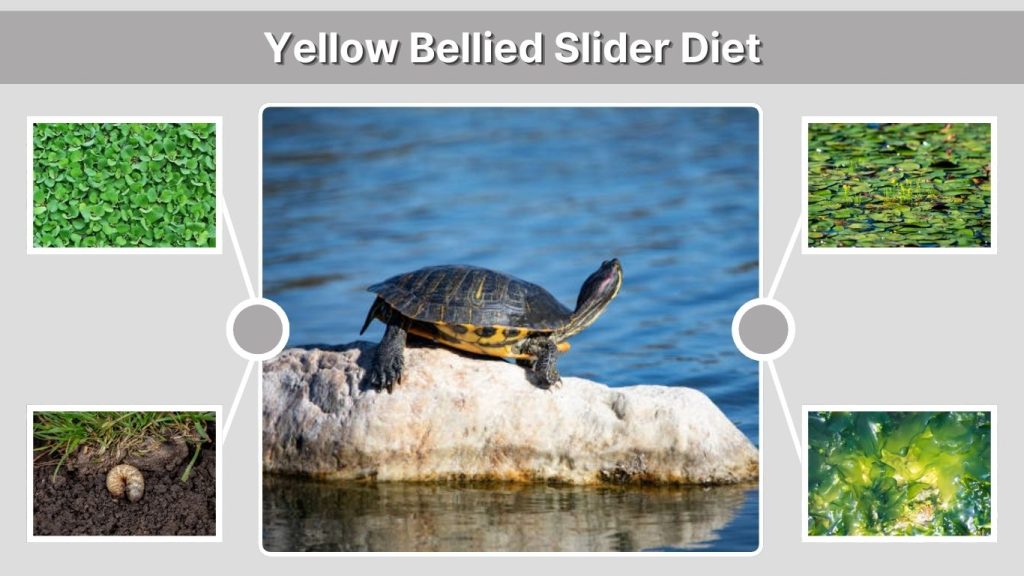
The yellow bellied slider diet changes as the turtle matures. This species is omnivorous, meaning it eats both plant and animal matter. However, the balance of foods shifts with age, making diet one of the most interesting aspects of its biology.
What Do Yellow Bellied Sliders Eat?
If you’re wondering what do yellow bellied sliders eat, their natural diet includes:
- Aquatic plants
- Algae
- Duckweed and water lettuce
- Insects and insect larvae
- Small fish
- Crayfish and crustaceans
- Worms
- Carrion (dead animals)
Juveniles tend to focus more on protein-rich foods like insects and small aquatic animals. Adults gradually consume more plant material, which can make up a large portion of their diet.
Diet Changes with Age
- Hatchlings: Mostly carnivorous, high-protein intake for growth
- Juveniles: Mixed diet of plants and animals
- Adults: Primarily plant-based but still opportunistic
This dietary flexibility helps the species adapt to different environments and food availability.
Feeding Behavior
Yellow-bellied sliders are active daytime feeders. They often search through vegetation or along muddy bottoms for food. In areas where food is abundant, they may gather in groups while feeding.
In captivity, a balanced diet with commercial turtle pellets, leafy greens, and occasional protein sources supports long-term health.
Yellow Bellied Slider Lifespan and Reproduction
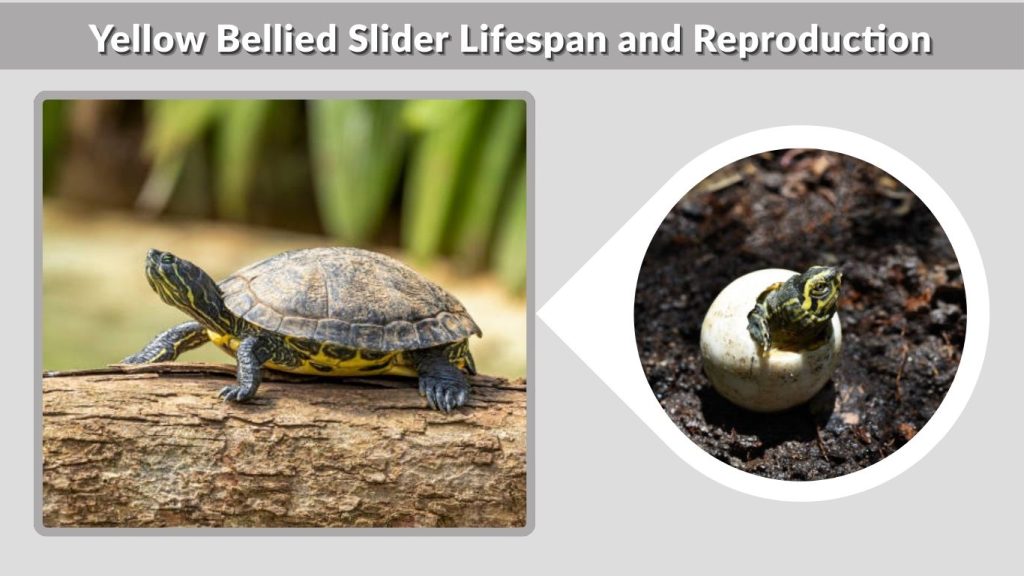
Yellow Bellied Slider Lifespan
The yellow bellied slider lifespan typically ranges from 20 to 30 years in the wild. In captivity, with proper care, clean water, and correct lighting, they can live 30 years or longer.
Factors affecting lifespan include water quality, availability of basking sites, predation, and environmental conditions.
Breeding and Nesting
Breeding usually occurs in spring. Males court females in the water using fluttering movements of their long front claws. After mating, females leave the water to find suitable nesting sites in sandy or loose soil.
A female may lay between 6 and 20 eggs per clutch and can produce multiple clutches in one season.
Yellow Bellied Slider Hatchling
A yellow bellied slider hatchling measures about 1 to 1.5 inches in shell length at birth. Hatchlings have bright green shells with vivid yellow markings, making them more colorful than adults.
After emerging from the nest, hatchlings instinctively move toward water. However, many face predation from birds, raccoons, and fish. Only a small percentage survive to adulthood.
Red Eared Slider vs Yellow Bellied Slider
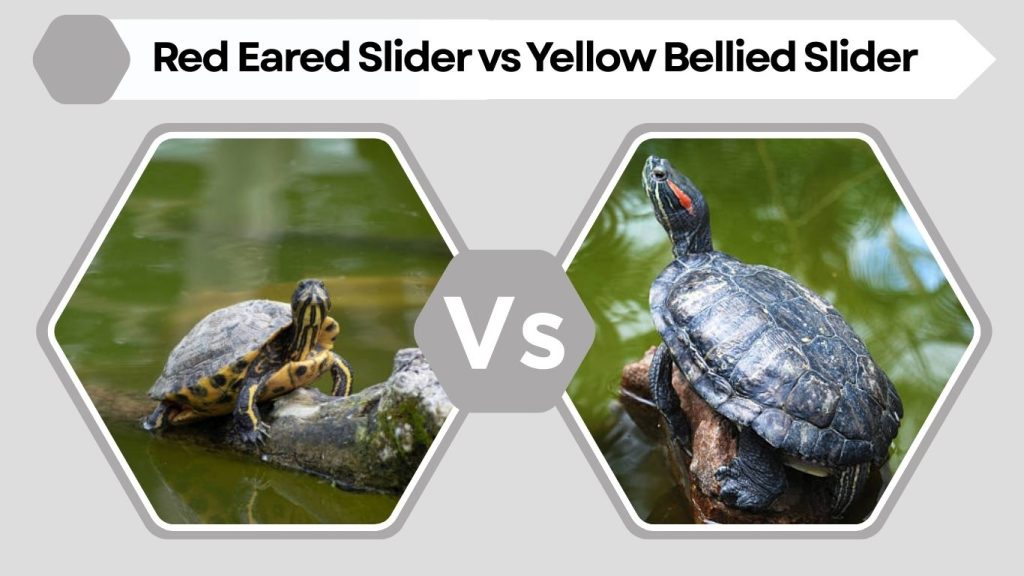
The red eared slider vs yellow bellied slider comparison is common because the two subspecies look very similar and often share habitats.
Key Visual Differences
- Ear Patch:
- Red-eared slider: Bright red patch behind the eye
- Yellow-bellied slider: Large yellow vertical stripe behind the eye
- Red-eared slider: Bright red patch behind the eye
- Plastron Color:
- Yellow-bellied slider: Brighter yellow underside
- Red-eared slider: Yellow with darker markings
- Yellow-bellied slider: Brighter yellow underside
- Shell Pattern:
- Both have green shells with stripes, but patterns vary slightly
- Both have green shells with stripes, but patterns vary slightly
Size and Behavior
Both species grow to similar sizes and share basking and feeding habits. However, red-eared sliders have become more widely invasive worldwide due to extensive pet trade releases.
Correct identification is important for conservation and management efforts.
Behavior and Temperament
Yellow-bellied sliders are diurnal and spend much of their time basking in the sun. Basking helps regulate body temperature, aids digestion, and supports shell health.
They are generally shy and will quickly slide into the water when approached. In the wild, they may bask in groups, stacking on top of one another on logs or rocks.
When threatened in the water, they are strong swimmers and can dive quickly to escape predators.
Yellow-Bellied Slider Facts
Here are some interesting yellow-bellied slider facts:
- They are one of the most common turtles in the southeastern U.S.
- Females grow significantly larger than males.
- They are excellent swimmers with streamlined shells.
- They rely heavily on basking for health and survival.
- They are frequently confused with red-eared sliders.
Threats and Conservation
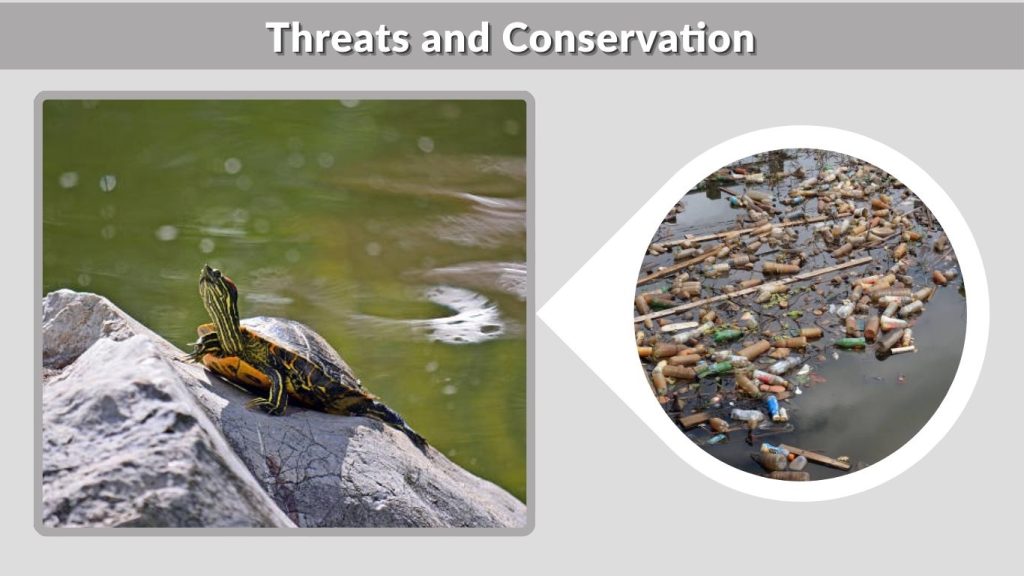
Although not currently endangered, yellow-bellied sliders face habitat loss from wetland destruction and water pollution. Road mortality can occur when females travel to nest.
In some regions, competition with invasive turtle species creates additional pressure. Responsible pet ownership and habitat conservation are important for maintaining healthy populations.
Conclusion
The yellow-bellied slider (Trachemys scripta scripta) is a large, adaptable freshwater turtle known for its bright yellow underside and bold facial stripes. Found throughout the southeastern United States, it thrives in ponds, lakes, and marshes. With an omnivorous diet, a lifespan of up to 30 years or more, and strong basking habits, it remains one of the most recognizable turtles in its range. Understanding its habitat, diet, and differences from the red-eared slider helps support responsible wildlife awareness and conservation efforts.