



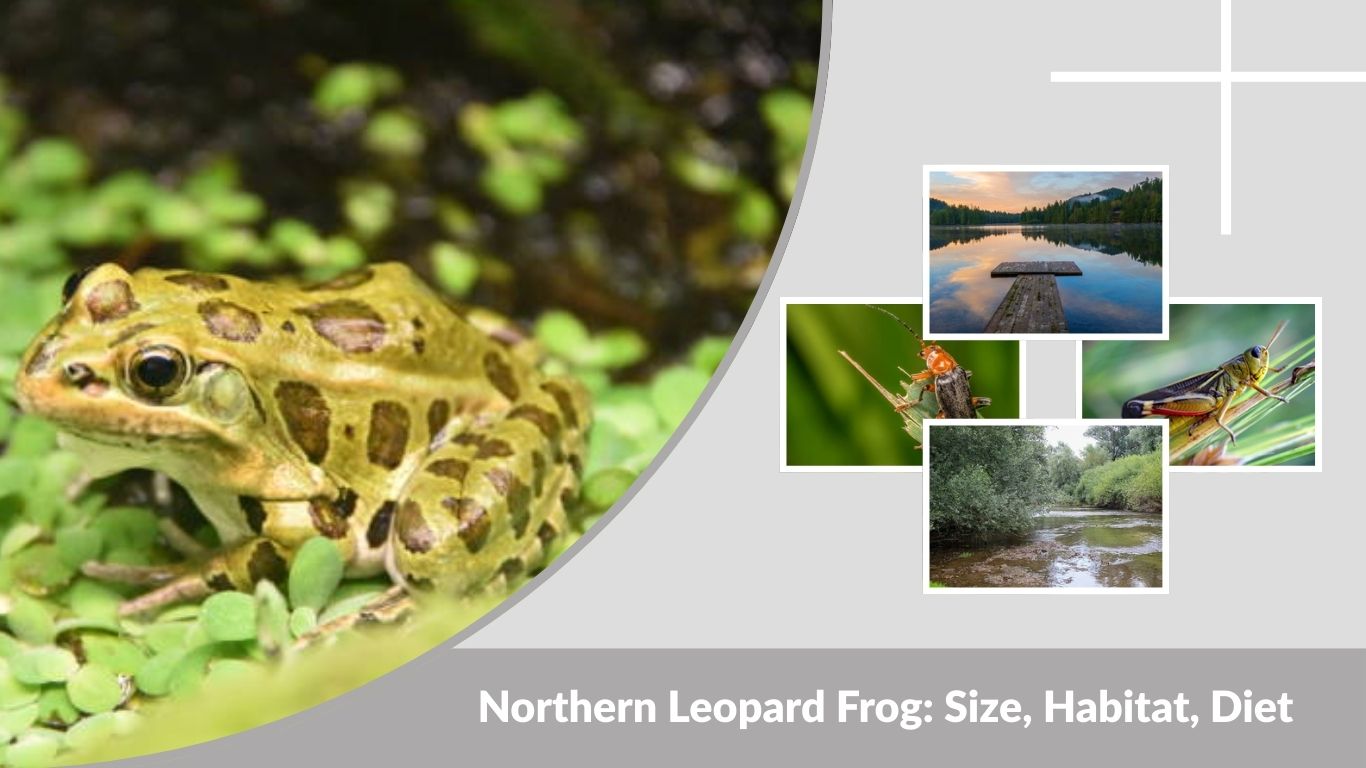
The Northern Leopard Frog is one of North America’s most recognizable amphibians, easily identified by its bold dark spots and bright green or brown coloring. Found across Canada and much of the northern United States, this adaptable frog thrives in wetlands, grasslands, and even agricultural areas. Known for its powerful jumps and strong swimming ability, the Northern Leopard Frog plays an important role in controlling insect populations and supporting healthy aquatic ecosystems.
What Is a Northern Leopard Frog?
The Northern Leopard Frog (Lithobates pipiens) is a medium-sized amphibian belonging to the true frog family, Ranidae. The species name pipiens roughly translates to “peeping” or “chirping,” referring to the sounds it produces during breeding season.
It is one of several “leopard frog” species in North America. The name comes from its distinctive pattern of dark, rounded spots that resemble a leopard’s markings. Because of its wide distribution and ease of observation, it has become one of the most studied frog species in biology and environmental science.
Physical Characteristics
Size and Weight
Northern Leopard Frogs typically measure between 2 and 4 inches in length. Females are usually larger than males, especially during breeding season. Their long hind legs make them excellent jumpers, capable of leaping several times their body length in a single bound.
Color and Markings
Their base color ranges from bright green to olive or brown. The most distinctive features include:
- Dark, rounded spots with lighter borders
- Pale or white underside
- Prominent dorsolateral folds (raised ridges running down each side of the back)
These ridges are a key identifying feature and help distinguish them from some similar species.
Each frog’s spot pattern is slightly unique, much like a fingerprint.
Body Structure
Northern Leopard Frogs have smooth, moist skin and a streamlined body built for both land and water movement. Their powerful hind legs support strong swimming and impressive jumping ability.
Unlike tree frogs, they do not have adhesive toe pads. Instead, they are well adapted for life in and around water.
Habitat and Distribution
Geographic Range
The Northern Leopard Frog has a broad range across North America, including:
- Most of Canada
- The northern and central United States
- Prairie and grassland regions
They are especially common in areas with abundant freshwater habitats.
Preferred Habitats
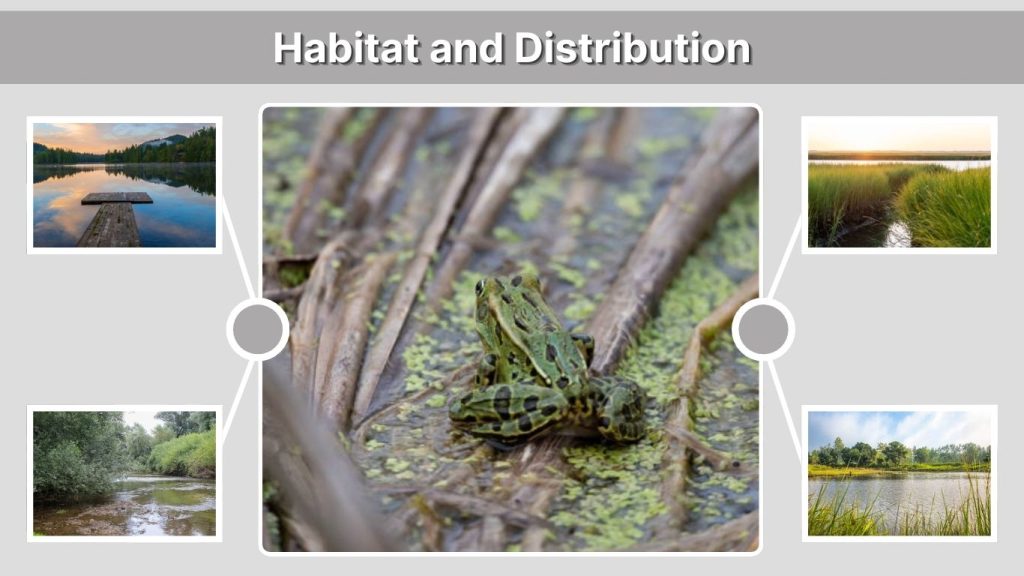
Northern Leopard Frogs are closely associated with water but also spend time in surrounding upland areas. Typical habitats include:
- Marshes
- Ponds
- Lakes
- Slow-moving streams
- Wet meadows
- Prairie wetlands
They prefer shallow, vegetated waters for breeding and feeding. During summer, they may move into grassy fields or meadows to hunt insects.
Seasonal Habitat Changes
In warm months, Northern Leopard Frogs are active along the edges of ponds and wetlands. They often bask in sunlight near the water’s edge and quickly leap into the water when disturbed.
As temperatures cool in fall, they migrate to deeper ponds, lakes, or slow-moving streams for overwintering. Unlike freeze-tolerant species such as Wood Frogs, Northern Leopard Frogs hibernate underwater.
Behavior and Activity
Diurnal and Nocturnal Behavior
Northern Leopard Frogs can be active both during the day and at night. They are more visible than many frog species and are frequently seen resting along shorelines or moving through grassy areas.
They rely on quick reflexes to escape predators. When startled, they make long, powerful leaps toward water for safety.
Movement and Migration
This species is known for seasonal movement between habitats. In spring, they migrate to shallow wetlands to breed. After breeding season, they may disperse considerable distances into nearby grasslands or fields to feed.
Some individuals travel several hundred meters between seasonal habitats, making safe wetland connections essential for their survival.
Calling Behavior
During breeding season, males gather in shallow water and produce a low, snore-like call. The sound has been described as a series of chuckles or grunts rather than a clear musical note.
Breeding choruses usually occur in early to mid-spring, depending on regional climate. Warmer temperatures and rainfall often trigger calling activity.
Diet and Feeding Habits
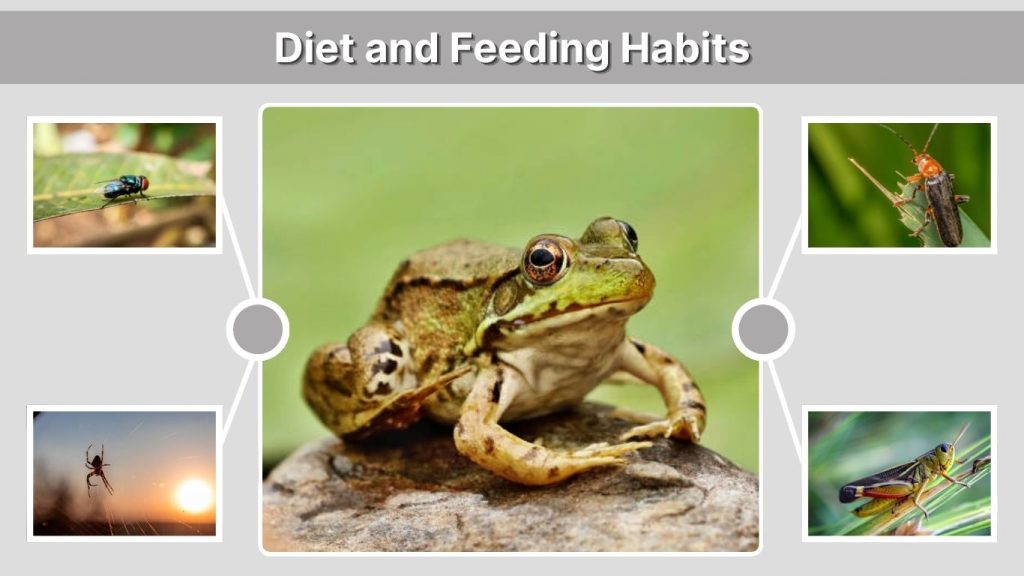
Northern Leopard Frogs are opportunistic carnivores as adults. They consume a wide variety of invertebrates, including:
- Beetles
- Grasshoppers
- Flies
- Spiders
- Ants
- Small crustaceans
They hunt both on land and in shallow water, using quick tongue strikes to capture prey. Their strong legs also allow them to lunge forward rapidly when targeting insects.
As tadpoles, their diet consists mainly of:
- Algae
- Plant matter
- Organic debris
This herbivorous diet supports steady growth during their aquatic development stage.
Lifecycle and Reproduction
Northern Leopard Frogs breed in early to mid-spring, often soon after ice melts from ponds. Breeding typically occurs in shallow, sun-warmed wetlands.
Females lay large, jelly-like egg masses attached to submerged vegetation. Each mass can contain several thousand eggs. Eggs usually hatch within one to two weeks, depending on water temperature.
Tadpoles remain aquatic for approximately 2–3 months before undergoing metamorphosis. As they develop legs and absorb their tails, young frogs gradually leave the water and begin life on land.
Winter Survival and Overwintering
Unlike freeze-tolerant species such as Wood Frogs, Northern Leopard Frogs cannot survive being frozen solid. Instead, they overwinter underwater.
Overwintering Strategy
As temperatures drop in autumn, Northern Leopard Frogs migrate to deeper ponds, lakes, or slow-moving streams. They settle at the bottom, often partially buried in mud or resting among aquatic vegetation.
During winter:
- They remain mostly inactive
- Their metabolism slows significantly
- They rely on stored energy reserves
Oxygen Absorption
Because they do not surface for air under ice-covered water, Northern Leopard Frogs absorb oxygen directly through their skin. This process, known as cutaneous respiration, requires well-oxygenated water.
If oxygen levels drop too low—especially in stagnant or polluted water—frogs may not survive the winter. For this reason, clean and healthy aquatic habitats are essential for their long-term survival.
When ice melts in spring, they become active again and migrate to shallow breeding areas.
Predators and Threats
Natural Predators
Northern Leopard Frogs face predators throughout every stage of life.
Eggs and tadpoles are preyed upon by:
- Fish
- Aquatic insects
- Salamanders
- Birds
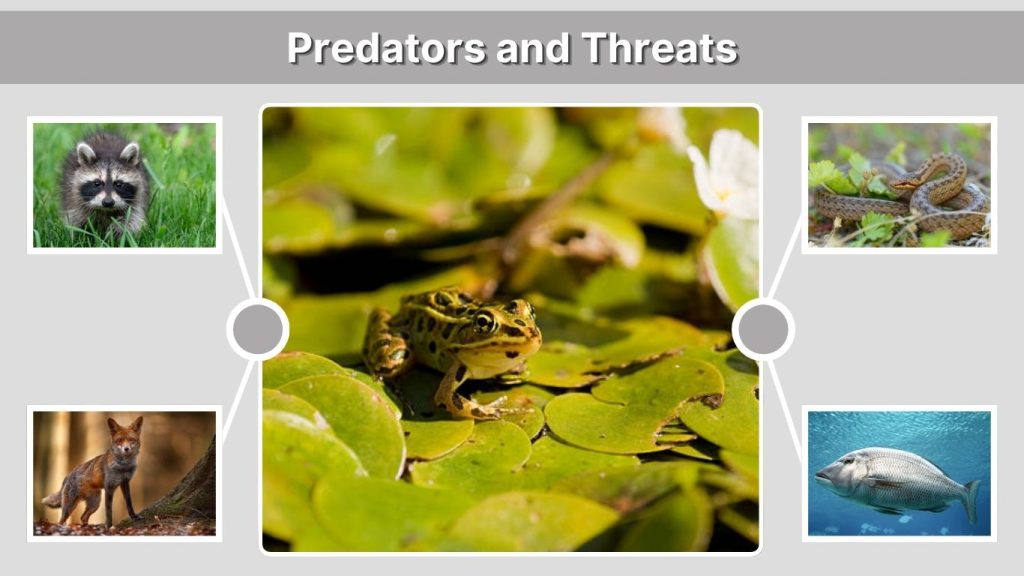
Juveniles and adults may be eaten by:
- Snakes
- Herons and other wading birds
- Raccoons
- Foxes
- Larger fish
Their spotted pattern provides camouflage among vegetation, helping them blend into grassy shorelines and aquatic plants.
Environmental Threats
Although the Northern Leopard Frog is listed as Least Concern overall, populations have declined in certain regions.
Major threats include:
- Wetland drainage and habitat loss
- Agricultural chemicals and pesticide runoff
- Road mortality during seasonal migrations
- Habitat fragmentation
- Disease, including chytrid fungus infections
Because this species depends on both aquatic and upland habitats, the loss of connected landscapes can severely impact local populations.
Northern Leopard Frog vs. Similar Species
Differences from Southern Leopard Frog
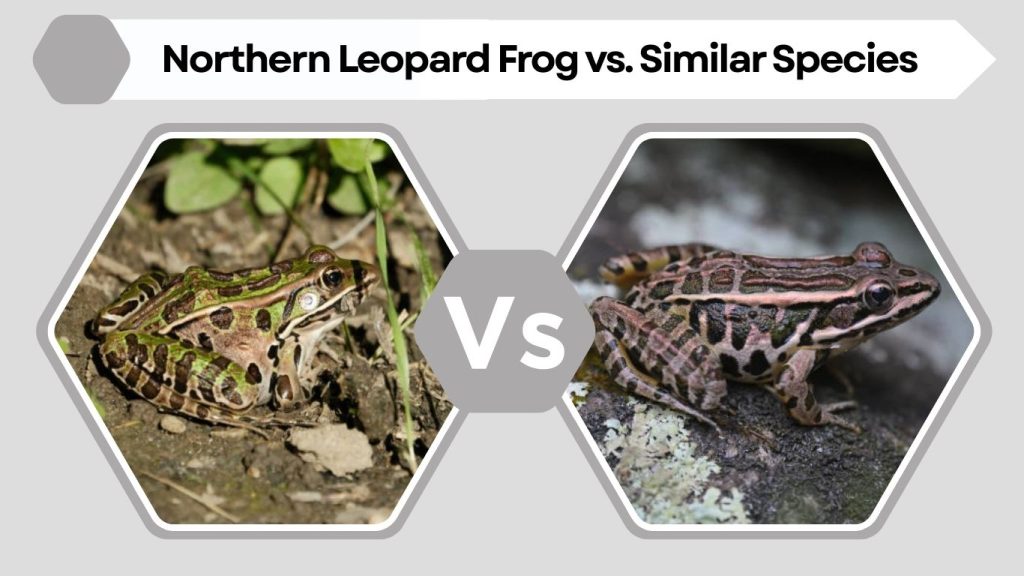
The Southern Leopard Frog shares similar markings but differs in:
- Geographic range (primarily southeastern U.S.)
- Spot pattern arrangement
- Slight differences in call
Northern Leopard Frogs tend to have more rounded, evenly spaced spots.
Differences from Pickerel Frog
The Pickerel Frog is another spotted species that can be confused with the Northern Leopard Frog. Key differences include:
- Pickerel Frogs have more rectangular spots arranged in neat rows.
- Pickerel Frogs often prefer cooler streams.
- Pickerel Frogs produce skin secretions that can be irritating to predators, while Northern Leopard Frogs do not have strong defensive toxins.
Careful observation of spot shape and habitat often helps distinguish these species.
Role in the Ecosystem
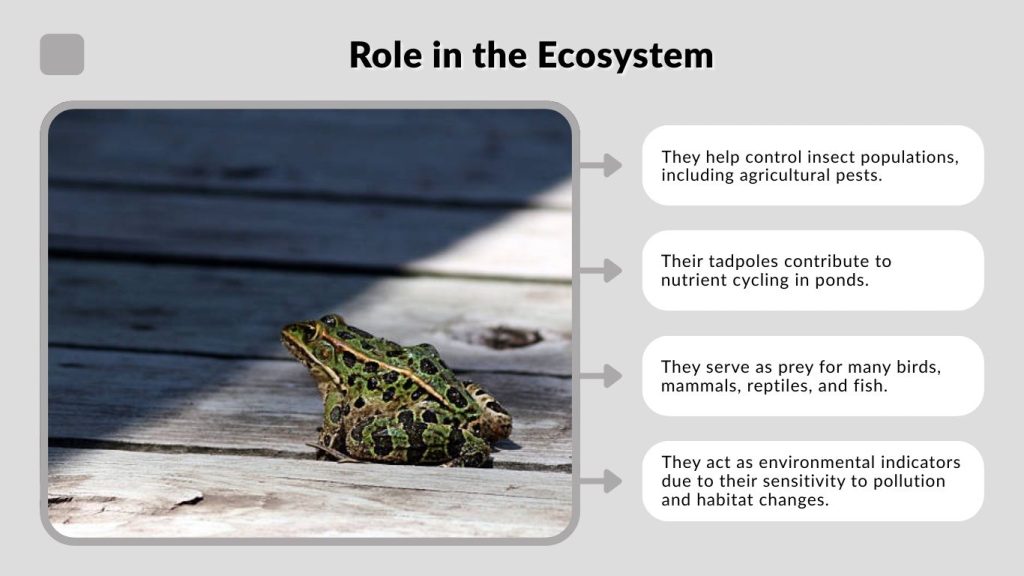
Northern Leopard Frogs play an important role in wetland and grassland ecosystems.
- They help control insect populations, including agricultural pests.
- Their tadpoles contribute to nutrient cycling in ponds.
- They serve as prey for many birds, mammals, reptiles, and fish.
- They act as environmental indicators due to their sensitivity to pollution and habitat changes.
Because they are relatively easy to observe and study, they have also contributed greatly to scientific research in biology, ecology, and environmental monitoring.
Conservation Status
The Northern Leopard Frog is currently classified as Least Concern on a global scale. However, regional declines have been documented, particularly in parts of the western United States and Canada.
Conservation efforts focus on:
- Protecting wetlands
- Reducing agricultural runoff
- Maintaining habitat corridors
- Monitoring disease outbreaks
Preserving both breeding wetlands and surrounding upland areas is critical for maintaining stable populations.
FAQs
Are Northern Leopard Frogs poisonous?
Northern Leopard Frogs are not poisonous to humans. Like most amphibians, they produce mild skin secretions, but these are generally harmless.
How big do Northern Leopard Frogs get?
Adults typically grow between 2 and 4 inches long, with females usually larger than males.
What do Northern Leopard Frogs eat?
They eat a wide variety of insects and small invertebrates, including beetles, grasshoppers, flies, spiders, and ants. Tadpoles feed mainly on algae and plant material.
Where do Northern Leopard Frogs live?
They live in Canada and the northern and central United States, especially in marshes, ponds, lakes, streams, and wet meadows.
Do Northern Leopard Frogs hibernate?
Yes. They hibernate underwater during winter, resting at the bottom of ponds or lakes and absorbing oxygen through their skin.