




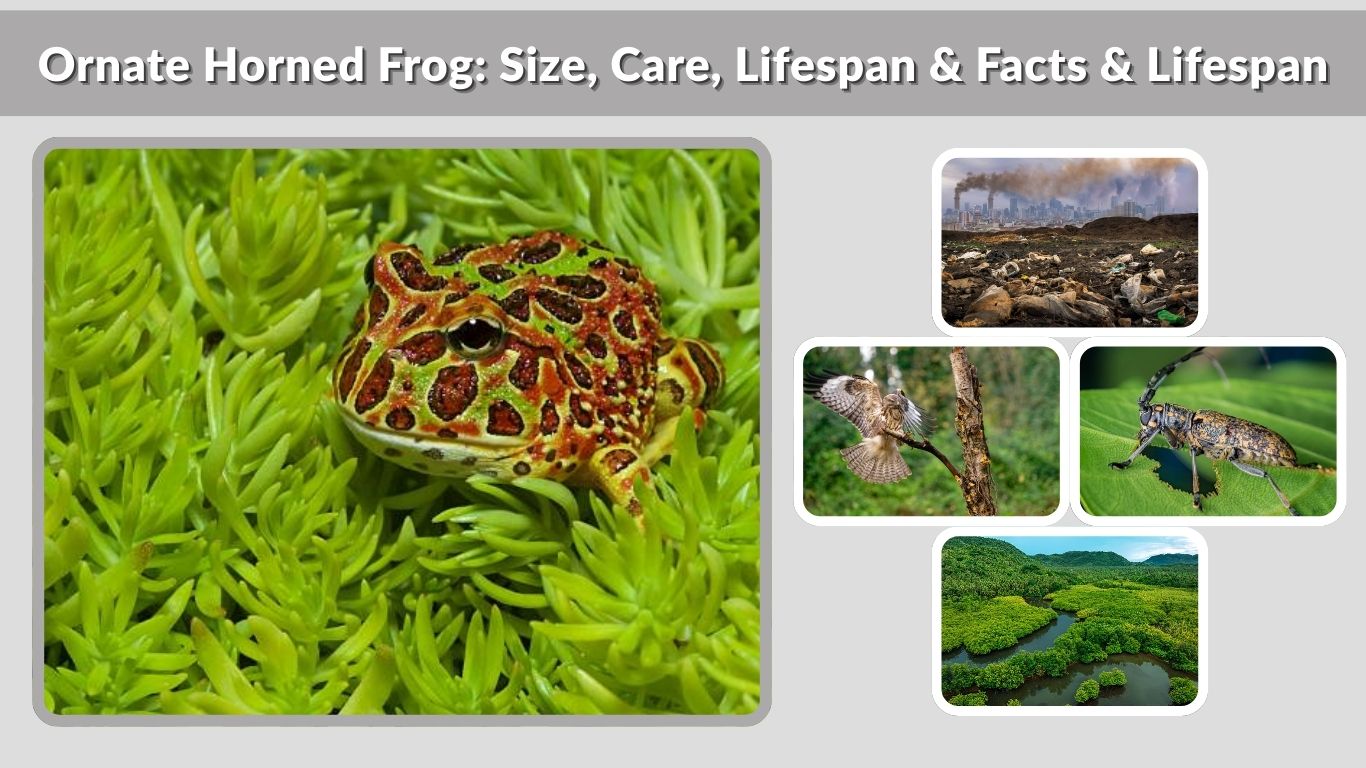
The ornate horned frog (Ceratophrys ornata), also known as the Argentine horned frog, is one of the most striking amphibians in South America. Famous for its massive mouth, bold colors, and ambush hunting style, this species belongs to a group commonly called “Pacman frogs.” Native to Argentina and surrounding regions, the ornate horned frog is both fascinating in the wild and popular in the pet trade. In this guide, we’ll explore its size, appearance, habitat, behavior, and lifespan.
Ornate Horned Frog Overview
The ornate horned frog is part of the family Ceratophryidae, a group of large, ground-dwelling frogs known for their aggressive feeding response and round body shape. The name “horned frog” comes from the pointed, horn-like projections above its eyes. These are not true horns but extended skin ridges that give the frog a fierce expression.
It is primarily found in Argentina, Uruguay, and parts of southern Brazil. This species prefers warm, humid environments and spends much of its life on the forest floor or in grasslands.
Quick Facts:
- Scientific name: Ceratophrys ornata
- Common names: Ornate horned frog, Argentine horned frog
- Average size: 4–7 inches
- Lifespan: 5–8 years (wild), 10–15 years (captivity)
- Habitat: Grasslands, forest floors, humid lowlands
- Diet: Insects, small vertebrates
Physical Characteristics
Size
The ornate horned frog is large and heavy-bodied compared to many other frog species. Adults typically grow between 4 and 7 inches (10–18 cm) in length. Females are significantly larger and bulkier than males.
Rather than being long and slender, this frog is round and wide, often appearing almost circular when viewed from above. Its body mass is impressive for its size, giving it a powerful, solid appearance.
Color and Pattern
One of the most remarkable features of this species is its vibrant coloration. Most individuals display bright green as a base color, decorated with bold patterns of red, brown, yellow, and black. These markings create an ornate, almost painted look, which is how the species gets its common name.
Despite their bright colors, they are surprisingly well camouflaged in their natural habitat. The mix of greens and browns blends effectively with leaf litter, grass, and soil on the forest floor.
Color intensity and pattern variations differ between individuals, making each frog slightly unique.
Distinctive Features
The ornate horned frog has several defining physical traits:
- Horn-like projections above the eyes
- An extremely wide mouth
- Powerful jaws
- Short, sturdy legs
Its mouth is particularly notable. It is so wide that the frog appears to be “all mouth,” which explains the nickname “Pacman frog.” This large gape allows it to consume prey nearly its own size.
Unlike tree frogs, ornate horned frogs are not built for climbing or long-distance jumping. Their legs are short and strong, suited for short lunges rather than agile movement.
Natural Habitat
Geographic Range
The ornate horned frog is native to:
- Argentina (primarily)
- Uruguay
- Southern Brazil
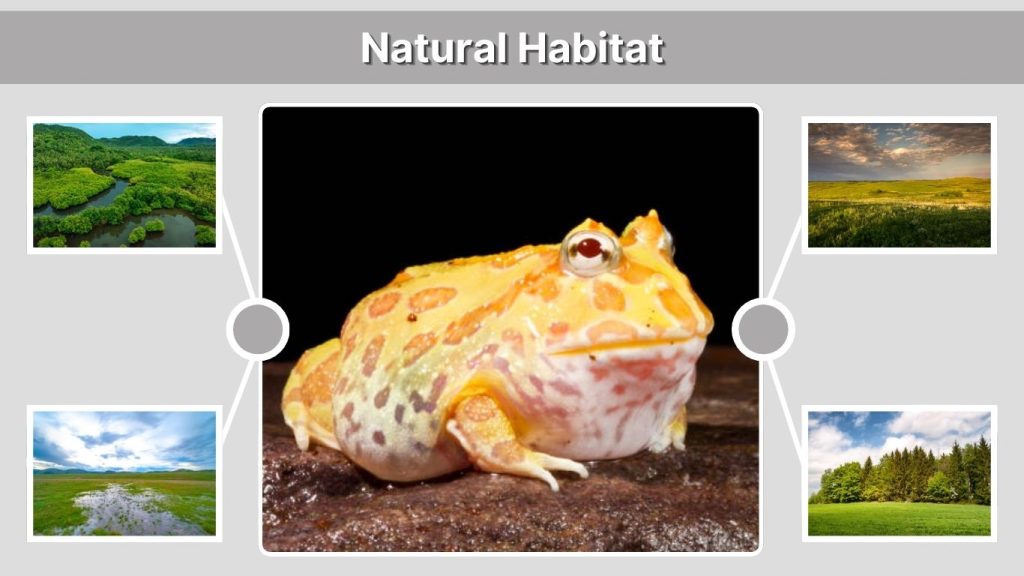
It is most commonly associated with the Pampas region of Argentina.
Preferred Environment
This species lives mainly on the ground in:
- Grasslands
- Forest edges
- Humid lowlands
- Rain-soaked plains
They prefer areas with soft soil where they can partially burrow. During dry periods, they may dig deeper into the ground to retain moisture.
Unlike arboreal frogs, ornate horned frogs spend almost their entire lives on the forest floor.
Climate Conditions
The ornate horned frog thrives in warm temperatures and moderate to high humidity. Seasonal rainfall plays a major role in its life cycle, especially reproduction.
In dry seasons, they may enter a state similar to hibernation called estivation. During this time, they burrow into the soil and form a protective cocoon from shed skin layers to conserve moisture.
Behavior and Temperament
Ambush Lifestyle
The ornate horned frog is a classic ambush predator. It spends much of its time partially buried in soil or leaf litter, with only its eyes and upper body exposed.
Rather than actively searching for food, it waits patiently for prey to come within striking distance. When something moves nearby, it lunges forward quickly and clamps down with its strong jaws.
This sit-and-wait strategy conserves energy and makes the frog highly effective despite its limited mobility.
Temperament
Ornate horned frogs are solitary animals and should not be housed together. They can be aggressive and may attempt to eat anything that moves, including other frogs.
They are known for their strong feeding response and may bite if they mistake a finger for food. While they are not dangerous to humans, their bite can be surprising and uncomfortable.
Because of this, handling should be kept to a minimum.
Diet and Feeding Habits

What Do Ornate Horned Frogs Eat?
The ornate horned frog is a carnivorous predator with a very strong appetite. In the wild, it eats a wide range of prey, including:
- Crickets and grasshoppers
- Beetles and other large insects
- Earthworms
- Small rodents
- Other frogs
- Small reptiles
Because of their large mouths, they are capable of swallowing prey nearly their own size. They are opportunistic feeders and will attempt to eat almost anything that moves within reach.
Hunting Strategy
These frogs rely on a sit-and-wait strategy. Buried in soil or leaf litter, they remain motionless until prey approaches. When triggered by movement, they lunge forward with surprising speed and clamp down using their powerful jaws.
Unlike many frogs that rely mainly on their sticky tongues, ornate horned frogs often use their jaws to grab and hold prey. Once captured, prey is swallowed whole.
Feeding in Captivity
In captivity, their diet commonly includes:
- Gut-loaded crickets
- Dubia roaches
- Nightcrawlers or earthworms
- Occasional pinky mice (fed sparingly)
Young frogs should be fed more frequently, while adults may only need feeding two to three times per week. Calcium and vitamin supplements are important to prevent metabolic bone disease.
Overfeeding is a common problem in captivity, as these frogs will continue eating even when overweight. Proper portion control is essential.
Lifespan
Lifespan in the Wild
In their natural environment, ornate horned frogs generally live between 5 and 8 years. Survival rates depend on habitat quality, food availability, and avoiding predators.
Tadpoles and juveniles face high mortality rates, but adults are relatively hardy once fully grown.
Lifespan in Captivity
With proper care, ornate horned frogs can live 10 to 15 years in captivity. Stable temperatures, clean enclosures, proper humidity, and a balanced diet significantly increase their lifespan.
Because they are sedentary animals, long-term health depends heavily on careful feeding and good husbandry practices.
Reproduction and Life Cycle
Breeding Season
Breeding is typically triggered by heavy seasonal rains. In the wild, ornate horned frogs reproduce during warm, wet periods when temporary pools of water form.
Males call to attract females, though their calls are not as loud or frequent as those of tree frogs.
Egg Laying
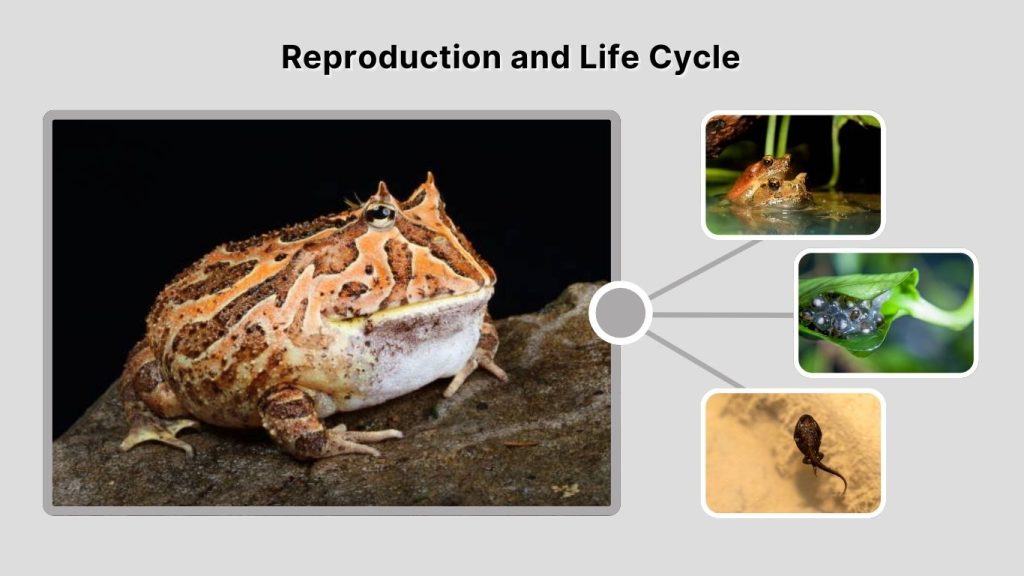
After mating, females lay large clusters of eggs in shallow water. A single female can produce hundreds or even thousands of eggs during a breeding season.
The eggs hatch quickly, often within just a few days.
Tadpole Stage
The tadpoles of ornate horned frogs are carnivorous, unlike many frog species whose tadpoles feed on algae. They grow rapidly and may even display cannibalistic behavior if food is scarce.
This aggressive feeding behavior helps them develop quickly before temporary water sources dry up.
Metamorphosis
Metamorphosis happens relatively fast compared to many amphibians. As the tadpoles develop legs and lungs, they transition to life on land.
Once fully transformed, young froglets begin their ground-dwelling, ambush-predator lifestyle.
Predators and Threats
Natural Predators
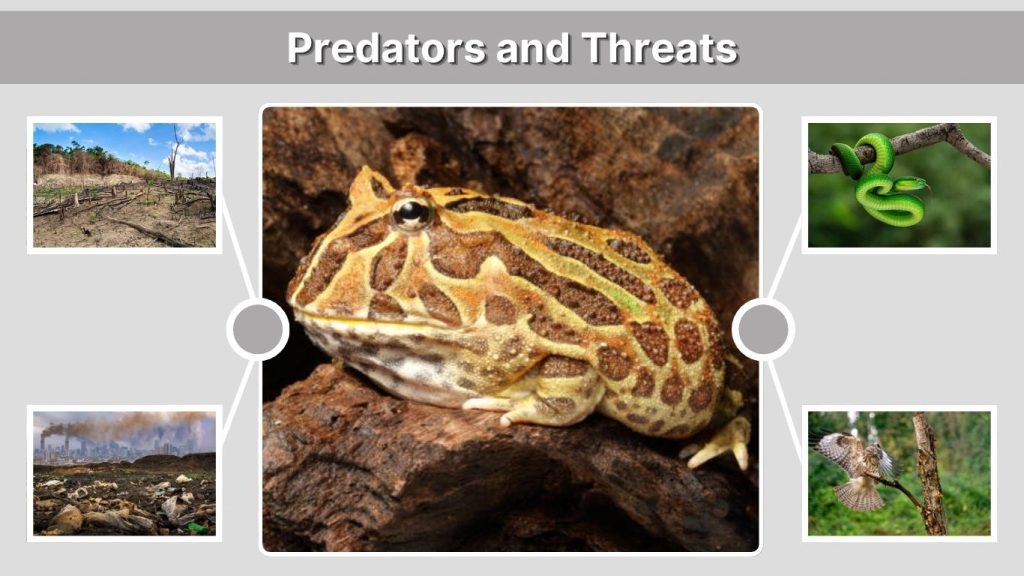
In the wild, ornate horned frogs may be preyed upon by:
- Birds of prey
- Snakes
- Larger mammals
Their camouflage helps them avoid detection, but their limited mobility makes them vulnerable if discovered.
Environmental Threats
Major threats to the species include:
- Habitat destruction
- Agricultural expansion
- Pollution
- Collection for the pet trade
Although not currently considered critically endangered, habitat loss in parts of their native range can impact local populations.
Ornate Horned Frog as a Pet
Why They’re Popular
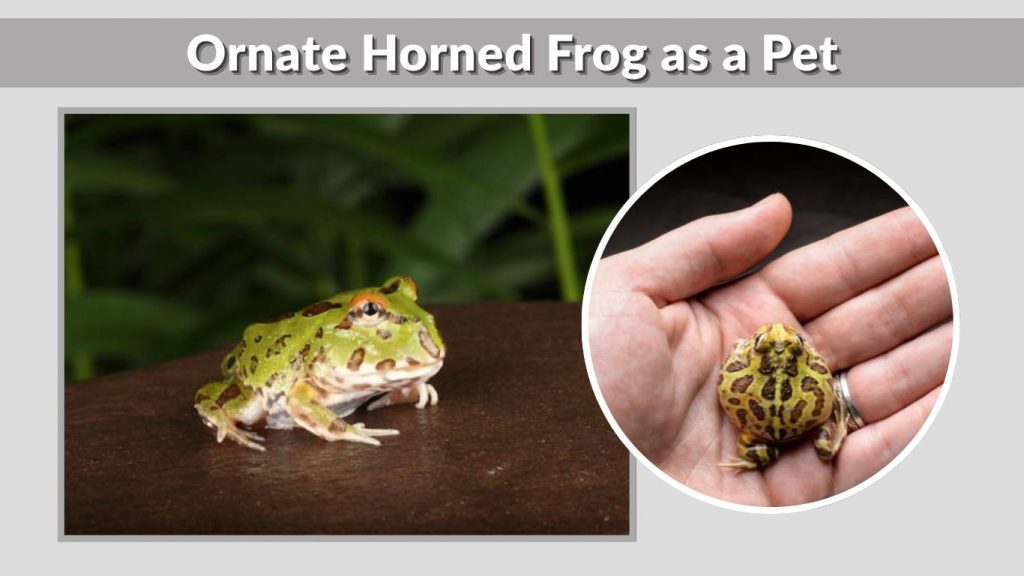
The ornate horned frog is popular among amphibian enthusiasts because of:
- Its bold colors
- Unique appearance
- Simple enclosure requirements
- Strong feeding response
They do not require large enclosures, as they are mostly stationary.
Enclosure Setup
A 10–20 gallon horizontal tank is usually sufficient for one adult. Important setup elements include:
- Deep, moist substrate (such as coconut fiber)
- A shallow water dish
- Stable temperatures between 75–85°F
- Humidity levels around 60–80%
The substrate should be kept damp but not waterlogged to prevent skin infections.
Handling Considerations
Ornate horned frogs are not ideal for frequent handling. They are prone to biting if they mistake fingers for food. Handling can also stress them and damage their sensitive skin.
They are best suited as display pets rather than interactive animals.
FAQs
How big do ornate horned frogs get?
Ornate horned frogs typically grow between 4 and 7 inches long. Females are noticeably larger and heavier than males. Their round, stocky body makes them appear even bigger, and they are considered one of the larger ground-dwelling frog species.
How long do ornate horned frogs live?
In the wild, they usually live 5 to 8 years. In captivity, with proper care, they commonly live 10 to 15 years. Stable temperatures, correct humidity, and a balanced diet greatly improve their lifespan.
Are ornate horned frogs aggressive?
Yes, they are known for their strong feeding response and can be aggressive toward anything that moves. They may bite if they mistake a hand for food. For this reason, they should be handled minimally and housed alone.
What do ornate horned frogs eat?
They eat insects like crickets and roaches, earthworms, and occasionally small vertebrates. In captivity, they are commonly fed gut-loaded insects and worms, with occasional pinky mice offered sparingly to prevent obesity.
Are ornate horned frogs good pets for beginners?
They can be suitable for beginners who understand their needs. They require simple housing but must be fed properly and handled carefully. Their aggressive feeding behavior and risk of obesity mean responsible care is essential.