


The Cuban Tree Frog (Osteopilus septentrionalis) is one of the largest and most recognizable tree frogs in North America. Native to Cuba, the Bahamas, and the Cayman Islands, this adaptable amphibian has established itself far beyond its original range—particularly throughout Florida and parts of the southeastern United States. While its size and impressive climbing ability make it fascinating to observe, the Cuban Tree Frog is also considered an invasive species due to its impact on native wildlife.
Understanding this species requires looking at its physical characteristics, behavior, habitat preferences, and ecological effects. Its success in new environments is a result of remarkable adaptability, high reproductive output, and opportunistic feeding habits.
Scientific Classification & Taxonomy
The Cuban Tree Frog belongs to the family Hylidae, commonly known as tree frogs. Its scientific name, Osteopilus septentrionalis, reflects its classification within the order Anura, which includes all frogs and toads.
It was first described in the 19th century and is closely related to other Caribbean tree frog species. Despite sharing traits with native North American tree frogs, it differs significantly in size, behavior, and ecological impact. Because of its expanding range and aggressive feeding habits, it has become one of the most studied invasive amphibians in the southeastern United States.
Physical Description
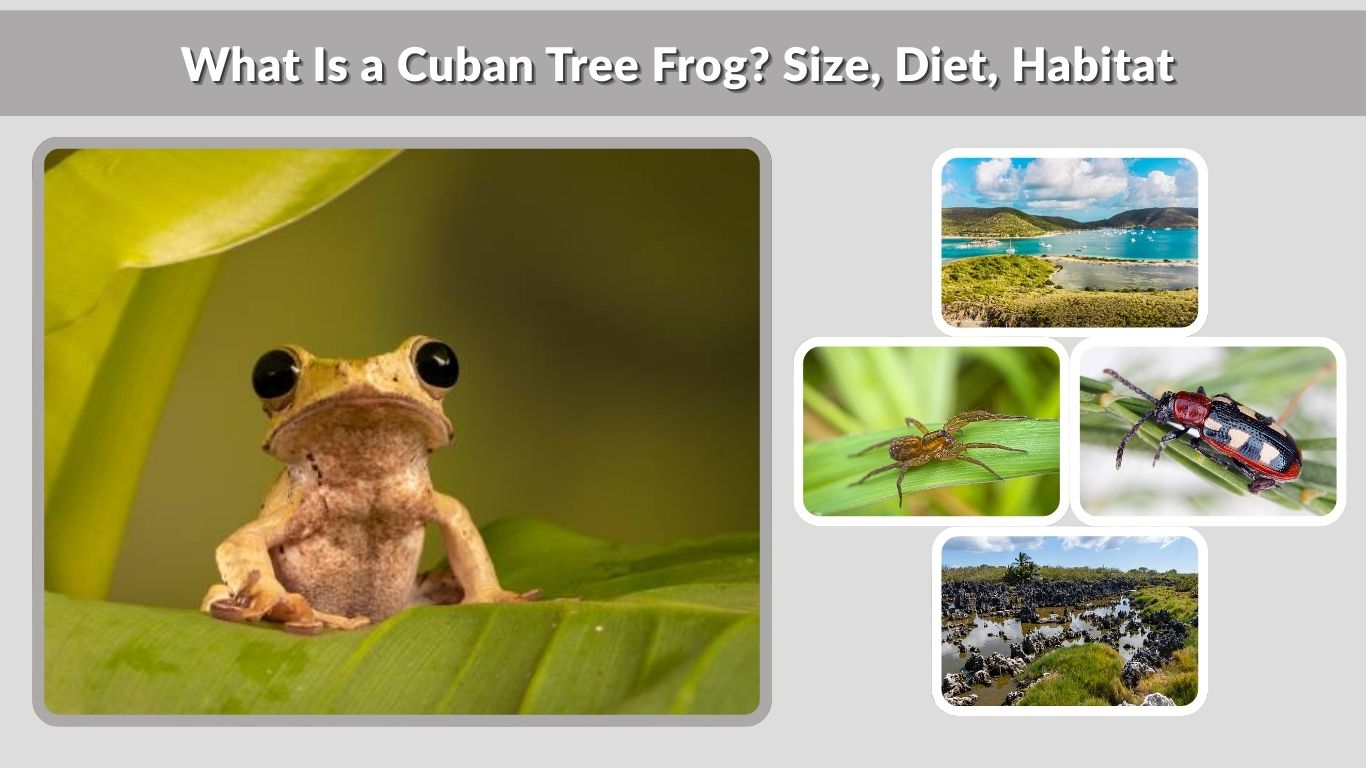
One of the most striking features of the Cuban Tree Frog is its size. Adults typically measure between 3 and 6 inches in length, with females generally larger than males. This makes it the largest tree frog species found in Florida.
Coloration varies widely. Individuals may appear white, gray, green, or brown, and their skin often displays irregular blotches or patterns. They are capable of changing color slightly to match their surroundings, which helps with camouflage. Their skin has a somewhat warty texture compared to the smoother skin of many native tree frogs.
Cuban Tree Frogs have large, bulging eyes and a clearly visible tympanum (external eardrum) behind each eye. Their toe pads are especially prominent and adapted for climbing, allowing them to grip vertical and even smooth surfaces such as glass windows or metal pipes.
Juveniles typically have brighter coloration and more defined patterns, which can sometimes make identification more challenging. As they mature, their appearance becomes more variable and robust.
Habitat & Geographic Distribution
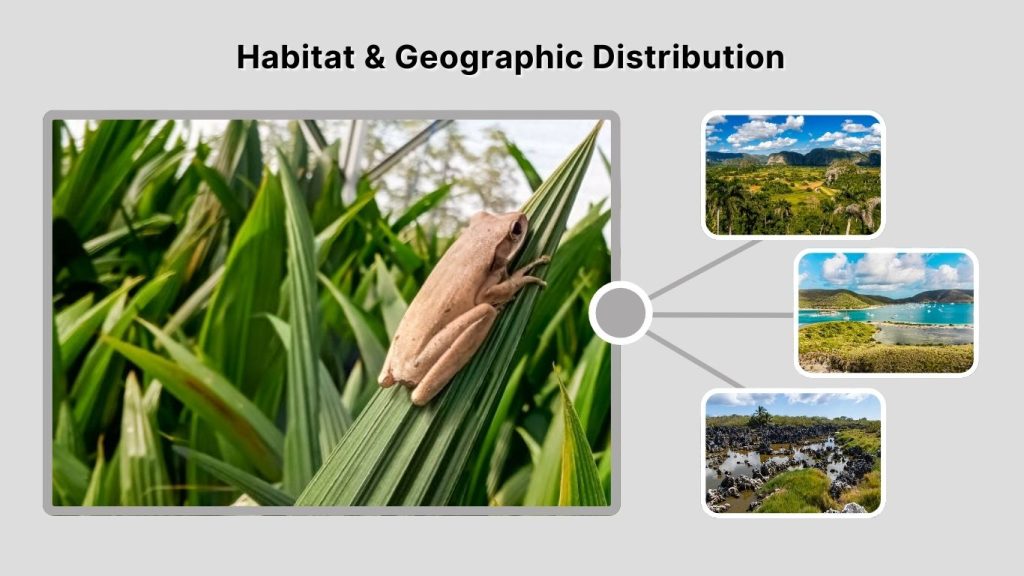
Native Range
The Cuban Tree Frog originates from the Caribbean, specifically:
- Cuba
- The Bahamas
- The Cayman Islands
In these areas, it occupies forests, wetlands, and coastal habitats.
Introduced Range
The species was introduced to Florida in the early 20th century, likely through cargo shipments and ornamental plant trade. Over time, it has spread widely throughout the state and continues expanding into parts of Georgia, South Carolina, Louisiana, and Texas.
Its ability to travel in shipping materials, vehicles, and plant containers has contributed significantly to its rapid spread.
Preferred Habitat
Cuban Tree Frogs are highly adaptable and thrive in both natural and human-altered environments. They are commonly found in:
- Suburban neighborhoods
- Gardens and landscaped yards
- Around porch lights (where insects gather)
- Inside plumbing vents and drain pipes
- Bathrooms and utility boxes
They also inhabit natural areas such as wetlands, ponds, forests, and canals. Their comfort in urban environments gives them an advantage over many native amphibians.
Behavior & Lifestyle
Cuban Tree Frogs are primarily nocturnal, becoming active after sunset. During the day, they hide in cool, moist areas such as tree cavities, dense shrubs, mailboxes, and drainage pipes.
Their climbing ability is one of their defining traits. Using their large adhesive toe pads, they can scale trees, walls, windows, and even ceilings. This makes them especially successful in urban areas, where vertical surfaces are abundant.
When threatened, Cuban Tree Frogs secrete a sticky mucus from their skin. This secretion can cause mild irritation to human skin and should be handled with care. Wearing gloves is recommended when interacting with them.
Another notable behavioral trait is their opportunistic and sometimes cannibalistic feeding behavior. They are known to consume smaller frogs—including members of their own species—if given the opportunity.
Breeding typically occurs during warm, rainy months. Males produce loud, rasping calls to attract females, often near ponds, ditches, or other standing water sources. These calls are commonly heard on humid summer nights throughout Florida and other southeastern states.
Diet & Feeding Habits
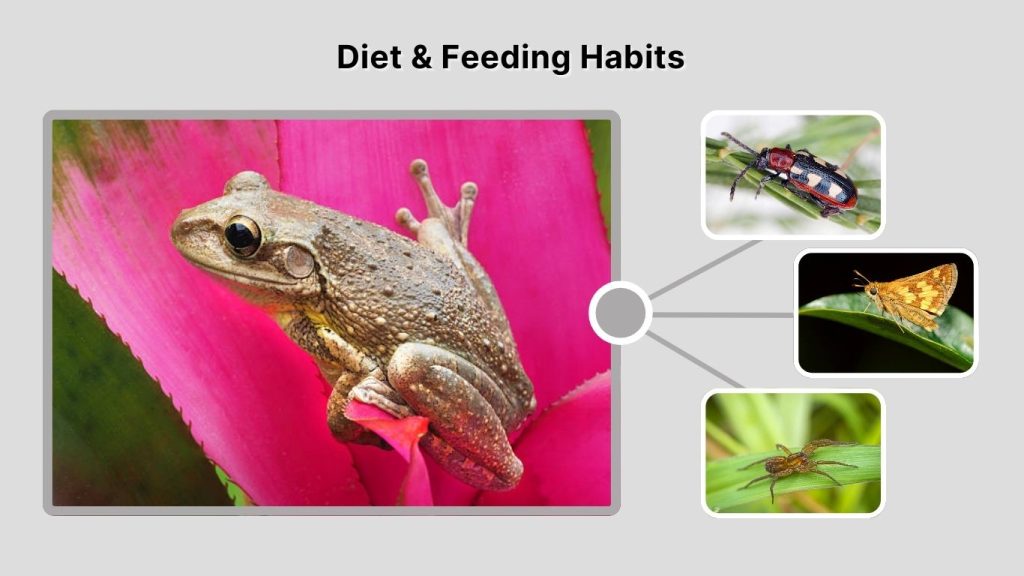
The Cuban Tree Frog is an opportunistic carnivore with a remarkably broad diet. Unlike many smaller native tree frogs that primarily consume insects, this species will eat almost anything it can overpower and swallow. Its diet commonly includes beetles, moths, crickets, spiders, cockroaches, and other insects attracted to outdoor lights. However, its feeding habits extend far beyond typical insect prey.
Cuban Tree Frogs are known to consume small lizards, other frogs, and even hatchling snakes. They readily prey on native tree frog species, which contributes significantly to their invasive impact. Their large size gives them a competitive advantage, allowing them to dominate food sources and reduce native amphibian populations.
Because they feed heavily on insects, some homeowners see them as beneficial pest controllers. However, the ecological cost of their predation on native wildlife often outweighs this limited benefit. Their aggressive appetite is one of the key reasons they have spread so successfully in non-native regions.
Reproduction & Life Cycle
Breeding Season
Cuban Tree Frogs breed primarily during warm, rainy months, typically from late spring through early fall in the southeastern United States. Males gather near standing water and produce loud, rasping calls to attract females. These vocalizations are deeper and harsher than those of most native tree frogs, making them easier to distinguish at night.
Egg Laying
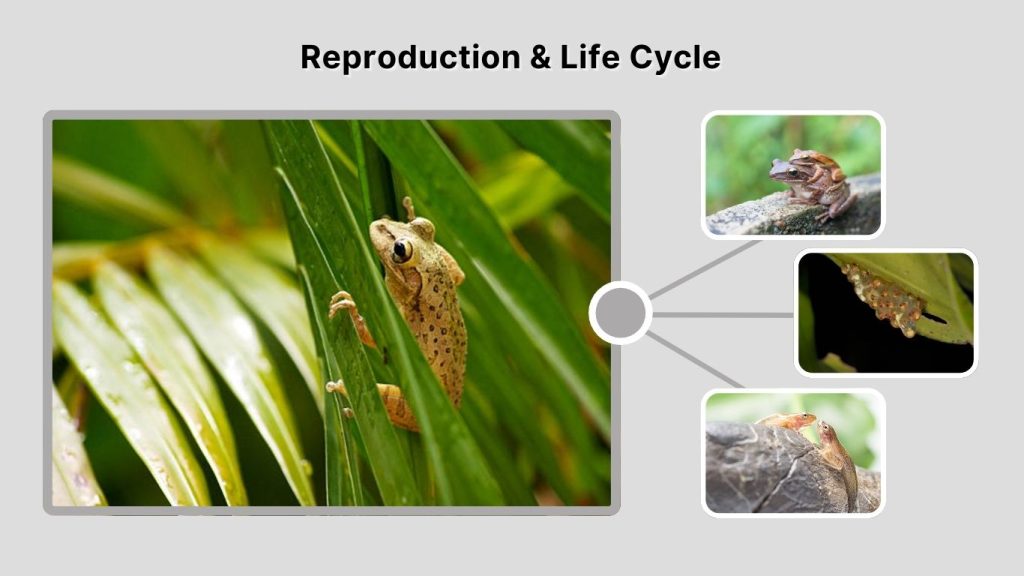
Females lay large clutches of eggs in ponds, retention basins, flooded ditches, canals, and even temporary rain pools. A single female can lay hundreds to thousands of eggs at a time. The eggs float on the water’s surface in a thin film or cluster and hatch quickly, often within one to two days depending on temperature.
Tadpole Stage
The tadpoles develop rapidly and are highly competitive. They feed on algae and organic material in the water, growing quickly in warm conditions. In crowded environments, they may even display aggressive behavior toward one another.
Tadpoles of the Cuban Tree Frog can be difficult to distinguish from those of native species without careful observation. However, they often grow larger and develop more quickly than many native frog larvae.
Growth to Adulthood
Metamorphosis from tadpole to frog typically occurs within three to eight weeks. After leaving the water, juvenile frogs disperse into surrounding vegetation and urban structures. They grow quickly and may reach reproductive maturity within their first year.
Their rapid life cycle and high reproductive output play a major role in their population expansion.
Ecological Impact & Invasive Status
The Cuban Tree Frog is widely regarded as an invasive species in the southeastern United States. Its impact on native ecosystems is substantial and well documented.
Competition with Native Species
Because of its large size and aggressive feeding habits, the Cuban Tree Frog competes directly with native tree frogs for food and shelter. It often displaces native species from breeding sites and hiding places. In many areas of Florida, native tree frog populations have declined where Cuban Tree Frogs are abundant.
Predation on Native Wildlife
Beyond competition, Cuban Tree Frogs actively prey on smaller frogs and other native amphibians. This direct predation further reduces biodiversity and disrupts natural ecological balance.
Human Interactions
Cuban Tree Frogs frequently interact with people due to their attraction to buildings and artificial lights. They are known to:
- Clog plumbing vent pipes
- Hide inside electrical equipment, sometimes causing short circuits
- Enter homes through small openings
Their sticky skin secretions can irritate human skin and eyes, so careful handling is advised.
Management & Control
Wildlife agencies encourage humane removal in areas where they are invasive. Identification is important before removal, as native frogs should not be harmed. Public education programs focus on teaching residents how to recognize Cuban Tree Frogs and report sightings outside established areas.
Despite control efforts, complete eradication is unlikely due to their adaptability and rapid reproduction.
Identification Tips
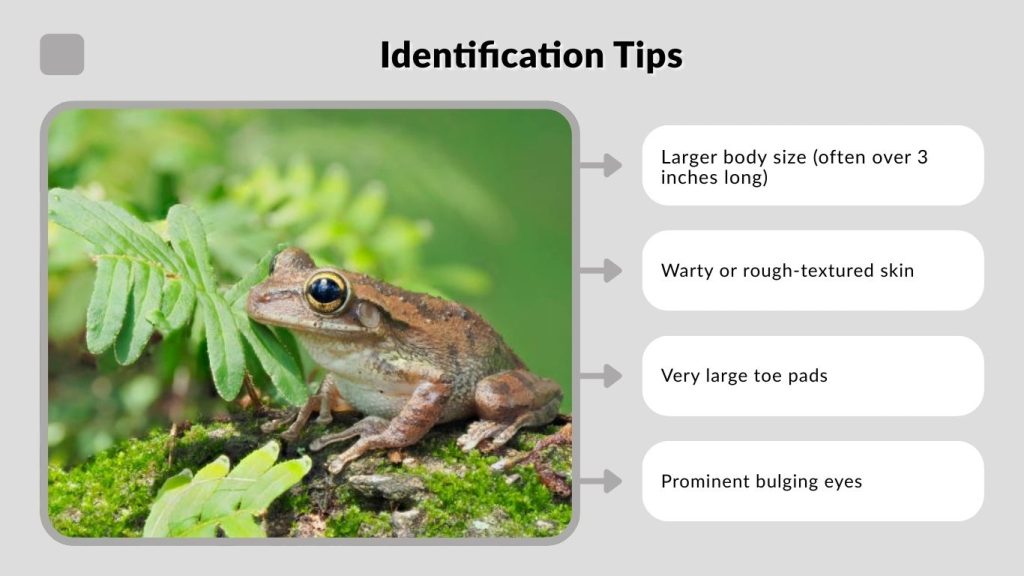
Distinguishing a Cuban Tree Frog from native species is important for conservation efforts. Key identifying features include:
- Larger body size (often over 3 inches long)
- Warty or rough-textured skin
- Very large toe pads
- Prominent bulging eyes
- Variable coloration
Compared to the native Green Tree Frog, the Cuban Tree Frog appears bulkier and lacks the distinct white stripe that runs along the side of the Green Tree Frog’s body. Its call is also deeper and more rasping.
Correct identification helps prevent accidental harm to native amphibians.
Fun Facts About the Cuban Tree Frog
- It is the largest tree frog species found in Florida.
- It can survive short cold snaps by sheltering in protected areas.
- Its sticky skin secretion helps deter predators.
- It has spread largely through human transportation networks.
- It is known to eat smaller members of its own species.
FAQs
Are Cuban Tree Frogs dangerous to humans?
Cuban Tree Frogs are not dangerous or poisonous to humans, but they do secrete a sticky mucus from their skin that can cause mild irritation. If handled without gloves, the secretion may irritate the skin or eyes. It’s always recommended to wash your hands thoroughly after contact and avoid touching your face.
How can you tell a Cuban Tree Frog from a native tree frog?
Cuban Tree Frogs are generally larger, often measuring over 3 inches long. They have warty skin, very large toe pads, and bulging eyes. Unlike the native Green Tree Frog, they lack a distinct white stripe running along the side of the body. Their call is also deeper and raspier compared to native species.
Why are Cuban Tree Frogs considered invasive?
They are considered invasive because they outcompete and prey on native frog species. Their large appetite, rapid reproduction, and adaptability allow them to dominate habitats, leading to declines in native amphibian populations and reduced biodiversity.
What do Cuban Tree Frogs eat?
Cuban Tree Frogs are opportunistic predators. They eat insects, spiders, small lizards, other frogs, and even small snakes. They are known to consume native tree frogs and may even eat smaller members of their own species.
What should you do if you find a Cuban Tree Frog in your yard?
First, confirm proper identification to avoid harming native species. In areas where they are invasive, wildlife authorities often recommend humane removal. Wearing gloves is advised when handling them. You can also report sightings in regions where they are newly spreading to help monitor their expansion.