




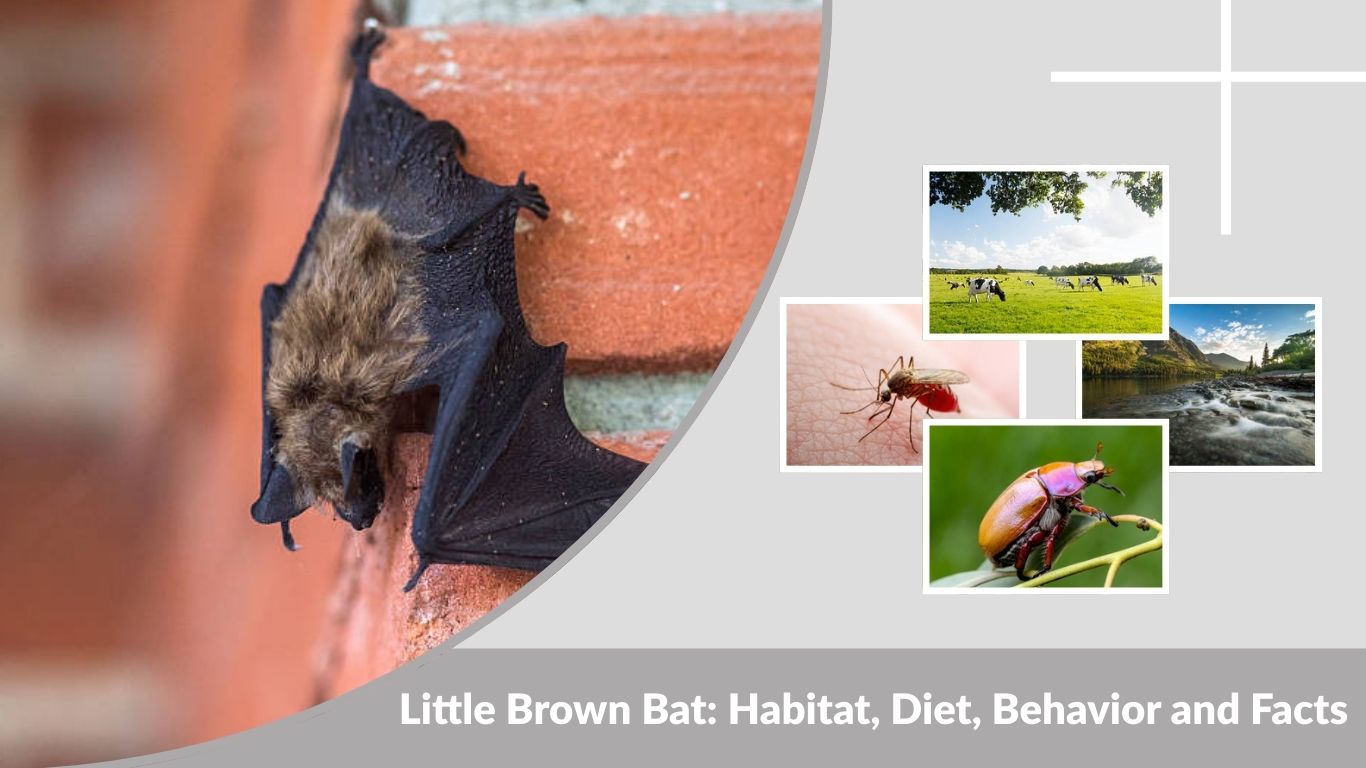
The little brown bat (Myotis lucifugus) is one of the most well-known bat species in North America. Despite its small size, this bat plays a huge role in maintaining ecological balance. Little brown bats are famous for their nighttime hunting skills and their ability to consume thousands of insects each night. They commonly live near forests, lakes, and human structures where insects are abundant. Because they help control pest populations naturally, scientists consider them an extremely valuable species for agriculture and ecosystems.
What Is a Little Brown Bat?
The little brown bat is a small insect-eating mammal belonging to the bat order Chiroptera, the only mammals capable of true flight. It is widely recognized for its adaptability and ability to live in many different environments. This species has been studied extensively because of its long lifespan and important ecological role.
Scientific Classification
The little brown bat belongs to the following scientific classification:
- Kingdom: Animalia
- Phylum: Chordata
- Class: Mammalia
- Order: Chiroptera
- Family: Vespertilionidae
- Genus: Myotis
- Species: Myotis lucifugus
The name lucifugus means “light-avoiding,” which perfectly describes the bat’s nocturnal behavior.
Physical Characteristics
Little brown bats are small but highly efficient flyers. Their bodies usually measure 7–10 centimeters (about 2.5–4 inches) in length, and they weigh only 7–14 grams, roughly the same as a few coins. Despite their tiny bodies, they have a wingspan of about 20–27 centimeters.
Their fur is typically glossy brown, although the shade can range from yellowish-brown to dark brown depending on age and location. The bat’s wings are made of a thin membrane stretched between elongated fingers, allowing flexible and agile flight.
Other distinctive features include:
- Short rounded ears
- A small, blunt snout
- Dark wings and tail membrane
- Tiny but sharp teeth adapted for catching insects
These bats may appear delicate, but they are extremely strong flyers capable of rapid movements while chasing prey.
Lifespan and Longevity
One surprising fact about the little brown bat is its remarkable lifespan. Most small mammals live only a few years, but little brown bats can live over 30 years in the wild. The average lifespan is often around 6–10 years, though many individuals survive much longer.
Scientists believe their long life is linked to their hibernation habits and slow metabolism, which help conserve energy and reduce stress on the body. However, diseases such as white-nose syndrome have significantly affected bat populations in recent years.
Habitat and Distribution

Little brown bats are highly adaptable and can live in many environments across North America. They are commonly found near water sources and areas with abundant insects.
Geographic Range
The little brown bat is widely distributed across North America, particularly in:
- The United States
- Canada
- Parts of Alaska
They are most common in temperate regions where seasonal changes influence insect populations. Their large range makes them one of the most frequently observed bat species in the region.
Preferred Habitats
These bats prefer habitats that provide both shelter and food sources. Because they feed on flying insects, they usually live near areas where insects gather.
Common habitats include:
- Forests
- Wetlands
- Lakes and rivers
- Meadows and farmland
- Suburban and rural areas
Water bodies are especially important because insects often gather above water, providing ideal hunting grounds for bats.
Roosting Locations
During the daytime, little brown bats rest in places known as roosts. These locations provide protection from predators and harsh weather.
Natural roosting sites include:
- Hollow trees
- Tree bark crevices
- Rock cracks
However, little brown bats have also adapted to human environments. They often roost in:
- Attics
- Barns
- Bridges
- Abandoned buildings
Female bats frequently gather in maternity colonies, where many individuals share the same roost while raising their young.
Diet and Feeding Behavior
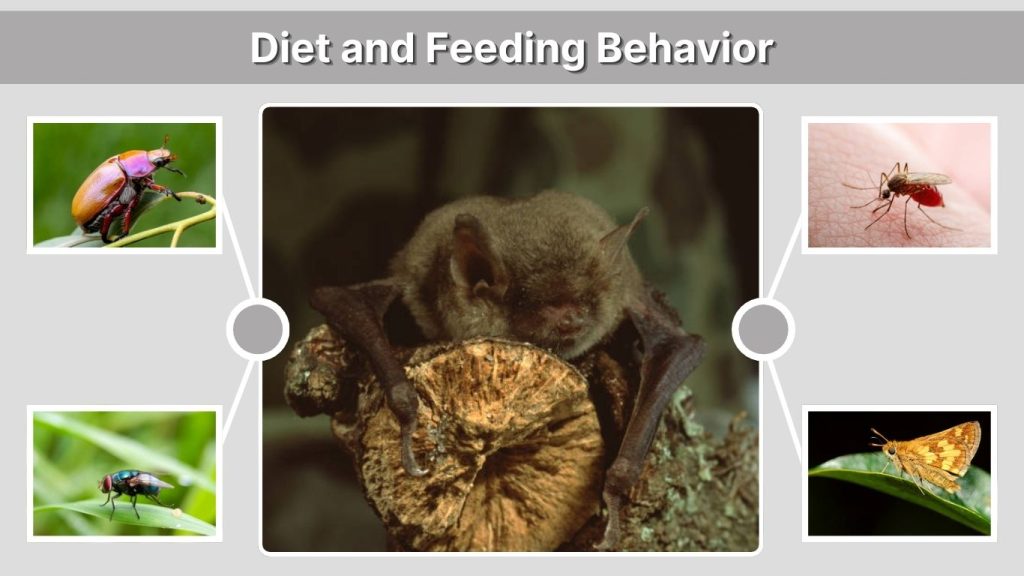
Little brown bats are insectivores, meaning they eat insects. Their feeding habits make them extremely important for controlling pest populations.
What Little Brown Bats Eat
Their diet mainly consists of small flying insects, including:
- Mosquitoes
- Moths
- Beetles
- Flies
- Midges
A single bat can eat hundreds to thousands of insects in one night, depending on food availability.
Hunting Techniques
Little brown bats hunt using a remarkable biological system called echolocation. They emit high-frequency sound waves that bounce off objects and return as echoes. By analyzing these echoes, bats can detect the size, distance, and movement of their prey.
This system allows them to:
- Hunt in complete darkness
- Avoid obstacles while flying
- Track fast-moving insects
Their flight patterns are fast and agile, allowing them to capture insects mid-air with impressive precision.
Behavior and Lifestyle
Little brown bats display fascinating behaviors that help them survive and thrive in a wide range of environments. Their daily activities are closely connected to the availability of insects and seasonal changes.
Nocturnal Activity
Little brown bats are nocturnal animals, meaning they are active mainly at night. They leave their roosts shortly after sunset to begin hunting for insects. During the day, they rest in dark and sheltered locations to avoid predators and conserve energy.
Their nightly routine usually follows a pattern:
- Leaving the roost at dusk
- Feeding actively during the night
- Returning to the roost before sunrise
This schedule helps them avoid daytime predators such as hawks and owls.
Social Structure
Little brown bats are social animals and often live in groups. During the summer, females gather in maternity colonies, which can contain dozens or even hundreds of bats. These colonies provide warmth and protection for newborn pups.
Male bats usually roost alone or in smaller groups. Social living allows bats to share warmth and improve survival, especially during cooler temperatures.
Flight and Movement
The little brown bat is known for its fast and agile flight. Its flexible wings allow it to quickly change direction while chasing insects. These bats typically fly at heights of 2 to 20 feet above the ground or water, where insects are most abundant.
Their combination of flight agility and echolocation makes them extremely effective hunters.
Reproduction and Life Cycle
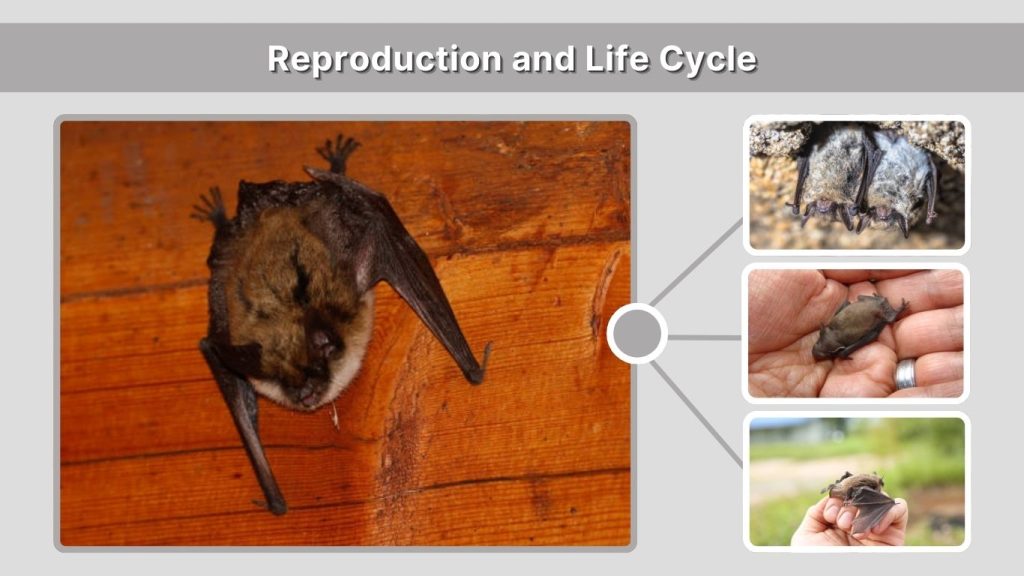
The reproductive cycle of the little brown bat is unique and closely tied to seasonal changes.
Mating Season
Mating usually occurs during late summer and early autumn. During this time, bats gather in large groups at caves and other locations known as swarming sites.
Interestingly, female bats store sperm during the winter months. Fertilization does not occur immediately after mating.
Pregnancy and Birth
After hibernation ends in spring, fertilization takes place. The pregnancy period lasts about 50 to 60 days. Female bats usually give birth to a single pup, although twins can occasionally occur.
Birth typically happens in late spring or early summer, when insect populations are high and food is plentiful.
Development of Young
Newborn bats are small, hairless, and completely dependent on their mothers. The mother carries and nurses the pup until it becomes strong enough to hang in the roost on its own.
Young bats grow quickly and usually learn to fly within three to four weeks. Once they can fly, they begin hunting insects and gradually become independent.
Hibernation and Winter Survival
One of the most important survival strategies of the little brown bat is hibernation. This process allows them to survive winter when insects are scarce.
Hibernation Behavior
During winter, little brown bats enter a deep sleep called hibernation. Their body temperature drops, and their metabolism slows dramatically.
While hibernating:
- Heart rate decreases significantly
- Breathing becomes very slow
- Energy consumption is reduced
These changes help them survive for several months without eating.
Hibernation Sites
Little brown bats hibernate in cool, humid places called hibernacula. Common hibernation sites include:
- Caves
- Abandoned mines
- Underground tunnels
These environments maintain stable temperatures, which are essential for successful hibernation.
Physiological Adaptations
During hibernation, bats rely on fat reserves stored during the summer and fall. If they are disturbed too often during winter, they may wake up and use too much energy, which can threaten their survival.
Because of this, protecting hibernation sites is extremely important for bat conservation.
Threats to Little Brown Bats
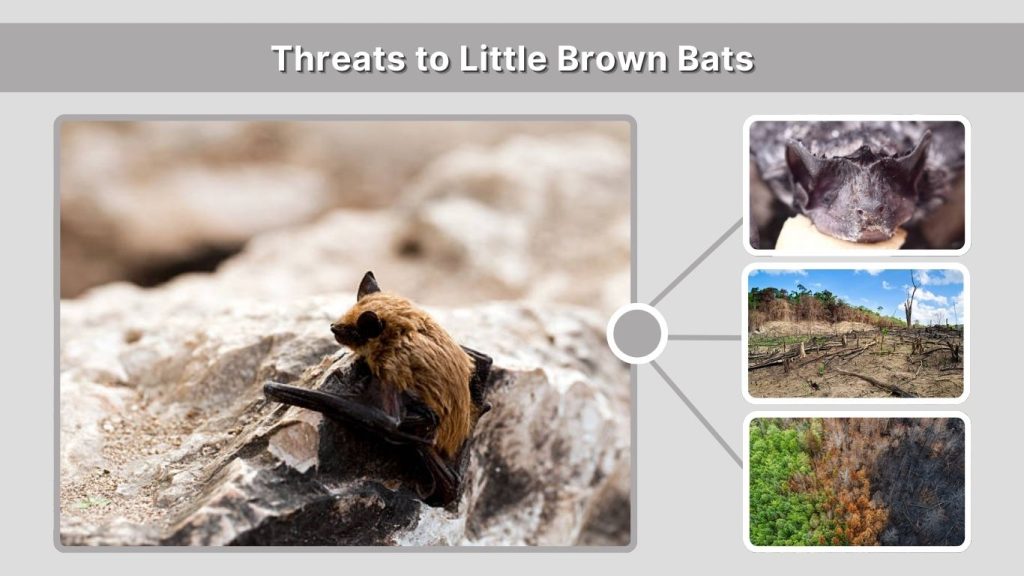
Although little brown bats were once extremely common, several threats have caused significant population declines.
White-Nose Syndrome
One of the most serious threats is white-nose syndrome, a fungal disease that affects bats during hibernation. The fungus grows on their noses and wings, disrupting their normal hibernation cycles.
Infected bats often wake up too frequently during winter and use up their fat reserves, leading to starvation. This disease has caused millions of bat deaths across North America.
Habitat Loss
Human activities have also reduced bat habitats. Deforestation, urban development, and the destruction of old buildings can eliminate important roosting locations.
When roosting sites disappear, bats may struggle to find safe places to live and reproduce.
Climate and Environmental Changes
Changes in climate can affect insect populations and seasonal patterns. Since bats depend heavily on insects for food, shifts in insect availability may impact bat survival.
Conservation Efforts
Scientists and conservation groups are working to protect little brown bats and their habitats.
Protection Programs
Many wildlife organizations are studying bat populations and creating conservation strategies. Some caves and mines have been closed to the public to protect hibernating bats.
Monitoring Populations
Researchers track bat populations using:
- Acoustic monitoring devices
- Banding and tagging programs
- Population surveys
These efforts help scientists understand population trends and develop protection plans.
How People Can Help
Individuals can also support bat conservation by:
- Installing bat houses
- Reducing pesticide use
- Protecting natural habitats
- Avoiding disturbance of caves and roosting sites
Even small actions can help protect these valuable animals.
Interesting Facts About Little Brown Bats
Little brown bats have many fascinating characteristics. Here are a few interesting facts:
- A single bat can eat up to 1,000 insects per hour.
- They use echolocation, similar to sonar technology.
- Despite their small size, they are among the longest-living mammals relative to body size.
- Their wings are made of a thin skin membrane supported by elongated finger bones.
- They are important natural pest controllers for agriculture.
Conclusion
The little brown bat is a remarkable species that plays a crucial role in maintaining ecological balance. By feeding on large numbers of insects, these bats help control pests and support healthy ecosystems. Their unique abilities, such as echolocation and hibernation, make them fascinating subjects of scientific study. However, threats like white-nose syndrome and habitat loss have placed many populations at risk. Protecting these bats and their habitats is essential to ensure that future generations continue to benefit from their presence in the natural world.