

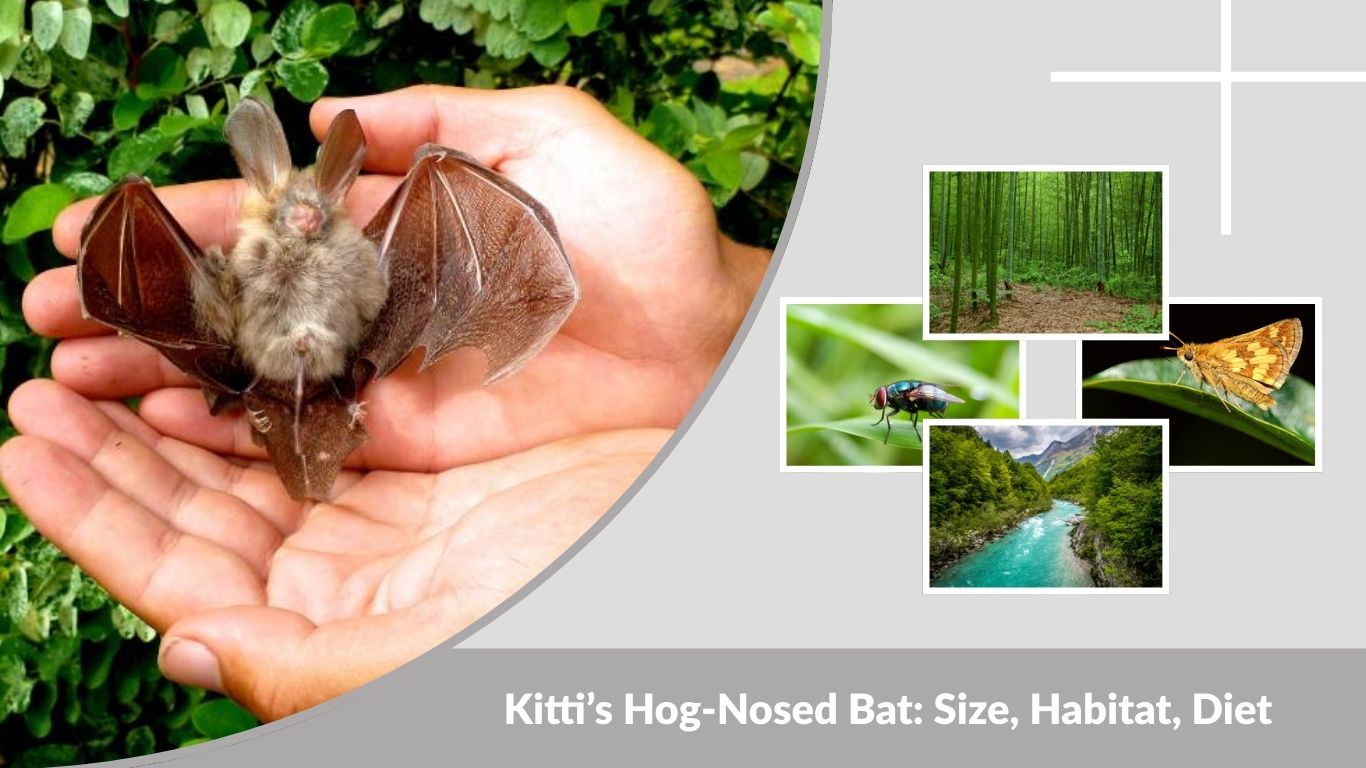
Kitti’s hog-nosed bat is one of the most remarkable bat species in the world. Scientifically known as Craseonycteris thonglongyai, this tiny bat is famous for being one of the smallest mammals on Earth. Because of its extremely small size and buzzing flight, it is often called the bumblebee bat. Kitti’s hog-nosed bats live mainly in limestone caves in Southeast Asia and feed on insects during the night. Despite their tiny size, they play an important role in controlling insect populations and maintaining ecological balance.
What Is Kitti’s Hog-Nosed Bat?
The Kitti’s hog-nosed bat is a very small insect-eating bat species belonging to the family Craseonycteridae. It is the only species in its genus and is considered one of the most unique bats in the world.
These bats are known for their extremely small bodies, short snouts, and distinctive pig-like nose. Because of their tiny size and hovering flight, they resemble small flying insects, which led to their nickname “bumblebee bat.”
Kitti’s hog-nosed bats are nocturnal animals that spend the daytime resting in caves and become active after sunset to hunt insects.
Scientific Classification
Kitti’s hog-nosed bat belongs to the following scientific classification:
- Kingdom: Animalia
- Phylum: Chordata
- Class: Mammalia
- Order: Chiroptera
- Family: Craseonycteridae
- Genus: Craseonycteris
- Species: Craseonycteris thonglongyai
The order Chiroptera includes all bats, while the family Craseonycteridae contains only this single unique species.
Scientific Name (Craseonycteris thonglongyai)
The scientific name Craseonycteris thonglongyai honors the Thai zoologist Kitti Thonglongya, who discovered this bat species in 1973.
The name reflects both the bat’s scientific classification and the researcher who first identified it.
Why It Is Called the Bumblebee Bat
Kitti’s hog-nosed bat is often called the bumblebee bat because of its tiny size and buzzing flight.
Like a bumblebee, the bat is extremely small and moves quickly through the air while hunting insects. This nickname has become widely used when referring to the species.
Physical Characteristics of Kitti’s Hog-Nosed Bat
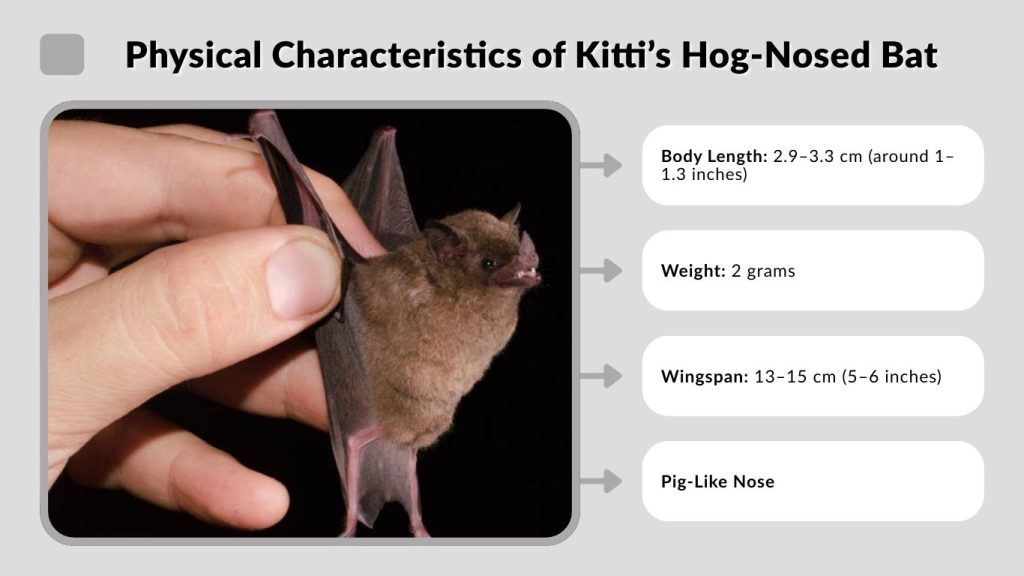
Kitti’s hog-nosed bat is famous for its incredibly small size and unique physical features.
Key Physical Characteristics
- Body Length: About 2.9–3.3 cm (around 1–1.3 inches)
- Weight: Approximately 2 grams
- Wingspan: Around 13–15 cm (5–6 inches)
- Pig-Like Nose: Short snout that resembles a hog’s nose
- Large Ears: Rounded ears that help detect sounds
- Short Tail: Tail is very small or barely visible
- Soft Fur: Usually reddish-brown or gray in color
These features make the bumblebee bat one of the most recognizable tiny mammals.
Tiny Body Size
Kitti’s hog-nosed bat is considered one of the smallest mammals in the world by body size.
Although the Etruscan shrew may weigh slightly less, the bumblebee bat is generally regarded as the smallest bat species on Earth.
Distinctive Hog-Like Nose
The bat’s name comes from its small, pig-like nose, which looks similar to the snout of a hog.
This nose structure helps the bat detect insects and navigate during flight.
Wings and Flight Adaptations
Despite its tiny size, the bumblebee bat has strong wings that allow fast and agile flight. These wings help it maneuver through forest areas and catch insects in midair.
Its lightweight body also allows it to hover briefly while searching for prey.
Unique Features Compared to Other Bats
Kitti’s hog-nosed bat differs from many other bat species in several ways:
- Extremely small body size
- Unique hog-like nose structure
- Very short tail
- Limited geographic distribution
These characteristics make it one of the most unusual bat species in the world.
Kitti’s Hog-Nosed Bat Habitat
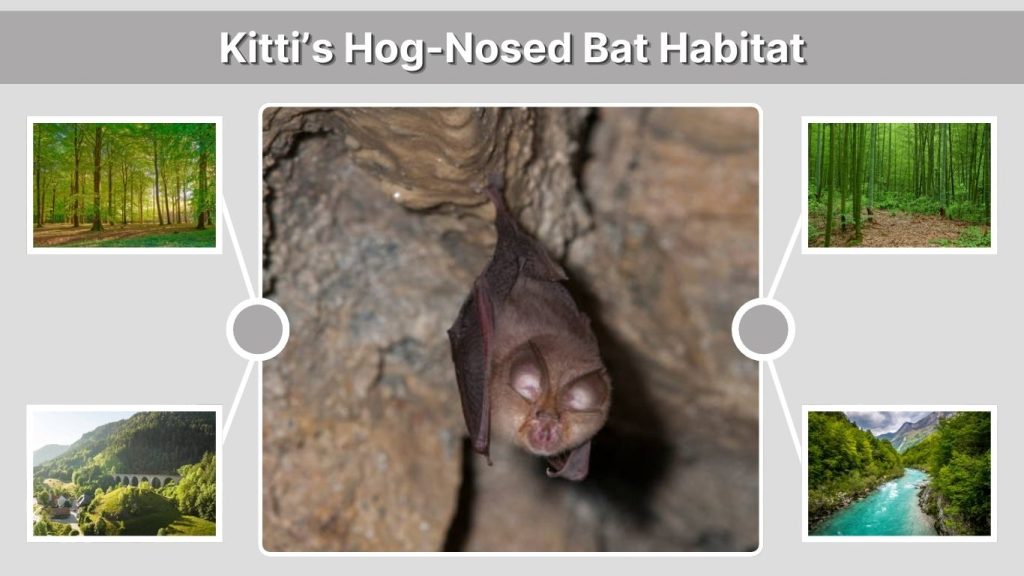
Kitti’s hog-nosed bats live mainly in limestone cave environments in Southeast Asia.
Preferred Limestone Cave Habitats
These bats prefer limestone caves that provide dark, stable environments where they can safely rest during the day.
Caves offer protection from predators and extreme weather conditions.
Forest Environments Near Caves
Although they roost in caves, Kitti’s hog-nosed bats usually hunt in nearby forests and vegetation where insects are abundant.
Common hunting areas include:
- Bamboo forests
- River valleys
- Forest clearings
- Areas with dense vegetation
These habitats provide ideal conditions for finding insect prey.
Environmental Conditions They Prefer
Kitti’s hog-nosed bats prefer warm, humid climates, which are typical of tropical regions in Southeast Asia.
These environments support a wide variety of insects that form the main part of their diet.
Where Do Kitti’s Hog-Nosed Bats Live?
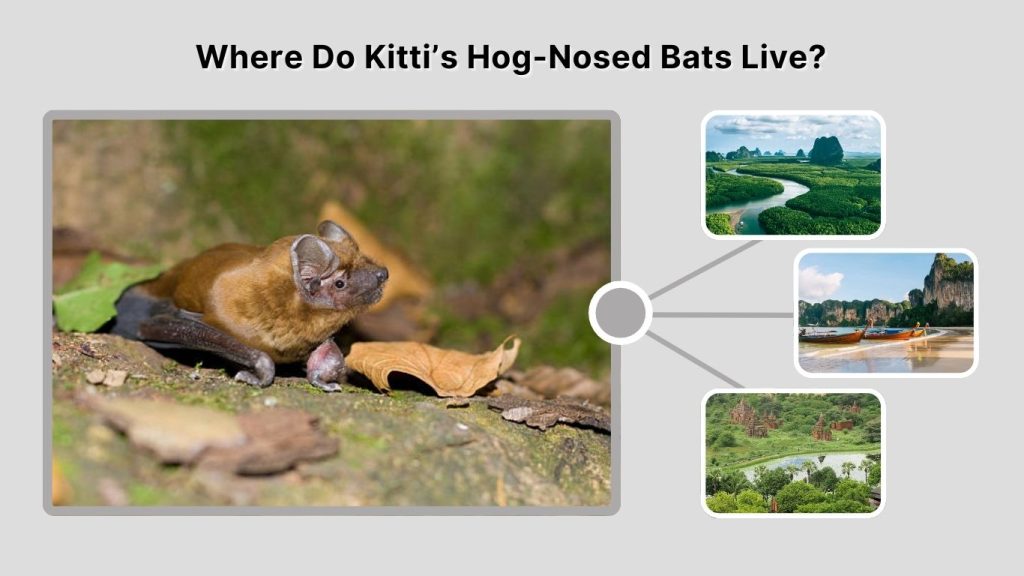
Kitti’s hog-nosed bats have a very limited geographic range, which makes them rare compared to many other bat species.
Geographic Distribution
This species is found only in Southeast Asia, specifically in small regions of:
- Thailand
- Myanmar
Cave Regions Where They Are Found
Most populations live in limestone cave systems near rivers and forested areas.
Each cave colony may contain only a few dozen to a few hundred bats, making their populations relatively small.
Kitti’s Hog-Nosed Bat Diet
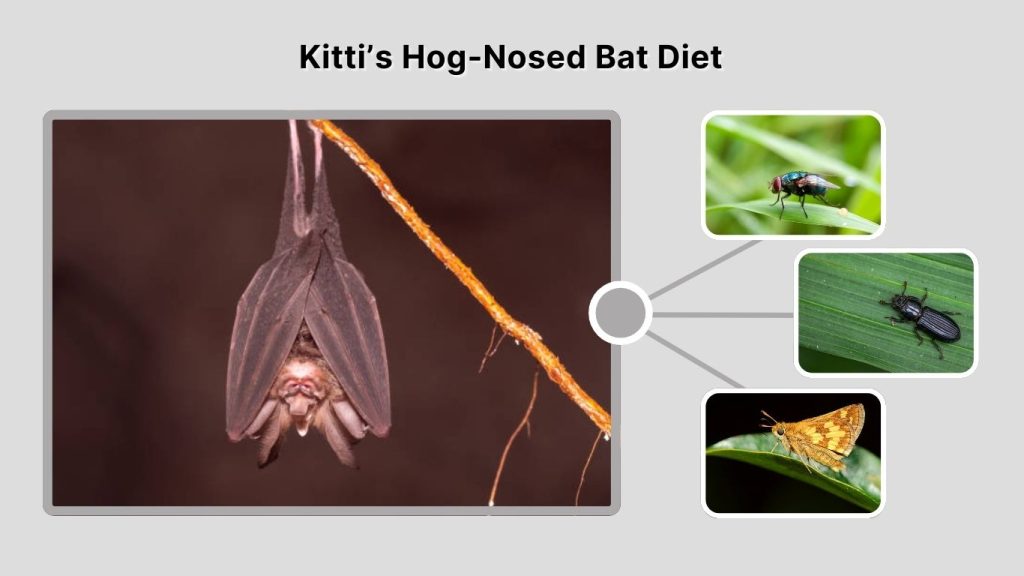
Kitti’s hog-nosed bat is an insectivorous species, meaning it feeds mainly on insects.
Main Foods They Eat
Their diet includes a variety of small flying insects such as:
- Flies
- Beetles
- Moths
- Tiny flying insects near water
These insects provide the energy the bats need to sustain their active nighttime flight.
Hunting Behavior
Kitti’s hog-nosed bats hunt insects shortly after sunset. They usually fly low over forest areas and near water sources where insects gather.
They catch insects directly in midair while flying.
Echolocation for Finding Prey
Like most bats, the bumblebee bat uses echolocation to locate insects.
It produces high-frequency sounds that bounce off nearby objects. By listening to the returning echoes, the bat can detect insects and navigate even in complete darkness.
Behavior and Lifestyle
Kitti’s hog-nosed bats have unique behaviors that help them survive in their cave and forest environments. Because of their small size, they rely on agility and quick flight to hunt insects and avoid predators.
Nocturnal Activity
Kitti’s hog-nosed bats are nocturnal mammals, meaning they are active mainly at night. After sunset, they leave their cave roosts and begin searching for insects.
They usually hunt during short feeding periods at dusk and dawn, when insects are most active.
Small Colony Living
Unlike some bat species that form huge colonies, Kitti’s hog-nosed bats live in small groups. A single cave may contain only 10 to 100 bats, depending on the size of the cave and available resources.
Living in smaller colonies helps reduce competition for food.
Roosting Behavior
During the daytime, these bats rest in limestone caves. They often hang from cave ceilings or walls where the environment remains dark, cool, and humid.
These roosting spots protect them from predators and harsh weather.
Kitti’s Hog-Nosed Bat Life Cycle
The life cycle of the bumblebee bat begins with mating and continues through the growth and development of young bats.
Mating Season
Mating usually occurs during the dry season, when environmental conditions are stable. This timing helps ensure that young bats are born during seasons when insects are plentiful.
Birth and Development of Pups
Female Kitti’s hog-nosed bats typically give birth to one pup per year.
The baby bat is born extremely small and depends entirely on its mother for warmth and food. The mother feeds the pup with milk while resting in the cave colony.
Growth and Independence
Within a few weeks, the young bat begins developing wings and fur. As it grows stronger, it starts practicing short flights inside the cave.
Eventually, the young bat learns to hunt insects and becomes independent.
Kitti’s Hog-Nosed Bat Lifespan
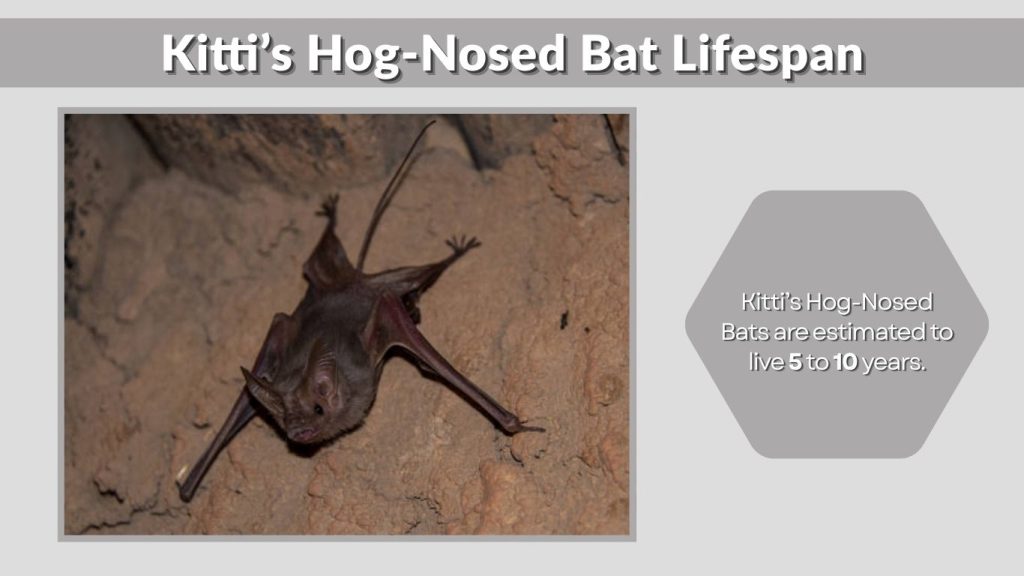
Kitti’s hog-nosed bats can live several years if they survive environmental threats.
Average Lifespan
In the wild, these bats are estimated to live 5 to 10 years.
Because they are small and difficult to study, researchers are still learning more about their exact lifespan.
Factors Affecting Lifespan
Several factors can affect how long these bats live, including:
- Availability of insects
- Habitat quality
- Predators such as snakes or birds
- Human disturbance in caves
- Environmental changes
Protecting their cave habitats is important for their survival.
Importance of Kitti’s Hog-Nosed Bats in the Ecosystem
Despite their tiny size, Kitti’s hog-nosed bats play an important role in their ecosystems.
Insect Population Control
These bats consume many insects each night. By eating insects, they help control insect populations naturally.
Role in Forest Ecosystems
By feeding on insects that damage plants, these bats help maintain healthy forest environments.
Contribution to Biodiversity
Kitti’s hog-nosed bat is a unique species that contributes to the biodiversity of Southeast Asian ecosystems. Protecting this species helps maintain ecological balance.
Threats to Kitti’s Hog-Nosed Bats
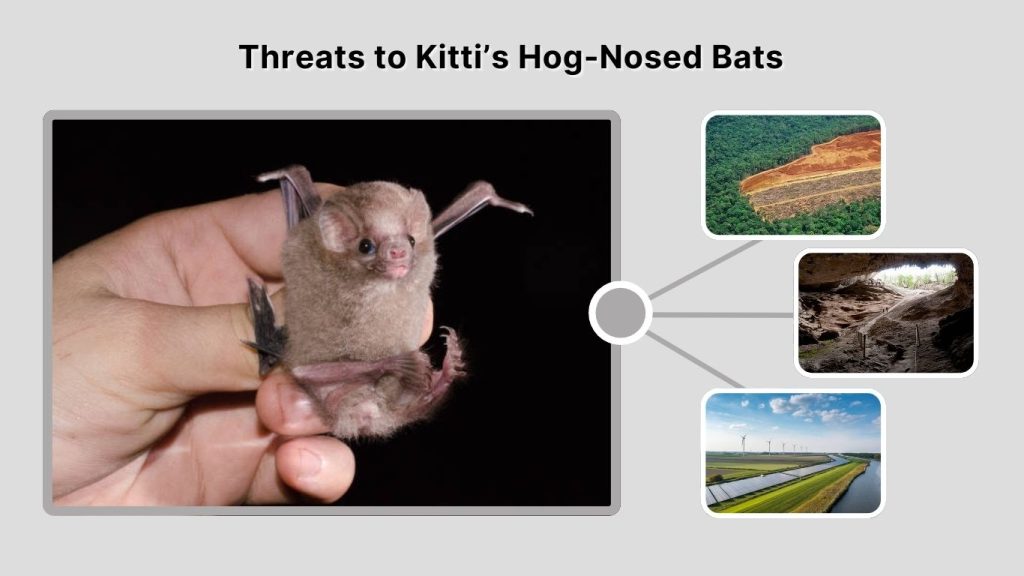
Kitti’s hog-nosed bats face several threats due to their limited habitat and small population size.
Habitat Destruction
Deforestation and land development near caves can reduce hunting areas and disturb bat populations.
Tourism Disturbance in Caves
Some cave systems attract tourists, which may disturb bats during their resting periods.
Environmental Changes
Changes in climate and environmental conditions may affect insect populations and suitable habitats.
Conservation Efforts
Because of its small population and limited habitat, Kitti’s hog-nosed bat is considered a species that requires conservation attention.
Protection of Cave Habitats
Protecting limestone caves is essential for the survival of these bats. Some caves are now designated as protected wildlife areas.
Wildlife Research Programs
Scientists continue to study these bats to better understand their behavior, population size, and ecological importance.
How People Can Help Protect This Species
People can help protect Kitti’s hog-nosed bats by:
- Protecting natural habitats
- Supporting conservation programs
- Avoiding disturbance of cave ecosystems
- Promoting awareness about bat conservation
Interesting Kitti’s Hog-Nosed Bat Facts
Here are some fascinating facts about the bumblebee bat:
- It is one of the smallest mammals in the world.
- It weighs only about 2 grams.
- Its wingspan is around 13–15 cm.
- It is commonly called the bumblebee bat.
- It lives only in Thailand and Myanmar.
FAQs
How small is Kitti’s hog-nosed bat?
Kitti’s hog-nosed bat is about 3 cm long and weighs roughly 2 grams, making it one of the smallest mammals on Earth.
Where do Kitti’s hog-nosed bats live?
They live mainly in limestone caves in Thailand and Myanmar.
What do Kitti’s hog-nosed bats eat?
They eat small flying insects, including flies, beetles, and moths.
Why is it called the bumblebee bat?
It is called the bumblebee bat because of its tiny size and buzzing flight that resembles a small bee.
Conclusion
Kitti’s hog-nosed bat is a remarkable species known for its incredibly small size and unique appearance. Found only in a few regions of Southeast Asia, this tiny bat plays an important role in controlling insect populations and supporting healthy ecosystems. Although it faces threats from habitat disturbance and environmental changes, conservation efforts can help protect this extraordinary species. Understanding and protecting Kitti’s hog-nosed bat ensures that one of the world’s smallest mammals continues to thrive in its natural habitat.