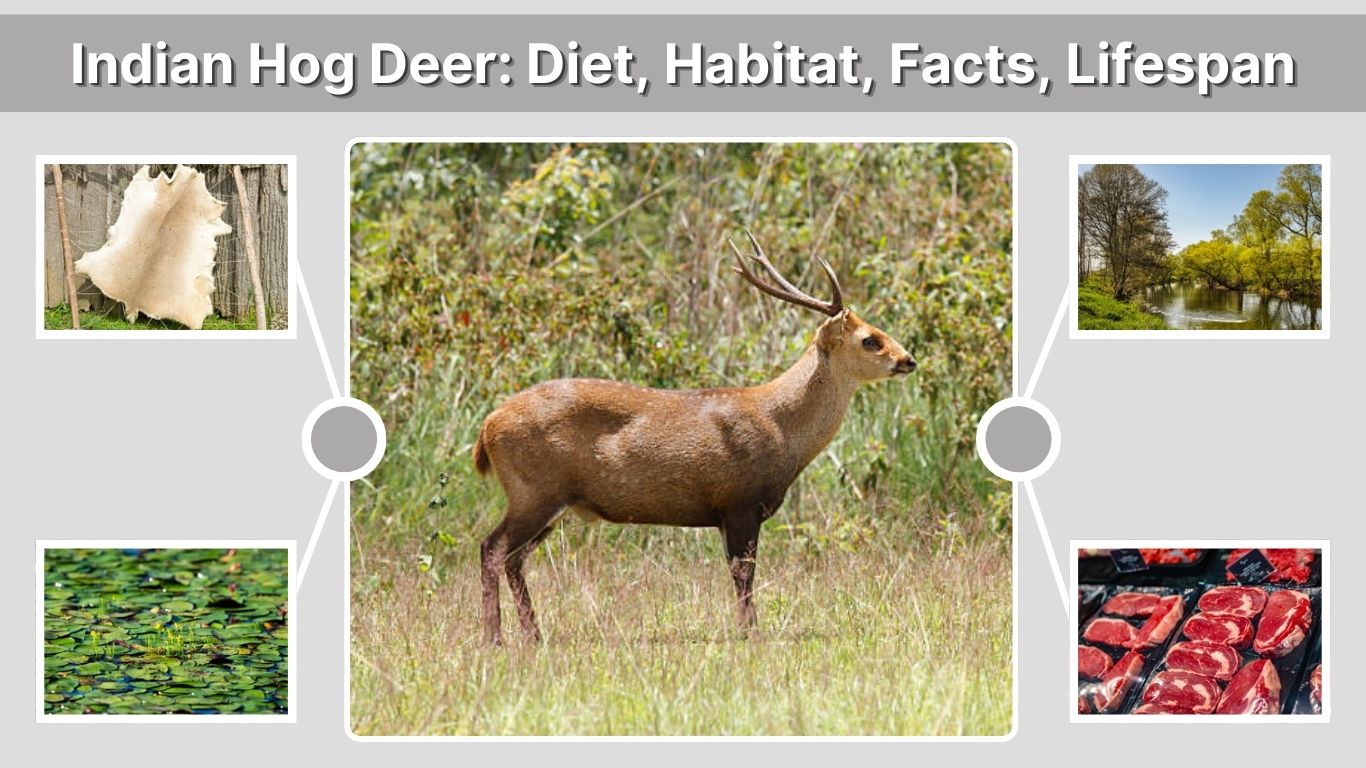






The Chinese water deer is one of the most unusual deer species in the world. Unlike most deer, it does not have antlers. Instead, males have long, fang-like canine teeth that give the animal a unique appearance and the nickname “vampire deer.” Native to China and Korea, this small deer is also found in parts of Europe, especially the United Kingdom. From its diet and habitat to its lifespan and behavior, the Chinese water deer has many fascinating traits that make it different from other deer species.
What Is a Chinese Water Deer?
The Chinese water deer (Hydropotes inermis) is a small species of deer known for its distinctive tusk-like teeth and lack of antlers. It belongs to the family Cervidae but differs from most deer because males grow elongated upper canine teeth instead of antlers.
Male Chinese water deer use these tusks during territorial disputes and mating competitions. The tusks can grow up to 5–8 centimeters long and are often visible when the deer opens its mouth.
Physically, Chinese water deer are relatively small compared to other deer species. They usually weigh between 9 and 14 kilograms (20–31 pounds) and stand about 50–55 centimeters tall at the shoulder. Their coat is typically brown with a lighter underside, helping them blend into grasslands and wetland environments.
Another interesting feature is their strong hind legs, which allow them to run quickly and leap through dense vegetation. Because they often live near wetlands and rivers, they are also excellent swimmers.
Identification of Chinese Water Deer
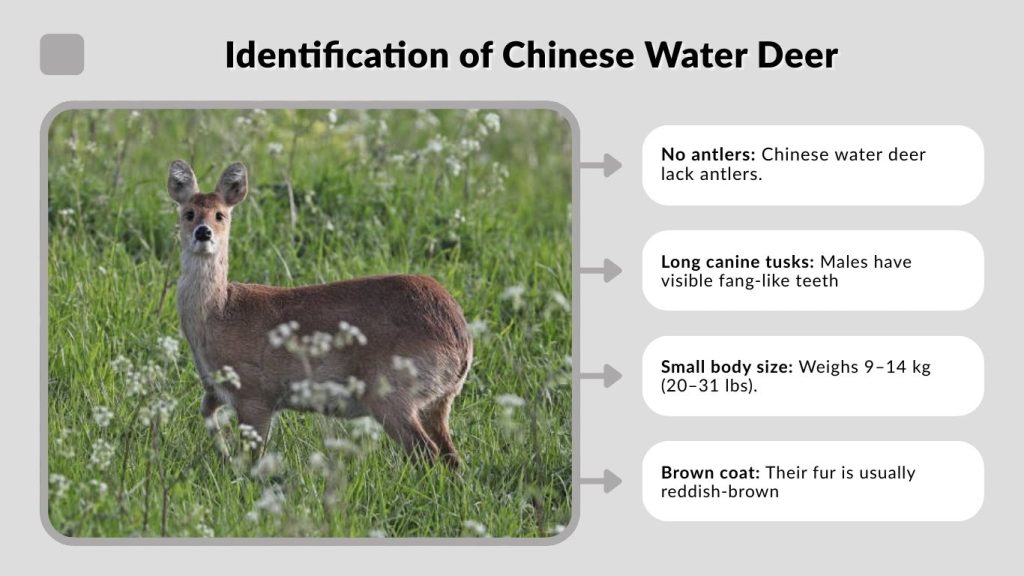
The Chinese water deer (Hydropotes inermis) is easy to recognize because it looks different from most other deer species. While many deer grow antlers, Chinese water deer do not have any. Instead, male deer develop long tusk-like canine teeth, which give them a distinctive appearance. Their small body size, rounded face, and strong hind legs also make them unique among deer.
These deer are well adapted to wetlands and grassy environments, where their brown coat helps them blend into the surrounding vegetation. Because of these physical traits, wildlife observers can often identify them quickly in their natural habitat.
Key Identification Features
- No antlers: Unlike most deer species, Chinese water deer lack antlers.
- Long canine tusks: Males have visible fang-like teeth used for fighting and display.
- Small body size: Adults typically weigh between 9–14 kg (20–31 lbs).
- Brown coat: Their fur is usually reddish-brown with a lighter underside.
- Short tail: The tail is small and not very noticeable.
- Rounded face: They have a short snout and large ears.
- Strong hind legs: Built for quick running and jumping.
- Good swimmers: Often found near rivers, wetlands, and marshes.
These features help distinguish the Chinese water deer from other deer species, especially in areas where multiple deer types may live together.
Chinese Water Deer Habitat
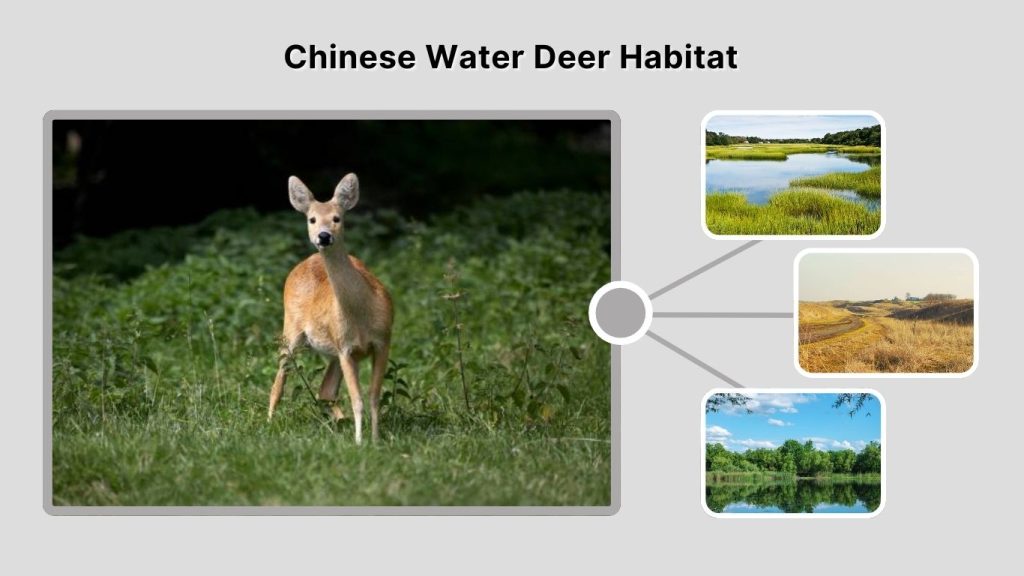
Chinese water deer prefer environments with dense vegetation and access to water. As their name suggests, they are often found near wetlands, marshes, rivers, and lakes.
Native Habitat
Originally, Chinese water deer are native to:
- Eastern China
- The Yangtze River basin
- Parts of Korea
These areas provide the moist grasslands and wetlands that the species prefers.
Introduced Populations
In the late 19th century, Chinese water deer were introduced to the United Kingdom. Today, the UK has one of the most stable populations of this species outside Asia. They can be found in areas such as:
- East Anglia
- Bedfordshire
- Cambridgeshire
- Norfolk
The climate and wet grasslands in these regions are suitable for their survival.
Preferred Environment
Chinese water deer typically live in:
- Wetlands and marshes
- Tall grasslands
- Riverbanks
- Reed beds
- Agricultural fields
These habitats provide both food sources and shelter from predators.
Chinese Water Deer Diet
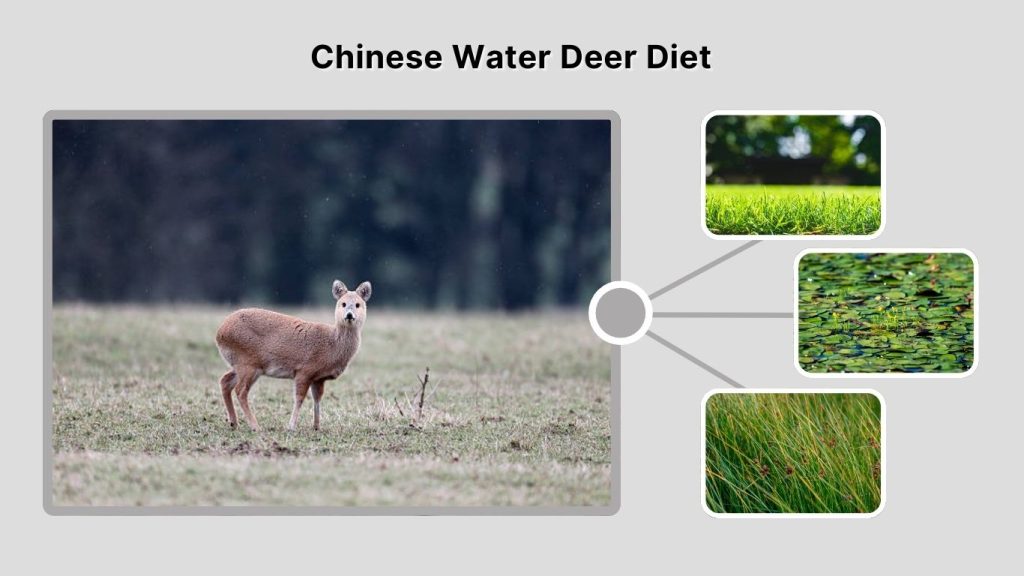
The Chinese water deer is primarily a herbivore, meaning it feeds entirely on plant material. Its diet changes slightly depending on the season and the availability of vegetation in its habitat.
What Do Chinese Water Deer Eat?
Chinese water deer mainly consume soft vegetation found near wetlands and grasslands. Their typical diet includes:
- Grasses
- Aquatic plants
- Reeds and sedges
- Leaves from shrubs
- Herbs and wild plants
- Agricultural crops such as wheat or rice
Because they live near water sources, they often feed on plants growing along riverbanks and marshy areas.
Feeding Behavior
Chinese water deer are mostly crepuscular, meaning they are most active during early morning and late evening. During these times, they leave their hiding spots in dense vegetation to graze.
Their feeding habits vary throughout the year:
- Spring and summer: They eat fresh grasses and herbs.
- Autumn: They consume fallen leaves and tougher vegetation.
- Winter: They rely on woody plants, bark, and remaining grasses.
Their small size allows them to move quietly through thick vegetation while searching for food.
Baby Chinese Water Deer
Baby Chinese water deer are called fawns, just like other deer species. However, they have some unique characteristics that help them survive in the wild.
Appearance of Baby Chinese Water Deer
Newborn fawns are extremely small and usually weigh around 1 kilogram (2.2 pounds) at birth. Their coats have white spots that help camouflage them in tall grass and dense vegetation.
These spots fade as the fawns grow older.
Early Life and Development
After birth, the mother hides the fawn in thick vegetation to protect it from predators. Unlike some deer species that stay close to their mothers, Chinese water deer fawns often remain hidden for long periods while the mother goes out to feed.
Within a few weeks, the fawn becomes strong enough to follow its mother and start exploring its surroundings.
Young deer grow quickly and can become independent within a few months.
Chinese Water Deer Lifespan

The lifespan of a Chinese water deer varies depending on whether it lives in the wild or in captivity. In the wild, these deer typically live for 6 to 8 years. However, in protected environments such as wildlife reserves or zoos, they may live 10 to 12 years or even longer.
Several factors affect the lifespan of Chinese water deer:
Predators
In their natural habitat, young deer are vulnerable to predators such as:
- Foxes
- Wild dogs
- Large birds of prey
Predation can significantly reduce survival rates, especially for fawns.
Habitat Quality
Deer living in areas with abundant vegetation, water, and shelter generally live longer. Healthy wetlands and grasslands provide the food and protection they need to survive.
Disease and Environmental Stress
Like many wildlife species, Chinese water deer can be affected by disease, harsh winters, and habitat loss. These environmental challenges can shorten their lifespan in the wild.
Chinese Water Deer Hunting

Chinese water deer are sometimes hunted in certain regions where hunting is legally permitted and carefully regulated. Hunting is most commonly practiced in the United Kingdom, where the species has established a stable population.
Hunting Locations
The most popular areas for Chinese water deer hunting include:
- England (especially East Anglia)
- Certain managed estates and hunting grounds
Because the deer were introduced and are now widespread in some areas, controlled hunting helps manage their population.
Hunting Methods
Hunters usually rely on methods such as:
- Stalking – quietly approaching the deer through fields or wetlands
- High-seat hunting – waiting in an elevated position near feeding areas
These methods require patience and knowledge of deer behavior.
Conservation Considerations
Responsible hunting is regulated to ensure populations remain stable. Wildlife management organizations monitor deer numbers and establish hunting seasons to prevent overhunting.
Interesting Chinese Water Deer Facts
Chinese water deer have several fascinating traits that make them unique among deer species.
They Have Fangs Instead of Antlers
Unlike most deer species, male Chinese water deer do not grow antlers. Instead, they develop long canine teeth that resemble fangs, which they use for fighting and displaying dominance.
They Are Excellent Swimmers
Because they often live near wetlands and rivers, Chinese water deer are strong swimmers. They can cross rivers and move through marshy environments with ease.
They Are Highly Territorial
Male Chinese water deer defend their territory aggressively, especially during the breeding season. They use scent marking and their tusks to warn off rivals.
They Are Among the Most Primitive Deer
Scientists consider the Chinese water deer to be one of the most primitive members of the deer family, meaning their evolutionary lineage is very ancient.
They Can Jump Surprisingly Well
Despite their small size, Chinese water deer are capable of powerful leaps, helping them escape predators and navigate thick vegetation.
Conservation Status
The Chinese water deer is currently classified as Vulnerable in parts of its native range. Habitat loss, agricultural expansion, and human activity have reduced populations in some areas of China and Korea.
However, introduced populations—particularly in the United Kingdom—are stable and sometimes even expanding.
Conservation efforts focus on:
- Protecting wetland habitats
- Monitoring population numbers
- Managing hunting regulations
- Supporting wildlife reserves
These measures help ensure that the species continues to survive in both its native and introduced habitats.
Conclusion
The Chinese water deer is a remarkable species known for its unusual appearance and fascinating behavior. With its fang-like tusks, strong swimming ability, and preference for wetland habitats, it stands out from most other deer species. From its plant-based diet and unique feeding habits to the development of baby fawns and its typical lifespan, this small deer has many interesting characteristics. Protecting its natural habitats and maintaining responsible wildlife management will help ensure the survival of this unique animal for future generations.