

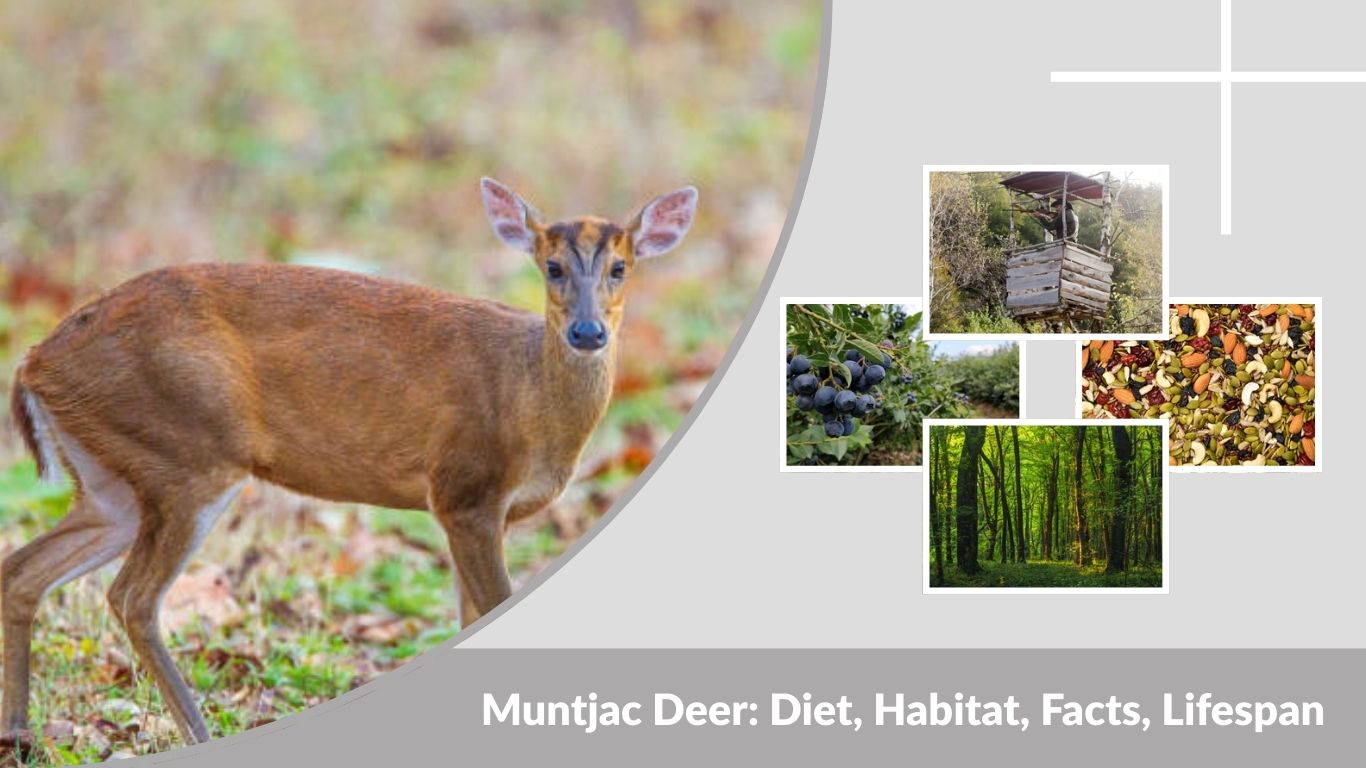
The muntjac deer is one of the most fascinating and unusual members of the deer family. Often called the “barking deer” because of the dog-like sound it makes, this small deer is native to parts of Asia but can also be found in regions such as the United Kingdom. Muntjac deer are known for their compact size, sharp canine teeth, and unique behavior. From their habitat and diet to their lifespan and distinctive characteristics, muntjac deer stand out as one of the most interesting deer species in the wild.
What Is a Muntjac Deer?
The muntjac deer belongs to the genus Muntiacus, a group of small deer species found mainly in South and Southeast Asia. These deer are considered among the oldest deer species, with fossils dating back millions of years.
One of the most recognizable features of muntjac deer is their unusual vocalization. When alarmed or threatened, they produce a loud barking sound similar to a dog. This behavior is why they are commonly called barking deer.
Muntjac deer are relatively small compared to other deer species. Adults typically stand 40–65 centimeters (16–26 inches) tall at the shoulder and weigh around 10–18 kilograms (22–40 pounds) depending on the species. Their bodies are compact, with short legs and a rounded appearance.
Another unique feature is that male muntjac deer possess both antlers and long canine teeth. The antlers are small and grow on long pedicles (bony stalks) on the head, while the tusk-like canine teeth are used for fighting during territorial disputes.
Their reddish-brown or dark brown coats help them blend into forest environments, making them well adapted to dense vegetation and woodland habitats.
Identification of Muntjac Deer
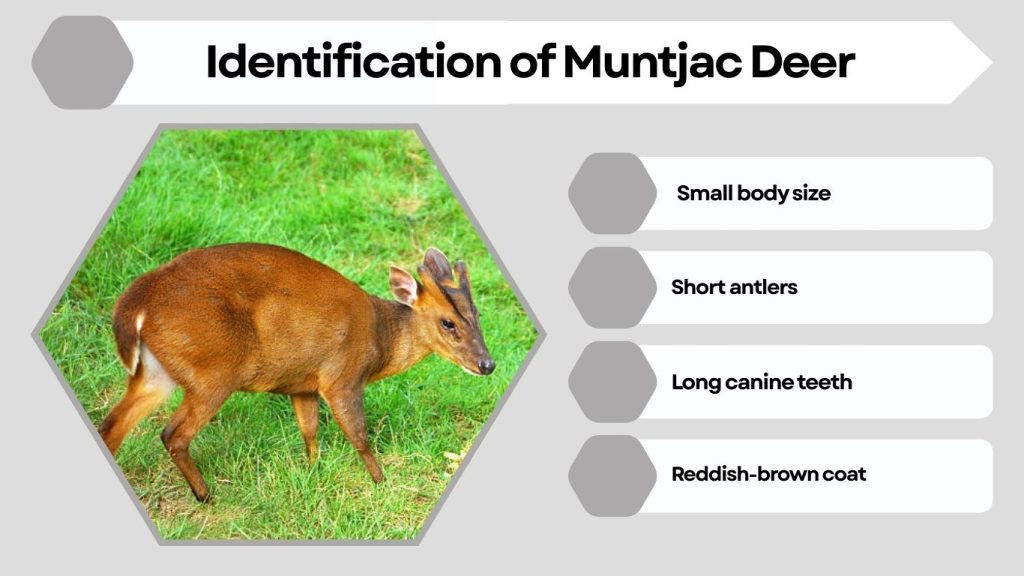
The muntjac deer is relatively easy to identify because of its small size and distinctive facial features. Unlike many larger deer species, muntjacs have a more compact body and unique head structure. Males have short antlers that grow on elongated pedicles, while both males and females possess noticeable facial glands used for scent marking.
These physical traits help wildlife observers and researchers distinguish muntjac deer from other deer species living in the same habitat.
Key Identification Features
- Small body size: Much smaller than most deer species.
- Short antlers: Males have small antlers growing on long pedicles.
- Long canine teeth: Male muntjacs have sharp tusk-like teeth.
- Reddish-brown coat: Their fur ranges from reddish to dark brown.
- Large facial scent glands: Used to mark territory and communicate.
- Short tail: The tail is small but visible.
- Distinct barking call: A loud barking sound used as an alarm signal.
These characteristics make the muntjac deer one of the most recognizable small deer species in Asia and parts of Europe.
Muntjac Deer Habitat
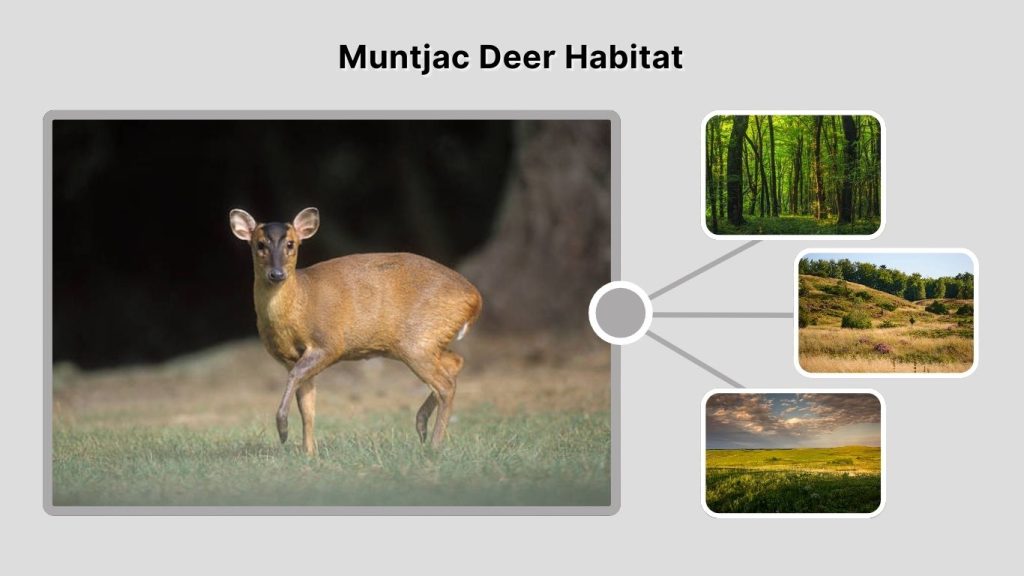
Muntjac deer are highly adaptable animals and can live in a variety of habitats. However, they prefer areas with dense vegetation and plenty of cover, which provide protection from predators and easy access to food.
Native Range
Muntjac deer are originally native to several parts of Asia, including:
- India
- China
- Sri Lanka
- Nepal
- Thailand
- Vietnam
- Indonesia
In these regions, they commonly inhabit tropical and subtropical forests.
Introduced Populations
Some muntjac species, particularly the Reeves’s muntjac, were introduced to the United Kingdom in the early 20th century. Since then, they have spread across many parts of England and established stable populations.
Preferred Environment
Muntjac deer typically live in habitats such as:
- Dense forests
- Woodland areas
- Shrublands
- Grasslands
- River valleys and farmland edges
Their small size allows them to move easily through thick vegetation, making these environments ideal for hiding from predators.
Muntjac Deer Diet
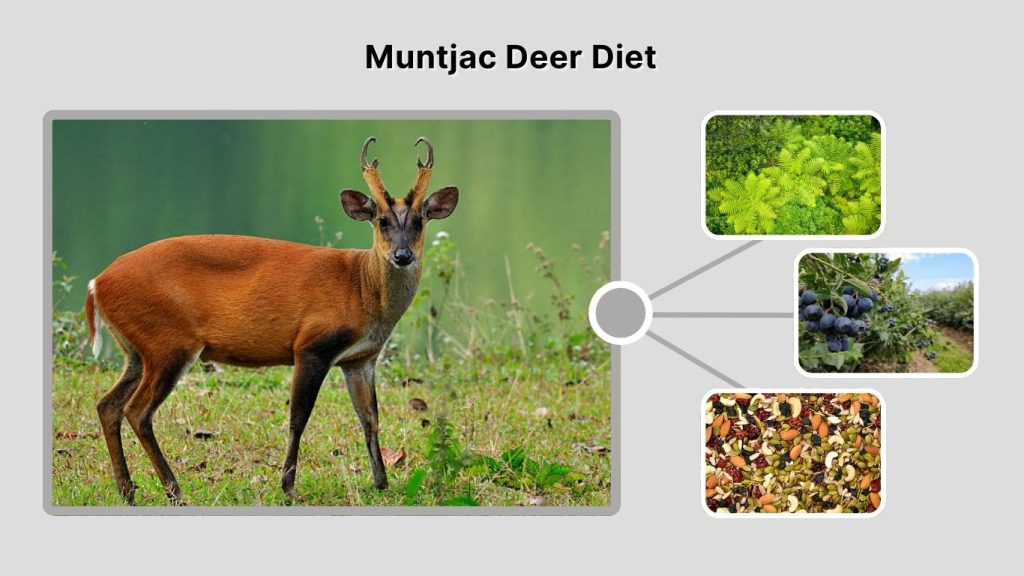
Muntjac deer are herbivores, meaning they feed primarily on plant materials. They are also considered opportunistic feeders, which means they eat a wide variety of available vegetation depending on the season and habitat.
What Do Muntjac Deer Eat?
The diet of muntjac deer includes many types of plants and vegetation commonly found in forests and grasslands. Their typical food sources include:
- Leaves from shrubs and trees
- Grass and young shoots
- Fruits and berries
- Seeds and nuts
- Bark and twigs
- Herbs and flowering plants
In agricultural areas, muntjac deer may also feed on crops and garden plants.
Feeding Behavior
Muntjac deer are most active during early morning and evening, making them crepuscular animals. During these times, they leave dense vegetation to search for food.
Their feeding habits can change depending on the season:
- Spring and summer: Fresh leaves, grasses, and fruits are common food sources.
- Autumn: They consume fallen fruits, seeds, and nuts.
- Winter: They rely more on bark, twigs, and tougher vegetation.
Because of their adaptable diet, muntjac deer can survive in a wide range of environments.
Baby Muntjac Deer
Baby muntjac deer are known as fawns, similar to the young of other deer species. Despite their small size, they develop quickly and have several natural adaptations that help them survive in the wild.
Appearance of Baby Muntjac Deer
Newborn muntjac fawns are very small and usually weigh about 1–1.5 kilograms (2–3 pounds) at birth. Their coats often feature light spots, which provide natural camouflage in forest vegetation and tall grasses.
These spots help protect the young deer from predators during the early stages of life. As the fawn grows older, the spots gradually fade and the coat becomes a solid reddish-brown color.
Early Life and Development
Mother muntjac deer usually give birth to a single fawn, although twins can occasionally occur. After birth, the mother hides the fawn in dense vegetation while she searches for food.
This hiding behavior reduces the chances of predators detecting the young deer.
Within a few weeks:
- The fawn becomes stronger and more active
- It begins to follow its mother for short distances
- It gradually learns to feed on vegetation
Muntjac fawns grow quickly and can become independent within several months.
Muntjac Deer Lifespan
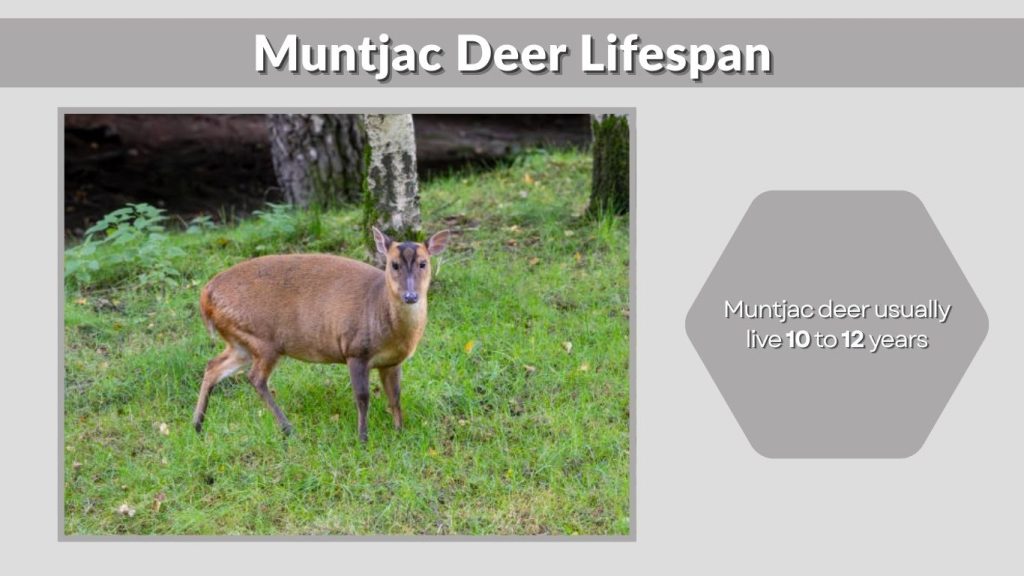
The lifespan of muntjac deer varies depending on environmental conditions and whether they live in the wild or in captivity.
In the wild, muntjac deer usually live 10 to 12 years, although some may live slightly longer under favorable conditions. In captivity, where they are protected from predators and disease, they may live up to 15–20 years.
Several factors influence their lifespan.
Predators
In their natural habitats, muntjac deer may face predators such as:
- Leopards
- Tigers
- Wild dogs
- Large birds of prey (for young fawns)
Predation is one of the main causes of mortality among young deer.
Environmental Conditions
Food availability, weather conditions, and habitat quality also play an important role in determining how long muntjac deer survive.
Healthy forests with abundant vegetation provide the best conditions for their long-term survival.
Muntjac Deer Behavior
Muntjac deer display several unique behaviors that set them apart from other deer species.
Barking Alarm Call
One of their most famous traits is their barking sound, which resembles the bark of a dog. They produce this sound when they sense danger, such as the presence of predators or unfamiliar animals.
This barking can continue for long periods as the deer alerts other animals in the area.
Territorial Nature
Male muntjac deer are highly territorial. They use scent glands located on their face to mark territory and warn other males to stay away.
When conflicts occur, males may use their sharp canine teeth during fights.
Solitary Lifestyle
Unlike many deer species that live in herds, muntjac deer are usually solitary animals. They tend to live alone or in pairs, only coming together during the breeding season.
Muntjac Deer Hunting
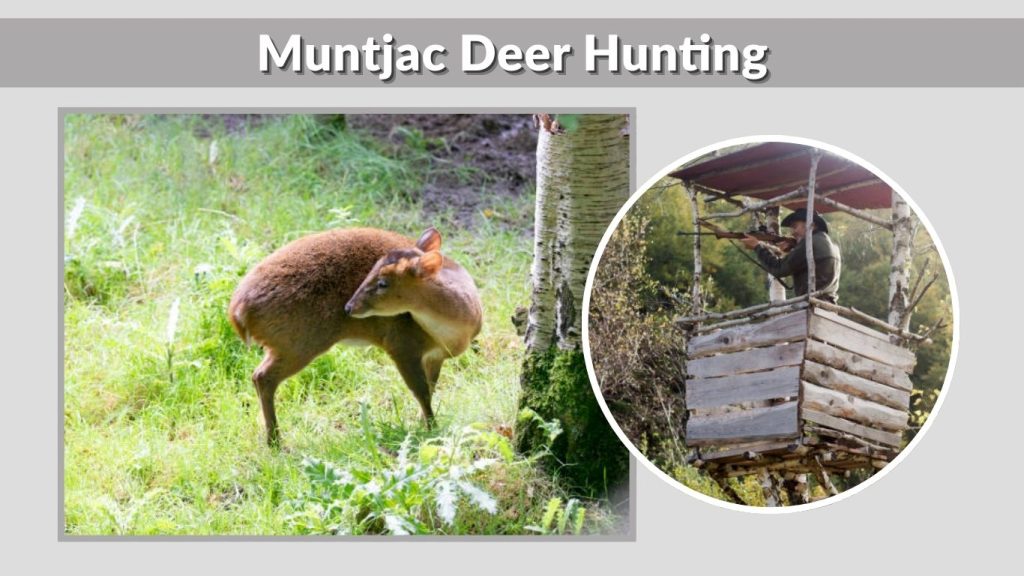
In some regions, muntjac deer are hunted as part of wildlife management programs. This is especially common in areas where the species has become widespread or invasive.
Hunting Regions
The most notable hunting activity occurs in:
- The United Kingdom
- Certain parts of Asia
In the UK, the Reeves’s muntjac population has grown significantly, and controlled hunting helps maintain ecological balance.
Hunting Methods
Common methods used by hunters include:
- Stalking: Quietly approaching deer in woodland areas
- High-seat hunting: Waiting from elevated platforms near feeding paths
These methods require patience and knowledge of deer behavior.
Wildlife Management
Controlled hunting is often used to manage deer populations and prevent damage to crops, forests, and natural ecosystems.
Interesting Muntjac Deer Facts
Muntjac deer have several remarkable characteristics that make them unique among deer species.
- They are known as “barking deer” because of their dog-like alarm call.
- They are considered one of the oldest deer species, with ancient evolutionary origins.
- Male muntjacs have both antlers and tusk-like canine teeth.
- They are capable of breeding throughout the year, unlike many deer species with fixed breeding seasons.
- They are extremely adaptable and can survive in forests, farmland, and even suburban areas.
Conservation Status
The conservation status of muntjac deer varies depending on the species and region. Some muntjac species are common and expanding their range, while others are threatened due to habitat loss and hunting pressure.
In their native habitats, conservation efforts focus on:
- Protecting forest ecosystems
- Monitoring population trends
- Preventing illegal hunting
In areas where muntjac deer have been introduced, wildlife managers often monitor populations to maintain ecological balance.
Conclusion
The muntjac deer is a fascinating species known for its small size, unique barking call, and distinctive physical features. Native to Asia but now present in parts of Europe, this adaptable deer can survive in a wide range of habitats. From its varied plant-based diet and solitary lifestyle to the rapid development of baby fawns, the muntjac deer displays many traits that set it apart from other members of the deer family. Understanding and managing their populations helps ensure these unique animals continue to thrive in the wild.