


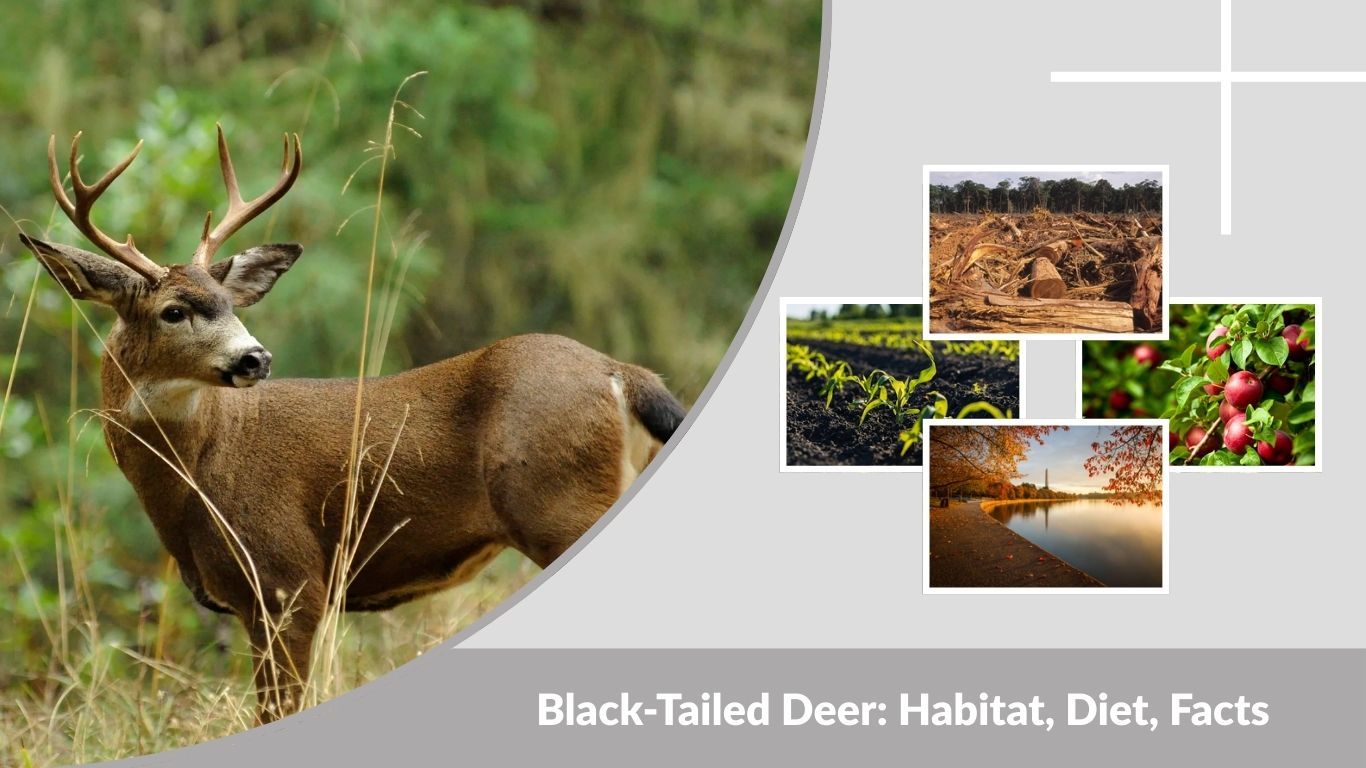
The black-tailed deer is a fascinating subspecies of mule deer found primarily along the western coast of North America. Known for its distinctive black-tipped tail and strong adaptability to forest environments, this deer plays an important role in coastal ecosystems. Black-tailed deer are commonly seen in dense forests, mountain regions, and shrublands where food and shelter are abundant. From their habitat and diet to their unique behaviors and differences from mule deer, these animals are an important part of wildlife in the Pacific region.
What Is a Black-Tailed Deer?
The black-tailed deer is a subspecies of mule deer scientifically classified as Odocoileus hemionus. It is closely related to the mule deer but has adapted to the coastal forests of western North America, where dense vegetation and mild climates dominate the landscape.
Black-tailed deer are medium-sized deer with strong bodies and excellent agility. Adult males typically weigh between 60 and 90 kilograms (130–200 pounds), while females are usually smaller. Their coats are usually dark brown or grayish-brown, which helps them blend into forest environments.
One of their most recognizable features is the black tip on their tail, which gives the species its common name. When the deer senses danger, it may raise its tail to signal alarm to other deer.
Male black-tailed deer grow forked antlers, which are shed and regrown each year. These antlers are used during the breeding season when males compete for mating opportunities.
Because of their adaptability, black-tailed deer thrive in forest ecosystems where thick vegetation provides both food and protection from predators.
Identification of Black-Tailed Deer
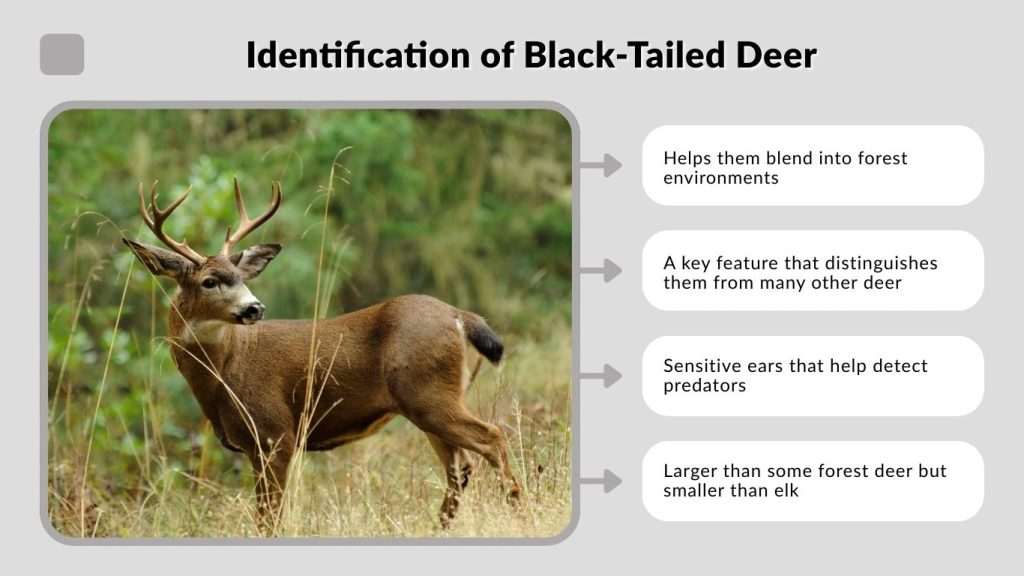
Black-tailed deer can be recognized by several physical characteristics that distinguish them from other deer species. Their body shape, tail color, and antler structure make them relatively easy to identify in the wild.
Compared with other deer species, black-tailed deer are well suited for life in dense forests where agility and camouflage are essential for survival.
Key Identification Features
- Dark brown coat: Helps them blend into forest environments
- Black-tipped tail: A key feature that distinguishes them from many other deer
- Large mule-like ears: Sensitive ears that help detect predators
- Medium body size: Larger than some forest deer but smaller than elk
- Forked antlers: Males grow branching antlers that split into two points
These characteristics allow wildlife observers and researchers to identify black-tailed deer even in dense vegetation.
Black-Tailed Deer Habitat
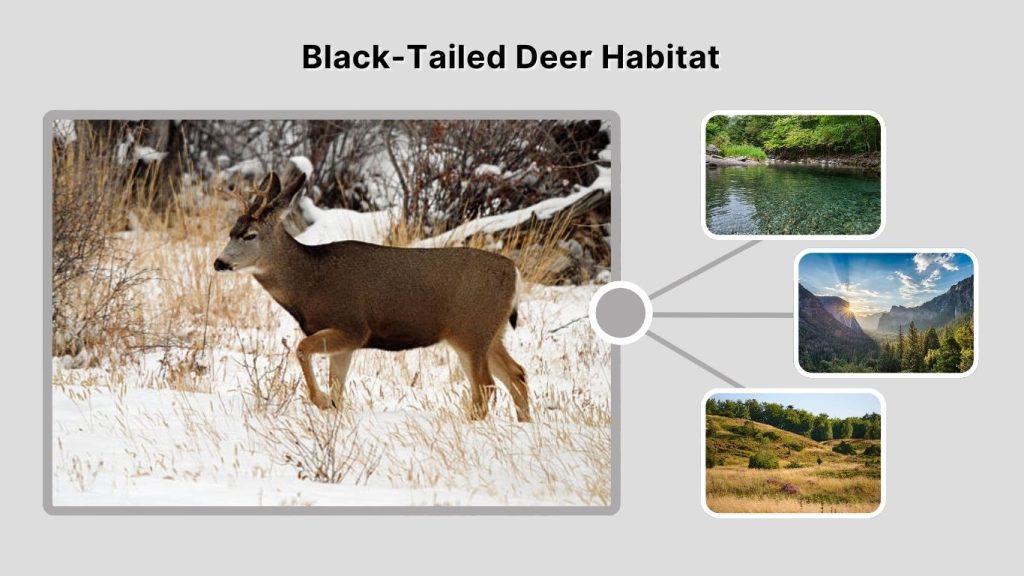
Black-tailed deer are highly adapted to coastal forest ecosystems. These environments provide a combination of dense vegetation, water sources, and protection from predators.
Preferred Habitat
Black-tailed deer typically live in environments such as:
- Coastal temperate forests
- Mountain forests
- Shrublands
- Woodland valleys
- River valleys and forest edges
Dense vegetation provides shelter from predators and harsh weather, while nearby open areas allow the deer to forage for food.
Environmental Adaptations
Black-tailed deer have several adaptations that help them survive in forest habitats.
Their strong legs allow them to move quickly through rough terrain, while their coat coloration provides camouflage among trees and shrubs. They are also excellent jumpers, which helps them escape predators and navigate obstacles in dense forests.
Where Do Black-Tailed Deer Live?
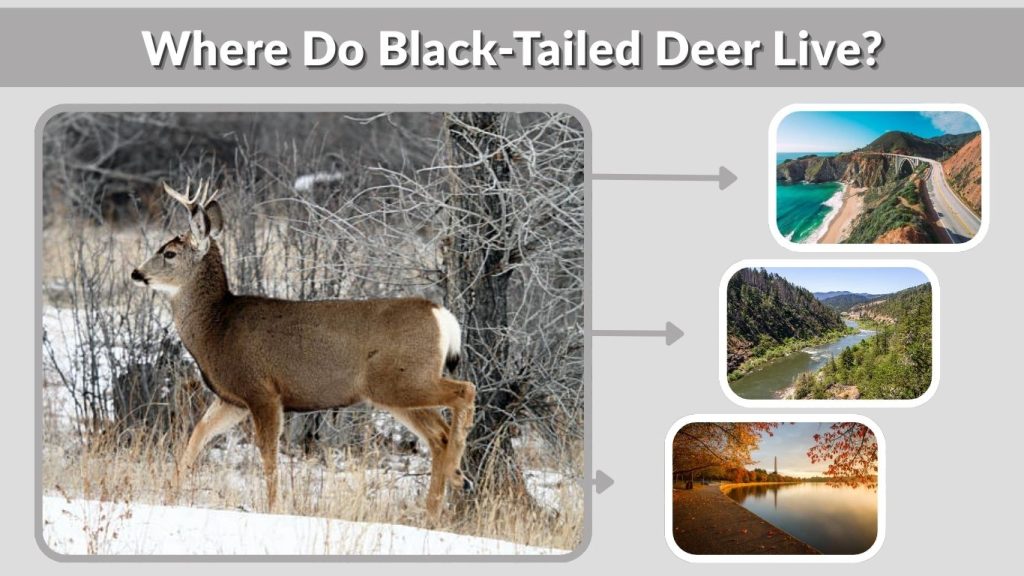
Black-tailed deer are mainly found along the Pacific Coast of North America. Their distribution is largely influenced by forest ecosystems and mild coastal climates.
Geographic Range
The main range of black-tailed deer includes:
- California
- Oregon
- Washington
- British Columbia (Canada)
These regions contain the coastal forests and mountainous areas that black-tailed deer prefer.
Habitat Distribution
Within these areas, black-tailed deer are most commonly found in:
- Coastal rainforests
- Forested mountain slopes
- Woodland valleys
- Dense shrublands
They tend to remain close to areas that offer both shelter and food sources, making forests and forest edges ideal habitats.
Black-Tailed Deer Diet
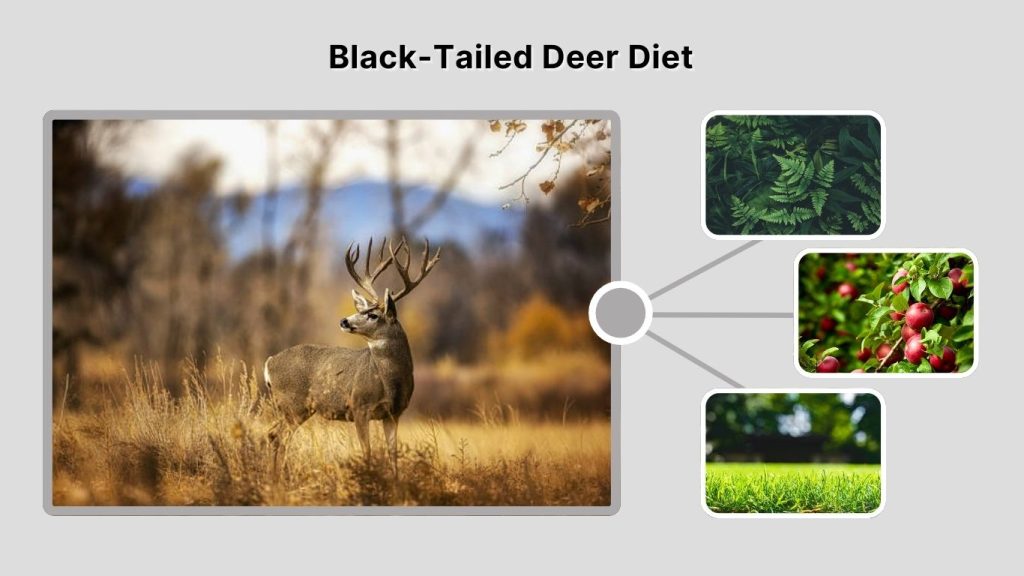
Black-tailed deer are herbivores, meaning they eat only plant-based foods. Their diet varies depending on the season and the vegetation available in their habitat.
What Do Black-Tailed Deer Eat?
Black-tailed deer eat a variety of plants found in forests and shrublands. Their typical diet includes:
- Leaves from shrubs and trees
- Grasses and herbs
- Fruits and berries
- Acorns and seeds
- Young plant shoots
In some regions, they may also feed on agricultural crops or garden plants when natural food sources are limited.
Feeding Behavior
Black-tailed deer are usually crepuscular, meaning they are most active during early morning and late evening. During these times, they leave their resting areas to search for food.
Their diet often changes with the seasons:
- Spring and summer: Fresh grasses, herbs, and leafy plants are common foods.
- Autumn: Fruits, berries, and acorns become important food sources.
- Winter: They rely more on woody plants and evergreen shrubs.
Because of their flexible feeding habits, black-tailed deer can survive in a variety of forest ecosystems.
Black-Tailed Deer vs Mule Deer
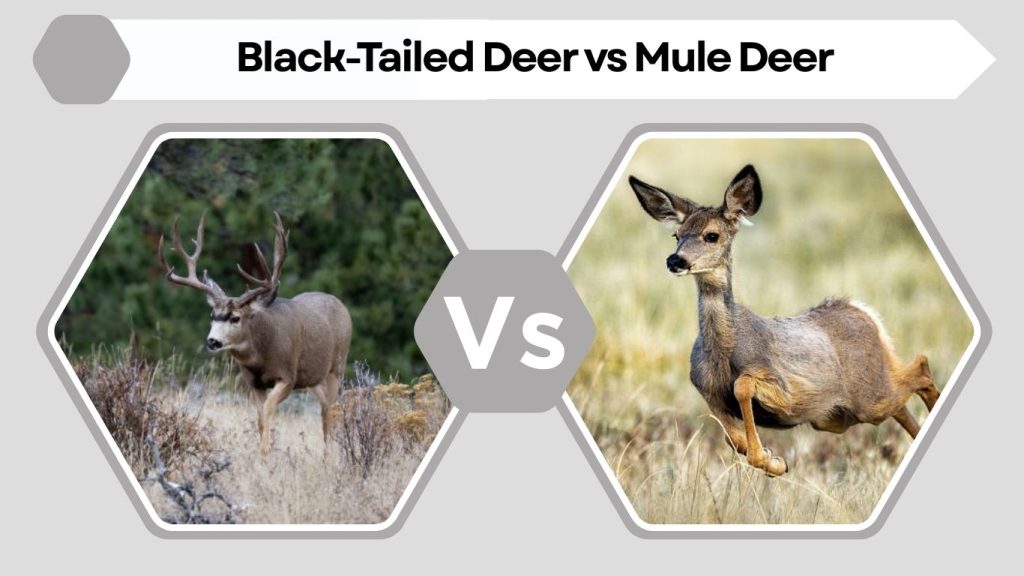
Black-tailed deer and mule deer are closely related because the black-tailed deer is actually a subspecies of mule deer. However, they have several noticeable differences in appearance, habitat, and behavior.
Key Differences
| Feature | Black-Tailed Deer | Mule Deer |
| Habitat | Coastal forests and dense vegetation | Mountains, deserts, and open plains |
| Size | Slightly smaller and more compact | Larger and heavier body |
| Tail | Dark tail with a black tip | White tail with a black tip |
| Distribution | Pacific Coast of North America | Western North America |
| Movement | Adapted to dense forests | More suited for open landscapes |
While they share many physical similarities, black-tailed deer have evolved to thrive in coastal forest ecosystems, while mule deer prefer more open and rugged terrain.
Black-Tailed Deer Behavior
Black-tailed deer show several behaviors that help them survive in forest environments.
Social Structure
Black-tailed deer are generally solitary animals or may live in small family groups. Females often stay with their young, while males tend to live alone except during the breeding season.
Seasonal Movement
Although they do not migrate long distances like some deer species, black-tailed deer may move to lower elevations during winter to find food and avoid deep snow.
Daily Activity
Black-tailed deer are mostly active during dawn and dusk. During these cooler hours, they leave dense cover to feed. During the daytime, they usually rest in thick vegetation where they are less visible to predators.
Interesting Black-Tailed Deer Facts
Black-tailed deer have several unique traits that make them fascinating animals in North American forests.
- They are considered a subspecies of mule deer.
- Black-tailed deer are highly adapted to dense coastal forests.
- Their large ears help them detect predators quickly.
- They are excellent jumpers, capable of clearing obstacles several feet high.
- Predators such as cougars, wolves, and bears commonly hunt black-tailed deer.
These characteristics allow the species to survive in challenging forest environments.
Conservation and Population Status
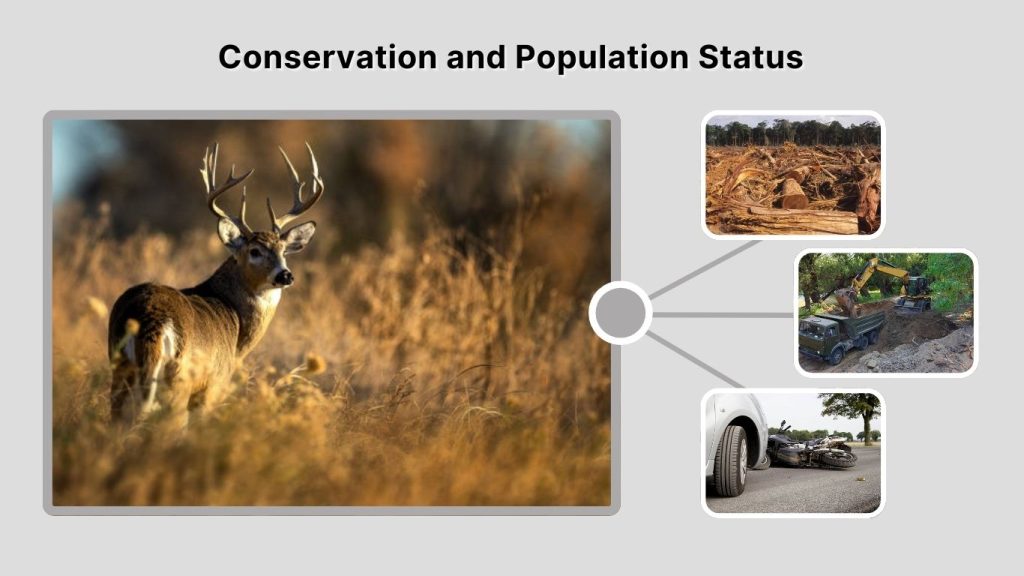
Black-tailed deer populations are generally stable in many areas, but they can face challenges in certain regions. Habitat loss, human development, and vehicle collisions are some of the main threats affecting their populations.
Wildlife management agencies monitor deer numbers and implement conservation strategies to ensure healthy populations.
Important conservation efforts include:
- Protecting forest habitats
- Managing hunting regulations
- Monitoring deer populations
- Promoting wildlife awareness and conservation programs
These measures help maintain balanced ecosystems where black-tailed deer continue to play an important ecological role.
Conclusion
The black-tailed deer is an important subspecies of mule deer that thrives in the coastal forests of western North America. Known for its black-tipped tail, medium body size, and adaptability to dense vegetation, this deer plays a vital role in forest ecosystems. From its varied plant-based diet and forest habitat to its unique behavior and differences from mule deer, the black-tailed deer remains a fascinating species to study. Continued conservation and habitat protection will help ensure that these remarkable animals remain part of North America’s wildlife for generations to come.