

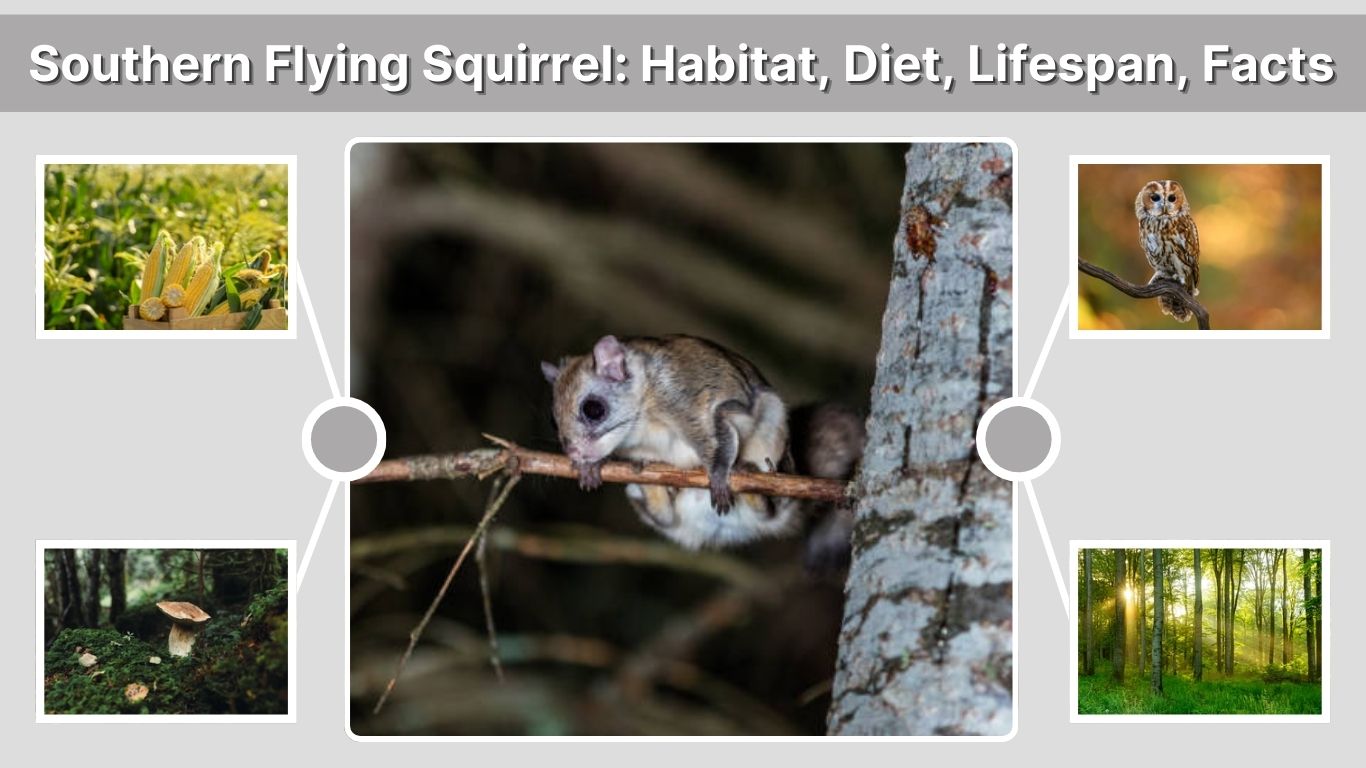
The southern flying squirrel (Glaucomys volans) is a small nocturnal mammal known for its remarkable ability to glide between trees. Despite its name, this squirrel does not truly fly but uses a special skin membrane to glide through the air. Found across eastern North America, the southern flying squirrel lives mainly in forests and wooded areas. It plays an important role in forest ecosystems by spreading seeds and fungi. Understanding its habitat, diet, and lifespan helps reveal why this tiny gliding squirrel is such a fascinating animal.
What Is a Southern Flying Squirrel?
Scientific Classification
The southern flying squirrel belongs to the squirrel family Sciuridae, which includes tree squirrels, ground squirrels, and flying squirrels. Its scientific name is Glaucomys volans.
Basic classification:
- Kingdom: Animalia
- Phylum: Chordata
- Class: Mammalia
- Order: Rodentia
- Family: Sciuridae
- Genus: Glaucomys
- Species: Glaucomys volans
Southern flying squirrels are one of the two main flying squirrel species found in North America, the other being the northern flying squirrel.
Overview of the Species
The southern flying squirrel is a small, nocturnal gliding mammal that spends most of its life in trees. Unlike typical squirrels that run and jump between branches, this species can glide from one tree to another.
These squirrels are rarely seen during the day because they are active mainly at night. Their large eyes help them see clearly in low-light conditions while searching for food or moving through the forest.
Although they are small, southern flying squirrels are highly agile and well adapted to life in wooded environments.
Why It Is Called a Flying Squirrel
Southern flying squirrels do not actually fly like birds or bats. Instead, they glide using a thin membrane of skin called a patagium. This membrane stretches between the front and back legs.
When the squirrel jumps from a tree, it spreads its legs, allowing the membrane to act like a parachute or wing. This allows the squirrel to glide smoothly through the air from one tree to another.
Gliding helps southern flying squirrels:
- Escape predators
- Travel quickly between trees
- Search for food over larger areas
Some glides can cover over 150 feet (45 meters) depending on the height of the starting tree.
Southern Flying Squirrel Physical Characteristics
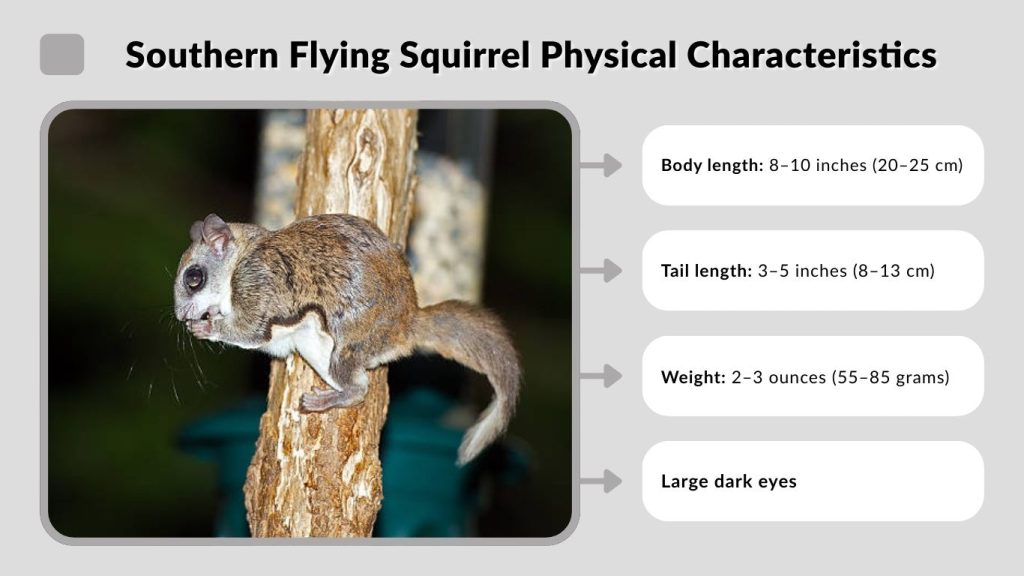
Southern flying squirrels are small and lightweight mammals with unique features that help them glide and live in forest environments. Their body structure is specially adapted for climbing trees and gliding between branches.
Body Size and Weight
Southern flying squirrels are much smaller than many common tree squirrels.
Typical measurements include:
- Body length: 8–10 inches (20–25 cm) including the tail
- Tail length: About 3–5 inches (8–13 cm)
- Weight: Around 2–3 ounces (55–85 grams)
Their small size helps them move easily through dense tree branches.
Unique Gliding Membrane
One of the most distinctive features of the southern flying squirrel is the patagium, the loose flap of skin that stretches between its front and hind legs.
This membrane allows the squirrel to glide through the air. When the squirrel jumps, it spreads its legs and the membrane forms a gliding surface.
The tail helps guide direction while gliding and assists with balance when landing.
Other Key Features
Several other physical traits make southern flying squirrels well suited for nocturnal life in forests.
Important features include:
- Large dark eyes that improve night vision
- Soft gray-brown fur with a lighter belly
- Flat, bushy tail used for steering while gliding
- Sharp claws that help grip tree bark
- Lightweight body that allows longer glides
These features allow the squirrel to move quickly through trees while staying safe from predators.
Southern Flying Squirrel Habitat

Geographic Range
The southern flying squirrel is widely distributed across eastern North America. Its range extends from southern Canada through much of the eastern United States and into parts of Central America.
In the United States, it is commonly found in regions such as:
- The southeastern states
- The Midwest
- The eastern forests
- Parts of the central United States
Because they are nocturnal and spend most of their time in trees, these squirrels are often present in forests but rarely noticed by people.
Preferred Environment
Southern flying squirrels prefer mature forests with plenty of trees. They thrive in areas that provide both food sources and safe nesting sites.
Typical habitats include:
- Deciduous forests
- Mixed hardwood forests
- Woodland areas with nut-producing trees
- Forest edges and wooded parks
Trees that produce nuts, such as oak, hickory, and beech, are especially important because they provide a major part of the squirrel’s diet.
Nesting Locations
Southern flying squirrels build nests in tree cavities or natural holes in trees. They often use abandoned woodpecker holes as shelter.
Sometimes they also create leaf nests made from:
- Twigs
- Leaves
- Moss
- Bark strips
These nests provide protection from cold weather, rain, and predators. Southern flying squirrels may also share nests with other squirrels, especially during winter when they group together to stay warm.
Southern Flying Squirrel Diet
Main Foods They Eat
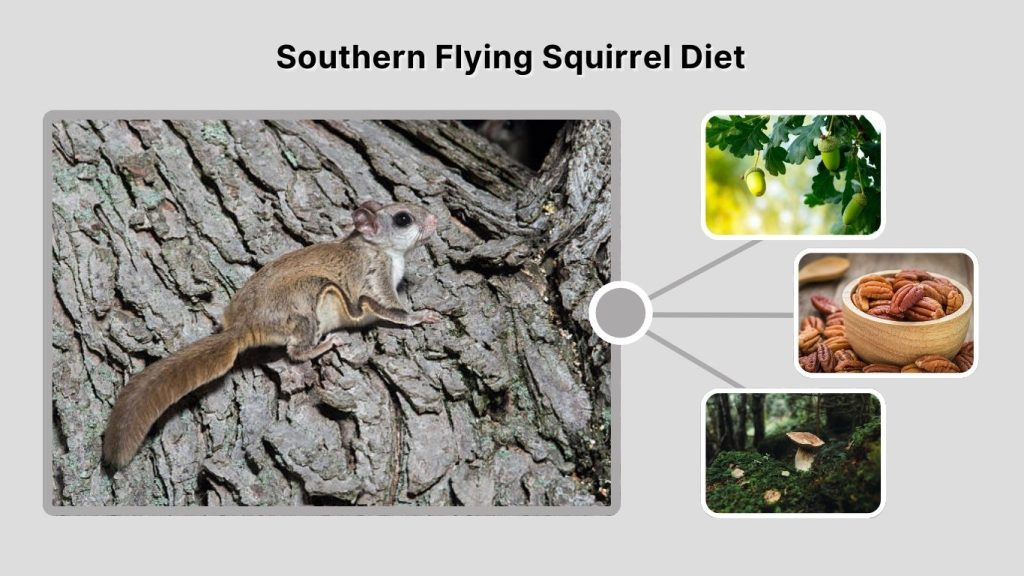
The southern flying squirrel has a varied omnivorous diet, meaning it eats both plant and animal foods. Most of its diet comes from nuts, seeds, fruits, and fungi found in forest environments.
Common foods include:
- Acorns
- Hickory nuts
- Beech nuts
- Seeds
- Fruits and berries
- Mushrooms and fungi
Fungi are especially important in their diet and are a major food source in many forest ecosystems.
Occasional Animal Foods
Although plant foods make up most of their diet, southern flying squirrels sometimes eat small animal foods when available.
These may include:
- Insects
- Beetles and larvae
- Bird eggs
- Small invertebrates
This mixed diet helps them survive in different seasons when certain foods are scarce.
Seasonal Diet Changes
The southern flying squirrel’s diet changes depending on the time of year.
Spring:
They eat buds, fresh shoots, and insects.
Summer:
Fruits, berries, seeds, and fungi become common foods.
Fall:
They collect and store large quantities of nuts and seeds.
Winter:
They rely on stored food and leftover nuts from the fall season.
Southern Flying Squirrel Behavior
Nocturnal Activity
Southern flying squirrels are nocturnal animals, meaning they are active mainly at night. During the day, they remain inside tree cavities or nests to rest and stay safe from predators.
Their large eyes help them see clearly in low light while they search for food or glide through the forest.
Gliding Ability
One of the most remarkable behaviors of the southern flying squirrel is its ability to glide between trees.
When the squirrel leaps from a high branch, it spreads its legs and stretches the patagium membrane. This allows it to glide smoothly through the air.
Some key facts about their gliding ability:
- They can glide distances of up to 150 feet (45 meters).
- The tail helps steer during flight.
- They can control their landing position on tree trunks.
This gliding ability helps them move quickly through forests while avoiding predators on the ground.
Social Behavior
Unlike many other squirrel species, southern flying squirrels can be fairly social animals. They may share nests with several other squirrels, especially during cold weather.
Group nesting helps them:
- Stay warm in winter
- Reduce energy loss
- Increase survival during cold nights
However, they still search for food mostly on their own.
Southern Flying Squirrel Lifespan
Average Lifespan in the Wild
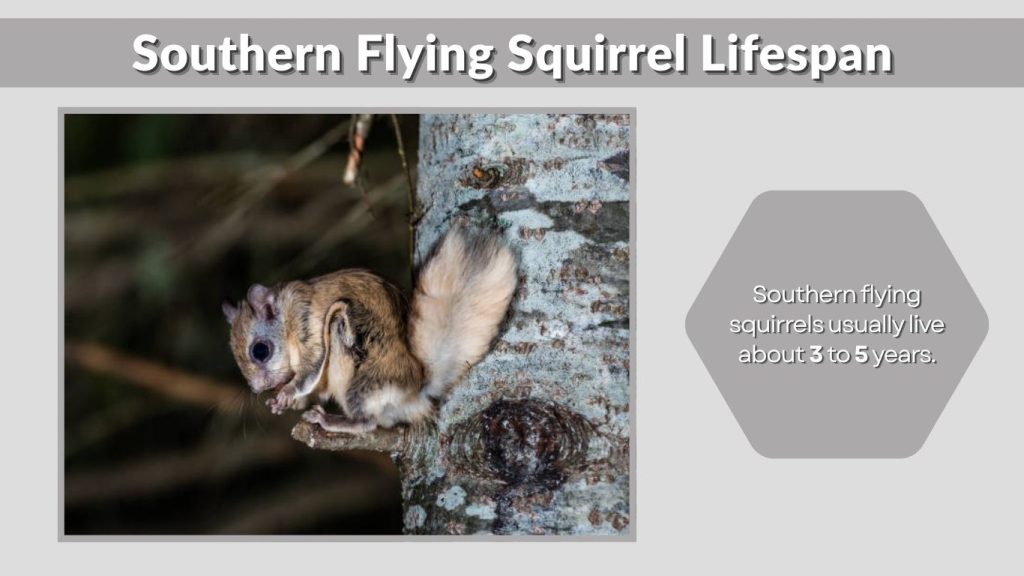
In the wild, southern flying squirrels usually live about 3 to 5 years. Many do not survive longer due to predators, accidents, and environmental challenges.
Lifespan in Captivity
When protected from predators and given proper care, southern flying squirrels can live much longer.
In captivity, they may live 10 years or more, depending on health and living conditions.
Factors That Affect Lifespan
Several factors influence how long a southern flying squirrel can live:
- Predators
- Availability of food
- Weather conditions
- Habitat quality
- Disease and parasites
Flying Squirrel vs Regular Squirrel
Flying Squirrel vs Tree Squirrel
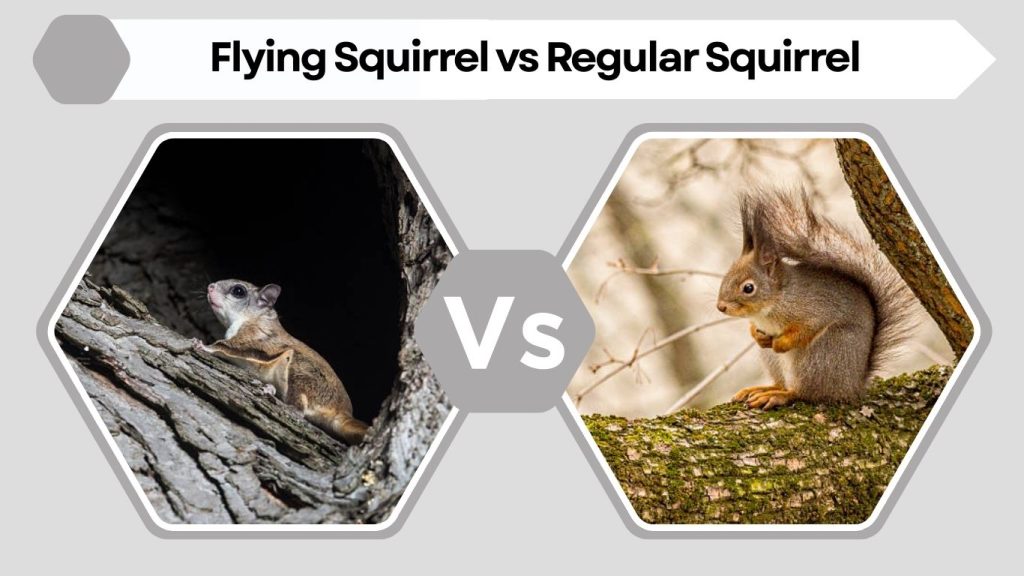
The biggest difference between flying squirrels and regular squirrels is their ability to glide.
Flying squirrels have a special membrane that allows them to glide between trees, while typical tree squirrels can only climb and jump.
Physical Differences
Several physical traits distinguish flying squirrels from regular squirrels.
Flying squirrels have:
- A patagium membrane between their legs
- Larger eyes adapted for night vision
- Smaller and lighter bodies
Regular tree squirrels usually have:
- No gliding membrane
- Smaller eyes
- Larger bodies with stronger legs for jumping
Behavior Differences
Flying squirrels also behave differently from most tree squirrels.
Key differences include:
- Flying squirrels are nocturnal, active at night.
- Most tree squirrels are diurnal, active during the day.
- Flying squirrels often share nests, while many other squirrels live alone.
Interesting Southern Flying Squirrel Facts
They Can Glide Long Distances
Southern flying squirrels can glide over 150 feet between trees, making them excellent aerial navigators in forest environments.
Large Eyes for Night Vision
Their large, dark eyes allow them to see well in the dark, helping them find food and avoid predators at night.
They Rarely Come to the Ground
Most of their life is spent in trees. Gliding allows them to travel through the forest without descending to the ground often.
Important for Forest Ecosystems
By spreading seeds and fungi spores, southern flying squirrels help maintain healthy forest ecosystems and support plant diversity.
Predators and Threats
Natural Predators
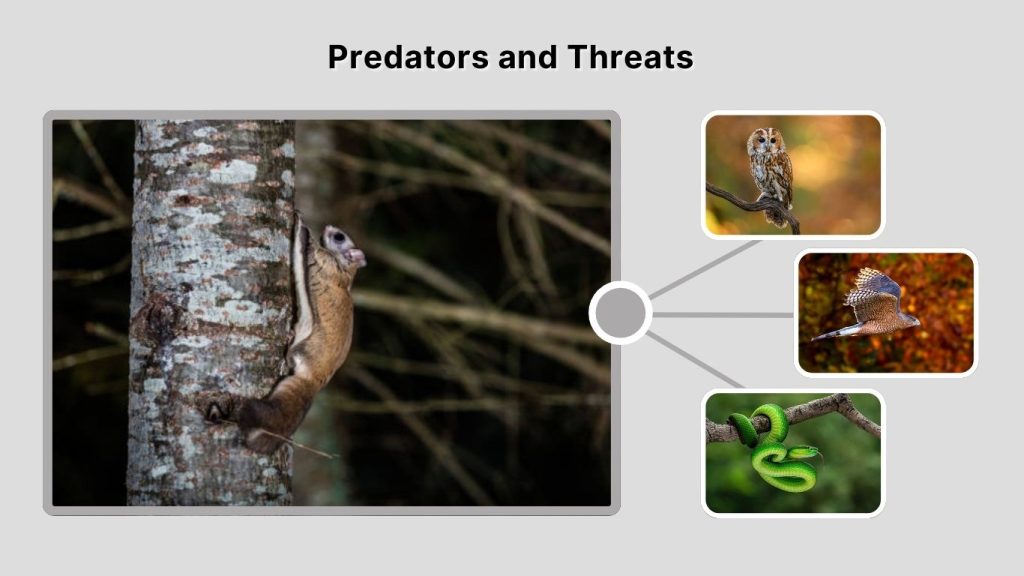
Southern flying squirrels face several predators in the wild, including:
- Owls
- Hawks
- Snakes
- Raccoons
- Foxes
Owls are one of their most dangerous predators because both animals are active at night.
Environmental Threats
Human activities can also affect southern flying squirrel populations.
Major threats include:
- Habitat loss from deforestation
- Forest fragmentation
- Urban development
Even so, the species remains widespread in many forested regions.
Conclusion
The southern flying squirrel is a unique and fascinating mammal known for its gliding ability and nocturnal lifestyle. Found across eastern North America, this small squirrel plays an important role in forest ecosystems by spreading seeds and fungi. Its specialized body structure, varied diet, and social behavior help it survive in forest habitats. By understanding the habitat, diet, and lifespan of the southern flying squirrel, we can better appreciate the importance of protecting the forests where this remarkable gliding animal lives.