





The Malabar giant squirrel is one of the most striking and fascinating squirrels in the world. Known for its vibrant multicolored fur and impressive size, this species is native to the forests of India. Unlike common squirrels that are often seen on the ground, the Malabar giant squirrel spends most of its life high in the tree canopy. Its agility, unique appearance, and important role in forest ecosystems make it an interesting subject for wildlife enthusiasts and researchers alike.
What Is the Malabar Giant Squirrel?
The Malabar giant squirrel (Ratufa indica), also known as the Indian giant squirrel, is a large tree-dwelling rodent found primarily in the forests of India. It belongs to the genus Ratufa, which includes some of the largest squirrels in the world. This species is especially famous for its vibrant fur colors, which may include shades of deep brown, maroon, cream, orange, and black.
Unlike many other squirrel species that frequently move on the ground, the Malabar giant squirrel is strictly arboreal, meaning it lives almost entirely in trees. It travels through forest canopies by making impressive leaps from branch to branch. Because of this tree-based lifestyle, it is rarely seen on the forest floor.
The squirrel is most commonly found in dense tropical and subtropical forests, where tall trees provide food, shelter, and safe nesting locations. It plays an important role in maintaining the balance of these ecosystems, particularly through seed dispersal.
Malabar Giant Squirrel Identification

The Malabar giant squirrel (Ratufa indica) is easy to recognize because of its large size, vibrant fur colors, and long bushy tail. Unlike common squirrels, it lives mostly in tall forest trees and rarely comes down to the ground. Its striking appearance and unique physical traits help wildlife observers quickly identify it in its natural habitat.
Key identification features include:
- Large body size – Much bigger than typical squirrels, reaching up to 1 meter in total length including the tail.
- Multicolored fur – Distinct shades of maroon, brown, cream, orange, and sometimes black.
- Long bushy tail – Often as long as or longer than the body, used for balance while jumping.
- Rounded ears – Small rounded ears that sit on the top of the head.
- Large dark eyes – Adapted for spotting movement in forest canopies.
- Strong curved claws – Ideal for gripping tree bark and climbing tall trees.
- Arboreal lifestyle – Mostly seen high in the forest canopy rather than on the ground.
These distinctive characteristics make the Malabar giant squirrel one of the most recognizable and visually striking squirrels in the world.
Malabar Giant Squirrel Size
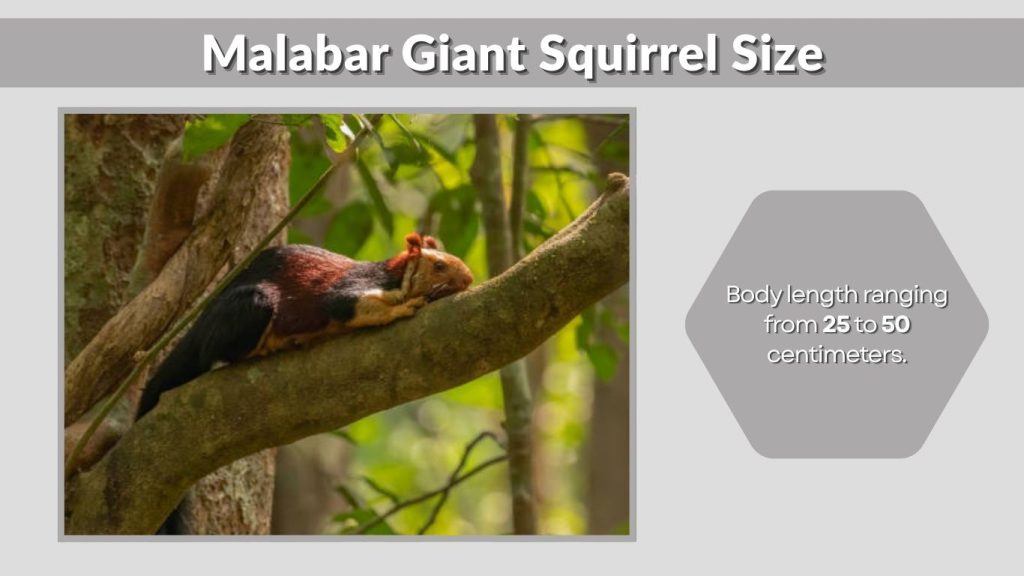
The Malabar giant squirrel is considered one of the largest squirrels in the world. Its size alone makes it stand out among other squirrel species.
Average Body Length
An adult Malabar giant squirrel typically has a body length ranging from 25 to 50 centimeters (about 10 to 20 inches). However, its long tail can add another 20 to 50 centimeters to its total length.
This means that the total length of the squirrel, including the tail, can reach up to nearly one meter in some cases.
Weight and Physical Dimensions
Most Malabar giant squirrels weigh between 1.5 and 2 kilograms (3 to 4.5 pounds). This weight makes them significantly larger than common squirrels found in cities or parks.
Their larger body size helps them store energy and survive in forest environments where food availability may vary by season.
Growth and Development
Young Malabar giant squirrels are born small and relatively helpless. As they grow, they gradually develop stronger limbs and climbing abilities. Juveniles remain in the nest for some time before learning how to move confidently through the trees.
By adulthood, they reach their full size and become skilled climbers capable of navigating complex forest canopies.
Facts About Malabar Giant Squirrel
The Malabar giant squirrel is not only large and colorful but also known for several fascinating characteristics that make it unique among squirrels.
Interesting Facts
One of the most interesting facts about the Malabar giant squirrel is that it is one of the largest squirrel species in the world. Its impressive size and long bushy tail make it easily recognizable in the forests where it lives.
Another remarkable ability of this squirrel is its jumping skill. It can leap distances of 6 to 9 meters (about 20 to 30 feet) between tree branches. These powerful jumps allow it to travel quickly through the forest canopy without descending to the ground.
Unlike many smaller squirrel species, the Malabar giant squirrel rarely comes down to the forest floor. Staying in the trees helps protect it from predators and allows it to easily find food among branches and leaves.
Unique Behavior
The Malabar giant squirrel is generally solitary and territorial. Most individuals prefer living alone, except during the breeding season. They maintain their own territories and may defend them from other squirrels.
These squirrels are also known for their careful and deliberate movements in trees. Instead of constantly running like many smaller squirrels, they move more slowly and cautiously along branches.
Another interesting behavior is their habit of building large nests called dreys. These nests are constructed from leaves, twigs, and branches and are usually located high in tall trees. The nests provide a safe place for resting and raising young.
Lifespan and Reproduction
The average lifespan of a Malabar giant squirrel in the wild is estimated to be around 12 to 20 years, although this can vary depending on environmental conditions and threats.
Breeding may occur once or twice a year. Female squirrels usually give birth to one or two young at a time. The babies remain in the nest until they are strong enough to climb and explore the surrounding trees.
Mother squirrels take care of their young by protecting them and providing food until they become independent.
Malabar Giant Squirrel Diet
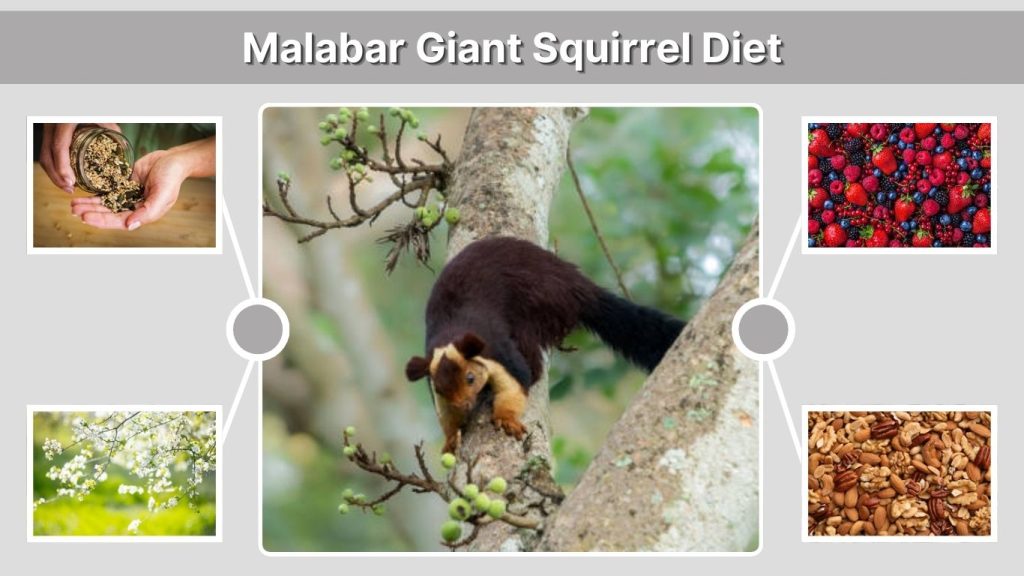
The Malabar giant squirrel has a varied diet, which helps it survive in different forest environments. As an omnivore with a strong preference for plant-based foods, it consumes a wide range of natural forest resources.
Primary Foods
The main foods eaten by the Malabar giant squirrel include:
- Fruits
- Nuts
- Seeds
- Tree flowers
These foods provide essential nutrients and energy. Many of these items are readily available in forest canopies where the squirrel spends most of its time.
Additional Food Sources
In addition to plant-based foods, the Malabar giant squirrel may occasionally eat other items such as:
- Tree bark
- Tender leaves
- Insects
- Bird eggs
These additional foods help supplement the squirrel’s diet, especially when fruits or seeds are scarce.
Feeding Behavior
The Malabar giant squirrel is an active forager. It moves through tree branches while searching for food and often uses its strong teeth to break open hard nuts and seeds.
Sometimes the squirrel may store food temporarily in tree crevices for later consumption. This behavior helps it survive during periods when food is less abundant.
While feeding, the squirrel often sits upright on a branch and holds food with its front paws, much like smaller squirrel species.
Malabar Giant Squirrel Habitat
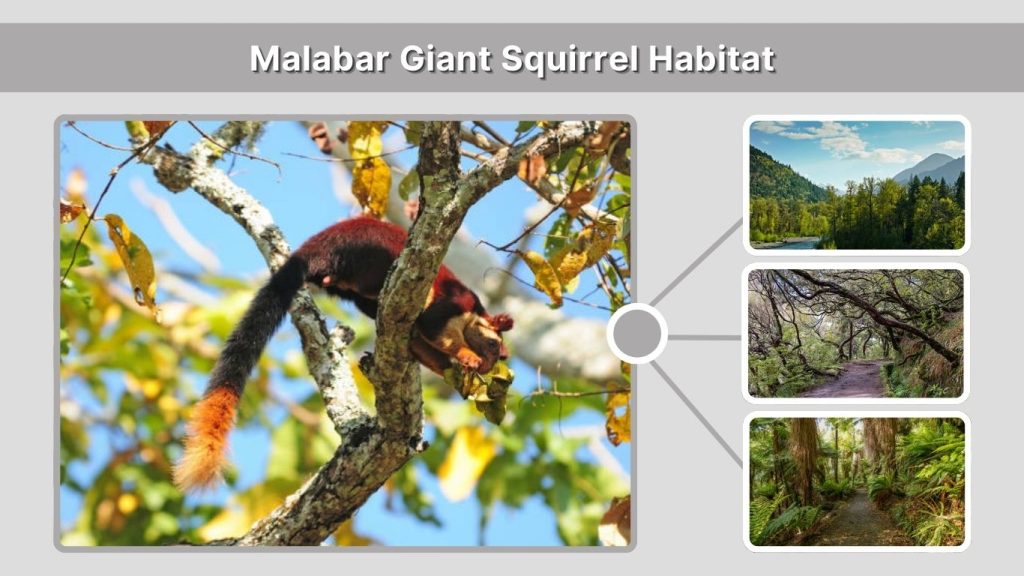
The Malabar giant squirrel lives in dense forest environments, where tall trees provide shelter, food, and nesting sites.
Natural Habitat
This species thrives in tropical and subtropical forests with thick vegetation and high tree canopies. Such environments allow the squirrel to move safely from tree to tree without touching the ground.
These forests usually contain a variety of fruit-bearing trees, which supply the squirrel with a steady source of food.
Geographic Distribution
The Malabar giant squirrel is primarily found in India, especially in the Western Ghats, a mountain range known for its rich biodiversity. It can also be seen in parts of central and southern India.
Several protected areas, national parks, and wildlife sanctuaries provide important habitats for this species.
Nesting Areas
Malabar giant squirrels build large spherical nests made from leaves and twigs. These nests are usually placed on strong branches high above the ground.
A single squirrel may build multiple nests within its territory, using them for resting, sleeping, or raising young.
Threats and Conservation Status
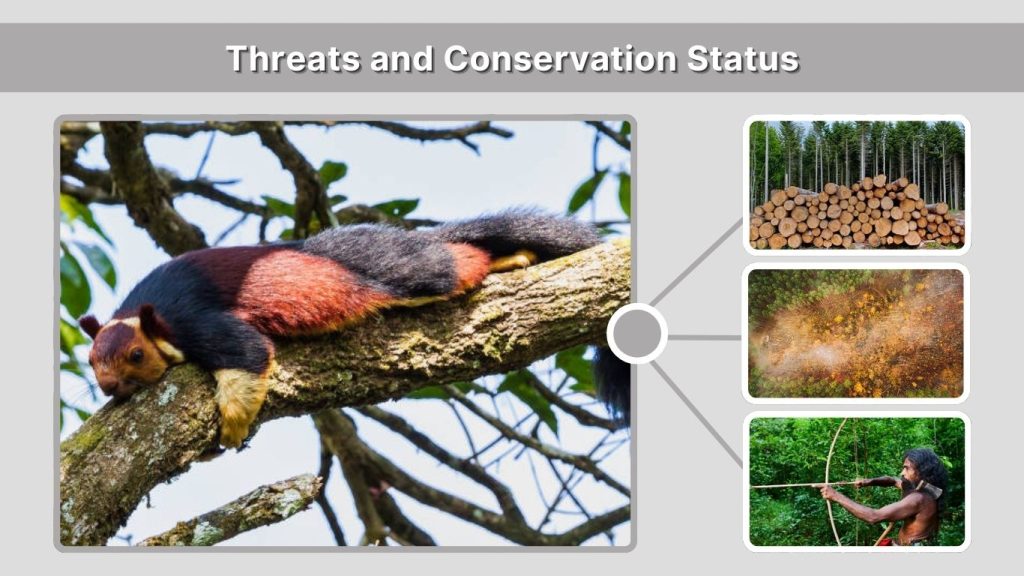
Although the Malabar giant squirrel is still found in several forest regions, it faces certain environmental challenges.
Major Threats
The biggest threats to this species include:
- Deforestation, which destroys its natural habitat
- Habitat fragmentation is making it harder for squirrels to move between forest areas
- Human activities, such as hunting in some regions
When forests are cleared for agriculture or development, the squirrels lose both their food sources and nesting sites.
Conservation Efforts
To protect this species, several conservation measures have been implemented. Many Malabar giant squirrels live within protected national parks and wildlife reserves.
Forest conservation programs and wildlife protection laws in India also help safeguard their habitats. Continued conservation efforts are important to ensure that this unique and colorful squirrel remains part of the forest ecosystem.
Conclusion
The Malabar giant squirrel is one of the most remarkable squirrel species in the world. With its striking colors, large size, and tree-dwelling lifestyle, it stands out among other forest animals. Found mainly in the forests of India, this species plays an important role in maintaining ecological balance by spreading seeds and supporting forest regeneration.
Protecting forest habitats and promoting conservation awareness are essential steps in ensuring that future generations can continue to witness the beauty and uniqueness of the Malabar giant squirrel in the wild.