





The Japanese squirrel is a small tree-dwelling mammal native to Japan’s forests. Known for its agile climbing skills and bushy tail, this squirrel plays an important role in maintaining healthy forest ecosystems. It is commonly seen in wooded areas where it searches for nuts, seeds, and fruits among tree branches. With its soft fur, alert behavior, and energetic movements, the Japanese squirrel is one of the most fascinating wildlife species found in Japan.
What Is the Japanese Squirrel?
The Japanese squirrel (Sciurus lis) is a species of tree squirrel that belongs to the family Sciuridae, which includes many squirrels found around the world. This species is native to Japan and is mainly distributed across the islands of Honshu, Shikoku, and Kyushu.
Japanese squirrels are arboreal animals, meaning they spend most of their lives in trees. They move quickly along branches and leap from tree to tree while searching for food or escaping predators. Their lifestyle in the forest canopy helps them stay safe and provides easy access to the nuts, seeds, and fruits that make up much of their diet.
This squirrel species is well adapted to living in temperate forests and woodland environments. Its strong limbs, sharp claws, and bushy tail allow it to balance easily while climbing and jumping through trees.
Although they are not usually aggressive animals, Japanese squirrels are alert and cautious, always watching for potential threats in their surroundings.
Japanese Squirrel Identification
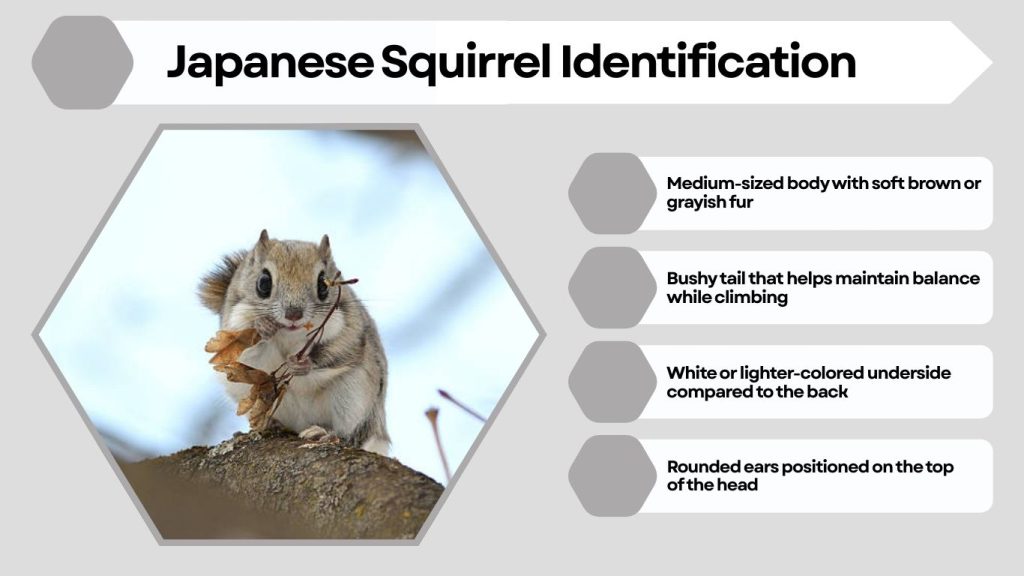
The Japanese squirrel can be identified by its small body, soft fur, and long bushy tail. While it may look similar to other tree squirrels, several features help distinguish it from related species.
Key identification features include:
- Medium-sized body with soft brown or grayish fur
- Bushy tail that helps maintain balance while climbing
- White or lighter-colored underside compared to the back
- Rounded ears positioned on the top of the head
- Large dark eyes adapted for spotting movement in forest environments
- Sharp curved claws used for gripping tree bark
These features help the Japanese squirrel move easily through trees and blend into its natural forest surroundings.
Japanese Squirrel Size
The Japanese squirrel is considered a medium-sized tree squirrel compared to other species in Asia. Its body structure is designed for agility and climbing rather than large body mass.
Average Body Length
An adult Japanese squirrel usually has a body length of about 20 to 25 centimeters (8 to 10 inches). Its tail adds an additional 15 to 20 centimeters, giving the squirrel a balanced and streamlined shape.
The tail plays an important role in maintaining stability while jumping between branches.
Weight
Most Japanese squirrels weigh between 250 and 350 grams. Their lightweight bodies allow them to move quickly through tree canopies without placing too much pressure on thin branches.
Comparison With Other Squirrels
Compared with larger squirrel species such as the Indian giant squirrel, the Japanese squirrel is much smaller. However, it is similar in size to the Eurasian red squirrel, which is found across many parts of Europe and Asia.
Despite its modest size, the Japanese squirrel is an excellent climber and jumper, capable of navigating dense forests with remarkable speed.
Japanese Squirrel Habitat
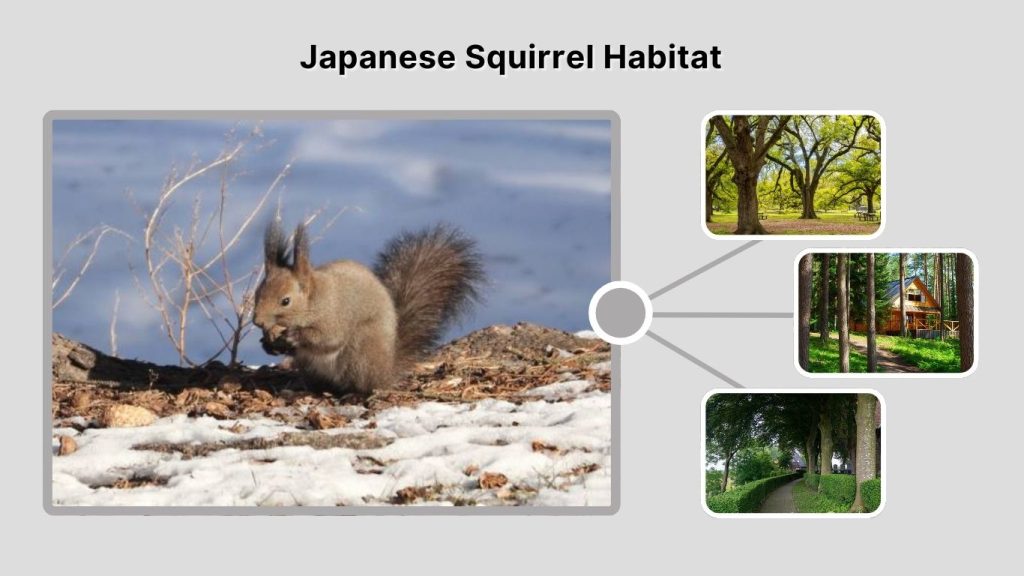
The Japanese squirrel lives primarily in forested areas, where tall trees provide shelter, food, and nesting places.
Natural Habitat
This species prefers deciduous and mixed forests, where a variety of trees produce nuts, seeds, and fruits throughout the year. Forests with oak, pine, and other nut-bearing trees are especially suitable habitats.
These environments offer plenty of branches and tree trunks that squirrels use for climbing, resting, and building nests.
Geographic Distribution
The Japanese squirrel is native to the islands of Honshu, Shikoku, and Kyushu, which are part of the main Japanese archipelago. Within these regions, it can be found in both mountain forests and lower woodland areas.
Although it primarily inhabits natural forests, the squirrel can sometimes be seen in parks, rural woodlands, and forested areas near human settlements.
Nesting Areas
Japanese squirrels build nests known as dreys, which are made from leaves, twigs, and other plant materials. These nests are usually located high in tree branches to protect them from predators.
In some cases, squirrels may also use natural tree hollows as shelter. These locations provide warmth and safety for resting and raising young squirrels.
Japanese Squirrel Diet
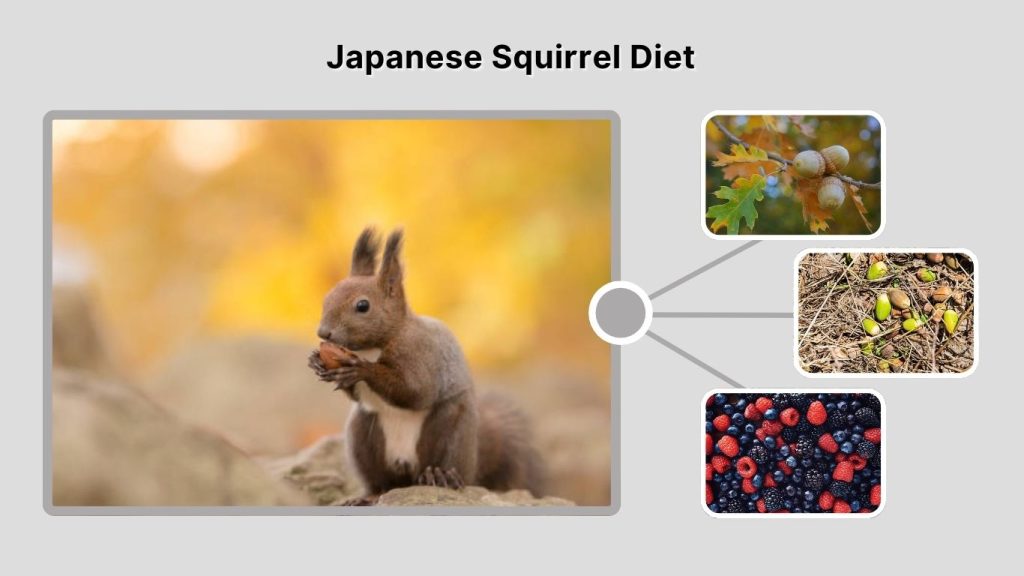
The Japanese squirrel has a varied diet that mainly consists of plant-based foods found in forest environments. Its feeding habits help it survive throughout different seasons while also playing an important role in the forest ecosystem.
Primary Foods
The main foods eaten by Japanese squirrels include:
- Nuts, such as acorns and walnuts
- Seeds from various forest trees
- Fruits and berries
- Tree buds and shoots
These foods provide the squirrel with essential nutrients and energy for its active lifestyle in the trees.
Seasonal Diet Changes
The diet of the Japanese squirrel can change depending on the season and food availability.
- Spring and summer: Fresh buds, flowers, fruits, and soft seeds are common food sources.
- Autumn: Nuts and seeds become more important as squirrels collect and store food for the colder months.
- Winter: Stored nuts and seeds help them survive when fresh food is scarce.
This seasonal feeding strategy helps the squirrel adapt to changes in the forest environment.
Feeding Behavior
Japanese squirrels are active foragers. They move along tree branches while searching for food and often hold nuts or fruits with their front paws while eating.
Sometimes they hide or cache food in tree crevices or in the ground to eat later. This behavior not only helps the squirrel survive during food shortages but also contributes to seed dispersal, which supports forest growth.
Japanese Squirrel Behavior
Japanese squirrels are known for their energetic and agile behavior, especially when moving through tree branches.
Daily Activity
These squirrels are diurnal, meaning they are most active during the daytime. They spend their day searching for food, grooming, and exploring their territory.
During colder weather or heavy rain, they may stay inside their nests to conserve energy.
Movement and Climbing
The Japanese squirrel is an excellent climber. Its strong legs and sharp claws allow it to move easily up and down tree trunks.
It can also jump between branches with impressive precision. This ability allows the squirrel to travel through the forest canopy quickly and safely.
Social Behavior
Japanese squirrels are generally solitary animals. Most individuals live alone and maintain their own territory.
However, interactions may occur during the breeding season, when males and females come together for mating.
Interesting Facts About Japanese Squirrels
Japanese squirrels have several interesting characteristics that make them unique among forest animals.
Unique Characteristics
One interesting feature of the Japanese squirrel is that its fur color can change slightly with the seasons. In colder months, the coat may appear thicker and slightly darker, helping the animal stay warm.
Another notable trait is their excellent climbing ability, which allows them to move confidently through dense forest canopies.
Adaptations for Forest Life
Japanese squirrels are well adapted to life in trees. Some of their key adaptations include:
- Sharp claws for gripping bark
- Strong teeth for cracking hard nuts
- Bushy tail for balance during jumps
- Camouflage fur colors that blend into forest surroundings
These adaptations help them survive and thrive in woodland environments.
Reproduction and Lifespan

Breeding Season
Japanese squirrels typically breed once or twice each year, often during spring and early summer when food is abundant.
During this time, males compete for the attention of females, and mating occurs within the forest canopy.
Young and Development
Female squirrels usually give birth to two to four babies per litter. The young are born blind and without fur, relying entirely on their mother for warmth and protection.
They stay in the nest for several weeks before gradually learning to climb and explore the surrounding trees.
Average Lifespan
In the wild, Japanese squirrels generally live for about 6 to 10 years, although this can vary depending on environmental conditions and predation.
In protected environments such as wildlife reserves or captivity, they may live slightly longer.
Threats and Conservation Status
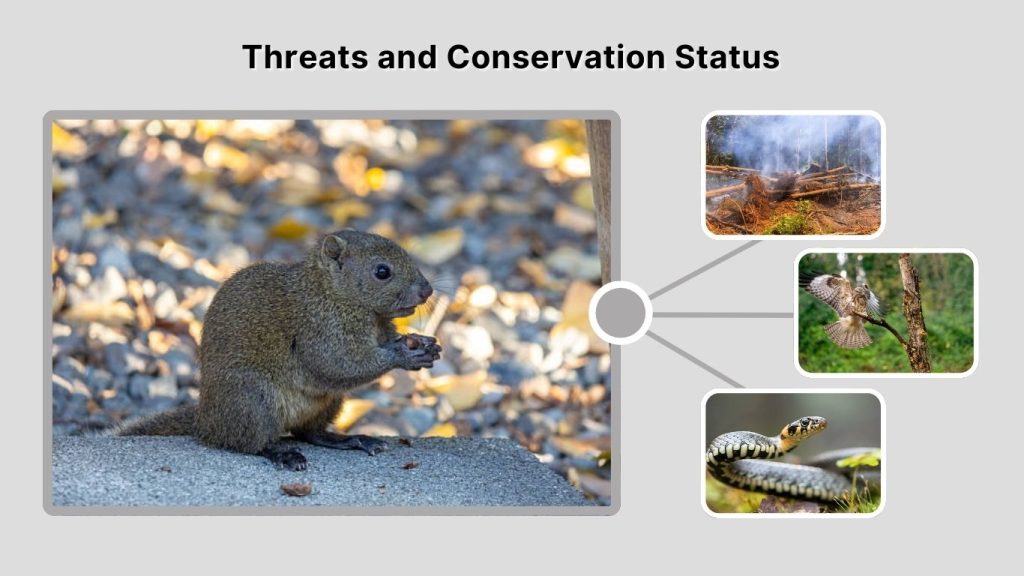
Although Japanese squirrels are still relatively common in many forests, they face several environmental challenges.
Habitat Loss
One of the biggest threats to Japanese squirrels is deforestation and urban development. When forests are cleared for construction or agriculture, squirrels lose their homes and food sources.
Predators
Natural predators of Japanese squirrels may include birds of prey, snakes, and some forest mammals. Living high in trees helps reduce the risk of attacks.
Conservation Efforts
Conservation programs in Japan aim to protect forests and natural habitats where Japanese squirrels live. National parks, wildlife reserves, and forest protection laws help maintain stable populations of this species.
Conclusion
The Japanese squirrel is a fascinating forest animal known for its agility, bushy tail, and energetic behavior. Native to Japan’s woodland environments, this squirrel spends most of its life in trees, where it feeds on nuts, seeds, and fruits.
Beyond its charming appearance, the Japanese squirrel plays an important ecological role by helping disperse seeds and support forest regeneration. Protecting natural forests is essential to ensure that this unique species continues to thrive in its native habitat.