


The Douglas squirrel is a small and energetic tree squirrel commonly found in the forests of western North America. Known for its quick movements and loud chatter, this squirrel is an important part of forest ecosystems. It spends much of its time collecting and storing pine cones, seeds, and other foods found in coniferous forests. Because of its active behavior and territorial nature, the Douglas squirrel is one of the most noticeable wildlife species living in woodland environments.
What Is the Douglas Squirrel?
The Douglas squirrel (Tamiasciurus douglasii) is a species of tree squirrel native to western North America, particularly in the coastal and mountain forests of the United States and Canada. It belongs to the genus Tamiasciurus, which includes several small forest squirrels known for their energetic behavior.
This squirrel is often associated with coniferous forests, where trees such as pine, spruce, and fir provide food and shelter. Douglas squirrels spend most of their lives in trees, moving quickly along branches while searching for seeds and cones.
Another common name for the Douglas squirrel is “chickaree.” This nickname comes from the loud chatter or alarm calls the squirrel makes when it detects predators or other animals entering its territory.
The Douglas squirrel plays an important role in forest ecosystems by spreading seeds and influencing tree growth through its feeding habits.
Douglas Squirrel Identification
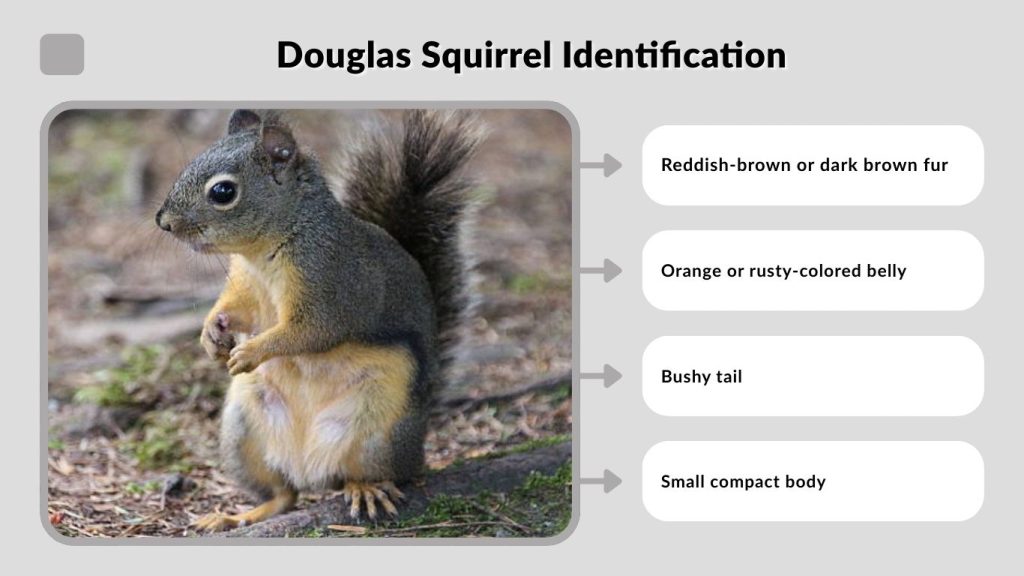
The Douglas squirrel can be identified by its small body size, reddish-brown fur, and bushy tail. It may look similar to other tree squirrels, but several features make it easy to recognize.
Key identification features include:
- Reddish-brown or dark brown fur on the back
- Orange or rusty-colored belly in many individuals
- Bushy tail used for balance while climbing
- Small compact body compared to larger squirrels
- Large dark eyes and rounded ears
- Quick and alert movements in trees
Douglas squirrels are also known for their loud chattering calls, which they often use to warn other animals about potential threats.
Douglas Squirrel Habitat
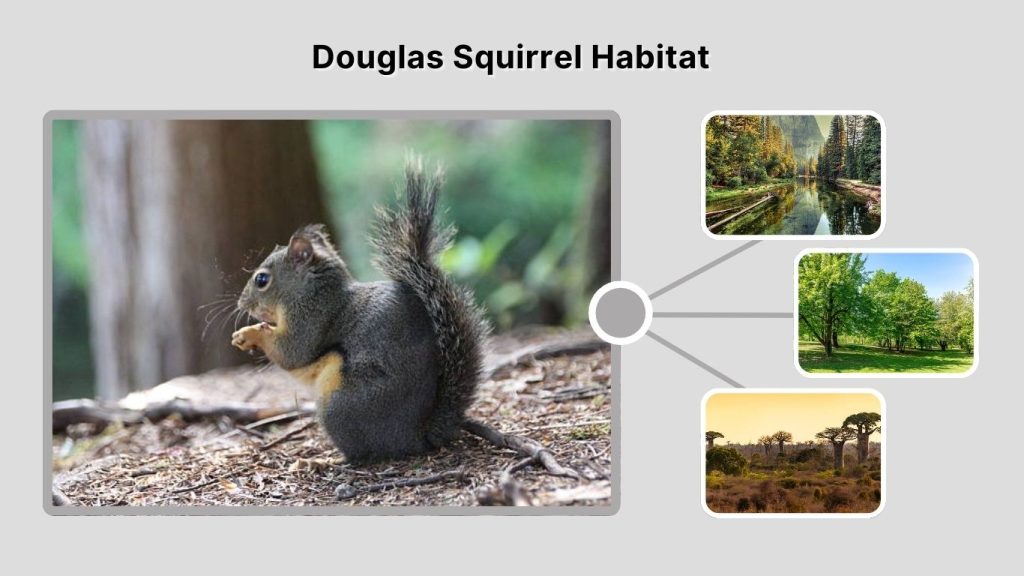
The Douglas squirrel lives mainly in dense forest environments, especially areas dominated by coniferous trees.
Natural Habitat
This species prefers conifer forests where trees produce large amounts of cones. Pine, fir, and spruce forests provide the squirrel with both food and nesting locations.
Because these trees produce seeds inside cones, they are an essential part of the Douglas squirrel’s habitat.
Geographic Distribution
Douglas squirrels are primarily found along the western regions of North America, including:
- Coastal forests of British Columbia
- Washington and Oregon in the United States
- Parts of California and nearby mountain forests
Within these areas, they commonly live in mountain forests, woodland parks, and protected forest reserves.
Nesting Locations
Douglas squirrels build nests both in tree branches and inside tree cavities. These nests provide shelter from predators and harsh weather.
Nests located in branches are usually constructed from twigs, leaves, moss, and bark, creating a warm and protective structure.
Douglas Squirrel Nest
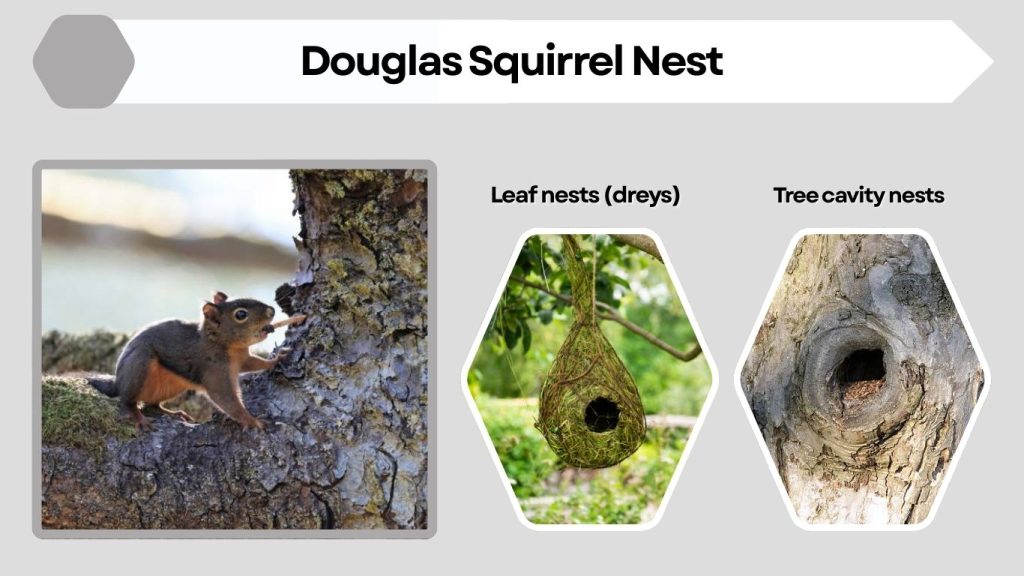
Douglas squirrels build nests to provide safety, warmth, and shelter for resting and raising their young. These nests are usually located high in trees where predators have difficulty reaching them.
Types of Nests
Douglas squirrels may build two main types of nests:
- Leaf nests (dreys) built from twigs, leaves, and moss
- Tree cavity nests located inside natural holes in tree trunks
Tree cavity nests often offer better protection from weather and predators.
Nest Construction
When building a nest, the squirrel gathers materials such as:
- Twigs
- Leaves
- Moss
- Bark strips
These materials are carefully arranged to create a strong outer structure and a softer interior lining.
Nest Purpose
Nests serve several important purposes for Douglas squirrels:
- Safe places to sleep and rest
- Protection from cold weather and rain
- Raising and protecting young squirrels
Some squirrels may build multiple nests within their territory, using different nests depending on weather or safety conditions.
Douglas Squirrel Diet
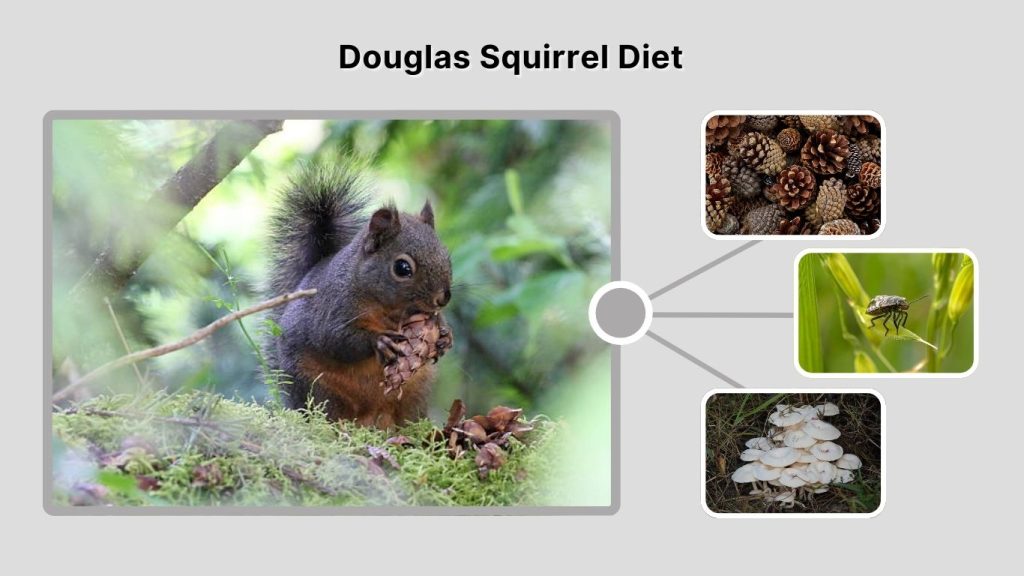
The Douglas squirrel diet mainly consists of foods found in coniferous forests. These squirrels rely heavily on tree seeds and cones for nutrition.
Primary Foods
The main foods eaten by Douglas squirrels include:
- Pine cones
- Seeds from conifer trees
- Nuts and acorns
These foods provide the energy needed for the squirrel’s active lifestyle.
Additional Foods
Douglas squirrels may also eat other foods when available, such as:
- Mushrooms and fungi
- Tree buds and bark
- Insects
This varied diet helps them survive when certain food sources are limited.
Food Storage Behavior
One of the most interesting behaviors of Douglas squirrels is their habit of storing large numbers of pine cones.
They create piles of stored cones called middens. These cone piles allow the squirrel to access food during winter when fresh food is harder to find.
Douglas Squirrel Lifespan
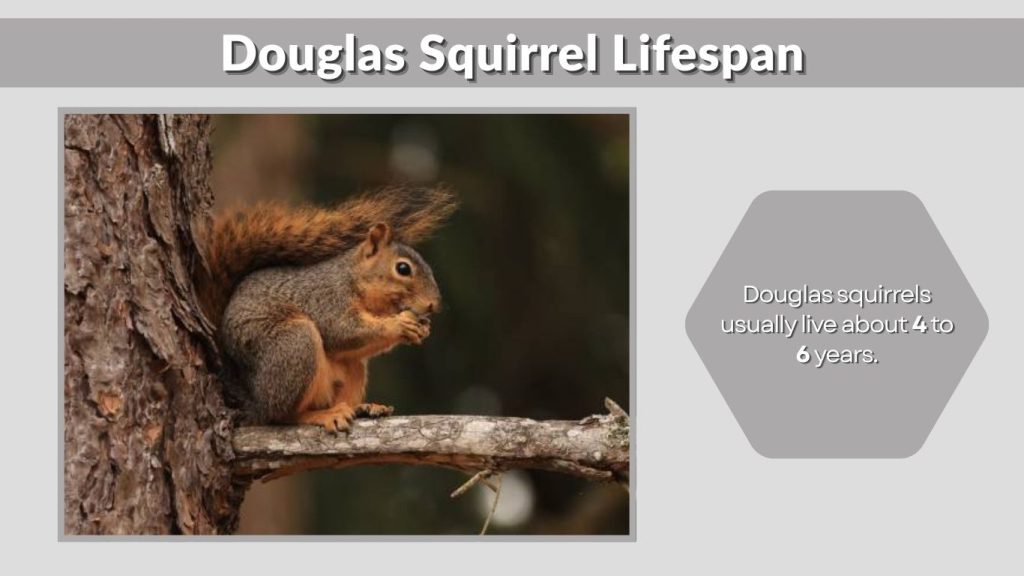
The Douglas squirrel lifespan can vary depending on environmental conditions, food availability, and the presence of predators. Like many small forest mammals, their life expectancy is influenced by survival challenges in the wild.
Average Lifespan in the Wild
In the wild, Douglas squirrels usually live about 4 to 6 years. However, many individuals may live shorter lives due to predators or environmental dangers.
Lifespan in Protected Environments
In protected environments such as wildlife reserves or captivity, Douglas squirrels may live up to 7 or 8 years because they face fewer threats and have consistent access to food.
Factors Affecting Lifespan
Several factors can influence how long a Douglas squirrel lives:
- Predation from birds of prey and forest predators
- Food availability, especially during winter
- Habitat quality and forest health
- Disease and environmental stress
Healthy forest ecosystems help support longer and more stable squirrel populations.
Douglas Squirrel Facts
The Douglas squirrel is known for its energetic personality and several interesting behaviors that make it unique among forest squirrels.
Interesting Facts
Here are some fascinating Douglas squirrel facts:
- Douglas squirrels are often called “chickarees” because of their loud, chattering calls.
- They are highly territorial and will loudly defend their area from other squirrels.
- These squirrels are very active and can often be seen running quickly along tree branches.
- Douglas squirrels create large food storage piles known as middens, which contain hundreds of pine cones.
Unique Behaviors
Douglas squirrels are known for their cone harvesting behavior. They collect cones from trees and store them in central piles within their territory. Over time, these piles can become very large.
They also use vocal sounds to warn other animals or signal danger, making them one of the most vocal squirrel species in North American forests.
Douglas Squirrel Behavior
Douglas squirrels are extremely active and alert animals, spending much of their day searching for food and defending their territory.
Daily Activity
Douglas squirrels are diurnal, meaning they are active during the daytime. Their daily activities usually include:
- Searching for food
- Gathering cones and seeds
- Grooming and maintaining their nests
During cold weather or storms, they may remain inside their nests to conserve energy.
Territorial Behavior
These squirrels are strongly territorial. Each individual maintains its own area where it stores food and builds nests.
If another squirrel enters this territory, the Douglas squirrel may respond with loud chatter and aggressive displays to drive the intruder away.
Communication
Douglas squirrels communicate using:
- Vocal calls such as chattering or squeaking
- Tail movements to signal warning or excitement
- Body posture when defending territory
These signals help them interact with other squirrels and detect danger.
Douglas Squirrel vs Gray Squirrel

The Douglas squirrel vs gray squirrel comparison highlights several differences in size, behavior, and habitat preference.
Size Differences
The Douglas squirrel is smaller than the gray squirrel. While Douglas squirrels usually weigh around 200–300 grams, gray squirrels can be significantly larger and heavier.
Habitat Differences
Douglas squirrels mainly live in coniferous forests, where pine, spruce, and fir trees are abundant.
Gray squirrels, on the other hand, are often found in deciduous forests, parks, and urban environments.
Behavior Differences
Douglas squirrels are generally more territorial and vocal than gray squirrels. They frequently use loud calls to defend their territory.
Gray squirrels tend to be less aggressive and are more adaptable to living near human settlements.
Predators and Threats
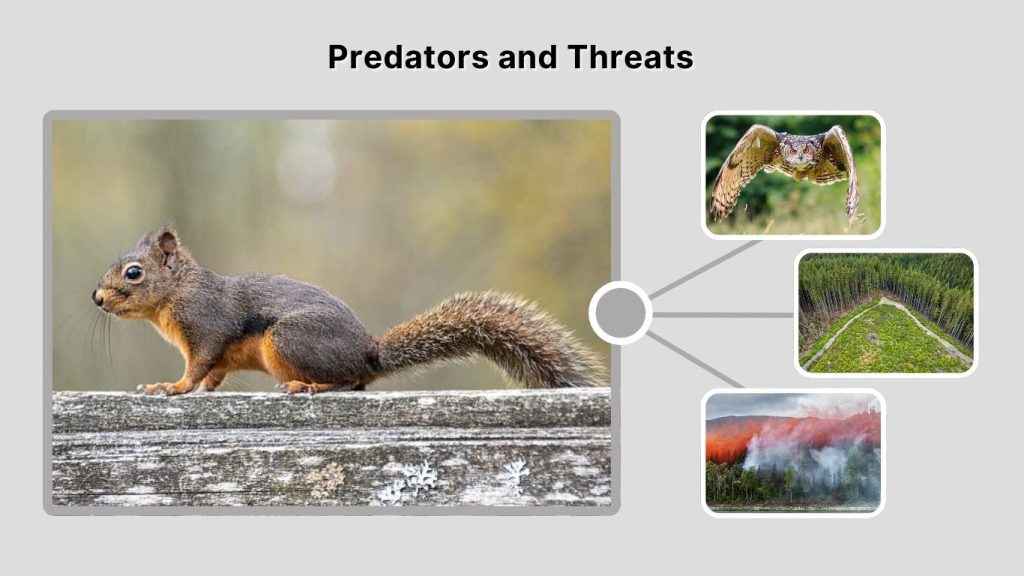
Douglas squirrels face several natural dangers in their forest habitats.
Natural Predators
Common predators include:
- Hawks and owls
- Foxes and coyotes
- Weasels and martens
Living in trees helps Douglas squirrels avoid some ground predators.
Environmental Threats
Human activities can also affect Douglas squirrel populations. Some major threats include:
- Deforestation and habitat loss
- Forest fires
- Climate changes affecting food sources
Protecting healthy forests is essential for maintaining stable populations of Douglas squirrels.
Role in the Forest Ecosystem
Douglas squirrels play an important role in maintaining healthy forest ecosystems.
Because they collect and store seeds and cones, some seeds are left behind and eventually grow into new trees. This process helps support forest regeneration and biodiversity.
Their feeding habits also influence how conifer forests develop over time.
Conclusion
The Douglas squirrel is a lively and important member of North American forest ecosystems. Known for its territorial nature, loud calls, and cone-storing behavior, this small squirrel thrives in coniferous forests across western regions of the continent.
By spreading seeds and interacting with forest environments, Douglas squirrels contribute to the health and growth of woodland ecosystems. Protecting forest habitats ensures that this energetic and fascinating squirrel species continues to thrive in the wild.