





Ground squirrels are small to medium-sized rodents that belong to the squirrel family Sciuridae. Unlike tree squirrels that spend most of their time in trees, ground squirrels live mainly on the ground and in underground burrows. These animals are commonly found in open landscapes such as grasslands, plains, and deserts. Known for their alert posture and digging ability, ground squirrels play an important role in many ecosystems by aerating soil and serving as prey for various predators.
What Is a Ground Squirrel?
A ground squirrel refers to several species of squirrels that live primarily on the ground rather than in trees. These animals are part of the squirrel family and are closely related to tree squirrels, flying squirrels, chipmunks, and marmots.
Ground squirrels are well adapted to life in open environments where trees are scarce. Instead of nesting in tree branches, they build complex underground burrow systems that provide shelter, protection from predators, and safe places to raise their young.
Most ground squirrels are diurnal, meaning they are active during the day. They often sit upright on their hind legs to watch for predators, which is a behavior commonly associated with these animals.
Ground squirrels are found in many regions of the world, particularly in North America, Europe, and parts of Asia.
Ground Squirrel Identification

Ground squirrels can be recognized by several physical and behavioral characteristics that distinguish them from other types of squirrels.
Key identification features include:
- Small to medium-sized body with compact build
- Shorter tail compared to most tree squirrels
- Strong forelimbs and sharp claws designed for digging burrows
- Brown, gray, or tan fur, sometimes with stripes or spots
- Large dark eyes that help detect predators
- Alert standing posture, often seen when the animal scans its surroundings
Because of these features, ground squirrels are usually easy to identify in open habitats where they move quickly across the ground.
Types of Ground Squirrels

There are many species of ground squirrels, each adapted to different environments. Some of the most well-known types include the following.
California Ground Squirrel
The California ground squirrel is commonly found in the western United States. It lives in grasslands, farmland, and open woodland areas. This species is known for its grayish-brown fur and its habit of living in colonies.
Arctic Ground Squirrel
The Arctic ground squirrel is one of the northernmost squirrel species in the world. It lives in Arctic tundra regions and has special adaptations that allow it to survive extremely cold winters.
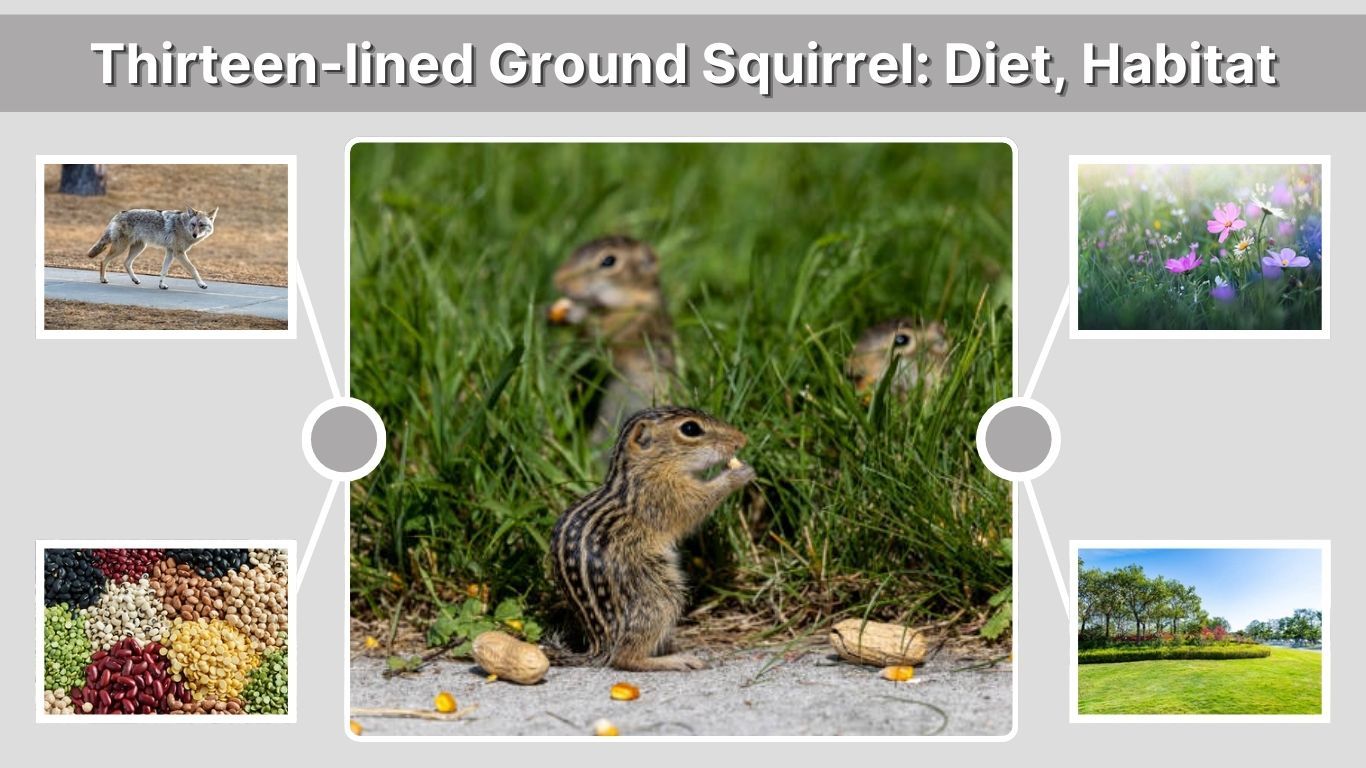
Thirteen-Lined Ground Squirrel
The thirteen-lined ground squirrel is named for the distinctive pattern of stripes and spots running along its back. This species is commonly found in grasslands and prairies across North America.
Other Notable Species
Other well-known ground squirrels include:
- Richardson’s ground squirrel
- Columbian ground squirrel
- European ground squirrel
Each species has unique adaptations that help it survive in its specific habitat.
Ground Squirrel Size

Ground squirrels vary in size depending on the species, but most fall within a similar range.
Average Body Length
Most ground squirrels have a body length of about 18 to 30 centimeters (7 to 12 inches). This compact body shape helps them move quickly across open ground and navigate narrow underground tunnels.
Tail Length
Their tails are usually shorter than those of tree squirrels, often measuring about 6 to 15 centimeters. While the tail still helps with balance, it is less prominent than the bushy tails of tree-dwelling squirrels.
Weight
Ground squirrels typically weigh between 150 grams and 1 kilogram, depending on the species. Smaller species weigh only a few hundred grams, while larger ones may approach the size of small marmots.
Size Differences Between Species
Some ground squirrels, such as the thirteen-lined ground squirrel, are relatively small, while others like the Arctic ground squirrel can grow significantly larger.
Ground Squirrel Habitat

Ground squirrels live in a variety of environments, but they are most commonly associated with open landscapes.
Natural Habitat
Typical habitats for ground squirrels include:
- Grasslands and prairies
- Open plains and farmland
- Desert and semi-arid regions
- Mountain meadows
These environments allow ground squirrels to dig burrows and easily spot approaching predators.
Geographic Distribution
Ground squirrels are widely distributed across several continents. They are most commonly found in:
- North America
- Parts of Europe
- Central and northern Asia
Different species occupy different climates and landscapes within these regions.
Burrow Systems
One of the most important features of ground squirrel life is their underground burrow systems.
These burrows consist of complex networks of tunnels and chambers used for:
- Sleeping and resting
- Storing food
- Raising young
- Protection from predators and extreme weather
Burrow systems may have multiple entrances and can extend several meters underground.
Ground Squirrel Diet
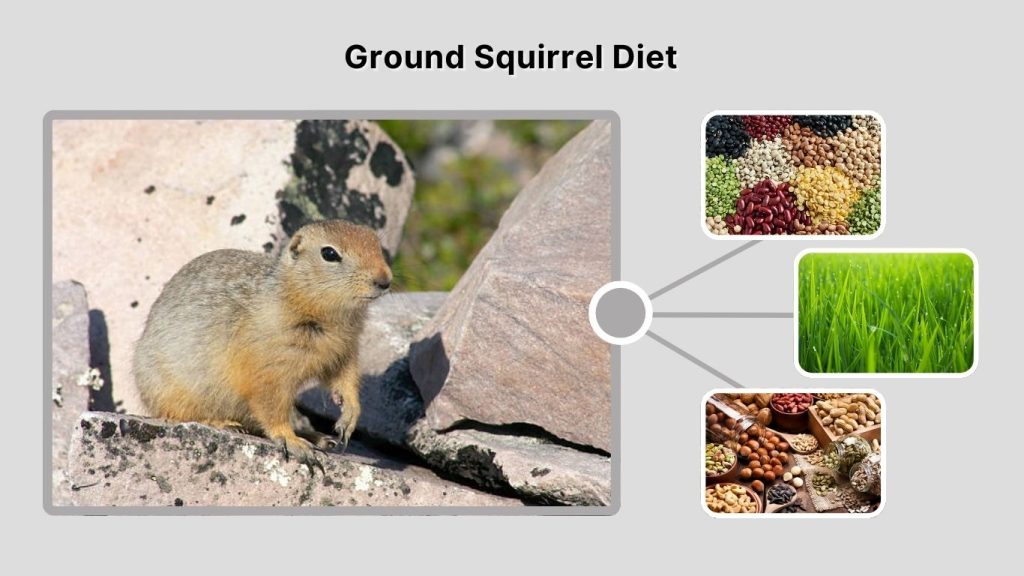
Ground squirrels are generally omnivores, meaning they eat both plant and animal foods.
Primary Foods
The most common foods eaten by ground squirrels include:
- Seeds and grains
- Nuts and plant materials
- Grasses and leaves
These foods provide the nutrients needed for their active lifestyle.
Additional Foods
Ground squirrels may also consume:
- Fruits and berries
- Insects
- Small invertebrates
This varied diet allows them to adapt to different environments and seasons.
Feeding Behavior
Ground squirrels typically forage on the ground, collecting food with their front paws while sitting upright.
Some species also store food in their burrows, especially before winter, when food becomes less available.
Ground Squirrel Behavior
Ground squirrels are known for their alert and social behavior, especially in species that live in colonies. Their daily activities usually involve searching for food, maintaining burrows, and watching for predators.
Daily Activity
Most ground squirrels are diurnal animals, meaning they are active during the daytime. During the day they forage for food, groom themselves, and move around their territory.
When temperatures become very hot or during bad weather, they may stay inside their burrows to remain safe and conserve energy.
Burrowing Behavior
Ground squirrels are excellent diggers. Their strong forelimbs and sharp claws allow them to create complex underground tunnels.
Burrow systems often include:
- Sleeping chambers
- Food storage areas
- Nursery chambers for young
- Multiple escape entrances
These underground systems help protect them from predators and extreme weather conditions.
Social Structure
Some ground squirrel species are solitary, while others live in large colonies with many individuals.
In colony-living species, squirrels often communicate with each other using warning calls when predators approach.
Ground Squirrel Hibernation
Many ground squirrel species survive cold winters by entering a state known as hibernation.
Why Ground Squirrels Hibernate
Hibernation helps ground squirrels survive when food is scarce and temperatures are very low. During this time they remain inside their burrows and rely on stored body fat for energy.
Hibernation Duration
The length of hibernation depends on the species and climate. Some ground squirrels may hibernate for several months during winter.
In colder regions, hibernation can last six to eight months.
Physiological Adaptations
During hibernation, a ground squirrel’s body undergoes several changes:
- Body temperature drops significantly
- Heart rate slows down
- Metabolism decreases
These changes help conserve energy until warmer weather returns.
Ground Squirrel Reproduction
Ground squirrels reproduce once or twice each year depending on the species and environmental conditions.
Breeding Season
Breeding usually occurs in spring, shortly after squirrels emerge from hibernation. This timing ensures that young squirrels are born when food is more available.
Offspring
Female ground squirrels typically give birth to 4 to 8 babies per litter. The young are born blind and hairless and remain in the burrow while they develop.
Growth and Development
Young squirrels grow quickly. Within a few weeks they begin developing fur and opening their eyes. After about a month, they start exploring outside the burrow and learning survival skills.
Interesting Facts About Ground Squirrels
Ground squirrels have many fascinating characteristics that make them unique among rodents.
Alert Standing Behavior
One well-known behavior is their upright stance. Ground squirrels often stand on their hind legs to watch for predators or observe their surroundings.
Communication Methods
Many ground squirrel species communicate using whistles or alarm calls. These warning sounds alert other squirrels when predators such as hawks or foxes are nearby.
Adaptations for Digging
Ground squirrels have powerful forelimbs and long claws that allow them to dig extensive burrow systems quickly and efficiently.
Predators and Threats

Ground squirrels face many natural threats in their environments.
Natural Predators
Common predators include:
- Hawks and eagles
- Foxes and coyotes
- Snakes
- Weasels
Living in burrows helps ground squirrels escape many predators.
Environmental Threats
Human activities can also impact ground squirrel populations. Some threats include:
- Habitat destruction
- Agricultural development
- Urban expansion
Protecting natural habitats helps support healthy ground squirrel populations.
Ground Squirrels vs Tree Squirrels
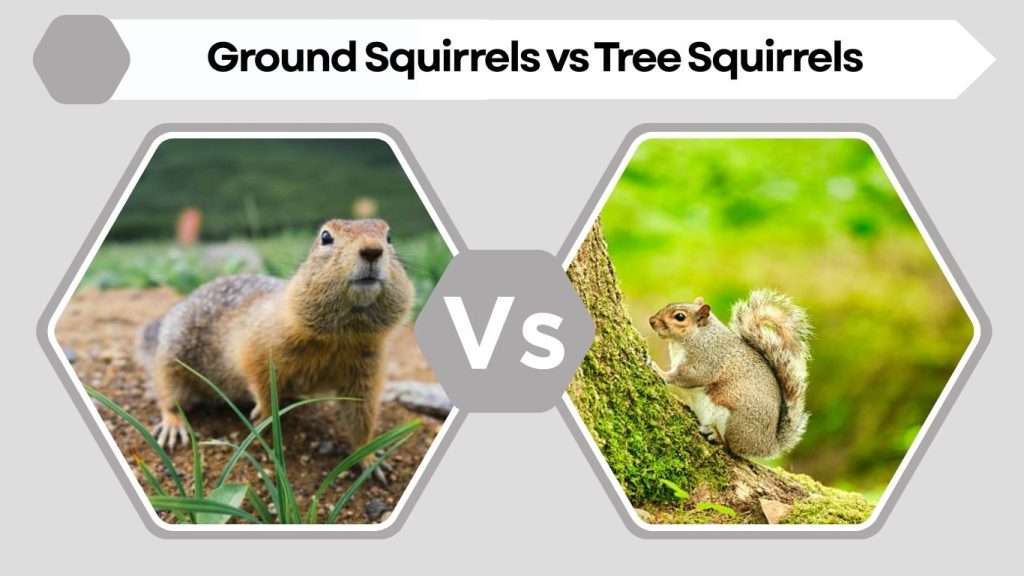
Although both belong to the squirrel family, ground squirrels and tree squirrels have several differences.
Habitat Differences
Ground squirrels mainly live on the ground in open landscapes, while tree squirrels live primarily in forests and wooded areas.
Physical Differences
Ground squirrels generally have shorter tails and stronger digging claws, while tree squirrels have longer bushy tails and are adapted for climbing.
Behavior Differences
Ground squirrels spend much of their time digging and living in burrows, while tree squirrels build nests in tree branches or cavities.
Role in the Ecosystem
Ground squirrels play an important role in maintaining healthy ecosystems.
Their burrowing activity helps aerate the soil, which improves soil quality for plants. They also help spread seeds and serve as an important food source for predators.
Because of these ecological roles, ground squirrels contribute to maintaining balance within many natural environments.
Conclusion
Ground squirrels are fascinating animals known for their digging skills, alert behavior, and underground lifestyles. Found in grasslands, deserts, and open plains across several continents, they have adapted well to life on the ground.
Through their burrowing activities and feeding habits, ground squirrels contribute to soil health and ecosystem balance. Protecting their habitats helps ensure that these unique animals continue to thrive in the wild.